Artificial Condition (Murderbot Diaries #2) — Read Report

Book | E-book | Audiobook (affiliate links)

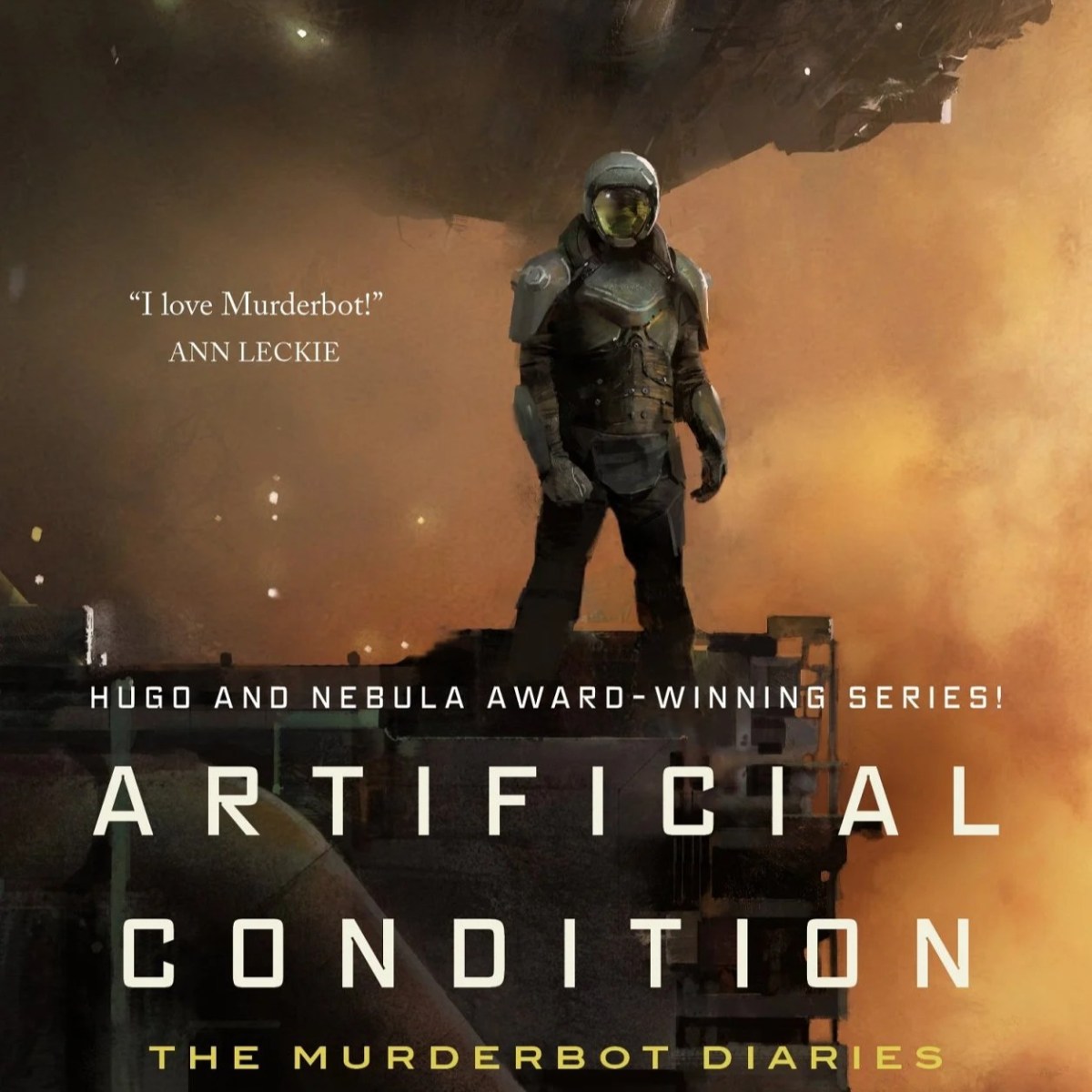
I purchased this as The Murderbot Diaries Vol. 1 double feature—which contains the first two novellas in the series—so I immediately jumped into this story after completing All Systems Red.

While the first story in a series has to introduce characters, introduce a setting, and set the tone, this is really not very different from the requirements of a stand-alone story. The only additional thing a good series-starter needs is some dangling plot threads that can be used to pull the reader into subsequent entries. As a reader, my question for a series is always, “what’s my reason for reading the next story?”

All Systems Red did this setup well, ending with Murderbot sneaking away from the new friends that had just bought its freedom from the oppressive Company. It knows that its memory was wiped after an incident at a mining colony; an incident where many people died and it was first able to override the governor module that keeps all security bots under strict control. It feels compelled to return and learn the truth about what happened.

The ART of Security Consulting

This second installment begins to set up Murderbot as the travelling tough guy in the mold of classic ronin samurai stories and westerns. Murderbot is Jack Reacher with social anxiety, 50% artificial components, and (ironically) actual emotions.

As far as we can tell, Murderbot seems to be pretty good at its job. It knows how to hack the local security systems to avoid being spotted as it makes its way through space stations. It disguises itself as an augmented human, and tries to secure passage off-the-books by finding automated transports with no human passengers to be suspicious.

Unfortunately, a deep space research vessel that Murderbot uses for transportation turns out to have an advanced artificial brain, and once he’s aboard it immediately clocks him as suspicious and forces him to reveal who he really is. What follows is a strange and decidedly awkward relationship with the ship, who Murderbot eventually dubs ART—Asshole Research Transport.

ART eventually helps Murderbot develop a cover story as a security consultant and even helps modify Murderbot’s body in its emergency surgery bay to help it avoid detection. It also ends up acting much like the classic hacker in the protagonist’s earpiece for the ensuing heist.

Murderbot, seemingly unable to avoid human entanglements, ends up taking a security job for a group of out-of-their-depth researchers trying to get their intellectual property from a shady mining corporation. This serves as cover for Murderbot’s actual goal of finding information about the mining colony massacre.

A Lack of Loose Ends

After two volumes, my impression of the Murderbot Diaries is that it’s more comfort food than high-brow sci-fi pushing the boundaries of the genre. That’s not a critique. Now seems like a time when plenty of readers could use some lighter, comforting stories.

Martha Wells has assembled a number of recognizable tropes and familiar ideas in the story so far. But they’re put together in a way that feels fresh, and mixed in with the mild goofiness of a surprisingly effective security bot who prefers to avoid human contact and binge watch its favorite shows instead.

Unfortunately, I felt that the ending of Artificial Condition didn’t quite measure up to All Systems Red. There was a whiff of deus ex machina in the sudden appearance of a character that happens to neatly resolve the concerns of Murderbot’s scientist clients. Murderbot does eventually find some information about the mining colony massacre and its own origin, but nothing is fully explained, and there are no clues as to where it could learn more. I would have liked one or two obvious threads to draw me into the third novella.

Artificial Condition expands the world, introduces new characters, and lets us get further into the head of Murderbot. It also feels like a comfortable stopping point to me, at least for now. The ending doesn’t compel me to keep reading, and maybe that’s okay. I will probably jump back in when I feel the need for some cozy, lighthearted action-adventure.

For now, this volume goes on the bookshelf, and I’ll pick up something else from my TBR list.

Etchings on a Boulder

It was only a couple weeks ago that I posted a poem while claiming that I don’t write much poetry. And it’s true, honest! But it just so happens that I’ve written another one.

I recently went on vacation with my family to a national park. I really shouldn’t be, but I find myself perpetually shocked by the human propensity to deface the most beautiful places with little bits of graffiti. So here’s a poem about that.

Etchings on a Boulder

We cannot count ourselves enlightened
Until we outgrow this need
To carve our names
In every nook and cranny
Of beautiful wilderness

What vain hope
That initials in the rock
Will obtain immortality
Our frail bodies cannot

Petty little scratches
May outlive us
But they will fade
Wind and rain painting
A clean canvas

What meaning will those letters have?
Only this:
We were so afraid
Of being forgotten

Sprayed Edges and Books as Artifacts

I like to think I’m not a materialist, but I do have a propensity to buy too many books. This year I’ve been working on buying fewer and reading more. I’ll get through that TBR list some day…or some year. Now, I buy e-books and audio books, but I do have a soft spot in my heart for a real, physical book.

The Cheapening

I grew up in the 80s and 90s, before e-books, when the paperback was truly at the height of its power. In fact, I tended to prefer paperbacks over hardbacks, with their finicky dust covers and heavy bindings.

Paperbacks are a great, cheap form factor. If all you care about is getting those sweet, sweet story-words into your eye-holes, paperbacks are a great option. They are just not a high-quality option. These days, trade paperbacks don’t seem to be much better than mass market paperbacks either. I find that many comic collections and graphic novels are ready to come apart at the binding with minimal provocation.

In general, I think the last four or five decades of physical publishing have been all about trying to shave pennies off the print cost. E-books and print-on-demand upended the publishing game, and the industry feels like it never quite got its feet back under it.

Books as Artifact

There is something to be said for books as a physical artifact. There is a satisfaction to a full bookshelf that simply can’t be replicated by an app or e-reader. Even though I don’t like the experience of holding and reading a hardcover book as much as a light paperback (that I can force into a pocket if need be), I love the look of a shelf full of embossed leatherbound books.

In the drive for cost cutting, the industry has spent less and less effort on the physical beauty of books. It’s not unreasonable, but it is unfortunate. I would love to see publishers experimenting with more ways to differentiate the look of books on the shelf, even if I admittedly don’t want to spend $50 or $100 on some ultra-fancy collector’s edition.

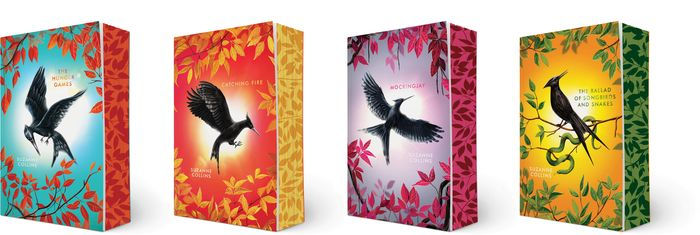
Browsing the bookstore recently, I saw one indicator that someone is thinking along those lines. Many of the books in the special front-of-store featured sections now have sprayed edges.

(Pic courtesy of Barnes and Noble)

These special editions tend to be the best-sellers or the big-buck new releases that the publishing oracles have selected for special treatment, but hey, that’s nothing new. Publishers have always consulted the oracles and picked certain books for special treatment.

I’m sure something in the printing tech has changed recently to make this cheaper and more accessible, because there are a ton of these now. And while some people clearly find it off-putting, I personally like it.

Let’s find more reasons to get excited about books! Let’s make them look cool and different. Let’s enjoy them as beautiful artifacts on the shelf, instead of merely that guilty pleasure that I indulge a little too often. Heck, as long as we’re at it, I want to see more embossing and fake gold leaf and variant covers.

What do you think? Do you like fancy books? Are you interested in books as artifacts, or are you all about jamming the story-words in the eye-holes with a complete disregard for their containment vessel? Let me know in the comments.

The Holy App — The Story Idea Vault

It’s a common misconception that a great idea makes a great story. The truth is that most great stories come down to execution. A great idea with poor execution rarely works, but a great writer can breathe new life into even the most tired tropes.

Like any writer, I have my own treasure trove of ideas that might end up in a story…someday. But why horde them? Instead, I’m opening the vault and setting them free.

Feel free to use these ideas as a writing prompt, or come up with your own twist and reply in the comments.

The Holy App

Caleb Ortiz-Levin made a career through the boom and bust cycles of Silicon Valley. Increasingly desperate bids to sell cryptocurrency, the metaverse, and everything AI. And what did he have to show for it? Only a few billion dollars.

Everyone was shocked when he stepped away from business.

He climbed remote mountains to study at isolated monasteries. He obtained three theological degrees. He brought his cadre of spiritual advisors to every gold plate charity dinner and political fundraiser. He spent six months not speaking. He interviewed the Pope and the Dalai Lama in the New Yorker.

Caleb wasn’t a fool. He knew how he was viewed: just another rich tech bro going down some obsessive rabbit hole. He didn’t mind. It just meant that he would be on the cutting edge of the next big thing: personalized religion.

People were increasingly desperate for meaning in a meaningless world. Why settle for an ethical system written on stone tablets in the bronze age? Why accept a cosmogony developed by shepherds before the invention of telescopes?

The app was downloaded a hundred million times in the first week. It made it easy to register a new religion, set up a hierarchy, and ordain your own priests. All with AI auto-complete, recorded indelibly on the blockchain. People began to wonder how the old religions survived without push notifications and subscription fees.

The two Churches of Satan, the Flying Spaghetti Monster, and Hatsune Miku vied for the most adherents in the weekly rankings. The pope denounced it as a tool of the devil. Oddly, this only caused a spike in downloads. Within a year, all the major religions were on the app too.

When Caleb went on the podcast circuit, he was asked one question more than any other: “What do you believe?”

“Who cares?” he said.

Thoughts on Fiction, Read Aloud

Reading to my Kids

The first time I started regularly reading books aloud in adulthood was shortly after my first son was born. Books for the under-three crowd aren’t exactly high literature, but that’s okay. Babies aren’t discerning consumers, and I wasn’t an amazing narrator.

Still, it was clearly valuable. My oldest could turn the pages and recite his favorite books from memory long before he could actually read any words. All of our children have become voracious readers, and that literacy is an asset in school and life. Plus…you know…it’s fun to read.

My oldest child is now a high schooler, and no longer interested in me reading aloud to him. My youngest is also losing interest, although he still listens occasionally, when we find a book that piques his interest. For now, my middle child is the one who asks me to read to her. She’s a smart middle-schooler, and we mostly read adult sci-fi novels. It’s a gift to be able to share the books that I enjoyed at that age, and revisit them through her eyes.

I know those days are numbered. I suppose I’ll miss it when I no longer have someone asking me to read to them.

Reading fiction aloud for 30-60 minutes most evenings has made me much better at it. I know to shift my tone to better separate external and internal dialogue. I know to adjust my voice to differentiate between two characters in conversation. I know how much space is needed to create a scene break. Sometimes I even know when I’ve gone too far with the bad accents and silly voices.

I’m no professional narrator, but I’ve improved through 15 years of practice.

Audiobooks

I recently made a conscious effort to start “reading” audiobooks. They’re going through something of a renaissance. Enabled by the same streaming and on-demand technology that has upended movies and radio, audiobooks have also helped fill a sizable hole in publisher profits left by the rise of e-books and precipitous decline of physical (and especially hardcover) sales.

Audiobooks also happen to fit well into our current culture, where it often feels hard to sit down and dedicate time to reading, but there are still plenty of opportunities to connect a phone to the car radio during commutes, or put something on the headphones while doing laundry or mowing.

For me, including audiobooks in my reading diet has at least doubled the number of pages I consume. Maybe more. It has given me more opportunities to try new authors without adding to my overfull bookshelves.

I’ve also been slowly noticing the ways that listening to a story alters the way I perceive it. I have a harder time keeping track of different characters and remembering their names. It’s much harder to skip back a chapter and reread something for context.

Stories, Spoken

When humanity was young, storytellers were part historian, part wizard, part priest. Stories were a way for us to make sense of a confusing and  malevolent world, to preserve knowledge and wisdom, and to build a shared worldview. For thousands of years, all stories were spoken.

Even in modern times, when the world is more literate than it has ever been before; even as a writer who most values the written word, there is clearly some special power in a story, spoken aloud.

Writing Advice

Some oft-quoted advice for writers suggests the value in reading your work in progress out loud.

“It will help you find the parts of your prose that sound off.”

“It will help you hear the rhythm of your words.”

“It will help you find your characters’ voices.”

“It will help you find your own voice.”

Like most writing advice, I think these pearls of wisdom will work well for some and not for others.

My opinion these days is considerably broader. As a writer, I think there’s value in consuming many kinds of stories in many different forms and formats, just as there’s value in writing drabbles, flash, novellas, novels, and series, composed by pen or typewriter or computer, or even dictation.

I think writing fiction is an activity where generalists and jacks of all trades excel. We open ourselves up to the world and gather as much as we can, so we can sift it for notes of truth to sprinkle on the page.

And I think we’d be remiss if we didn’t at least dabble in the original medium of stories, the only one that has persisted since before humans were recognizable as human: the spoken word.