Adventure — The Story Idea Vault

It’s a common misconception that a great idea makes a great story. The truth is that most great stories come down to execution. A great idea with poor execution rarely works, but a great writer can breathe new life into even the most tired tropes.

Like any writer, I have my own treasure trove of ideas that might end up in a story…someday. But why horde them? Instead, I’m opening the vault and setting them free.

Use these ideas as a writing prompt, or come up with your own twist and reply in the comments.

Adventure

Life in the preserve is peaceful. It’s not very big—you can walk the perimeter in a day—but there are only a few of us and we don’t need much. There is plenty of good food, and for the most part we all get along. If any of us feel the need to explore, there are other preserves the Robbies can take us to.

I was happy where I was. I didn’t plan my adventure; it happened to me. One day I woke up sick, the first of us to know “illness” in 194 years. The Robbies were very kind. They explained how my illness could spread, so I had to be taken away from the preserve. That’s why I became the first person to see the world outside the preserves.

The Robbies have cities filled with gleaming spires of silver and glass. Machines fly among them like beautiful insects. They brought me to a tower and told me it had been built just for me, a “hospital” where they would examine me and try to understand why I was sick.

They haven’t found the answer. My body hurts so much I can barely get out of my bed. I do not blame them. They know much more than I do. If they cannot find the answer, who could? They are always kind, and they seem to be working very hard.

One of the Robbies visited me yesterday to tell me I may be the first human in centuries to go on another kind of adventure. He placed a silver hand on mine and explained that the illness would stop my body from working. Then, I will embark on an adventure called “death.” Just as we left the preserve to come here, I will leave my body and go somewhere else. Even the Robbies don’t know where.

It sounds frightening, and I am very tired, but I have learned that we cannot always choose our adventures. Sometimes they choose us.

The Other Side — The Story Idea Vault

It’s a common misconception that a great idea makes a great story. The truth is that most great stories come down to execution. A great idea with poor execution rarely works, but a great writer can breathe new life into even the most tired tropes.

Like any writer, I have my own treasure trove of ideas that might end up in a story…someday. But why horde them? Instead, I’m opening the vault and setting them free.

Use these ideas as a writing prompt, or come up with your own twist and reply in the comments.

The Other Side

We converted to green energy. We built the carbon sequestration plants. We started turning things around. We had the best of intentions. We were just too slow.

The result was widespread famine and death, unnatural natural disasters, and the worst refugee crises in human history. The die-off of species eventually slowed, but so many ecosystems had already been thinned out and strained beyond the breaking point.

Desperate times call for desperate measures. When the ecosystem is going to collapse anyway, you might as well get creative.

Enclaves of rogue gene-grinders sprouted up in places that were already supposedly uninhabitable, CRISPRing up new versions of old species to fill in the empty niches. It was an imperfect science, and every change caused its own cascade of problems, like propping up a collapsing building so they could live in the basement.

Instead of becoming wastelands, those places became new oases of chaotic life—riots of species that broke down pollutants, converted chemicals, generated energy, and regenerated resources.

The gene-grinders didn’t stop at other species. They had grown beyond taboos. They altered themselves to better fit their new ecosystems, and sometimes just for fun.

The world survived global catastrophe. Humanity survived too. But neither was the same on the other side.

Fifteen Years — The Story Idea Vault

It’s a common misconception that a great idea makes a great story. The truth is that most great stories come down to execution. A great idea with poor execution rarely works, but a great writer can breathe new life into even the most tired tropes.

Like any writer, I have my own treasure trove of ideas that might end up in a story…someday. But why horde them? Instead, I’m opening the vault and setting them free.

Use these ideas as a writing prompt, or come up with your own twist and reply in the comments.

Fifteen Years

He’s one of the most successful CEOs in history, turning a small business into a corporate behemoth in a little over a decade. Every industry he touches is revolutionized. Every decision proves prescient. He keeps the prices low. He takes care of his workers and their communities. He puts people over profits, but the profits still roll in. The business analysts don’t understand how he does it. Nobody does.

It’s easy though. Easy when you can travel backward in time exactly fifteen years. Easy when you can try every strategy, make every mistake, and then start again. How many times has he started over?

What’s hard is the long cycle. Fifteen years to recharge, and then back again. No way to go further. No way to escape that event horizon of the past.

So many days are too far back now for him to visit. They exist only as memories. The day he met the woman he loves. They day they married. The day she got her diagnosis.

She’s still back there, in the past. He can still visit her hospital bed. He can smell the antiseptic, see the sunken hollows of her cheeks and eyes. Hear the wheezing rhythm of the machine that helps her breathe. Two weeks before she passes on. Two weeks by her side, every fifteen years.

He knows he should let her go. That’s what she would want. He has tried. But he’s so afraid to lose those last two weeks. Then she’ll really be gone beyond his reach. And what will be the point of this empire he has built? What will be the point of anything?

The date is blocked off in his calendar, among the meetings and events. It’s nearly time again.

Fifteen years.

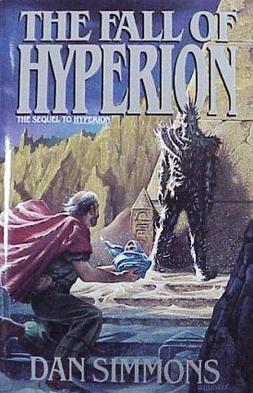
The Fall of Hyperion — Read Report

Book | E-book (affiliate links)

The Fall of Hyperion is the second book in the Hyperion Cantos. It is the sequel to Hyperion, and although the two Endemion books pick up a related story in the future of the same universe, the two Hyperion books really form a complete pair.

They are an interesting duo of books to compare. Hyperion has only a few long chapters, each a self-contained story. As the first half of a series, it makes little attempt to resolve loose ends. The Fall of Hyperion has a very large number of short chapters and has many mysteries to wrap up and plot points to resolve.

Severn, Gladstone, and the Pilgrims

Hyperion followed the stories of the seven Shrike Pilgrims, who make their way to the so-called Time Tombs, finding themselves alone in a dire situation as the galaxy sits on the brink of war. The Ousters, humans who long ago committed to life in wandering deep space colonies, face off against the Hegemony, a culture stradles hundreds of planets with instant-travel “farcaster” portals and a central government.

The Fall of Hyperion introduces the character of Joseph Severn, who takes his name from a friend of the ancient poet, John Keats. Severn is a “cybrid”—a hybrid of human biology and an AI personality, with the artificial memories of John Keats embedded in his mind. As if that weren’t enough, Severn is in some ways the twin of Johnny, the dead cybrid lover of one of the Shrike Pilgrims.

Severn is hired by Hegemony CEO Meina Gladstone, ostensibly to draw her portraiture in what is expected to become a defining moment of the Hegemony’s history. For most of the book, chapters alternate between Severn and the Shrike Pilgrims. The Pilgrims work to discover the mysteries of the Time Tombs and how they relate to the Shrike, a four-armed, semi-mythic, razor-covered metallic monstrosity that seems inextricably linked to the tombs and a far-future war where humankind fights for its existence.

It eventually becomes apparent that the chapters alternate because Severn has the unique ability to “see” the pilgrims’ activities in real time through his dreams, and it is because of this that Gladstone wants to keep him close.

The Hegemony’s war with the Ousters heats up and threatens to spill out of the Hyperion system, into the web of farcaster-linked worlds. But the pilgrims and Severn soon learn that the Ousters may not be the biggest threat. The Core of hyper-intelligent AIs, inventors of the farcasters and aloof patrons of the Hegemony, are revealed to be split into three competing factions. At least one of these is Hell-bent on creating a machine god and wiping out humanity.

The Challenges of Mythic Sci-Fi

The greatest strength of Hyperion becomes the main weakness of The Fall of Hyperion. The first book manages to build an epic space-opera universe and populates it with characters and stories pulled from other genres. The overall effect of the Pilgrims’ quest and their adventures is a mythical-feeling quest in a far-future setting.

Hyperion gets away with this partly because it only dips its toes into galactic politics and space wars and AI metaverses. But the sequel has to gather the loose ends into a somewhat logical and satisfying conclusion. As a result, it digs deeper into many of the sci-fi elements and strips away some of the hand-wavy magic of the universe by explaining how it all works. Of course, the AIs and quantum physics of eight centuries in the future are still magic, just with a technobabble vocabulary.

I do appreciate that the resolution really resolves the story (even if it does leave one very specific opening for the sequels). The two books make a satisfying series. But the second book feels more like “standard” space opera and doesn’t quite achieve the same highs of the first book.

That said, my favorite chapter across both books comes from The Fall of Hyperion, and follows Meina Gladstone as she traverses many worlds by farcaster on the eve of war. Rarely does sci-fi achieve such a sense long history in its setting or capture so well the feeling of insignificance in the face of a vast universe.

Is Dan Simmons Problematic?

Coincidentally, as I was re-reading these books, Dan Simmons passed away. I clicked through a few articles and quickly learned that he is widely considered problematic. I hadn’t come across much in these books that raised my hackles, so I ventured down the Internet rabbit hole to see what random strangers found objectionable.

The answer was mostly in his other books. It turns out historical and alt-history fiction is a more fertile ground for outright racist tropes. However, I did find some specific complaints with the Hyperion books, and I thought they offered interesting insights into modern readers.

Firstly, some people are just excited to pile on. Hating things online has long been a popular pastime, and hating on awful people has the added bonus of letting the hater feel superior and righteous.

A notable number of criticisms come from “readers” who pretty clearly haven’t read the material. They complain about unreasonable interpretations of the material, or complain about something insignificant when there are clearly better examples for their argument elsewhere in the books. At best, these are readers who quit after the first few chapters.

One critic took offense at the use of the r-slur by one of the characters, in reference to a tribe of people with a parasite that revives them whenever they die, but degrades their mental faculties each time. This is an interesting case, because the first book was published in 1989.

For younger readers unfamiliar with the history, I suspect it comes across as weirdly blatant use of a nasty slur. These readers seem unaware of the shifting moral terrain of scientific terms around mental disabilities over the course of the 20th century. I think it’s fair to assume that this particular usage of the r-word was considered relatively innocuous in ’89. The modern, offensive, and derogatory usage of the word (and pushback against it) came mostly in the following two or three decades. Similarly, the word “oriental” is used once or twice. That might have been a bit dated in ’89, but I don’t think it would have seemed nearly as off-color as it does today.

These books are “only” 40 years old, but that is enough time for the language and the culture to change. I may be the old man yelling at clouds, but this shallow maligning of the author’s intent and tone strikes me as willful disinterest in any non-negative interpretation.

That said, there are parts of these particular stories that don’t hold up well to modern sensibilities. Simmons indulges in a few Star Wars-style monolithic planets, including a Catholic planet, a Jewish planet, and an Islamic planet. None of these are explored in great detail, but the Islamic planet is suggested to be a place where holy war and fanatic religious hatred are normalized.

There’s also no question that the book embodies a full-on male gaze. It definitely doesn’t pass the Bechdel test. On a list of important characters, the top fifteen contains—at most—three women. Only two of them meaningfully impact the plot. And yet there are a number of sex scenes focusing almost exclusively on female anatomy.

Of course, sex in sci-fi is hardly a big deal, especially in a world where romantasy is a wildly popular genre. I’d also argue that the most gratuitous examples in these two books come from the story of the meathead action hero, whose focus on sex and violence make some sense for his character.

I don’t defend Simmons’s character. It certainly sounds like some of the books I haven’t read contain more racist and questionable material. For what it’s worth, the first two Hyperion books mostly avoid it.

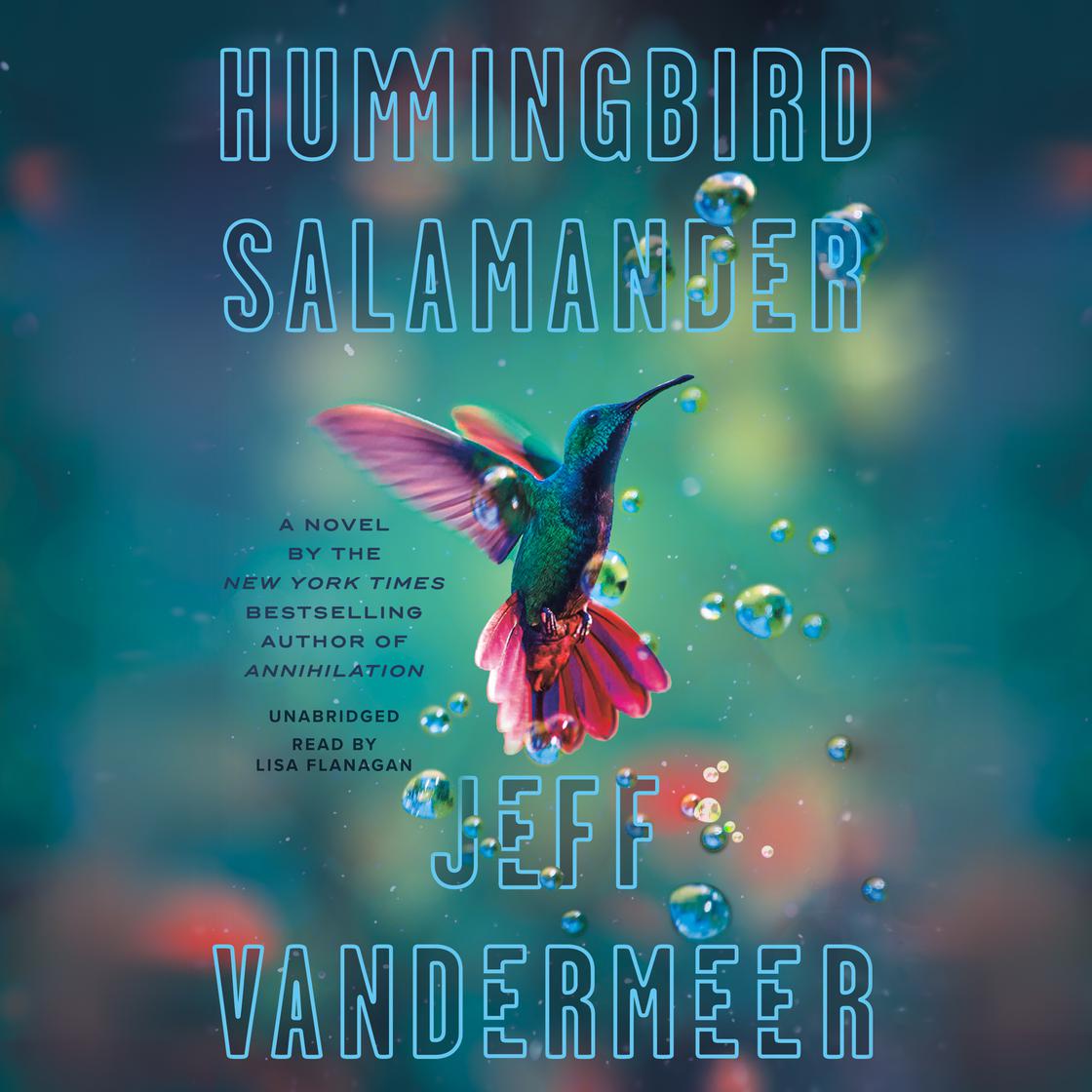
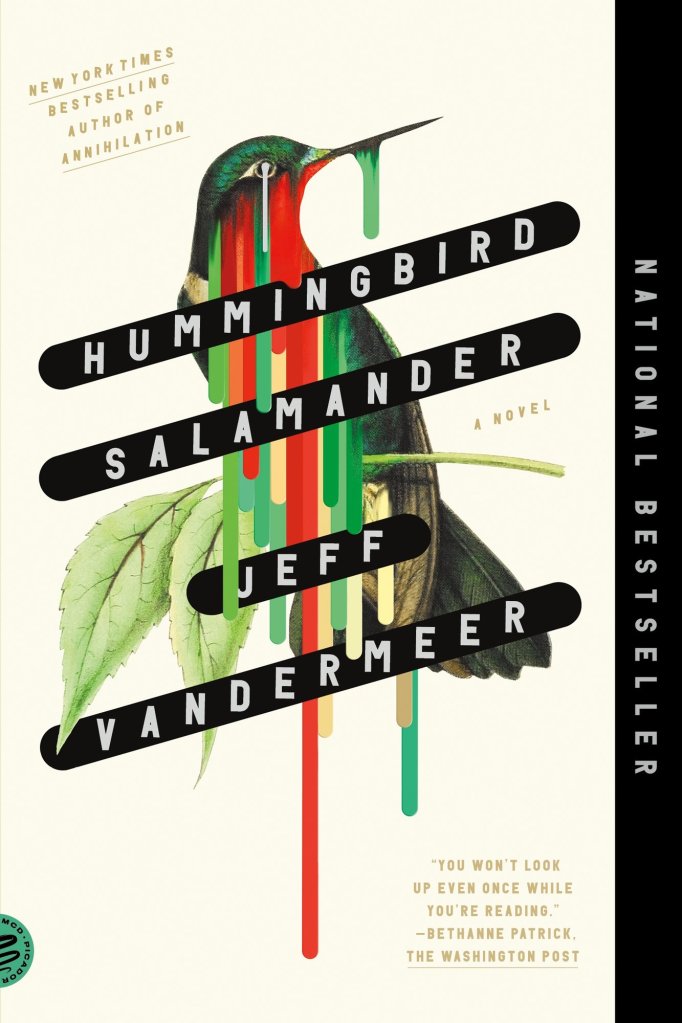
Hummingbird Salamander — Read Report

Book | E-book | Audiobook (affiliate links)

Jeff VanderMeer has hovered at the top of my favorite authors list since I read Borne and Dead Astronauts. The Area X trilogy only cemented that position. I had understandably high hopes for his latest book, Hummingbird Salamander.

Hummingbird Salamander stays close to the modern day in a way that will feel familiar to William Gibson fans. There are science fiction elements, but they are very restrained compared to VanderMeer’s previous work.

Borne was almost Joycean in a way that made it a challenging read. Hummingbird Salamander is much more straightforward, even if VanderMeer can’t stop himself from adding literary flourishes. It comes across as more of a suspense/thriller story than anything he has written in recent years.

Eco-Terrorism and Generational Trauma

It’s not particularly hard to pick out the bigger themes running through VanderMeer’s work. Ecology is the most obvious. His stories explore the ways humans interact with the world around them, and how social and technological factors intertwine with the natural world. Area X seems to exist in a relatively near future where climate change continues apace and a mysterious section of coastline is hidden behind government claims of a localized ecological catastrophe. The Borne stories describe a far-flung future city where most of what survives is the result of extreme genetic manipulation.

In Hummingbird Salamander, humankind’s fraught relationship with nature is again front and center. The story begins with a note that leads the protagonist, Jane, to a storage unit. The note contains the words “Hummingbird” and “Salamander,” with some mysterious dots in between. The storage unit contains an actual, taxidermied hummingbird of a variety that turns out to be extinct. These clues lead Jane into a deadly mystery that involves poaching and the illegal wildlife trade, as well as eco-terrorism and organized crime.

Jane lives in an America that is on the brink. Extreme weather is normalized. Ecological collapse is commonplace. Pandemics are perpetually imminent. It turns out that society fails in more of a whimper than a bang, and most things in life are getting slowly, steadily worse. But people still have jobs, family, and lives. Jane has all of these things. She’s a private security analyst, a mother, and a wife. She stands out as an unusually tall, strong woman who has excelled at weight lifting and body building, but has an otherwise normal, middle-class existence.

Another common theme among VanderMeer books is generational trauma, and in some ways this is just ecology at an individual level. A family is an environment, and as our current world is shaped by the mistakes made by our forefathers and ancestors, our personal hangups and dysfunctions are shaped by those who raised us, and those who raised them.

Jane’s dysfunctions are revealed slowly in fragments and flashbacks, only becoming fully apparent in the final third of the book. In many ways, this is the story of everything she does wrong, and why.

Where it All Breaks Down

Hummingbird Salamander is a well-written book. It has rich and detailed characters, an interesting setting, and touches on timely topics. And after some consideration, I have to admit that it is the most unenjoyable VanderMeer book I have read. This book and I have irreconcilable differences, and they are, unfortunately, at the very heart of the story.

From the first chapters, Jane is obsessed with the hummingbird and the mystery it represents. And sure, there is a reason for why the two words on the note would be important to her. But even with all the answers that are eventually revealed, I can’t help but feel that her obsession is unreasonable.

I might be able to overlook that questionable motivation if I had some sympathy for Jane. But in spite of her horrible upbringing, I find it hard to root for her. There are a handful of moments in the book where Jane shows affection for her teenage daughter and long-suffering husband, but these seem like afterthoughts. These people are hindrances, distractions from her obsessive pursuit of the central mystery. When it becomes apparent that unraveling the mystery might be dangerous, she barely spares a thought about how that could impact her “loved” ones.

In the end, she makes choices that destroy her family and ruin their lives, but she can barely muster a moment of self-reflection or regret. Her coworkers are caught up in the maelstrom. Strangers are hurt and killed because of her. She simply doesn’t care. She gets tougher and meaner as the book goes on, but she was cold and indifferent to begin with.

I will admit, as a husband and father of a teenage daughter I may be especially well-positioned to dislike Jane and her choices. Other readers with different backgrounds might have an easier time identifying with her and sympathizing. I enjoy flawed characters. I just need them to have enough redeeming qualities to get me on their side.

All Cloud, no Silver Lining

I think you’d be hard-pressed to find anyone who’d say VanderMeer’s work shows a positive attitude or hope for the future, but the pessimism has never been as apparent as it is here. A straightforward reading suggests that we might have to hit rock-bottom (as individuals and as a species) before things will get better. And even then, they might not.

Jeff’s other work balances that dark and dismal worldview with genuine strangeness and wonder. There’s a reason he was one of the leading voices of the New Weird/Slipstream movement. His worlds are shadowy and unfamiliar, but also unexpectedly delightful. Nobody loves a tidal pool the way this man loves a tidal pool. He describes coastlines like French poets describe their lovers. Hell, in Borne, the post-apocalyptic city is effectively ruled by a kaiju-sized, magically levitating super-bear, and the scariest villain is a regular-sized (but very menacing) duck.

There’s almost none of that here. The drones have gotten a little fancier and the world’s gone to shit. No impossible sci-fi. No crazy weirdness. Just a mysterious note in a grim world that eventually leads to violence and heartbreak.

The Missed Twist

I don’t want to be too down on this book, and I’ve already gotten more negative than I really like. The fact is, I plowed through it, and I did want to know the answer to the mystery. I wanted to know how it all turned out. But the entire time I was reading, I kept waiting for the twist that would help me finally understand Jane and why she was doing all this.

That twist never came.

Solarpunk Syllabus

I recently purchased a solarpunk anthology, and it led me into a minor fixation on this lesser-known sub-genre of science fiction. Last week I wrote an introduction to solarpunk, but I’ve barely scratched the surface. I’ve been exploring the web to find more, and compiling a little syllabus for my own self-directed course.

Since I’m taking the time to write it all down, I figured I might as well put it out as a resource for anyone else who is interested in digging a little deeper. (As usual, I’m providing Bookshop.org affiliate links where possible – these support me and local bookstores.)

It’s interesting to note that most of the solarpunk fiction I’ve found so far is anthologized short stories—fitting considering my renewed focus on short fiction this year.

Short Fiction

Novels

(Retroactively Categorized as Solarpunk)

Articles and Essays

Posts and Lists

Related

Solarpunk 101

The term “solarpunk” has been on my radar for a couple years: a fuzzy idea of a genre that has ecology and climate change near its center, and the overused “-punk” suffix that we can no longer trust to have much real meaning.

When I finally picked up an actual solarpunk anthology at my local Half-Price Books, the introduction sent me spiraling down an Internet rabbit hole. I found myself with 30 tabs of solarpunk open, at least that many already combed through, and a small pile of dead links and dead ends.

The term solarpunk is now more than a decade old, but it still exists in the periphery, the outskirts and wild country of sci-fi, futurism, fashion, and politics. It may be a short-lived idea that never achieves critical mass. Only time will tell if it’s something that has actually taken root and begun to grow.

As evidence of this tenuous position, I submit most articles, posts, and papers that mention solarpunk. The vast majority are just like this one: explanations that attempt to answer “What is it, really?”

And yet, there is a cult following. Among this small cohort, there is clearly a hunger for more of this genre and aesthetic. There appears to be a demand that far outstrips the supply (a couple anthologies, small online magazines, and a smattering of discourse).

I’d love to talk about where solarpunk might go, and how it can grow and gain traction. But I’ll have to save that for later posts. First, I have to start where everyone starts. What is solarpunk?

Origins

The first piece of Solarpunk literature generally cited is Solarpunk: Historias Ecologicas e Fantasticas em um Mundo Sustentavel—a 2013 Brazilian anthology, first published in English in 2018.

Another widely cited early work is a Tumblr post that popularized the term on that platform. The tag now has 20k followers.

Solarpunk – Notes Toward a Manifesto is a somewhat more academic treatment of the nascent movement and the ideas that influence it.

The Aesthetics of Solarpunk

There aren’t any. Not really.

Well, okay, that’s just my personal position. Others will disagree.

There aren’t any. Not really. This is my position. Others will disagree.

Plants and nature have an obvious place in it. Stained glass and art nouveau have been proposed as a component. Reclaimed and recycled materials, decomposable and natural materials; metal, glass, fabric, stone and wood. Less plastic. Or the polar opposite of Apple’s design philosophies.

A fair amount of ink has been spilled trying to corral an aesthetic, but these attempts often come at it from the wrong direction. You can’t start with an aesthetic and then back into a genre from there. The recognizable elements of cyberpunk and steampunk were distilled from many examples of those genres.

I’d argue that there simply aren’t enough popular examples of solarpunk to achieve the critical mass needed for generally agreed-upon aesthetics to emerge. That’s okay. It’s exciting. The field is still wide open, and resonant ideas still have a chance to shape what the genre might become.

The Politics of Solarpunk

If the “punk” in cyberpunk and steampunk ever held any political connotations, I would argue that they have long been ground down and worn out. The philosophy of cyberpunk is largely nihilistic: a wildly unequal world full of wealth disparity, desperation, and hopelessness, where the unification of corporate greed and governmental control has made the rich practically unassailable. If I were a cynic, I might say it’s a slightly grimier, neon-lighted version of the world we appear to be living in.

The politics of steampunk is anachronistic Victorian British, which isn’t much better.

Solarpunk might have more right to claim “punk” than its older siblings. It has an inherently political core: a belief that the average Joe has the duty to fight back against the status quo, that the system dominated by corporatism, greed, indifference to human rights, and ecological catastrophe must be overthrown. It’s a belief in individualism and self-sufficiency, but also in local small communities, human- and environmentally-conscious economics, and grassroots support systems.

This is a modern twist on the original punk movement of the 70s and 80s, strongly anti-authority and inherently suspicious of both government and corporatism. Wild and chaotic, but also joyful in a way that only people living on the edge of desperation can be.

Solarpunk currently has a streak of willful nonviolence (at least toward people). This, perhaps, runs contrary to the punk ethos that if The Man is going to push you down, you had better go down swinging, and knock some of his teeth out along the way. I suspect there might be a real audience for a rougher, more violent strain of eco-fiction like this, but I’m not sure it could call itself solarpunk.

The Challenges of Writing Solarpunk

The first challenge, as you might already suspect, is trying to define the boundaries of the genre and writing within them. Solarpunk invites you to choose your own adventure, and then find out whether others think you’ve hit the mark.

The second, and much bigger problem, I feel, is that solarpunk strives for a utopic vision, and utopias are dangerously boring. Nobody wants to read a story where all the challenges and difficulties have been smoothed out. That’s why so many utopias turn out to be dystopias once the protagonist discovers a few nasty truths.

Luckily, the road to utopia is rough, and there are plenty of solarpunk stories to be told along the way. I see the best place for solarpunk stories living in the time between the present and some glorious, distant future.

That brings us to the third challenge: imagining solutions to very hard, very real problems. We don’t live in a solarpunk utopia today because there are daunting technological, societal, political, and economic challenges that prevent it. Those conflicts and tensions are fertile ground for stories, but they also require some serious thought about how we should try to overcome them.

The soft sci-fi of technobabble problems and technobabble solutions don’t work well here. The readers of today are all too familiar with climate change, oligopoly, and enshittification. A story that proposes half-hearted or unrealistic solutions to these modern woes will fall flat. It’s not easy to imagine solutions (or even battle tactics) that feel plausible. And yet, this is one of the great delights of science fiction, and a reason why the genre continues to inspire the real future. People use stories to make sense of the world.

Future Positive

I hope this brief introduction has whet your appetite for more. Although it’s young, solarpunk strikes me as a genre that is shockingly well-suited to the current moment. We don’t need the nihilism of cyberpunk or the escapist fantasy of steampunk. We need something grounded and fighting mad.

Solarpunk takes the energy and anti-authority attitude of classic punk, and marries it with determined optimism and ethical technology. It is a rebuttal to the world outside the window, and an opportunity to imagine better futures.

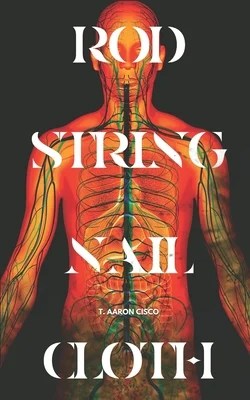
Rod String Nail Cloth: An Afrofuturist Mixtape — Read Report

Buy on Bookshop (affiliate links)

Rod String Nail Cloth was a random library pick containing six stories and a poem. It’s slim enough that I read it in the span of a Saturday afternoon. When I grabbed it I didn’t know anything apart from the title, but I’ve been meaning to investigate Afrofuturism for a while, and a short anthology seemed like a good place to start.

As it turns out, T. Aaron Cisco was born and raised in Chicago, but now lives in Minneapolis, so there’s a hometown connection for me. It also turns out that this is self-pub, and has a whiff of punk-rock “zine” to it. Unfortunately, it also has something like 20-30 typos and formatting errors across its 150-odd pages.

These stories revolve around themes of time travel, racial injustice, environmental catastrophe, and transhumanism. There are some interesting ideas in here, and some sentences and paragraphs that really pop. However, I found some of the writing straying too far into the literary style that I most struggle with: pages spent on a character’s languid internal thoughts without giving me enough plot or setting to latch onto.

The first story, “Now, Justice,” is the biggest offender in this regard. It follows a Black inventor who creates a machine that manipulates people’s perceptions. He uses it to take vengeance on a policeman who shot an unarmed Black kid and dodged the consequences. However, we don’t get to the first mention of the machine until page 17.

The subsequent stories were tighter, in my opinion. “Thursday Addison” is a Shonen anime of a story where a cybernetically enhanced enforcer is sent into a violent, futuristic battle that she barely survives.

“The Hesitant Envoy” is a tongue-in-cheek tale where an advanced civilization pulls aside one human to ask him to justify the continued existence of the species. He has a hard time coming up with a good argument, and isn’t particularly inclined to try.

 “Lydian Mode” is about a down-on-his-luck Black musician who travels back in time to 1960s Chicago. Despite the dangers of life at the height of the civil rights movement, he discovers that there are also opportunities.

“Captain Michaela” is a poem about the titular character (maybe?) saving the universe. I’m just the wrong audience for this. While I have my favorite poets and poems, I’ve never felt drawn to sci-fi poetry.

“Rod String Nail Cloth” is the stand-out story of the book for me, an epistolary story about a person sent far back in time to fix a broken world.

In “They Burn So Easily,” an apocalyptic virus turns people into still-thinking vampire/zombie creatures called Chalkies, more strongly affecting those with paler, less pigmented skin. It’s a story about choosing forgiveness and humanity even when it may be undeserved. The conflict in this one felt a bit rushed, and I would have been interested in a longer exploration of the setting, the premise, and the relationships between the characters.

Rod String Nail Cloth is, in parts: intriguing, goofy, and a little rough around the edges. It’s not going on my favorites list, but I’m happy to have read it, and I’ll keep an eye out for Cisco’s work in the future.

It also whet my appetite for more Afrofuturism, especially in short fiction. If you have any good recommendations, leave them in the comments.

Hyperion — Read Report

Book | E-book (affiliate links)

Reading the four-part Ender’s saga left me feeling skeptical of big, philosophical, late-80s sci-fi books.  Now I’m going back to that well with Hyperion.

I’ll be honest, Hyperion feels clever and stylish after Children of the Mind. Then again, Ender’s Game was the first and best book in the series. Hyperion is also the first book in a four-book series. So maybe I’m setting myself up for heartbreak all over again.

Canterbury Tales, in Space!

Hyperion opens with a frame story. A man we know only as the Consul is given instructions to go to the planet of Hyperion along with six others, on a mysterious pilgrimage. He goes, and meets his compatriots:

  • Het Masteen, captain of the spaceship that will transport them, which just so happens to be a giant tree.
  • Father Lenar Hoyt, a Catholic priest in a galaxy where Catholicism is nearly extinct
  • Colonel Fedmahn Kassad, a soldier of the galaxy-spanning Hegemony’s military
  • Martin Silenus, a centuries-old poet who has journeyed between stars and across time via relativistic space travel
  • Sol Weintraub, a scholar, who brings his baby daughter Rachel
  • Brawne Lamia, a hard-boiled private detective

When the pilgrims arrive at Hyperion and introductions are made, they come to an agreement: they will each tell the story of why they came as they make the long journey from the spaceport to their final destination, the Time Tombs. There, they expect to find the Shrike, a mythic creature made entirely of razor-sharp blades. Supposedly, he will choose one of them to grant a boon, and the others will be sacrificed.

As the journey gets underway, each pilgrim tells their story in turn. Between the stories, they travel across the planet toward their destination. It’s a bad time to return to Hyperion. The planet is poised to be the first front in the largest war humanity has ever seen, between the Hegemony and the long-exiled Ousters, who live strange lives in their deep-space ships. The Time Tombs—in what cannot be coincidence—appear to be opening, and nobody knows what will come out.

A Slowly Woven Tapestry

The structure of the book allows Simmons to expand the scope of ideas slowly. The unexplained and confusing in one story is addressed and answered in another. It allows the reader to assemble these small pieces into a detailed and rich setting.

Through the pilgrims’ stories, we begin to understand the galaxy they inhabit and the ways their paths have crossed Hyperion and the Shrike to bring them to the current moment. From Silenus we learn about Old Earth and the Big Mistake, a man-made black hole that slowly (and then quickly) devoured the planet, forcing the Hegira to many worlds. From Father Hoyt and Saul, we learn about Hyperion, it’s inhabitants, and the Time Tombs. From Kassad and the Consul, we learn about the armies of the Hegemony; the many rebellions quashed and small wars fought by a supposedly peaceful and democratic government. From Brawne, we come to understand the vast web of farcaster portals that allow instantaneous travel between Hegemony worlds, and the mysterious society of AIs who control them and remain apart from humanity while ostensibly guiding and helping them.

The book paints rich portraits of a handful of specific worlds. Dan Simmons manages to make almost every setting in the book genuinely strange and interesting. A planet wracked with storms, a sea of grass navigated by gyroscopic sailing ship, a 1.3g planet where the people live in vast arcology-like “hives,” a bus-sized cable-car over snowy mountains, an ocean world where people live on island-sized migratory creatures, and a vast capital city where the rich live in houses where every room is a portal to a different planet.

This feels like a universe with a history, a big universe populated by billions of people across dozens of worlds, and all the diversity that represents. It’s full of beauty and weirdness. And yet, the same human sins and weaknesses are still there, still causing problems.

Each pilgrim brings a different perspective to their story, which allows Dan Simmons to shift style and tone throughout. Kassad’s story is full of sex and violence, a pastiche of military sci-fi, while the Consul’s story is more of a historical documentary. Brawne’s story is a cyberpunk noir where the detective inevitably falls in love with her dangerous client. Sol’s story is that of a father desperately trying to save his sick child. These different styles help to keep the book constantly fresh, and each reveals new pieces in the puzzle of what’s really happening on Hyperion.

In the Ender Saga books, the relativistic effects of space travel were a promise that never really delivered. Nobody apart from the main characters traveled between worlds, and it seemed that nobody could even imagine that someone might live for hundreds of years by traveling between stars while time passes by.

In Hyperion, relativistic space travel is a part of life. The Web of Hegemony worlds are connected instantaneously via farcasters, but each world starts as a colony whose inhabitants took a many years to arrive, and even longer to build their first farcasters. Conflicts often arise between the original settlers, or indiginies, and the flood of tourists that inevitably come with joining the web.

Style Plus Substance

Ultimately, I think a lot of what I enjoy about Hyperion comes down to Dan Simmons’s writing style. It incorporates literary flashes and delightfully crafted language, while maintaining the workmanlike plotting and characterization that a mainstream science-fiction audience would expect…especially in the late 1980s.

For a thirty-five year old novel, Hyperion still feels fresh and interesting. It’s doing a lot, and doing most of it well. If there’s anything to critique, it’s that the book sets up some big mysteries and leaves the biggest ones unresolved. I believe the four books in the series are really a pair of duologies, so I expect to get most of the answers in the sequel, The Fall of Hyperion.

Computational Literature — The Story Idea Vault

It’s a common misconception that a great idea makes a great story. The truth is that most great stories come down to execution. A great idea with poor execution rarely works, but a great writer can breathe new life into even the most tired tropes.

Like any writer, I have my own treasure trove of ideas that might end up in a story…someday. But why horde them? Instead, I’m opening the vault and setting them free.

Use these ideas as a writing prompt, or come up with your own twist and reply in the comments.

Computational Literature

Early on, computer programming was valued for its practical uses. It overturned industry and transformed society. It was deemed a science, even if computer science wasn’t as rigorous as physics or chemistry.

There were always those who saw the artistry in programming, the code golfers, makers of esoteric languages, and high-minded software architects. But what does artistry matter in the face of trillion-dollar industries and socioeconomic upheaval?

That was before Gustav Nacht, classical painter turned web designer. In retrospect, it’s clear that his genius was on par with greats like Mozart, Nabokov, or Van Gogh. At the time, nobody took his School for Computational Literature seriously.

Nacht pioneered programming languages that were as expressive for humans as they were for computers. Ernest was a language as terse and evocative as the writing of Hemingway, while Faulkner was a language as verbose, complex, and non-linear as the stories of its namesake.

It took decades, but by the time of Nacht’s death, non-programmers reading computational literature had become commonplace, and the ability to program finally seemed destined to become ubiquitous, as more and more people discovered these accessible gateways into the practice.

Nacht’s best students carried on his work, and while some fans might suggest that nobody would ever attain the same artistic heights as Nacht himself, most readers found subsequent generations even more enjoyable.