The Read Report — April

It’s Spring. Here in Minnesota it may be 40 or 80 degrees on any given day. The animals have that springtime energy. The kids can sense that summer is almost in spitting distance. But there are also those notorious April showers, and some cooler days, and plenty of reasons to curl up inside with a good book. Let’s talk about some of them.

Where possible, I include Bookshop affiliate links instead of Amazon. If any of these books pique your interest, please use those links. I’ll get a tiny commission, and you’ll support real book stores instead of scalp polish for Jeff Bezos.

Audio Books and Libro.fm

I recently decided to try audio books as a way to “read” more while I’m driving, folding laundry, or performing other mundane tasks. I was excited to discover Libro.fm, an audio book alternative to Amazon’s Audible, much like Bookshop.org has become my default option for buying paper books.

While Bookshop is a B Corp and Libro is a Social Purpose Corporation, both share profits with local bookstores and seem to have a moral framework beyond simple money-making. While the moral aspects of my purchases have become increasingly important to me, I’ll also note that both of these websites (and in Libro’s case, their mobile app) are well-constructed and easy to use, and the buying experience is very good. So I don’t feel like I’m missing out or working harder for the same product.

The first audio book I purchased through Libro was Jade City, by Fonda Lee.

Jade City

By Fonda Lee

I could tell immediately that Jade City fits my fantasy sensibilities perfectly. There are no elves or dragons to be seen, no medieval castles. Yes, the story takes place in a secondary world, and yes, there is magic in that world, but it feels grounded and real. High fantasy this is not.

The story takes place in the small, Asian-inspired island nation of Kekon, and almost entirely in the capital city of Janloon. The country is in a transitional period in the decades following the Many Nations War, a world war which distracted colonial overlords long enough for native, magic-imbued freedom fighters to drive them out.

As is often the case, without a shared enemy to fight the guerrilla army fractures into feuding clans. While there is an official, somewhat clan-neutral government over Kekon, these clans have an effective monopoly on magic and exercise significant power. They operate like mafia houses with spiritual, commercial, and governmental components,  controlling and battling over territory. The fight to free the country from outsiders is still within living memory, but that memory is fading.

Although the world of Jade City is in the early stages of industrial revolution, with cars being commonplace and guns only slightly less so, the magic is decidedly wuxia, focusing on close-range martial arts fighting with knives and swords. Even then, the magic serves to move the plot as a political and social element, and only occasionally comes to the fore in tense life-or-death battles.

Magic is derived from bio-reactive jade, and this jade is only to be found in Kekon. Moreover, not everyone can use jade. It requires a genetic component, luck, and training.

However, there is a loophole. A drug has recently been invented—SN1 or “shine”—that allows those without aptitude and genetics to use jade. It threatens both the political order of Kekon and the Kekonese control of jade. Larger powers out in the world are eager to get their hands on both jade and the means to use it, and most of them are indifferent towards Kekon.

Within this complex historical and geopolitical backdrop, the story follows a single family: the Kauls, leaders of the No Peak clan. They are one of the largest clans, second only to the Mountain clan. But the longstanding equilibrium is broken as the Mountain makes moves to consolidate power inside and outside the island, no longer following the codes of honor that have long bound the actions of jaded “greenbones.”

Jade City is a family drama, as well as a political and crime drama. It’s Wuxia Godfather. It’s a fantastic first entry for a fantasy trilogy, and I’ll definitely pick up the sequels.

Hellblazer Vol. 12 – How to Play With Fire
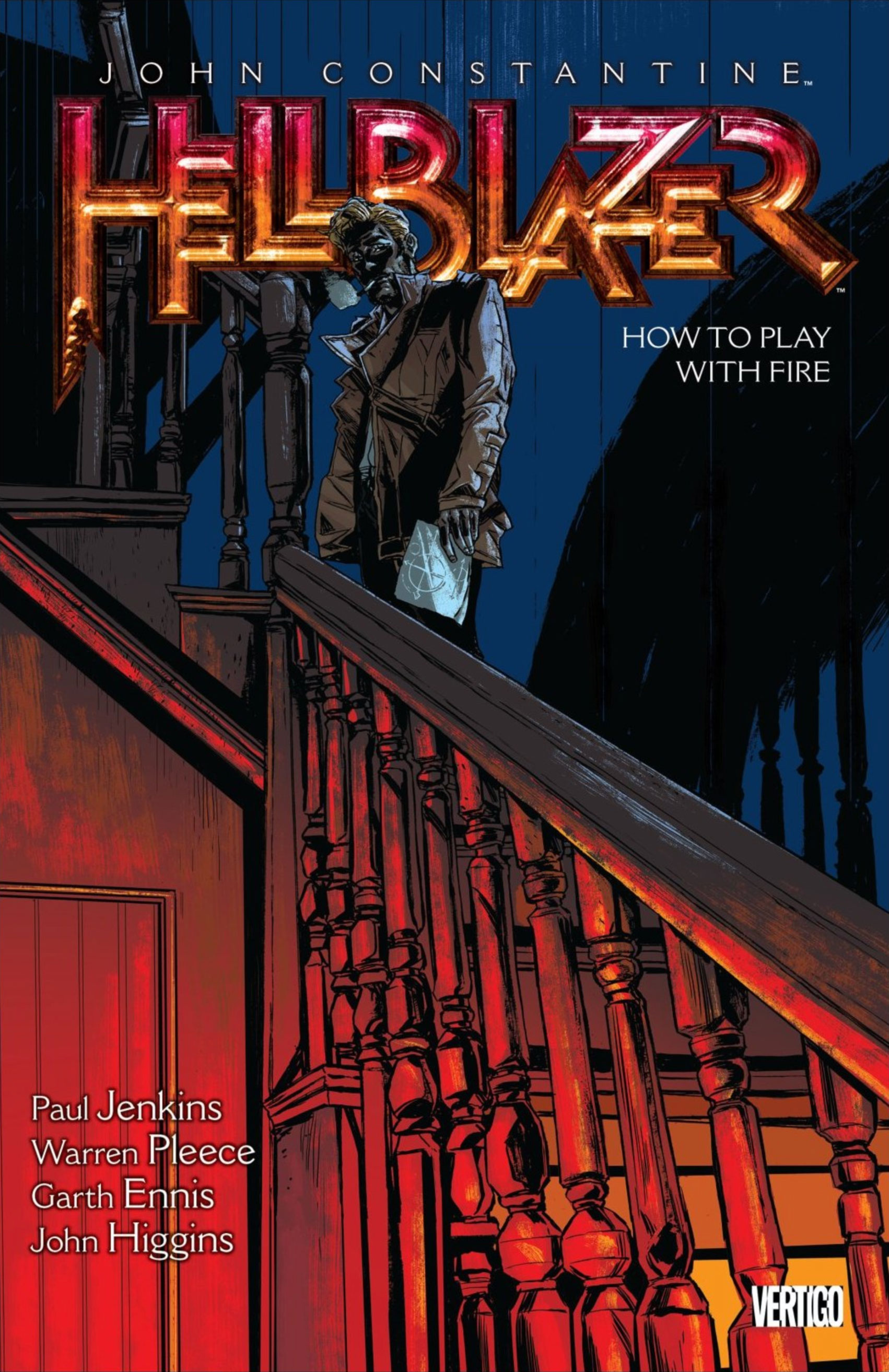
By Paul Jenkins, Warren Pleece, Garth Ennis, John Higgins

There are questions you ask at the start of any Constantine story arc. Which old enemy is going to show up? Which estranged friends? What terrible thing is going to happen to this girlfriend? Does the big bad evil plan to wreck up the entire planet, or only London?

This trade paperback collects three story arcs, four issues each. In the first, Constantine is in New York to meet the latest girlfriend’s family. And for some reason, he’s up against that classic villain, Satan. But the devil isn’t raining down fire and brimstone, he’s unleashing some kind of overly-vague psychic malaise on New York, the girlfriend’s family included. Of course, John manages to save the day with the help of the girlfriend’s grandpa and a psychic he happens to know. Or at least he clears off the bad mojo from her family. Everyone else is on their own.

This arc really felt like filler to me. The actual danger is described in such vague terms, and the solution is just as unclear. I don’t need every story to conclude with a beatdown of the villain, but I do need to actually understand what’s going on, and as far as I can tell the plot of these issues seems to be that America is psychically sick, and the only cure is to share memories with boomers who know what it means to really live.

The second storyline is classic Hellblazer, with old friends turned to enemies and demonic forces desperate to get even with Constantine. As usual, everything in John’s life begins to fall apart. His buddies are estranged and his girlfriend leaves him. But all it takes to fix it is making a deal with the devil.

The final arc is the best of the bunch. John’s friend Chas gets accidentally mixed up in some gangster business and hopes that Constantine can get him out of it. Unfortunately, John has history with these gangsters too—he once did them a dangerous favor that ended in a little bit of demonic possession. This one does end in a proper showdown with a big nasty demon. So maybe that is something I need in a Hellblazer story to really enjoy it.

American Gods

By Neil Gaiman

I last read American Gods about two decades ago. It holds up pretty well, all things considered.

It is a love letter to America and especially the Midwest, a novel whose story runs across rural highways and through chintzy roadside attractions. It looks on America kindly, but also observes our weaknesses and foibles as only an outsider can.

In American Gods, there is a spiritual void in modern America, and the gods are dying. They are being forgotten, their worshipers dwindling. In their place, new concepts ascend: media, the internet, and mysterious three-letter government organizations. And yet, for some, the transition can’t happen soon enough. Among the new gods, there are those who aren’t content to let the old gods fade. They want blood.

Meanwhile, Shadow is getting out of prison. He’s served his time and he’s going home to his wife. He has a job lined up. Then, right before release, he finds out that his wife is dead, and everything falls apart. That’s when he meets an old man who calls himself Mr. Wednesday, and Shadow is pulled into the war among the gods.

The end hinges on several surprise twists, which are nicely telegraphed, but not obvious. The final chapters are satisfying without being glib or wrapping things up too cleanly.

Acknowledging Monsters

I would be remiss to write up this book without acknowledging the recent accusations against Gaiman. His stories never shied away from dark topics like sexual assault—which once seemed like a clear-eyed view of an often terrible world. Now, it comes across as something more personal and disturbing.

I won’t argue for or against the death of the author. I can understand appreciating a piece of work, even while disagreeing with or hating the author. I’ve certainly enjoyed stories by authors like Card or Heinlein while vehemently disagreeing with their politics and social views. I also can’t blame anyone who can’t (or doesn’t want to) separate the author and the story.

There are things I love in many of Gaiman’s works. I would have called myself a fan of his not so long ago. It’s unfortunate that those stories will now be tainted. They will always have that dark coda attached.

What I’m Reading in April

Hey, it turns out audiobooks are pretty cool. I can turn a lot more of my mundane task time into listening time. And what I’m listening to next is the Area X trilogy by one of my favorite literary SFF authors: Jeff VanderMeer. I’ve also got short fiction by Ted Chiang, and maybe a couple other things from the TBR pile. See you next month.

The Read Report — July 2024

Since I took a month away from blogging in June (and I was so busy that I only read one book), this will include my June reading as well.

Where possible, I’ve included Bookshop affiliate links instead of Amazon. If any of these books pique your interest, please use those links. I’ll get a small commission, and you’ll support real book stores instead of a fifth vacation house for a billionaire.

Going Postal

By Terry Pratchett

This is my favorite Discworld book, and Pratchett is at the top of his game. There are a couple of additional books that came after this, but sadly he was likely fighting dementia at that point, and I think later books like Unseen Academicals suffered for it.

Moist von Lipwig is a confidence man who starts the book by getting hanged. He’s given a reprieve by Vetinari, ruler of the city, and given the job of postmaster. The Ankh-Morpork post office is a dilapidated disaster, but he’s aided by Mr. Pump, a golem bodyguard/probation officer, the elderly “junior” postman Groat (who attributes his health to horrifying homemade herbal remedies), and the young postman apprentice Stanley, a boy who isn’t quite all there and has an abiding obsession with collecting pins.

Moist spends the first half of the story looking for ways out of his forced government service. However, he’s a showman at heart, and he soon discovers that his brand of hype and hyperbole is well-suited to getting people excited about sending mail. Unfortunately, the post has largely been replaced by Clacks—a network of semaphore towers that act as a fantasy telegraph system.

The Clacks were built by high-minded engineers, but the original owners have all been ousted or murdered by clever corporate raiders, who are doing their best to extract as much value as possible while running the whole company into the ground. By delivering the mail once again, Moist finds himself in their crosshairs, and it doesn’t help that he’s falling in love with Adora Bell Dearheart, the disaffected, chain-smoking daughter of the Clacks’ dead founder.

Pratchett is a fantastic comedy writer, but he doesn’t get praised enough for his intricate plots or his characters that make you care, even if they’re all rather silly. This book is filled to the brim with all of that. If you’re only going to read one Discworld book, it should be Going Postal.

Poison for Breakfast

By Lemony Snicket

This was a re-read with my children. It is still one of my favorite books, and you can read my review from a couple years ago.

Ender’s Game

By Orson Scott Card

Another re-read with my kids. This was a formative sci-fi book for me when I was young, and it holds up fairly well.

This is one of those books with some content that some adults probably wouldn’t want their kids reading, like children murdering other children. And yet, my children really enjoyed it, and didn’t seem especially traumatized. I guess we’ll see how they turn out.

I appreciate that Ender’s Game is populated by many characters who do terrible things, but the narrative is not judgmental. As a reader, you’re free to form your own opinions about whether each character’s actions are justified or reasonable, without feeling like the book is trying to steer you to a particular conclusion.

It’s a book about growing up, and war, and the terrible things people do to one another, often for reasons that seem justifiable or even absolutely necessary at the time. It is also about the way that history often judges those actions in its own context, ignoring those justifications.

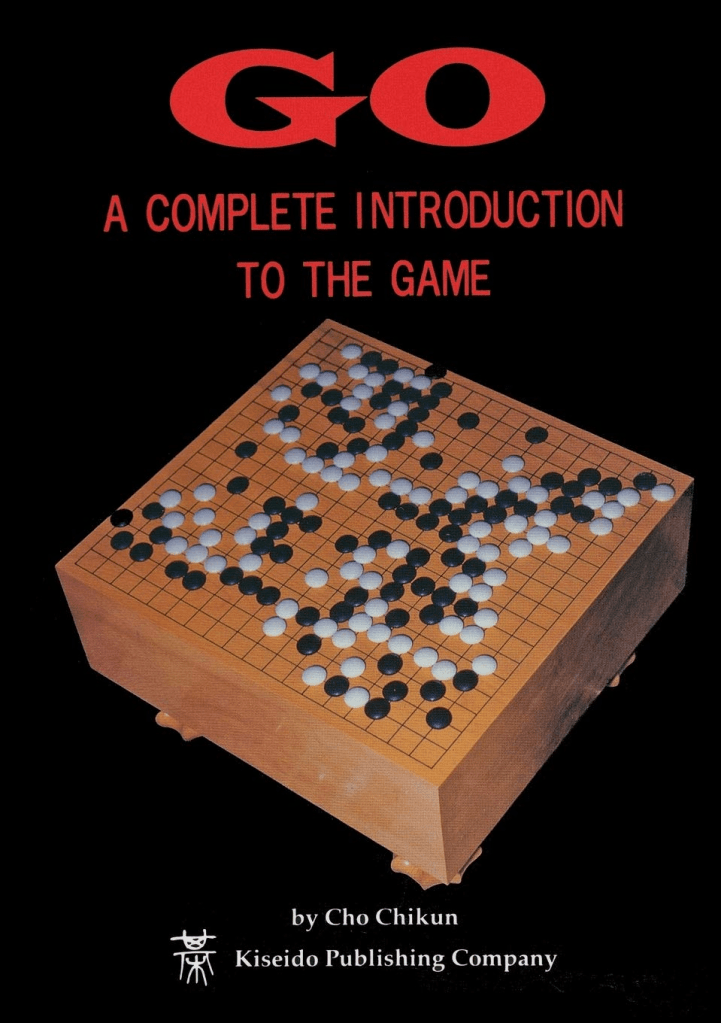
Go: A Complete Introduction to the Game

By Cho Chikun

As I was getting back into Go, I re-read this excellent beginner’s guide in the SmartGo app. Cho Chikun is one of the most famous professional players in modern times, and the Japanese player with the most titles.

This book deftly introduces all the important aspects of Go rules and basic strategy, while alternating chapters about the history and cultural significance of Go. It’s a perfect introduction to the game (or re-introduction, in my case).

Double Digit Kyu Games

By Neil Moffatt

Another book from my SmartGo library.

In amateur Go, players start at a rank of 30 kyu. As they improve, their rank decreases down to 1 kyu, then to 1 dan, and up to 7 dan. As you might expect, players with double digit kyu ranks are beginners and casual players.

While most books about Go are written by pro players for obvious reasons, Moffatt wrote this as a moderately high (1 kyu-ish) amateur. He’s close enough to still remember and understand why the players of these games make the mistakes they do.

Moffatt also goes into more detail than usual in explaining the merits and disadvantages of each move, often exploring various alternatives. They result is a set of thorough game deconstructions that are very useful aids for an amateur player to recognize their own shortcomings.

Lore Olympus, Vol. 1

By Rachel Smythe

I bought this on a whim while on vacation, mostly on the authority of a positive blurb by Kieran Gillian (of Die and other comics), and a brief skimming of the art. Unfortunately, this book was not for me.

I don’t read a lot of romance, but I’m not strictly opposed to the genre. This, however, was just too much irritating teenage angst and not enough mythology for my tastes. When the romance hinges on everybody being afraid to voice how they feel, and the conflict stems from people hating each other for basically no reason, I get bored.

As far as the art goes, the character work is nice, but these characters live in a world composed of colored smears. This lack of any background detail is something that seems to be more and more common in indie comics, and while I understand it, I do miss the crispness that you see more in high budget superhero comics.

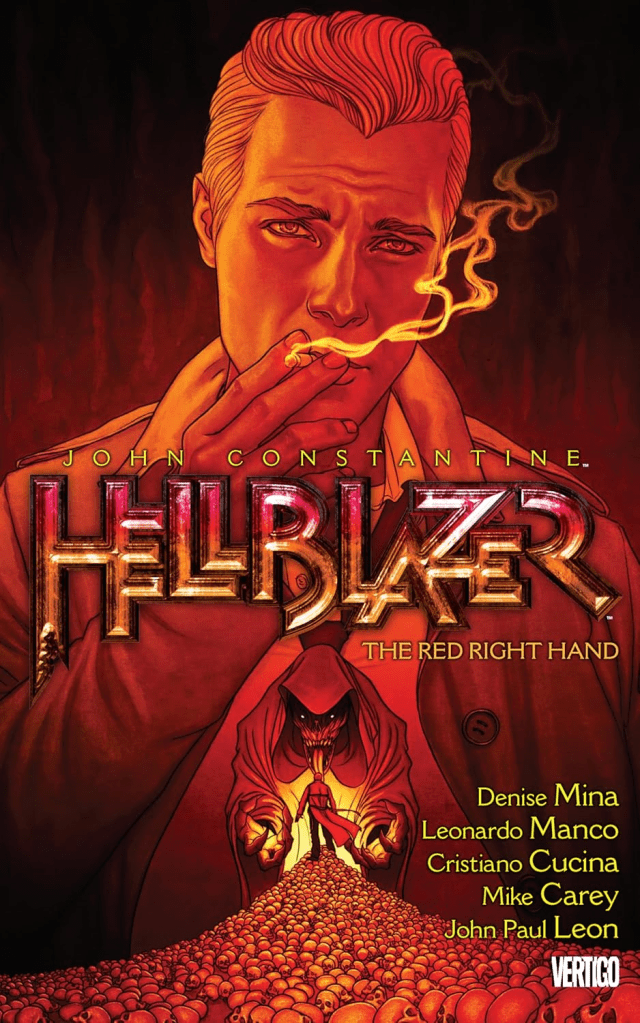
Hellblazer: The Red Right Hand

By Denise Mina and Mike Carey

Illustrated by Leonardo Manco, Cristiano Cucina, John Paul Leon

I do love me some John Constantine, but this collection wasn’t my favorite. There are two story arcs here: one where Constantine enters into a trap, and one where he gets out of it.

The typical Constantine story usually has a mystery twist, and this is no exception. Unfortunately, the twist didn’t shock me, it just made me shrug. Maybe if I were reading the series in sequence I would be better prepped as a reader.

It’s also not uncommon for Constantine to have some plan that only gets revealed when everything seems hopeless. Here, he doesn’t have much of a plan at all.

A collection of Constantine’s friends show up midway through, and it feels like deus ex machina, but even they don’t actually do very much. They muddle through, and the eventual resolution to the situation hardly feels like any of the characters had agency.

The last issue in this volume is a stand-alone one-off story, and it’s a classic, solid Hellblazer story. It made me a little sad that the rest of the book didn’t hold up as well.

The Read Report — May 2023

Good God, I read a lot of books in May. You can find out more about why in another post.

I don’t have the desire or time to write full-on blog posts for every book I read, but I’ve come to appreciate how blogging gives me an opportunity to reflect a little bit more explicitly on what I got out of a book. So, I’m going to start writing these monthly posts to talk about what I’m reading.

If you’re interested in any of these books, please use the included Bookshop.org links instead of Amazon. It helps independent bookstores, and I get a small affiliate commission.

Ways of Being: Animals, Plants, Machines: The Search for a Planetary Intelligence

By James Bridle

This triply-titled book is the kind of non-fiction that is perfect for fiction writers. It’s full of interesting ideas that could spark a story. Bridle is a little bit “out there,” but this exploration of intelligence comes at an old topic from an interesting perspective.

The book postulates that we should consider a lot more under the umbrella of intelligence than we typically do. The human definition of intelligence always seems to be “things that humans do,” and Bridle argues that this definition dramatically limits our understanding of the universe.

As you might guess from the title, Bridle argues that various animals, plants and machines all have their own varied forms of intelligence, often radically different from our own. He provides some interesting examples to back up his opinions, although some of the leaps of logic toward the end of the book didn’t quite land for me.

The Way of Zen

By Alan Watts

This is an introduction to the basics of Zen Buddhism, along with some history and context.

Alan Watts was an odd duck. A British-born writer and speaker who gained popularity after moving to California in the 1950s, he was a priest before becoming enamored with Asian religions and philosophy, and he found a receptive audience in the hippie movement.

I don’t really know if Watts is much appreciated in more mainstream or traditional Zen circles, but he has an entertaining style and a knack for explaining abstract concepts through metaphors and parables aimed at a western audience. His many recorded philosophical lectures have found new life on the internet in the YouTube era.

Becoming a Writer

By Dorothea Brande

I wrote a whole post about this one.

The Black Tides of Heaven / The Red Threads of Fortune

By Neon Yang

A fun pair of fantasy novellas set in an Asian-inspired secondary world. Despite a pair of royal twins and a magic system based around elements, these books feel original and fresh. Quick reads full of action and adventure.

What I really appreciated about these books was that all of the magical fantasy action was driven by relatable and varied interpersonal conflicts: disagreements between parents and children, irritation with in-laws, and the loss of loved-ones.

The first book also successfully tricked me into believing that it would end with a big fight, then switched it up at the last second and gave me a more cerebral conclusion.

Animal Farm

By George Orwell

Originally published in 1945, Animal Farm is a skinny little book that Orwell sometimes described as a fairy story. It’s a modern (for its day) fable about a group of animals that take over the farm, only to have their noble rebellion slowly subverted back into tyranny.

I’ll be the first to say that allegorical novels aren’t exactly the sort of thing I’m very excited to read, and I probably wouldn’t have read this if it wasn’t considered such a classic. However, it’s a very quick read, and entertaining enough that I didn’t regret it.

In many ways, this book feels like an early prototype of Orwell’s 1984, which was published only four years later. Many of the same ideas appear in that book, but in less simple, satirical forms.

The Wes Anderson Collection / The Grand Budapest Hotel

By Matt Zoller Seitz

These are big “coffee table” books with some great illustrations and images from the movies.

The original book spent a good amount of time on each of Anderson’s first seven movies. While I’m not much of a movie critic, I do have an appreciation for experts talking about the things they love. This was an interesting look into that world. While a lot of it is specific to filmmaking, there are some useful tidbits about building good stories in general.

The second book is a bit thinner, but focused entirely on a single film. For my money, Grand Budapest is Anderson’s best work, but this still felt like more of a deep dive than I needed on the one movie, especially when contrasting it with the first book.

While they may make more of these books as the director continues to make movies, I think these two were enough to satisfy me, and I’ll get off the ride at this stop.

Flash Futures

(Anthology, edited by Eric Fomley)

This was one of my backer rewards from a Kickstarter for The Martian magazine. It’s an anthology of sci-fi flash fiction, generally on the darker side. I have to admit, while there were some enjoyable stories here, I prefer the drabbles on the site.

I think flash fiction is one of the hardest formats to write. I enjoy drabbles and micro-fiction because it’s hard to even tell a coherent story at that length. Pulling it off is a bit of a magic trick. At the 500 or 1000 words of a flash piece, you still can’t tell very much story, but you also don’t have the incredible tightness of a drabble, where you’re fighting to fit every single word and forced to cut words in clever ways.

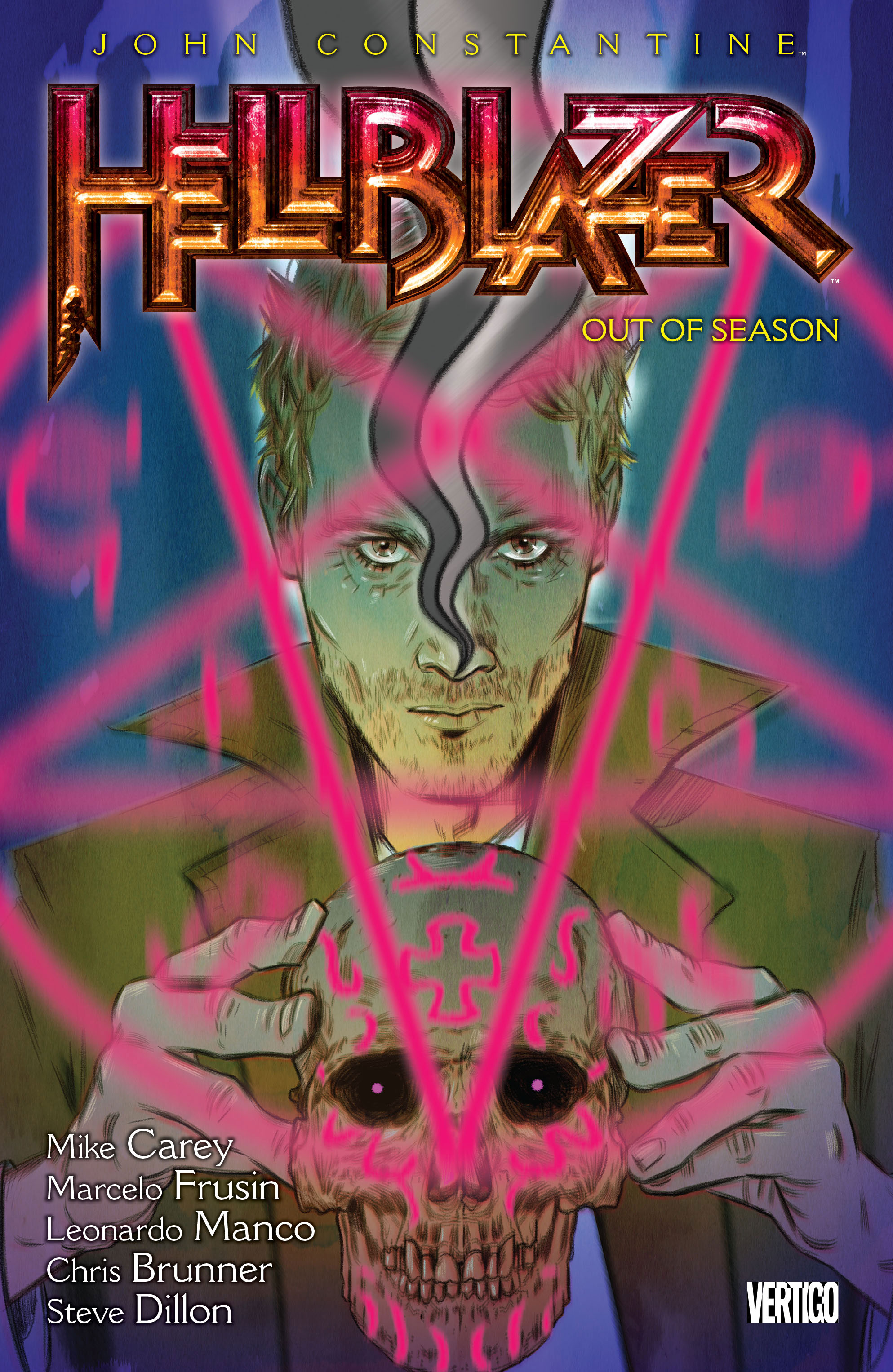
Hellblazer: Out of Season (Volume 17)

Written by Mike Carey

Art by Chris Brunner, Leonardo Manco, Marcelo Frusin, Steve Dillon

This was a random pick from the library.

I love Constantine as a character, and his whole milieu, but how many times can there be a worldwide supernatural apocalypse event? It seems like it happens every year or so in these books. I really prefer the smaller, more intimate story arcs that focus on just how miserable it is to be in Constantine’s social circle.

I will say, this is a pretty great connecting arc. The twist at the end is interesting, and it creates new characters and problems. It’s a great example of finishing a chunk of episodic story by building a lot of new scaffolding that future stories can be built upon. That’s not always an easy thing to achieve. Good lessons for anyone who wants to write a series.

The Sandman: Overture

Written by Neil Gaiman

Illustrated by J.H. Williams and Dave Stewart

Not my first time reading this, and it won’t be my last. If you love comics and you haven’t read this book, you are missing out.

It is, by far, the most beautiful Sandman book, and that is a high bar. There are no straight-edged standard panels here. It’s a master-class in all the different ways a comics page can be composed. While the original Sandman was often very dark and brooding, Overture contrasts its serious blacks with all sorts of psychedelic color.

I’ve read some complaints about the story not being as good as the originals. And that might be true, but I also don’t think it’s too far off the original series. Neil Gaiman does his usual Neil Gaiman things, crafting stories that feel simultaneously new and old, familiar and strange, playing around in one of the worlds where he is most comfortable.

Although this is a prequel, I think it definitely ought to be read after the original run. Narratively, the story comes before the other books, but the references and emotional beats are clearly designed as a follow-up.

Reading this again gave me the itch to read even more Sandman. So…

Sandman: Preludes and Nocturnes (Volume 1)

Written by Neil Gaiman

Illustrated by Sam Keith, Mike Dringenberg, Malcolm Jones III, Kelley Jones

The big, bad original, from the early days of DC’s Vertigo imprint.

Despite Morpheus (a.k.a. Dream) being almost infinitely old when we first meet him, this is a fantastic origin story. It’s a satisfying arc in its own right, as Morpheus is trapped, escapes, and then has to regain his tools and repair his kingdom. It also sets the tone for the entire series: a delightful mix of modern and ancient stories in a new mythological frame.

Almost all of the issues collected here are dedicated to the main plot, with the exception of the final one. “The Sound of Her Wings” remains one of the greatest single issues of a comic of all time, characterizing Death as a whimsical, kind, and profoundly compassionate older sister to Dream.

What I’m Reading in June

In June I’ll be continuing my re-read of the original Sandman series. I’m also delving into the Witcher series and a brand new TTRPG.