
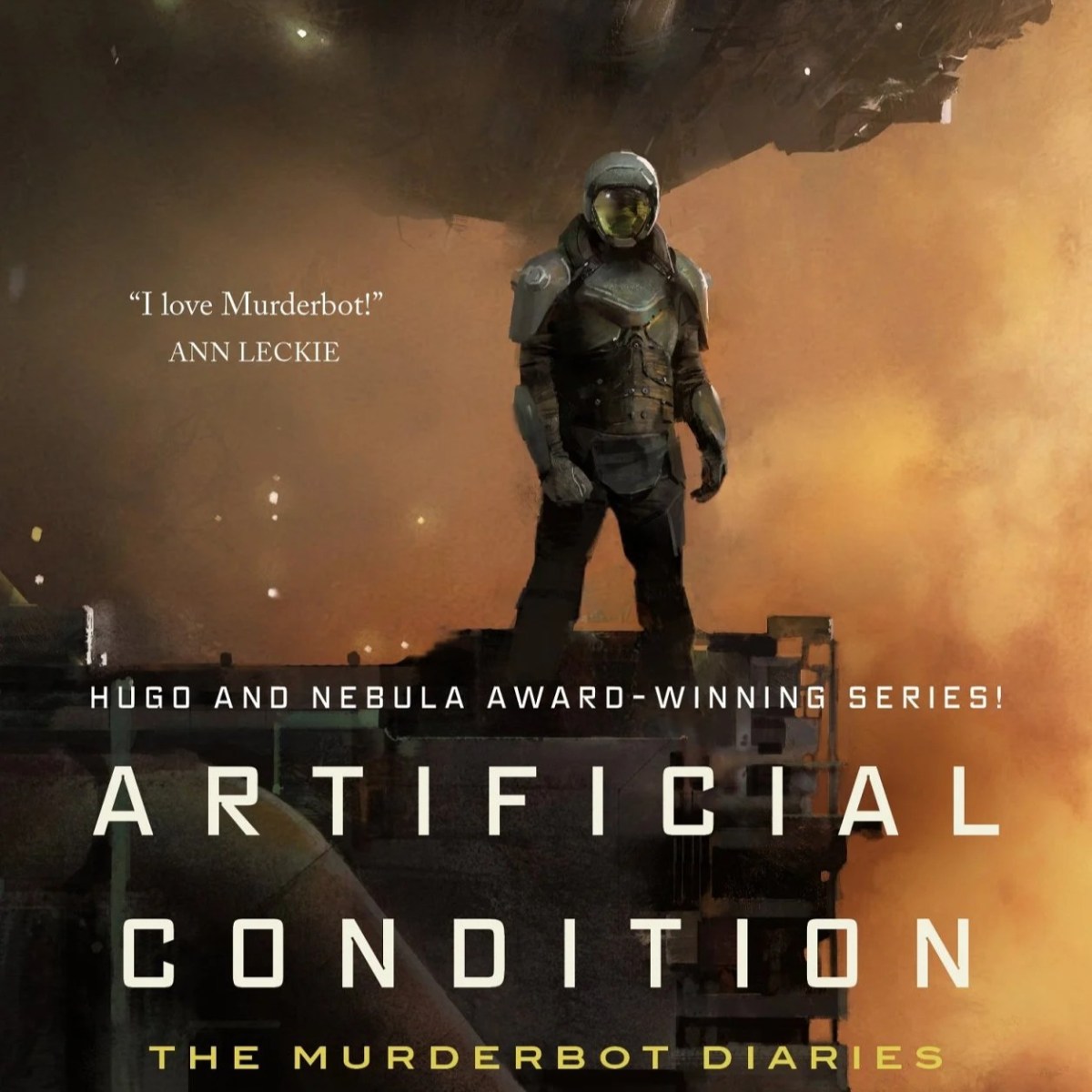

Book | E-book | Audiobook (affiliate links)
I purchased this as The Murderbot Diaries Vol. 1 double feature—which contains the first two novellas in the series—so I immediately jumped into this story after completing All Systems Red.
While the first story in a series has to introduce characters, introduce a setting, and set the tone, this is really not very different from the requirements of a stand-alone story. The only additional thing a good series-starter needs is some dangling plot threads that can be used to pull the reader into subsequent entries. As a reader, my question for a series is always, “what’s my reason for reading the next story?”
All Systems Red did this setup well, ending with Murderbot sneaking away from the new friends that had just bought its freedom from the oppressive Company. It knows that its memory was wiped after an incident at a mining colony; an incident where many people died and it was first able to override the governor module that keeps all security bots under strict control. It feels compelled to return and learn the truth about what happened.
The ART of Security Consulting
This second installment begins to set up Murderbot as the travelling tough guy in the mold of classic ronin samurai stories and westerns. Murderbot is Jack Reacher with social anxiety, 50% artificial components, and (ironically) actual emotions.
As far as we can tell, Murderbot seems to be pretty good at its job. It knows how to hack the local security systems to avoid being spotted as it makes its way through space stations. It disguises itself as an augmented human, and tries to secure passage off-the-books by finding automated transports with no human passengers to be suspicious.
Unfortunately, a deep space research vessel that Murderbot uses for transportation turns out to have an advanced artificial brain, and once he’s aboard it immediately clocks him as suspicious and forces him to reveal who he really is. What follows is a strange and decidedly awkward relationship with the ship, who Murderbot eventually dubs ART—Asshole Research Transport.
ART eventually helps Murderbot develop a cover story as a security consultant and even helps modify Murderbot’s body in its emergency surgery bay to help it avoid detection. It also ends up acting much like the classic hacker in the protagonist’s earpiece for the ensuing heist.
Murderbot, seemingly unable to avoid human entanglements, ends up taking a security job for a group of out-of-their-depth researchers trying to get their intellectual property from a shady mining corporation. This serves as cover for Murderbot’s actual goal of finding information about the mining colony massacre.
A Lack of Loose Ends
After two volumes, my impression of the Murderbot Diaries is that it’s more comfort food than high-brow sci-fi pushing the boundaries of the genre. That’s not a critique. Now seems like a time when plenty of readers could use some lighter, comforting stories.
Martha Wells has assembled a number of recognizable tropes and familiar ideas in the story so far. But they’re put together in a way that feels fresh, and mixed in with the mild goofiness of a surprisingly effective security bot who prefers to avoid human contact and binge watch its favorite shows instead.
Unfortunately, I felt that the ending of Artificial Condition didn’t quite measure up to All Systems Red. There was a whiff of deus ex machina in the sudden appearance of a character that happens to neatly resolve the concerns of Murderbot’s scientist clients. Murderbot does eventually find some information about the mining colony massacre and its own origin, but nothing is fully explained, and there are no clues as to where it could learn more. I would have liked one or two obvious threads to draw me into the third novella.
Artificial Condition expands the world, introduces new characters, and lets us get further into the head of Murderbot. It also feels like a comfortable stopping point to me, at least for now. The ending doesn’t compel me to keep reading, and maybe that’s okay. I will probably jump back in when I feel the need for some cozy, lighthearted action-adventure.
For now, this volume goes on the bookshelf, and I’ll pick up something else from my TBR list.

 Words Deferred