2026 is another year of short stories. In this weekly series, I talk about short story writing, from idea and draft to submission.
This is week twelve: Mar. 23-29.
Stats
Stories Finished: 2
Submissions Currently Out: 7
Submissions Total: 15
Rejections: 12
Acceptances: 0
Goals and Results
Another quick post this week, since I don’t have much to report.
My goals for last week were:
Get ahead on critiques.
Prep a story to queue up for Critters.
I did manage to get caught up on critiques, which was not quite as much work as I had anticipated. I always forget that the 75% ratio allows for roughly one week skipped per month.
I did not get a story ready for submission, but I’ve been knocking out one goal per week, so I guess I’ll make it my one goal and get it done next week.
Next Week
Goal:
Prep a story to submit to Critters.
I also have non-writing plans next week, so I’ll be taking a week off from my surprisingly consistent 2026 posting schedule. See you all in approximately two weeks!
2026 is another year of short stories. In this weekly series, I talk about short story writing, from idea and draft to submission.
This is week eleven: Mar. 16-22.
Stats
Stories Finished: 2
Submissions Currently Out: 8
Submissions Total: 15
Rejections: 11
Acceptances: 0
Goals and Results
My goals for last week were:
Prep a story to queue up for Critters.
Start the post-Critters revisions for F-TIB.
Get ahead on critiques.
This was a quiet week on the writing front. IN the end, I received over twenty critiques and responses to my story, F-TIB. I suspect this is partly because it’s right in the sweet spot for Critters—long enough to count for full credit, but not much longer.
The feedback was mostly very good, but there is so much that it took a good chunk of my weekend to begin to catalog it and think about what I want to do in revisions.
I did not get ahead on critiques, and while I know which story I will submit next, it needs more work before I throw it to the wolves.
Submissions and Responses
I received two rejections this week: one for The Incident at Pleasant Hills and one for Taco Cat. I spent some time searching new publications to send them to, and found two for each story. So out they go again.
Next Week
Since I didn’t get through my goals last week, they will carry over to next week. I am going to let F-TIB sit for at least a week to give the feedback a chance to
I recently purchased a solarpunk anthology, and it led me into a minor fixation on this lesser-known sub-genre of science fiction. Last week I wrote an introduction to solarpunk, but I’ve barely scratched the surface. I’ve been exploring the web to find more, and compiling a little syllabus for my own self-directed course.
Since I’m taking the time to write it all down, I figured I might as well put it out as a resource for anyone else who is interested in digging a little deeper. (As usual, I’m providing Bookshop.org affiliate links where possible – these support me and local bookstores.)
It’s interesting to note that most of the solarpunk fiction I’ve found so far is anthologized short stories—fitting considering my renewed focus on short fiction this year.
2026 is another year of short stories. In this weekly series, I talk about short story writing, from idea and draft to submission.
This is week ten: Mar. 9-15.
Stats
Stories Finished: 2
Submissions Currently Out: 6
Submissions Total: 11
Rejections: 9
Acceptances: 0
Goals and Results
My goals for last week were:
Get my Critters ratio in the green by Wednesday.
Catch up on my word count goal, and possibly finish the first draft of Out of Towner.
Submit Taco Cat.
I had a story in the Critters queue, and I needed to get my ratio up to ensure it went out. I got that done early in the week, the story went out, and the feedback has been steadily coming in.
I haven’t finished Out of Towner, but I’ve made some good progress. I think the story probably needs another 500 words or so to wrap it up. I’ll see if I can get to that this week. I also wrote a few hundred words of a solarpunk idea that may or may not go anywhere. Either way, I’m happy to now be well ahead of my word count and editing goals for March.
Submissions and Responses
I had a form rejection for my drabble Tom, Dick, and Larry, which I sent out to a drabble-specific themed issue. I have a couple of these 100 word stories knocking around, but I mostly only send them out these days when I see a flash fiction theme that fits them.
I also received a personalized rejection for The Incident at Pleasant Hills. I’ve been submitting this story for a while now, and while it has gotten positive feedback a couple of times, it just hasn’t gotten across the finish line. I think it’s a good story that will eventually find a home, so I sent it out again.
I also sent out a pair of submissions for Taco Cat Employee Manual. That keeps it active and covers goal #3 for the week.
Next Week
The Critters’ critiques of my story, F-TIB, will finish rolling in by Wednesday. At that point, I’ll have a bunch of notes to work through. I will also want to get another story in the queue as quickly as possible. I think the next one on the docket is called Hunter’s Apprentice. I’ll need to read through it a few times and try to get it as polished as possible (for a draft that only a couple people have read).
I’d also like to get one or two critiques ahead. I didn’t enjoy having a tight deadline to get those done so my story would go out. Getting ahead makes that less of a concern.
2026 is another year of short stories. In this weekly series, I talk about short story writing, from idea and draft to submission.
This is week nine: Mar. 2 – 8.
Stats
Stories Finished: 2
Submissions Currently Out: 5
Submissions Total: 8
Rejections: 7
Acceptances: 0
Goals and Results
My goals for last week were:
Submit critiques.
Start a new story.
It was a busy week outside of writing, but I’ll count both of these for partial credit. I did work on my Critters critiques, but I still need to get one more done before Wednesday. F-TIB is scheduled to go out for review this week, and I’d rather not have it delayed for a week while I get caught up.
Despite my noises last week about giving up on Out of Towner, I actually wrote six or seven more pages. I was able to employ that classing writing technique of just skipping over the part I wasn’t sure about. That means I’ll have to come back to that part later, but at least I can hope that I’ll have a better perspective on it when the rest of the story is done. That goal is a partial miss only because I’m still a few hundred words behind my self-imposed average daily word count.
Rejections
I marked down three rejections this week. One was from Clarkesworld, a magazine I love not only for the fiction they publish, but for their absolutely no-nonsense attitude toward submissions and crazy fast turnaround times for reading submissions. I send a lot of new stories their way, because I know I’ll get a response in a couple days; basically unmatched speed among high-tier pro markets.
Another of these was a non-response from a magazine whose Duotrope stats show it averages non-responses on 5-10% of its submissions. These are a thing that everyone who submits a lot will run into eventually, but it’s still annoying. I do my best to act professionally as a writer, and I expect the same from publishers I’m submitting to. On the other hand, it’s a real AI-slopfest-shitshow in publishing right now, and you never know what an overstrained, underpaid editorial staff might be going through.
Next Week
My goals for next week:
Get my Critters ratio in the green by Wednesday.
Catch up on my word count goal, and possibly finish the first draft of Out of Towner.
2026 is another year of short stories. In this weekly series, I talk about short story writing, from idea and draft to submission.
This is week eight: Feb. 23 – Mar. 1.
Stats
Stories Finished: 2
Submissions Currently Out: 8
Submissions Total: 8
Rejections: 4
Acceptances: 0
Goals and Results
My goals for last week were:
Submit stories
Submit critiques
Continue writing Out of Towner, or start a new story.
This week was a submissions week. I made two submissions for stories that have already been making the rounds, and another four for my new stories, Taco Cat and Red Eye. Those submissions get me back on track for meeting my goal of 50 submissions this year.
My inspiration for the story Out of Towner has fizzled, so I’ve decided to set it aside. I haven’t started a new story yet, but I’ve been thinking about punk stories, on two different fronts. The first is an idea for a punk magical community in late 1970s New York, and the second is a budding interest in the genre of Solarpunk. I’ll have more to say about that in a future post.
I continued to neglect my Critters critiques, something I’ll need to rectify in the upcoming week.
Next Week
Unfortunately, my wife injured her arm this past week, so I’ll be picking up the chores that require arm mobility and strength, and giving her some extra support for the next few weeks. That will cut into writing time, and I’ll have to make some adjustments to my plans and goals.
For now, my goals next week are carried over from this week:
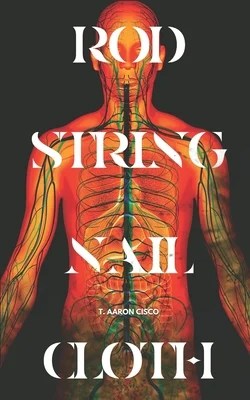
Rod String Nail Cloth was a random library pick containing six stories and a poem. It’s slim enough that I read it in the span of a Saturday afternoon. When I grabbed it I didn’t know anything apart from the title, but I’ve been meaning to investigate Afrofuturism for a while, and a short anthology seemed like a good place to start.
As it turns out, T. Aaron Cisco was born and raised in Chicago, but now lives in Minneapolis, so there’s a hometown connection for me. It also turns out that this is self-pub, and has a whiff of punk-rock “zine” to it. Unfortunately, it also has something like 20-30 typos and formatting errors across its 150-odd pages.
These stories revolve around themes of time travel, racial injustice, environmental catastrophe, and transhumanism. There are some interesting ideas in here, and some sentences and paragraphs that really pop. However, I found some of the writing straying too far into the literary style that I most struggle with: pages spent on a character’s languid internal thoughts without giving me enough plot or setting to latch onto.
The first story, “Now, Justice,” is the biggest offender in this regard. It follows a Black inventor who creates a machine that manipulates people’s perceptions. He uses it to take vengeance on a policeman who shot an unarmed Black kid and dodged the consequences. However, we don’t get to the first mention of the machine until page 17.
The subsequent stories were tighter, in my opinion. “Thursday Addison” is a Shonen anime of a story where a cybernetically enhanced enforcer is sent into a violent, futuristic battle that she barely survives.
“The Hesitant Envoy” is a tongue-in-cheek tale where an advanced civilization pulls aside one human to ask him to justify the continued existence of the species. He has a hard time coming up with a good argument, and isn’t particularly inclined to try.
“Lydian Mode” is about a down-on-his-luck Black musician who travels back in time to 1960s Chicago. Despite the dangers of life at the height of the civil rights movement, he discovers that there are also opportunities.
“Captain Michaela” is a poem about the titular character (maybe?) saving the universe. I’m just the wrong audience for this. While I have my favorite poets and poems, I’ve never felt drawn to sci-fi poetry.
“Rod String Nail Cloth” is the stand-out story of the book for me, an epistolary story about a person sent far back in time to fix a broken world.
In “They Burn So Easily,” an apocalyptic virus turns people into still-thinking vampire/zombie creatures called Chalkies, more strongly affecting those with paler, less pigmented skin. It’s a story about choosing forgiveness and humanity even when it may be undeserved. The conflict in this one felt a bit rushed, and I would have been interested in a longer exploration of the setting, the premise, and the relationships between the characters.
Rod String Nail Cloth is, in parts: intriguing, goofy, and a little rough around the edges. It’s not going on my favorites list, but I’m happy to have read it, and I’ll keep an eye out for Cisco’s work in the future.
It also whet my appetite for more Afrofuturism, especially in short fiction. If you have any good recommendations, leave them in the comments.
2026 is another year of short stories. In this weekly series, I talk about short story writing, from idea and draft to submission.
This is week seven: Feb. 15 – Feb. 22.
Stats
Stories Finished: 2
Submissions Currently Out: 2
Submissions Total: 2
Rejections:4
Acceptances: 0
Goals and Results
The goals I set for last week were:
Finish Red Eyes.
Finish Taco Cat.
Continue writing Out of Towner.
Get a new story in the Critters queue.
This week felt good. I am finished with Red Eyes, and I think I can safely say that this is the most work I’ve had to put into a story to make it work. It’s a relief to be done with it.
Taco Cat Employee Manual v7.1 (a much shorter story) made it through the Critters queue this week, and I received 11 responses—a pretty decent turn-out. It was mostly well-received, and only needed some minor tweaks. Quite a contrast between these two stories. I trimmed it down to an even 1,000 words so I can submit it to most flash fiction listings.
I already had another story, F-TIB, ready for the critters queue, so I sent that off and should get feedback in mid-March.
Finally, I sat and stared at Out of Towner, a story comprised (so far) of a single introductory scene, and felt completely indifferent to it. So that was the one goal I didn’t meet. This week, I’ll have to decide if I can find a spark of excitement in it, or if I should set it aside and pick something else to work on.
Submissions and Rejections
I received a response to the light rewrite that was requested for Incident at Pleasant Hills. Unfortunately, it was a rejection. This was a bummer, but they had very kind words for the story so I can’t really complain.
I submitted one story, Tom, Dick, and Larry, to a themed drabble contest. It has been challenging to find publications interested in drabbles, and they frequently don’t offer payment. (It’s pretty funny, since pro rates on 100 words come out to only $8.) This contest pays and the theme fits the story, so it’s a nice find.
I haven’t yet looked through the listings with Red Eyes or Taco Cat in mind, but I plan to send them out in the upcoming week.
Next Week
My goals for next week are:
Submit stories – at least three
Submit some critiques
Continue writing Out of Towner, or start a new story.
2026 is another year of short stories. In this weekly series, I talk about short story writing, from idea and draft to submission.
This is week six: Feb. 8 – Feb. 15
Stats
Stories Finished: 1
Submissions Currently Out: 2
Submissions Total: 1
Rejections: 3
Acceptances: 0
Goals and Results
My goals from last week were:
Finish revising Red Eyes.
Start the first draft of a new story.
Although I’ve been generally keeping up with my self-imposed quotas for writing and editing, this week marks the first time where I’ve gotten ahead on both.
I started a new story with a working title of Out of Towner. I hate this title and it will change. I’m not sure how I feel about the story itself. I’ll give it another week to see how it shapes up.
I made a couple of breakthroughs with Red Eyes revisions this week. First, I found a motivation for my main character that connects several aspects of the story and helps to explain why he finds himself in his current predicament. This also gave me a reason to make a change to the ending—not really changing the outcome of the story, but replacing some dialogue between two characters that I always felt was not up to snuff.
In the past couple weeks, I’ve addressed about two pages of bullet point notes, with some content migrating across several scenes. I believe I’ve reached the point where I added and clarified everything I wanted to. Unfortunately, that process added 600-700 words to a fairly long story. I’m refusing to call it done until it gets another one or two editing passes, mainly to trim, trim, trim.
As I finally wrap up this story, it’s really apparent that I’m just not as good at editing as I’d like to be. It’s slow, painful work to slog through. The writing is breezy in comparison. I’ve been able to get away with it, to some extent, by writing shorter stories that don’t have as many complicated, moving parts.
This isn’t a point of shame, but it does reinforce my determination to do a lot of editing this year so I can get better at it.
Critiques
It will be a relief to have Red Eyes done, because I’ve got another story coming down the pipe. Taco Cat Employee Manual v.7.1 went out for critique this week. The Critters week runs Wednesday to Wednesday, so it still has a couple days to go. I’ve gotten seven responses, which is not bad, but I’m hoping to get a few more.
Taco Cat currently stands at 1150 words, and a couple people have noted that it’s probably worth trying to get that down to an even 1000, the common cutoff for flash fiction. I expect the editing pass to be much shorter and less intensive on this one. Soon, I should have two more stories ready to submit.
Here we are, in the thick of a new year of short stories. It’s the perfect time to direct you to one of my favorite short-story-writing bloggers, Aeryn Rudel.
Rudel writes and submits short fiction in numbers that I can only aspire to. In fact, the title of this post apparently understates his case—he mentions that he’s had 120 stories published over the past 12 years! That much experience brings a lot of perspective on short story writing, and we’re lucky that Rudel shares it regularly.
Check out the post over on his site, Rejectomancy.






 Words Deferred