The Story Idea Vault — Post-Apocalyptic Cookbook

It’s a common misconception that a great idea makes a great story. The truth is that most great stories come down to execution. A great idea with poor execution rarely works, but a great writer can breathe new life into even the most tired tropes.

Like any writer, I have my own treasure trove of ideas that might end up in a story…someday. But why horde them? Instead, I’m opening the vault and setting them free.

Feel free to use these ideas as a weekly writing prompt, or come up with your own twist and reply in the comments.

Idea of the Week – Post-Apocalyptic Cookbook

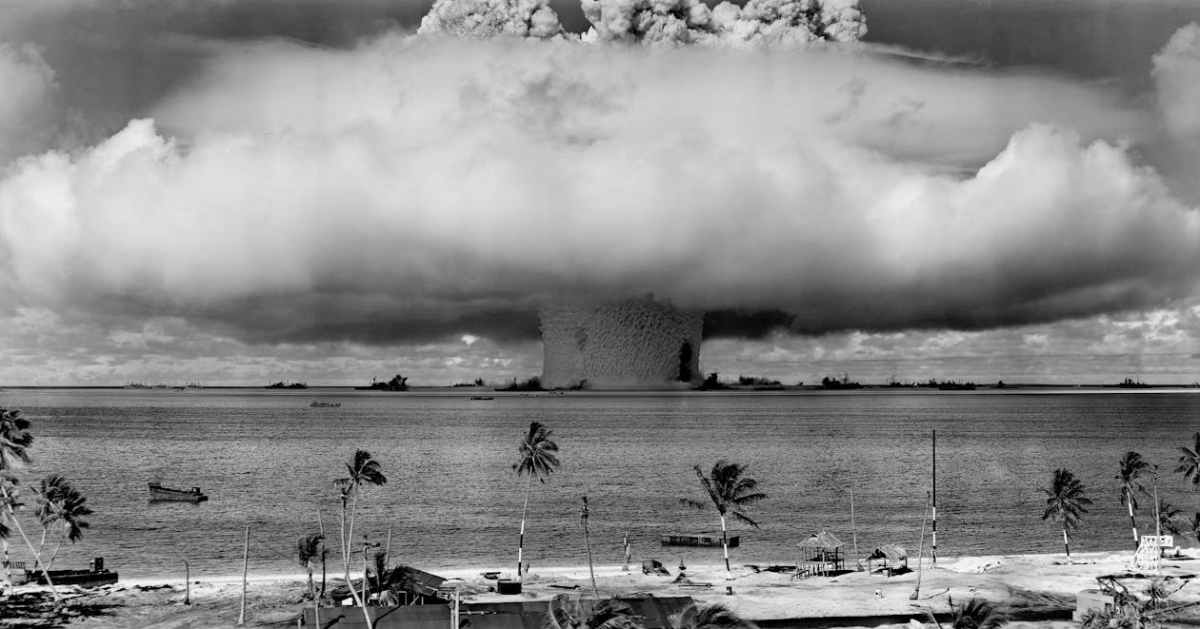
Something has gone badly wrong in the world. Perhaps it was a natural disaster, or global warming, or nuclear war. Whatever happened, the old human societies fell apart. Those that remain live in small tribes, struggling for survival in a hostile world.

But enough about that. I’m hungry. We all are.

In this new dark age, one person travels the globe, braving the dangers of the wilds to make contact with all the remnants of human civilization and ask them that age old question: “What’s for dinner?”

Their post-apocalyptic cookbook is a collection of anecdotes and recipes that reveal the lives people live and the meals they eat in the shadow of destruction. Mutant plants? Giant cockroaches? Cans of creamed corn from some Silicon Valley billionaire’s ruined fallout shelter?

Mmm, mmm. Let’s eat.

The Story Idea Vault — The Final Year

It’s a common misconception that a great idea makes a great story. The truth is that most great stories come down to execution. A great idea with poor execution rarely works, but a great writer can breathe new life into even the most tired tropes.

Like any writer, I have my own treasure trove of ideas that might end up in a story…someday. But why horde them? Instead, I’m opening the vault and setting them free.

Feel free to use these ideas as a weekly writing prompt, or come up with your own twist and reply in the comments.

Idea of the Week – The Final Year

There’s a meteor shower coming, and it’s a big one. Hundreds of city-sized rocks are headed for Earth, and we only have one year to prepare.

Of course, the governments and space agencies of the world are working feverishly to find a solution. Oil drillers? Nuclear weapons? Space lasers? Or maybe they’ve secretly given up on saving earth and they’re planning a colony ship to Mars?

Among the citizens of the world, some hold out hope. Some find religion. Others believe that we’re living in the twilight of the human race, and they decide how to live out Earth’s final months.

Is there chaos? Apathy and despair? Widespread riots, looting and violence?

Cults pop up across the globe; what are their plans? What is this final year like for the elderly, or middle-aged parents, or grade-schoolers?

The Story Idea Vault — Garbage Miner

It’s a common misconception that a great idea makes a great story. The truth is that most great stories come down to execution. A great idea with poor execution rarely works, but a great writer can breathe new life into even the most tired tropes.

Like any writer, I have my own treasure trove of ideas that might end up in a story…someday. But why horde them? Instead, I’m opening the vault and setting them free.

Feel free to use these ideas as a weekly writing prompt, or come up with your own twist and reply in the comments.

Idea of the Week – Garbage Miner

In the future, all sorts of resources are scarce. Precious metals that were once easily strip mined from the surface have now been exhausted. Luckily, new processes and advances in biotech make possible the separation and disassembly of all sorts of materials.

The rise in prices of many commodities makes it cost-efficient to mine the past. Huge companies crop up to dig up and process old landfills. Historic buildings are stripped for parts and rebuilt with futuristic, cheap materials. In some places, the flora, fauna, and the soil itself are churned up for the valuable trace elements absorbed from previous centuries’ pollution.

What are the consequences of these shortages? How do these new “mines” and “factories” impact the communities around them. Are people desperate for the lifestyle these once-ubiquitous materials afford them? Or do they try to change society so we can all live comfortably (or uncomfortably) without?

The Story Idea Vault — Totally Not Banksy

It’s a common misconception that a great idea makes a great story. The truth is that most great stories come down to execution. A great idea with poor execution rarely works, but a great writer can breathe new life into even the most tired tropes.

Like any writer, I have my own treasure trove of ideas that might end up in a story…someday. But why horde them? Instead, I’m opening the vault and setting them free.

Feel free to use these ideas as a weekly writing prompt, or come up with your own twist and reply in the comments.

Idea of the Week – Totally Not Banksy

An anonymous artist is building the world’s largest unauthorized art installations. They appear on skyscrapers, in the middle of interstates, on military bases, and floating in busy harbors. She and her team secretly construct these elaborate pieces, then unleash them onto the world without anyone realizing what’s happening until it’s done.

Nobody knows who she really is or what her motivations are. Does she do it for the thrill, or is there a subtle, hidden meaning that connects all of her work? Does her inner circle really know her, or is she a mystery even to them? Who seeks to expose her, and why? What is the public reaction to her work?

The Story Idea Vault — Virtual Afterlife

It’s a common misconception that a great idea makes a great story. The truth is that most great stories come down to execution. A great idea with poor execution rarely works, but a great writer can breathe new life into even the most tired tropes.

Like any writer, I have my own treasure trove of ideas that might end up in a story…someday. But why horde them? Instead, I’m opening the vault and setting them free.

Feel free to use these ideas as a weekly writing prompt, or come up with your own twist and reply in the comments.

Idea of the Week – Virtual Afterlife

Earth is becoming uninhabitable, and humankind faces extinction. Luckily, there’s a new invention that allows us to upload the human consciousness into a computer. A system is built in a stable orbit, designed to survive as long as possible without intervention, fed by solar power so long as the sun still shines. Ten thousand people are uploaded into the machine.

This artificial physical space can be made to look like anything. Who are the architects, and how do they design it? What can people do in this virtual existence that they couldn’t do in the real world? What do the power structures and politics look like in this virtual afterlife?

Are the remnants of humanity happy to have survived the end, or are they haunted by the loss of their species? Is a virtual world freeing, or does it feel like a prison?

The Story Idea Vault — The Big One

It’s a common misconception that a great idea makes a great story. The truth is that most great stories come down to execution. A great idea with poor execution rarely works, but a great writer can breathe new life into even the most tired tropes.

Like any writer, I have my own treasure trove of ideas that might end up in a story…someday. But why horde them? Instead, I’m opening the vault and setting them free.

Feel free to use these ideas as a weekly writing prompt, or come up with your own twist and reply in the comments.

Idea of the Week – The Big One

Wizards are often depicted constantly slinging fireballs and lightning bolts, but real magic isn’t like that at all. Real magic requires a huge amount of energy—energy that takes months, years, or even decades for a person to accumulate. Casting a spell burns all of that energy. Some wizards spend a lifetime accumulating energy for a single spell.

What spells do wizards spend all that time preparing? Do the rich and powerful pay fortunes for a single spell to be cast; or threaten, blackmail, and coerce wizards into doing what they want? Do the wizards keep their accumulated power a secret?

The Story Idea Vault — Across the Multiverse

It’s a common misconception that a great idea makes a great story. The truth is that most great stories come down to execution. A great idea with poor execution rarely works, but a great writer can breathe new life into even the most tired tropes.

Like any writer, I have my own treasure trove of ideas that might end up in a story…someday. But why horde them? Instead, I’m opening the vault and setting them free. Use these ideas as a weekly writing prompt, or come up with your own twist and reply in the comments.

Idea of the Week – Across the Multiverse

A man undergoes a traumatic event and discovers that he can jump between versions of himself in different universes. At first, he thinks he’s the only one who can do this. Then, he meets a woman who can do the same thing. They become friends, then lovers—but he slowly realizes that she is a dangerous megalomaniac. They have a violent falling-out.

Soon, they target other selves in other worlds. They build organizations across the multiverse. One aims to gain power: political, military, religious. The other organizes opposition groups.

How can either of them win? Do they continue fighting forever across infinite worlds?

The Story Idea Vault — Nouveau Riche in Space

It’s a common misconception that a great idea makes a great story. The truth is that most great stories come down to execution. A great idea with poor execution rarely works, but a great writer can breathe new life into even the most tired tropes.

Like any writer, I have my own treasure trove of ideas that might end up in a story…someday. But why horde them? Instead, I’m opening the vault and setting them free.

Feel free to use these ideas as a weekly writing prompt, or come up with your own twist and reply in the comments.

Idea of the Week – Nouveau Riche in Space

Humankind has spread from Earth across the stars. Advances in robotics allow cheap harvesting of resources from asteroids and uninhabitable planets.

Now, those who live in space are far more wealthy than those on planets. The ground-bound population may save for a lifetime to buy their way up into the stars, while the space-born retire to dirt-cheap planet-side resorts.

What are the people on the ground willing to do for a ticket on a one-way rocket? What are the hottest spots in space tourism? And who is interested in toppling the entire galactic economy?

The Story Idea Vault — Wizard Lawyers

It’s a common misconception that a great idea makes a great story. The truth is that most great stories come down to execution. A great idea with poor execution rarely works, but a great writer can breathe new life into even the most tired tropes.

Like any writer, I have my own treasure trove of ideas that might end up in a story…someday. But why horde them? Instead, I’m opening the vault and setting them free.

Use these ideas as a weekly writing prompt, or come up with your own twist and reply in the comments.

Idea of the Week – Wizard Lawyers

There’s a world where magic is real: a powerful force in politics, war, and religion. But people can’t wield magic on their own; they can only get it from supernatural forces—for the right price.

The wizards who negotiate these contracts are power brokers, lawyers, expert deal-makers, and sometimes thrill-seeking gamblers. They know how to hedge their bets, and might enter into half a dozen interconnected contracts to get what they want while negating the consequences.

What’s the contract that breaks the system? Who brokered it? And what will happen when the most powerful beings in heaven to hell find out?

Reference Desk #10 — The Story Engine

The Story Engine is a card-based tool to generate endless, semi-random writing prompts. It’s is billed as a tool or multiplayer game to aid in writing fiction, playing tabletop RPGs, or just to be played on its own. It started out in 2019 as one of those Kickstarter projects that caught fire and got fifteen times as much money as they were asking for. Now, the full product is launched, along with myriad add-ons enabled by Kickstarter stretch goals.

As a writer, a TTRPG player, and general lover of boxes of cards with nice art, I decided to try it out.

What’s in the Box

The main box comes with 180 cards. There are also three 60-card “expansions” that can be purchased separately: sci-fi, fantasy, and horror; and six 18-card sub-genre “boosters” for cyberpunk, steampunk, eldritch horror, post-apocalyptic, mythological and dystopian. I went for broke and got the whole collection. The core set is genre-agnostic, but the add-ons are clearly focused on speculative fiction.

The build quality is solid, which I appreciate as someone who has accumulated quite a few board and card games of varying quality. The box is a sturdy, fold-open affair that latches with magnets and has a sleeve. The cards are glossy, nicely weighty paper, and the illustrations are evocative. The cards aren’t plastic-coated, so expect the edges to get roughed up as they’re repeatedly shuffled.

How Does it Work?

The cards are divided into five different types: Agents, Engines, Anchors, Conflicts and Aspects.

  • Agents represent characters
  • Engines represent a goal or desire
  • Anchors represent places, things, and ideas
  • Conflicts are challenges or difficulties
  • Aspects are adjectives

In its simplest form, I can play one card of the first four types, in sequence, to generate a random prompt, such as

A daredevil (agent) wants to enact a secret plan revolving around (engine) an election (anchor), but they will bear the scars for all to see (conflict).

I can then customize that prompt in two ways. First, each card has 2 or 4 prompt phrases depending on type, so it can be turned 90 or 180 degrees to change the “active” phrase facing me to something more inspiring. Secondly, I can add an Aspect. Since aspects are adjectives, they can be applied to the noun cards: agents (characters) and anchors (places, things, ideas).

With those changes, I might transform the first prompt into

A tormented fraud (agent + aspect) wants to unmask the conspiracy of (engine) a rebellion (anchor), but they will bear the scars for all to see (conflict).

The guidebook that comes in the main box also suggests ways to use the cards to generate character concepts, items and settings, as well as several more complex prompts that utilize more cards. These include things like conflicted characters with multiple goals, or two characters in conflict over related goals.

Finally, it includes rules for multi-player storytelling games and some helpful hints toward RPG players as to how the various prompts might be used in building campaigns, settings and scenarios.

Despite all these prescriptive rules for building prompts, The Story Engine is also happy to tell you that this doesn’t have to be rigid, with hard and fast rules. You can use the cards however you’d like.

1. A robot wants to map an obsidian prison, but they will have to try something frightening and new. 2. An archivist wants to pay an old debt with a corrupted tool, but they will have to resist a great temptation.

My Experience

The Story Engine does a good job riding the line between too specific and too vague. I often find writing prompts irritating when they’re little more than a vague topic, but too much detail obviously takes any agency away from the writer.

I filled a few notebook pages using the “simple” writing prompts. Not all of the results were instantly inspiring, but I was able to glean a few ideas that feel promising, and a few more that seem like they could lead somewhere with a bit more time and thought.

The complex prompts include more cards and more structure, and as a result they are less open-ended and more inflexible. These are sometimes too detailed for me, feeling like there’s not enough room for filling in the blanks. However, you can always swap cards or break the rules to get something more to your liking.

The individual cards are also just fine as prompts by themselves. Sometimes a one-word character or setting description is all you need, especially when trying to flesh out an idea in progress. The pictures on the cards also do work as extra inspirational elements that don’t insert more words into the mix.

What about RPGs?

I’m not currently running a campaign, so I haven’t tried incorporating The Story Engine into one. However, I have used the similar dice-and-table-based prompts in The Perilous Wilds to run totally improvised one-shots of Dungeon World. I could definitely see using The Story Engine to do something similar.

If you have a home brew campaign, these prompts are probably going to be more useful than if you’re trying to add to a pre-written one. They might also be fun for generating NPCs on-the-fly when your adventuring party takes an unexpected turn.

Conclusions

So far, I’m pleased with what I’ve gotten out of The Story Engine, and I’ll continue to use it. My only concern is that the prompts might start to feel samey after a while. Even if there are technically billions of combinations, the cards will eventually become familiar. Still, with the core and add-ons, I have quite a few cards to work with. I think I’ll be using these cards as a story brainstorming tool for a long time.

If you’re unsure, the core set is a good starting point, and it’s genre-agnostic. If you’re not writing speculative fiction, the add-ons don’t offer much. If you are writing spec-fic and The Story Engine sounds exciting to you, buying one of the bundles gets you a pretty steep discount vs. buying piecemeal.

Check it out at https://storyenginedeck.myshopify.com/