I am mainly a fiction writer. I put a considerable amount of effort into it. I worry about the quality, and I’m constantly striving to be better. I don’t often write poetry, and I don’t consider myself a poet. Since I finished school, I don’t think I’ve ever sat down with the intent to write a poem. So when I write poems, it’s usually an accident. Some small phrase or stanza pops into my head, and the rest of the thing follows.
This poem came as a response to some of the pessimism around modern politics and the sky-is-falling, world-is-ending rhetoric. Not political ideology, just a passing feeling. I don’t have the expertise to judge whether it’s any good, but it might as well go out into the world instead of rotting on my hard drive. Enjoy!
Another Song, Another Kiss
They say it’s getting worse.
Look how people talk,
How they behave.

Look at politics.
We live in different worlds.
(Nobody has ever said
Politics is getting better)

And if you don’t believe it's all falling apart,
If you don’t live in fear,
Or you dare to hope,
You’re a fool, or worse: complicit.

But they forgot the feeling:
The first time hearing
Your favorite song,
The first time kissing
Someone you love

The future is not all bad.
There are more good things in store.
Tomorrow has a surprise for you
And you’ll never guess.
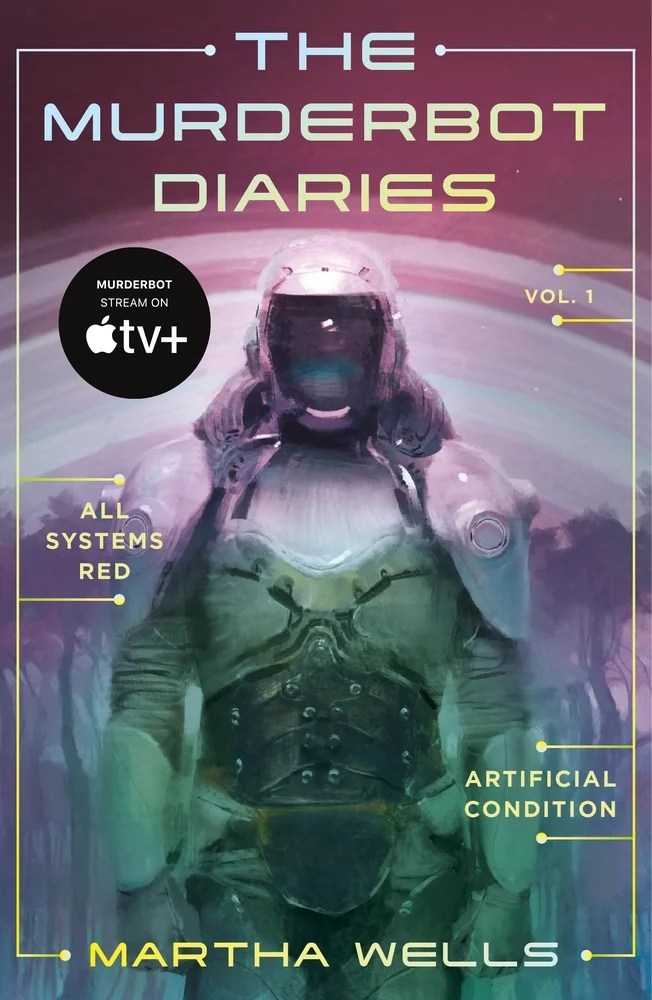
I suspect, in a vacuum, I would not pick up a book labeled Murderbot Diaries. It sounds like a combination of military SF parody and introspective John Green-esque YA fiction. Having read the first installment, the title comes off as tongue-in-cheek and less abrasively cheesy.
This is one of those cases where “word of mouth” unequivocally led to a sale. The book has been recommended to me by friends, acquaintances, podcasts, and blogs which would usually all have very different tastes. My interest was piqued by broad support across normally unaligned quadrants.
Who is this Killer Robot?
I can see why so many people like Murderbot. He is a protagonist for our times.
In another universe, he might have the makings of a charismatic action hero: a humanoid, partly organic robot with armor; built-in weapons; the ability to repair from near death; and extensive experience in private security.
In the universe of All Systems Red, he just wants to slack off, avoid talking to anyone, and watch his favorite shows.
Many robot narratives are either as emotionless as possible or essentially indistinguishable from a human narrative. Murderbot finds a middle-ground. He has emotions and can certainly get caught up in the moment, but he is also aware that he is more affected by the storylines of his shows than by the actual interactions between himself and the crew who has purchased his company contract for security services.
He needs his space, both physically and emotionally. He’s more comfortable talking to the crew with his opaque helmet on; more comfortable seeing them through the security cameras; and happy to spend his time alone in the tiny security room, or even tinier repair bay.
The company that owns Murderbot and sells his services to the highest bidder is an amoral edifice of shitty space capitalism. They worry about the welfare of the people Murderbot is hired to protect because they will suffer financial penalties for injuries and deaths. They care about Murderbot because he would be expensive to replace.
Murderbot himself has more theoretical autonomy than he should. He has hacked his own modules and only feigns following orders enough to not get caught. He also has actual morals, even if they often butt up against his limited emotional range and social anxiety.
Many readers identify with Murderbot because he reflects marginalized identities. He is aromantic, asexual, and exhibits behaviors and feelings familiar to many neurodivergent people. He is also a small character in a big world. He uses his very limited freedom to seek little comforts that help block out an indifferent and cruel universe, at least for a little while. He cannot possibly imagine leading a rebellion or overthrowing evil, but he appreciates when someone does it on TV.
I suspect many of us feel the same way when we flip on our favorite show these days.
Quick Hits and Remixes
I am a big fan of the return of novellas. When I was young I read huge fantasy tomes and played 100-hour JRPGs. Now that I’m older and cherish my precious free time, I quite like a book or game that I can finish comfortably in a day or two.
Novellas also lend themselves wonderfully to series like this. Much like a weekly TV show, each entry can provide a concise arc while building characterization and setting on top of the previous entries.
I’m also appreciative of the fresh familiarity of Murderbot. It’s hard to point to any particular element of the story that is a purely original take. The action-adventure, the robot learning how to be more human, and the mildly dystopic libertarian space future have all been explored elsewhere. However, Martha Wells puts those puzzle pieces together in a way that feels fun and strangely parallel to our current moment in time.
It’s a common misconception that a great idea makes a great story. The truth is that most great stories come down to execution. A great idea with poor execution rarely works, but a great writer can breathe new life into even the most tired tropes.
Like any writer, I have my own treasure trove of ideas that might end up in a story…someday. But why horde them? Instead, I’m opening the vault and setting them free.
Feel free to use these ideas as a writing prompt, or come up with your own twist and reply in the comments.
Voices of the Dead
The professors were all thrilled when Dr. Landau agreed to join our little jungle expedition. They didn’t want to reveal their findings in writing, but they had to say enough to catch her interest.
I met her at the landing strip, and she wasted no time. As she stepped out of the plane, she asked me, “What’s all this about the parrots?”
“They’re speaking a dead language,” I told her. It sounded silly when I said it. “But the dig sites are all pristine. No potsherds. No hand axes. No bones or remnants of fire pits.”
She soon gave up questioning me, and we hiked to the camp, hardly speaking. We listened to the banter of long-dead voices, croaked from bird to bird in the treetops.
She was quick to confront my superiors.
“What kind of catastrophe can wipe out all traces of a civilization except their language?” she asked the professors. Of course, they had no answer. We had pondered it for twenty sleepless nights.
I once held those withered, bookish men in high esteem, but they were afraid to tell her our final secret. And who am I to judge them? I didn’t tell her either. She had to find out herself, alone in her tent as twilight fell on the misty jungle.
At night, the parrots stop echoing the words of the dead. After the sun goes down, the birds only recount their final, terrified screams.
After focusing intensely on submitting short stories in 2024, I have to admit, I fell off hard in 2025. However, I haven’t been completely dormant. I’ve been writing a little and submitting a little, so I figured it’s about time for an update.
The Joy of Simultaneous Submissions
I have two stories out on submission right now, and both have been rejected a few times, mostly by big pro markets.
I submit to these big markets first, simply because an acceptance will come with a bigger check and more prestige. It would be fun to have my name on a cover that has been graced with genre greats; the magazines that I read when I was young.
Am I confident that my stories are a high enough caliber for those markets? No, but judging the quality of fiction is such a personal, opinionated thing, and doubly so when you’re the one who wrote it. So why not? It’s worth a shot.
The big magazines and websites can afford to be picky and demanding. They often have months-long slush pile backlogs, and don’t allow multiple or simultaneous submissions. Once you’ve submitted, your story could be in limbo for a quarter, six months, sometimes even longer. All for that <1% chance at a big acceptance.
The stories I have out right now are past all that. They had their shot. Now I’m submitting to lower-paying and less well-known markets. There are three reasons why this is nice.
There are a lot of them! Even in the face of limited reading windows, narrow topics/genres, and themed issues, most stories have at least a couple reasonable places to submit in a given month.
They have smaller slush piles, and that often equates to higher acceptance rates and faster responses.
Many of them accept simultaneous submissions, which means you can send a story to several places at once.
So even though I only have two stories I’m currently submitting, I’ve been able to make 11 submissions, which isn’t too bad.
Timing the Market
Another thing I’ve noticed is that there seem to be a lot of markets that open for submissions in the summer, and close at the end of July or August. There are reading windows all year round, but there are also these larger trends. December and January seem to be the worst times to submit, with so many people out on holiday in the US and Europe.
I still check the Duotrope themed submissions calendar and publishing news pages fairly frequently. Their “Fiction publishers that have recently opened to submissions” list is a great way to track reading windows without trying to keep tabs on all the markets in your genres. The theme deadlines list is easy to glance through to see if anything matches any of the stories that I’m currently shopping around.
Drafts and Critiques
I’m still very behind on my rough drafts and critiques. I wrote a couple stories this year, and I’m now sitting on four that are somewhere between “technically complete” and “needs a final polish.”
The downside of using Critters for critique is that I’m not very good at keeping up my three(ish) critiques per month, so when I have stories I want to submit, I tend to have to do a couple months of critiques to get caught back up. However, with my finished stories out on submission, I really have no excuse. Aside from revision being the toughest part of the job.
The rest of August is going to be busy. I have a family vacation planned for the end of the month, and the kids are back in school the week after.
I’ve set myself a lofty goal of trying to get all four stories edited before the end of the year. That works out to almost one story per month. Doesn’t sound too implausible…until you compare it to my track record for the year so far.
That’s all the news that’s fit to print. How is your summer writing going? Let me know in the comments.
Apparently some of the longest-running genre fiction magazines still in print were bought up by a single entity at the start of the year: Asimov’s Science Fiction, Analog Science Fiction and Fact, The Magazine of Fantasy & Science Fiction, Alfred Hitchcock’s Mystery Magazine, and Ellery Queen’s Mystery Magazine. Unfortunately, print magazines feel like a relic of the past, and even though sci-fi/fantasy has managed better than most fiction markets, it’s a tough business to be in.
There is some hope, as the group that now owns these magazines at least claims to be in it for the love of the fiction and the community, and not just to leech the remaining value like most private equity. Still, simply combining several similar magazines under one operation probably isn’t enough to keep things profitable. It appears that part of the strategy will be to try to leverage stories and IPs beyond magazines. This is at the heart of recent contract controversies, with the company using some pretty broad legal language.
Twenty years ago, when I was first getting serious about writing, these magazines were the most prestigious places a sci-fi/fantasy author could place their story. They are now sadly diminished, but some of that prestige still lingers. Let’s hope that they can find ways to keep the lights on without taking advantage of their writers and tarnishing the reputations that made them so beloved.






 Words Deferred