
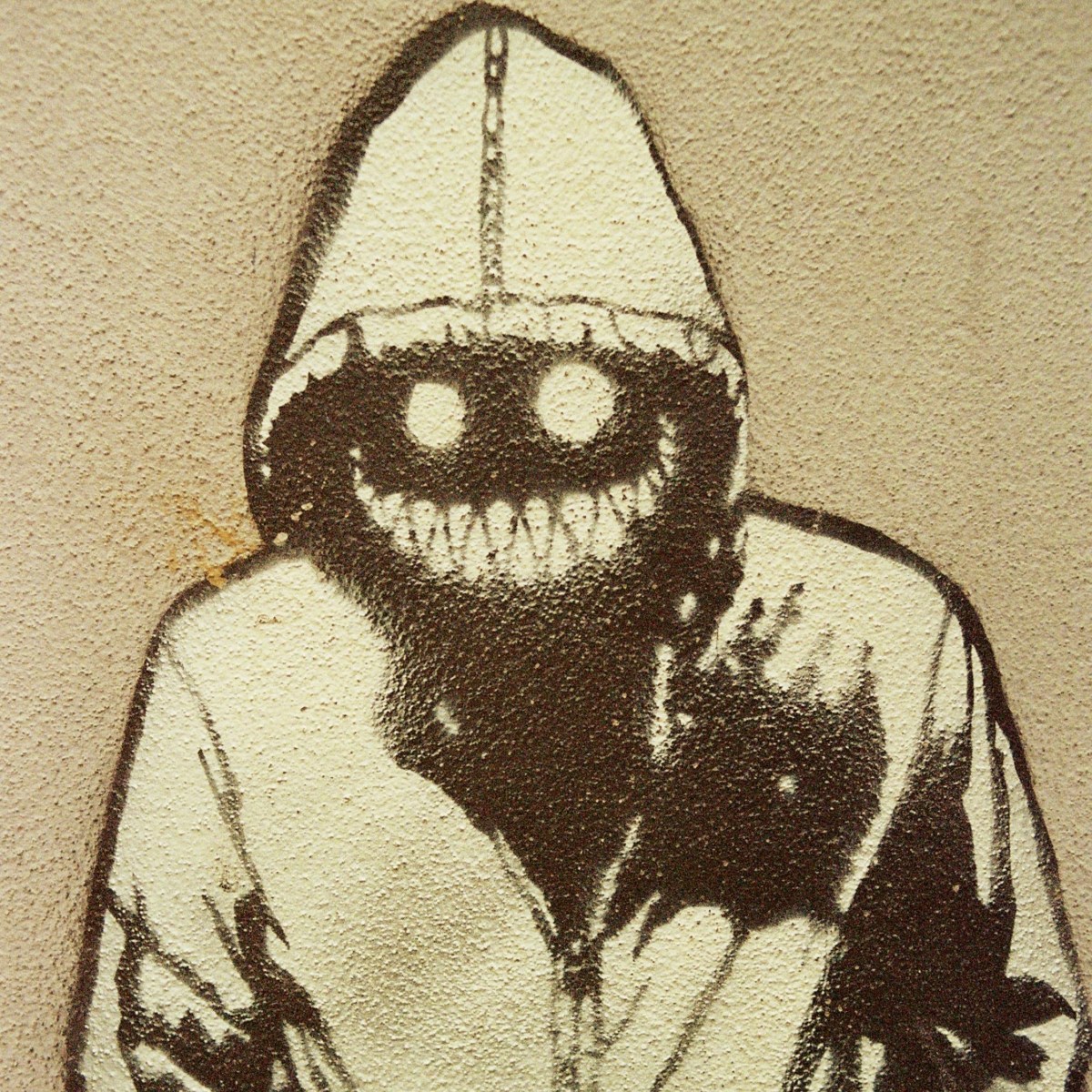
As a speculative fiction writer, I tend to stay in the zones of sci-fi and fantasy. I don’t go across the tracks to horrorville very often. However, I’m currently writing a horror story featuring a monster who appears human. That got me thinking about monsters and how to write them effectively.
Despite my limited horror writing experience, I do read a good amount of horror and have analyzed a fair number of short stories through Critters critiques. As authors, we inevitably read far more work than we produce, so it’s important to learn not just from our own mistakes, but from others’ mistakes (and successes) as well.
In my opinion, horror is reliant on pacing and rising tension more than any other genre. While “conflict” and “tension” are sometimes used interchangeably, the difference is important here. Physical violence is common in horror (although it’s hardly the only form of conflict available). But too much violence runs the risk of verging into absurdity or action/thriller and losing those “creeping dread” horror vibes.
To feel like horror, there should be rising tension throughout, and outright conflict only at key “peaks” of the story.
Save the Reveal
Any connoisseur of monster movies knows that revealing the monster too early is a mortal sin. Mystery, uncertainty, and fear all build tension. So long as the reader and the characters don’t have a complete understanding of the antagonist, there’s always the possibility of something new and unexpected happening.
To this end, it’s important to slow roll the reveal. Dribble out information and understanding. The characters might think they have a chance against the monster when they discover that it’s blind. They’ll learn how wrong they are when they discover it has superhuman hearing and sense of smell.
The unknown is always more spooky. This goes for all aspects of the horrific. When describing the monster, give the characters and the reader glimpses, not straight on views. Show us a stray tentacle, a slime trail, a bloodshot eye through the crack in the door, or the sound of sharp claws scraping on the window.
If there has to be a full reveal, it should come close to the end. However, there doesn’t always have to be a reveal. Sometimes the story can resolve, and the characters can even win, without ever completely understanding the monster. Cosmic horror especially relishes the unknowable, and often outright refuses to fully explain its biggest bad guys. They are too horrific or mind-bending for mere humans to comprehend while staying sane.
Use All of Your Senses
Vision is the sense that able-bodied humans use most, and it’s usually the first mode of description authors reach for. Hearing is a distant second place. The rest of the senses are a lap behind on the track.
In any fiction it’s a good idea to shake this up. Hearing, touch, smell and taste can all add verisimilitude and depth to a story. For horror, this is even more important. Since mystery and the unknown are vital to creating tension, preventing characters from seeing the danger will ramp up that tension.
Since a lot of horror lives in the realm of speculative fiction, there may even be opportunities to include “extraordinary” senses beyond the standard five. Characters might get the feeling that they’re being watched, or the extrasensory certainty that something horrible is about to happen.
Using the full array of senses is an opportunity to make associations with things that cause discomfort—the feeling of bugs crawling over skin, dripping slime in an unexpected place, the smell or taste of rot, the sound of crunching bones. These kinds of sensory discomforts are another key way to ramp up the tension in a story.
Be aware that you may lose certain readers when you get into phobia territory. This is par for the course with horror, and audiences should expect a certain amount of discomfort, but you’re still going to encounter certain readers who absolutely can’t get enough axe murder and will still throw a book across the room when they get to the bit with the spiders under a character’s skin or the clown in the sewer.
Metaphor and Synecdoche
Another important way to maintain mystery and reveal without revealing is to use layers of indirection. Metaphor and simile can give a sense of what the monster is like, without providing the whole picture. Synecdoche substitutes a part of the thing for the whole.
We know the creature has a snout that snuffles like a pig when it seeks out its victims. We know that it has a slimy hide with bristly, needle-like hair. We know that when it was feeding on that old man in the shadows, it was all sharp claws and red-tinged fangs.
Twisted or False Innocence
Another tactic for introducing mystery and uncertainty is to start with something safe and known, and systematically show that this surface-level simplicity hides sinister depths.
The classic examples of this tend toward typical innocence and innocuousness: children, dolls, nuns, clowns. These cheerful, delightful, or inherently good things and people slowly reveal aspects that do not match what they’re supposed to be.
The feeling of understanding something, only to have to revise that initial impression naturally brings some level of discomfort and tension with it. It speaks to the primal parts of the human brain that are responsible for studying the dark jungle around us and noticing on the third or fourth pass that the ordinary shadow under that tree is really a tiger.
Reveal Through Reaction
Effective fiction requires a level of empathy between the reader and the characters. Luckily, most humans are natural empathy machines—when we see something happen to somebody else, we tend to think about how that makes the other person feel, and we can even generate a sympathetic response that makes us feel the same feelings we perceive in someone else.
In all fiction, and especially in horror, it’s the author’s job to help the reader activate that sympathetic response. Sensory descriptions are a great way to do this. Again, as a culture that’s immersed in TV and movies, we tend to think very visually, but other senses often are even better at eliciting this empathy in the reader.
Importantly, fiction offers an avenue that isn’t entirely possible to replicate in TV and movies: the inner thoughts and emotions of the characters. Of course, the POV of the story may be a limiting factor, but in first person, second person, and “close” third person points of view it should be possible to delve into the thoughts and emotions of at least one character.
Reveals are Climaxes
With mysteries and uncertainties providing vital sources of tension in horror stories, it’s only natural that reveals should be moments of excitement or relief. Major revelations should come at a point of maximum tension. This can be used as a pressure release valve before moving into a new part of the story and ratcheting up a new source of tension. However, the reveal is often closely coupled with a moment of violence, pain, or trauma, turning that inherent excitement toward terror.
Reveals are also sometimes opportunities to raise the stakes. What started as “I don’t want to die,” may become “I can’t let this evil be unleashed onto the world.” One of my favorite takeaways from Chuck Wendig’s Damn Fine Story is that the character’s personal story should tie into the broader external action. What this means is that good stories have personal stakes for key characters, but those stakes are tied to the bigger events.
In Stranger Things, a group of kids has to fight monsters to save their friends, but those monsters also have bigger plans to wreak havoc on their small town and the world. In The Omen, fear of a monstrous child is heightened by the possibility that he may be the Antichrist. The Alien movies aren’t just about avoiding the Xenomorph, but about preventing it from spreading.
Most horror—or at least horror with monsters in it—ends in defeat, or victory snatched from the jaws of defeat. The climactic reveal may be the piece of information that is needed to fully understand the monster, and thus discover a weakness that can be used to defeat it.
The final opportunity for tension comes at the end of the story, just beyond the climax. The monster was finally defeated…or was it? Did that mangled corpse twitch? Did the eye open? Or is there a clutch of eggs somewhere cool and moist, waiting to hatch? Was the demon really banished, or is there a strange glint of red in that side character’s eye?
One of the hallmarks of horror is leaving the reader with an unsettled feeling even after the final sentence, and a great way to do that is to leave some tension unresolved.

 Words Deferred