Blog

Razor Mountain — Chapter 32.1

Razor Mountain is a serial novel, with new parts published every week or two. For more info, visit the Razor Mountain landing page.

“Do you know what this is about?” Christopher asked.

“No, he said it was news specifically for you,” Cain replied. “He said it was on a need-to-know basis. That’s the sort of thing he says all the time though.”

The pair walked the halls from Christopher’s apartment to his office. Christopher was still groggy from another night of strange dreams. The God-Speaker memories surfaced and integrated, sometimes clear and sometimes fragmentary. He still hadn’t caught hold of the key memory of his death, but there was now an image seared in his mind, a shadowy, half-formed figure looming above him, a knife glinting in its hand.

Cain had a squinty look that Christopher had come to recognize as his worried face. Cain worried that anything unexpected was an assassination attempt. It was probably the right mode of thinking, but Christopher found it hard to muster more than a steady feeling of mild dread. His body couldn’t pump the chemicals of fear through his system continuously, and his mind was a distracted whirlwind of memories, ideas and emotions.

When they arrived at the office, General Reese was already waiting for them. He was pacing, his service cap in his hands, seemingly rotating of its own accord.

“Ah,” he said, when he saw them. “You had an interest in the group of deserters that were holed up in the old 3-F office block?”

“Yes?” Christopher said.

“They were apprehended, and they’ve been brought back. They’re being detained, if you want to talk to them.”

“I trust they were treated humanely?” Christopher asked. “And they’re comfortable now?”

He imagined the entire group crammed into the white room with four cells, under the ministrations of Sergeant Meadows.

“Yes, of course,” General Reese said. “One of them gave us some trouble, but they’re none the worse for wear. You can see for yourself.”

Christopher didn’t like the sound of that. He could see a sheen of sweat on Reese’s brow. There was something he was hiding.

“The girl who can’t speak?”

Reese’s eyes flicked away for a fraction of a second. Then he nodded.

“Two of the members of the capture team were injured. Both relatively minor injuries.”

Christopher knew that he shouldn’t talk to the exiles. They knew nothing about him, and it was better that way. God-Speaker knew that a king was always a target. He ruled from the shadows, almost unknown in his own kingdom. He was protected from danger by a circle of proxy rulers and the belief that the real chain of command was in Washington D.C.

Still, he wanted to at least see the people who had briefly taken him in, and ensure they were being treated well. They would be court-martialed. Could he somehow intervene in that process? There would be problems if the rules were seen to be flouted.

Cain appeared to read his mind.

“Better to delegate it. Someone else can check on them. I can, if you’d like.”

Christopher nodded, but he said, “Where are they being held, Reese?”

“Military prison, standard area for those awaiting arraignment.”

“I don’t need to talk to them. I’d just like to look in,” Christopher said.

“We could get you a video feed,” Cain said.

Something was itching in the back of Christopher’s mind. He couldn’t tell what it was, exactly, but he felt an almost irresistible urge to follow it. An instinct honed over thousands of years.

He turned to Reese. The edges of the cuffs and collar on the man’s green uniform were outlined in dark sweat.

“What do you think?”

“It…it’s well in hand, sir. But if you want to see for yourself, that’s your prerogative.”

“Yes, I think I will. Care to join me?”

“Of course.”

Christopher turned and stepped close to Cain, so that their right shoulders almost touched, and leaned down.

“You’re armed?” Christopher asked quietly.

“I am,” Cain said, eyes narrowing slightly.

“So am I. Prepare a message for the rest of the cabinet to be ready for a meeting at short notice. Don’t send it yet. Then go straight through town and down to the military prison. Backtrack to us from there. We’ll take the back way.”

“Did you remember…?”

Christopher shook his head. “No, but I have a feeling that we’ll know everything soon.”
<< PREVIOUS ] [HOME] [ NEXT >>

Reference Desk #18 — ScriptNotes Podcast

ScriptNotes, as you might guess, is a podcast “about screenwriting, and things interesting to screenwriters.” It’s hosted by working screenwriters John August and Craig Mazin, with frequent high-profile guests like Christopher McQuarrie and Vince Gilligan.

I’ve never written a screenplay. While it might be fun to try at some point, my interests mostly lie in prose fiction. Luckily, I’ve found that most of the episodes I’ve listened to are filled with good advice and discussion that’s applicable to all sorts of fiction writing, not just movies and TV.

The podcast recently crossed the 600-episode mark in their 11th season (what do seasons even mean in podcasting?) Episodes are typically about an hour long, and vary from screenwriter interviews to listener Q&A to deep dives on specific writing topics or specific movie scripts.

As an example, recent episodes included a discussion about the dynamics of writing a story with a large cast of characters, and an analysis of the “side-quests” and “sub-quests” that make up the scene-to-scene meat of a larger character arc.

The show only keeps something like the most recent 20 episodes in their free feed. As someone who sometimes binges podcasts, I was actually a bit relieved to not feel the need to “catch up” on something new with so many episodes.

However, if you really like the free samples and are willing to pay, the entire back catalog and some bonus content is available via subscription on their website, for $5 per month or $49 per year. They also include a few minutes of bonus content at the end of each episode, for subscribers. I may decide to pick up a sub for a month or two, just to surf through some of the old episodes.

SC39 – Sidecast: The 2026 MBA Scriptnotes Podcast

There's a brand new agreement between the WGA and the AMPTP! And since John was the co-chair of the negotiating committee, he's excited to share all the details of the 2026 MBA. Links: The 2026 MBA agreement memorandum John August on Instagram and Bluesky Scriptnotes on Instagram and TikTok Scriptnotes is produced by Drew Marquardt Email us at ask@johnaugust.com You can download the episode here.
  1. SC39 – Sidecast: The 2026 MBA
  2. 89 – Writing effective transitions (Encore)
  3. 730 – A Frank Conversation About Screenwriting
  4. 729 – Endings Compendium, Part II
  5. 728 – Beats to Scenes with Drew Goddard

The Read Report — May 2023

Good God, I read a lot of books in May. You can find out more about why in another post.

I don’t have the desire or time to write full-on blog posts for every book I read, but I’ve come to appreciate how blogging gives me an opportunity to reflect a little bit more explicitly on what I got out of a book. So, I’m going to start writing these monthly posts to talk about what I’m reading.

If you’re interested in any of these books, please use the included Bookshop.org links instead of Amazon. It helps independent bookstores, and I get a small affiliate commission.

Ways of Being: Animals, Plants, Machines: The Search for a Planetary Intelligence

By James Bridle

This triply-titled book is the kind of non-fiction that is perfect for fiction writers. It’s full of interesting ideas that could spark a story. Bridle is a little bit “out there,” but this exploration of intelligence comes at an old topic from an interesting perspective.

The book postulates that we should consider a lot more under the umbrella of intelligence than we typically do. The human definition of intelligence always seems to be “things that humans do,” and Bridle argues that this definition dramatically limits our understanding of the universe.

As you might guess from the title, Bridle argues that various animals, plants and machines all have their own varied forms of intelligence, often radically different from our own. He provides some interesting examples to back up his opinions, although some of the leaps of logic toward the end of the book didn’t quite land for me.

The Way of Zen

By Alan Watts

This is an introduction to the basics of Zen Buddhism, along with some history and context.

Alan Watts was an odd duck. A British-born writer and speaker who gained popularity after moving to California in the 1950s, he was a priest before becoming enamored with Asian religions and philosophy, and he found a receptive audience in the hippie movement.

I don’t really know if Watts is much appreciated in more mainstream or traditional Zen circles, but he has an entertaining style and a knack for explaining abstract concepts through metaphors and parables aimed at a western audience. His many recorded philosophical lectures have found new life on the internet in the YouTube era.

Becoming a Writer

By Dorothea Brande

I wrote a whole post about this one.

The Black Tides of Heaven / The Red Threads of Fortune

By Neon Yang

A fun pair of fantasy novellas set in an Asian-inspired secondary world. Despite a pair of royal twins and a magic system based around elements, these books feel original and fresh. Quick reads full of action and adventure.

What I really appreciated about these books was that all of the magical fantasy action was driven by relatable and varied interpersonal conflicts: disagreements between parents and children, irritation with in-laws, and the loss of loved-ones.

The first book also successfully tricked me into believing that it would end with a big fight, then switched it up at the last second and gave me a more cerebral conclusion.

Animal Farm

By George Orwell

Originally published in 1945, Animal Farm is a skinny little book that Orwell sometimes described as a fairy story. It’s a modern (for its day) fable about a group of animals that take over the farm, only to have their noble rebellion slowly subverted back into tyranny.

I’ll be the first to say that allegorical novels aren’t exactly the sort of thing I’m very excited to read, and I probably wouldn’t have read this if it wasn’t considered such a classic. However, it’s a very quick read, and entertaining enough that I didn’t regret it.

In many ways, this book feels like an early prototype of Orwell’s 1984, which was published only four years later. Many of the same ideas appear in that book, but in less simple, satirical forms.

The Wes Anderson Collection / The Grand Budapest Hotel

By Matt Zoller Seitz

These are big “coffee table” books with some great illustrations and images from the movies.

The original book spent a good amount of time on each of Anderson’s first seven movies. While I’m not much of a movie critic, I do have an appreciation for experts talking about the things they love. This was an interesting look into that world. While a lot of it is specific to filmmaking, there are some useful tidbits about building good stories in general.

The second book is a bit thinner, but focused entirely on a single film. For my money, Grand Budapest is Anderson’s best work, but this still felt like more of a deep dive than I needed on the one movie, especially when contrasting it with the first book.

While they may make more of these books as the director continues to make movies, I think these two were enough to satisfy me, and I’ll get off the ride at this stop.

Flash Futures

(Anthology, edited by Eric Fomley)

This was one of my backer rewards from a Kickstarter for The Martian magazine. It’s an anthology of sci-fi flash fiction, generally on the darker side. I have to admit, while there were some enjoyable stories here, I prefer the drabbles on the site.

I think flash fiction is one of the hardest formats to write. I enjoy drabbles and micro-fiction because it’s hard to even tell a coherent story at that length. Pulling it off is a bit of a magic trick. At the 500 or 1000 words of a flash piece, you still can’t tell very much story, but you also don’t have the incredible tightness of a drabble, where you’re fighting to fit every single word and forced to cut words in clever ways.

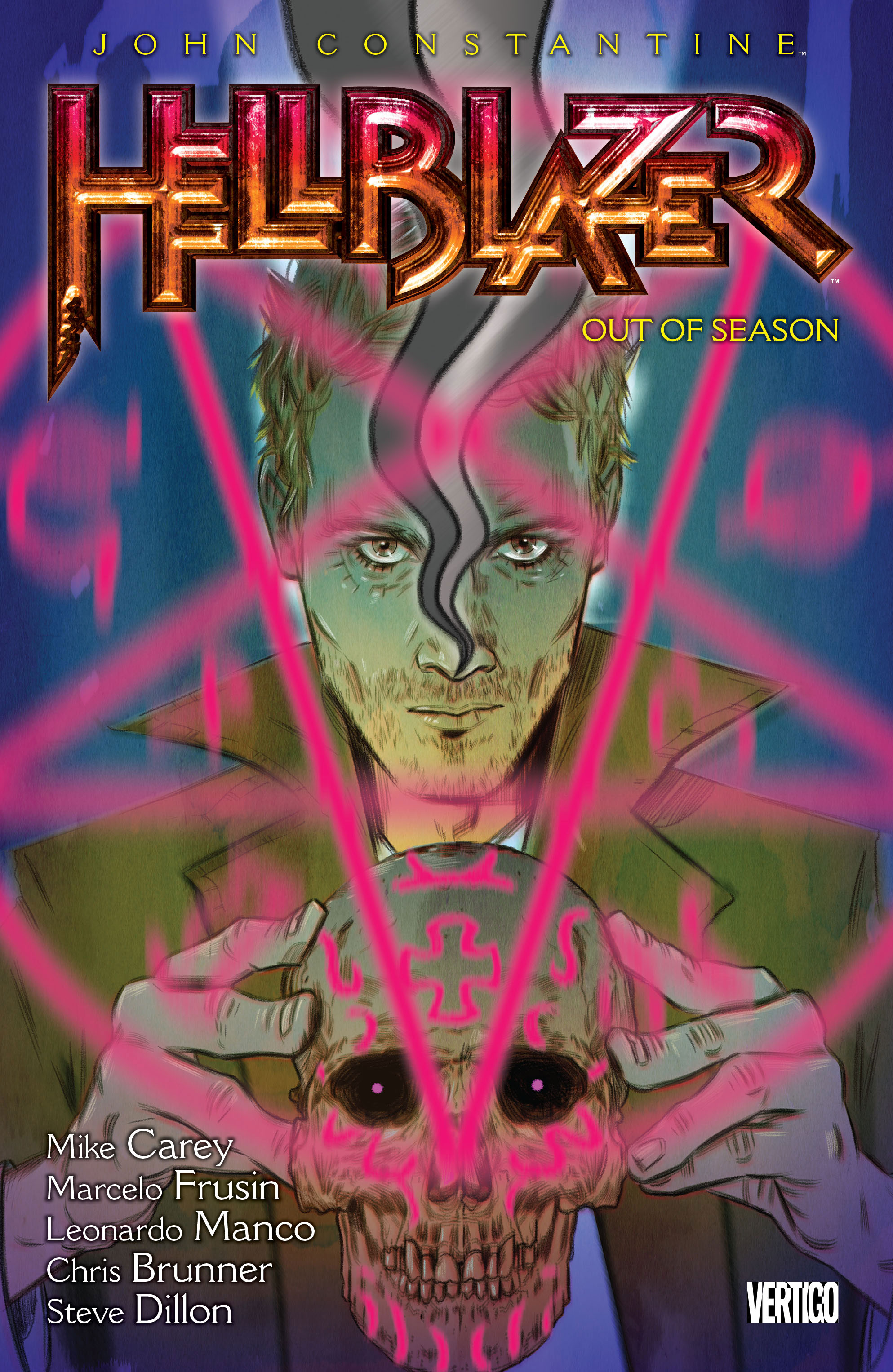
Hellblazer: Out of Season (Volume 17)

Written by Mike Carey

Art by Chris Brunner, Leonardo Manco, Marcelo Frusin, Steve Dillon

This was a random pick from the library.

I love Constantine as a character, and his whole milieu, but how many times can there be a worldwide supernatural apocalypse event? It seems like it happens every year or so in these books. I really prefer the smaller, more intimate story arcs that focus on just how miserable it is to be in Constantine’s social circle.

I will say, this is a pretty great connecting arc. The twist at the end is interesting, and it creates new characters and problems. It’s a great example of finishing a chunk of episodic story by building a lot of new scaffolding that future stories can be built upon. That’s not always an easy thing to achieve. Good lessons for anyone who wants to write a series.

The Sandman: Overture

Written by Neil Gaiman

Illustrated by J.H. Williams and Dave Stewart

Not my first time reading this, and it won’t be my last. If you love comics and you haven’t read this book, you are missing out.

It is, by far, the most beautiful Sandman book, and that is a high bar. There are no straight-edged standard panels here. It’s a master-class in all the different ways a comics page can be composed. While the original Sandman was often very dark and brooding, Overture contrasts its serious blacks with all sorts of psychedelic color.

I’ve read some complaints about the story not being as good as the originals. And that might be true, but I also don’t think it’s too far off the original series. Neil Gaiman does his usual Neil Gaiman things, crafting stories that feel simultaneously new and old, familiar and strange, playing around in one of the worlds where he is most comfortable.

Although this is a prequel, I think it definitely ought to be read after the original run. Narratively, the story comes before the other books, but the references and emotional beats are clearly designed as a follow-up.

Reading this again gave me the itch to read even more Sandman. So…

Sandman: Preludes and Nocturnes (Volume 1)

Written by Neil Gaiman

Illustrated by Sam Keith, Mike Dringenberg, Malcolm Jones III, Kelley Jones

The big, bad original, from the early days of DC’s Vertigo imprint.

Despite Morpheus (a.k.a. Dream) being almost infinitely old when we first meet him, this is a fantastic origin story. It’s a satisfying arc in its own right, as Morpheus is trapped, escapes, and then has to regain his tools and repair his kingdom. It also sets the tone for the entire series: a delightful mix of modern and ancient stories in a new mythological frame.

Almost all of the issues collected here are dedicated to the main plot, with the exception of the final one. “The Sound of Her Wings” remains one of the greatest single issues of a comic of all time, characterizing Death as a whimsical, kind, and profoundly compassionate older sister to Dream.

What I’m Reading in June

In June I’ll be continuing my re-read of the original Sandman series. I’m also delving into the Witcher series and a brand new TTRPG.

Writing Excuses — Mysteries and Tension

I wrote about Writing Excuses almost two years ago, as a part of my Reference Desk series. It’s still my favorite podcast about writing. I’m not a consistent podcast consumer, so I tend to let quite a few episodes build up and then burn through them. I’m currently enjoying several episodes on mystery and tension in Season 18.

If you haven’t listened before, don’t let that number of seasons intimidate you. Each episode is only 15-20 minutes and generally self-contained, so it works perfectly well to just start with the current episodes and work your way backwards.

While the show has had a rotating cast of hosts and a lot of guests over the years, they’ve announced a slight format change with the latest season. The core hosts now include several long-standing members and a couple of new-ish faces who have guested previously. The show is more diverse than ever, not only in terms of gender, race and orientation, but in the different perspectives each host brings to writing and publishing.

Writing Excuses also feels a little bit more organized now, with each host lined up to do a deep dive this season. However, it’s still very much unscripted, and still contains unexpected tangents and the occasional bad joke. It mostly feels like a group of smart people who love stories and writing, sitting around and having a chat about a particular topic each week.

The Tools of Tension

The Writing Excuses folks suggest a list of tools for building tension:

  • Anticipation
  • Juxtaposition
  • Unanswered Questions
  • Conflict
  • Micro-Tension

Anticipation, or suspense, is anything that lets the reader know something is coming, whether it be good, bad, or of uncertain providence. It’s Alfred Hitchcock’s bomb under the table. It’s the flash-forward at the beginning of the police procedural that lets us know what’s going to happen, but not how. It may even be built into the genre itself, like the detective’s big reveal at the end of a classic murder mystery.

Juxtaposition is anything that plays with the differences between two or more things. In movies, this might be a contrast between the style of music or voice-over and the action on the screen. In fiction, it might be the calm and collected way the high-class villain writes about the gruesome murder he has committed.

Unanswered questions can find a home in almost any kind of story, but are exemplified in the Mystery Box style of story. The reader keeps reading to find out why strange things are happening, and what will happen next. This was the type of tension that I chose as the driving force in my serial novel, Razor Mountain.

Conflict is that old classic that everyone talks about. It’s characters who want the same thing, when only one of them can have it. It’s a clash between diametrically opposed viewpoints. It’s the kung-fu fight in the martial arts movie, or the shoot-out in the western. It might just be the easiest form of tension to write, and the easiest for the reader to parse, which explains why it’s so popular.

Finally, micro-tension is any of these forms, shrunk down into a tiny little dose. It’s what pulls us through each conversation between characters, each scene, each chapter. It’s what keeps us turning the page. Contrasts are important for pacing, but micro-tension keeps the reader engaged in the lulls between the  bigger payoffs.

Just a Taste

This is just a condensed example of the kind of conversations about craft that make Writing Excuses so great. If this kind of nuts-and-bolts writing advice interests you, I’d highly encourage you to check it out.

The episodes on types of tension run from 18.9 – 18.14.

A Month In the Moment

During the month of May I performed an experiment. I decided to limit myself: I would watch no video (TV, movies, streaming, or internet), play no video games, and stay off social media. It was an enlightening experience.

Soma

In Brave New World, Aldous Huxley introduces a fictional drug called soma, which is used to make the people in the story’s future civilization happy and docile. A variety of people have excitedly pointed toward media, and especially television and social media as a kind of modern soma.

I think those arguments are overblown in some ways. In the past hundred years, various pundits have claimed that newspapers, paperback books, comics, radio, and every form of television would also turn us into mindless zombies. Somehow society hasn’t collapsed. However, there’s also clearly some truth in the idea: media can be an escape from the real world, and it’s certainly possible to use it as a mind-numbing drug.

There’s plenty of “junk food” media that passes time, but nobody would claim is great art. Or even mediocre art. A great movie can feel elevating and change your whole outlook on life. But also, Jersey Shore exists. The junk can be fun, but too much of it is obviously problematic.

I’ve certainly done things like doom-scroll Twitter while watching a movie I don’t care about with half an eye. I would frequently watch whatever the YouTube algorithm threw at me while playing a low-effort video game. That’s the sort of behavior that really crams so much stuff into the eyeballs that the brain short-circuits. I like the word used by the YouTube video game theory channel Extra Credits: abnegation, literally entering an ego-negating mental state via the consumption of media.

Finding My Keys

Over the month, I shifted from a lifestyle where I was frequently performing this kind of media-fueled abnegation to one where I consumed almost no screen-based media at all. I did continue to listen to podcasts (although most of these are writing-related) and I read books.

I’m reminded of a comedy act I saw years ago (and unfortunately can no longer find to give credit). They talked about giving up smoking weed.

I could remember things again. I thought I was psychic. I was like, where are my keys?

They’re over on the counter!

How did I know?

I don’t smoke, but I did find that my time used to disappear mysteriously. Where did my evening go? My weekend? That time would just vanish. During May, I really didn’t have that feeling at all. I was experiencing all that time instead of letting it just slip away.

I also noticed some of the environmental factors that contributed to my problem. On day 2, I realized I had the Twitter app open on my phone, with no recollection of opening it. I ended up turning off notifications, because the bird app would ping me first thing in the morning, inviting me to turn off my brain before I even got out of bed.

I also began to notice just how many pings I got from services like Steam and Oculus. When I wasn’t paying attention, all these things together created a steady stream of invitations to distraction every single day. But being aware of them also takes away a lot of their power. It turns out almost none of those notifications were for anything that was more than a 5/10 on my excitement scale, so why would I bother opening them, except out of habit?

What I Did Instead

I read eleven books in a month. (Granted, there were a few short ones in there, but I still find that hard to believe.) I have a bad tendency of buying books faster than I read them, and I have quite a backlog on the book shelf. If I keep reading like this, I could get through it in a couple months.

In addition to all that reading, I got a lot more of my to-do list done. And when bedtime rolled around, I was much more inclined to actually go to bed. I got the appropriate amount of sleep most nights, which is another strange feeling when I’ve spent years depriving myself of sleep to various degrees.

I wrote more, but not a lot more. I found that even when I had more time, my ability to write (as well as do other things) was still limited by my energy. As much as I love it, writing is not low-effort or relaxing to me.

During the week, I only have time at the end of the day, and I’m already drained. Unfortunately, I didn’t find my secret to writing productivity, but I did come to a better understanding of what’s limiting me.

What Changed?

It’s now June. My experiment is over, but it really changed my outlook. While I had the periodic itch to watch something, or pick up Twitter or a video game, I wouldn’t say I’ve been missing it.

At the start, I was worried that May would be a miserable month for me. In actuality, it felt really good—so good that I want to keep that feeling going. That doesn’t mean I’m going to give up most media forever, but I am going to be much more discriminating when I spend my time watching or playing something.

Taking a month off really clarified which media I’m genuinely excited about. I found that I had no desire to go back to most of the “junk” I was watching before, but I wrote a small list of movies I’ve been meaning to watch and never got around to because it was just slightly more effort than firing up the first thing that caught my eye on YouTube or Netflix. I can still watch less, but feel like I’m getting more out of it.

I’m honestly not sure if I’ll go back to Twitter. It was a slow-burning dumpster fire in April, when they broke all the integrations, and I sincerely doubt it has gotten any better in the past month. It is, unfortunately, still the social media hangout for writers though. I’ve found a lot of great books, blogs, substacks, etc. through it. Time will tell.

Try It, You’ll Like It

I’ll close with this. If you’re someone who consumes a lot of media, I’d encourage you to try this experiment: one month, no TV, movies, games or social media. If it turns out to be miserable, well, it’s only a month.  But I don’t think it will. It changed my perspective and my priorities, and somewhat to my surprise, it made me a happier person.

If you decide to try it, let me know. I’d love to know how it goes for you.

Razor Mountain Development Journal — Chapter 31

This is part of an ongoing series where I’m documenting the development of my serial novel, Razor Mountain.

You can find my spoiler-free journals for each chapter, my spoiler-heavy pre-production journals, and the book itself over at the Razor Mountain landing page.

Waking Up

I find myself writing a lot of chapters in this book that start with Christopher waking up. Popular advice is that this is an overused trope that should be avoided. I feel like I might be given a pass, because earlier in the story there was some question as to whether Christopher would wake up at all, and now the question is whether he’ll still be himself when he awakens. But maybe those are just excuses for using tropes.

After Chapter 30 delved mostly into Christopher’s head, Chapter 31 gets back to the external action. However, I did make a little digression back into Christopher’s thoughts at the start of the chapter because I wanted to drop more information about the voices. Now that Christopher is getting God-Speaker knowledge, there’s no more hiding their origins.

I expect this is a spot where I might lose some readers. It’s been clear since halfway through the book that God-Speaker has some inhuman powers, but it wasn’t clear whether these came from a supernatural source or something else. If the reader thinks the book is trending toward fantasy and it takes a sudden swerve into sci-fi territory, that’s bound to annoy someone.

Hopefully those readers are invested enough at this point to accept it and keep going to the end.

Breakfast

My goal in the breakfast scene was to highlight the juxtaposition of the incredibly mundane (mediocre microwave breakfast burrito) with the incredibly weird (attempted assassination by poisoning). Even for the immortal god-emperor, breakfast is the most important meal of the day.

Revealing tidbits of information helps to drive the story, but the poisoning incident and the interview with Reed are there to help keep up the tension. The reader knows who killed God-Speaker, but Christopher and Cain do not, and that kind of information disparity can be used as a tension machine. As time runs out, we have to wonder when Reed is going to make his move, and what form the danger will take.

The other topic I wanted to cover in the conversations between Cain and Christopher was the oracles. They are one of the two big mysteries that I haven’t adequately resolved, and they’ll play an important part in the ending of the book. I’m honestly a little worried about how well it will work. I don’t want it to feel like deus ex machina, but I also don’t want to give away the secrets too early.

If it doesn’t work, I’ll have to go back in revisions and figure out how to clean it up. I knew there was a risk of that happening when I decided to post these chapters as I wrote them. This is an open experiment, with all the possible messiness that entails. If nothing else, I hope it’s interesting to other writers to see how one person’s process played out for one particular book.

The Interviews

The interviews that make up the rest of this chapter mostly serve to flesh out the world and the way God-Speaker fits into it. He’s the spider in the middle of the web, and the web started to break down in his absence. Hopefully it also raises the question of what Razor Mountain is for, and whether it’s a good or bad thing that God-Speaker has created.

Moira, the former Secretary of Justice, has been imprisoned for a good portion of her life in an absolutely unjust way. Whether Christopher and Cain feel guilty about this, it’s a result of the systems that God-Speaker built. She points out that no matter how they feel, there’s nothing they can do now. It’s already done, and nothing will get those years back.

Next Time

Chapter 31 was the longest chapter yet, and looking to be the longest of the book. (It’s not that long though. I just like short chapters.) There are only three chapters left.  In Chapter 32, big things will happen. See you next time.

Razor Mountain — Chapter 31.5

Razor Mountain is a serial novel, with new parts published every week or two. For more info, visit the Razor Mountain landing page.

The Secretary of Labor sat in the chair on the other side of the desk with legs crossed and hands steepled. He wore a dark suit with a narrow tie that only further accentuated his lankiness. He didn’t speak, he just looked at Christopher.

“Well, since I’ve been asking everyone else, I suppose I had better ask you too: do you need more evidence that I am who I say I am?”

Reed frowned. “Is that what the others have been doing?”

“Some of them.”

Reed shook his head. “As I said before, it seems like the reasonable thing to do is wait. If what you’ve said is true, then it shouldn’t be long before we have all the incontrovertible proof we could ever desire.”

“What would you like to talk about then?” Christopher asked.

“I was under the impression that this meeting was for your benefit,” Reed replied. He picked up the briefcase next to his chair and set it on his lap. “I’ve taken the liberty of organizing some reports. It’s obviously not practical to condense decades of work, but I’ve summarized a few of the more interesting projects, and the things that are currently in progress.”

Christopher took the proffered papers and set them on the desk.

“I’ll take a look. I’m sure it will take some time to get caught up with everything.”

“Yes, half a lifetime of work. I’m sure by now Cain has mentioned his many concerns that everything is more or less falling apart around here, but I think you’ll discover for yourself that his claims are overblown.”

Christopher heard a faint sigh escape Cain from across the room.

“Honestly, I don’t think that’s been the nature of our conversations at all,” Christopher said.

“I see. Well, I think you’ll be pleasantly surprised by some of the advancements we have made in your absence.”

Reed stood, abruptly enough that Christopher sat back in his chair. His hand touched the gun under the desk.

“If there’s nothing else?”

Christopher shook his head. “No, I suppose there isn’t, at least for now.”

Reed left as stiffly as he had entered, briefcase in hand.

When the door had closed, Christopher said, “That was odd.”

“He came in expecting an argument,” Cain said.

“Why is that?”

“I assume it’s because he and I rarely see eye-to-eye on anything, and he thought I’d be busy telling you how awful he is.”

“Is he? From what I remember, he was competent enough.”

“He does his job well enough, from what I can tell,” Cain said. “It’s the way he always tries to do little bits of other peoples’ jobs as well that tends to irritate me.”

“I see. He’s one of the ones who has been trying to expand his kingdom, so to speak?”

“That’s my opinion,” Cain said. “Obviously I don’t expect you to take my word for it. You can form your own opinions. But that’s more or less the root of our particular disagreements.”

Christopher thought about the strange mix of people within the cabinet. God-Speaker had sought out a set of qualities in his administrators. They were supposed to be reasonably good at their jobs, but they also had to be servile and content with the limited power they had. Above all, God-Speaker had tried to build a place where he was safe and in control; a protective shell around himself.

Cain was a perfect fit for the job. He enjoyed the work and sought out improvements. He kept the trains running on time, so to speak. Beyond that, he had little ambition. In fact, he was so eager for God-Speaker to come back, he had almost single-handedly engineered it. It was a rare combination of personality traits.

“When did you send back the oracles?” Christopher asked.

Cain scratched his scalp. “We sent one an hour or two after you were found. Then everyone argued about how we would know if it had worked. The next morning we sent two more. The last two were a couple days after that. At that point, there was only one left. Despite all the arguments about whether or not the oracles were of any use at all, nobody wanted to send the last. Of course, at some point he aged out, as they all do.”

Christopher shook his head. “I remember now. I remember getting those messages, for all the good it ended up doing.”

“So they did actually make it?”

“They made it. But they didn’t tell me who the threat was.”

Christopher cocked his head, listening. “Nobody knows exactly how the oracles work. Not even the voices under the mountain. I received messages, but it’s hard to say if they were from you.”

“I’m not sure I understand.”

Christopher waved a hand. “It’s not important. I remember being on my guard. I knew something was coming. Whatever happened, I wasn’t prepared.”

“We didn’t know who had done it either,” Cain said. “We couldn’t send you a proper warning.”

“That should have been enough.”

Christopher rose from his chair.

“I think I had better sleep. Maybe in the morning we’ll know the truth.”

<< PREVIOUS ] [HOME] [ NEXT >>

Razor Mountain — Chapter 31.4

Razor Mountain is a serial novel, with new parts published every week or two. For more info, visit the Razor Mountain landing page.

Christopher no longer felt the freedom of anonymity to walk around the city unrecognized. Although nobody outside the cabinet would know who he was, public areas would be dangerous: someone acting on the murderer’s orders might attempt assassination anywhere. Cain suggested he remain in the highly restricted areas reserved for himself and the cabinet, where even high-level advisers and well-vetted guards were rarely permitted. It would force the traitor to involve themselves personally in any assassination attempts.

Christopher insisted on one excursion, despite Cain’s attempts to dissuade him, so Cain called a lieutenant colonel he trusted to act as personal body guard, and they set out without warning anyone that they were going. They took service hallways and elevators to the levels below the city center, and made their way to the section that served as the city’s military prison.

Cain led the way, showing credentials and speaking to the guards at the entrance. Prisons, it seemed, did not like unexpected visitors. There was some discussion among the guards (and Christopher suspected some complaining just out of earshot), but they were eventually allowed through. One of the guards took them down a maze of hallways to another checkpoint, where they were let through immediately. Then more hallways.

Finally, the guard swiped his card over the black Plexiglas square on the wall and held the door open for them. Cain stepped through and Christopher followed. The door shut behind them with a solid sound, like an airlock sealing.

“I don’t like this,” Cain said.

“Isn’t this one of the most secure places in the city?” Christopher asked. “There are cameras covering every nook and cranny. And plenty of witnesses.”

Cain shook his head, but didn’t complain further. Christopher understood what he was feeling. Regardless of logic, it felt like they were trapped. He supposed that was the whole point of prison architecture.

At the end of the hallway, where only specific guards were permitted to enter, there were four cells. For decades now, according to Cain, only one of them had been occupied. Drawing on the confusing swirl of memories available to him, Christopher was able to calculate that the woman inside should be sixty-six. She looked far older.

The cell was lavish, compared to the one that Christopher had been kept in. It was about twenty feet square, with a real bed, a desk and chair, and a stainless steel privacy partition for the toilet. It still wasn’t a place he would want to spend days, let alone decades.

Moira McCaul was sitting at the desk in the middle of the cell, well back from the bars. She didn’t stand, or even turn to look at them.

“It’s been a while, Cain.”

“Longer than it should have been,” Cain said. “I could make excuses, but they hardly seem adequate in the face of your situation.”

She laughed, though it was little more than a papery whisper. “I accepted my situation years ago. I think it’s your guilt that keeps you coming back to visit me.”

“It’s not guilt,” Cain said. “I did what I could to try and free you. I just thought it might make it a tiny bit more bearable if you had someone to talk to once in a while.”

“Maybe if you were a better conversationalist,” she said, dryly. “Though I appreciate the effort. Now I imagine you’re not here to rehash the same old conversations again. Who have you brought with you this time?”

“It’s me,” Christopher said, without thinking. There was something different in his voice, something he didn’t recognize.

Moira turned her head sharply. It was clear she recognized it.

Christopher was momentarily submerged in new memories: a young McCaul taking the elevator to the top floors for the first time, their early meetings and her guarded excitement. The young face faded from his inner eye, leaving behind the wrinkled and far older version that sat before him in the cell.

“You actually came back,” she said.

“I did. Through a truly ridiculous series of events.”

“Nobody said it would be easy, coming back from the dead.”

Christopher scratched his head. “I don’t suppose you were the one who killed me?”

As soon as it came out of his mouth, he thought it might be the worst thing he could have possibly said. There was silence for a moment, and then she laughed, a real proper laugh this time.

“Did you pick up a sense of humor while you were away?” she asked.

“I picked up a few things,” Christopher said. “Unfortunately, I’m still missing memories, and a few of them are important ones.”

“I see. Well, as I’m sure Cain has already told you, I didn’t kill you, and I don’t know who did. I gave up trying to figure it out a long time ago.”

“There may have already been another attempt to kill me,” Christopher said. “Poison, this time. You don’t seem to be in the position to pull that off.”

She nodded, but her humor had fled.

“I promise you, I’ll release you as soon as we know who the killer was.”

“I appreciate the thought,” she said, “but it comes a few decades late.”

“I’m sorry.”

“Oh, not your fault. Certainly not your fault. You’ve had all that being dead to deal with.”

“Everything under the mountain is my responsibility,” Christopher said.

“Maybe so, but what’s done is done. Even the oracles couldn’t undo it.”

They stood in silence.

“Was that all you came to say, then?”

Christopher sighed. “I guess it was. I felt like I needed to speak to you in person.”

“To know that it really wasn’t me? You always were convinced you could read anyone, up close. Did it do you any good?”

Christopher didn’t know how to reply. “I’ll see you again when we know who the killer is.”

“Just make sure you take care of it this time.”

“I will.”

They left the way they had come, and Christopher felt the oppressiveness of the prison lift bit by bit as they passed the checkpoints. There were no traps and no assassins.

Even safely back in his office, Christopher couldn’t banish Moira’s face from his mind, the young face from years past superimposed on the unnaturally aged face of the imprisoned woman. He realized what really unsettled him was her calm in the face of it all. So much of her life had been taken from her. There was nothing she could do about it, and she had accepted that.

<< PREVIOUS ] [HOME] [ NEXT >>

Razor Mountain — Chapter 31.3

Razor Mountain is a serial novel, with new parts published every week or two. For more info, visit the Razor Mountain landing page.

David Tull was the Director of Media, responsible for overseeing all the books, movies, television and any other forms of text or video that originated inside or outside the mountain. Perhaps more importantly, it put him in charge of censorship and ensuring that no information entered the mountain that would go against the narratives that had been carefully constructed for the general populace.

He was a short man with a precise gray crew-cut. He entered the office wearing a salmon dress shirt, a wine-red tie, and khaki pants with a crisp crease. He talked fast and spoke little, and struck Christopher as decidedly unfriendly.

The first thing he did after sitting in the chair on the far side of the desk was to hand over one of the two manila folders he carried. The topmost thing within was a page of questions, double-spaced and numbered.

“These are all the questions I could think of that only God-Speaker would know,” he said.

Christopher glanced down the list.

“Would you like me to answer them right now?”

“Yes, that’s the idea.”

“And your opinion of whether I am, in fact, God-Speaker will depend on my success.”

“It will be a contributing factor,” Tull replied.

Christopher sighed.

“As I said before, I haven’t yet regained all of my memories. I also have to say that some of these things…I just don’t care about, and I will never remember.”

The corners of Tull’s mouth turned down a fraction of a millimeter.

“I believe you are the twelfth person to hold your current position,” Christopher said, starting down the list. (This was either incorrect or very incorrect, depending on how specific he wanted to be about the position and its predecessors, but accurate to what Tull knew.)

“Numbers two and three I’ll just write here, and you can look at them. I assume you don’t want to talk about those things in detail with others present,” Christopher continued. He glanced over at Cain, who was sitting in a chair off to the side, ostensibly working on a laptop while observing the situation.

The other questions ranged from pretty reasonable indicators to complete ridiculousness.

“I don’t remember what color the halls in section B-22-F are painted, but I would assume something awful in the range of dull gray to dull green. If the maintenance rounds still work like they did before my absence, they will have been repainted…three or four times.

“The last edition of official city history was finalized in 1974, with the usual yearly updates. That’s again assuming that there hasn’t been an updated edition and you’ve all just been keeping up through those updates. The list of disallowed topics was 1975, with the same caveats.”

As he worked his way through the list, Christopher became more and more distinctly aware of the knot of thoughts and emotions that he felt as God-Speaker’s presence in his head. These thoughts were both irritated about satiating a slightly annoying subordinate, and mildly pleased to finally be getting back into the workings of Razor Mountain. The place had decayed in his absence, but that also meant new opportunities to fix things. To make them right again.

Christopher felt uneasy discussing the various ways that information was manipulated within God-Speaker’s society. The God-Speaker thoughts, perhaps in response, were about whether it was really much different beyond the confines of the mountain.

Christopher was also constantly aware of the gun slung under the desk, ready for quick access. It served as a reminder that any of these people might have betrayed him, might be ready to do it again.

#

The new Secretary of Justice was named Justine Vahn, and Christopher knew nothing about her beyond their brief encounter at that first chaotic meeting with all the secretaries. She wore a stylish navy business suit, offset by a gauzy yellow scarf.

“Is there anything I can do to reassure you of my identity?” Christopher asked, after she had introduced herself.

“Oh, no, no, no,” she said, waving the question away as though it were an insect. “Your story and Cain’s clearly line up, and I don’t know what reason Cain would have to lie to us.”

She turned in her chair to talk to Cain. “You’re not exactly the power-hungry type, are you? And if you were, you wouldn’t wait three decades to get ’round to your secret master plan for taking over.”

She turned back to Christopher.

“No, I think the big question now is how we can all readjust to your presence. It’ll be a relief to have everything properly organized again. No more petty squabbles among the cabinet. Of course, we still have the matter of who exactly this traitor is, but I have every confidence we’ll get that business out of the way soon. With any luck, you’ll confirm that the cabinet convicted the correct person, and we can get back to doing our jobs.”

“You’re not worried that it might be someone else?” Christopher asked.

“The truth will out,” she replied. “I trust that my colleagues did not take it lightly to convict and imprison my predecessor. Obviously that was before my own tenure. I was relatively new to the deputy secretary position at that time, so I really didn’t have the access to know the details.”

“You didn’t go back and look at the events in retrospect?” Christopher asked. “I assume you have access to all those records now.”

“Well, of course. But it hardly seemed appropriate to re-litigate.”

“Even if the result is that my murderer might remain free and in power, among you?” Christopher asked. This was entirely God-Speaker’s irritation leaking through. “You’re the Secretary of Justice.”

“You have to understand, there was no authority to appeal to,” she said, for the first time sounding a little more hesitant. “Without you around, the cabinet is a council of equals. We each have our own domains of control, and no particular authority over each other. There was a great deal of debate as to whether I should even be permitted to take over the position. Nobody was supposed to be appointed to the cabinet without your approval.”

Cain chimed in from the corner. “It seemed like a better option than giving one of our remaining number double-duty.”

“I must say,” she continued, becoming more prim with every word, “it was quite a shock to learn how everything really works. I felt rather out of my depth. I certainly didn’t feel like I ought to be leading a charge to reopen the investigation. There was a certain period where I thought the whole thing might just fall apart.”

“Luckily, everything seems to have worked out,” Christopher said, through the barest hint of a smile. “Here I am.”

“Yes,” she agreed. “It’s remarkable.”

“…Although it may not have worked out so well for Moira McCaul,” Christopher said.

There was the faintest hint of a twinge in Justine’s dimple. Her smile had begun to look a little artificial.

“Yes, well, I suppose we’ll know soon enough.”

“I suppose we will.”

<< PREVIOUS ] [HOME] [ NEXT >>

Razor Mountain — Chapter 31.2

Razor Mountain is a serial novel, with new parts published every week or two. For more info, visit the Razor Mountain landing page.

Christopher rubbed his eyes and forced the complaints of the voices out of his head. He found himself back in the apartment entryway, in front of the stone doors. On the wall screen was an image of Cain, standing awkwardly in the hall beyond the doors and holding a brown paper bag.

Christopher opened the door. Cain stepped inside and held up the bag.

“Breakfast, unfortunately.”

They made their way to the apartment kitchen, where Cain poured out a pile of pre-packaged breakfast foods. The cardboard boxes and plastic wrappers gave Christopher an odd emotional twang. These were cheap, probably unhealthy, and shockingly normal. They were the sort of thing he might eat in a hurry when he was late for work. They felt out-of-place and alien here.

“I was hoping to have a proper chef cook you something fancy, to celebrate your return,” Cain said, by way of explanation. “Instead, you get the bounty of my personal freezer. I’m afraid I have a weakness for the kind of food that takes no effort to make. I usually just want something I can throw down the hatch and get on with what I’m doing.”

He hefted his belly. “The results are self-evident.”

“This is fine,” Christopher said. “Maybe even weirdly appropriate for this morning. Besides, this is exactly the sort of thing I’d eat when…well, in my other life, I suppose you could say.”

They selected breakfast burritos and microwaved them while Christopher put a skillet on the stove and tore open a package of Jimmy Dean breakfast sausage links. Cain made a move to get in front of the stove, but Christopher waved him off.

“I’m not an invalid,” he said, then worried that he might come across as irritable. “I don’t mind doing things for myself. I don’t expect to be treated like a king.”

“Sorry,” Cain said. “It’s been a long time, and I’m not sure how to navigate…all this.”

Christopher chuckled. “Believe me, I get it.”

“I just thought today deserved some sort of, I don’t know, ceremony,” Cain said. “Of course, it should really wait until everything is resolved. I discovered that the hard way, this morning.”

“What do you mean?”

The microwave beeped, interrupting their conversation. Cain took one burrito and handed the other to Christopher. He ate one-handed and gave the half-thawed sausages a shake in the skillet.

Cain sighed. “There was a meal prepared—rather nice, I thought—but we did a test run last night, and I gave it to one of my engineers. Called him first thing this morning, and he was knocked out with food poisoning. Maybe proper poisoning, the doctors are looking him over now. Thus…”

Cain raised his partly eaten breakfast burrito.

“You used someone without their knowledge to test my food for poison?” Christopher said.

Cain shrugged. “I honestly thought it was far-fetched. But there were a number of people who would have known what I was doing and guessed the food was for you.”

“I don’t like the idea that someone might die that way.”

“You’d prefer to eat the poison?” Cain asked.

“Of course not. But don’t you feel bad about doing that?”

“I feel bad that the man is ill, but that doesn’t mean it was a bad choice. And hopefully it turns out to just be some coincidence or allergic reaction.”

Christopher studied Cain’s face. There was a streak of cold, unemotional intellectualism there that Christopher hadn’t noticed. The man was an engineer, and Christopher had known one or two engineers like that, who unexpectedly failed to grasp the emotional import of some things, despite being incredibly intelligent in other ways.

“So whoever killed me last time around may or may not be trying to poison me now?”

“We’ll have to make sure you only eat and drink things that we’ve thoroughly vetted,” Cain said. “I’ve also got people trying to trace the ingredients. The chef is also being thoroughly questioned, although I’ve known him for some time, and I don’t think he’d purposely do something like this, unless someone had some kind of serious leverage over him.”

Christopher took a fork out of the drawer and shuffled the sausages around the pan as they began to sizzle.

“This would all be a lot simpler if I could just shuffle through these memories in some kind of orderly way and open up the ones I need.”

Cain nodded. “But you’ve said that’s not how it works.”

“No, that’s not how it works.”

They stood in the well-appointed kitchen, finishing off their breakfast burritos, the sizzle and smell of the sausages filling the room. Christopher felt untethered from reality, unable to really believe in the sequence of events that somehow ended in this moment.

He dumped the sausages onto a plate. Cain followed him into the adjoining dining room to eat them.

“So what now?” Christopher asked. “There must be something I can do while I wait for the eureka moment.”

“I had some thoughts on that,” Cain said. “I thought it might be beneficial to meet with some of the other secretaries today. We’re all still getting used to the idea that you’re really back, and it would probably do them some good to talk with you in a venue other than a chaotic conference room. Of course, there’s some risk involved, whoever has it out for you might try something, but we can take precautions. And it might jog some memories loose.”

“It might,” Christopher said.

“If anyone does try something, it can be at the battle-ground of our choosing,” Cain added. “We have to assume they’re getting desperate, and that should play to our advantage.”

To Christopher, Cain sounded a little too much like a man playing a game. He wasn’t wrong, as far as Christopher could tell, but the man wasn’t in the cross-hairs. Christopher could feel worry lodged in the too-tight muscles of his shoulders and neck, the constant knowledge that someone nearby was desperate to kill him.

<< PREVIOUS ] [HOME] [ NEXT >>