Firewatch — Games for People Who Prefer to Read

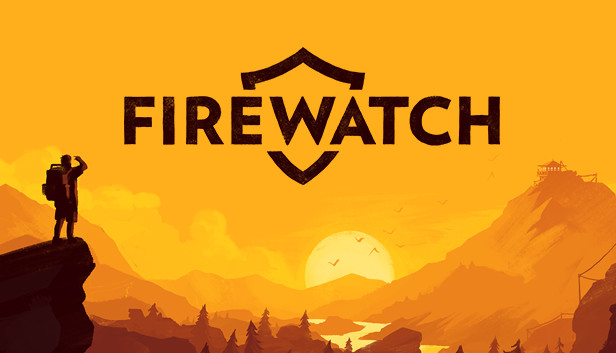
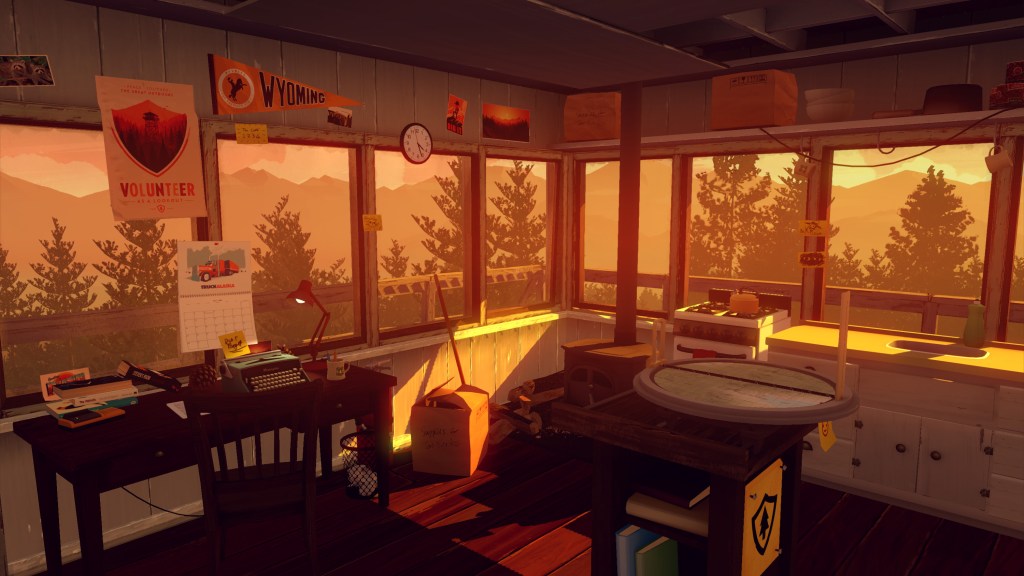
The job of a firewatch involves living in a single-room tower deep in the wilderness, monitoring the forest for fires. It’s a job that attracts those seeking solitude—the strange or socially awkward, and people trying to run away from their problems.

An Unorthodox Beginning

Firewatch begins with a blurred background and the audioscape of a bar. You play as Henry, a drunk college student, and you’re meeting your wife, Julia, for the first time.

A few paragraphs of text and a couple of life choices allow you to choose-your-own-adventure through several years of Henry and Julia’s relationship and marriage: their joys, arguments, and struggles. The choices start out easy, then problems arise, and the game presents more harrowing decisions where neither option is good.

Interspersed between these text vignettes are little snippets of 3D gameplay. As Henry, you load your truck in your apartment’s underground parking. You arrive at a trailhead in the forested wilderness. You hike, you camp. Eventually, you arrive at a huge, wooden firewatch tower.

On paper, I would never expect the opening of Firewatch to work. A rushed prologue in plain text? Front-loading a ton of emotional weight and exposition? When the game started, I was skeptical.

It’s a testament to the writing and design of the Campo Santo team that it does work. As a player, you become a participant by making tough choices with Henry in his back-story. You get a glimpse of life being good, then bad, and finally almost unbearable. It’s just enough time and detail to begin to sympathize with him and understand why he took the firewatch job.

Interleaving this backstory with the journey to the firewatch tower is oddly cinematic, a bit like voiceover, and creates the sense that all of this is weighing on him as he travels to the tower.

Exploration

Beyond this initial prologue, Firewatch sets aside the text and becomes a full 3D game. Your tower is your home base, but most of your time is spent in the forest. As Henry, you can walk and run, vault over obstacles and climb, but not jump. This is not a “walking simulator,” but the mechanics are simple and straightforward.

From the beginning, a surprisingly large area of wilderness is open to your exploration. More areas open up as you get further into the game and acquire new tools, the first of which is a backpack of ropes that allow you to rappel up and down shale slides and steep slopes.

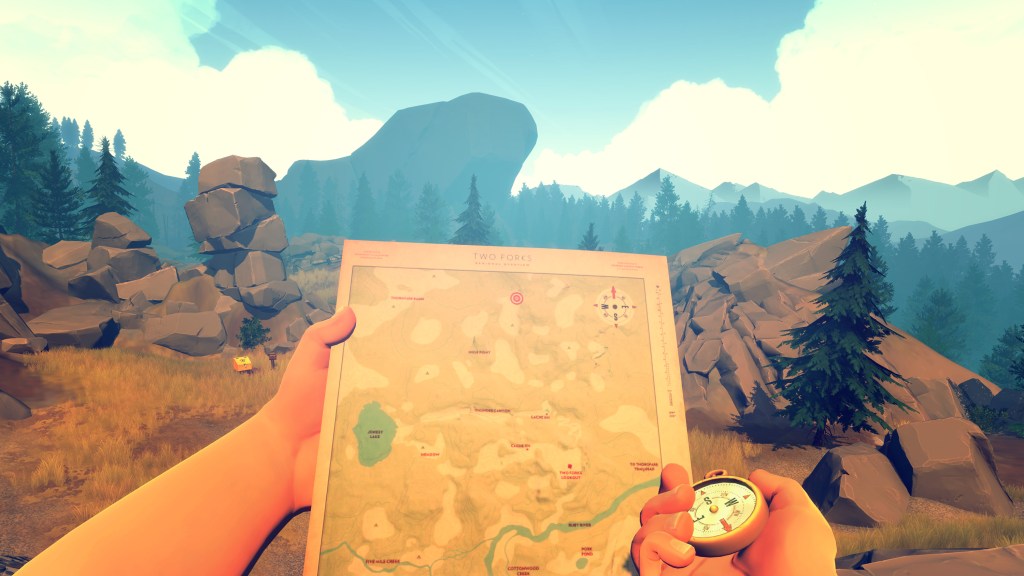
You are given a compass and map, and the game doesn’t clutter the screen with big arrows, icons, and indicators. It’s easy to get turned around or take the wrong path, but this makes it feel more like real exploring and less like the game is holding your hand.

In reality, the game carefully contains the player, but it goes to great pains to make it feel like the world is wide open. For the most part, it succeeds.

Ten-Four, Boss

You are alone in the wilderness, and your only link to the rest of the world is your high-powered walkie-talkie radio. With it, you can talk to your boss, Delilah, in the next tower over, which is barely visible on the top of a mountain several miles away.

As your boss, she helps get you acclimated to the job and provides you with tasks to keep you busy. She’s been out here for years and knows her way around.

The radio becomes your primary means of interacting with the world. When you see something interesting in the world, an icon pops up and you have the opportunity to talk to Delilah about it. You soon strike up a snarky rapport, and she becomes your constant companion throughout the game. The two of you discuss your past, shoot the shit, and become close. Then everything starts to go wrong.

What’s Out There?

From your first day on the job, there is mystery lurking in the forest. Delilah tasks you with finding and telling off some camping teens who are launching fireworks in peak fire season. On your way back, you encounter a shadowy figure who blinds you with a flashlight and disappears into the night. Then you find that someone has broken into your tower.

At first, the strange happenings seem innocuous, but things get weirder and weirder. More and more clues point toward something nefarious (and perhaps science-fictiony) going on.

To make matters worse, a fire breaks out just a few miles away. Fire crews do their best to contain it, but it grows day by day, a looming danger that adds tension. If it spreads, you and Delilah will be forced to evacuate, and you’ll never know the truth about what’s really going on.

Storytelling

Firewatch is full of moral quandaries posed to flawed characters. Everyone here has made bad choices, and everyone can be blamed for something. The game doesn’t tell you how to feel, and doesn’t paint the world in black and white. It doesn’t provide a pat conclusion either.

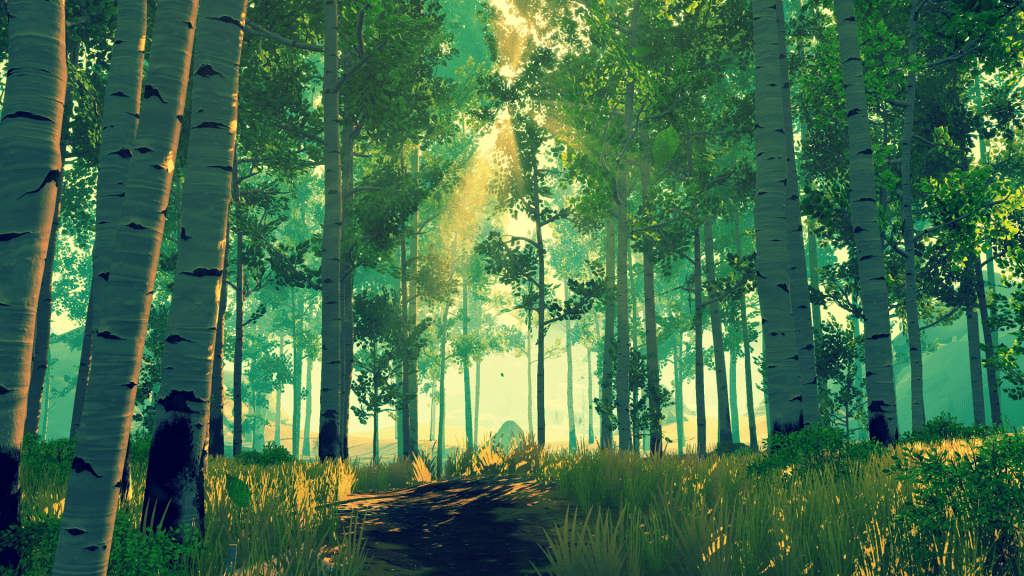
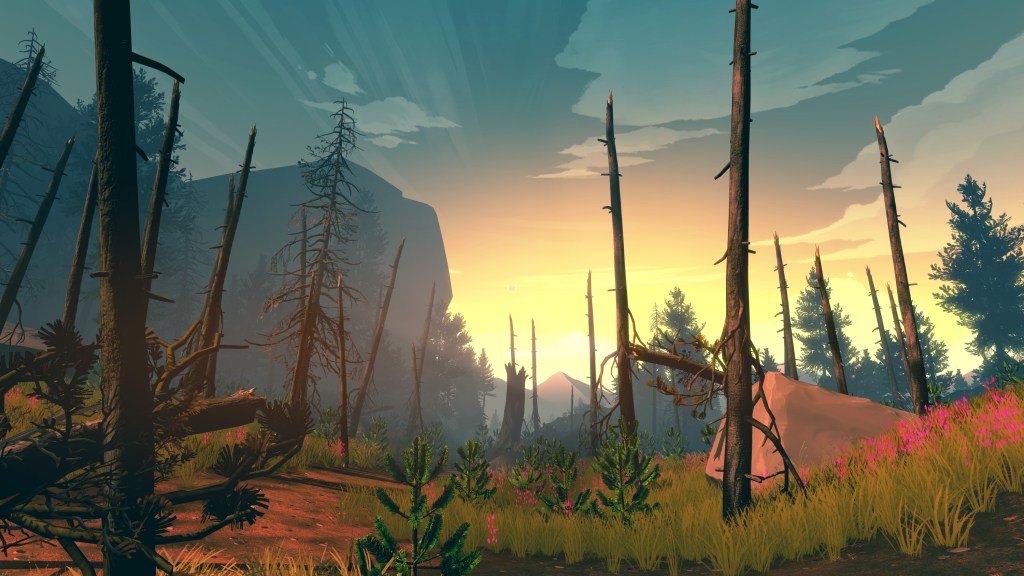
Firewatch isn’t perfect—it was made by a small team, and they had to cut corners in some places to be able to finish it. But they did so very smartly. The graphics are not state of the art (even for a decade ago, when the game was released), but they have a painterly aesthetic that is often beautiful. There are few characters, but the voice-acting is impeccable, and makes the whole game work.

The story can be completed in 3-5 hours, but it’s full of twists and turns, and contains a few laughs and a fair bit of heartbreak. Games, even story-centric games, often struggle with endings. Firewatch sticks the landing. It’s not necessarily a happy ending, but the mysteries are all resolved.

Henry, having run away from his problems, is confronted with an example of how badly that can go. It’s up to you whether he takes that lesson to heart.

As a wonderful bonus, the game includes a documentary mode. It turns the game into a sort of interactive museum with stations scattered throughout the wilderness. Each station has voice notes from the developers, and sometimes concept art or other notes pinned to bulletin boards. I wish more games would do something like this, although I can understand forgoing it when it’s such a challenge just to ship a game.

Where to Get It

Firewatch is a game by Campo Santo, published by indie powerhouse Panic, Inc. It’s available on just about every modern console and PC platform.

If You Care About Video Game Stories, You Should be Watching /noclip

If writing is my creative first love, video games are my second. Words Deferred is a site about writing, so I mostly limit my talk about video games to the story-centric, like my series about Games for People Who Prefer to Read.

Of course, not all games care much about story, and the entire medium has long been lambasted by serious artists for its weak storytelling. There’s a weird tension built into games, between experience and participation, the twin engines that make a game at least partly something you do instead of something you receive. That doesn’t mean there are no great stories in games, but it does mean that you have to go searching if you want to find them.

Games are also fascinating from the perspective of their construction. They are half art, and half science; programmers and engineers working side by side with artists, modelers and sound designers. The closest analogues are stage theater or TV and movies, where there is a certain unexplainable amalgamation of the magical and the mundane in order to actually put a finished product in front of an audience. Art constructed by a team is very different from the work of the lone artist.

There are plenty of documentaries on movie making; on the actors, directors, and myriad other craftspeople who put stories on the big screen. But there are comparatively few who do the same thing for games. Among the best are the small team at /noclip.

They are remarkably prolific for a core group of just four people, not only putting out multiple high-quality documentaries per year, but hosting a weekly podcast, building a game history archive, doing some indie game development, and recently creating a sort-of, kind-of online game magazine thing. They are also clearly a group who loves games as a storytelling medium, and that passion comes through in the documentary series where they give voice to the developers of some of the most exciting story-centric games.

Now is the perfect time to check out their work, because they’re right in the middle of releasing a multi-part series about Disco Elysium, one of the most critically acclaimed and lauded “story games” in the past decade, and the story of the people who made it is just as interesting as the game itself.

Thousand Year Old Vampire — A Solo RPG

Thousand Year Old Vampire is a lonely solo role-playing game in which you chronicle the unlife of a vampire over the many centuries of their existence, beginning with the loss of mortality and ending with their inevitable destruction.

I happened across this little hardcover book at a games store in a mall near my house. I was there to have the failing battery in my phone replaced, and I had some time to browse and meander. Since most TTRPG books are oversized tomes, a novel-sized book stands out on the shelf.

I don’t have an active gaming group these days, and most game books don’t come cheap, so I don’t buy random game books as much as I once did. But a solo RPG sounded appealing, and my kids had been asking if there was something I might want for Father’s Day. So I texted a pic of the cover to my wife with a note about where I had seen it. Lo and behold, a week or two later I was unwrapping it.

Becoming a Vampire

The rules of TYOV are simple. Your character is defined by their memories, and you can only keep a limited number over your long (un)life. Each memory is a collection of experiences, defined by some particular theme or topic. Each experience is a single sentence that describes something that happened in a turn of the game. You can have up to 5 memories (topics) with three experiences attached to each.

Although this gives you enough space to retain up to fifteen experiences, those experiences need to fit under the existing memories, which can sometimes be tricky. Additionally, you can “offload” up to four memories into a diary—a physical object that could be anything from a book to a cuneiform tablet—they’ll no longer take up space in your head, but they can be lost forever if something happens to that diary.

Along with memories, your vampire has skills. Skills are one of the two mechanically important resources that your vampire can use to survive when things go wrong (and they will go wrong a lot). Skills typically relate to an experience, and can only be used once, usually to get out of a jam. However, skills that have been used (or “checked”) can sometimes become relevant again in later prompts.

Your vampire can also accumulate physical “resources.” These mechanically important (and personally significant) items can be anything from a trinket to a castle, and are differentiated from mere possessions that you may accumulate over the centuries.

The other aspects of the game are marks and characters. Marks can be any sign of your immortality, such as the classic vampire tells: nasty teeth, failure to show up in a mirror, and sparkles. You could also choose to go big with bat wings, glowing eyes, or something more extreme.

Characters are the mortals and immortals you meet, meat, and perhaps re-meet along the way. Mortals will typically only be relevant for a few turns of your long life. Immortals may become allies or enemies, and be lost and found again across the centuries.

Play

To play, you move through a series of eighty numbered prompts. Each turn, you roll d10 – d6. This means you can move forward and backward, although statistics ensures you’ll eventually progress forward. If you land on the same prompt more than once, there are additional prompts for the second and third go round (and even more options in the appendixes).

Prompts will present a new situation, and you’ll have to decide what happens as a result. Each prompt may change your story mechanically, by granting or using up skills, resources and NPC characters. Prompts also add story context. You make choices, if instructed. And you always create a new experience that must be added to one of your memories. If no relevant memory has an open slot, you must give something up: forgetting a memory or moving it to your diary.

The last eight prompts end the game, providing a natural limit. It is also possible to use up your skills or resources. In a pinch, you can substitute one for another, creating some fiction to explain how you escaped a sticky situation. If you have no skills or resources left and the game demands one, then your vampire dies. My first game ended at prompt 25, having completed seventeen experiences. The endings at the high end of the prompts are a goal to aim for, but you aren’t guaranteed to make it there. There are a few ways the game can end: death and destruction, being trapped forever, or losing yourself in the throes of madness.

Variations

The game suggests two modes of play: quick game, where you simply track the state of your vampire with the minimum necessary information, or a journalling game, where you write vampiric journal entries for each prompt in addition to tracking experiences, memories, skills, resources, and characters.

A scant three pages in the back of the book are dedicated to suggestions for group play, suggesting that “journalling games” be treated as a long-form game of letter writing between participants that may last days or weeks, and “quick games” can be done in-person over the course of a few hours.

In multiplayer, the book suggests sharing non-player characters and creating stories that link the players’ vampires. It also outlines a mechanic for sharing or stealing resources.

This section seemed like an afterthought to me. There were minimal examples to help understand what this kind of game might look like in action. I don’t expect really crunchy rules from a game like this, but at least a little bit of rigor seems necessary, so the players actually know how to interact.

The Fun

The last time I played a solo TTRPG was A Visit to San Sibilia. That game was extremely mechanically light, and felt almost like a series of slightly randomized short story prompts (which I found very enjoyable, but might not satisfy someone who is more interested in the “gamier” aspects of TTRPGs.)

Thousand Year Old Vampire is more mechanical, and gives you more opportunities to choose whether you’ll make decisions for story reasons (do I save a favorite character?) or mechanical ones (do I save my skills and resources?). These mechanical aspects also mean that there is more stuff to keep track of over the course of a game.

Despite following the life of a single vampire from start to finish, this is less of a storytelling game. With San Sibilia, the natural result of playing the game is a short story. The artifacts that come out of a game of TYOV are more fragmented. Until I got into it, I didn’t realize how much erasing or crossing-out I’d be doing. Characters, skills, and resources all come and go. Even memories are liable to be erased eventually, and diaries can be destroyed.

It’s easy to end the game with a sheaf of scribbly, messy papers. While it’s possible to carefully document your vampire’s life in a journaling game, I think it may be a stronger experience if you lean into the ephemeral nature of the experience.  One of the more interesting things that can happen in the game is your vampire living so long that they no longer remember their origin.

It’s probably good to treat your first game of TYOV as a test run, just as you’d expect to need a few sessions to get comfortable with the rules for a “big book” group TTRPG like D&D or Shadowrun.

Delving Through History

Something that was not obvious to me at first is that this game is at least as much about history as vampires. If you begin in Spain in the 1300s, you won’t get through many prompts before you’ll need to know some things about what life is like in that time and place. And your vampire will likely travel the world as they pass the centuries, so you may soon need to learn about 14th century Africa or the New World in the 15th century.

A good general background in history helps, but isn’t necessary so long as you’re willing to go down some Wikipedia rabbit holes. However, learning about history ends up being a significant part of the game. If that sounds boring, this may be a tough game to get through.

Of course, you could always make up some alternate history, or start your vampire in the modern day and let them travel into the far-flung sci-fi future…

Returning to Go

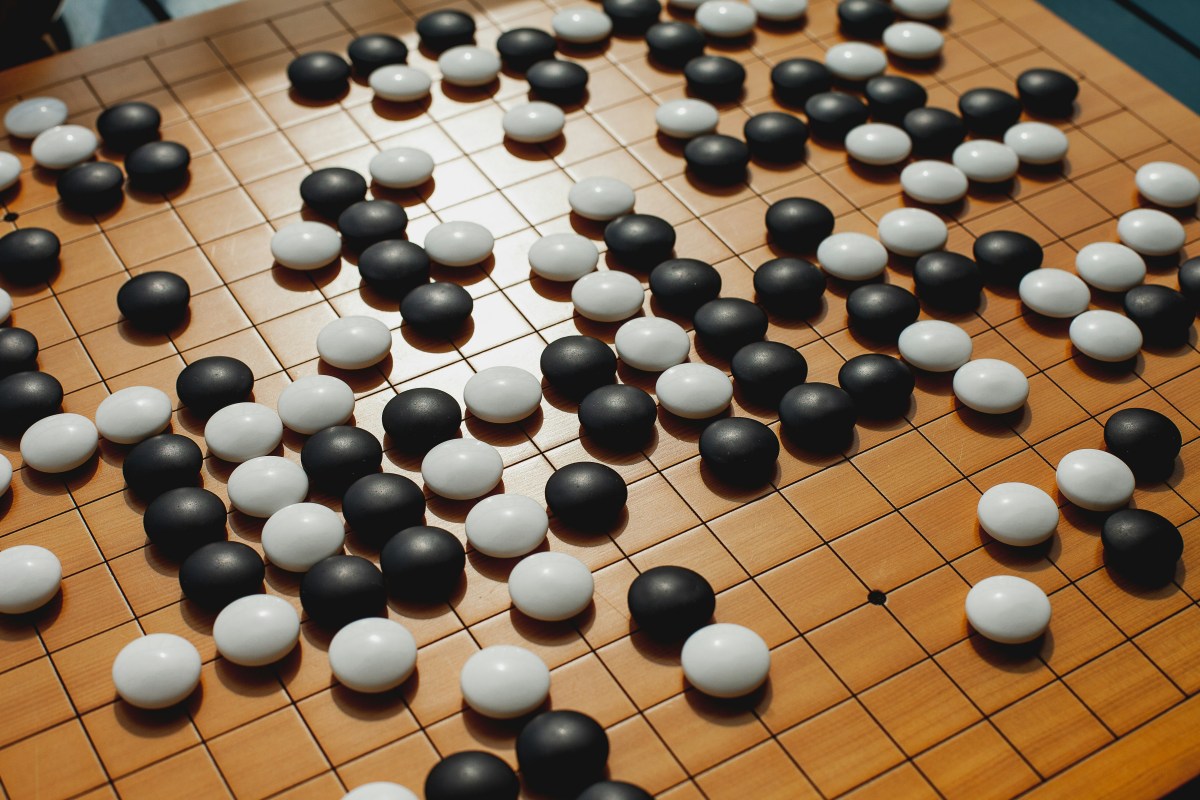
I have been a fan of the game of Go for more than a decade. It’s a game of strategy comparable to chess, played in China, Japan and Korea for thousands of years, but only recently more popular in the rest of the world.

While chess is all about the tactics of threatening and capturing pieces with different capabilities, Go is both simpler and more complex. The board is much larger, but the stones stay where they’re placed. Capturing stones is an important part of the game, but happens only occasionally; the main goal is to surround more territory than your opponent.

Unfortunately, my past attempts to get my family interested in playing have failed, and I never got very deep into online play. I was just good enough to frustrate my family, and mostly much worse than the dedicated online players.

When we moved to our new house, our board game collection moved out of the basement and into a place of honor on bookshelves in the living room. The big wooden board and the bowls of stones caught my kids’ attention, and at least for a little while they’re interested in learning. Just like that, I was sucked back into the game.

Now I haven’t played in a while and I can tell my skills are rusty, so I fired up the Go app on my phone. I can’t speak to the options for Android, but on iOS, SmartGo One is the best app I’ve found. It offers quite a few features for free, and while it’s pricey to upgrade (as far as phone apps go), it offers a massive archive of pro games and practice problems for all skill levels.

The SmartGo people have also incorporated their extensive library of interactive Go e-books from their Go Books app. This is a really nice resource, because good books on Go in English are still quite hard to find in physical bookstores, and these e-books are honestly more useful, because the problems and examples can be “played” directly in the book.

I don’t know if my kids’ interest in the game will last, but I’ll enjoy it while I can. My oldest has been studying chess and now outclasses all of us, so maybe I can foster his interest in another game where he’ll quickly exceed my skill level.