The 1799 Roanoke Valley Slave Revolt — The Story Idea Vault

It’s a common misconception that a great idea makes a great story. The truth is that most great stories come down to execution. A great idea with poor execution rarely works, but a great writer can breathe new life into even the most tired tropes.

Like any writer, I have my own treasure trove of ideas that might end up in a story…someday. But why horde them? Instead, I’m opening the vault and setting them free.

Use these ideas as a writing prompt, or come up with your own twist and reply in the comments.

The 1799 Roanoke Valley Slave Revolt

I first heard tell of Abraham when I was helping Miss Elisabeth with the cleaning in the big house. Two of the drivers had come in to get a break from the August heat. They had their lemonade, and then they hung around in the back hall to sneak a few sips of whiskey. If the missus of the house saw that, they’d be the ones getting a whipping.

I heard one of the drivers say that name, Abraham Arnaud. I didn’t know any French back then, but I could tell that name didn’t sound right the way he chewed it up. The other one only spat in response, and then he saw me and I ran on up the stairs with my load of linens before he could find a reason to do something I’d regret. The only Abraham I knew was the one from the Genesis.

Now, having heard that strange name, my ears were all perked up for it. The second time they caught it was when Old Jack was telling stories to the boys. He said Abraham Arnaud was being talked about in whispers all over Virginia and the Carolinas. He heard it from the new boy, Tom.

Word was that the bosses had paid top dollar for Tom, and they were mighty mad when he ran off the first chance he got. Must have hid like a jungle cat, because they never caught him. Usually nobody got away from our straw bosses; they had real sharp eyes and they knew every way to put a hurt on you without making it so you couldn’t work.

Old Jack said that Abraham Arnaud came from Haiti to New Orleans, and he had become a vodou priest. But he wasn’t no regular oungan, lighting black candles and sticking pins in dolls. He had the real power of possession, and he could bring strong lua into his own body or anyone else. To hear Old Jack tell it, Tom was convinced that Abraham Arnaud would tear down every planation house and free every slave. Tom said he had met one of Abraham’s followers, who had taught him a little magic.

That was about when my momma made Old Jack hush up and “stop talking nonsense, putting dangerous ideas in these child heads.” It didn’t matter though, because everyone started whispering about Abraham Arnaud after that.

Four months that went on. Tom never turned up, and when three new slaves came to the plantation, they brought their own stories: runaways all over. Vodou priests walking the roads at night. The Master up at the big house must have heard things too, because more men were set to guard the farm, and the big plantation owners all got their men together to patrol at night, with torches.

The night he came was dark as death, cloudy and a new moon. After midnight the drums started, first far away, then closer, like they were talking to each other. A shout went up, and we heard one gun, then all the drums went quiet. I never heard a quiet like that in all my life. Most of us didn’t dare touch the door of the slave house, but Old Jack opened it a crack and peeked out, and just about fell backward like he’d been hit.

That door swung open and we all saw it, the big house bright as day, sheets of orange flame rising up the walls like a waterfall of light. There were shadows of people running, but one stood perfectly still, outlined in that fierce firelight like the devil, long coat billowing and a straw hat cocked sideways on his head.

“That’s him,” I thought. Nobody else it could be. And that’s how we came to be free, and how I started on the road to real, honest-to-God magic.

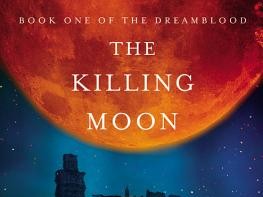
The Killing Moon — Read Report

Book | E-book | Audiobook — Bookshop/Libro affiliate links

The New York Times calls Jemisin “The most celebrated science fiction and fantasy writer of her generation.” She has repeatedly won every major sci-fi/fantasy award, and when she’s not winning, she’s usually nominated. In short, I’ve heard great things about Jemisin for a while now, but I’ve never read her work. The Killing Moon was published in 2012, so I’m a couple decades late to the party.

I’ve been listening to a lot of audio books lately, and I’ve taken it as an opportunity to fill in some of these major gaps in my genre knowledge. I knew nothing about this book going in, I just saw it on Libro.fm while searching for something new to listen to on my commute.

The Killing Moon takes place in an Egyptian-inspired secondary world, a desert land with a loose pantheon of gods shared across nations. The technology is in the neighborhood of bronze or iron age, with the swords, spears, and armor a fantasy reader would expect.

There is magic in this world, specifically dream magic—narcomancy—attributed to the power of the goddess Hananja. But this is not a world where the gods are close. If they do exist, they are distant and do not meddle.

The story follows master Ehiru and apprentice Nijiri, gatherers who use narcomancy to collect magical energy from souls and guide them to the afterlife. This magical killing, sanctioned by the state of Gujaareh, is usually a gift reserved for the willing but sometimes used as a form of capital punishment for those deemed corrupt.

The pair are assigned to chase down Sunandi, a foreign ambassador accused of corruption. But they soon discover themselves embroiled in a conspiracy that goes to the highest levels of their order, and to the prince of Gujaareh himself. It threatens to reveal long-buried secrets about the near-mythological founding of their country, the religious order surrounding Hananja, and the true nature of narcomancy.

Settings and Sentiment

About a third of the way into The Killing Moon, I found myself struggling. I wasn’t feeling that compulsion to continue that usually accompanies a fantastic book. With all of the hype around Jemisin, I was expecting to be blown away, and I found myself a little disappointed.

I have a hard time pointing to any particular issue. The writing is solid. The world is well-constructed. The plot is perhaps a little slow to get going. However, I was consuming this as an audiobook, and I’m coming to realize that is not a mode of reading that makes it easy to analyze a story in detail.

One thing I can point to is the setting. I am thoroughly burnt out on the “elves and dwarves in medieval Europe” school of fantasy, so I was hoping that the Egyptian-inspired world would prove interesting. However, aside from the names and the desert, I don’t think it made much of an impact. It’s still swords and sorcery. It’s still mighty kings and high priests and big battles and political machinations.

Jade City makes for an interesting comparison. It is also a fantasy book inspired by an underused geographical region, and another one that I read as an audiobook. Jade City imagines a world that is recently industrialized and recovering from war, akin to post-WWII Asia. It eschews the kings and kingdoms so common in fantasy, and imagines a complicated web of politics, religion, and family ties that feels more modern. It limits its scope to roughly two generations of recent history and the capital city of a small island nation. The result is a setting that feels fresh and richly detailed, and I believe that’s in large part because it’s not trying to cover a thousand years and an entire world, as so many fantasy stories do.

Another frustration I noticed is that practically every character in The Killing Moon is miserable all the time. Moments of levity or happiness are brief and far between. Everything is bad, and it’s getting worse. This is certainly an engine to drive the plot, but I found that it ground me down and made it tiring to be with these characters for an extended length of time.

There are a few twists near the end that piqued my interest and substantially improved my opinion of the book overall. I was also relieved to discover that the plot wraps up nicely, because I was expecting it to end with a cliffhanger. The Killing Moon is billed as the first book in the Dreamblood duology, but they apparently only share a setting and can be read as independent books.

(A side note, as I’m reading so much fantasy lately. I sometimes find it exhausting that the norm for this genre is huge tomes and multi-book series. If I’m trying an author to see if I like their work, I don’t want to commit to a 1500 page odyssey. Just one more way it feels like we’re still slavishly copying Tolkien. Where are all the high-quality standalone fantasy books?)

It’s Not You, It’s Me

I don’t like giving negative reviews. If I don’t like a book, I’ll often just not talk about it. I’d much rather discuss what makes good things work. I can’t help but feel that I’m heaping unnecessary negativity on The Killing Moon. I don’t think it’s a bad book. To the contrary, all of the components are here for a great book. It’s well written; it just didn’t resonate for me and I don’t entirely understand why. Maybe part of that was having my expectations calibrated by all the acclaim and awards I know Jemisin has accrued.

Oddly, this only makes me want to read another book by Jemisin. Is it this particular book that doesn’t work for me? Only one way to find out.

After some searching, I see that the Broken Earth trilogy seems to be the most recommended. It made history by winning the Hugo three years in a row, for all three books in the series. Plus, it apparently uses second person POV extensively, and that’s certainly an ambitious choice. I’ll try that next.

The Blue Finch and the Chipmunk

I’m happy to announce that my short story, The Blue Finch and the Chipmunk, is in the April issue of Sally Port magazine.

A young apprentice sorcerer must choose whether to help her cantankerous master out of a sticky situation…or use it to her advantage.

Click here to buy the issue or subscribe.

The Story Idea Vault — Sacred Monster

It’s a common misconception that a great idea makes a great story. The truth is that most great stories come down to execution. A great idea with poor execution rarely works, but a great writer can breathe new life into even the most tired tropes.

Like any writer, I have my own treasure trove of ideas that might end up in a story…someday. But why horde them? Instead, I’m opening the vault and setting them free.

Feel free to use these ideas as a writing prompt, or come up with your own twist and reply in the comments.

Idea of the Week – The Sacred Monster

The temple seems nice enough. All those marble pillars, the fine stained glass, and candle-lit sanctuary. A holy place. A peaceful place. The monks travel the twilit halls in packs, the cowls of their rough gray robes hiding their faces.

Visitors may know about the catacombs below the temple. They may know that the monks will end up there, when their service is done. Each is assigned a stone alcove where their flesh will slowly fall away and their bones will remain for eternity. Only the holy are welcome there. Visitors may not descend to the catacombs.

Visitors do not know about the shape in the darkness. They do not know about the eyes that watch the monks when they place one of their own in his final resting place. Outsiders must not hear the whispers that echo up the sealed stairwells, that can barely be heard in the clatter of steam working through the old pipes and radiators.

They must never know about the thing down there. About the notes the monks find, etched into the bedrock, telling them what the future holds. About the tomes of prophecy dictated by those who have seen the scrawlings of the beast. Those who inevitably suffer terrible deaths. Accidents. Surely accidents. Never mind the eyes weeping blood, or the missing fingernails.

The temple is a peaceful place. A holy place. Visitors are welcome.

The Story Idea Vault — The Big One

It’s a common misconception that a great idea makes a great story. The truth is that most great stories come down to execution. A great idea with poor execution rarely works, but a great writer can breathe new life into even the most tired tropes.

Like any writer, I have my own treasure trove of ideas that might end up in a story…someday. But why horde them? Instead, I’m opening the vault and setting them free.

Feel free to use these ideas as a weekly writing prompt, or come up with your own twist and reply in the comments.

Idea of the Week – The Big One

Wizards are often depicted constantly slinging fireballs and lightning bolts, but real magic isn’t like that at all. Real magic requires a huge amount of energy—energy that takes months, years, or even decades for a person to accumulate. Casting a spell burns all of that energy. Some wizards spend a lifetime accumulating energy for a single spell.

What spells do wizards spend all that time preparing? Do the rich and powerful pay fortunes for a single spell to be cast; or threaten, blackmail, and coerce wizards into doing what they want? Do the wizards keep their accumulated power a secret?

The Story Idea Vault — Wizard Lawyers

It’s a common misconception that a great idea makes a great story. The truth is that most great stories come down to execution. A great idea with poor execution rarely works, but a great writer can breathe new life into even the most tired tropes.

Like any writer, I have my own treasure trove of ideas that might end up in a story…someday. But why horde them? Instead, I’m opening the vault and setting them free.

Use these ideas as a weekly writing prompt, or come up with your own twist and reply in the comments.

Idea of the Week – Wizard Lawyers

There’s a world where magic is real: a powerful force in politics, war, and religion. But people can’t wield magic on their own; they can only get it from supernatural forces—for the right price.

The wizards who negotiate these contracts are power brokers, lawyers, expert deal-makers, and sometimes thrill-seeking gamblers. They know how to hedge their bets, and might enter into half a dozen interconnected contracts to get what they want while negating the consequences.

What’s the contract that breaks the system? Who brokered it? And what will happen when the most powerful beings in heaven to hell find out?

Reblog: On the State of Literary Magazines — Lincoln Michel

Today’s reblog is Lincoln Michel discussing the sorry state of short fiction magazines, which isn’t exactly anything new, but still worth paying attention to.

Check it out on Counter Craft.

I’m only just now learning of the fact that Amazon is no longer “publishing” periodicals on their Kindle platform. This seems bad, but they wouldn’t shut it down if it was making any significant money (although who knows where that line is at Amazon). It’s probably more a symptom of shrinking short fiction markets than a cause.

I have a few samples of these magazines on my Kindle. And I’m not subscribed to any of them. So I suppose I’m part of the problem.

When I first started writing, the fiction magazine landscape had already contracted quite a bit from the golden age, but it still seemed fairly strong. Magazines were the place to cut your teeth—standard advice was to submit short stories until you got good enough to publish, then publish short stories to build credibility for getting an agent to sell novels.

That old pipeline of short fiction into traditional publishing isn’t gone, but it seems like the funnel continues to narrow. Meanwhile, indie publishing has become a legitimate alternative for novels and novellas, but it’s no easier to stand out or make money as an indie, and I suspect hardly anyone is making money on indie short stories.

Maybe I should be grateful that I write SFF and there is still a professional short fiction scene at all. Maybe eventually they’ll all be non-paying or barely-paying markets.