The Read Report — December 2024

The final month of 2024 has come and gone. As usual, I’m reading too many books at once. As a result, I have only one to discuss for December. Luckily I have a lot to say.

Where possible, I include Bookshop affiliate links instead of Amazon. If any of these books pique your interest, please use those links. I’ll get a tiny commission, and you’ll support real book stores instead of longevity injections for billionaires.

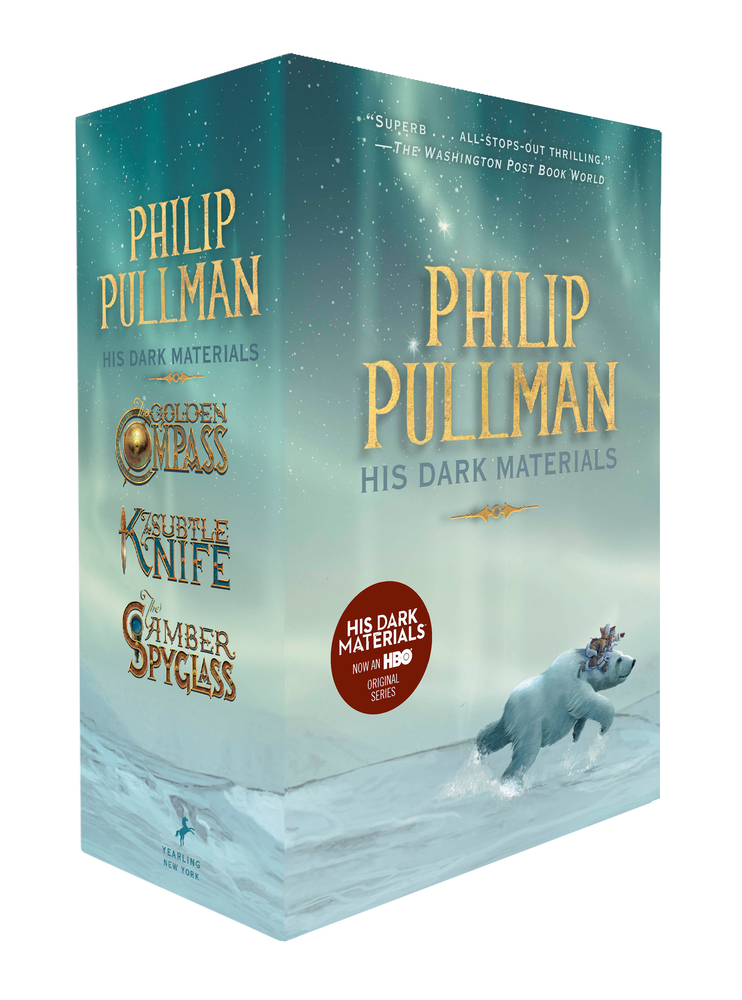
The Amber Spyglass

By Philip Pullman

I finally finished reading the “His Dark Materials” trilogy with my kids. Unfortunately, the cracks in the story that were apparent in the second book caused the whole thing to fall apart in the third.

Trilogies and longer series are interesting. They are weightier than a single, self-contained book. Each book in a series needs to function at least partly on its own, while a larger arc plays out across all of them. However, readers are also willing to give the author some grace in a series; just because something is unresolved or unclear in one book doesn’t mean it won’t resolve by the end of the series. I continued reading to give Pullman a chance to make it all work.

Unfortunately, when the mysteries, confusing bits, and strange motivations don’t resolve by the end, you run into the “LOST” phenomenon (or Game of Thrones, if you prefer a more recent reference). Rabid fans can instantly sour on it due to an unsatisfying ending. All of that willingness to forgive goes away when the series ends and the problems remain. And that’s how I feel about His Dark Materials.

I usually try to avoid talking negatively about stories, books, and other media. After all, I haven’t published a successful trilogy, right? There are certainly things to criticize in my own work. That said, I think this trilogy is a showcase for a number of things that every author should try to avoid. So I will be a bit harsh on His Dark Materials, in order to better understand why it doesn’t work for me.

The Hook

Critically, I think the first book, The Golden Compass, is pretty good. In fact, I would recommend it as a book to read on its own. For what it’s worth, my kids also thought that the first book was good, while the second and third were “confusing.”

The Golden Compass introduces a main character, Lyra; the antagonist, Mrs. Coulter; the mysterious Lord Asriel (Villain? Ally?), and quite a few interesting, but less rounded characters that help Lyra on her way. Lyra has a clear quest—to rescue her friend from Mrs. Coulter—and understandable motivations. She has clear character traits, being clever and almost reflexively anti-authority, and happily willing to lie when it serves her or just seems like a good time. The setting is an alternate history Britain with a dash of steampunk sensibility, where everyone has their own soul-bound animal companion. It manages to feel both fresh and familiar.

Lyra sets out on her quest, collects allies, learns about the world, and makes a number of choices (both good and bad) in her efforts to rescue her friend. It’s a well-worn story arc, but that’s because it works.

The book is not without its weaknesses, as Lyra overcomes most challenges a little too easily and practically every secondary character she encounters quickly vows to help her even at the cost of life and limb.

The story ultimately ends in tragedy, as Lyra goes to the ends of the earth only to fail at the last moment. This also resolves that open question of whether Asriel is villain or good guy. The result is a satisfying resolution to this book—the end of Lyra’s quest—while providing an open question that leads us into the next two books: just what is Asriel up to?

Book Two Problems

The second book, The Subtle Knife, immediately steps away from the setting of the first book, and introduces a new main character: Will Parry. Lyra soon follows, but her agency in this book is so diminished that she’s practically a secondary character. It’s jarring. Even more problematic is that neither Will nor Lyra have very clear motivations or goals.

The children certainly both have problems, but neither of them have plans to try and resolve them. They go from place to place, exploring a brand new world and facing its dangers, but this meandering doesn’t have the sense of going anywhere purposeful. They acquire the namesake of the book, the Subtle Knife, completely by accident.

Mrs. Coulter is back as the villain. New characters are introduced, both allies and enemies, but this also seems haphazard. Characters from the first book reappear, but they feel as though they are pushed into their necessary positions by deus ex machina, strictly to perform actions and say words that advance the plot.

This book ups the stakes by killing off two characters, but the emotional sting is blunted by how absurd these deaths are. One character dies at the hands of someone barely seen, for a silly reason mentioned once in passing. The other dies nobly, to protect Lyra, but only because he completely forgot that he had a “get out of jail free” card that was inconvenient to the plot.

The book ends in what ought to be a cliffhanger. Lyra has been captured by villainous forces, and separated from this book’s protagonist, Will. Will has just lost the father he wasn’t even sure was alive, and decides (like most everyone else in the series) that he must help and protect Lyra.

Then, suddenly, some angels appear.

A Limp Ending

This is how we arrive at the third book, The Amber Spyglass. It’s nearly as long as the first two books combined, and it has a lot of explaining to do.

This book contains most of the anti-religious sentiment and outright blasphemy that has made Pullman so hated by Christian groups, and it’s unfortunate that his vitriol ends up channeled into decidedly bland villains with no redeeming characteristics and no desires beyond total power. Heaven is ruled by a powerful angel with a lust for control, and he sends the armies of angels and human believers across many different worlds to do his bidding, which mostly involves killing everyone who doesn’t fall in line.

This leaves us with three villains. The book implies a change of heart for Mrs. Coulter and Azriel, but they’ve done nothing to earn it. In the most perplexing twist of them all, these three supposedly mismatched villains end up in a brawl and fall into an abyss together. It’s not even the climax of the story—the book continues for more than a hundred pages afterward. The supposed protagonists, Will and Lyra, aren’t present for the fight, and have nothing to do with it.

Since the story can’t wrap up with a final battle between good and evil, or the characters overcoming some major challenge, it instead ends with heartbreak. It turns out our protagonists are in love, but they can’t be together. Pullman does a pretty good job dropping hints about Will and Lyra’s feelings for one another, even if it’s not very subtle. But the reasons why they can’t be together feel flimsy, at best. Pullman must have thought so too, because he spends a significant number of pages on the characters coming up with all the reasons why they have to end up apart.

Maybe I’m a jaded old guy, but this conclusion of love lost didn’t tug very hard at my heartstrings. How tragic can it really be for someone to not end up with their middle-school sweetheart? It’s implied that they’ll pine away for the rest of their lives…but…why? How many of us end up with our first crush?

Lessons Learned

Know your protagonist, and set your readers’ expectations accordingly. This series sets up Lyra as the protagonist, but by the end she’s little more than a bystander. Will takes over the mantle, but even he fails to have much influence on the events of the story. Readers expect the main characters to make a difference. The arc of the story is their arc.

Plot with purpose. It doesn’t matter whether you’re an outliner or an exploratory writer, either can work. But every scene and chapter should be there for a reason. Each character should have motivations and goals. Ideally these all work together to bring the story toward a conclusion that feels inevitable without feeling forced.

Stay focused. Novels are huge projects, and trilogies are even bigger. It’s easy to go down cul-de-sacs by exploring interesting ideas or building characters that aren’t really necessary. The fantastic idea that doesn’t fit in the book is just as important to cut as a bad idea. As they say, kill your darlings (or at least save them for another story, where they belong).

What I’m Reading in January

I’m working through the massive historical epic comic, Katusha; the final Witcher book; and some sci-fi short stories. See you next month!
The Read Report — Sept and October 2024

We’re doubling up two months again! Why? Because I didn’t read much in September, and by golly, I’m all about providing maximum quality to my readership.

Where possible, I’ve included Bookshop affiliate links instead of Amazon. If any of these books pique your interest, please use those links. I’ll get a small commission, and you’ll support real book stores instead of private islands for billionaires.

Dune, the Graphic Novel — Vol. 1, 2, 3

Adapted by Brian Herbert and Kevin J. Anderson

Illustrated by Raul Allen and Patricia Martin

Dune is one of those perpetually evergreen sci-fi books that has somehow managed to maintain relevancy for more than half a century. This graphic novel adaptation of the book comes on the heels of the big budget Denis Villeneuve movies (despite the fact that those movies also have graphic novel adaptations).

I’ll admit that I had uncertain expectations for these books. Dune is fairly dense, as evidenced by its longevity and the very different adaptations that have been made over the years. These three volumes cover the plot of the original book, but there was no way to make it work in comic form without significant trimming. Even beyond that, Dune is a book that is often dialogue-sparse and heavy on characters’ internal thoughts, and this is a challenge that any visual adaptation needs to overcome.

The framing in the first book mostly stays out of the way. It’s nice and clear, but avoids any interesting or dangerous choices. There are a few multi-panel zooms and pans; a variety of big and small, wide and narrow panels; but almost no verticality in a medium where pages are taller than they are wide, and not a single curved line. It’s all rectangles, all the time.

However, the second and third books expand into a much wider variety of framing techniques. There are several pages with interesting nested circular frames, and a little bit of blending with nebulous or absent frames. It’s not quite the insane level of frame shenanigans you’ll see in something like Sandman: Overture, but it’s still praise-worthy.

The art is a little inconsistent, but never bad. There are a few faces and figures that come across as stilted or flat. It improves steadily in the second and third volumes. If I was disappointed, it was only because the whole package didn’t quite live up to the potential shown in some of the best, gorgeous full-page spreads. Hoo-boy, that full page sandworm reveal shot is fantastic. Color is used to great effect, with the characters and elements of House Atreides shaded blue, in contrast to the reds and pinks of House Harkonnen and the planet of Arrakis.

It tells the story competently, but I would have really loved to see more of that classic sci-fi strangeness. For all of the aspects of Dune that feel tropey in modern sci-fi (cough-cough-desert-planet-cough), it is a book where the people, places and cultures feel genuinely foreign and weird. The best aspect of the much-lampooned 1984 David Lynch movie adaptation was that it leaned into that weirdness. Even the Hollywood-friendly Villeneuve movies capture some of that magic with the Sardaukar throat-singing, insectoid spaceships, and psychopathic man-baby Harkonnen aesthetic. Here, the clothes, the technology, the landscapes all look a little too normal.

The story did, as I expected, suffer in some ways due to the inherent trimming that had to happen to fit into the graphic novel form factor. There is no room for expanded dialogue or exposition. The writers do take advantage of the ability to make characters thoughts visible to the reader. Ultimately, this is a slightly abridged version of the story, but there are only a couple of places where the development feels rushed as a result. The story isn’t broken, but it’s occasionally bent and loses some nuance.

My daughter (who didn’t really pay attention when I was reading the original book with my son) decided to read these books as soon as I was done with them. While I thought they might serve as a lighter, easier introduction to Dune, especially for a younger reader, her opinion was that it was still pretty confusing.

The Subtle Knife

By Philip Pullman

This is the second book in the Dark Materials trilogy, which I’m working through for bedtime reading with my children.

The Subtle Knife is a very different book from The Golden Compass. The first book takes place entirely in a secondary world, and feels like a traditional fantasy novel. It follows Lyra Belacqua, who is the classic precocious child/chosen one archetype. This second book takes Lyra into our world and another fantasy world, and introduces a second viewpoint character named Will Parry.

Will’s story is darker and hits a little closer to home, since he hails from the “real” world, and his problems, while extreme, are more relatable. I was curious to see how his story connects to Lyra’s. It’s clear that there are parallels between the two worlds, so I assumed the two characters are entangled in ways they don’t understand.

Pullman doesn’t lock us into a strict POV—the book jumps between Will and Lyra—but it does feel like Will is heavily favored, and certainly seems to make more meaningful choices. Lyra often seems to be pulled along as a sidekick, and this is a significant demotion of her character after the first book. I wonder if this pairing would have felt more natural if Pullman had included parts of Will’s story in the first book, even if Will and Lyra didn’t cross paths until the second.

The book ends with a strange series of events. An important character dies for a reason that was only lightly hinted at once. Another major character dies because he forgot that he had a “get out of jail free” card until it was too late. The villains, after being completely stymied for the entire book, are suddenly pretty effective. And it looks like book three is going to be even moreso Will’s story, at least to begin with.

The feeling I had when reading The Golden Compass was that this is a serious kids’ fantasy series that doesn’t quite succeed at achieving the plot, deep characterization, and world-building that other YA fantasy has achieved in the last couple decades. That feeling is not going away here.

I do still believe that Pullman has some genuine weirdness in his setting and plot that deviates unusually far from the classic Tolkien fantasy formulas, and I really hope that it will blow up in book three.

The New Age of Apocalypse

By Larry Hama, Akira Yoshida, Tony Bedard

As I mentioned in my August recap, I discovered a lost box of superhero comics when I moved to my new house. This month, I re-read the “new” Age of Apocalypse.

The original Age of Apocalypse was a big cross-book event that ran for four or five months across all of the X-Men books in the mid ’90s. It’s my favorite thing in superhero comics, although that is probably a function of my age when it hit, the state of Marvel at that time, and a good dose of classic nostalgia. I also don’t really read superhero comics anymore, so there’s really no opportunity for anything to usurp it.

The New Age of Apocalypse is the trade paperback collection of a limited-run series that released for the 10-year anniversary of the original event and picks up the story in the same alternate universe where the originals left off.

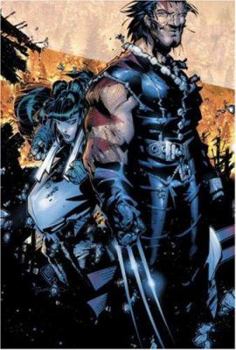
The book is drawn in the same heavy-lined, anime-inspired style of the Ultimate X-Men books I reviewed in the August read report. This style is clean and easy to read, and the artists are certainly skilled and make it work, but something about it just rubs me the wrong way. It’s a little too cartoony.

The story follow’s Magnetos X-Men as they try to pick up the pieces in the wake of Apocalypse’s collapsed North American empire. There is a mystery element, with Mr. Sinister playing the villain, but the resolution of that mystery ends up being…kind of dumb. There is a soap opera quality of over-the-top character motivations and emotions, and some of the characters change their minds seemingly at the drop of a hat. If I’m being charitable, I’d say that the writers tried to cram too much plot into relatively few issues, and this explains the abruptness of the action and mood swings of the characters.

Much like Ultimate X-Men, the New AoA feels like a classic comic book story with classic comic book failings. It’s a little more disappointing to me, but that’s only because I have such a fondness for the original AoA.

On that note, my box of old comics does include almost the entire run of the original Age of Apocalypse. I’m a little afraid to read those issues again, lest I discover that it’s not quite as good as my faded and nostalgic memory would claim. But I might do it anyway.

The Witcher: The Tower of Swallows

By Andrzej Sapkowski

Dear God, I did it! After several months of promising that I would get back to it, I finally finished this book.

The Tower of Swallows is the penultimate volume in the main five-book Witcher series, and it suffers a bit of the classic long fantasy series syndrome. All of the characters are wandering across the land, spending a long time trying to get somewhere for something to happen.

Our three main characters, Ciri, Geralt, and Yennefer, are all split up for this entire book, and I suspect this is a lot of what slows it down. They each have their own cast of secondary characters in orbit, and while a lot is happening, it still ends up feeling like all the pieces are being lined up just right for everything exciting to happen in the final volume.

That said, it’s still a good book in a great series. The setting, heavily inspired by Polish mythology, continues to shine. The world feels alive with complexity and depth, and even the characters with supernatural powers are often at the mercy of bigger cultural and political forces.

I’m beginning to feel that Sapkowski’s literary calling card is his ability to build a narrative through a dozen little frame stories. The book is a mix of flashbacks and retellings of events from different perspectives: a bard’s memoirs, a late night story next to the hearth, or the testimony of a soldier on trial for treason. It’s to the author’s credit that all of these blend together into a cohesive quilt of smaller stories.

With any luck, I’ll finish the final volume before the end of the year. I’ve really enjoyed my time with the Witcher and his cohorts, and I’m hopeful that Sapkowski will answer the remaining questions, finish off the biggest villains, and bring it all to a satisfying conclusion.

The Read Report — August 2024

It’s August! Or at least it was when I read these books! Summer isn’t quite gone yet, but it’s fading fast. School is back in session, the first leaves are beginning to fall, and the most deranged of the yard decorators are already getting their Halloween decorations out.

It was a relatively light reading month for me, but that’s fine. Soon enough we’ll be huddled inside for a long Minnesota winter. I’ve got to enjoy the outdoors while I can.

Where possible, I’ve included Bookshop and Thriftbooks affiliate links instead of Amazon. If any of these books pique your interest, please use those links. I’ll get a small commission, and you’ll support real book stores instead of a fifth vacation house for a billionaire.

Ultimate X-Men Vol. 1 – 3

By Mark Millar and Chuck Austen

In the process of moving to the new house, I came across a box of old superhero comics that I had completely forgotten about. These Ultimate X-Men books harken back to a time when I wasn’t quite so jaded about reboots (and superhero comics in general).

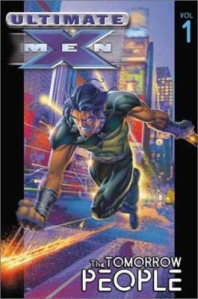
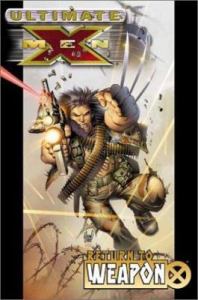
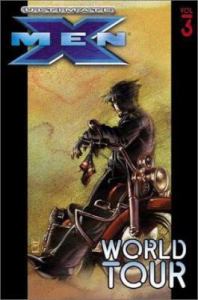
My first thought was that these are some ugly covers—heavily photoshopped Wolverine, looking like a 20-year-old nu-metal singer. I don’t know what style they were shooting for, but it ended up somewhere between CGI and anime.

Thankfully, the covers don’t tell the whole story. The art within the books is solid, but not life-changing. There is talent on display, and a ton of detail and creative layouts. There are interesting angles, some non-obvious choices (like flashbacks and TV broadcasts done in sketchy pencils), and proper backgrounds. As much as I love indie comics, they’re often missing a lot of this complexity. That Marvel money does buy a certain base level of quality that I appreciate.

The Ultimate series were a collection of reboots, probably more notable these days as the origin of Miles Morales in Ultimate Spiderman, although I believe Ultimate X-Men was popular when it first came out. The characters are all redesigned (although there are some nods to older costumes) with the entire team remade as teenagers this time around. The first book really wants to call attention to this, repeatedly bringing up how young everyone is in a way that felt forced at times.

The point of a reboot is often to retell the classic stories, and these issues feel like a speedrun of X-Men classics, starting with the formation of the core team and quickly burning through arcs about the Sentinel program, Magneto, and Weapon X.

While the original Weapon X program was run by those dastardly Canadians, this version of the X-verse collects most of the nasty government programs under the good ol’ U.S. of A. There are some interesting undercurrents of mid-2000s distrust in government that feel very post-Iraq-invasion to me, which is interesting considering the series actually kicked off a good half year before 9/11.

I don’t think revisiting these books will inspire me to go subscribing to all the modern X-books or anything like that, but it was a fun trip down memory lane.

The Golden Compass

By Philip Pullman

Time for a new bedtime trilogy with the kiddos!

I acquired very cheap copies of the Dark Materials books years ago, and they’ve sat on the shelf, waiting to be read. I knew almost nothing about them going in, except that there was a big-budget movie of the first book that must have done badly, because they never bothered to finish the series.

It turns out that Phillip Pullman has built the kind of world I like. It’s fantasy, but it’s not just aping Tolkien. It’s a strange alternate history with a mildly steampunky anachronistic mix of technologies, and one where every single person has a slightly magical animal familiar called a daemon.

Lyra Belacqua (with her daemon, Pantalaimon) is the plucky child protagonist, growing up as a semi-orphan at an alternate Oxford, where she is loosely taken care of by the scholars. Thanks to their lack of parenting skills and her rebellious disposition, she spends most of her time running across the rooftops, sneaking through the catacombs, and picking fights with other urchins, rather than learning.

The plot kicks in when one of her friends goes missing during a rash of local kidnappings. Word on the street is that the “Gobblers” have taken these children for some unknown, nefarious purpose, and Lyra sets out to get them back. Along the way, she discovers the truth about her parents, who both turn out to be terrible people in their own special way. She gets the titular golden compass, a device that is essentially a very accurate (but difficult to read) oujia board. And she makes friends with an intelligent polar bear warrior king, a hot-air-balloon-flying Texan, and a witch.

In my opinion, the world-building is really the star of these books. The alternate world that Pullman has created is just different enough from ours to be incredibly mysterious. Each new discovery changes the rules, just a little bit. Oh, everyone has an animal companion who is bound to them? Oh, there are polar bears that can talk? Oh, there are witches that can fly? Some actual, visible spirits that everyone just accepts as a somewhat normal thing? Certain kinds of science-esque alchemy that the all-powerful-Church controls?

Lyra is defined mainly by her general defiance of authority, her ability to accomplish pretty much anything, and her high levels of sass. She is, of course, the chosen one that the prophecies foretold. Some fantasy tropes are apparently inescapable. Still, as a book geared toward children, I won’t complain too much. The protagonist is meant to be a reader-insert and a fantasy fulfiller.

Overall, the story does a good job constantly throwing obstacles in Lyra’s way, although there were a couple times where my suspension of disbelief was strained or some difficulties were elided without a satisfactory explanation.

What I’m Reading in September

Looking to September, I’m already reading the second book with my daughter, and it introduces a completely new protagonist from an entirely different world. I’m curious to see where this leads, and I suspect there are plenty of big secrets about what’s actually going on that are yet to be revealed.

I also have the next Witcher book 80% complete, and by golly, I’m going to finish it or die trying.

And of course, I’ll probably have at least have some graphic novels or comics thrown in the mix as well. What’s the difference, you ask? Only how pretentious you’re feeling while you read them.

See you at the end of September!