Okay, the full, absurd name of this game is Dr. Langeskov, The Tiger, and the Terribly Cursed Emerald: A Whirlwind Heist. If you’re a reader who has never, ever played a video game, this might be the ideal first game for you to try. It’s free, it only takes about 15 minutes to complete, and it requires no reflexes or puzzle-solving skills. It’s available on Steam for those who have it, and Itch.io for those who don’t.
I don’t generally throw my lot in with the “hardcore gamers” who heap derision on so-called walking simulators, but it might be more accurate to call this a narrative experience than a game. Still, it’s a fun narrative experience.
The game promises an adventure in thievery, but even in the description on the store pages, it’s clear that something is amiss. Halfway through the description of the game, the person writing it decides to join “the strike,” complaining about being forced to do multiple jobs, and signs off with “I’m out.”
The opening menu screen also suggests an over-the-top adventure, with a moody forest scene illuminated only by the taillights of a car. You click the button to start the game. A loading screen appears for “heist.map,” cycling through several tips about the history of the mansion that you will presumably set out to rob in just a moment.
Suddenly, the music cuts out. The screen glitches, and you’re back at the title screen again. There is a voice; distant and muffled. You realize you’re hearing “back-stage,” where people are getting the game ready for you, as though it were a live stage production. Then there’s silence. Nothing is happening. You wait.
At some point, you decide to do something. Maybe click the “start game” button again? Moving the mouse causes the camera to shift, and you realize this isn’t the start menu at all. It’s a huge poster of the start menu on a wall. You’re in a drab waiting room, staring at a painted replica of the menu background.
This immediate double fake-out sets the stage for a very silly game where most of the “behind the scenes” workers running the game have gone on strike. You’re recruited to help, pulling levers and pushing buttons back-stage so some other player can enjoy the experience you thought you were going to have. The voice over the loudspeaker assures you that if you just help out a little bit more, you’ll get to play the game next. Promise.
Dr. Langeskov was developed by a small, indie studio called Crows Crows Crows, which includes William Pugh, best known for his work on The Stanley Parable and the considerably expanded version, The Stanley Parable: Ultra Deluxe.
It’s very similar to the Stanley Parable; with limited modes of interaction; a narrator that leads you along; the light, absurdist tone; and the playful ways the game gives you to rebel against the narrative by refusing to do what you’re told. It’s smaller than The Stanley Parable, but it feels like the perfect size for what it’s doing, and doesn’t overstay its welcome.
It’s a common misconception that a great idea makes a great story. The truth is that most great stories come down to execution. A great idea with poor execution rarely works, but a great writer can breathe new life into even the most tired tropes.
Like any writer, I have my own treasure trove of ideas that might end up in a story…someday. But why horde them? Instead, I’m opening the vault and setting them free.
Feel free to use these ideas as a writing prompt, or come up with your own twist and reply in the comments.
Idea of the Week – The Sacred Monster
The temple seems nice enough. All those marble pillars, the fine stained glass, and candle-lit sanctuary. A holy place. A peaceful place. The monks travel the twilit halls in packs, the cowls of their rough gray robes hiding their faces.
Visitors may know about the catacombs below the temple. They may know that the monks will end up there, when their service is done. Each is assigned a stone alcove where their flesh will slowly fall away and their bones will remain for eternity. Only the holy are welcome there. Visitors may not descend to the catacombs.
Visitors do not know about the shape in the darkness. They do not know about the eyes that watch the monks when they place one of their own in his final resting place. Outsiders must not hear the whispers that echo up the sealed stairwells, that can barely be heard in the clatter of steam working through the old pipes and radiators.
They must never know about the thing down there. About the notes the monks find, etched into the bedrock, telling them what the future holds. About the tomes of prophecy dictated by those who have seen the scrawlings of the beast. Those who inevitably suffer terrible deaths. Accidents. Surely accidents. Never mind the eyes weeping blood, or the missing fingernails.
The temple is a peaceful place. A holy place. Visitors are welcome.
Alright, February was a train wreck for me, so I never managed to get January’s post out. But that’s fine. We’re all here now. We’ll do it live!
Where possible, I include Bookshop affiliate links instead of Amazon. If any of these books pique your interest, please use those links. I’ll get a tiny commission, and you’ll support real book stores instead of longevity injections for billionaires.
I’m still working through the Discworld series with my kids. Thankfully, Pritchett was a prolific author, and if I stretch them out I can continue reading his books for several more years before I’ve read them all. It’s nice to think that a favorite author can live on in this way, through his books.
Moving Pictures is an experiment in how many movie-related references and metaphors Pratchett can cram into a fantasy world. Alchemists have invented movies, their cameras powered by the dangerous combination of little imps and highly flammable cellulose film. Within weeks, the seaside shanty-town of Holy Wood springs up on an otherwise deserted stretch of beach, and people are drawn toward it by the chance for fame, and perhaps a more nefarious force.
One of the newly minted actors who found his big break at Holy Wood happens to be a student wizard from Anhk-Morpork’s Unseen University. He starts to see signs that there’s more than movie magic going on: in fact, there may be other realities (like our own) leaking into the Discworld from the void between universes. Where there are weak places in the fabric of the universe, there are Cthulhu-esque “Things” looking for a way in.
Much of the silliness of the book comes from twisted versions of familiar movie tropes: the Orangutan-transformed University Librarian picked up by a 50-foot woman climbing a tower in an inversion of King Kong; or the bald, golden, statuesque ancient protector against cosmic evil who just happens to look like everyone’s uncle Oscar.
Like the Simpsons, Discworld has a massive cast of characters that can be pulled into service for any given plotline. Detritus the troll and perpetual scammer “Cut-me-own-Throat” Dibbler get higher billing than usual, with the wizards of the University making a strong appearance toward the end.
Pratchett’s super-power, however, is the ability to write a silly story in a silly setting, packed with quips and jokes, and still build a real plot and characters with actual motivations that make you root for them.
Like many of the more unusual comics I pick up, this was a Half Price Books impulse buy. There is now a whole sub-genre of historical fiction and biography within indie comics (see Maus, Palestine, and Persepolis in my previous months’ reading), and while I don’t generally gravitate toward it, I’m glad I picked up Katusha.
Firstly, this thing is a tome, clocking in at almost 600 pages. Unlike many trade paperback comics, this has a strong binding that has held up well so far, despite that size.
When I started reading, I wasn’t especially excited by the art, which has a sketchy look that sometimes skimps on detail. However, it grew on me over time, and I came to understand that Vansant was picking and choosing important panels to fully flesh out. I could call the art “workmanlike,” but that is not an insult. It is straightforward, and there is never any confusion about what is happening. It is impactful at all the right moments, and really fits the documentarian feel of the story. I can hardly blame Vansant for lack of detail here or there. The fact that one person was able to write and illustrate this entire book is a small miracle.
The story follows the titular girl soldier from the early war, before the German expansion east into Russia, all the way through the messy German retreat to Berlin.
The first few chapters provide a day in the life before the war, introducing Katusha’s mother and father, her adopted sister, her best friend, and her mysterious troublemaker of an uncle.
Katusha and her family are Ukrainian, and their life under Soviet rule is already sometimes fraught. When the Germans invade, making promises to civilians of a better life under their rule, rural Ukranians have to wonder whether the occupation might improve their lives.
Unfortunately, those promises soon prove hollow, as the family witnesses brutal suppression and an immediate round-up of Ukrainian Jews and others the Germans consider undesirable. Katusha and her family are forced to flee their home town to stay with relatives, and then flee again and again. The family is separated, and Katusha and her sister become partisans under the leadership of their uncle, creating a rebel base in a well-hidden cave.
After a winter of successful operations against the Germans, the sisters are briefly reunited with their father, a tank factory supervisor, who helps them enroll in the Soviet tank school. They spend the remainder of the war manning, and eventually commanding their own tanks.
For a book that is concerned with brutal war, there is no excessive gore. When there is violence, it isn’t skimmed over, and it feels honest. Over the course of the war, Katusha loses many family members and friends. It is a sad coming-of-age story that must mirror what millions of teenagers went through in many countries over the course of the war.
Vansent is careful to show the complexity of wartime politics, with multiple factions of Ukrainian partisans. Some fight with the Soviets, while others fight with the Germans, and some fight against both in a bid for independence. Even after the Germans retreat, the fighting continues in what eventually proves to be a vain hope for Ukrainian independence. It is a particularly timely reminder that the Ukrainian people have spent so much of their history fighting for the right to choose their own destinies.
Katusha ultimately survives beyond the end of the war, but like any good war story it is a melancholy victory. She marries a fellow soldier who nearly died of his injuries. Most of her family is gone. And despite the best efforts of the partisans, Ukraine returns to the grip of the USSR. It’s a long and bittersweet journey.
Severance: The Lexington Letter
(Unattributed)
Like the rest of America, I’ve been watching Severance. The Lexington Letter is a little in-universe book (exclusive to Apple Books, of course) that includes a series of emails and a pamphlet titled “The Macrodata Refiner’s Handbook.”
The emails chronicle the brief story of a severed worker who finds clues that her “innie”—the separated personality that only activates at work—has found evidence of bad things happening at her employer, Lumon. After trying in various ways to sneak information out of the company, the woman quits and contacts a reporter at the Topeka Star with her information. The story, however, is ultimately suppressed. The editor killing the story has a name that will lead observant fans to realize he is likely in the company’s pocket, and the woman turns up dead soon thereafter.
The handbook in the second part features a cartoonized severance brain chip as a mascot that guides new workers through the mysterious job featured in the show: macrodata refinement. It is full of the tone-deaf and slightly sinister corporate propaganda-speak that the show is known for, and filled with a plethora of little details that seem like they might be clues, but probably don’t mean anything. In short, perfect fodder for the mega-fan conspiracy theorists.
Typical r/SeveranceAppleTVPlus Redditor
The entire book can be easily read in a sitting or two, and serves to add a little more content to the Severance universe, without really revealing anything new or exciting. It is definitely focused on existing fans, and newcomers to the series will likely not find much for them here. However, if you’re a hardcore fan of the show and desperately counting down the days until the next episode release, this might just tide you over for an evening.
I’ll also note that I hate it when big media tie-ins do this thing where they don’t credit the author(s) of the tie-in material. Yes, the book is effectively a stealth advertisement for the show, but there was clearly some effort put into the writing and illustration. Those people deserve credit.
What I’m Reading in March
I’m currently working my way through American Gods, a book that I loved when I first read it, years ago. It’s by Neil Gaiman, award-winning author and person recently outed as being somewhere on the spectrum between avid sex pest and serial abuser. Never have heroes, kids. You’ll be disappointed.
I’m also working through some excellent Ted Chiang stories, something I’ve wanted to do ever since I fell in love with the movie Arrival, based on his Story of Your Life. See you next month!
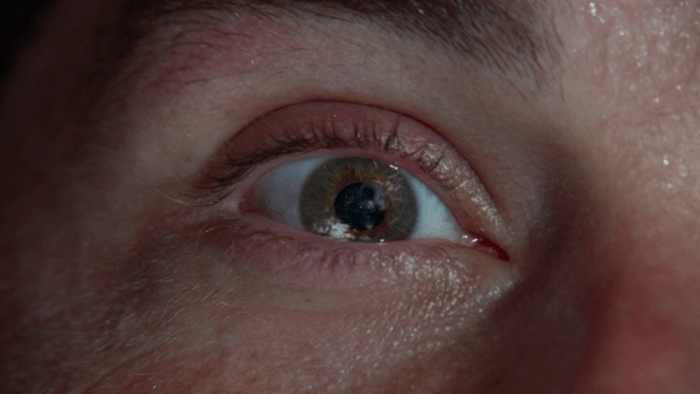
A close-up of a man’s eyeball. As tense music plays, the eye opens wide, reflecting a canopy of bamboo.
A wider shot, zooming out: the man wears a suit and tie. His face is scraped. He may be in shock.
A sound from the forest. A yellow labrador retriever walks out of the trees.
The injured man rises, finds a minibar bottle of vodka in his pocket, and runs through the trees. He comes to a beach, where the camera slowly pans to reveal the catastrophic wreckage of a trans-oceanic flight, survivors screaming and frantic.
“Who are you?” It’s a tinny, artificial voice.
We look down on a conference room: a long wooden table surrounded by twelve chairs. The carpet forms concentric rings of green and yellow.
There is a woman on the table, wearing sensible blue business skirt, blouse, and beige heels. She is face down, arms splayed as though she fell from above.
“Who are you?” the voice asks again. There is a little intercom box on the table, near the woman’s head. She begins to stir.
“Hello?” the woman asks, looking at the box in confusion. There is a beat of silence.
“I’m sorry,” the voice says. “I got a little ahead of myself. Hello there, you on the table. I wonder if you’d mind taking a brief survey?”
That Familiar Feeling
The first scene was the opening of LOST, the show best known for popularizing the mystery box genre and irritating its fans with an unsatisfying ending. The second scene is from Severance, the new mystery box darling that’s currently rolling out its second season on Apple TV+.
There’s a striking similarity between the openings of these two shows, nearly two decades apart. A person waking up in a strange environment, inviting the character and the audience to immediately start wondering “what’s this all about?” (And as an aside, if anyone ever tells you that you should never start a story with a character waking up, feel free to point them toward these lauded, high-budget shows.)
I have spent a good amount of time thinking about mystery boxes (and writing my own), and the current popularity of Severance provides an interesting opportunity for reflection. After all, LOST was hugely popular and widely praised for much of its run, with many critics and fans souring only at the conclusion or in the last season.
Is a show like Severance bound for a similar fate? Or will it be a shining example of how to do it right?
What’s In the Box?
So what elements contribute to a show like this working or falling apart?
First, it has to be going somewhere. That implies two things: the writers have to know the answers ahead of time, and the answers have to be interesting. If the story is built up by throwing around mysteries too liberally, without careful concern for how it all fits together, then it inevitably won’t. And even if the biggest mysteries manage to get wrapped up, audiences will be frustrated when the path along the way is littered with plot holes.
This was perhaps the biggest failing of LOST. The show runners changed across seasons, and are on record admitting that they introduced mysteries without knowing all the answers or the final resolution of the series.
However, it’s not enough to know what you’re doing. You also need the trust of your audience. A mystery box show can earn that trust in a couple ways. The first is to set up and pay off smaller mysteries. These can be arcs within an episode or questions about a particular character; anything that shows foresight and planning, without necessarily giving away too many major plot points. Bigger reveals are less frequent by necessity, but a steady drip of smaller reveals are what builds up audience trust. Severance has done this fairly well, usually dropping a “big reveal” every couple episodes.
Finally, it pays to reward the audience for noticing the details. Smart writers will leave breadcrumbs and clues for the super-sleuths to find and interpret. LOST fans were known for insane frame-by-frame analysis of seemingly mundane details, including many things that simply didn’t end up mattering.
While there’s no way to prevent determined fans from going through the irrelevant details with a fine-toothed comb, LOST included many details that practically shouted “this is a clue!” but never had a satisfying explanation (like those six numbers that kept showing up everywhere).
Mystery is not Enough
The mysteries are obviously an important engine of the “mystery box” genre, but they can’t be the only thing driving the story. Even the most mystery-centric story must have compelling characters and interesting relationships between them.
One of the greatest insights in Chuck Wendig’s Damn Fine Story is that the inner emotional story should drive the external action. Star Wars isn’t just a story about galactic war, it’s about the Skywalker family drama that will ultimately decide the fate of the galaxy. The mystery box needs to be inhabited by compelling characters, and they should be driven by their own needs to try to find out what is going on.
The characters in LOST had a very straightforward reason to solve the mysteries around them (at least in the first few seasons): they were stranded on an island and wanted to go home. To a certain extent, this is true in Severance as well. The “innies” live their lives trapped within the confines of their underground office complex, even if their bodies and the other half of their brain gets to go home at night.
A more subtle and more powerful way to drive the story is to tie the characters’ arc and growth to the resolution of the mysteries. If the character needs to solve the mystery to mend a broken relationship or understand their purpose, they’ll be driven to find answers.
In LOST, this manifested in the long-running debate between characters who believed in free will and choice, vs. those that thought their experiences were driven by unalterable fate. In Severance, the mysteries are direct impediments to at least four different romantic relationships. If those characters want to be together and be happy, they need to resolve the mysteries surrounding them.
The Danger of Success
The biggest threat to quality on a mystery-centric show is runtime, and there is an obvious impulse to drag out a successful story to maximize its money-making potential. Unfortunately, the longer the story goes on, the harder it is to maintain the tension. It’s difficult to keep the audience’s interest across seasons without moving the goal-posts or introducing long digressions.
Even worse, stretching out the development increases the likelihood that the outside world will intrude: from writers’ strikes to key actors and personnel leaving, to network executives foisting questionable demands onto the creatives responsible for crafting a good story.
Every episode or chapter is another opportunity to accidentally introduce loose ends, red herrings, and irrelevant details. There is a constant danger of diluting the elements that make the story exciting.
Gravity Falls — A Mystery Box that Delivers?
While Apple slowly releases new episodes of Severance on a weekly cadence, I also happen to be watching another mystery box show with my kids: Gravity Falls.
Admittedly, Gravity Falls is a slightly different beast. It’s first and foremost a funny cartoon for kids, even if it does have some jokes thrown in for the parents and those unexpected tonal shifts that define a good “dramedy.” However, it is a mystery box, and the slightly simplified formulas of a kids’ show help to show off how a mystery box can be done well.
The show follows the classic “monster-of-the-week” formula, with stand-alone episodes that add depth to the characters, interspersed with key episodes that advance the bigger, ongoing plot. Having originally run on TV before the rise of streaming, the show limits itself to two seasons, but these are old-fashioned TV seasons, totalling 40-episodes. It’s a run that might still outdo a show like Severance, with seasons under 10 episodes. Regardless, it’s fairly tight compared to LOST.
The show builds mystery in a lot of small ways: secret codes in the credits, callbacks and background details, and generally rewarding the fan base for digging deeper. And mystery isn’t the sole draw: there is character building and tension in the relationships, with overarching themes of siblings growing apart, and the challenges of maintaining ties in the face of growing up.
Gravity Falls does a fantastic job spreading out the clues and resolutions across episodes. It doesn’t try to save all the secrets for a huge ending. In fact, most of the mysteries are resolved before the end, with a finale that focuses on defeating the big villain and answering the ultimate emotional question of the show: will the two sets of sibling relationships (adult brothers and kid brother and sister) survive and thrive, or end in estrangement?
Don’t Let me Down, Ben and Dan…
Back to the original question. Will Severance satisfy, or will it be another LOST?
The answer, of course, is that we won’t know until the final episode. There is still plenty of time for the people behind the show to make bad decisions. I have reason to be hopeful though.
So far, Severance hasn’t been overly stingy with clues and reveals. While certain plot points (cough-cough-goats-cough-cough) feel worryingly LOST-esque, I’m still willing to believe the show-runners’ claim that they have a clear ending in mind.
The characters have had fantastic arcs so far, and they’re tied nicely into the central mysteries. But we’ve seen this before. They need to stick the landing.
I’ll be watching the season two finale with fingers crossed.
I look at my dashboard today and see that it has been a month since I last posted, and the previous post was a month before that. I don’t think I’ve taken that much time off since starting Words Deferred back in 2020.
Sorry for the lack of communication. I didn’t know I was going to disappear either. I’d like to claim I had an exciting reason, like being black-bagged by the CIA or abducted by aliens, but my life is much more mundane.
Spring has been a struggle, with a seemingly never-ending series of cold and flu germs rampaging through my family. When everyone is well, the kids are now getting to the age where their school activities are taking up a lot of our time. Plus, there’s that general late-winter Minnesota malaise, as we eagerly await the warmer weather.
At the beginning of February, I was sick and struggling to write much of anything. I started a few blog posts, and then left them unfinished. I let myself get distracted, and as days slipped by without writing anything, it felt like a bigger and bigger task just to put pen to paper.
Starting to Write Again
I’ve always struggled with consistency when it comes to my writing, and I know I’m not the only one. Over the years, I’ve noticed two genres of blog post and online discourse among writers (and especially amateur writers):
How to write consistently
Oh no, I can’t seem to write consistently, what do I do?
These conversations often take as given that you have to be consistent to be successful, and therefore inconsistency is tantamount to failure. Writers just love self-flagellation.
As I’ve gotten older, I’ve gotten more consistent. Through trial and error, I’ve found ways to motivate myself and fight back against some of my less helpful habits. I’ve learned how to write more and better. I’ve also come to understand that consistency is a moving target. I suspect I will never feel as productive as I would like, no matter how much I improve.
Each writer is on a different stage of that journey, and starting from a different place. Some people are lucky to have the built-in drive and consistency to simply set themselves goals and then work toward them, day after day. Some of us have to treat getting stuff done like a heist, with elaborate plans to trick ourselves into productivity.
I’m happy to be in the position now where I know how to get going again. I’ve done it many times before. Unfortunately it’s still a pain in the ass. I have to get my brain back into that mode.
Other Updates
A few stories came back to me in February, all rejections. One of these was Dr. Clipboard’s Miracle Wonder Drug, which had been on hold at an anthology for a while, so that was a bit of a let-down.
After making myself a word count mini-goal in January, I had planned to dedicate February to revisions. That never happened, and I’ll most likely try again in April. February was a lost month as far as writing was concerned, and I’m taking March to get back into the groove of writing regularly again. That means the blog will be coming back to life. Otherwise, I’ll be doing a mix of things—whatever gets my fingers on the keyboard.
That’s All
This post was a little more off-the-cuff than usual. I needed to write something without worrying too much about format. I don’t really have a conclusion, except to say that I’m back, and you should expect to see me around more.







 Words Deferred