Rod String Nail Cloth: An Afrofuturist Mixtape — Read Report

Buy on Bookshop (affiliate links)

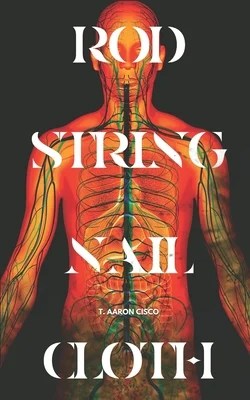
Rod String Nail Cloth was a random library pick containing six stories and a poem. It’s slim enough that I read it in the span of a Saturday afternoon. When I grabbed it I didn’t know anything apart from the title, but I’ve been meaning to investigate Afrofuturism for a while, and a short anthology seemed like a good place to start.

As it turns out, T. Aaron Cisco was born and raised in Chicago, but now lives in Minneapolis, so there’s a hometown connection for me. It also turns out that this is self-pub, and has a whiff of punk-rock “zine” to it. Unfortunately, it also has something like 20-30 typos and formatting errors across its 150-odd pages.

These stories revolve around themes of time travel, racial injustice, environmental catastrophe, and transhumanism. There are some interesting ideas in here, and some sentences and paragraphs that really pop. However, I found some of the writing straying too far into the literary style that I most struggle with: pages spent on a character’s languid internal thoughts without giving me enough plot or setting to latch onto.

The first story, “Now, Justice,” is the biggest offender in this regard. It follows a Black inventor who creates a machine that manipulates people’s perceptions. He uses it to take vengeance on a policeman who shot an unarmed Black kid and dodged the consequences. However, we don’t get to the first mention of the machine until page 17.

The subsequent stories were tighter, in my opinion. “Thursday Addison” is a Shonen anime of a story where a cybernetically enhanced enforcer is sent into a violent, futuristic battle that she barely survives.

“The Hesitant Envoy” is a tongue-in-cheek tale where an advanced civilization pulls aside one human to ask him to justify the continued existence of the species. He has a hard time coming up with a good argument, and isn’t particularly inclined to try.

 “Lydian Mode” is about a down-on-his-luck Black musician who travels back in time to 1960s Chicago. Despite the dangers of life at the height of the civil rights movement, he discovers that there are also opportunities.

“Captain Michaela” is a poem about the titular character (maybe?) saving the universe. I’m just the wrong audience for this. While I have my favorite poets and poems, I’ve never felt drawn to sci-fi poetry.

“Rod String Nail Cloth” is the stand-out story of the book for me, an epistolary story about a person sent far back in time to fix a broken world.

In “They Burn So Easily,” an apocalyptic virus turns people into still-thinking vampire/zombie creatures called Chalkies, more strongly affecting those with paler, less pigmented skin. It’s a story about choosing forgiveness and humanity even when it may be undeserved. The conflict in this one felt a bit rushed, and I would have been interested in a longer exploration of the setting, the premise, and the relationships between the characters.

Rod String Nail Cloth is, in parts: intriguing, goofy, and a little rough around the edges. It’s not going on my favorites list, but I’m happy to have read it, and I’ll keep an eye out for Cisco’s work in the future.

It also whet my appetite for more Afrofuturism, especially in short fiction. If you have any good recommendations, leave them in the comments.

Week 7 — Year of Short Stories 2026

2026 is another year of short stories. In this weekly series, I talk about short story writing, from idea and draft to submission.

This is week seven: Feb. 15 – Feb. 22.

Stats

  • Stories Finished: 2
  • Submissions Currently Out: 2
  • Submissions Total: 2
  • Rejections:4
  • Acceptances: 0

Goals and Results

The goals I set for last week were:

  1. Finish Red Eyes.
  2. Finish Taco Cat.
  3. Continue writing Out of Towner.
  4. Get a new story in the Critters queue.

This week felt good. I am finished with Red Eyes, and I think I can safely say that this is the most work I’ve had to put into a story to make it work. It’s a relief to be done with it.

Taco Cat Employee Manual v7.1 (a much shorter story) made it through the Critters queue this week, and I received 11 responsesa pretty decent turn-out. It was mostly well-received, and only needed some minor tweaks. Quite a contrast between these two stories. I trimmed it down to an even 1,000 words so I can submit it to most flash fiction listings.

I already had another story, F-TIB, ready for the critters queue, so I sent that off and should get feedback in mid-March.

Finally, I sat and stared at Out of Towner, a story comprised (so far) of a single introductory scene, and felt completely indifferent to it. So that was the one goal I didn’t meet. This week, I’ll have to decide if I can find a spark of excitement in it, or if I should set it aside and pick something else to work on.

Submissions and Rejections

I received a response to the light rewrite that was requested for Incident at Pleasant Hills. Unfortunately, it was a rejection. This was a bummer, but they had very kind words for the story so I can’t really complain.

I submitted one story, Tom, Dick, and Larry, to a themed drabble contest. It has been challenging to find publications interested in drabbles, and they frequently don’t offer payment. (It’s pretty funny, since pro rates on 100 words come out to only $8.) This contest pays and the theme fits the story, so it’s a nice find.

I haven’t yet looked through the listings with Red Eyes or Taco Cat in mind, but I plan to send them out in the upcoming week.

Next Week

My goals for next week are:

  1. Submit stories – at least three
  2. Submit some critiques
  3. Continue writing Out of Towner, or start a new story.

Hyperion — Read Report

Book | E-book (affiliate links)

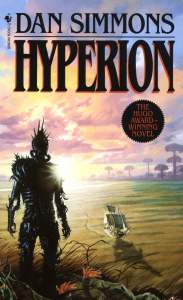
Reading the four-part Ender’s saga left me feeling skeptical of big, philosophical, late-80s sci-fi books.  Now I’m going back to that well with Hyperion.

I’ll be honest, Hyperion feels clever and stylish after Children of the Mind. Then again, Ender’s Game was the first and best book in the series. Hyperion is also the first book in a four-book series. So maybe I’m setting myself up for heartbreak all over again.

Canterbury Tales, in Space!

Hyperion opens with a frame story. A man we know only as the Consul is given instructions to go to the planet of Hyperion along with six others, on a mysterious pilgrimage. He goes, and meets his compatriots:

  • Het Masteen, captain of the spaceship that will transport them, which just so happens to be a giant tree.
  • Father Lenar Hoyt, a Catholic priest in a galaxy where Catholicism is nearly extinct
  • Colonel Fedmahn Kassad, a soldier of the galaxy-spanning Hegemony’s military
  • Martin Silenus, a centuries-old poet who has journeyed between stars and across time via relativistic space travel
  • Sol Weintraub, a scholar, who brings his baby daughter Rachel
  • Brawne Lamia, a hard-boiled private detective

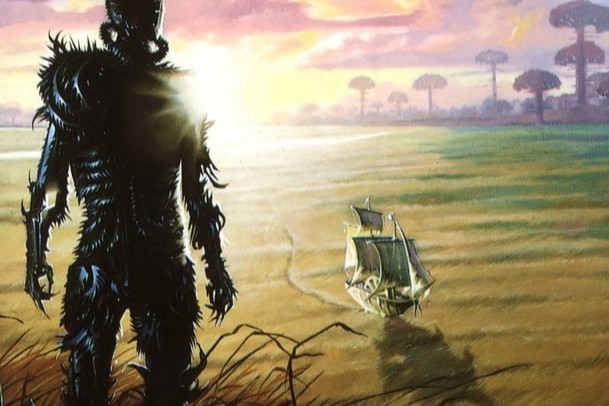
When the pilgrims arrive at Hyperion and introductions are made, they come to an agreement: they will each tell the story of why they came as they make the long journey from the spaceport to their final destination, the Time Tombs. There, they expect to find the Shrike, a mythic creature made entirely of razor-sharp blades. Supposedly, he will choose one of them to grant a boon, and the others will be sacrificed.

As the journey gets underway, each pilgrim tells their story in turn. Between the stories, they travel across the planet toward their destination. It’s a bad time to return to Hyperion. The planet is poised to be the first front in the largest war humanity has ever seen, between the Hegemony and the long-exiled Ousters, who live strange lives in their deep-space ships. The Time Tombs—in what cannot be coincidence—appear to be opening, and nobody knows what will come out.

A Slowly Woven Tapestry

The structure of the book allows Simmons to expand the scope of ideas slowly. The unexplained and confusing in one story is addressed and answered in another. It allows the reader to assemble these small pieces into a detailed and rich setting.

Through the pilgrims’ stories, we begin to understand the galaxy they inhabit and the ways their paths have crossed Hyperion and the Shrike to bring them to the current moment. From Silenus we learn about Old Earth and the Big Mistake, a man-made black hole that slowly (and then quickly) devoured the planet, forcing the Hegira to many worlds. From Father Hoyt and Saul, we learn about Hyperion, it’s inhabitants, and the Time Tombs. From Kassad and the Consul, we learn about the armies of the Hegemony; the many rebellions quashed and small wars fought by a supposedly peaceful and democratic government. From Brawne, we come to understand the vast web of farcaster portals that allow instantaneous travel between Hegemony worlds, and the mysterious society of AIs who control them and remain apart from humanity while ostensibly guiding and helping them.

The book paints rich portraits of a handful of specific worlds. Dan Simmons manages to make almost every setting in the book genuinely strange and interesting. A planet wracked with storms, a sea of grass navigated by gyroscopic sailing ship, a 1.3g planet where the people live in vast arcology-like “hives,” a bus-sized cable-car over snowy mountains, an ocean world where people live on island-sized migratory creatures, and a vast capital city where the rich live in houses where every room is a portal to a different planet.

This feels like a universe with a history, a big universe populated by billions of people across dozens of worlds, and all the diversity that represents. It’s full of beauty and weirdness. And yet, the same human sins and weaknesses are still there, still causing problems.

Each pilgrim brings a different perspective to their story, which allows Dan Simmons to shift style and tone throughout. Kassad’s story is full of sex and violence, a pastiche of military sci-fi, while the Consul’s story is more of a historical documentary. Brawne’s story is a cyberpunk noir where the detective inevitably falls in love with her dangerous client. Sol’s story is that of a father desperately trying to save his sick child. These different styles help to keep the book constantly fresh, and each reveals new pieces in the puzzle of what’s really happening on Hyperion.

In the Ender Saga books, the relativistic effects of space travel were a promise that never really delivered. Nobody apart from the main characters traveled between worlds, and it seemed that nobody could even imagine that someone might live for hundreds of years by traveling between stars while time passes by.

In Hyperion, relativistic space travel is a part of life. The Web of Hegemony worlds are connected instantaneously via farcasters, but each world starts as a colony whose inhabitants took a many years to arrive, and even longer to build their first farcasters. Conflicts often arise between the original settlers, or indiginies, and the flood of tourists that inevitably come with joining the web.

Style Plus Substance

Ultimately, I think a lot of what I enjoy about Hyperion comes down to Dan Simmons’s writing style. It incorporates literary flashes and delightfully crafted language, while maintaining the workmanlike plotting and characterization that a mainstream science-fiction audience would expect…especially in the late 1980s.

For a thirty-five year old novel, Hyperion still feels fresh and interesting. It’s doing a lot, and doing most of it well. If there’s anything to critique, it’s that the book sets up some big mysteries and leaves the biggest ones unresolved. I believe the four books in the series are really a pair of duologies, so I expect to get most of the answers in the sequel, The Fall of Hyperion.

Week 6 — Year of Short Stories 2026

2026 is another year of short stories. In this weekly series, I talk about short story writing, from idea and draft to submission.

This is week six: Feb. 8 – Feb. 15

Stats

  • Stories Finished: 1
  • Submissions Currently Out: 2
  • Submissions Total: 1
  • Rejections: 3
  • Acceptances: 0

Goals and Results

My goals from last week were:

  1. Finish revising Red Eyes.
  2. Start the first draft of a new story.

Although I’ve been generally keeping up with my self-imposed quotas for writing and editing, this week marks the first time where I’ve gotten ahead on both.

I started a new story with a working title of Out of Towner. I hate this title and it will change. I’m not sure how I feel about the story itself. I’ll give it another week to see how it shapes up.

I made a couple of breakthroughs with Red Eyes revisions this week. First, I found a motivation for my main character that connects several aspects of the story and helps to explain why he finds himself in his current predicament. This also gave me a reason to make a change to the ending—not really changing the outcome of the story, but replacing some dialogue between two characters that I always felt was not up to snuff.

In the past couple weeks, I’ve addressed about two pages of bullet point notes, with some content migrating across several scenes. I believe I’ve reached the point where I added and clarified everything I wanted to. Unfortunately, that process added 600-700 words to a fairly long story. I’m refusing to call it done until it gets another one or two editing passes, mainly to trim, trim, trim.

As I finally wrap up this story, it’s really apparent that I’m just not as good at editing as I’d like to be. It’s slow, painful work to slog through. The writing is breezy in comparison. I’ve been able to get away with it, to some extent, by writing shorter stories that don’t have as many complicated, moving parts.

This isn’t a point of shame, but it does reinforce my determination to do a lot of editing this year so I can get better at it.

Critiques

It will be a relief to have Red Eyes done, because I’ve got another story coming down the pipe. Taco Cat Employee Manual v.7.1 went out for critique this week. The Critters week runs Wednesday to Wednesday, so it still has a couple days to go. I’ve gotten seven responses, which is not bad, but I’m hoping to get a few more.

Taco Cat currently stands at 1150 words, and a couple people have noted that it’s probably worth trying to get that down to an even 1000, the common cutoff for flash fiction. I expect the editing pass to be much shorter and less intensive on this one. Soon, I should have two more stories ready to submit.

Goals for Next Week

  1. Finish Red Eyes.
  2. Finish Taco Cat.
  3. Continue writing Out of Towner.
  4. Get a new story in the Critters queue.

Making Monsters: Nightmare Creatures for Horror Stories

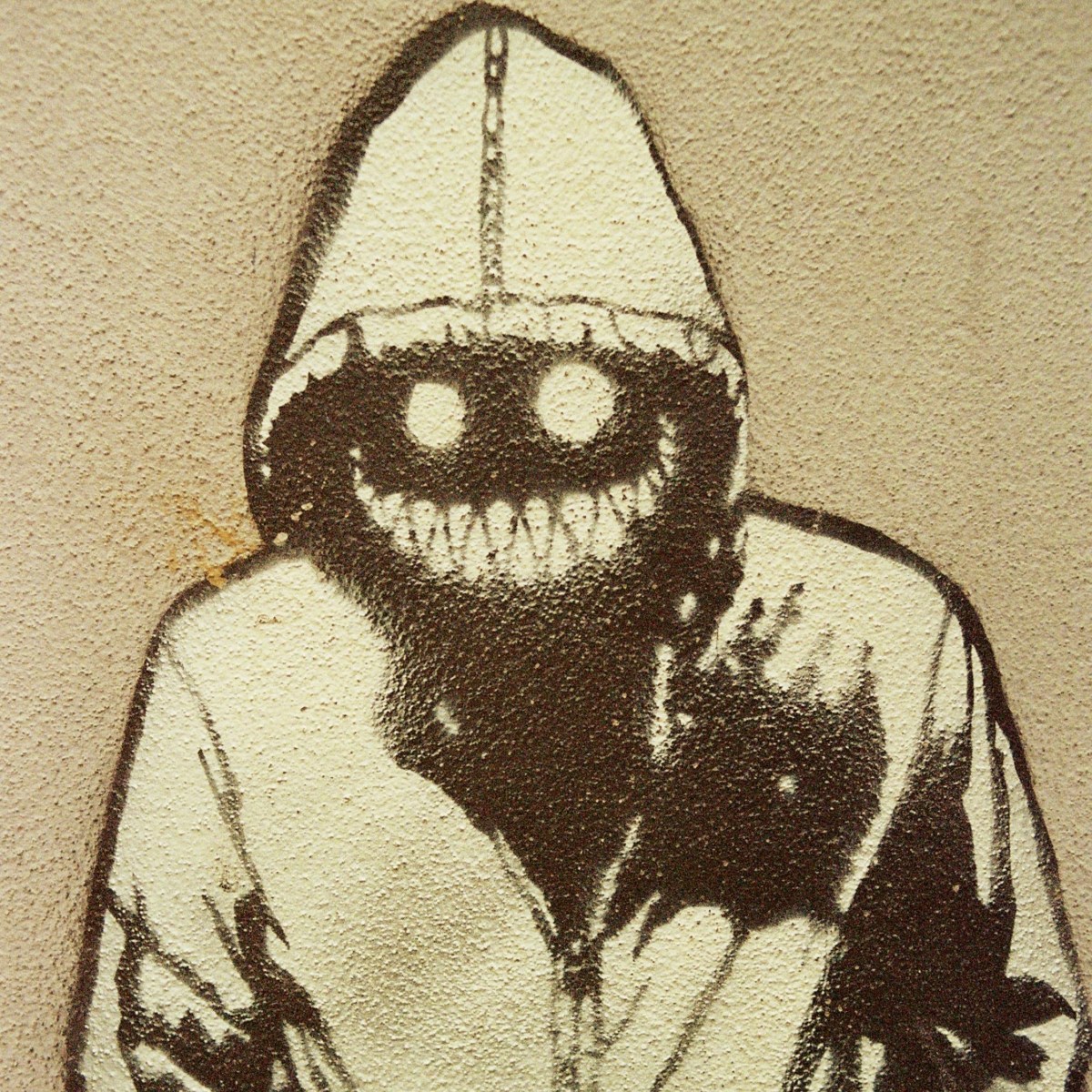
As a speculative fiction writer, I tend to stay in the zones of sci-fi and fantasy. I don’t go across the tracks to horrorville very often. However, I’m currently writing a horror story featuring a monster who appears human. That got me thinking about monsters and how to write them effectively.

Despite my limited horror writing experience, I do read a good amount of horror and have analyzed a fair number of short stories through Critters critiques. As authors, we inevitably read far more work than we produce, so it’s important to learn not just from our own mistakes, but from others’ mistakes (and successes) as well.

In my opinion, horror is reliant on pacing and rising tension more than any other genre. While “conflict” and “tension” are sometimes used interchangeably, the difference is important here. Physical violence is common in horror (although it’s hardly the only form of conflict available). But too much violence runs the risk of verging into absurdity or action/thriller and losing those “creeping dread” horror vibes.

To feel like horror, there should be rising tension throughout, and outright conflict only at key “peaks” of the story.

Save the Reveal

Any connoisseur of monster movies knows that revealing the monster too early is a mortal sin. Mystery, uncertainty, and fear all build tension. So long as the reader and the characters don’t have a complete understanding of the antagonist, there’s always the possibility of something new and unexpected happening.

To this end, it’s important to slow roll the reveal. Dribble out information and understanding. The characters might think they have a chance against the monster when they discover that it’s blind. They’ll learn how wrong they are when they discover it has superhuman hearing and sense of smell.

The unknown is always more spooky. This goes for all aspects of the horrific. When describing the monster, give the characters and the reader glimpses, not straight on views. Show us a stray tentacle, a slime trail, a bloodshot eye through the crack in the door, or the sound of sharp claws scraping on the window.

If there has to be a full reveal, it should come close to the end. However, there doesn’t always have to be a reveal. Sometimes the story can resolve, and the characters can even win, without ever completely understanding the monster. Cosmic horror especially relishes the unknowable, and often outright refuses to fully explain its biggest bad guys. They are too horrific or mind-bending for mere humans to comprehend while staying sane.

Use All of Your Senses

Vision is the sense that able-bodied humans use most, and it’s usually the first mode of description authors reach for. Hearing is a distant second place. The rest of the senses are a lap behind on the track.

In any fiction it’s a good idea to shake this up. Hearing, touch, smell and taste can all add verisimilitude and depth to a story. For horror, this is even more important. Since mystery and the unknown are vital to creating tension, preventing characters from seeing the danger will ramp up that tension.

Since a lot of horror lives in the realm of speculative fiction, there may even be opportunities to include “extraordinary” senses beyond the standard five. Characters might get the feeling that they’re being watched, or the extrasensory certainty that something horrible is about to happen.

Using the full array of senses is an opportunity to make associations with things that cause discomfort—the feeling of bugs crawling over skin, dripping slime in an unexpected place, the smell or taste of rot, the sound of crunching bones. These kinds of sensory discomforts are another key way to ramp up the tension in a story.

Be aware that you may lose certain readers when you get into phobia territory. This is par for the course with horror, and audiences should expect a certain amount of discomfort, but you’re still going to encounter certain readers who absolutely can’t get enough axe murder and will still throw a book across the room when they get to the bit with the spiders under a character’s skin or the clown in the sewer.

Metaphor and Synecdoche

Another important way to maintain mystery and reveal without revealing is to use layers of indirection. Metaphor and simile can give a sense of what the monster is like, without providing the whole picture. Synecdoche substitutes a part of the thing for the whole.

We know the creature has a snout that snuffles like a pig when it seeks out its victims. We know that it has a slimy hide with bristly, needle-like hair. We know that when it was feeding on that old man in the shadows, it was all sharp claws and red-tinged fangs.

Twisted or False Innocence

Another tactic for introducing mystery and uncertainty is to start with something safe and known, and systematically show that this surface-level simplicity hides sinister depths.

The classic examples of this tend toward typical innocence and innocuousness: children, dolls, nuns, clowns. These cheerful, delightful, or inherently good things and people slowly reveal aspects that do not match what they’re supposed to be.

The feeling of understanding something, only to have to revise that initial impression naturally brings some level of discomfort and tension with it. It speaks to the primal parts of the human brain that are responsible for studying the dark jungle around us and noticing on the third or fourth pass that the ordinary shadow under that tree is really a tiger.

Reveal Through Reaction

Effective fiction requires a level of empathy between the reader and the characters. Luckily, most humans are natural empathy machines—when we see something happen to somebody else, we tend to think about how that makes the other person feel, and we can even generate a sympathetic response that makes us feel the same feelings we perceive in someone else.

In all fiction, and especially in horror, it’s the author’s job to help the reader activate that sympathetic response. Sensory descriptions are a great way to do this. Again, as a culture that’s immersed in TV and movies, we tend to think very visually, but other senses often are even better at eliciting this empathy in the reader.

Importantly, fiction offers an avenue that isn’t entirely possible to replicate in TV and movies: the inner thoughts and emotions of the characters. Of course, the POV of the story may be a limiting factor, but in first person, second person, and “close” third person points of view it should be possible to delve into the thoughts and emotions of at least one character.

Reveals are Climaxes

With mysteries and uncertainties providing vital sources of tension in horror stories, it’s only natural that reveals should be moments of excitement or relief. Major revelations should come at a point of maximum tension. This can be used as a pressure release valve before moving into a new part of the story and ratcheting up a new source of tension. However, the reveal is often closely coupled with a moment of violence, pain, or trauma, turning that inherent excitement toward terror.

Reveals are also sometimes opportunities to raise the stakes. What started as “I don’t want to die,” may become “I can’t let this evil be unleashed onto the world.” One of my favorite takeaways from Chuck Wendig’s Damn Fine Story is that the character’s personal story should tie into the broader external action. What this means is that good stories have personal stakes for key characters, but those stakes are tied to the bigger events.

In Stranger Things, a group of kids has to fight monsters to save their friends, but those monsters also have bigger plans to wreak havoc on their small town and the world. In The Omen, fear of a monstrous child is heightened by the possibility that he may be the Antichrist. The Alien movies aren’t just about avoiding the Xenomorph, but about preventing it from spreading.

Most horror—or at least horror with monsters in it—ends in defeat, or victory snatched from the jaws of defeat. The climactic reveal may be the piece of information that is needed to fully understand the monster, and thus discover a weakness that can be used to defeat it.

The final opportunity for tension comes at the end of the story, just beyond the climax. The monster was finally defeated…or was it? Did that mangled corpse twitch? Did the eye open? Or is there a clutch of eggs somewhere cool and moist, waiting to hatch? Was the demon really banished, or is there a strange glint of red in that side character’s eye?

One of the hallmarks of horror is leaving the reader with an unsettled feeling even after the final sentence, and a great way to do that is to leave some tension unresolved.

Reblog: Three Things I Learned From 100 Story Sales — Aeryn Rudel

Here we are, in the thick of a new year of short stories. It’s the perfect time to direct you to one of my favorite short-story-writing bloggers, Aeryn Rudel.

Rudel writes and submits short fiction in numbers that I can only aspire to. In fact, the title of this post apparently understates his case—he mentions that he’s had 120 stories published over the past 12 years! That much experience brings a lot of perspective on short story writing, and we’re lucky that Rudel shares it regularly.

Check out the post over on his site, Rejectomancy.

Week 5 — Year of Short Stories 2026

2026 is another year of short stories. In this weekly series, I talk about short story writing, from idea and draft to submission.

This is week five: Jan. 31 – Feb. 6.

Stats

  • Stories Finished: 0
  • Submissions Currently Out: 2
  • Submissions Total: 1
  • Rejections: 3
  • Acceptances: 0

A New Kind of Rejection

I received one rejection this week. Sort of.

At first I thought it was going to be one of those rejections where the publication is so worried about offending anyone that they don’t even clearly say that the story is rejected. (For the record, these are my least favorite kind of rejection. Don’t treat writers as fragile little babies, even if we occasionally act that way.)

Around the fifth paragraph it became apparent what was actually going on. The publication was unable to keep up with the number of submissions, so they gave up, rejected everything, and changed their format to be flash fiction only.

My submission wasn’t flash, hence the non-rejection rejection.

Goals and Results

The goals I set out for this week were:

  1. Finish or get close to finishing Red Eyes revisions.
  2. Catch up on writing word count.

I have to admit I got distracted this week, but it was productive distraction. I ended up working on several blog posts, which should be a longer-term benefit when I have less work to do for the remainder of my February posting schedule.

I didn’t finish my revisions on Red Eyes, but I did make good progress. I’m now ahead on my self-imposed revision quota for the first time this year. I still have one more week to wrap up Red Eyes before critiques for another story, Taco Cat, start coming in from Critters.

I didn’t quite catch up to my word count quota this week, although I am within spitting distance. Those words were spent on finishing the first draft of the horror story I’ve been working on, currently titled Estate Sale. (I’ll be looking for a more interesting name when I come back to it for revisions.)

Next Week

For the upcoming week, my goals are:

  1. Finish revising Red Eyes. Finally.
  2. Start the first draft of a new story.

Computational Literature — The Story Idea Vault

It’s a common misconception that a great idea makes a great story. The truth is that most great stories come down to execution. A great idea with poor execution rarely works, but a great writer can breathe new life into even the most tired tropes.

Like any writer, I have my own treasure trove of ideas that might end up in a story…someday. But why horde them? Instead, I’m opening the vault and setting them free.

Use these ideas as a writing prompt, or come up with your own twist and reply in the comments.

Computational Literature

Early on, computer programming was valued for its practical uses. It overturned industry and transformed society. It was deemed a science, even if computer science wasn’t as rigorous as physics or chemistry.

There were always those who saw the artistry in programming, the code golfers, makers of esoteric languages, and high-minded software architects. But what does artistry matter in the face of trillion-dollar industries and socioeconomic upheaval?

That was before Gustav Nacht, classical painter turned web designer. In retrospect, it’s clear that his genius was on par with greats like Mozart, Nabokov, or Van Gogh. At the time, nobody took his School for Computational Literature seriously.

Nacht pioneered programming languages that were as expressive for humans as they were for computers. Ernest was a language as terse and evocative as the writing of Hemingway, while Faulkner was a language as verbose, complex, and non-linear as the stories of its namesake.

It took decades, but by the time of Nacht’s death, non-programmers reading computational literature had become commonplace, and the ability to program finally seemed destined to become ubiquitous, as more and more people discovered these accessible gateways into the practice.

Nacht’s best students carried on his work, and while some fans might suggest that nobody would ever attain the same artistic heights as Nacht himself, most readers found subsequent generations even more enjoyable.

Week 4 — Year of Short Stories 2026

2026 is another year of short stories. In this weekly series, I talk about short story writing, from idea and draft to submission.

This is week four: Jan. 24 – Jan. 30

Stats

  • Stories Finished: 0
  • Submissions Currently Out: 2
  • Submissions Total: 1
  • Rejections: 2
  • Acceptances: 0

Goals and Results

The goals I set for this week were:

  1. Clean up another story (F-TIB) for Critters
  2. Revise a story (Red Eyes)
  3. Do just enough new writing to meet my self-imposed quota

My first goal went very smoothly. I usually don’t do a lot of heavy editing on a story initially, unless I get seriously negative feedback from my first readers or I feel like it has big structural problems. This particular story is fairly short—about 2300 words—and feels pretty good after some light cleanup.

My biggest concern isn’t a story structure thing, it’s the fact that one of the two main characters is trans, and their transition is an important plot point. I’m not trans, and I want to do right by the character and by that community. I haven’t worked with a sensitivity reader (formal or informal), but that’s something I might explore for this piece.

Goal number two is a work in progress. I won’t talk too much more about it. I’ve already mentioned that Red Eyes is a fairly long story (6600 words) that does need some structural adjustments, and that’s ongoing. I think this is an interesting example of the editorial process, so I may publish a longer post-mortem when I’m done.

Goal three was an abject failure. I barely wrote anything new this week. That doesn’t bother me, since I’m making progress on my revisions and that’s what I need to do to get more stories ready for submission. My word count goals are very reasonable, and I can still easily make up those words in a few hours of solid work.

Looking Back on the First Month

It’s hard to believe that January is over. One month down, eleven to go. I’m happy to report that I feel like I’ve struck a good equilibrium with my goals. I don’t feel overwhelmed, but I am getting things done.

So far, that isn’t reflected much in the stats at the top of these posts. I’ve been working on several stories, but haven’t yet pushed one over the line to be ready for submission. If we go by my goals for the year, I should be finishing one story per month. So I will necessarily have to ramp that up.

The number of submissions is also slightly low, if we go by the raw math of splitting 50 submissions over 12 months. This flows from completing stories, so it makes sense. Naturally, as I finish more stories I will be able to submit more, so I expect this to ramp up throughout the year.

My final goal for the year was orthogonal to writing short fiction: essentially keeping the blog active by posting 100 times. Conveniently, this works out to roughly two posts per week. So far I’ve remained comfortably on track.

I was struck by multiple ideas for the blog this week, which was a small distraction from writing fiction, but a welcome one. I was able to build up a small backlog of posts over my holiday vacation, and I’m happy to be able to maintain a healthy buffer for those inevitable times when the well of ideas runs dry. It’s a nice way to keep the writing muscles in shape while taking a break from fiction, and a good excuse to think about and discuss process.

Next Week

For the upcoming week, my goals are:

  1. Finish or get close to finishing Red Eyes revisions.
  2. Catch up on writing word count.

Taco Cat Employee Manual still has roughly two weeks in the Critters queue before I start to get feedback, and I now have F-TIB ready to submit for critique immediately after that. Red Eyes progress has been slow, so I’m mostly clearing my week to work on that. I’d really like to have it done by the time the critiques start rolling in so I can move on to addressing those.

Catching up on word count is a secondary goal, and one that will be fairly easy to achieve if I get in the right mood for it, but I’ll be happy to let it slide if I can make significant progress on revisions instead.