
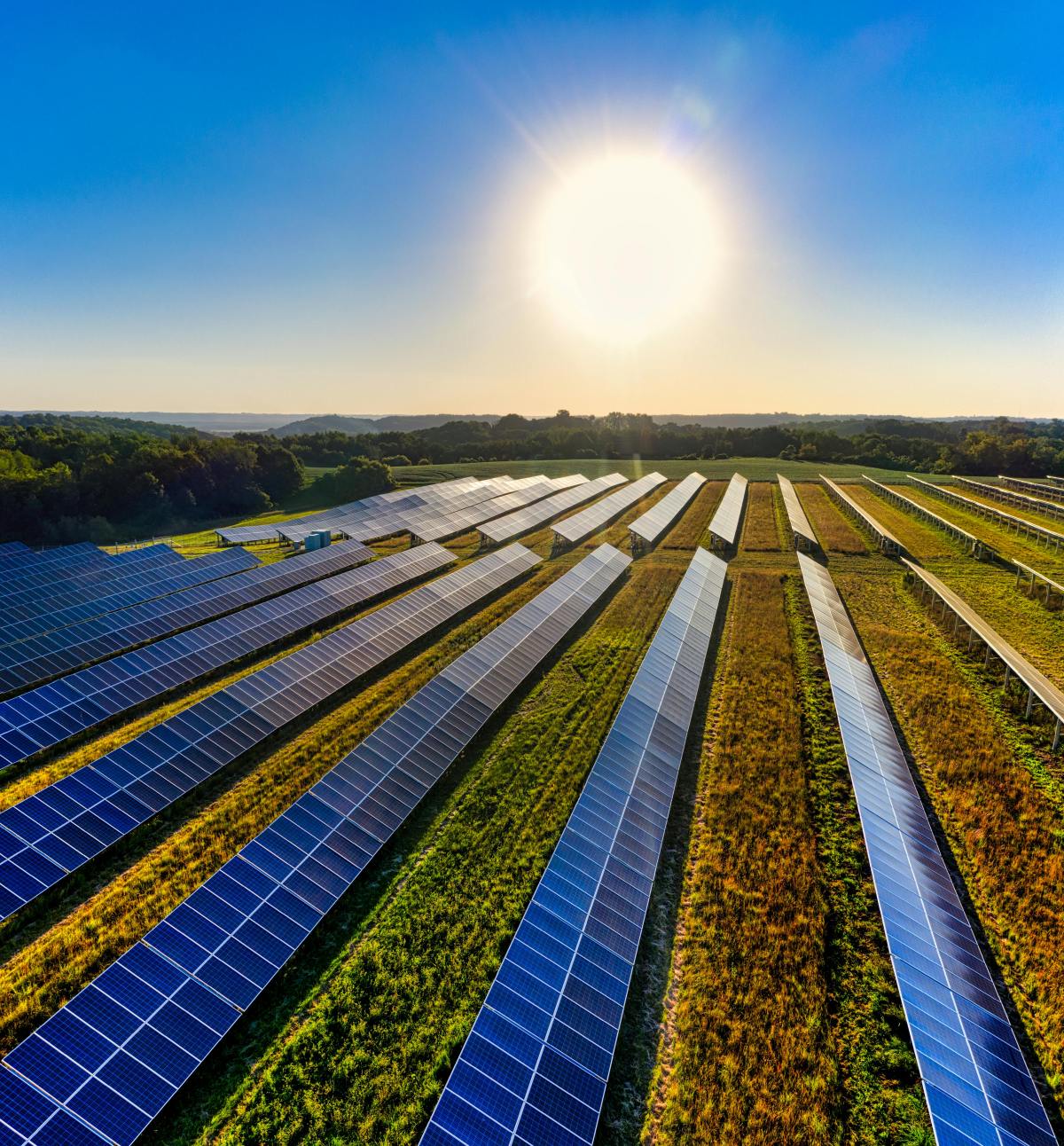
The term “solarpunk” has been on my radar for a couple years: a fuzzy idea of a genre that has ecology and climate change near its center, and the overused “-punk” suffix that we can no longer trust to have much real meaning.
When I finally picked up an actual solarpunk anthology at my local Half-Price Books, the introduction sent me spiraling down an Internet rabbit hole. I found myself with 30 tabs of solarpunk open, at least that many already combed through, and a small pile of dead links and dead ends.
The term solarpunk is now more than a decade old, but it still exists in the periphery, the outskirts and wild country of sci-fi, futurism, fashion, and politics. It may be a short-lived idea that never achieves critical mass. Only time will tell if it’s something that has actually taken root and begun to grow.
As evidence of this tenuous position, I submit most articles, posts, and papers that mention solarpunk. The vast majority are just like this one: explanations that attempt to answer “What is it, really?”
And yet, there is a cult following. Among this small cohort, there is clearly a hunger for more of this genre and aesthetic. There appears to be a demand that far outstrips the supply (a couple anthologies, small online magazines, and a smattering of discourse).
I’d love to talk about where solarpunk might go, and how it can grow and gain traction. But I’ll have to save that for later posts. First, I have to start where everyone starts. What is solarpunk?
Origins
The first piece of Solarpunk literature generally cited is Solarpunk: Historias Ecologicas e Fantasticas em um Mundo Sustentavel—a 2013 Brazilian anthology, first published in English in 2018.
Another widely cited early work is a Tumblr post that popularized the term on that platform. The tag now has 20k followers.
Solarpunk – Notes Toward a Manifesto is a somewhat more academic treatment of the nascent movement and the ideas that influence it.
The Aesthetics of Solarpunk
There aren’t any. Not really.
Well, okay, that’s just my personal position. Others will disagree.
There aren’t any. Not really. This is my position. Others will disagree.
Plants and nature have an obvious place in it. Stained glass and art nouveau have been proposed as a component. Reclaimed and recycled materials, decomposable and natural materials; metal, glass, fabric, stone and wood. Less plastic. Or the polar opposite of Apple’s design philosophies.
A fair amount of ink has been spilled trying to corral an aesthetic, but these attempts often come at it from the wrong direction. You can’t start with an aesthetic and then back into a genre from there. The recognizable elements of cyberpunk and steampunk were distilled from many examples of those genres.
I’d argue that there simply aren’t enough popular examples of solarpunk to achieve the critical mass needed for generally agreed-upon aesthetics to emerge. That’s okay. It’s exciting. The field is still wide open, and resonant ideas still have a chance to shape what the genre might become.
The Politics of Solarpunk
If the “punk” in cyberpunk and steampunk ever held any political connotations, I would argue that they have long been ground down and worn out. The philosophy of cyberpunk is largely nihilistic: a wildly unequal world full of wealth disparity, desperation, and hopelessness, where the unification of corporate greed and governmental control has made the rich practically unassailable. If I were a cynic, I might say it’s a slightly grimier, neon-lighted version of the world we appear to be living in.
The politics of steampunk is anachronistic Victorian British, which isn’t much better.
Solarpunk might have more right to claim “punk” than its older siblings. It has an inherently political core: a belief that the average Joe has the duty to fight back against the status quo, that the system dominated by corporatism, greed, indifference to human rights, and ecological catastrophe must be overthrown. It’s a belief in individualism and self-sufficiency, but also in local small communities, human- and environmentally-conscious economics, and grassroots support systems.
This is a modern twist on the original punk movement of the 70s and 80s, strongly anti-authority and inherently suspicious of both government and corporatism. Wild and chaotic, but also joyful in a way that only people living on the edge of desperation can be.
Solarpunk currently has a streak of willful nonviolence (at least toward people). This, perhaps, runs contrary to the punk ethos that if The Man is going to push you down, you had better go down swinging, and knock some of his teeth out along the way. I suspect there might be a real audience for a rougher, more violent strain of eco-fiction like this, but I’m not sure it could call itself solarpunk.
The Challenges of Writing Solarpunk
The first challenge, as you might already suspect, is trying to define the boundaries of the genre and writing within them. Solarpunk invites you to choose your own adventure, and then find out whether others think you’ve hit the mark.
The second, and much bigger problem, I feel, is that solarpunk strives for a utopic vision, and utopias are dangerously boring. Nobody wants to read a story where all the challenges and difficulties have been smoothed out. That’s why so many utopias turn out to be dystopias once the protagonist discovers a few nasty truths.
Luckily, the road to utopia is rough, and there are plenty of solarpunk stories to be told along the way. I see the best place for solarpunk stories living in the time between the present and some glorious, distant future.
That brings us to the third challenge: imagining solutions to very hard, very real problems. We don’t live in a solarpunk utopia today because there are daunting technological, societal, political, and economic challenges that prevent it. Those conflicts and tensions are fertile ground for stories, but they also require some serious thought about how we should try to overcome them.
The soft sci-fi of technobabble problems and technobabble solutions don’t work well here. The readers of today are all too familiar with climate change, oligopoly, and enshittification. A story that proposes half-hearted or unrealistic solutions to these modern woes will fall flat. It’s not easy to imagine solutions (or even battle tactics) that feel plausible. And yet, this is one of the great delights of science fiction, and a reason why the genre continues to inspire the real future. People use stories to make sense of the world.
Future Positive
I hope this brief introduction has whet your appetite for more. Although it’s young, solarpunk strikes me as a genre that is shockingly well-suited to the current moment. We don’t need the nihilism of cyberpunk or the escapist fantasy of steampunk. We need something grounded and fighting mad.
Solarpunk takes the energy and anti-authority attitude of classic punk, and marries it with determined optimism and ethical technology. It is a rebuttal to the world outside the window, and an opportunity to imagine better futures.

 Words Deferred
One thought on “Solarpunk 101”