Blog

The Read Report — July 2024

Since I took a month away from blogging in June (and I was so busy that I only read one book), this will include my June reading as well.

Where possible, I’ve included Bookshop affiliate links instead of Amazon. If any of these books pique your interest, please use those links. I’ll get a small commission, and you’ll support real book stores instead of a fifth vacation house for a billionaire.

Going Postal

By Terry Pratchett

This is my favorite Discworld book, and Pratchett is at the top of his game. There are a couple of additional books that came after this, but sadly he was likely fighting dementia at that point, and I think later books like Unseen Academicals suffered for it.

Moist von Lipwig is a confidence man who starts the book by getting hanged. He’s given a reprieve by Vetinari, ruler of the city, and given the job of postmaster. The Ankh-Morpork post office is a dilapidated disaster, but he’s aided by Mr. Pump, a golem bodyguard/probation officer, the elderly “junior” postman Groat (who attributes his health to horrifying homemade herbal remedies), and the young postman apprentice Stanley, a boy who isn’t quite all there and has an abiding obsession with collecting pins.

Moist spends the first half of the story looking for ways out of his forced government service. However, he’s a showman at heart, and he soon discovers that his brand of hype and hyperbole is well-suited to getting people excited about sending mail. Unfortunately, the post has largely been replaced by Clacks—a network of semaphore towers that act as a fantasy telegraph system.

The Clacks were built by high-minded engineers, but the original owners have all been ousted or murdered by clever corporate raiders, who are doing their best to extract as much value as possible while running the whole company into the ground. By delivering the mail once again, Moist finds himself in their crosshairs, and it doesn’t help that he’s falling in love with Adora Bell Dearheart, the disaffected, chain-smoking daughter of the Clacks’ dead founder.

Pratchett is a fantastic comedy writer, but he doesn’t get praised enough for his intricate plots or his characters that make you care, even if they’re all rather silly. This book is filled to the brim with all of that. If you’re only going to read one Discworld book, it should be Going Postal.

Poison for Breakfast

By Lemony Snicket

This was a re-read with my children. It is still one of my favorite books, and you can read my review from a couple years ago.

Ender’s Game

By Orson Scott Card

Another re-read with my kids. This was a formative sci-fi book for me when I was young, and it holds up fairly well.

This is one of those books with some content that some adults probably wouldn’t want their kids reading, like children murdering other children. And yet, my children really enjoyed it, and didn’t seem especially traumatized. I guess we’ll see how they turn out.

I appreciate that Ender’s Game is populated by many characters who do terrible things, but the narrative is not judgmental. As a reader, you’re free to form your own opinions about whether each character’s actions are justified or reasonable, without feeling like the book is trying to steer you to a particular conclusion.

It’s a book about growing up, and war, and the terrible things people do to one another, often for reasons that seem justifiable or even absolutely necessary at the time. It is also about the way that history often judges those actions in its own context, ignoring those justifications.

Go: A Complete Introduction to the Game

By Cho Chikun
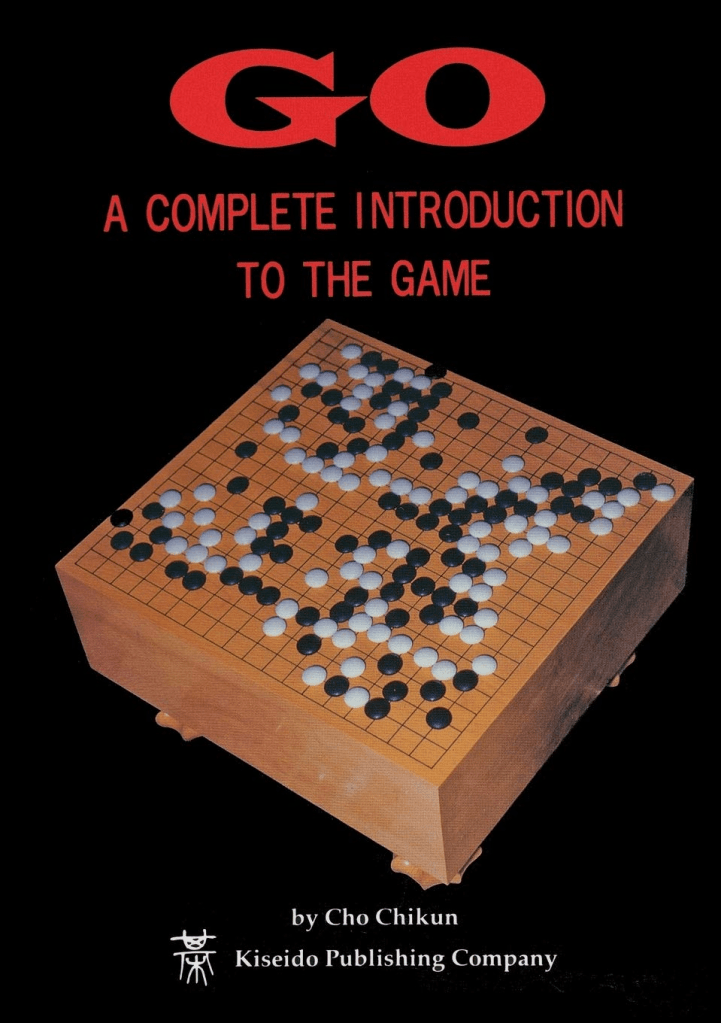
As I was getting back into Go, I re-read this excellent beginner’s guide in the SmartGo app. Cho Chikun is one of the most famous professional players in modern times, and the Japanese player with the most titles.

This book deftly introduces all the important aspects of Go rules and basic strategy, while alternating chapters about the history and cultural significance of Go. It’s a perfect introduction to the game (or re-introduction, in my case).

Double Digit Kyu Games

By Neil Moffatt

Another book from my SmartGo library.

In amateur Go, players start at a rank of 30 kyu. As they improve, their rank decreases down to 1 kyu, then to 1 dan, and up to 7 dan. As you might expect, players with double digit kyu ranks are beginners and casual players.

While most books about Go are written by pro players for obvious reasons, Moffatt wrote this as a moderately high (1 kyu-ish) amateur. He’s close enough to still remember and understand why the players of these games make the mistakes they do.

Moffatt also goes into more detail than usual in explaining the merits and disadvantages of each move, often exploring various alternatives. They result is a set of thorough game deconstructions that are very useful aids for an amateur player to recognize their own shortcomings.

Lore Olympus, Vol. 1

By Rachel Smythe

I bought this on a whim while on vacation, mostly on the authority of a positive blurb by Kieran Gillian (of Die and other comics), and a brief skimming of the art. Unfortunately, this book was not for me.

I don’t read a lot of romance, but I’m not strictly opposed to the genre. This, however, was just too much irritating teenage angst and not enough mythology for my tastes. When the romance hinges on everybody being afraid to voice how they feel, and the conflict stems from people hating each other for basically no reason, I get bored.

As far as the art goes, the character work is nice, but these characters live in a world composed of colored smears. This lack of any background detail is something that seems to be more and more common in indie comics, and while I understand it, I do miss the crispness that you see more in high budget superhero comics.

Hellblazer: The Red Right Hand

By Denise Mina and Mike Carey

Illustrated by Leonardo Manco, Cristiano Cucina, John Paul Leon
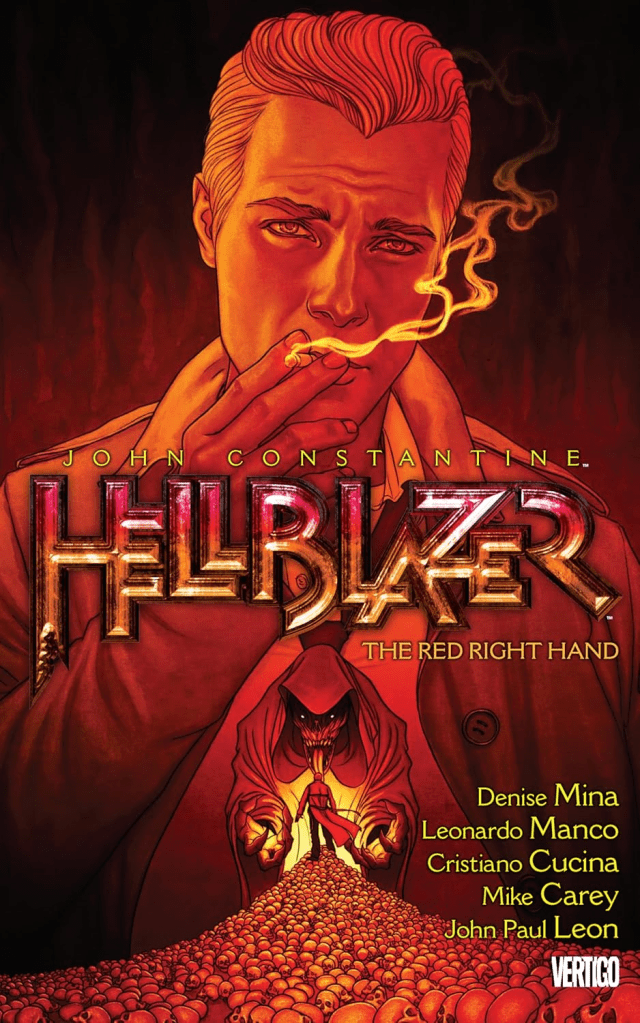
I do love me some John Constantine, but this collection wasn’t my favorite. There are two story arcs here: one where Constantine enters into a trap, and one where he gets out of it.

The typical Constantine story usually has a mystery twist, and this is no exception. Unfortunately, the twist didn’t shock me, it just made me shrug. Maybe if I were reading the series in sequence I would be better prepped as a reader.

It’s also not uncommon for Constantine to have some plan that only gets revealed when everything seems hopeless. Here, he doesn’t have much of a plan at all.

A collection of Constantine’s friends show up midway through, and it feels like deus ex machina, but even they don’t actually do very much. They muddle through, and the eventual resolution to the situation hardly feels like any of the characters had agency.

The last issue in this volume is a stand-alone one-off story, and it’s a classic, solid Hellblazer story. It made me a little sad that the rest of the book didn’t hold up as well.
Year of Short Stories — Week #28

2024 is my year of short stories. In this weekly series, I talk about the stories I’m working on, from idea and draft to submission.

  • Stories in Progress – 3
  • Submissions This Week – 1
  • Submissions Currently Out – 3
  • Acceptances This Year – 1
  • Rejections This Year – 17 (7 personalized)

The Vine

I have the excuse of a busy schedule over the past month or two, but I haven’t been getting as much done on my stories as I would like. Perhaps counterintuitively, I decided to unblock myself by starting work on yet another story.

The new story is tentatively titled “The Vine,” and is one that I’ve been kicking around for a while. (It inspired a piece of microfiction way back in the summer of 2021.) It’s about a plant that gets inside you and makes you feel empathy for others.

When I find myself getting stuck like this, it’s usually because there is some issue that I’m not recognizing and addressing, and it can be helpful to step away and work on something else. When I return, I’ll have a little more distance to evaluate the problems in my other stories and address them.

The Drabble Publishing List

I mentioned in previous weeks that I have a couple of drabbles that I’m interested in submitting, but some would qualify as reprints (since they already appeared on this site), and I think a good percentage of publications aren’t interested in stories that short.

So I dug deep on Duotrope and sifted through nearly two hundred publications that say they accept SFF flash fiction. I poured over submission requirements, editorial interviews and mastheads, and created a list of about thirty paying and thirty non-paying markets that might be good places to submit.

My next step will be to read some stories from as many of these as possible, especially the ones that specialize in shorter formats.

The Grind

It was a quiet week for submissions, with no new responses. I resubmitted The Incident at Pleasant Hills (which came back to me last week).

Goals for Next Week

  • Continue narrowing my drabble publisher list
  • Work on The Vine

Year of Short Stories — Week #27

2024 is my year of short stories. In this weekly series, I talk about the stories I’m working on, from idea and draft to submission.

  • Stories in Progress – 2
  • Submissions This Week – 0
  • Submissions Currently Out – 2
  • Acceptances This Year: 1
  • Rejections This Year – 17 (7 personalized)

Acceptance

It was a busy week for submissions, but the exciting news is that I received my first acceptance of the year. My drabble, Renter’s Dilemma, will be published in an upcoming horror anthology.

Part of being a writer is the “skill” of being simultaneously self-aggrandizing and self-deprecating, so my inner critic immediately looked for some reasons to get less excited: it’s just a drabble, it’s a big anthology series with lots of authors, and there’s no payment. But hey, the truth is that there are fewer and fewer publications that pay, and a writing credit is a writing credit. I’ll take a win, and keep on submitting. And I’ll post links when it’s released.

A Little Clarity?

I also received an odd email this week that made me realize even those who work in publishing sometimes have trouble communicating clearly.

This email was in response to a submission I had sent, and it said that the story had been “accepted for further consideration.” Since this publication accepts submissions via email, I am assuming this is nothing more than an acknowledgement that they received my story. (Duotrope’s guidelines for their normal response times also backs this up.) However, many publications do require submissions to pass through multiple readers or editors before acceptance, so this could conceivably be a note that the story made it through a first round.

The word “accepted” is a very loaded word in a response to a submission, so this phrasing that starts with the story “accepted” and ends with “further consideration” ends up being a linguistic rug pull for expectant writers.

Rejections

I received two speedy rejections this week: one for my recently renamed drabble, Tom, Dick and Larry, and one for Incident at Pleasant Hills.

I don’t normally talk about where I’m submitting, but I did want to mention how much I appreciate Clarkesworld Magazine. They are an excellent sci-fi mag with a very nice homemade online submission system, and they are remarkably fast at responding to submissions, despite being one of the biggest English language sci-fi markets.

Goals for Next Week

Quick turnarounds on submissions are a mixed blessing. It means I’m getting stories in front of more editors, sooner, but it also means I’m spending more time prepping and sending stories. It’s a lot easier to get to some of my other writing goals when stories aren’t coming back to me in 3-4 days.

As usual, I find myself with a lot of things I’d like to do, and not enough time to get them all done. I need to re-send those rejected stories, and I need to continue working on my stories in progress. That’s the bread-and-butter work.

I do still have a couple of completed drabbles that I have not been sending out, and this is mostly because it’s a pain to find places that are interested in a 100-word story. I also haven’t really done any simultaneous submissions, even when I’m sending stories to publications that allow it. That’s another way to get more stories in front of more editors.

Finally, there are always Critters critiques to catch up on. Those tend to be the first thing I let slide when I have too much to do. Luckily, I’ve built up a lot of credit, but it will eventually run out, and I don’t want to end up with a story blocked, waiting in the queue while I try to catch up on my quota.

So, I’ll throw down all of these as goals, with the understanding that I’m only going to get some of them done in the next week:

  • Resubmit rejected stories
  • Look for simultaneous submission options for The Bluefinch and the Chipmunk
  • Submit more drabbles
  • Work on incomplete stories
  • Catch up on critiques

Year of Short Stories — Week #26

2024 is my year of short stories. In this weekly series, I talk about the stories I’m working on, from idea and draft to submission.

  • Stories in Progress – 2
  • Submissions This Week – 4
  • Submissions Currently Out – 5
  • Rejections This Year – 15 (7 personalized)

Playing Catch-Up

First thing this week, I queried the final submission that was still outstanding after my one-month writing break. The magazine responded promptly, and it was a rejection that was likely eaten by my spam filter. I’ll need to be a little more vigilant checking for responses in the future.

I re-submitted the four stories that came back to me over the past month. The process still takes a while, but I’m getting better at having publications lined up for each story, so it’s mostly a matter of checking the particulars and making sure my cover letter and formatting match their expectations.

I submitted Dr. Clipboard to a contest with a small submission fee. This is the first time I’ve spent money on a submission. I received positive feedback on a different story from the magazine running the contest, so I’m hoping that their tastes align with my style.

The Halfway Point

We’re over halfway through the year, but I got a late start on my “year of short stories” project, so this is week 26 by my count—the official halfway point.

I’d be lying if I said I wasn’t hoping I’d have an acceptance at this point, but the process is slow, and I have received positive feedback. I’m also feeling more and more comfortable with the short story grind, from writing and editing to submission. It’s quite a bit of work, but I’m having a lot of fun.

Goals for Next Week

With my finished stories back in submission, I really need to get back to writing. I’ve also been neglecting my Critters critiques, and I need to get back into that habit as well.

  • Get back to writing stories and get my word count up
  • Finish a few Critters critiques

Returning to Go

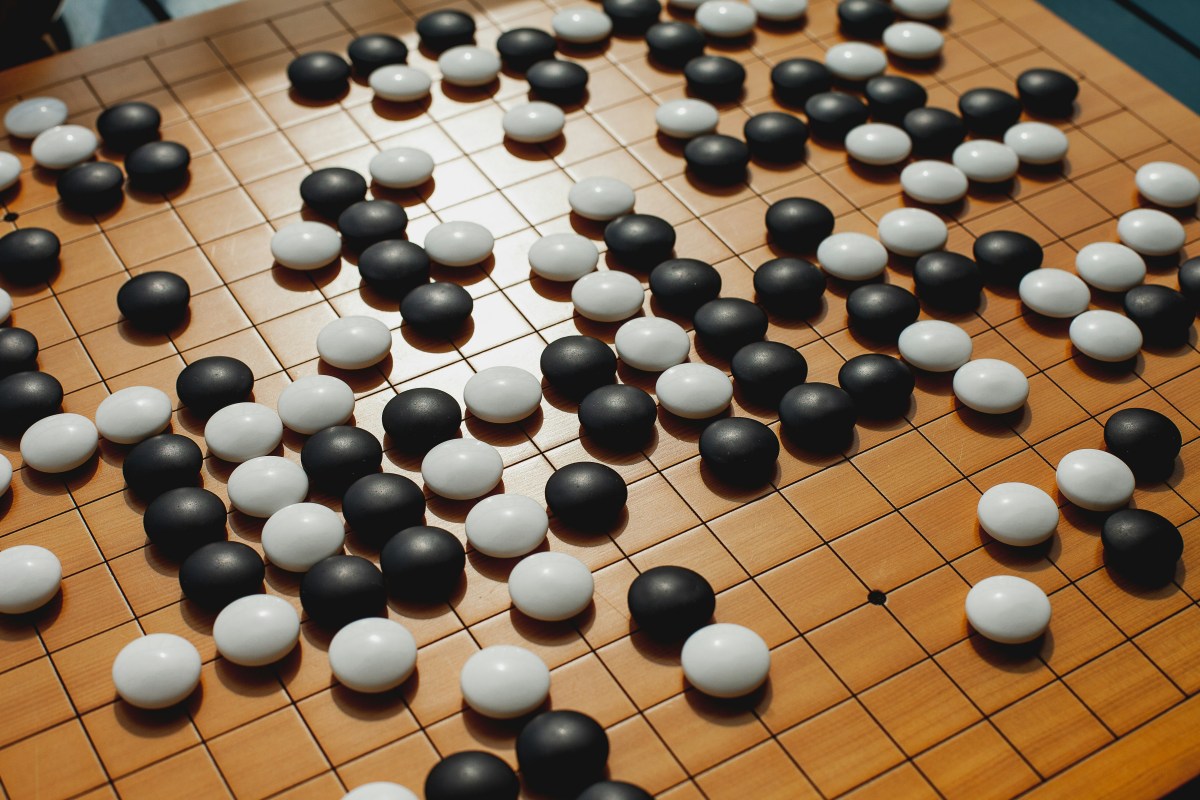
I have been a fan of the game of Go for more than a decade. It’s a game of strategy comparable to chess, played in China, Japan and Korea for thousands of years, but only recently more popular in the rest of the world.

While chess is all about the tactics of threatening and capturing pieces with different capabilities, Go is both simpler and more complex. The board is much larger, but the stones stay where they’re placed. Capturing stones is an important part of the game, but happens only occasionally; the main goal is to surround more territory than your opponent.

Unfortunately, my past attempts to get my family interested in playing have failed, and I never got very deep into online play. I was just good enough to frustrate my family, and mostly much worse than the dedicated online players.

When we moved to our new house, our board game collection moved out of the basement and into a place of honor on bookshelves in the living room. The big wooden board and the bowls of stones caught my kids’ attention, and at least for a little while they’re interested in learning. Just like that, I was sucked back into the game.

Now I haven’t played in a while and I can tell my skills are rusty, so I fired up the Go app on my phone. I can’t speak to the options for Android, but on iOS, SmartGo One is the best app I’ve found. It offers quite a few features for free, and while it’s pricey to upgrade (as far as phone apps go), it offers a massive archive of pro games and practice problems for all skill levels.

The SmartGo people have also incorporated their extensive library of interactive Go e-books from their Go Books app. This is a really nice resource, because good books on Go in English are still quite hard to find in physical bookstores, and these e-books are honestly more useful, because the problems and examples can be “played” directly in the book.

I don’t know if my kids’ interest in the game will last, but I’ll enjoy it while I can. My oldest has been studying chess and now outclasses all of us, so maybe I can foster his interest in another game where he’ll quickly exceed my skill level.

Reblog: “800 Submissions: An Analysis” — Aeryn Rudel

Today’s reblog comes from Aeryn Rudel, who breaks down the numbers on his remarkable 800 tracked story submissions over twelve years. This includes a few novel submissions, but the vast majority are short stories and flash fiction.

With over 100 acceptances, Aeryn has a very good batting average. Even so, it’s interesting to hear that there are still publications where he’s submitted often and escaped the slush pile, but never gotten an acceptance.

These statistics also show the power of writing a lot of flash fiction: there are simply more publishing slots available for flash fiction than any other kind of story.

Read the whole post at Aeryn’s blog, Rejectomancy…

Year of Short Stories — Week #25

2024 is my year of short stories. In this weekly series, I talk about the stories I’m working on, from idea and draft to submission.

  • Stories in Progress – 2
  • Submissions This Week – 0
  • Submissions Currently Out – 2
  • Rejections This Year – 14 (7 personalized)

A Month Of Responses

As I mentioned in my previous post, I took a writing break in June, so my works in progress are still in progress. I haven’t sent anything new out, but I did receive several responses.

For “The Incident at Pleasant Hills,” I received a very positive personalized rejection, indicating I had gotten past several rounds of evaluation. This confirms to me that the story is solid, and this is a publication I should keep in mind for future submissions.

“Dr. Clipboard’s Miracle Wonder Drug,” received a rather strange rejection that was generally positive about the story, but concluded that it didn’t fit the editors’ definition of the fantasy genre. To my sensibilities, it’s more of a modern fantasy or new weird story, but this response makes me think it might be worth trying some “softer” sci-fi magazines as well.

“The Bluefinch and the Chipmunk” received a form rejection.

My drabble, “Tom, Dick, and Larry,” has the distinction of being the first submission of the year that didn’t get a response at all. A few magazines state in their submission guidelines that they won’t respond for rejections, but this was not one of them. It’s possible that the story got lost in the shuffle, or the response was eaten by internet goblins or spam filters. I’ll be sending a query to see if I can get a clear response.

Goals for Next Week

  • Send a query to get the status of “Tom, Dick, and Larry”
  • Re-send all the stories that came back to me
  • Get back into the writing groove and work on at least one short story

A Foolish Consistency is the Hobgoblin of Little Minds

I’ve always loved this quote by Ralph Waldo Emerson, and not just for the image of a monster wriggling out of a tiny brain.

Modern life is rigid in many ways. School and work train us to believe that consistency should be valued and striven after. For many modern creators, the internet and its algorithms reward consistency. But we’re not robots, and consistency is often the enemy of creativity. The human brain is a creativity machine, but it needs constant stimulus and surprise as grist for the mill.

One of the things I’ve been consistent about over the last few years is this blog. Granted, I don’t always stick to a tight schedule, but over more than four hundred posts, I’ve rarely gone more than a week or two between posting. I’m happy about that, but I do wonder if it’s a bit of “foolish consistency”.

Life has been busy lately, and one of the results of that has been a sparseness and lack of variety here on the blog. So, I decided to take a little writing break. In that time, I moved to a new house and sorted out some of those dull real-life things that need doing.

Now I’m back, refreshed, with some new ideas. I’m currently on a much-needed vacation at the lake—the perfect time to write. I’ll be catching up on my short story submissions, and I may have some table-top content coming up in the not too distant future.

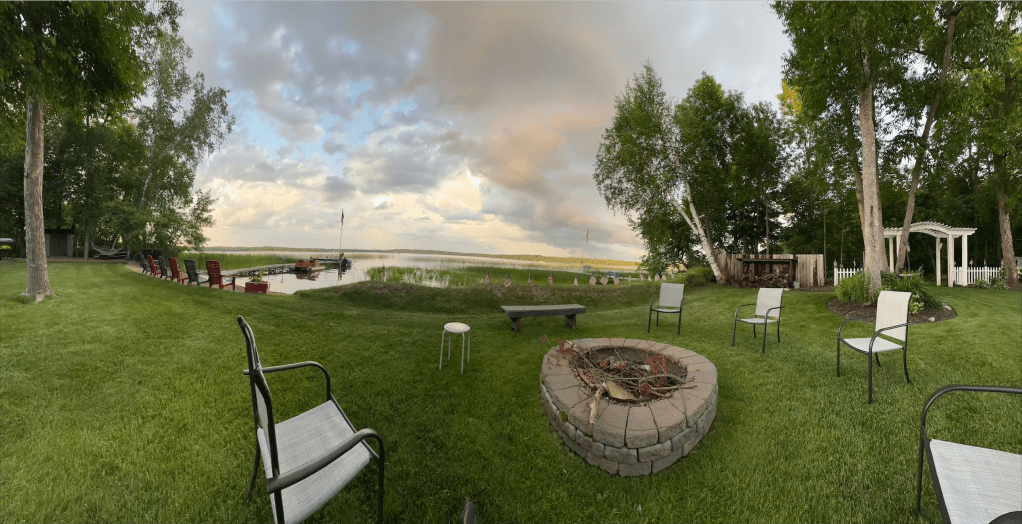
For now, here’s the peaceful panorama from the shore.

The Read Report — May 2024

Summer is here, and I’m currently in the process of packing to move. It turns out you can acquire a shocking amount of junk when you spend almost 15 years in a house, so I’m going through it and getting rid of everything I can.

This past month was light on reading, but I did manage to get through a couple of books.

Where possible, I’ve included Bookshop affiliate links instead of Amazon. If any of these books pique your interest, please use those links. I’ll get a small commission, and you’ll support real book stores instead of Armageddon bunkers for billionaires.

Hogfather

By Terry Pratchett

I’m still reading Discworld with the kids at bedtime. This title features some of my favorite recurring characters: Death (and the miniature rat version, the Death of Rats); Susan, his grand-daughter; the wizards of Unseen University; and the mysterious and villainous Auditors, who are not permitted to meddle in the affairs of mortals, but keep coming up with clever schemes to wipe them out so the universe can be neat and orderly.

The Discworld version of Death is, in some ways, the classic trope of the robot who wants to become human. He may be an anthropomorphic personification, but he has spent centuries around people, and he can’t help that they’ve rubbed off on him.

Thanks to the Auditors, the Hogfather (Discworld’s version of Santa Claus) is missing in action, and it’s up to Death to take his place and keep the world believing in him. It’s a Nightmare Before Christmas with ancient gods and extra-dimensional monsters.

Susan is pulled into Death’s schemes against her will, determined (but mostly failing) to live a “normal” life instead of the inevitably strange life of the woman whose grandfather is the personification of Death.

Hogfather is a meditation on the way people create the gods they need, while also being a completely silly story about bumbling wizards, a skeleton posing as a mall Santa with a strap-on beard, and a governess who actually finds the monsters under the children’s beds, and resolves the issue with the sharp end of the fire poker.

Novelty

By John Crowley

Novelty is a book of four stories, two longer, and two shorter. Its themes and some elements of its plots are very science-fictiony, but the style is literary. It feels like a 1980s precursor to the “new weird” of Jeff Vandermeer or China Miéville.

“The Nightingale Sings at Night” begins in classic myth-story fashion with an explanation of the nightingale’s unusual song. It’s a retelling of the fall of man from Genesis, but the structure feels like something straight out of Aesop’s Fables. It’s a great example of using a classic story structure as a jumping-off point.

“Great work of time” is the longest story of the bunch, and a fantastic time travel story. Like all time travel stories, it’s linear from one perspective and non-linear from another.

Caspar Last is an imminently reasonable man who invents a time machine and decides to use it only once, in order to make enough money to live out the rest of his days in moderate comfort. However, he is tricked into giving up his invention to a secretive group calling themselves the Otherhood. They use the time machine, first and foremost, to sow peace around the world and build up the British Empire. They also use it to ensure their group’s own creation.

However, all this meddling in time has strange effects. The peace they create has its costs, twisting the world beyond all recognition. One member discovers that the Otherhood’s twisted timeline will eventually result in a sort of quiet cataclysm, a world so at peace that there is nothing but endless forest growing out of a quiet sea. The only way to prevent this terrible future is to undo everything the Otherhood has done.

“In Blue” is a story set some time in the future, in an unnamed city. Refugees crowd an ancient city that is being systematically rebuilt. There has been pseudo-communist Revolution, and lives are governed by a social calculus and act-field theory, mathematics that govern society and all interactions between people. The protagonist, Hare, is a member of the cadre that organizes society without overtly ruling it, but he becomes overwhelmed by his duties and has a mental break.

The final story, “Novelty” is the most literary (or, at least, the lightest on plot): a story about an author in a bar, realizing what his next book will be about. He decides he must write a book on the “pull men feel between Novelty and Security,” the drive to discover something new versus the safety of the known. The implication is that the story is at least a little autobiographical, and the book we’re reading is the book he will write.

What I’m Reading In June

I’m not sure how much reading I’ll actually be able to do, but I’m still working on the Witcher series and Discworld. I’m also continuing my goal of reading at least one anthology of short stories each month, and recently picked up a volume of stories from Apex which seems perfect for summer reading.

See you at the end of June!

Year of Short Stories — Week #19 and #20

2024 is my year of short stories. In this weekly series, I talk about the stories I’m working on, from idea and draft to submission.

  • Stories in Progress – 2
  • Submissions Past Two Weeks – 1
  • Submissions Currently Out – 5
  • Rejections This Year – 11 (4 personalized)

This week is the last week of school, so my kids are keeping me busy with concerts and events. I’m also packing and getting everything set up to move house next week. Once again I’ve been slacking on my short story reports, so we’re doubling up this week and last.

Submissions

My first submission for The Bluefinch and the Chipmunk came back with a rejection, so I sent it back out. This was my only submission for the week, although a few other stories should be coming back soon, if the duotrope estimates are anything to go by.

Writing

I finally completed a draft of Red Eyes, a story that I revived from the trunk, although it’s still a pretty big mess. This pass was mostly to find the core of the story and assess what the big, structural problems are. Now I need to take some time to decide how those things should be fixed. I also need to make it shorter, because this story is awfully long.

I’ve been doing a lot of revision lately. This is a good thing, because it’s one of my weaker points and I want to get better. However, too much revision makes me feel like I’m churning on the same stories, so I’m planning to shift focus to fresh stories for a week or two. The first of these will be Portrait of the Artist in Wartime, which I’ve been talking about for a while, but not really working on.

I intend to knock out a half-assed draft just to get a feel for where I want to go with it. Hopefully that will leave me feeling refreshed and ready to tackle more revisions.

Goals for Next Week

  • Rough draft of Portrait.