Reblog: Kishōtenketsu for Beginners — Nils Ödlund

If you’re a consumer of any kind of modern media, chances are pretty good that you know something about three-act structure. You may use it in your writing. You may recognize it intuitively from books, movies, TV and stage. But those three acts are not the only way to structure a story.

Today, I want to send you over to Mythic Scribes, where Nils Ödlund discusses Kishōtenketsu, a four-act story structure with roots in Asian classics.

Recently we presented a series of articles on three-act structure here on Mythic Scribes. This inspired me to try and write an article about a kind of four act structure known as Kishōtenketsu. It’s used in classical Chinese, Korean, and Japanese narratives, and is often mentioned as an example of a story structure without conflict.

Now, I’m not well versed in narrative theory. I find it interesting, but I’m far from an expert, and most of what I know of writing I have figured out myself (though the forums here on Mythic Scribes have been invaluable in doing just that). As such, this article will really only scratch the surface of Kishōtenketsu.

I’ll begin by explaining the word itself and the basic principles behind the story structure. I’ll then show two examples of stories told in this way, and finally I’ll give a few tips I’ve found useful for wrapping my head around this whole concept.

Read the rest over at Mythic Scribes…

Don’t Write the Tedious Thing — Maud Newton

Simple, but extremely good advice from Maud Newton on Medium.

At times while working on my book over the years, I would become resentful of it, as if it had its own expectations, as if the draft itself were insisting I recount the entire history of genealogy in the United States or offer a dissertation on genetics. Ugh, now I have to write this boring part, I would think. I would spend a few days in active rebellion against this directive that I imagined the book was imposing.

Read the rest on Maud Newton’s Medium page.

Max Gladstone on Repetition

The always-delightful Max Gladstone discusses the good and bad of repetition in fiction.

We notice repetition as a negative. But some words do not just repeat as tics, or not merely as tics. What is a book, but a constellation of words? Each time a word is used, it accumulates new meaning from its context, and lends the meanings it has accumulated—in your particular text, and in others—to the sentence. In this way languages can be ennobled or (for a time, at least) poisoned—if you’re an American, do you feel the same way about the word ‘great’ that you did six years ago? If you’re a particular kind of nerd, when I began that sentence just now with ‘What is a book,” did you hear it followed by “a miserable little pile of secrets”?

Within a text, repeated words draw connections. What sorts of things in this book are ghosts? Is this car a ghost? This memory? Is the white of her hat a ghostlike white? “The ghost of a smile?” Fantasy and science fiction prose worldbuilding sings—or, to be honest, works at all—by loading vocabulary in this way: ’uplift’ in Brin, ‘Guardian’ in Jemisin (or the beautiful side-loading of ‘suss’ into the invented sensory verb ‘sess’), iris in Heinlein’s off-referenced ‘the door irised open.’ McKillip’s ‘riddles’ and ‘beasts’ are quite particular sorts of riddles and beasts, as are Jordan’s ‘channeling,’ and Tolkien’s ‘ring.’

Read more at Gladstone’s substack, The Third Place.

Do Characters Need to Change?

I’m always excited to see someone make a well-considered, articulate argument against the traditional “rules of writing.” Lincoln Michel does exactly that, when he suggests that maybe characters don’t need to change over the course of a story.

Can a good story contain static characters, and instead change their circumstances, change how the reader views them, or just make that static viewpoint incredibly compelling?

Who to Write For When You Have No Audience or Readership

Elliot Chan's avatarElliot Chan

At the beginning of your writing journey, you won’t have a following. No audience. No readers. Nobody knows who you are. It’s almost impossible for them to find you. It can be an awfully lonely place at the start, and in this solitude, you’ll ask, “Why am I even writing this? Nobody will read it.”

Writing is more than putting words on pages. Writing is communicating. To solve the problem of not having a readership, all you have to ask is “Who am I communicating with?” Now, at this point, you might have an epiphany and discover your audience are the children of Mexico or all the pregnant women in their second trimester. If that’s you. Great! All you have to do then is direct your writing efforts towards schools in Mexico or building a pregnancy blog, and in a matter of time, you’ll have an audience.

But then…

View original post 466 more words

Kindle Vella is Now Live!

This is an interesting new market for serial fiction. It’s unfortunate (although not particularly surprising) that Amazon is demanding to be the sole distributor of any stories you put on the platform. That’s the main reason I’m not excited to start using it immediately.

It’ll be interesting to see if Amazon can leverage their existing writer and reader ecosystems to make headway against the existing services, especially companies from Asia, where short, serial fiction for mobile has been a thing for a while…

Originally posted on chrismcmullen: KINDLE VELLA Amazon just launched the new Kindle Vella. What is Vella? Stories that are told one episode at a …

Kindle Vella is Now Live!

The Clan of Novels Set Far in the Past

This post is one of those perfect coincidences, as I work on prepping a serial novel whose timeline ranges from prehistory to modern day.

It is interesting delving so far into the past that we have little idea what life was actually like. I’ll have to check out these recommendations.

Dave Astor's avatarDave Astor on Literature

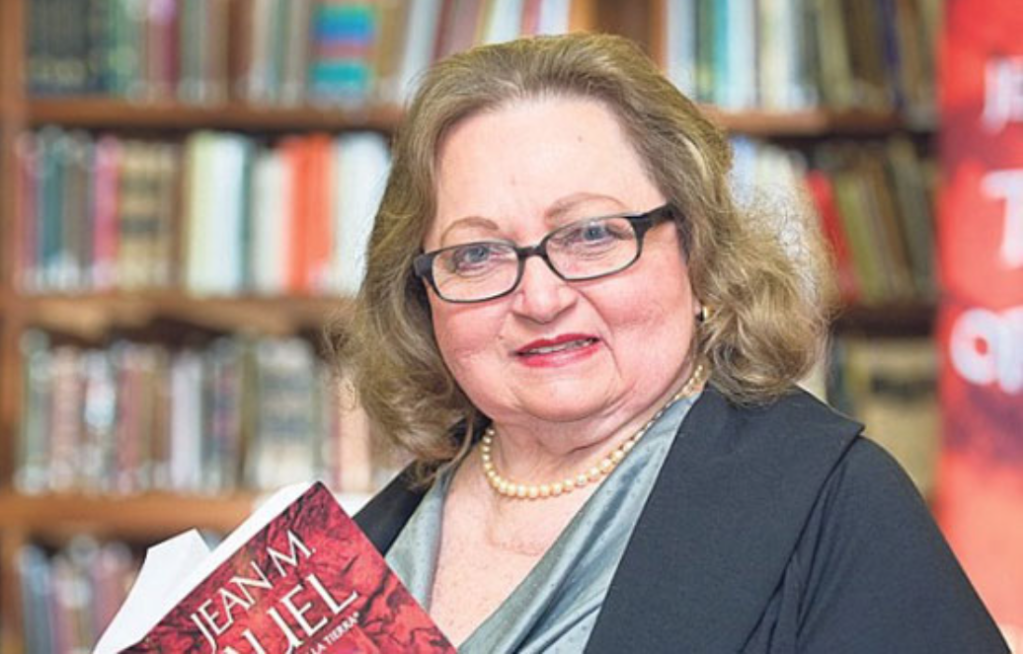
Jean M. Auel

Every novel is a work of imagination, but sometimes the imagination can be more striking than usual. That’s certainly the case with fiction set way back in time.

By “way back in time” I don’t mean several centuries. I’m talking about novels written in our modern age that are set millennia ago, perhaps MANY millennia. When a story is that far in the past, there are usually few or no documents for an author to draw on during the research phase of writing — and life was VERY different then. So, more imaginative leaping is needed by the novelist.

I’m currently reading Jean M. Auel’s impressive prehistoric saga The Clan of the Cave Bear, which takes place more than 25,000 years ago — a time when the Neanderthal race was reaching the end of the line and Cro-Magnon people were becoming ascendant. Auel did plenty of…

View original post 422 more words