Okay, the full, absurd name of this game is Dr. Langeskov, The Tiger, and the Terribly Cursed Emerald: A Whirlwind Heist. If you’re a reader who has never, ever played a video game, this might be the ideal first game for you to try. It’s free, it only takes about 15 minutes to complete, and it requires no reflexes or puzzle-solving skills. It’s available on Steam for those who have it, and Itch.io for those who don’t.
I don’t generally throw my lot in with the “hardcore gamers” who heap derision on so-called walking simulators, but it might be more accurate to call this a narrative experience than a game. Still, it’s a fun narrative experience.
The game promises an adventure in thievery, but even in the description on the store pages, it’s clear that something is amiss. Halfway through the description of the game, the person writing it decides to join “the strike,” complaining about being forced to do multiple jobs, and signs off with “I’m out.”
The opening menu screen also suggests an over-the-top adventure, with a moody forest scene illuminated only by the taillights of a car. You click the button to start the game. A loading screen appears for “heist.map,” cycling through several tips about the history of the mansion that you will presumably set out to rob in just a moment.
Suddenly, the music cuts out. The screen glitches, and you’re back at the title screen again. There is a voice; distant and muffled. You realize you’re hearing “back-stage,” where people are getting the game ready for you, as though it were a live stage production. Then there’s silence. Nothing is happening. You wait.
At some point, you decide to do something. Maybe click the “start game” button again? Moving the mouse causes the camera to shift, and you realize this isn’t the start menu at all. It’s a huge poster of the start menu on a wall. You’re in a drab waiting room, staring at a painted replica of the menu background.
This immediate double fake-out sets the stage for a very silly game where most of the “behind the scenes” workers running the game have gone on strike. You’re recruited to help, pulling levers and pushing buttons back-stage so some other player can enjoy the experience you thought you were going to have. The voice over the loudspeaker assures you that if you just help out a little bit more, you’ll get to play the game next. Promise.
Dr. Langeskov was developed by a small, indie studio called Crows Crows Crows, which includes William Pugh, best known for his work on The Stanley Parable and the considerably expanded version, The Stanley Parable: Ultra Deluxe.
It’s very similar to the Stanley Parable; with limited modes of interaction; a narrator that leads you along; the light, absurdist tone; and the playful ways the game gives you to rebel against the narrative by refusing to do what you’re told. It’s smaller than The Stanley Parable, but it feels like the perfect size for what it’s doing, and doesn’t overstay its welcome.
Alright, February was a train wreck for me, so I never managed to get January’s post out. But that’s fine. We’re all here now. We’ll do it live!
Where possible, I include Bookshop affiliate links instead of Amazon. If any of these books pique your interest, please use those links. I’ll get a tiny commission, and you’ll support real book stores instead of longevity injections for billionaires.
I’m still working through the Discworld series with my kids. Thankfully, Pritchett was a prolific author, and if I stretch them out I can continue reading his books for several more years before I’ve read them all. It’s nice to think that a favorite author can live on in this way, through his books.
Moving Pictures is an experiment in how many movie-related references and metaphors Pratchett can cram into a fantasy world. Alchemists have invented movies, their cameras powered by the dangerous combination of little imps and highly flammable cellulose film. Within weeks, the seaside shanty-town of Holy Wood springs up on an otherwise deserted stretch of beach, and people are drawn toward it by the chance for fame, and perhaps a more nefarious force.
One of the newly minted actors who found his big break at Holy Wood happens to be a student wizard from Anhk-Morpork’s Unseen University. He starts to see signs that there’s more than movie magic going on: in fact, there may be other realities (like our own) leaking into the Discworld from the void between universes. Where there are weak places in the fabric of the universe, there are Cthulhu-esque “Things” looking for a way in.
Much of the silliness of the book comes from twisted versions of familiar movie tropes: the Orangutan-transformed University Librarian picked up by a 50-foot woman climbing a tower in an inversion of King Kong; or the bald, golden, statuesque ancient protector against cosmic evil who just happens to look like everyone’s uncle Oscar.
Like the Simpsons, Discworld has a massive cast of characters that can be pulled into service for any given plotline. Detritus the troll and perpetual scammer “Cut-me-own-Throat” Dibbler get higher billing than usual, with the wizards of the University making a strong appearance toward the end.
Pratchett’s super-power, however, is the ability to write a silly story in a silly setting, packed with quips and jokes, and still build a real plot and characters with actual motivations that make you root for them.
Like many of the more unusual comics I pick up, this was a Half Price Books impulse buy. There is now a whole sub-genre of historical fiction and biography within indie comics (see Maus, Palestine, and Persepolis in my previous months’ reading), and while I don’t generally gravitate toward it, I’m glad I picked up Katusha.
Firstly, this thing is a tome, clocking in at almost 600 pages. Unlike many trade paperback comics, this has a strong binding that has held up well so far, despite that size.
When I started reading, I wasn’t especially excited by the art, which has a sketchy look that sometimes skimps on detail. However, it grew on me over time, and I came to understand that Vansant was picking and choosing important panels to fully flesh out. I could call the art “workmanlike,” but that is not an insult. It is straightforward, and there is never any confusion about what is happening. It is impactful at all the right moments, and really fits the documentarian feel of the story. I can hardly blame Vansant for lack of detail here or there. The fact that one person was able to write and illustrate this entire book is a small miracle.
The story follows the titular girl soldier from the early war, before the German expansion east into Russia, all the way through the messy German retreat to Berlin.
The first few chapters provide a day in the life before the war, introducing Katusha’s mother and father, her adopted sister, her best friend, and her mysterious troublemaker of an uncle.
Katusha and her family are Ukrainian, and their life under Soviet rule is already sometimes fraught. When the Germans invade, making promises to civilians of a better life under their rule, rural Ukranians have to wonder whether the occupation might improve their lives.
Unfortunately, those promises soon prove hollow, as the family witnesses brutal suppression and an immediate round-up of Ukrainian Jews and others the Germans consider undesirable. Katusha and her family are forced to flee their home town to stay with relatives, and then flee again and again. The family is separated, and Katusha and her sister become partisans under the leadership of their uncle, creating a rebel base in a well-hidden cave.
After a winter of successful operations against the Germans, the sisters are briefly reunited with their father, a tank factory supervisor, who helps them enroll in the Soviet tank school. They spend the remainder of the war manning, and eventually commanding their own tanks.
For a book that is concerned with brutal war, there is no excessive gore. When there is violence, it isn’t skimmed over, and it feels honest. Over the course of the war, Katusha loses many family members and friends. It is a sad coming-of-age story that must mirror what millions of teenagers went through in many countries over the course of the war.
Vansent is careful to show the complexity of wartime politics, with multiple factions of Ukrainian partisans. Some fight with the Soviets, while others fight with the Germans, and some fight against both in a bid for independence. Even after the Germans retreat, the fighting continues in what eventually proves to be a vain hope for Ukrainian independence. It is a particularly timely reminder that the Ukrainian people have spent so much of their history fighting for the right to choose their own destinies.
Katusha ultimately survives beyond the end of the war, but like any good war story it is a melancholy victory. She marries a fellow soldier who nearly died of his injuries. Most of her family is gone. And despite the best efforts of the partisans, Ukraine returns to the grip of the USSR. It’s a long and bittersweet journey.
Severance: The Lexington Letter
(Unattributed)
Like the rest of America, I’ve been watching Severance. The Lexington Letter is a little in-universe book (exclusive to Apple Books, of course) that includes a series of emails and a pamphlet titled “The Macrodata Refiner’s Handbook.”
The emails chronicle the brief story of a severed worker who finds clues that her “innie”—the separated personality that only activates at work—has found evidence of bad things happening at her employer, Lumon. After trying in various ways to sneak information out of the company, the woman quits and contacts a reporter at the Topeka Star with her information. The story, however, is ultimately suppressed. The editor killing the story has a name that will lead observant fans to realize he is likely in the company’s pocket, and the woman turns up dead soon thereafter.
The handbook in the second part features a cartoonized severance brain chip as a mascot that guides new workers through the mysterious job featured in the show: macrodata refinement. It is full of the tone-deaf and slightly sinister corporate propaganda-speak that the show is known for, and filled with a plethora of little details that seem like they might be clues, but probably don’t mean anything. In short, perfect fodder for the mega-fan conspiracy theorists.
Typical r/SeveranceAppleTVPlus Redditor
The entire book can be easily read in a sitting or two, and serves to add a little more content to the Severance universe, without really revealing anything new or exciting. It is definitely focused on existing fans, and newcomers to the series will likely not find much for them here. However, if you’re a hardcore fan of the show and desperately counting down the days until the next episode release, this might just tide you over for an evening.
I’ll also note that I hate it when big media tie-ins do this thing where they don’t credit the author(s) of the tie-in material. Yes, the book is effectively a stealth advertisement for the show, but there was clearly some effort put into the writing and illustration. Those people deserve credit.
What I’m Reading in March
I’m currently working my way through American Gods, a book that I loved when I first read it, years ago. It’s by Neil Gaiman, award-winning author and person recently outed as being somewhere on the spectrum between avid sex pest and serial abuser. Never have heroes, kids. You’ll be disappointed.
I’m also working through some excellent Ted Chiang stories, something I’ve wanted to do ever since I fell in love with the movie Arrival, based on his Story of Your Life. See you next month!
The final month of 2024 has come and gone. As usual, I’m reading too many books at once. As a result, I have only one to discuss for December. Luckily I have a lot to say.
Where possible, I include Bookshop affiliate links instead of Amazon. If any of these books pique your interest, please use those links. I’ll get a tiny commission, and you’ll support real book stores instead of longevity injections for billionaires.
I finally finished reading the “His Dark Materials” trilogy with my kids. Unfortunately, the cracks in the story that were apparent in the second book caused the whole thing to fall apart in the third.
Trilogies and longer series are interesting. They are weightier than a single, self-contained book. Each book in a series needs to function at least partly on its own, while a larger arc plays out across all of them. However, readers are also willing to give the author some grace in a series; just because something is unresolved or unclear in one book doesn’t mean it won’t resolve by the end of the series. I continued reading to give Pullman a chance to make it all work.
Unfortunately, when the mysteries, confusing bits, and strange motivations don’t resolve by the end, you run into the “LOST” phenomenon (or Game of Thrones, if you prefer a more recent reference). Rabid fans can instantly sour on it due to an unsatisfying ending. All of that willingness to forgive goes away when the series ends and the problems remain. And that’s how I feel about His Dark Materials.
I usually try to avoid talking negatively about stories, books, and other media. After all, I haven’t published a successful trilogy, right? There are certainly things to criticize in my own work. That said, I think this trilogy is a showcase for a number of things that every author should try to avoid. So I will be a bit harsh on His Dark Materials, in order to better understand why it doesn’t work for me.
The Hook
Critically, I think the first book, The Golden Compass, is pretty good. In fact, I would recommend it as a book to read on its own. For what it’s worth, my kids also thought that the first book was good, while the second and third were “confusing.”
The Golden Compass introduces a main character, Lyra; the antagonist, Mrs. Coulter; the mysterious Lord Asriel (Villain? Ally?), and quite a few interesting, but less rounded characters that help Lyra on her way. Lyra has a clear quest—to rescue her friend from Mrs. Coulter—and understandable motivations. She has clear character traits, being clever and almost reflexively anti-authority, and happily willing to lie when it serves her or just seems like a good time. The setting is an alternate history Britain with a dash of steampunk sensibility, where everyone has their own soul-bound animal companion. It manages to feel both fresh and familiar.
Lyra sets out on her quest, collects allies, learns about the world, and makes a number of choices (both good and bad) in her efforts to rescue her friend. It’s a well-worn story arc, but that’s because it works.
The book is not without its weaknesses, as Lyra overcomes most challenges a little too easily and practically every secondary character she encounters quickly vows to help her even at the cost of life and limb.
The story ultimately ends in tragedy, as Lyra goes to the ends of the earth only to fail at the last moment. This also resolves that open question of whether Asriel is villain or good guy. The result is a satisfying resolution to this book—the end of Lyra’s quest—while providing an open question that leads us into the next two books: just what is Asriel up to?
Book Two Problems
The second book, The Subtle Knife, immediately steps away from the setting of the first book, and introduces a new main character: Will Parry. Lyra soon follows, but her agency in this book is so diminished that she’s practically a secondary character. It’s jarring. Even more problematic is that neither Will nor Lyra have very clear motivations or goals.
The children certainly both have problems, but neither of them have plans to try and resolve them. They go from place to place, exploring a brand new world and facing its dangers, but this meandering doesn’t have the sense of going anywhere purposeful. They acquire the namesake of the book, the Subtle Knife, completely by accident.
Mrs. Coulter is back as the villain. New characters are introduced, both allies and enemies, but this also seems haphazard. Characters from the first book reappear, but they feel as though they are pushed into their necessary positions by deus ex machina, strictly to perform actions and say words that advance the plot.
This book ups the stakes by killing off two characters, but the emotional sting is blunted by how absurd these deaths are. One character dies at the hands of someone barely seen, for a silly reason mentioned once in passing. The other dies nobly, to protect Lyra, but only because he completely forgot that he had a “get out of jail free” card that was inconvenient to the plot.
The book ends in what ought to be a cliffhanger. Lyra has been captured by villainous forces, and separated from this book’s protagonist, Will. Will has just lost the father he wasn’t even sure was alive, and decides (like most everyone else in the series) that he must help and protect Lyra.
Then, suddenly, some angels appear.
A Limp Ending
This is how we arrive at the third book, The Amber Spyglass. It’s nearly as long as the first two books combined, and it has a lot of explaining to do.
This book contains most of the anti-religious sentiment and outright blasphemy that has made Pullman so hated by Christian groups, and it’s unfortunate that his vitriol ends up channeled into decidedly bland villains with no redeeming characteristics and no desires beyond total power. Heaven is ruled by a powerful angel with a lust for control, and he sends the armies of angels and human believers across many different worlds to do his bidding, which mostly involves killing everyone who doesn’t fall in line.
This leaves us with three villains. The book implies a change of heart for Mrs. Coulter and Azriel, but they’ve done nothing to earn it. In the most perplexing twist of them all, these three supposedly mismatched villains end up in a brawl and fall into an abyss together. It’s not even the climax of the story—the book continues for more than a hundred pages afterward. The supposed protagonists, Will and Lyra, aren’t present for the fight, and have nothing to do with it.
Since the story can’t wrap up with a final battle between good and evil, or the characters overcoming some major challenge, it instead ends with heartbreak. It turns out our protagonists are in love, but they can’t be together. Pullman does a pretty good job dropping hints about Will and Lyra’s feelings for one another, even if it’s not very subtle. But the reasons why they can’t be together feel flimsy, at best. Pullman must have thought so too, because he spends a significant number of pages on the characters coming up with all the reasons why they have to end up apart.
Maybe I’m a jaded old guy, but this conclusion of love lost didn’t tug very hard at my heartstrings. How tragic can it really be for someone to not end up with their middle-school sweetheart? It’s implied that they’ll pine away for the rest of their lives…but…why? How many of us end up with our first crush?
Lessons Learned
Know your protagonist, and set your readers’ expectations accordingly. This series sets up Lyra as the protagonist, but by the end she’s little more than a bystander. Will takes over the mantle, but even he fails to have much influence on the events of the story. Readers expect the main characters to make a difference. The arc of the story is their arc.
Plot with purpose. It doesn’t matter whether you’re an outliner or an exploratory writer, either can work. But every scene and chapter should be there for a reason. Each character should have motivations and goals. Ideally these all work together to bring the story toward a conclusion that feels inevitable without feeling forced.
Stay focused. Novels are huge projects, and trilogies are even bigger. It’s easy to go down cul-de-sacs by exploring interesting ideas or building characters that aren’t really necessary. The fantastic idea that doesn’t fit in the book is just as important to cut as a bad idea. As they say, kill your darlings (or at least save them for another story, where they belong).
What I’m Reading in January
I’m working through the massive historical epic comic, Katusha; the final Witcher book; and some sci-fi short stories. See you next month!
Where did November go? I got distracted for a minute, and the whole month was over.
Despite my best intentions, the month was light on both writing and reading. Still, I managed to sneak a few things in. I’m still working on the final volume of the main Witcher series, and still working through the last of the Dark Materials books with my kids. With some vacation time on the horizon, I have high hopes that those will be in the December report.
But, back to November…
Where possible, I’ve included Bookshop affiliate links instead of Amazon. If any of these books pique your interest, please use those links. I’ll get a small commission, and you’ll support real book stores instead of cocktails of longevity drugs for billionaires.
My first experience of the Umbrella Academy was being in the room while my wife watched the Netflix show. While I have arguably “seen” most of that series, my attention was not necessarily focused.
The impression I got from the show was that it was a near miss for me: lots of individual elements that I loved, but it somehow didn’t quite gel together to make something that really excited me.
So, either in spite of, or because of that, I had fairly high hopes for the comics. After all, most comic adaptations either crash and burn (cough, cough…League of Extraordinary Gentlemen, cough) or have trouble capturing the magic of their source material. However, as a power-nerd, I tend to come to those adaptations already familiar with the comics. In this case, I was starting with the show and going backward. As much as I try to remain unbiased, there’s a common tendency to appreciate the format where you first discovered the story.
My first impressions, in volume one, is that this is a setting that’s a bit whacky, without leaning especially hard into comedy. I mean, it practically starts with a cybernetic Gustav Eiffel attempting to launch the Eiffel Tower as a rocket into space.
This is very much a superhero comics world. Superhero comics are the background radiation, even if it’s not obsessed with muscle-bound men and women in incredibly resilient spandex. It’s a world where insane happenings are just a normal part of life.
These books follow the titular Umbrella Academy, seven super-powered children adopted by a cold and uncaring father and trained to save the world. Much like Disney channel actors, this thoroughly messes them up. Unlike Disney channel actors, only one in seven becomes a drug addict.
Volume one felt like a rushed introduction. Not only does it need to establish this world, but the seven super-powered children, their adoptive father, their robot mother, the chimp butler, and a handful of other miscellaneous characters. It’s a lot for six issues.
There’s a story here about the one estranged sibling turning villain against the others, but it’s so lost in the tumult. I never felt like the story had time to understand why she was angry, or so quick to “go bad.” Each character is touched on, but there’s not enough time to dig into any of them in depth. Ironically, the TV series gave me extra context that helped me understand the books. I suspect I would have had a tougher time without that.
Volume two feels like the real, proper beginning. The characters have been introduced, and we’re at least familiar with the surface-level. While this second series focuses on one particular member of the squad, we get more interaction and more background on pretty much all of the characters. We also get two completely deranged villains. I have to appreciate this, since absolute crazy people with incomprehensible motives are difficult characters to make work, and they work pretty well in this particular setting. And there are time travel shenanigans, which always makes me happy.
I think the second volume is the strongest story arc of the three. There’s a clear instigation, as the time-travel police come after a member of the Umbrella Academy, there’s a clear resolution by the end, and the story is neatly structured to build up the characters along the way.
The third volume is the longest of the three, boasting seven issues instead of six. It’s also the most ambitious in expanding the world and characters of the Umbrella Academy universe. Unfortunately, I can’t help but feel that it’s an interstitial story, setting up a Volume Four that has yet to release five years later. (Supposedly it’s in development.)
I have pretty mixed feelings about the series overall. It’s definitely unique among the series I’ve read, and I like to think I’ve covered a decent breadth of indie comics. But it has that same “not quite hitting it” feeling that I got from the TV show. Still, if Volume Four ever comes out, I’ll definitely buy it, so that says something.
Interestingly, and somewhat surprisingly in the era of Marvel ascendent, the Netflix show excised almost all of the superhero background radiation, and still made it work pretty well. For a show where the leader of the time-travel police is a robot body with a goldfish bowl for a head, it’s surprisingly grounded. If nothing else, it’s a great case study in making a comics-based show appeal to a non-comics audience. As much as such a thing even exists these days.
EVE Online “Chronicles”
I’m not generally interested in tie-in fiction. I’ve been burned too many times before.
When I was young, I read some of the early Star Wars tie-ins. I remember the novelizations of the original trilogy being pretty good. And then there was the Heir to the Empire trilogy, which was so successful as to spawn the entire Star Wars Expanded Universe. Of course, it was written by Timothy Zahn, who turned out to be decent apart from Star Wars. (I really enjoyed his Conqueror’s trilogy as a teen. Having not read it since, I assume it must still hold up…)
The Myst games were among the first games I played that felt like they had a real story (as little as you could glean from them) and I devoured the trilogy of books that expanded that universe. For my money, the first two Myst games and those three books are still probably the best example of games and books that tell a great story together.
My first real disappointment with tie-in fiction came several years later. I had discovered the relatively young and expanding world of ARGs, and found an archive of a Halo ARG now commonly known as ilovebees. It was a strange and seemingly futuristic way to deliver a story, and came in the form of a sort of radio-play pieced together from 30-second clips by a group of people discovering it as it went along.
I decided to delve into the Halo books, and quickly discovered that they were pretty much unreadable, even for a teen with possibly questionable taste.
Since then, I have steered clear of tie-in fiction. I may have dabbled here and there with some D&D-adjacent stories, but I’ve mostly turned up my nose at those shelves in the bookstore packed with D&D, Star Wars, Star Trek and myriad examples of trying to make a novel out of a hundred lines of in-game dialogue.
And now we come to the present day, where I am an old man having just turned forty, and I have begun dabbling in EVE Online.
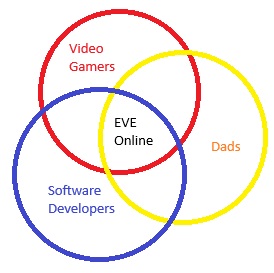
How could this have happened? Well, there honestly aren’t that many games with spaceships. I’ve bounced off this one twice before, and for some reason, this time it stuck. I just couldn’t escape the gravity of a game that seems to be populated mostly by middle-aged dads with a high propensity for programming.
EVE is one of those incredibly rare MMOs that isn’t World of Warcraft, and yet keeps puttering along, staying alive for over twenty years. Throughout all that time, they’ve been releasing fiction in this world.
Don’t get me wrong, I haven’t read any of their books yet. There are a few of them, but I’m not that far gone. Instead, I’ve been perusing the “Chronicles,” which encompass a bunch of dry descriptive reads about particular factions or technologies, and a slightly shocking number of short stories.
It’s now been a couple of years since I’ve participated in a long-running TTRPG group, and I find that this really scratches that itch. It’s the same satisfying combination of playing in a world, and then really digging into the setting. The only difference is that this one is online. (Well, okay, I guess my last D&D group met online too, thanks to the pandemic.)
What I’m Reading in December
Yes, I’m still reading the last Witcher book. Yes, I’m a little worried that the whole story is going to fall apart in the final volume. I’ll also be trying to wrap up the Dark Materials series, and I’ve still got a few more comics trade paperbacks waiting in the wings.
We’re doubling up two months again! Why? Because I didn’t read much in September, and by golly, I’m all about providing maximum quality to my readership.
Where possible, I’ve included Bookshop affiliate links instead of Amazon. If any of these books pique your interest, please use those links. I’ll get a small commission, and you’ll support real book stores instead of private islands for billionaires.
Dune is one of those perpetually evergreen sci-fi books that has somehow managed to maintain relevancy for more than half a century. This graphic novel adaptation of the book comes on the heels of the big budget Denis Villeneuve movies (despite the fact that those movies also have graphic novel adaptations).
I’ll admit that I had uncertain expectations for these books. Dune is fairly dense, as evidenced by its longevity and the very different adaptations that have been made over the years. These three volumes cover the plot of the original book, but there was no way to make it work in comic form without significant trimming. Even beyond that, Dune is a book that is often dialogue-sparse and heavy on characters’ internal thoughts, and this is a challenge that any visual adaptation needs to overcome.
The framing in the first book mostly stays out of the way. It’s nice and clear, but avoids any interesting or dangerous choices. There are a few multi-panel zooms and pans; a variety of big and small, wide and narrow panels; but almost no verticality in a medium where pages are taller than they are wide, and not a single curved line. It’s all rectangles, all the time.
However, the second and third books expand into a much wider variety of framing techniques. There are several pages with interesting nested circular frames, and a little bit of blending with nebulous or absent frames. It’s not quite the insane level of frame shenanigans you’ll see in something like Sandman: Overture, but it’s still praise-worthy.
The art is a little inconsistent, but never bad. There are a few faces and figures that come across as stilted or flat. It improves steadily in the second and third volumes. If I was disappointed, it was only because the whole package didn’t quite live up to the potential shown in some of the best, gorgeous full-page spreads. Hoo-boy, that full page sandworm reveal shot is fantastic. Color is used to great effect, with the characters and elements of House Atreides shaded blue, in contrast to the reds and pinks of House Harkonnen and the planet of Arrakis.
It tells the story competently, but I would have really loved to see more of that classic sci-fi strangeness. For all of the aspects of Dune that feel tropey in modern sci-fi (cough-cough-desert-planet-cough), it is a book where the people, places and cultures feel genuinely foreign and weird. The best aspect of the much-lampooned 1984 David Lynch movie adaptation was that it leaned into that weirdness. Even the Hollywood-friendly Villeneuve movies capture some of that magic with the Sardaukar throat-singing, insectoid spaceships, and psychopathic man-baby Harkonnen aesthetic. Here, the clothes, the technology, the landscapes all look a little too normal.
The story did, as I expected, suffer in some ways due to the inherent trimming that had to happen to fit into the graphic novel form factor. There is no room for expanded dialogue or exposition. The writers do take advantage of the ability to make characters thoughts visible to the reader. Ultimately, this is a slightly abridged version of the story, but there are only a couple of places where the development feels rushed as a result. The story isn’t broken, but it’s occasionally bent and loses some nuance.
My daughter (who didn’t really pay attention when I was reading the original book with my son) decided to read these books as soon as I was done with them. While I thought they might serve as a lighter, easier introduction to Dune, especially for a younger reader, her opinion was that it was still pretty confusing.
This is the second book in the Dark Materials trilogy, which I’m working through for bedtime reading with my children.
The Subtle Knife is a very different book from The Golden Compass. The first book takes place entirely in a secondary world, and feels like a traditional fantasy novel. It follows Lyra Belacqua, who is the classic precocious child/chosen one archetype. This second book takes Lyra into our world and another fantasy world, and introduces a second viewpoint character named Will Parry.
Will’s story is darker and hits a little closer to home, since he hails from the “real” world, and his problems, while extreme, are more relatable. I was curious to see how his story connects to Lyra’s. It’s clear that there are parallels between the two worlds, so I assumed the two characters are entangled in ways they don’t understand.
Pullman doesn’t lock us into a strict POV—the book jumps between Will and Lyra—but it does feel like Will is heavily favored, and certainly seems to make more meaningful choices. Lyra often seems to be pulled along as a sidekick, and this is a significant demotion of her character after the first book. I wonder if this pairing would have felt more natural if Pullman had included parts of Will’s story in the first book, even if Will and Lyra didn’t cross paths until the second.
The book ends with a strange series of events. An important character dies for a reason that was only lightly hinted at once. Another major character dies because he forgot that he had a “get out of jail free” card until it was too late. The villains, after being completely stymied for the entire book, are suddenly pretty effective. And it looks like book three is going to be even moreso Will’s story, at least to begin with.
The feeling I had when reading The Golden Compass was that this is a serious kids’ fantasy series that doesn’t quite succeed at achieving the plot, deep characterization, and world-building that other YA fantasy has achieved in the last couple decades. That feeling is not going away here.
I do still believe that Pullman has some genuine weirdness in his setting and plot that deviates unusually far from the classic Tolkien fantasy formulas, and I really hope that it will blow up in book three.
As I mentioned in my August recap, I discovered a lost box of superhero comics when I moved to my new house. This month, I re-read the “new” Age of Apocalypse.
The original Age of Apocalypse was a big cross-book event that ran for four or five months across all of the X-Men books in the mid ’90s. It’s my favorite thing in superhero comics, although that is probably a function of my age when it hit, the state of Marvel at that time, and a good dose of classic nostalgia. I also don’t really read superhero comics anymore, so there’s really no opportunity for anything to usurp it.
The New Age of Apocalypse is the trade paperback collection of a limited-run series that released for the 10-year anniversary of the original event and picks up the story in the same alternate universe where the originals left off.
The book is drawn in the same heavy-lined, anime-inspired style of the Ultimate X-Men books I reviewed in the August read report. This style is clean and easy to read, and the artists are certainly skilled and make it work, but something about it just rubs me the wrong way. It’s a little too cartoony.
The story follow’s Magnetos X-Men as they try to pick up the pieces in the wake of Apocalypse’s collapsed North American empire. There is a mystery element, with Mr. Sinister playing the villain, but the resolution of that mystery ends up being…kind of dumb. There is a soap opera quality of over-the-top character motivations and emotions, and some of the characters change their minds seemingly at the drop of a hat. If I’m being charitable, I’d say that the writers tried to cram too much plot into relatively few issues, and this explains the abruptness of the action and mood swings of the characters.
Much like Ultimate X-Men, the New AoA feels like a classic comic book story with classic comic book failings. It’s a little more disappointing to me, but that’s only because I have such a fondness for the original AoA.
On that note, my box of old comics does include almost the entire run of the original Age of Apocalypse. I’m a little afraid to read those issues again, lest I discover that it’s not quite as good as my faded and nostalgic memory would claim. But I might do it anyway.
Dear God, I did it! After several months of promising that I would get back to it, I finally finished this book.
The Tower of Swallows is the penultimate volume in the main five-book Witcher series, and it suffers a bit of the classic long fantasy series syndrome. All of the characters are wandering across the land, spending a long time trying to get somewhere for something to happen.
Our three main characters, Ciri, Geralt, and Yennefer, are all split up for this entire book, and I suspect this is a lot of what slows it down. They each have their own cast of secondary characters in orbit, and while a lot is happening, it still ends up feeling like all the pieces are being lined up just right for everything exciting to happen in the final volume.
That said, it’s still a good book in a great series. The setting, heavily inspired by Polish mythology, continues to shine. The world feels alive with complexity and depth, and even the characters with supernatural powers are often at the mercy of bigger cultural and political forces.
I’m beginning to feel that Sapkowski’s literary calling card is his ability to build a narrative through a dozen little frame stories. The book is a mix of flashbacks and retellings of events from different perspectives: a bard’s memoirs, a late night story next to the hearth, or the testimony of a soldier on trial for treason. It’s to the author’s credit that all of these blend together into a cohesive quilt of smaller stories.
With any luck, I’ll finish the final volume before the end of the year. I’ve really enjoyed my time with the Witcher and his cohorts, and I’m hopeful that Sapkowski will answer the remaining questions, finish off the biggest villains, and bring it all to a satisfying conclusion.
It’s August! Or at least it was when I read these books! Summer isn’t quite gone yet, but it’s fading fast. School is back in session, the first leaves are beginning to fall, and the most deranged of the yard decorators are already getting their Halloween decorations out.
It was a relatively light reading month for me, but that’s fine. Soon enough we’ll be huddled inside for a long Minnesota winter. I’ve got to enjoy the outdoors while I can.
Where possible, I’ve included Bookshop and Thriftbooks affiliate links instead of Amazon. If any of these books pique your interest, please use those links. I’ll get a small commission, and you’ll support real book stores instead of a fifth vacation house for a billionaire.
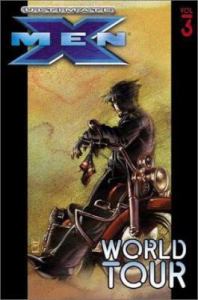
In the process of moving to the new house, I came across a box of old superhero comics that I had completely forgotten about. These Ultimate X-Men books harken back to a time when I wasn’t quite so jaded about reboots (and superhero comics in general).
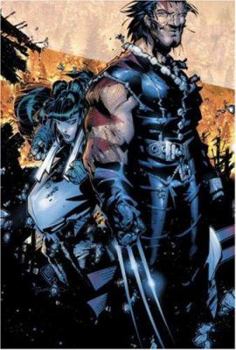
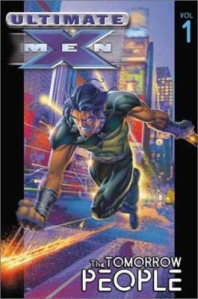
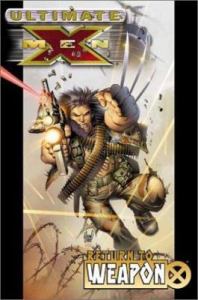
My first thought was that these are some ugly covers—heavily photoshopped Wolverine, looking like a 20-year-old nu-metal singer. I don’t know what style they were shooting for, but it ended up somewhere between CGI and anime.
Thankfully, the covers don’t tell the whole story. The art within the books is solid, but not life-changing. There is talent on display, and a ton of detail and creative layouts. There are interesting angles, some non-obvious choices (like flashbacks and TV broadcasts done in sketchy pencils), and proper backgrounds. As much as I love indie comics, they’re often missing a lot of this complexity. That Marvel money does buy a certain base level of quality that I appreciate.
The Ultimate series were a collection of reboots, probably more notable these days as the origin of Miles Morales in Ultimate Spiderman, although I believe Ultimate X-Men was popular when it first came out. The characters are all redesigned (although there are some nods to older costumes) with the entire team remade as teenagers this time around. The first book really wants to call attention to this, repeatedly bringing up how young everyone is in a way that felt forced at times.
The point of a reboot is often to retell the classic stories, and these issues feel like a speedrun of X-Men classics, starting with the formation of the core team and quickly burning through arcs about the Sentinel program, Magneto, and Weapon X.
While the original Weapon X program was run by those dastardly Canadians, this version of the X-verse collects most of the nasty government programs under the good ol’ U.S. of A. There are some interesting undercurrents of mid-2000s distrust in government that feel very post-Iraq-invasion to me, which is interesting considering the series actually kicked off a good half year before 9/11.
I don’t think revisiting these books will inspire me to go subscribing to all the modern X-books or anything like that, but it was a fun trip down memory lane.
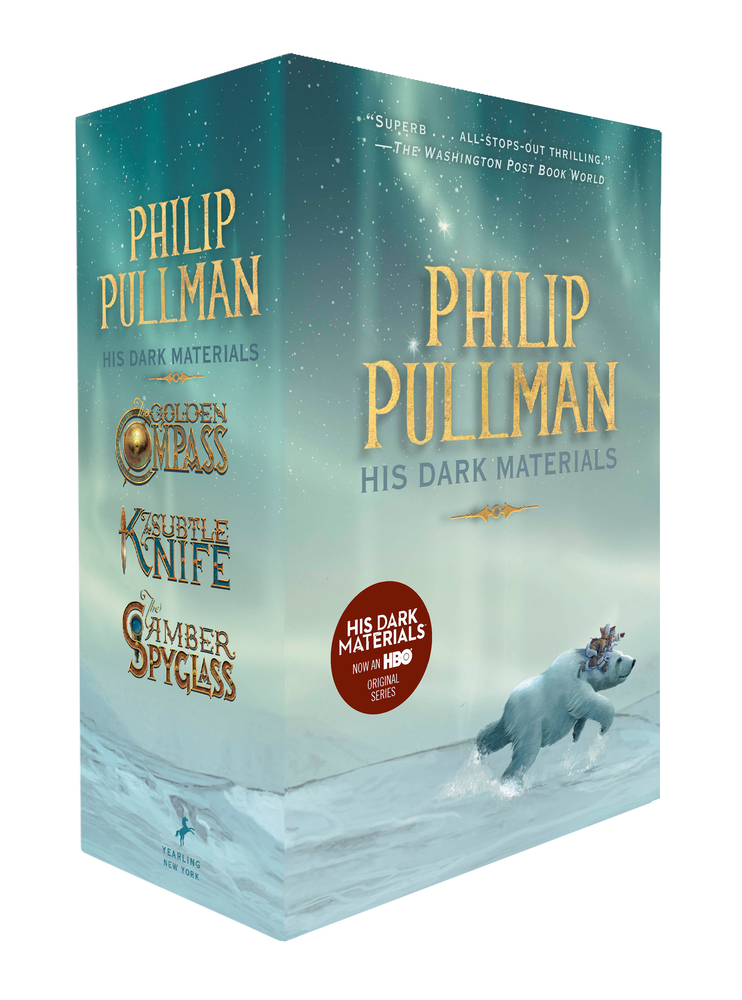
I acquired very cheap copies of the Dark Materials books years ago, and they’ve sat on the shelf, waiting to be read. I knew almost nothing about them going in, except that there was a big-budget movie of the first book that must have done badly, because they never bothered to finish the series.
It turns out that Phillip Pullman has built the kind of world I like. It’s fantasy, but it’s not just aping Tolkien. It’s a strange alternate history with a mildly steampunky anachronistic mix of technologies, and one where every single person has a slightly magical animal familiar called a daemon.
Lyra Belacqua (with her daemon, Pantalaimon) is the plucky child protagonist, growing up as a semi-orphan at an alternate Oxford, where she is loosely taken care of by the scholars. Thanks to their lack of parenting skills and her rebellious disposition, she spends most of her time running across the rooftops, sneaking through the catacombs, and picking fights with other urchins, rather than learning.
The plot kicks in when one of her friends goes missing during a rash of local kidnappings. Word on the street is that the “Gobblers” have taken these children for some unknown, nefarious purpose, and Lyra sets out to get them back. Along the way, she discovers the truth about her parents, who both turn out to be terrible people in their own special way. She gets the titular golden compass, a device that is essentially a very accurate (but difficult to read) oujia board. And she makes friends with an intelligent polar bear warrior king, a hot-air-balloon-flying Texan, and a witch.
In my opinion, the world-building is really the star of these books. The alternate world that Pullman has created is just different enough from ours to be incredibly mysterious. Each new discovery changes the rules, just a little bit. Oh, everyone has an animal companion who is bound to them? Oh, there are polar bears that can talk? Oh, there are witches that can fly? Some actual, visible spirits that everyone just accepts as a somewhat normal thing? Certain kinds of science-esque alchemy that the all-powerful-Church controls?
Lyra is defined mainly by her general defiance of authority, her ability to accomplish pretty much anything, and her high levels of sass. She is, of course, the chosen one that the prophecies foretold. Some fantasy tropes are apparently inescapable. Still, as a book geared toward children, I won’t complain too much. The protagonist is meant to be a reader-insert and a fantasy fulfiller.
Overall, the story does a good job constantly throwing obstacles in Lyra’s way, although there were a couple times where my suspension of disbelief was strained or some difficulties were elided without a satisfactory explanation.
What I’m Reading in September
Looking to September, I’m already reading the second book with my daughter, and it introduces a completely new protagonist from an entirely different world. I’m curious to see where this leads, and I suspect there are plenty of big secrets about what’s actually going on that are yet to be revealed.
I also have the next Witcher book 80% complete, and by golly, I’m going to finish it or die trying.
And of course, I’ll probably have at least have some graphic novels or comics thrown in the mix as well. What’s the difference, you ask? Only how pretentious you’re feeling while you read them.
Since I took a month away from blogging in June (and I was so busy that I only read one book), this will include my June reading as well.
Where possible, I’ve included Bookshop affiliate links instead of Amazon. If any of these books pique your interest, please use those links. I’ll get a small commission, and you’ll support real book stores instead of a fifth vacation house for a billionaire.
This is my favorite Discworld book, and Pratchett is at the top of his game. There are a couple of additional books that came after this, but sadly he was likely fighting dementia at that point, and I think later books like Unseen Academicals suffered for it.
Moist von Lipwig is a confidence man who starts the book by getting hanged. He’s given a reprieve by Vetinari, ruler of the city, and given the job of postmaster. The Ankh-Morpork post office is a dilapidated disaster, but he’s aided by Mr. Pump, a golem bodyguard/probation officer, the elderly “junior” postman Groat (who attributes his health to horrifying homemade herbal remedies), and the young postman apprentice Stanley, a boy who isn’t quite all there and has an abiding obsession with collecting pins.
Moist spends the first half of the story looking for ways out of his forced government service. However, he’s a showman at heart, and he soon discovers that his brand of hype and hyperbole is well-suited to getting people excited about sending mail. Unfortunately, the post has largely been replaced by Clacks—a network of semaphore towers that act as a fantasy telegraph system.
The Clacks were built by high-minded engineers, but the original owners have all been ousted or murdered by clever corporate raiders, who are doing their best to extract as much value as possible while running the whole company into the ground. By delivering the mail once again, Moist finds himself in their crosshairs, and it doesn’t help that he’s falling in love with Adora Bell Dearheart, the disaffected, chain-smoking daughter of the Clacks’ dead founder.
Pratchett is a fantastic comedy writer, but he doesn’t get praised enough for his intricate plots or his characters that make you care, even if they’re all rather silly. This book is filled to the brim with all of that. If you’re only going to read one Discworld book, it should be Going Postal.
Another re-read with my kids. This was a formative sci-fi book for me when I was young, and it holds up fairly well.
This is one of those books with some content that some adults probably wouldn’t want their kids reading, like children murdering other children. And yet, my children really enjoyed it, and didn’t seem especially traumatized. I guess we’ll see how they turn out.
I appreciate that Ender’s Game is populated by many characters who do terrible things, but the narrative is not judgmental. As a reader, you’re free to form your own opinions about whether each character’s actions are justified or reasonable, without feeling like the book is trying to steer you to a particular conclusion.
It’s a book about growing up, and war, and the terrible things people do to one another, often for reasons that seem justifiable or even absolutely necessary at the time. It is also about the way that history often judges those actions in its own context, ignoring those justifications.
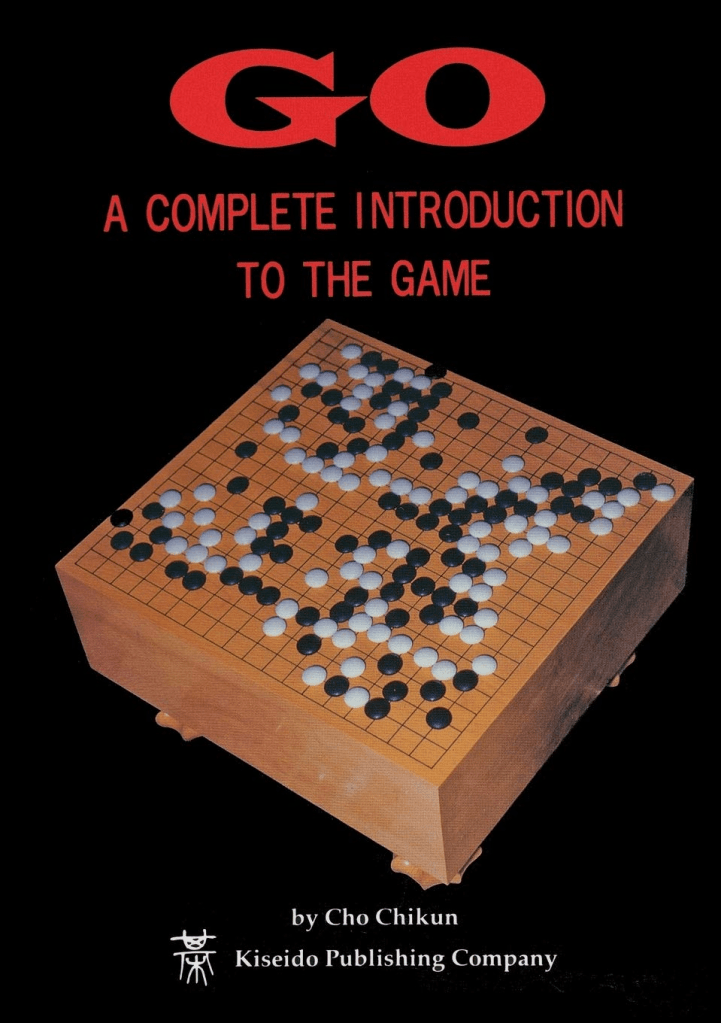
As I was getting back into Go, I re-read this excellent beginner’s guide in the SmartGo app. Cho Chikun is one of the most famous professional players in modern times, and the Japanese player with the most titles.
This book deftly introduces all the important aspects of Go rules and basic strategy, while alternating chapters about the history and cultural significance of Go. It’s a perfect introduction to the game (or re-introduction, in my case).
In amateur Go, players start at a rank of 30 kyu. As they improve, their rank decreases down to 1 kyu, then to 1 dan, and up to 7 dan. As you might expect, players with double digit kyu ranks are beginners and casual players.
While most books about Go are written by pro players for obvious reasons, Moffatt wrote this as a moderately high (1 kyu-ish) amateur. He’s close enough to still remember and understand why the players of these games make the mistakes they do.
Moffatt also goes into more detail than usual in explaining the merits and disadvantages of each move, often exploring various alternatives. They result is a set of thorough game deconstructions that are very useful aids for an amateur player to recognize their own shortcomings.
I bought this on a whim while on vacation, mostly on the authority of a positive blurb by Kieran Gillian (of Die and other comics), and a brief skimming of the art. Unfortunately, this book was not for me.
I don’t read a lot of romance, but I’m not strictly opposed to the genre. This, however, was just too much irritating teenage angst and not enough mythology for my tastes. When the romance hinges on everybody being afraid to voice how they feel, and the conflict stems from people hating each other for basically no reason, I get bored.
As far as the art goes, the character work is nice, but these characters live in a world composed of colored smears. This lack of any background detail is something that seems to be more and more common in indie comics, and while I understand it, I do miss the crispness that you see more in high budget superhero comics.
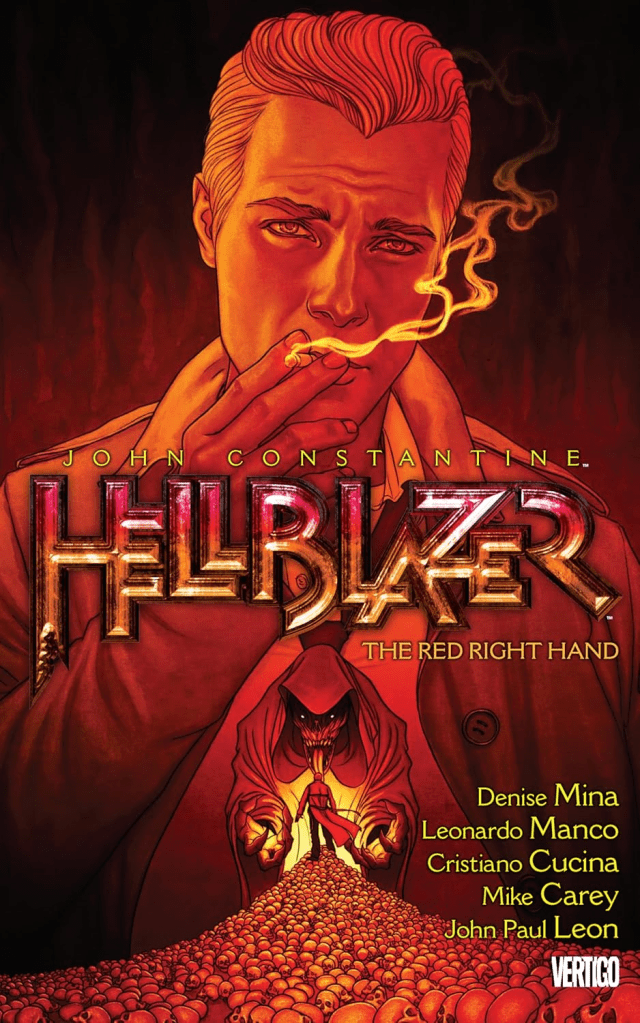
Hellblazer: The Red Right Hand
By Denise Mina and Mike Carey
Illustrated by Leonardo Manco, Cristiano Cucina, John Paul Leon
I do love me some John Constantine, but this collection wasn’t my favorite. There are two story arcs here: one where Constantine enters into a trap, and one where he gets out of it.
The typical Constantine story usually has a mystery twist, and this is no exception. Unfortunately, the twist didn’t shock me, it just made me shrug. Maybe if I were reading the series in sequence I would be better prepped as a reader.
It’s also not uncommon for Constantine to have some plan that only gets revealed when everything seems hopeless. Here, he doesn’t have much of a plan at all.
A collection of Constantine’s friends show up midway through, and it feels like deus ex machina, but even they don’t actually do very much. They muddle through, and the eventual resolution to the situation hardly feels like any of the characters had agency.
The last issue in this volume is a stand-alone one-off story, and it’s a classic, solid Hellblazer story. It made me a little sad that the rest of the book didn’t hold up as well.
Summer is here, and I’m currently in the process of packing to move. It turns out you can acquire a shocking amount of junk when you spend almost 15 years in a house, so I’m going through it and getting rid of everything I can.
This past month was light on reading, but I did manage to get through a couple of books.
Where possible, I’ve included Bookshop affiliate links instead of Amazon. If any of these books pique your interest, please use those links. I’ll get a small commission, and you’ll support real book stores instead of Armageddon bunkers for billionaires.
I’m still reading Discworld with the kids at bedtime. This title features some of my favorite recurring characters: Death (and the miniature rat version, the Death of Rats); Susan, his grand-daughter; the wizards of Unseen University; and the mysterious and villainous Auditors, who are not permitted to meddle in the affairs of mortals, but keep coming up with clever schemes to wipe them out so the universe can be neat and orderly.
The Discworld version of Death is, in some ways, the classic trope of the robot who wants to become human. He may be an anthropomorphic personification, but he has spent centuries around people, and he can’t help that they’ve rubbed off on him.
Thanks to the Auditors, the Hogfather (Discworld’s version of Santa Claus) is missing in action, and it’s up to Death to take his place and keep the world believing in him. It’s a Nightmare Before Christmas with ancient gods and extra-dimensional monsters.
Susan is pulled into Death’s schemes against her will, determined (but mostly failing) to live a “normal” life instead of the inevitably strange life of the woman whose grandfather is the personification of Death.
Hogfather is a meditation on the way people create the gods they need, while also being a completely silly story about bumbling wizards, a skeleton posing as a mall Santa with a strap-on beard, and a governess who actually finds the monsters under the children’s beds, and resolves the issue with the sharp end of the fire poker.
Novelty is a book of four stories, two longer, and two shorter. Its themes and some elements of its plots are very science-fictiony, but the style is literary. It feels like a 1980s precursor to the “new weird” of Jeff Vandermeer or China Miéville.
“The Nightingale Sings at Night” begins in classic myth-story fashion with an explanation of the nightingale’s unusual song. It’s a retelling of the fall of man from Genesis, but the structure feels like something straight out of Aesop’s Fables. It’s a great example of using a classic story structure as a jumping-off point.
“Great work of time” is the longest story of the bunch, and a fantastic time travel story. Like all time travel stories, it’s linear from one perspective and non-linear from another.
Caspar Last is an imminently reasonable man who invents a time machine and decides to use it only once, in order to make enough money to live out the rest of his days in moderate comfort. However, he is tricked into giving up his invention to a secretive group calling themselves the Otherhood. They use the time machine, first and foremost, to sow peace around the world and build up the British Empire. They also use it to ensure their group’s own creation.
However, all this meddling in time has strange effects. The peace they create has its costs, twisting the world beyond all recognition. One member discovers that the Otherhood’s twisted timeline will eventually result in a sort of quiet cataclysm, a world so at peace that there is nothing but endless forest growing out of a quiet sea. The only way to prevent this terrible future is to undo everything the Otherhood has done.
“In Blue” is a story set some time in the future, in an unnamed city. Refugees crowd an ancient city that is being systematically rebuilt. There has been pseudo-communist Revolution, and lives are governed by a social calculus and act-field theory, mathematics that govern society and all interactions between people. The protagonist, Hare, is a member of the cadre that organizes society without overtly ruling it, but he becomes overwhelmed by his duties and has a mental break.
The final story, “Novelty” is the most literary (or, at least, the lightest on plot): a story about an author in a bar, realizing what his next book will be about. He decides he must write a book on the “pull men feel between Novelty and Security,” the drive to discover something new versus the safety of the known. The implication is that the story is at least a little autobiographical, and the book we’re reading is the book he will write.
What I’m Reading In June
I’m not sure how much reading I’ll actually be able to do, but I’m still working on the Witcher series and Discworld. I’m also continuing my goal of reading at least one anthology of short stories each month, and recently picked up a volume of stories from Apex which seems perfect for summer reading.
Here in Minnesota, April showers have brought May…showers. It’s been rainy, drizzly, or just generally damp. Everything is slowly greening up, and Spring is going to sproing the moment the sun comes out.
This past month, I finished my read-through of the main series League of Extraordinary Gentlemen comics, I got back into Terry Pratchett’s Discworld books with my kids, and I finally received my Kickstarter-backed edition of The Secret World TTRPG.
Where possible, I’ve included Bookshop affiliate links instead of Amazon. If any of these books pique your interest, please use those links. I’ll get a small commission, and you’ll support real book stores instead of mega-yachts for billionaires.
Written by Alan Moore, Illustrated by Kevin O’Neill
After the first two volumes of League, I was a little disappointed in The Black Dossier, which was more backstory than story. I was curious to see where Volume 3 would take us. As it turns out, it’s both forward and backward in time.
As the subtitle suggests, the book covers a full one hundred years of the League. The main storyline of Black Dossier took place in the 1950s, but the story of Volume 3 begins just before the coronation of King George V, which is mid-1911, assuming the date in the alternate timeline of League lines up with real world history. This version of the League sees Mina Harker and Allan Quatermain joined by the immortal Orlando; occultist Thomas Carnacki; and gentleman thief A. J. Raffles.
The mystery that these characters seek to unravel throughout the book is the work of a cult founded by Oliver Haddo, who turns out to be a body-hopping mystic intent on creating the antichrist. The more immortal members of the League, Mina, Quatermain, and Orlando, investigate the cult over the course of the century. Their failure to stop the cult is matched by the cult’s own failure to create a proper apocalyptic monster.
This century sees the League eventually crumble, Mina falling into a drug-and-mysticism-induced fugue, Quatermain reviving his abusive relationship with Heroin, and Orlando getting lost in the violence of war.
It isn’t until 2009 that the League’s long-time mystical benefactor, Duke Prospero, contacts a reformed Orlando, who springs Mina from a mental institution. They join up with Allan just in time to confront the Harry Potter-esque magical antichrist, who is put down by an entirely appropriate modern myth who I’ll refrain from naming, lest I spoil the fun.
This third (technically fourth) volume once again shows the League as mostly ineffective. They are still involved in the big movements of the world, but none of their meddling does much good.
With the move away from steampunk Victorian England, some more recent pop-culture references inject fresh fun into the series, although I couldn’t help noting that twisted versions of Harry Potter have already been done elsewhere, and in my opinion, more effectively.
Written by Alan Moore, Illustrated by Kevin O’Neill
In this final volume of the main-line League books, Mina Harker, Orlando, and the freshly recruited Emma Night (a.k.a. M) are all that remains of the League in alt-history 2010.
In some ways, Volume 4 has learned lessons from the weak points of the previous books. The authors are playing with formats again, bringing back the 3D glasses sections and including parts reminiscent of classic superhero comics. These format-shifts add variety without being as gimmicky as Black Dossier.
The story alternates between three time periods. The 1970s sections follow superhero squad The Seven Stars, organized by Mina while disguised as Vull the Invisible. In 2010, the time travelers seek Vull and any remaining superheroes. In the 30th century, an apocalypse has occurred and a desperate few freedom fighters engineer a trip back in time to prevent the catastrophe.
The true history behind the League and the reason for its existence are finally revealed to be part of a vast conspiracy that also encompasses British Military Intelligence (with a host of oblique James Bond references) and Shakespearean-era faery politics.
While League has never shied away from killing off major characters, Volume 4 is perfectly happy to burn all the bridges. While a few characters manage to escape disaster and even find some semblance of happiness, the entire setting burns down around them, with time travelers making it clear that the cataclysm won’t be cleaned up for hundreds of years.
League of Extraordinary Gentlemen is a series built on literary references, and it has finally run the full gamut of time periods. This feels like a suitable ending. (At least until the thirtieth century, when I fully expect Alan Moore’s frozen head to be revived for Volume 5.)
I finally finished reading the Harry Potter series with my children last month. After that, I decided we ought to jump into some lighter fantasy, returning to the nearly inexhaustible Discworld series.
Pratchett has crafted a fantastic setting and populated it with a gigantic cast of interesting characters, but each book tends to follow particular groups. Feet of Clay follows Sam Vimes and his city watch in Ankh Morpork. The city’s patrician, Lord Vetinari, is being slowly poisoned, and it’s up to the Watch to figure out whodunnit.
The mystery provides the structure of the story, but the joy of any Discworld book is in the wonderful craft and comedy that Pratchett puts into almost every sentence, and the interactions between the characters. I think the craft of comedy writers tends to be underappreciated, but Pratchett at his best is as good as anyone out there.
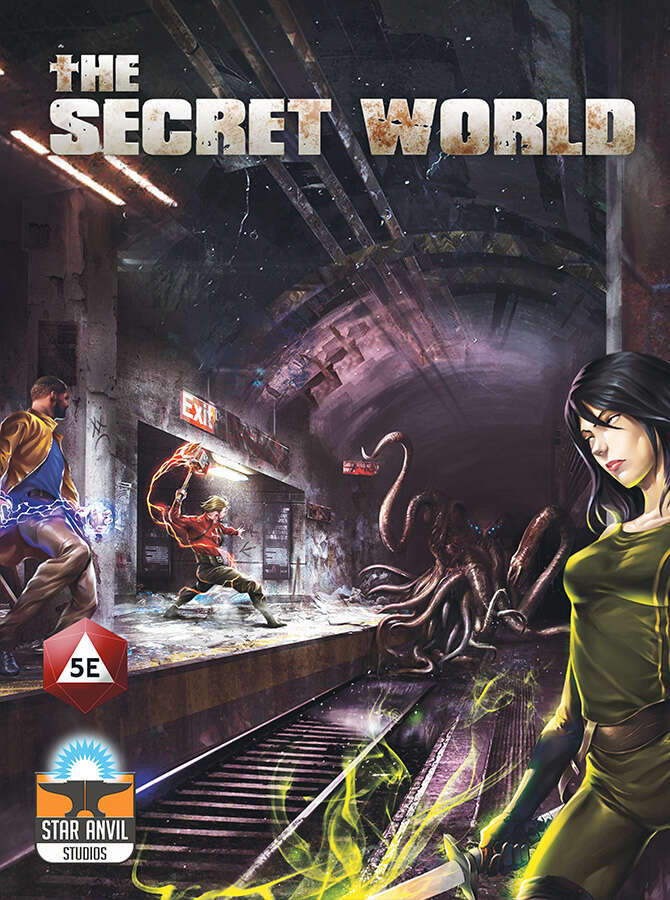
The Secret World began life as a 2012 MMORPG. Sadly, 2012 was one of the last few years when game developers still believed that the market for MMOs was infinite, and that it might somehow be possible for someone…anyone…to dethrone the longtime king of the genre, World of Warcraft.
While Secret World did a bunch of interesting, innovative things, it was really the modern, urban, “every conspiracy theory is true” setting, slow-burn mysteries, and brilliant writing that set it apart. Unfortunately, that wasn’t enough to overcome its clunky gameplay. The game stumbled along for several years, eventually spawning an updated, free to play re-launch and a few smaller games in the same universe.
I won’t lie. When I heard about a table-top RPG based on the IP, I was excited. The setting and story were always the best part of the Secret World, so a TTRPG made perfect sense to me.
The rules are based on 5th Edition Dungeons and Dragons, lightly adapted to a more modern, more urban setting and the Secret World character system. At this point, 5e D&D is probably both the most popular and most disliked TTRPG system out there. Because it’s so ubiquitous, and many people directly equate role playing games with D&D, it’s the obvious choice when adapting an IP that most people have never heard of. No point in limiting your audience.
Unfortunately, 5e has its downsides, and I suspect that the Secret World has once again paired its fun settings and stories with clunky gameplay systems. The book’s creators, Star Anvil Studios, might realize this, because as soon as they finished this edition, they announced a new Kickstarter to bring the Secret World setting to the Savage Worlds rule set. Or maybe it’s just a way to cash in in the IP by writing a new book that is 70% the same as the old book.
The 5e core book defines nine classes that will be familiar to anyone who has played Secret World Legends. Everyone is a spellcaster to some degree, but two of the classes are all about the spells. There is no true multi-classing, but there are Secret Architypes, which are like mini-classes that characters can collect as they level. Only one can be active at a time, but they can be swapped with a short rest. It feels like a fun way to scale characters horizontally, but I wonder if high-level characters will feel too much like a jumble of abilities.
The biggest draw, to me, is the setting, and the book wisely dedicates about 60% of its pages to the world, with descriptions of a large number of NPCs, the factions, and a good amount of the history and lore from the games. Sadly, there are limits to how much can fit in a single core book like this. The game will still likely be much more fun in the hands of a game master who knows their way around the Secret World setting.
There was a single premade adventure released as a part of the Kickstarter materials. I would love it if Star Anvil was able to craft a couple more, although I won’t be holding my breath.
What I’m Reading in May
I’m still reading The Witcher. For my short story fix, I’m thinking I’ll tackle a sci-fi novella collection from the 80s. And I’ve got a book of writing advice that has been calling my name for a while. See you in May!
Well, we’re halfway through April, but I’m just getting around to my monthly reading recap. This month was mostly continuing series: The Witcher, League of Extraordinary Gentlemen, and finally finishing Harry Potter with my kids.
Where possible, I’ve included Bookshop affiliate links instead of Amazon. If any of these book pique your interest, please use those links. I’ll get a small commission, and you’ll support real book stores instead of mega-yachts for billionaires.
Hemingway is often cited as the pinnacle of American short fiction, and I haven’t read any of his work since college. Perfect for my year of short stories. However, this particular collection is 650 pages, and I only managed about half of that in March, so I’ll be continuing in April.
If you’ve heard anything about Hemingway, it was probably that he’s known for his short, terse sentences. While those sentences are certainly present, he actually mixes up his sentence styles quite a bit. I feel like this description of him has been cargo-culted through undergrad English programs for decades. Possibly unpopular opinion: many of his best sentences are quite long.
While the majority of Hemingway stories are quite short and straightforward, the language is sometimes a little bit of a slog. We’re far enough removed from the times and places in these stories that it’s like visiting another land. The style and word choice is old fashioned enough that it’s sometimes like translating a different dialect. It’s not like parsing Shakespeare or anything, but I’m probably getting less out of it than a contemporary reader would.
None of these stories are particularly plot-heavy, and many are vignettes with scarcely any plot at all. They capture a feeling and a place and time, but I find myself wishing that more would happen.
If you’re a modern reader who is acclimated to fast-paced, plot-heavy stories, and you’re not interested in the historical value or the literary prose, I can’t really recommend reading all of the Complete Hemingway. However, I think anyone with an interest in short fiction should read at least a few of his more famous stories.
War is raging between the kingdoms of the north and Nilfgard. The Witcher is recovering from a near-fatal beating at the hands of the traitorous sorcerer, Vigilfortz. Ciri has become a bandit in Nilfgard, (though Nilfgard claims she is safe under the protection of the Emperor). Yennefer is gone, missing after the battle at the sorcerer’s conclave.
We appear to have reached the section of the fantasy series where the main characters are all split up and must fend for themselves. For Ciri, this means having to survive for the first time without the protection of Geralt or Yennefer, and falling in with a very bad crowd.
For Geralt, the Witcher, this means coming to grips with the possibility that he is not strong enough to protect the people he loves without some help. Despite himself, he collects a motly crew that includes his longtime bard friend, Dandelion; Regis, the old alchemist with a dark secret; Milva, the human archer allied with the non-human scoi’atel rebellion; and a caravan of kind-hearted dwarves scavenging and collecting refugees in the wake of battle.
Yennefer’s absence remains a mystery for most of the book, but she comes back into the story with a meeting of a new alliance of sorceresses from the north and Nilfgard. As usual, the wizards are always plotting ways to control the events of the world. Unfortunately, those plans still involve Ciri.
The strength of the Witcher books thus far is the way the story integrates the large-scale political machinations and battles with the personal connections between characters.
Written by Alan Moore, Illustrated by Kevin O’Neal
We begin with John Carter and Gullivar Jones as leaders in a war of many races on mars. One alien race, holed up in a fortress, escapes in rockets headed for earth. Thus begins the Martian invasion of tripods, a la War of the Worlds.
The first volume of League was so short and introduced so many characters that there was limited opportunity to delve into each one. It worked, partly, because the source material was already familiar. In Volume 2, there is space for more characterization: romance, betrayal, and plenty of fractures and disagreements between the League’s members (as well as Bond, M, and the British government).
If Volume 1 was the origin story, Volume 2 feels like an abrupt finale. Two members of the League end up dead and the rest are estranged by the time the story is over.
The weakness of the series so far is that all these exciting characters have so little control of their own lives. The violent and self-centered Hyde and Griffin act on their own impulses, mostly to their detriment. Mina and Quatermain, and to some extent Nemo, are the “good kids” of the group, who actually follow orders, and are once again used to carry out actions they don’t understand or necessarily agree with. While the League plays a major role in the fight against the martians, I couldn’t shake the feeling that they were side characters in their own story.
Volume 2 concludes with a thirty-page illustrated travelogue that hints at several earlier iterations of the League, composed of literary characters from previous eras. It also hints at the future.
Like the Quatermain story at the end of the first volume, this was too tedious for me, and I ended up skimming by the end. There are tantalizing references to the previous Leagues and the adventures of Allan and Mina will have after the Martian invasion. But much like Calvino’s Invisible Cities, endless descriptions of fantastic places become dull when they have no characters or plot to anchor them.
Written by Alan Moore, Illustrated by Kevin O’Neal
Set in the same alternate universe as the first two volumes, we’ve jumped to 1958. The totalitarian post-war Big Brother government has just fallen in England, and Mina Harker and Allan Quatermain are back after years abroad.
Black Dossier expects the reader to have slogged through the travelogue at the end of Volume 2, which contains a lot of mostly elided story. It explains where the pair have been all these years, why they are young-bodied and effectively immortal, who the heck this Orlando character is, and what exactly is up with the Blazing World.
Black Dossier is a very strange comic, a time-jumping multimedia extravaganza. It begins as an ordinary comic, as Mina and Quatermain trick a rather nasty version of James Bond into gaining them access to military intelligence records. They proceed to find the black dossier of information about all the different incarnations of the League, and make their escape.
Safely back at their boarding house lodgings, they begin to read the dossier. Then the narrative pauses to show the contents of the files.
The rest of the books shifts back and forth between Mina and Quatermain in ’58, fleeing military intelligence, and the dossier’s files, which range from lost Shakespearean folios to memoirs and maps, to borderline erotica/porn.
This book is incredibly horny. It makes some sense, with the pulp fiction roots that the series embraces wholeheartedly, but at a certain point it just comes across as a little juvenile, especially when some sections have no purpose in the story and exist just to be sexy.
The book ends with a 3D glasses chapter, and a play on the end of midsummer night’s dream — instead of comparing stories to dreams, it plays on the way science fiction has shaped the world over the years.
The League books have always been a mix of high-brow and pulpy. Unfortunately, the whole experience is pretty uneven. Some sections are dull and self-indulgent, feeling more like a collection of backstory notes than proper story, and it’s frustrating that you need to cross-reference everything to get a sense of exactly what’s going on.
This final book of the series eschews the structures that have held fast through the previous books. Harry isn’t going to school. He’s on the run, searching for the immortal lich villain’s phylacteries horcruxes. The story alternates between a series of narrow escapes and heists.
The death of a secondary character at the end of the fourth book was fairly shocking compared to the surrounding material, but the tone is so much darker by this final book that major characters are dying every few chapters.
The biggest problem I have with this book is how much time the three protagonists spend wandering, with no idea what to do. They fight, separate, come back together. They argue and complain. The middle of the story gets bogged down and doesn’t seem to be going anywhere. It’s too bad, because the first third and last third of the book are packed with good action.
Right in the center of this soggy middle is a sequence where the main characters acquire an important macguffin without any effort on their part. This is all explained much later, but it still feels like a major success falling into their laps almost accidentally.
Finally, I have to complain at least a little bit about the amount of info-dumping that occurs in the last couple chapters of the book. The biggest info-dump comes through the pensieve, a magical device that allows Harry to view other people’s memories. This device is Rowling’s exposition machine in the latter half of the series, but it is exercised to such an extent in this book that we effectively get a whole chapter of wading through memories. I can’t help but feel that this was a bit of a cop-out, allowing Rowling an easy way to reveal all the important secrets of a major character right at the end, without any of the messy difficulties of figuring out how the characters could discover that information.
With all that said, and the occasional other complaints I’ve lodged in earlier Read Reports, the series holds up pretty well. It feels relatively unique in the way its voice changes so significantly from the beginning of the series to the end. It also creates a huge cast of interesting characters. So even if I may be irritated by the inconsistencies of the magic or the incredible dysfunctionality of wizard society and government, the story still gets me to care about what’s happening to Harry and his friends.
What I’m Reading in April
I’m going to be finishing off the League of Extraordinary Gentlemen with Volumes three and four. I’ll be reading the fourth novel in the Witcher Saga, Tower of Swallows. I’ll also be doing my best to finish The Complete Short Stories of Ernest Hemingway.





















 Words Deferred