Voices of the Dead — The Story Idea Vault

It’s a common misconception that a great idea makes a great story. The truth is that most great stories come down to execution. A great idea with poor execution rarely works, but a great writer can breathe new life into even the most tired tropes.

Like any writer, I have my own treasure trove of ideas that might end up in a story…someday. But why horde them? Instead, I’m opening the vault and setting them free.

Feel free to use these ideas as a writing prompt, or come up with your own twist and reply in the comments.

Voices of the Dead

The professors were all thrilled when Dr. Landau agreed to join our little jungle expedition. They didn’t want to reveal their findings in writing, but they had to say enough to catch her interest.

I met her at the landing strip, and she wasted no time. As she stepped out of the plane, she asked me, “What’s all this about the parrots?”

“They’re speaking a dead language,” I told her. It sounded silly when I said it. “But the dig sites are all pristine. No potsherds. No hand axes. No bones or remnants of fire pits.”

She soon gave up questioning me, and we hiked to the camp, hardly speaking. We listened to the banter of long-dead voices, croaked from bird to bird in the treetops.

She was quick to confront my superiors.

“What kind of catastrophe can wipe out all traces of a civilization except their language?” she asked the professors. Of course, they had no answer. We had pondered it for twenty sleepless nights.

I once held those withered, bookish men in high esteem, but they were afraid to tell her our final secret. And who am I to judge them? I didn’t tell her either. She had to find out herself, alone in her tent as twilight fell on the misty jungle.

At night, the parrots stop echoing the words of the dead. After the sun goes down, the birds only recount their final, terrified screams.

Blue Prince — Games for People Who Prefer to Read

Previously in this series I have mostly recommended games that might be described as light on gameplay and heavy on narrative. Most of them are of the genre pejoratively titled “walking simulators.”

My goal is to recommend games that don’t require twitch reflexes or a lot of experience with  game systems, interfaces, or particular genres. There is narrative greatness in the world of video games, it just takes some looking to find.

Blue Prince

Blue Prince is a “gamier” game than I would typically recommend in this series—not because it’s frantic or overly-complex, but because it’s less narrative-forward and more mechanical at a surface level.

The story is still there, but it’s a mystery, and you have to search for answers and clues, making inferences. Because this is a mystery, the challenge of the game comes from puzzles, and these work on two levels, which I’ll call “the grid” and “the meta-puzzles.”

The Grid

The grid is the surface puzzle. You’ve inherited a mansion, and every day the rooms reconfigure themselves. The house contains a 5×9 grid, and every time you open a door, you choose from 3 semi-random rooms to occupy that space in the grid. Your goal: to get to the far end of the mansion, find a hidden 46th room, and claim your inheritance.

The grid is a game of resource-management, with a finite number of steps per day, used up with each room. There are keys to unlock doors, coins to buy things, gems to pay for more exciting rooms, and the rooms themselves offering 1-4 exits and other perks. There are also special, unique items to be found, which increase your resources or provide beneficial effects.

The grid offers plenty to keep the player busy, at first. But after a few failed attempts to get through the house, the second part of the game begins to reveal itself: the meta-game.

The Meta Game

Some rooms work in combination with each other. Some rooms have clues for puzzles in other rooms. And there are many, many rooms to discover and unlock. Eventually the player will find ways to go beyond the house and find new revelations on the grounds and beneath the foundations. The game is much larger than it first appears.

Here, Blue Prince introduces “roguelike” elements—new tools and additional resources that persist across days. Meta-puzzles can unlock new areas, but they can also reveal new information. Books in the library, newspaper clippings in the archives, letters hidden in safes and locked diaries all reveal narrow slices of a larger narrative.

I won’t spoil the story, but it involves the aristocratic family to which the player character belongs. A history of the surrounding countries—politics, warfare, and xenophobia—is revealed over the course of the game. The family must navigate these dangerous waters, and it becomes apparent that they did not always manage to pass through unscathed.

The Price of Something New

I think Blue Prince stands as something unique: a roguelike puzzle game that manages to embed an interesting story within a mechanically dense framework. However, it is not entirely without downsides.

I found that the puzzles were well-tuned while I was working toward the “end” of the game—the stated goal of finding the 46th room of the mansion. Each new day I was able to find new clues, solve a puzzle or two, and often experience a room or item or new mechanic that kept things interesting.

Entering the “final” room isn’t the end though. Not really. It’s a revelation, but most players will still have a few dangling story threads and unfinished puzzles to keep them playing after that initial victory. It doesn’t take long to discover that there is plenty more that can only be uncovered after supposedly winning.

The puzzles get harder and more obtuse. The items are all found, and it starts to become more and more rare to discover a new room or a new clue.

The game provides more resources to the player as they solve meta-puzzles, making progress in the daily grid game easier. There are a couple of mechanisms that the player can use to tweak their likelihood of finding specific rooms or items. But eventually, the repetition starts to wear thin, especially when you want to try a puzzle solution or find a specific bit of information and just can’t get the randomness of the house to cooperate. You might only feel like you’ve made progress once every few days. I found myself wishing I could do more to stack the deck in my favor.

There were also at least a couple puzzles that I couldn’t get past without a guide. I don’t begrudge a puzzle game its challenging puzzles, but I am disappointed when the clues don’t point clearly to the actual solution.

The Limits of Narrative through Setting

Blue Prince tells its story through its setting. It relies on the rooms themselves, supplemented with the letters, clippings, emails and books found within. It allows a few concessions to gameyness (nobody is surprised by the magically rearranging house in an otherwise normal world). The story has to fit within the framework of the grid game.

These limits prevent Blue Prince from creating the kind of curated narrative arc that is present in What Remains of Edith Finch or The Beginner’s Guide. That’s okay. It’s a different kind of game and a different kind of story.

Ultimately, it shows that the borders of interactive storytelling continue to expand.

Is Severance Just Another LOST?

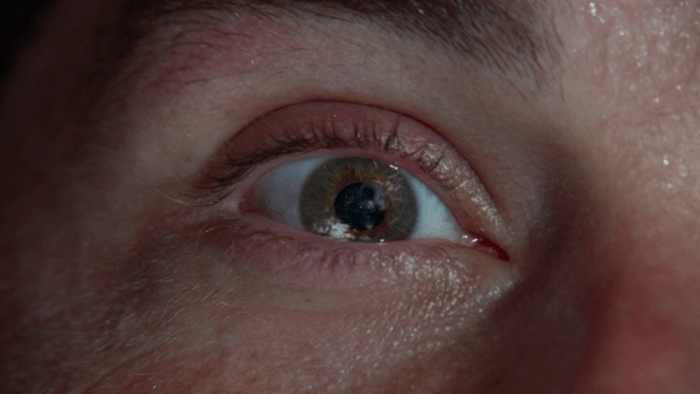
A close-up of a man’s eyeball. As tense music plays, the eye opens wide, reflecting a canopy of bamboo.

A wider shot, zooming out: the man wears a suit and tie. His face is scraped. He may be in shock.

A sound from the forest. A yellow labrador retriever walks out of the trees.

The injured man rises, finds a minibar bottle of vodka in his pocket, and runs through the trees. He comes to a beach, where the camera slowly pans to reveal the catastrophic wreckage of a trans-oceanic flight, survivors screaming and frantic.

“Who are you?” It’s a tinny, artificial voice.

We look down on a conference room: a long wooden table surrounded by twelve chairs. The carpet forms concentric rings of green and yellow.

There is a woman on the table, wearing sensible blue business skirt, blouse, and beige heels. She is face down, arms splayed as though she fell from above.

“Who are you?” the voice asks again. There is a little intercom box on the table, near the woman’s head. She begins to stir.

“Hello?” the woman asks, looking at the box in confusion. There is a beat of silence.

“I’m sorry,” the voice says. “I got a little ahead of myself. Hello there, you on the table. I wonder if you’d mind taking a brief survey?”

That Familiar Feeling

The first scene was the opening of LOST, the show best known for popularizing the mystery box genre and irritating its fans with an unsatisfying ending. The second scene is from Severance, the new mystery box darling that’s currently rolling out its second season on Apple TV+.

There’s a striking similarity between the openings of these two shows, nearly two decades apart. A person waking up in a strange environment, inviting the character and the audience to immediately start wondering “what’s this all about?” (And as an aside, if anyone ever tells you that you should never start a story with a character waking up, feel free to point them toward these lauded, high-budget shows.)

I have spent a good amount of time thinking about mystery boxes (and writing my own), and the current popularity of Severance provides an interesting opportunity for reflection. After all, LOST was hugely popular and widely praised for much of its run, with many critics and fans souring only at the conclusion or in the last season.

Is a show like Severance bound for a similar fate? Or will it be a shining example of how to do it right?

What’s In the Box?

So what elements contribute to a show like this working or falling apart?

First, it has to be going somewhere. That implies two things: the writers have to know the answers ahead of time, and the answers have to be interesting. If the story is built up by throwing around mysteries too liberally, without careful concern for how it all fits together, then it inevitably won’t. And even if the biggest mysteries manage to get wrapped up, audiences will be frustrated when the path along the way is littered with plot holes.

This was perhaps the biggest failing of LOST. The show runners changed across seasons, and are on record admitting that they introduced mysteries without knowing all the answers or the final resolution of the series.

However, it’s not enough to know what you’re doing. You also need the trust of your audience. A mystery box show can earn that trust in a couple ways. The first is to set up and pay off smaller mysteries. These can be arcs within an episode or questions about a particular character; anything that shows foresight and planning, without necessarily giving away too many major plot points. Bigger reveals are less frequent by necessity, but a steady drip of smaller reveals are what builds up audience trust. Severance has done this fairly well, usually dropping a “big reveal” every couple episodes.

Finally, it pays to reward the audience for noticing the details. Smart writers will leave breadcrumbs and clues for the super-sleuths to find and interpret. LOST fans were known for insane frame-by-frame analysis of seemingly mundane details, including many things that simply didn’t end up mattering.

While there’s no way to prevent determined fans from going through the irrelevant details with a fine-toothed comb, LOST included many details that practically shouted “this is a clue!” but never had a satisfying explanation (like those six numbers that kept showing up everywhere).

Mystery is not Enough

The mysteries are obviously an important engine of the “mystery box” genre, but they can’t be the only thing driving the story. Even the most mystery-centric story must have compelling characters and interesting relationships between them.

One of the greatest insights in Chuck Wendig’s Damn Fine Story is that the inner emotional story should drive the external action. Star Wars isn’t just a story about galactic war, it’s about the Skywalker family drama that will ultimately decide the fate of the galaxy. The mystery box needs to be inhabited by compelling characters, and they should be driven by their own needs to try to find out what is going on.

The characters in LOST had a very straightforward reason to solve the mysteries around them (at least in the first few seasons): they were stranded on an island and wanted to go home. To a certain extent, this is true in Severance as well. The “innies” live their lives trapped within the confines of their underground office complex, even if their bodies and the other half of their brain gets to go home at night.

A more subtle and more powerful way to drive the story is to tie the characters’ arc and growth to the resolution of the mysteries. If the character needs to solve the mystery to mend a broken relationship or understand their purpose, they’ll be driven to find answers.

In LOST, this manifested in the long-running debate between characters who believed in free will and choice, vs. those that thought their experiences were driven by unalterable fate. In Severance, the mysteries are direct impediments to at least four different romantic relationships. If those characters want to be together and be happy, they need to resolve the mysteries surrounding them.

The Danger of Success

The biggest threat to quality on a mystery-centric show is runtime, and there is an obvious impulse to drag out a successful story to maximize its money-making potential. Unfortunately, the longer the story goes on, the harder it is to maintain the tension. It’s difficult to keep the audience’s interest across seasons without moving the goal-posts or introducing long digressions.

Even worse, stretching out the development increases the likelihood that the outside world will intrude: from writers’ strikes to key actors and personnel leaving, to network executives foisting questionable demands onto the creatives responsible for crafting a good story.

Every episode or chapter is another opportunity to accidentally introduce loose ends, red herrings, and irrelevant details. There is a constant danger of diluting the elements that make the story exciting.

Gravity Falls — A Mystery Box that Delivers?

While Apple slowly releases new episodes of Severance on a weekly cadence, I also happen to be watching another mystery box show with my kids: Gravity Falls.

Admittedly, Gravity Falls is a slightly different beast. It’s first and foremost a funny cartoon for kids, even if it does have some jokes thrown in for the parents and those unexpected tonal shifts that define a good “dramedy.” However, it is a mystery box, and the slightly simplified formulas of a kids’ show help to show off how a mystery box can be done well.

The show follows the classic “monster-of-the-week” formula, with stand-alone episodes that add depth to the characters, interspersed with key episodes that advance the bigger, ongoing plot. Having originally run on TV before the rise of streaming, the show limits itself to two seasons, but these are old-fashioned TV seasons, totalling 40-episodes. It’s a run that might still outdo a show like Severance, with seasons under 10 episodes. Regardless, it’s fairly tight compared to LOST.

The show builds mystery in a lot of small ways: secret codes in the credits, callbacks and background details, and generally rewarding the fan base for digging deeper. And mystery isn’t the sole draw: there is character building and tension in the relationships, with overarching themes of siblings growing apart, and the challenges of maintaining ties in the face of growing up.

Gravity Falls does a fantastic job spreading out the clues and resolutions across episodes. It doesn’t try to save all the secrets for a huge ending. In fact, most of the mysteries are resolved before the end, with a finale that focuses on defeating the big villain and answering the ultimate emotional question of the show: will the two sets of sibling relationships (adult brothers and kid brother and sister) survive and thrive, or end in estrangement?

Don’t Let me Down, Ben and Dan…

Back to the original question. Will Severance satisfy, or will it be another LOST?

The answer, of course, is that we won’t know until the final episode. There is still plenty of time for the people behind the show to make bad decisions. I have reason to be hopeful though.

So far, Severance hasn’t been overly stingy with clues and reveals. While certain plot points (cough-cough-goats-cough-cough) feel worryingly LOST-esque, I’m still willing to believe the show-runners’ claim that they have a clear ending in mind.

The characters have had fantastic arcs so far, and they’re tied nicely into the central mysteries. But we’ve seen this before. They need to stick the landing.

I’ll be watching the season two finale with fingers crossed.

Razor Mountain — Chapter 34

Razor Mountain is a serial novel, with new parts published every week or two. For more info, visit the Razor Mountain landing page.

Christopher left the bottle and tumbler behind, in the empty dormitory. He walked the halls with purpose now.

The gray-walled back halls of Razor Mountain were a purgatory where Christopher could wander endlessly. He had been walking these hallways for centuries. God-Speaker had. There was hardly a difference between them anymore. But he couldn’t actually walk forever. Eventually, inevitably, he came to the place he knew he had to come to: the chamber of the voices.

He knew what he had to do, but he wondered if he was too far gone to do it. It was Christopher that was driving him, but there didn’t seem to be much Christopher left. God-Speaker wanted it too, in his own way, but he could never bring himself to do it—not on his own. He was a river that had run for so long, cut a canyon so deep, that he could never change course of his own volition.

In the chamber, he could not completely shut out the voices. The cloud of their strange memories surrounded him, at first just flashes, moments, then more and more until he was inside a kaleidoscope of images, smells, sounds and sensations from lives long past and places far away.

We must continue, they all said. They were a race of God-Speakers, a race that had come to the conclusion that death erased the value of living. A race for whom the transitory nature of life was anathema. Yet, they were here. In their quest for permanence, their race had died out, and even then, they refused to accept it. They cast themselves out, as living memories, to find new vessels for their endlessness. But this paltry rock played host to such primitive life. So primitive that it could scarcely even understand them, let alone play host to them. Only one had ever come close. Even though he could understand them, sometimes, and learn a bare few secrets of how they cheated death, even he was not a suitable vessel. They were trapped. They still clung to this purgatory, this faintest semblance of life, rather than face death.

They only made Christopher more determined. There was no dignity, scrabbling and clawing as you slid down the slope. It was a quiet fear, always at the edge of thought, poisoning every good thing with the sickness of impermanence. Everything was temporary. Hating impermanence made the world terrible.

Having seen enough of the kaleidoscope, Christopher pushed it back. He shut out those dead memories, and reached out with his mind. He took hold of their power one last time. He knew what to do, though he had never been brave enough to do it himself.

He felt a storm of emotions, of logical arguments arrayed like armies against one another. He could barely tell what came from Christopher and what came from God-Speaker. He didn’t want to do it. He had to do it. He had to wait, to be sure. No, now was the tipping point. Now was the only chance. He was afraid.

He recalled the words he used to train the oracles.

See the flow of time, the branching river. Reach out and stop yourself. Step out of the current. Hold on tight, and feel the universe move on without you.

It was surprisingly easy. He was untethered. His centuries of memory were small and simple in comparison to what unfolded around him: the endless strand of time, in the twinkling cascade of infinite moments. The universe unfolding in fractal complexity, perpetually giving birth to itself from nanosecond to nanosecond. The view was utterly overwhelming, and it made plain the lie that the minds in the chamber told themselves. There was no permanence in the face of the whole vast universe. Neither kings nor empires nor the lifetimes of planets and stars were of any consequence. They were so small as to be undetectable.

Christopher felt himself getting lost, and reached out for an anchor. He could go backward, but once he started, there was no stopping, not for long. He sought out the moment that mattered. Back a few years, then a few more, then a century, and time was flying past in a torrent.

It was like skimming a book. He saw only a few individual places and moments, moving in reverse. Effects spawning their causes. He was afraid he would miss it, but when he came to the pivotal moment, it was unmistakable. He grabbed at it, fighting against the pull that now owned him, that would eventually force him to keep going backward and backward and backward.

He dropped into the familiar world again. He found himself—but not himself.

Those ancient, arrogant, fearful minds in the chamber beneath the mountain could never find purchase in the human brain, but Christopher had no difficulty. This was his mind, even if it was inherited.

A hunched and dirty figure limped deeper and deeper into a dark cave. The space in the rock was little more than a narrow crack, and he was forced to crouch and crawl to get through. The voices were calling to him. They were faint, but they were like the voice of his stone god. He had nothing, no tribe, nobody to lead him or keep him safe. Nothing to trust in a world that was terrifying in every way.

There was no light here. He moved by feel alone. Christopher settled deeper into this mind, breathing this man’s breath, feeling the rough rock through his raw and stinging fingertips. Thinking his dull thoughts, despairing and afraid to admit the faint glimmer of hope that these voices engendered.

There was a gap, Christopher knew. A place where this crack intersected another. And that other crack opened into a deep and unknown space below. He was crawling. His fingers found the lip. He brought his knees to the edge and reached across the gap.

Yes, another ledge. Just a little more than an arm’s-length of empty air between.

He gripped the other side and slid forward. Carefully, carefully. The rough ceiling was low. He stretched his body across the gap.

Christopher was a passenger here. His influence was so small, so light. A flicker of thought here. A moment of distraction. A carefully placed hand slips on the moist rock.

Christopher can’t hold on. He is moving backwards, pulled by an unstoppable gravity. He is in God-Speaker, in the depths of Razor Mountain before it had a name. He is falling down the crack. Then he is outside the universe again, watching God-Speaker fall and fall and fall in a frozen, endless moment.

It’s strange seeing it from the outside. God-Speaker falls forever, and then he lands. It is so forceful that there is no pain. Just the quiet dignity of an ending, of death. It is a relief.

The long tail of the future cracks like a whip and rolls out in a different shape. The voices whisper in their chamber, deep within the mountain, but nobody ever hears their susurration. The earth moves slowly, and they sink deeper and deeper into its warm heart.

The mountain is still and sleepy. It is never riddled with tunnels like an anthill. No locked doors hiding secrets. It slumbers peacefully.

The world moves on, different, but not so different. People live and die.

Christopher sails on in the opposite direction, through a void far emptier than the deepest space. He is falling down time, toward the beginning of all things. He has done all he can do to change the course of history.

A tremendous sense of relief washes over him. He sails up the flow of the universe, backward through time, back to the pinprick of infinite light and heat at the beginning, and then beyond.

THE END

<< PREVIOUS ] [HOME]

Razor Mountain — Chapter 33.3

Razor Mountain is a serial novel, with new parts published every week or two. For more info, visit the Razor Mountain landing page.

Christopher could feel God Speaker in his bones—the disappointment, irritation, and disgust with Christopher. Beneath that was the fear. It was beneath everything. Christopher was exhausted. He was trapped in an endless cycle. He was scared to let it continue, but equally scared to fight against it.

The voices beneath the mountain raged and jeered. They had no such concerns. If only they could be free, they would happily live until the universe grew cold and dark around them.

He left Cain’s residence with a mumbled goodbye, annoyed by the man’s unflappable calm as he turned off the lights and lay back down to sleep.

There were miles of hallways under the mountain. Even in the restricted areas, Christopher could walk for a lifetime and not find every twist and turn. He let his feet walk where they wanted and did his best to feel nothing.

Eventually, he had to raise his eyes from the floor, to a door that was blocking his path. Like most doors here, there was a square of black plastic embedded in the wall. His skeleton key card granted him access.

He had never been to this place as Christopher, but it was instantly familiar. Something about the smell of the place made it register as a school, even though that was really just a facade.

He walked down the hallway. There were several rooms with desks; screens and white-boards on their walls. The rooms were bare and dusty and felt abandoned. Further down was a cafeteria, two long tables looking lonely amongst the empty space. A gymnasium followed, then a janitorial closet, a private office and several smaller rooms. Last was was a pair of dormitories, long rooms with bunk beds. A door at the far end of each led to bathrooms and showers.

It was an entire compound, weirdly segregated from the rest of the city, hidden in the restricted area. The rooms were large enough to comfortably hold dozens, though Christopher knew they had rarely held more than ten people: children, specifically, ranging from five or six years old up to their early teens. Children who showed signs of a gift. They heard faint, confusing voices from somewhere down below.

God-Speaker had accompanied every one of them to a strange room, deep below the city, where they might hear those voices a little better. With the right training, some of them could learn to listen.

Their parents would be told that their children were gifted. Those children would have to enroll in a boarding school, where their gifts could be cultivated. In that school, they would learn that they were special: they were oracles.

Christopher turned and looked back down the hallway, to the distant door where he had entered. Memory washed over him. It felt new, but somehow he had always known it.

God-Speaker was unique. Across thousands of years, he had never met another person who could hear the voices as clearly as he could. He did not know if it was some unique confluence of genes or something in his upbringing and culture. Perhaps there was some incurable defect in his thoughts that he managed to carry with him from one body to the next. Whatever it was, it didn’t flourish in the generations that followed him. If anything, it had become harder and harder to find anyone who could hear more than a hint of the voices.

God-Speaker had learned many things from the voices, projecting his mind out into the world and entering into others. Yet, the three dimensions of normal space were not the only ones the voices understood. There were other ways to project a mind, although they were dangerous.

Even the voices did not fully understand time. The future was forever hidden from them. Perhaps there was no concrete future, only the infinitely regenerating moment that was the present. Perhaps there were innumerable futures, branching and shifting and impossible to navigate.

On the other hand, there was certainly a past, and it was only slightly more comprehensible. In the same way a mind could be projected across space, it could be projected into the past. God-Speaker could send his mind back, if he chose to do so. But what would he find there?

Could he change the past? What would happen to the future he had already experienced? The voices weren’t certain. Time might split like the branches of a tree, different futures continuing in parallel. Or it might shift, like the flow of a river. It might tangle in self-referential loops and knots. It might even be impossible to change, a scrupulous bookkeeper who had already done the necessary math to ensure that anything the traveler did was already accounted for, that any actions taken in the past would lead to the future that already existed.

God-Speaker had experimented. Not with himself; that was too risky. He experimented by proxy. The oracles weren’t strong enough or skilled enough to project into someone else’s mind, across space, but they could project backward in time. They could find a perfectly compatible host: an earlier version of themselves. Still, time was a powerful current. Once they cast out into the past, it continued to pull them further and further back. They might visit their previous selves long enough to pass on a quick message, a few words of warning from their future, but they couldn’t stay. The riptides of time would tear them loose and pull them under. Their minds would be lost somewhere beyond the knowledge of God-Speaker and the voices.

The abilities of the oracles didn’t last. Some never learned, and others were capable only for a few years. The very best he found when they were young, and they might retain their usefulness for a decade.

Cain said the cabinet had used the oracles. They had sent back warnings. Of course they had. God-Speaker had received those vague messages. Someone would try to kill him, and without intervention they would succeed. None of the messages had told him who was responsible. They hadn’t known. The children had made their vague prophecies. He had begun his investigations. In the end, it had been for nothing.

God-Speaker understood this in cold, clinical terms. Christopher had to suppress the urge to vomit. He knew what would happen to those children whose minds had left their bodies, never to return. He knew that the families, who had been told their children were in a special training program, would be informed that they died in an unforeseeable accident. Their parents would feel what his parents had felt. Their siblings would feel what he felt. They would never know that these children had been sacrificed, or why. It hadn’t even saved him from a blade beneath the ribs.

Christopher remembered how he felt after being tortured, when he had finally stood up to Sergeant Meadows. He had known then, without a doubt, that he was going to die, and he had not been afraid. It felt like the ultimate liberation, the true face of freedom. That feeling had faded in the days that followed. It felt like so long ago, now. But the echoes of that revelation still reverberated deep inside him.

He was still going to die. He could no longer claim that he wasn’t afraid, but he knew that in this moment the fear wasn’t strong enough to bind him.

Deep in the darkest recesses of his mind, he could feel something coming, like the first faint light on the horizon at dawn. God-Speaker was waking up. Cain was right. Things would be different in the morning.

If he was going to do something as himself, as Christopher, now was his last chance.

<< PREVIOUS ] [HOME] [ NEXT >>

Razor Mountain — Chapter 33.2

Razor Mountain is a serial novel, with new parts published every week or two. For more info, visit the Razor Mountain landing page.

Christopher blinked. The sun had fallen behind the mountains while he was lost in thought. The sky was filled with stars, and he couldn’t look at them without feeling an unbearable ache in his chest. He rose unsteadily and took the crystal tumbler inside to refill it.

There were many amazing things about Sky-Watcher. She had shocked him into loving her, long after he thought he had lost the capacity for it. She had constantly surprised him. Nothing had surprised him more than her acceptance of her own death. He knew she must have felt some fear. What lay beyond death was unknown, even to God-Speaker, even to the voices beneath the mountain. She accepted that fear too. She was content to let it happen.

Christopher poured slowly, the thin stream of amber liquid cascading over the ice, slowly filling the glass. Despite the numbness imparted by the alcohol, he felt hyper-sensitized. The colors and shapes of the world were sharper and brighter than they had ever been before.

He thought about his parents. They had put so much of their lives and energy into protecting him, keeping him safe, and this was how it all ended. They could never know the truth. They would always think Christopher had died on that plane. They weren’t far off the mark.

He pressed his palm against the rich wood paneling on the wall behind the shelf of decanters. All of the decor was for nothing. Although it gave the impression of an ordinary building on the surface of the world, Christopher could feel the stone behind the decorative shell. He could feel the weight of the mountain, suffocating him.

Why was this place here? Why all these tunnels and machines? Why all these people, scurrying around like ants, following collective instincts that no individual understood. The mountain had one purpose, and everything else flowed from that. It was made to keep God-Speaker alive, so why did it feel like a vast tomb?

He took the tumbler in one hand and a decanter in the other and began to walk with the over-careful gait of the intoxicated. He stepped through the double doors at the entrance to the apartment and began the long descent down the gently curving, wide-stepped stairs. He followed the back hallways, now so etched in his mind that they required no thought to navigate. Though it was night and the lights in the main caverns would be dimmed, the lights in these hallways were still bright. He arrived at a door, and like all doors under Razor Mountain, he could open it. He set down the decanter for a moment and fumbled for a key card. Soon, he would have a new chip implanted under his skin. For now, the card was necessary.

He entered an apartment somewhat like his own, though on a significantly smaller scale. It was dark inside, so he flicked on the lights that illuminated the entry, then a dining room, then a hallway. He had never been here before, but he found his way.

When he reached the bedroom, he did not turn on the lights, but he opened the door, and some of the light from the hallway filtered in. He slid a chair across the carpet, next to the nightstand, facing the bed. He set the tumbler on the nightstand and poured himself another drink.

Cain sat up in bed, rubbing his eyes.

“Why did you work so hard to bring me back?” Christopher asked.

Cain blinked against the light. He took a tissue from the box on the nightstand and blew his nose. He showed no surprise to find himself in this situation.

Christopher waited, wondering if he would have to ask the question again.

“At first, I didn’t,” Cain said, at last. “I had no idea what to do. Like everyone else, I muddled through.”

He rubbed his eyes.

“Time passed, and I saw how the cabinet ran things. Endless squabbling and petty disagreements. I hated it. The more I thought about it, the more I wanted to do something. I wanted justice for Moira. I wanted everything back the way it used to be.

“I knew this place wouldn’t implode catastrophically. You built it to last. But it would fall into a long, slow decline. Eventually, cracks would form. Then, someday, something would fail and that would set off something else. It would all come tumbling down in a matter of weeks or days or hours. Maybe not soon. Maybe not for generations. But eventually. I didn’t want to be responsible for the first cracks that brought the whole thing down.”

“Why would it be bad for it to all fall apart?” Christopher asked.

“For one thing, if it happened on our watch, we’d be responsible. We’re the ones in charge. Or at least we were,” he said, nodding toward Christopher. “This place is my home. Despite everything that has happened, I’m happy here. I’m happy doing this job. I think this place really is important. We are a backstop against disaster for all of human civilization.”

“I thought you were worried it could all fall apart,” Christopher countered.

“Without you,” Cain replied. “It would all fall apart without you. The whole thing only works because there’s a single, strong vision. Empires fall because they lack consistency. A chain of successive humans running the show eventually fails, and it only takes one bad link to break the chain. The good king grows old and dies, and a bad king takes his place.

“But not here. Here, the good king lives forever. That’s why Razor Mountain has lasted.”

“You’ve never been in the outside world,” Christopher said. “Why do you think it’s better in here?”

“I’ve seen quite a bit of the outside world, even if only through screens and reports,” Cain said.

“It’s no utopia.”

Christopher sat next to the bed, lost in swirling, half-drunken thoughts. Cain rose, unabashed in his tee-shirt and boxers, walked to the bathroom and filled a glass from the tap. He returned to sit on the bed.

“You know, I think I might be the perfect vessel for God-Speaker,” Christopher said. “All he thinks about is staving off death. He does whatever he can to avoid every risk. It just so happens I’ve been doing the same things my whole life. Obviously with less expectation of long-term success.”

“Why is that?” Cain asked. Christopher got the sense that he was playing a part, acting as therapist for the stupid, inebriated king. Christopher shrugged off the feeling. Who else could he talk to?

“When I was young, my brother drowned,” Christopher said. He wondered when he had last spoken about it.

“After that, I was my parents’ only child. They didn’t let me bike to a friend’s house. They didn’t leave me with a babysitter. They never let me do anything remotely dangerous. Not that I was much inclined to. They never talked about it, but it was obvious that they were afraid they’d lose me too. I couldn’t very well blame them for it. I felt like I was obligated to outlive them, so they wouldn’t have to feel that pain again.”

Cain nodded. “And now?”

“They’re still alive,” Christopher said. “And as far as they know, I’m not.”

“That must be difficult.”

“A dozen times a day, I remember it. It feels a little bit like being stabbed in the chest.”

Cain was silent, calm and apparently content to just sit with Christopher. Christopher sipped from his tumbler.

“Doesn’t it worry you that your good king is so desperate to live forever?”

“Not really. Everyone is afraid of death. It keeps you going. It keeps the city running. It doesn’t really matter why you do it. It just matters that you keep doing it.”

“What about me? How is that fair for me?”

“It’s not. None of it is. Not for you, or me, or anyone else under the mountain. Reed wasn’t wrong about everything. It was only his conclusions that were wrong.”

“What if I just give up? What if I quit?”

Cain shrugged. “You could. I can’t stop you. Like I said, none of this works unless you’re running it.”

“You don’t care?”

“Don’t be shitty,” he said, suddenly irritable. “You know how much I care. I’ve dedicated my life to you and this city. I’ve done everything I can possibly do, and now I’m dead tired. It’s on you.”

Christopher sighed. “It’s on me.”

“You told me yourself that this transition, this change from Christopher to God-Speaker might be rough. I can’t even imagine. But I know this city pretty well, and even though I can only guess how old this place is and how old you are, I have some faint idea of how much work it must have been to build it and keep it secret. I don’t think you’d spend so many lifetimes doing that, just to throw it all away.”

He put his hand on top of Christopher’s hand and gave it a strangely patronizing squeeze.

“You’re just scared about what’s going to happen. And you’re drunk. Go get some sleep. Let the change happen. You’ll feel better in the morning.”

<< PREVIOUS ] [HOME] [ NEXT >>

Razor Mountain — Chapter 33.1

Razor Mountain is a serial novel, with new parts published every week or two. For more info, visit the Razor Mountain landing page.

Beyond the balcony the sun balanced perfectly between two mountain ridges, pouring its golden light down the creased slopes and highlighting deep valleys with their sharp black edges. Above the mountains, the clouds were streaked with purple and pink. Below, the forest was wreathed in mist that captured the fading light. The world looked too vivid to be real.

Everything was new again. He would be God-Speaker. It had taken thirty-two years, but he had finally, fully returned from the dead. His resurrection was complete. He had won.

Christopher thought ought to feel relieved. After all the chaos and fear he had gone through since waking on that dark airplane, it was a tremendous relief to feel that everything was under control. Even if he knew it wasn’t really under his control. He was fading into the background of his own life.

He drew an etched glass tumbler to his lips and felt the sting of liquor as he sipped. Christopher wasn’t a drinker. He wasn’t even sure what he had poured himself from the selection of unlabeled crystal decanters in God-Speaker’s apartment, but if there was ever a time when a toast was appropriate, it was surely this moment of ascendance. He raised the glass, alone on the balcony, and appreciated the prismatic light glinting off the glass before taking another drink.

Unfortunately, there was the matter of General Reese to deal with, and beyond that would be years of work slowly repairing the cracks in the foundations of his little society. Many of the secretaries were old. He would need to think about their replacements, get to know the people under them and who might have a suitable disposition for his inner circle. He would need to find more children to be oracles, to be his early warning system (for all the good that had done in this whole fiasco).

The time for relief was short. Christopher was beginning to understand that this was what it meant to be God-Speaker. There was always danger, always risk. It was a constant balancing act. He had been proven weak. Now, more than ever, the specter of death loomed over his empire, just waiting for opportunities to strike. He hadn’t lived for thousands of years without developing an understanding of that specter, learning the riposte and parry, the counter-play that kept the endless game going.

It was exhausting.

The past thirty-two years had exposed many new dangers. Or perhaps God-Speaker had grown complacent and let down his guard. Either way, these nearly catastrophic failures demanded equally extreme responses. So many things were more fragile than he had thought. He would need to rethink everything.

The memories were now clicking into place so quickly that he could barely follow them. No longer was it a vast sea of ink-black time, punctuated by little islands of recollection. Now it was a vast mountain range, the ups and downs of a geologically long life, with only a few dark valleys still hidden. The light of memory was creeping down into even those low spots.

He wondered if he would feel something different when the final memory fell into place. Would there be a seismic shift in perception, or would it be like hypothermia—a slow descent into diffuse darkness, a gradual fading away of the person named Christopher Lamarck?

As the sun sank beyond the mountains, he lay down on the cool stone of the balcony and searched for the light of the first stars. Again, he remembered reaching out for a hand, but this time, he knew the person it belonged to. She had such a soft smile, rarely even revealing her teeth, but always giving the impression that there was some beautiful joke shared between the two of them. Her eyes…her eyes were sad.

“There’s still time,” he had told her. “We can figure this out.”

“There is still time,” she had replied. “Let’s not waste it wishing for something that is not to be.”

“How can you say that?”

She exhaled softly. Her eyes twinkled with the reflected stars.

“Not everything is a problem to be solved. You told me yourself, even the stars die.”

“They live for billions of years,” God-Speaker countered.

“Sure. And what kinds of lives do they live? Are they full of worry? Do they scrabble greedily, always seeking more? Or do they just shine their light out into the universe until they run out?”

“It’s not the same. You’re a person. You are my love. I can’t live without you.”

“I am grateful for that,” she said. “I am a person, and I have lived the life of a person. That’s enough for me.”

“It’s not enough for me. How can I go on, if you leave me?”

She sighed. “I cannot answer that for you, my love.”

<< PREVIOUS ] [HOME] [ NEXT >>

Three Things I Learned from Glass Onion

Glass Onion: A Knives Out Mystery is the second movie in this loosely-connected series, written and directed by Rian Johnson. Although they share the character of Benoit Blanc, the world-famous detective, Glass Onion’s story is completely independent.

Glass Onion follows a group of colorful characters who are invited by their tech billionaire friend to a vacation on his private island. He hosts a murder mystery party where people start dying for real.

Good Parody Has to be Good First

Glass Onion is a parody of the classic murder mystery in many ways. It features tropes like a world-famous detective, a murder mystery party that turns to real murder, a secret twin, a shooting by a gloved hand from just off-screen, and a bullet stopped by an item in a breast pocket.

It also features silliness like a voice shouting “dong” across the island instead of a proper bell, an unexplained dudebro who intrudes in random scenes, Jeremy Renner’s homemade hot sauce, and a rich-guy exercise app that features famous sports figures “on the clock” in a constant live stream, waiting for the rich guy to exercise.

However, all of the tropes and silliness are layered into a well-executed mystery, with a cast of interesting and potentially murderous characters, whose motives and backgrounds come out in a series of reveals that each change our perception of the story.

The titular glass onion is the top room of the billionaire mansion, but also the structure of the story, called out within the dialogue as a metaphor for a mystery where all the layered complications are distractions, and the real answer was obvious all along.

In short, a really good parody must understand exactly what it is parodying. It has to be a good example of the conventional in order to call out the absurd aspects of a genre.

Genre is 50% Superficial

Many of the parts of Glass Onion that feel most like a classic mystery are simple visuals: the entrance and pose of the femme fatale when she first appears, or the sweep of the island’s lighthouse light through the mansion windows after the power goes out.

These things aren’t vital to the story, but they’re visually stunning and they do a tremendous amount of work to set the mood. This is an important lesson for genre writers, many of whom tend to favor plot or characterization over authorial voice and lyricism. It’s good to remember that stylized writing can pull the reader into the story just as effectively as brilliant world-building or dialogue. Ideally, we provide a healthy mix of both.

Bring the Audience Into the Story

The movie came out in 2022, with a brief theatrical release followed by Netflix. It is set in the height of the pandemic, and as it introduces the characters, it also smartly roots the world in its time and place.

We meet the politician taking TV news interviews from her living room, the scientist on a Zoom call at work, the self-centered fashionista hosting a huge unmasked house party, and the “manoshpere” influencer streaming from the house where he lives with his girlfriend and mom. The famous detective, Benoit Blanc, is in the tub, slowly losing his mind out of boredom and losing a game of Among Us with a bunch of celebrities. The bathroom is full of liquor bottles and piles of books.

The cast spends a bit of time solving their puzzle-box invitations to the murder mystery island vacation, revealing little tidbits of who they are before we jump to the luxury yacht trip from the Greek mainland to the island where the remainder of the movie will take place. The characters are given a mysterious concoction that is implied (but not outright stated) to protect them from Covid, and this is the last we see of the masks and social distancing.

What’s interesting about this first half of the first act is that it chooses to start in the midst of the pandemic, even though it has little bearing on the remainder of the movie. It could have done what many movies did, and simply ignored the plague times altogether. Instead, we start in a very relatable (maybe too relatable) time and place, and the movie brings us along into its fantastic world of ultra-wealth and murder.

Easing the audience gently into an unfamiliar world is common in fantasy and science fiction, where the world of the story is often very different from the world we live in. However, Johnson shows that it can be equally effective in a modern mystery story that takes place in a world very similar to ours.

A Mystery Worth Emulating

I really enjoyed Glass Onion. It’s the kind of movie that rewards re-watching, not just to notice all the clever clues hidden throughout, but to study the intricate layering of structural elements. Rian Johnson is frankly showing off. If you’re looking for a great study in constructing a mystery, this is a modern masterpiece of a classic genre.

Razor Mountain — Chapter 32.3

Razor Mountain is a serial novel, with new parts published every week or two. For more info, visit the Razor Mountain landing page.

The conference room was already filled with the cabinet, buzzing with whispered conversations. Cain, Reed, and General Reese were conspicuously absent, and everyone present had a good idea what that might mean.

The room quieted when Moira McCaul stepped through the door. She paused to look around the room. Her face was serene, with no trace of anger or bitterness, but few of those gathered were able to meet her eyes.

Justine Vahn, her replacement, looked around at the downcast faces, steeled herself, and pulled out an empty chair, offering it to Moira with an open hand. The corners of Moira’s mouth turned up almost imperceptibly, and she crossed the room to sit.

The buzz of conversation slowly returned to the room, only to be silenced moments later when the door opened again. Two figures entered: Reed, hands cuffed behind his back, and Reese, hands free, with his service cap in his hands and his head bowed. They were escorted by a uniformed soldier with a sidearm. This was something that had been forbidden for decades on the grounds that it would be tantamount to the military secretaries like Reese and Bell throwing their weight around in private cabinet spaces. Their world was changing, and the rules would change with it.

Cain and Christopher followed them into the room. Christopher pulled two chairs to the front of the room, where the prisoners sat. Cain whispered to the soldier, who saluted and stepped out, closing the door behind him.

Christopher’s mind was a vortex. In the center, an identity was coalescing, as though the memory of the murder was a blockage that had been opened, freeing the vast torrent of memories and feelings dammed up behind it. It could still only pour into him at a certain speed, but the end result felt more inevitable than ever. It could not be stopped. He was becoming God-Speaker.

As if that wasn’t enough, the voices were equally cacophonous. They congratulated and advised him. They raged against him. They howled and buzzed and thrummed with emotions that did not easily translate into human moods. The one saving grace was that it had become so easy for Christopher to tune them out. God-Speaker could block their noise as easily as turning off a faucet.

He stood at the front of the silent room. He kept his face neutral, but God-Speaker was reveling in the moment.

“Thirty-two years ago, Reed Parricida murdered me in my office. Today, he attacked me once again.”

“I have someone looking through the security footage,” Cain said. “We’ll see if it’s been tampered with.”

Reed sighed. “I’m sure it’s all there. I didn’t have access.”

“How did you expect to get away with it?”

He laughed. “Who said I did? The best I could hope was that you’d let your guard down and I could kill him. Either way, I was going to be found out.”

“Then why do it?” Cain asked.

“I was already as good as caught, once his memory came back,” Reed replied. “For all I knew, it already had, and he was playing his games with us. Better to keep my freedom, but since that no longer seemed possible, I thought I ought to at least try to finish what I started.”

“But why kill him at all?”

“Why? Because he’s made us all prisoners. You think you’re important, you think you’re in control. You’re just as trapped as those deserters.”

“I don’t need to be in control of everything,” Cain said. “Is that what you were hoping for? After all this time, you haven’t gotten very far.”

“You stupid ass,” Reed replied. “You just couldn’t imagine that anyone would want to kill him unless they had grand plans to become the new emperor. I just wanted him dead.”

God-Speaker frowned. “I gave you…”

“What?” Reed snapped. “A job? A purpose? Some modicum of power and a nice lifestyle? An endless stream of lies to tell and be told?”

“Everything,” God-Speaker said.

“My mother would disagree,” Reed replied. “With all that control, you could try to make things better. Even if it was just in this hidden corner of the world. No, even here there’s poverty and misery. People struggle. I grew up like that. I thought I might be able to make things better. Eventually I realized that you just didn’t care. Things only needed to be good enough to serve your needs. People are just tools to you.”

“This place has an important function,” Cain said.

“The only function of this place is to keep him alive. To keep him safe. And us, the people closest to him, we aren’t picked because we’re the best at what we do. Every one of us was picked because we were deemed safe. Useful enough, and docile. Pliable.”

“Obviously not all of us,” Cain said.

“No?” Reed said. “Look around this room. Everyone so happy to have their king back. To be told what to do again. And I’m hardly any different. Even when I realized what a monster he was—long after I realized—I never planned to do it. I never thought I would. I thought I would do his bidding for the rest of my life. Then he told me to forget about the job that was supposed to be my whole purpose. He had me drop everything because there might be some hint of a threat to him. Something just snapped in me. I…broke.”

Christopher saw the muscles working in the man’s jaw.

“I guess I’ve been broken for a long time now. So that’s something you gave me.”

Christopher studied Reed, who now faced the floor, and felt a weight in his chest, despite what had happened between them in the hallway less than an hour earlier, and what had happened in his office decades before.

“Do you feel any guilt? Any remorse?”

Reed laughed. “Of course. I couldn’t explain why, but I do. I’ve carried it with me all this time. I suppose it’s in my nature to abhor what I did. That’s why you chose me.”

“You killed another human being,” Moira said softly.

“No,” Reed replied, tensing. God-Speaker thought he might try to lunge to his feet, but instead he leaned back in the chair, shifting his cuffed wrists. His voice was softer than hers, but held a dangerous edge.

“No, a man of fifty years is human. A hundred years, maybe two hundred, sure. What about five hundred? A thousand? Ten thousand? Oh, and he hears voices under the mountain. He picks out new faces the way real people buy clothes. I don’t know what he is, but he isn’t human.”

Silence followed this pronouncement. Into it, Reed spat, “and he isn’t dead. He’s standing here, isn’t he?”

God-Speaker’s gaze swept down the table. There was little sympathy in the eyes staring back at Reed. He wasn’t making any converts in this room.

“That’s why I’ve always had the upper hand,” God-Speaker said. “That’s why your story ends like this.

Reed shrugged, as much as he could while cuffed.

“You didn’t seem to have the upper hand when I put a knife through your heart. Or when I got my people on your plane. In fact, it seems like you’re mostly here right now through sheer luck and the hard work of a man you’ve barely acknowledged.”

He tilted his head toward Cain. “A man you once asked me to investigate because you thought he might be a troublemaker.”

“I couldn’t have been more wrong,” Christopher said. “But I am curious about General Reese’s part in this.”

“Oh, we’ve talked a lot, in recent years, he and I,” Reed said. “Talked about certain indiscretions, mentioned in confidence. He couldn’t bear the idea of his family finding out about his dirty little secrets. All he had to do to avoid that was go along with my plan to give you a little test.”

“I see,” God-Speaker said. “General, would you say that’s accurate?”

General Reese nodded miserably, eyes still on the floor.

“We’ll have to chat more about that, General. We might find that there are ways you could redeem yourself.”

The fact that this had happened meant that the General was a dangerous liability, but Christopher felt sorry for him, and showing him some mercy could benefit the morale of the other secretaries. Even if he couldn’t keep his current role, he might retire with his honor mostly intact, and his personal indiscretions kept quiet. So long as they weren’t a problem for God-Speaker.

“I think we’re done here, for now,” Christopher said. “Cain, these men are ready to be escorted out. Please make sure that General Reese is made comfortable until he has a chance to go over his story in more detail.”

Cain nodded, already moving to open the conference room door.

“And Mr. Parricida?”

Christopher glanced at Moira.

“I believe a cell just became available.”

<< PREVIOUS ] [HOME] [ NEXT >>

Razor Mountain — Chapter 32.2

Razor Mountain is a serial novel, with new parts published every week or two. For more info, visit the Razor Mountain landing page.

General Reese had an almost cartoonishly military bearing. He was, after all, a man who had spent his life in the service, and his current position was as much about acting the part as it was about administrative competence. Today, however, there was something off, something ever-so-slightly loose or sloppy about the way he walked, a little ahead and to the right of Christopher, down the dull gray back halls of Razor Mountain.

“When did they arrive?” Christopher asked.

“What? Oh, about 05:00 this morning,” Reese said.

“I’ve had meetings with some of the secretaries, but we haven’t had the chance to talk, one on one,” Christopher said. “How are you feeling about everything that’s happened?”

Reese shrugged. “It’s hard to know what to make of it. I’ve done what I always do. Keep doing the work. We’ll sort everything out in due time.”

“That’s a good outlook,” Christopher said. “I tend to favor the long view of most things.”

“Ah, yes. I suppose so.”

“You have a son, don’t you?” Christopher asked. Reese visibly flinched.

Christopher let his left hand drift past his hip, ready to reach for the pistol stuck into his belt at the small of his back. But Reese kept walking without turning around to address him.

“Yes, he’s doing well. Made Captain just last year.”

“You must be proud.”

Reese nodded. “He’s a good man, and a fine soldier.”

Christopher felt almost as though he were watching a play, even though he was playing his part. He could sense God-Speaker directing all of it. The questions, to remind Reese just how old God-Speaker was, to remind him of his family and his personal honor.

They came to a corner. Reese stopped just short of it, hesitating.

“Tell me,” God-Speaker commanded.

The man deflated.

“Now.” It was a tone Christopher would never have been comfortable using, but it came out of his mouth with complete authority.

“I didn’t want to do it,” Reese said. “He said it would be a test, to see if you’re really who you claim to be.”

The lights went out. One heartbeat. Two. Three. Quiet footsteps beyond the corner. Then emergency systems kicked-in.

The emergency lights were dimmer, but adequate. Reese was already leaning despondently against the wall, eyes closed. Christopher pushed him further back, drew the gun, and peered around the corner.

Reed stood only fifteen feet away, gun already raised. Christopher pulled his head back as a shot rang out, chipping a chunk out of the wall behind him.

In the half-light, Christopher had also seen three more figures further down the hallway: Cain, flanked by a pair of men with MP armbands. He waited for two measured breaths, then peered around the corner again.

Reed was walking toward Christopher. He looked back and saw his pursuers. He threw down his weapon, but continued toward the corner as they closed in.

Christopher stepped out into the open to stare Reed in the face. The man wore a grimace. He drew a knife from his pocket and flicked it open.

The shadowy figure in God-Speaker’s memories resolved itself. Like an avalanche, that one uncovered moment turned into a cascade. Christopher’s perception shifted.

The knife came up toward Christopher’s chest, aiming to slip under his sternum, but the hand that wielded it was more than thirty years older, slower. Christopher turned his body so his profile faced Reed, his hand sweeping down to strike Reed’s forearm with the butt of the gun. Reed cried out, and the knife clattered to the ground.

Seconds thumped their passage in Christopher’s chest. His eyes were locked with Reed’s. Time and sound returned in the footfalls of Cain and the MPs, who immediately grabbed Reed’s arms and twisted them behind his back, pressing him against the wall.

“Are you alright?” Cain asked breathlessly.

Christopher looked down at himself. No blood, no wound. The change he was feeling was entirely internal. The world seemed to be painted with new colors.

“I’m fine.”

Cain moved between Christopher and General Reese.

“What about him?”

Christopher studied the man’s sad eyes, perched above the aquiline nose. He looked ten years older.

“He wasn’t involved in the original attack,” Christopher said. “I remember it now. I suspect we’ll find there was blackmail or some other leverage involved.”

“Should we cuff him?” one of the MPs asked. Cain looked to Christopher.

“Remove his sidearm. I’m sure he won’t cause trouble.”

God-Speaker fought to keep his emotions in check. After everything that had happened, this was the final, pathetic attempt on his life. A pair of old men, easily overcome.

“Call the cabinet meeting,” he told Cain. “Let’s put an end to this.”

<< PREVIOUS ] [HOME] [ NEXT >>