Tips for Thousand Year Old Vampire

If you saw my previous post, you know I’ve been playing the solo RPG “Thousand Year Old Vampire” recently. I enjoy the game, but like so many TTRPGs, the source book is heavy on rules and light on examples. With a few rounds completed, I thought I’d offer some tips for new players, to make the game more fun and easier to run.

One Easy Trick They Don’t Want You to Know

The included “character sheet” consists of two paperback-sized pages with six headings (memories, diary, skills, resources, characters, and marks). If you abuse the book’s spine, you can probably scan this onto a single sheet of standard paper, but anyone who has played the game will know that you’ll need the world’s tiniest handwriting to fit everything on that single page. And even if you do, you’ll be carefully erasing half of it as you play.

I’ve tried playing by writing everything in pencil on 4-6 sheets of paper. It’s manageable, but not great, especially for your first run. Luckily, we have the perfect technology to improve this situation: sticky notes. They come in a rainbow of colors, and they’re the perfect size for a one-sentence blurb, which is the format of just about everything in TYOV.

I really enjoy the tactile aspect of pen on paper, so I’ve been using color-coded Post-It notes that I can stick on 3-4 standard-sized sheets of heavy tagboard. You could also use a larger sheet of paper or poster board, or just array the notes across a table, but it’s nice to have something you can pick up and put away if you have to pack up an incomplete session.

The game doesn’t specifically tell you to, but I also like to track the age of my vampire (whether they know their own age or not), the current year, and all the prompts I’ve hit in the current game. This makes it much easier to pick up a game from a previous session.

Virtual vs. Physical

In our post-pandemic world, many of us are now used to playing our tabletop games on virtual tabletops. Since TYOV involves a significant amount of adding, deleting, and copy/pasting; tracking everything on a laptop can make all that easier.

However, the typical TTRPG virtual tabletops cater (by necessity) to Dungeons and Dragons, Pathfinder, and a lot of similar games. TYOV has only a little bit of die rolling, and none of the minifigures, maps and crunchy bits that these platforms put a lot of effort into. So virtual tabletops strike me as ineffective overkill. All TYOV really wants is a big whiteboard and some sticky notes.

As luck would have it, I know from my day job that a lot of professional project management and software development jobs happen to have similar requirements. Trello, Miro, and the dozens of similar apps are perfect for TYOV, and while they may be catering to big business, they all generally have free tiers that are more than adequate here.

Min/Maxing?

It’s clear from the very light-touch mechanics that TYOV is a story-centric game. However, there are still mechanics in the form of skills and resources. These are the currency that keeps the game going.

Before beginning a game, it’s worth thinking about what your goal is. If you want to let the story develop however it may, then there’s no need to worry too much about your resources. After my first vampire met a relatively early demise by running out of skills and resources, I decided I wanted to see a game all the way through to the “end”—reaching one of the last nine prompts. In that case, you’ll want to play with an eye toward the mechanics, and staying alive.

Many prompts offer choices. Characters and memories are ephemeral. Marks can impact the story. But none of them matter toward your vampire’s continued survival compared to skills and resources. So long as you pick options that maximize those, and you don’t roll too terribly, you’re likely to reach the final prompts.

Memory Miscellany

The TYOV rules as written place a hard cap on the length of an experience: one sentence. If you stick to this, you’ll quickly find yourself writing convoluted run-on sentences full of commas, colons, semicolons, em-dashes and parentheticals. Even the few examples in the book do it.

I appreciate the purpose of the rule: to keep the game tight and quick. But sometimes it’s just faster and more fun to write a couple of sentences, rather than heaping abuse on the English language. As far as I’m concerned, a short paragraph of two or three sentences is just fine, and if you use sticky notes, each experience will still have a natural built-in size limit.

When it comes to memories—the headings that experiences must be filed under—it pays to pick something that will be easy to fill with a full roster of three memories. To this end, I find that single-word concepts work well, especially emotions and vampire-related things.

Love, hate, hope, fear, loneliness, determination.

Blood, feeding, pain, death.

Many new experiences will be able to fit under several of these memories, which means you can pick and choose to better max out your fifteen possible slots for experiences.

Alternately, if you want a highly forgetful vampire, you can try the opposite: very specific memory headings will make it harder to slot in experiences. This will force your vampire to offload to diaries and forget things sooner. This may be fun if you want to play with a monster who has forgotten his own origin, or increase the likelihood of repeatedly running across a nemesis or lover that your vampire has forgotten.

Thousand Year Old Vampire — A Solo RPG

Thousand Year Old Vampire is a lonely solo role-playing game in which you chronicle the unlife of a vampire over the many centuries of their existence, beginning with the loss of mortality and ending with their inevitable destruction.

I happened across this little hardcover book at a games store in a mall near my house. I was there to have the failing battery in my phone replaced, and I had some time to browse and meander. Since most TTRPG books are oversized tomes, a novel-sized book stands out on the shelf.

I don’t have an active gaming group these days, and most game books don’t come cheap, so I don’t buy random game books as much as I once did. But a solo RPG sounded appealing, and my kids had been asking if there was something I might want for Father’s Day. So I texted a pic of the cover to my wife with a note about where I had seen it. Lo and behold, a week or two later I was unwrapping it.

Becoming a Vampire

The rules of TYOV are simple. Your character is defined by their memories, and you can only keep a limited number over your long (un)life. Each memory is a collection of experiences, defined by some particular theme or topic. Each experience is a single sentence that describes something that happened in a turn of the game. You can have up to 5 memories (topics) with three experiences attached to each.

Although this gives you enough space to retain up to fifteen experiences, those experiences need to fit under the existing memories, which can sometimes be tricky. Additionally, you can “offload” up to four memories into a diary—a physical object that could be anything from a book to a cuneiform tablet—they’ll no longer take up space in your head, but they can be lost forever if something happens to that diary.

Along with memories, your vampire has skills. Skills are one of the two mechanically important resources that your vampire can use to survive when things go wrong (and they will go wrong a lot). Skills typically relate to an experience, and can only be used once, usually to get out of a jam. However, skills that have been used (or “checked”) can sometimes become relevant again in later prompts.

Your vampire can also accumulate physical “resources.” These mechanically important (and personally significant) items can be anything from a trinket to a castle, and are differentiated from mere possessions that you may accumulate over the centuries.

The other aspects of the game are marks and characters. Marks can be any sign of your immortality, such as the classic vampire tells: nasty teeth, failure to show up in a mirror, and sparkles. You could also choose to go big with bat wings, glowing eyes, or something more extreme.

Characters are the mortals and immortals you meet, meat, and perhaps re-meet along the way. Mortals will typically only be relevant for a few turns of your long life. Immortals may become allies or enemies, and be lost and found again across the centuries.

Play

To play, you move through a series of eighty numbered prompts. Each turn, you roll d10 – d6. This means you can move forward and backward, although statistics ensures you’ll eventually progress forward. If you land on the same prompt more than once, there are additional prompts for the second and third go round (and even more options in the appendixes).

Prompts will present a new situation, and you’ll have to decide what happens as a result. Each prompt may change your story mechanically, by granting or using up skills, resources and NPC characters. Prompts also add story context. You make choices, if instructed. And you always create a new experience that must be added to one of your memories. If no relevant memory has an open slot, you must give something up: forgetting a memory or moving it to your diary.

The last eight prompts end the game, providing a natural limit. It is also possible to use up your skills or resources. In a pinch, you can substitute one for another, creating some fiction to explain how you escaped a sticky situation. If you have no skills or resources left and the game demands one, then your vampire dies. My first game ended at prompt 25, having completed seventeen experiences. The endings at the high end of the prompts are a goal to aim for, but you aren’t guaranteed to make it there. There are a few ways the game can end: death and destruction, being trapped forever, or losing yourself in the throes of madness.

Variations

The game suggests two modes of play: quick game, where you simply track the state of your vampire with the minimum necessary information, or a journalling game, where you write vampiric journal entries for each prompt in addition to tracking experiences, memories, skills, resources, and characters.

A scant three pages in the back of the book are dedicated to suggestions for group play, suggesting that “journalling games” be treated as a long-form game of letter writing between participants that may last days or weeks, and “quick games” can be done in-person over the course of a few hours.

In multiplayer, the book suggests sharing non-player characters and creating stories that link the players’ vampires. It also outlines a mechanic for sharing or stealing resources.

This section seemed like an afterthought to me. There were minimal examples to help understand what this kind of game might look like in action. I don’t expect really crunchy rules from a game like this, but at least a little bit of rigor seems necessary, so the players actually know how to interact.

The Fun

The last time I played a solo TTRPG was A Visit to San Sibilia. That game was extremely mechanically light, and felt almost like a series of slightly randomized short story prompts (which I found very enjoyable, but might not satisfy someone who is more interested in the “gamier” aspects of TTRPGs.)

Thousand Year Old Vampire is more mechanical, and gives you more opportunities to choose whether you’ll make decisions for story reasons (do I save a favorite character?) or mechanical ones (do I save my skills and resources?). These mechanical aspects also mean that there is more stuff to keep track of over the course of a game.

Despite following the life of a single vampire from start to finish, this is less of a storytelling game. With San Sibilia, the natural result of playing the game is a short story. The artifacts that come out of a game of TYOV are more fragmented. Until I got into it, I didn’t realize how much erasing or crossing-out I’d be doing. Characters, skills, and resources all come and go. Even memories are liable to be erased eventually, and diaries can be destroyed.

It’s easy to end the game with a sheaf of scribbly, messy papers. While it’s possible to carefully document your vampire’s life in a journaling game, I think it may be a stronger experience if you lean into the ephemeral nature of the experience.  One of the more interesting things that can happen in the game is your vampire living so long that they no longer remember their origin.

It’s probably good to treat your first game of TYOV as a test run, just as you’d expect to need a few sessions to get comfortable with the rules for a “big book” group TTRPG like D&D or Shadowrun.

Delving Through History

Something that was not obvious to me at first is that this game is at least as much about history as vampires. If you begin in Spain in the 1300s, you won’t get through many prompts before you’ll need to know some things about what life is like in that time and place. And your vampire will likely travel the world as they pass the centuries, so you may soon need to learn about 14th century Africa or the New World in the 15th century.

A good general background in history helps, but isn’t necessary so long as you’re willing to go down some Wikipedia rabbit holes. However, learning about history ends up being a significant part of the game. If that sounds boring, this may be a tough game to get through.

Of course, you could always make up some alternate history, or start your vampire in the modern day and let them travel into the far-flung sci-fi future…

Recommendations

Blogs are ancient technology, an elegant weapon from a more civilized age, and nowadays they can be found mainly in museums. However, back in their heyday, blogs were so popular that their authors would post lists of their favorite blogs on their own blogs in a sort of blogception. They called it a blogroll. Yes, people once used the term “blogroll” with utter seriousness.

Being an ancient artifact myself, I’ve been thinking for a while that I ought to make one of these blogroll things. I’ve also occasionally thought about off-topic posts where I talk about my favorite music or movies, but we all know that successful blogging requires total focus on your chosen topic, and if I veered off into something like music, I’d never get any views or subscriptions ever again.

Luckily, I’ve found a loophole. I’ve created the Recommendations page! It’s in the menu! You can get to it from every page!

Now I can have lists of my favorite blogs, books, movies, games, TV, music, tabletop games, and more—all without cluttering up that precious RSS feed—another ancient technology that I’m sure you’re all using. I’ll be updating these lists…sometimes. Occasionally. Whenever I come across something so good it needs to go in a top ten list for a while.

And as long as we’re being off-topic, feel free to comment and tell me about whatever show, movie, song, game, book, podcast, TTRPG, or anything else that’s got you excited today.

The Read Report — November 2024

Where did November go? I got distracted for a minute, and the whole month was over.

Despite my best intentions, the month was light on both writing and reading. Still, I managed to sneak a few things in. I’m still working on the final volume of the main Witcher series, and still working through the last of the Dark Materials books with my kids. With some vacation time on the horizon, I have high hopes that those will be in the December report.

But, back to November…

Where possible, I’ve included Bookshop affiliate links instead of Amazon. If any of these books pique your interest, please use those links. I’ll get a small commission, and you’ll support real book stores instead of cocktails of longevity drugs for billionaires.

The Umbrella Academy — Vol. 1, 2, and 3

By Gerard Way, Illustrated by Gabriel Bá

My first experience of the Umbrella Academy was being in the room while my wife watched the Netflix show. While I have arguably “seen” most of that series, my attention was not necessarily focused.

The impression I got from the show was that it was a near miss for me: lots of individual elements that I loved, but it somehow didn’t quite gel together to make something that really excited me.

So, either in spite of, or because of that, I had fairly high hopes for the comics. After all, most comic adaptations either crash and burn (cough, cough…League of Extraordinary Gentlemen, cough) or have trouble capturing the magic of their source material. However, as a power-nerd, I tend to come to those adaptations already familiar with the comics. In this case, I was starting with the show and going backward. As much as I try to remain unbiased, there’s a common tendency to appreciate the format where you first discovered the story.

My first impressions, in volume one, is that this is a setting that’s a bit whacky, without leaning especially hard into comedy. I mean, it practically starts with a cybernetic Gustav Eiffel attempting to launch the Eiffel Tower as a rocket into space.

This is very much a superhero comics world. Superhero comics are the background radiation, even if it’s not obsessed with muscle-bound men and women in incredibly resilient spandex. It’s a world where insane happenings are just a normal part of life.

These books follow the titular Umbrella Academy, seven super-powered children adopted by a cold and uncaring father and trained to save the world. Much like Disney channel actors, this thoroughly messes them up. Unlike Disney channel actors, only one in seven becomes a drug addict.

Volume one felt like a rushed introduction. Not only does it need to establish this world, but the seven super-powered children, their adoptive father, their robot mother, the chimp butler, and a handful of other miscellaneous characters. It’s a lot for six issues.

There’s a story here about the one estranged sibling turning villain against the others, but it’s so lost in the tumult. I never felt like the story had time to understand why she was angry, or so quick to “go bad.” Each character is touched on, but there’s not enough time to dig into any of them in depth. Ironically, the TV series gave me extra context that helped me understand the books. I suspect I would have had a tougher time without that.

Volume two feels like the real, proper beginning. The characters have been introduced, and we’re at least familiar with the surface-level. While this second series focuses on one particular member of the squad, we get more interaction and more background on pretty much all of the characters. We also get two completely deranged villains. I have to appreciate this, since absolute crazy people with incomprehensible motives are difficult characters to make work, and they work pretty well in this particular setting. And there are time travel shenanigans, which always makes me happy.

I think the second volume is the strongest story arc of the three. There’s a clear instigation, as the time-travel police come after a member of the Umbrella Academy, there’s a clear resolution by the end, and the story is neatly structured to build up the characters along the way.

The third volume is the longest of the three, boasting seven issues instead of six. It’s also the most ambitious in expanding the world and characters of the Umbrella Academy universe. Unfortunately, I can’t help but feel that it’s an interstitial story, setting up a Volume Four that has yet to release five years later. (Supposedly it’s in development.)

I have pretty mixed feelings about the series overall. It’s definitely unique among the series I’ve read, and I like to think I’ve covered a decent breadth of indie comics. But it has that same “not quite hitting it” feeling that I got from the TV show. Still, if Volume Four ever comes out, I’ll definitely buy it, so that says something.

Interestingly, and somewhat surprisingly in the era of Marvel ascendent, the Netflix show excised almost all of the superhero background radiation, and still made it work pretty well. For a show where the leader of the time-travel police is a robot body with a goldfish bowl for a head, it’s surprisingly grounded. If nothing else, it’s a great case study in making a comics-based show appeal to a non-comics audience. As much as such a thing even exists these days.

EVE Online “Chronicles”

I’m not generally interested in tie-in fiction. I’ve been burned too many times before.

When I was young, I read some of the early Star Wars tie-ins. I remember the novelizations of the original trilogy being pretty good. And then there was the Heir to the Empire trilogy, which was so successful as to spawn the entire Star Wars Expanded Universe. Of course, it was written by Timothy Zahn, who turned out to be decent apart from Star Wars. (I really enjoyed his Conqueror’s trilogy as a teen. Having not read it since, I assume it must still hold up…)

The Myst games were among the first games I played that felt like they had a real story (as little as you could glean from them) and I devoured the trilogy of books that expanded that universe. For my money, the first two Myst games and those three books are still probably the best example of games and books that tell a great story together.

My first real disappointment with tie-in fiction came several years later. I had discovered the relatively young and expanding world of ARGs, and found an archive of a Halo ARG now commonly known as ilovebees. It was a strange and seemingly futuristic way to deliver a story, and came in the form of a sort of radio-play pieced together from 30-second clips by a group of people discovering it as it went along.

I decided to delve into the Halo books, and quickly discovered that they were pretty much unreadable, even for a teen with possibly questionable taste.

Since then, I have steered clear of tie-in fiction. I may have dabbled here and there with some D&D-adjacent stories, but I’ve mostly turned up my nose at those shelves in the bookstore packed with D&D, Star Wars, Star Trek and myriad examples of trying to make a novel out of a hundred lines of in-game dialogue.

And now we come to the present day, where I am an old man having just turned forty, and I have begun dabbling in EVE Online.

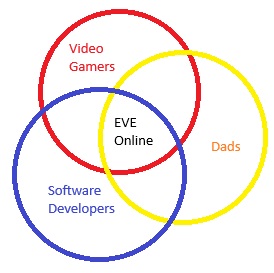
How could this have happened? Well, there honestly aren’t that many games with spaceships. I’ve bounced off this one twice before, and for some reason, this time it stuck. I just couldn’t escape the gravity of a game that seems to be populated mostly by middle-aged dads with a high propensity for programming.

EVE is one of those incredibly rare MMOs that isn’t World of Warcraft, and yet keeps puttering along, staying alive for over twenty years. Throughout all that time, they’ve been releasing fiction in this world.

Don’t get me wrong, I haven’t read any of their books yet. There are a few of them, but I’m not that far gone. Instead, I’ve been perusing the “Chronicles,” which encompass a bunch of dry descriptive reads about particular factions or technologies, and a slightly shocking number of short stories.

It’s now been a couple of years since I’ve participated in a long-running TTRPG group, and I find that this really scratches that itch. It’s the same satisfying combination of playing in a world, and then really digging into the setting. The only difference is that this one is online. (Well, okay, I guess my last D&D group met online too, thanks to the pandemic.)

What I’m Reading in December

Yes, I’m still reading the last Witcher book. Yes, I’m a little worried that the whole story is going to fall apart in the final volume. I’ll also be trying to wrap up the Dark Materials series, and I’ve still got a few more comics trade paperbacks waiting in the wings.

See you next month!

A Foolish Consistency is the Hobgoblin of Little Minds

I’ve always loved this quote by Ralph Waldo Emerson, and not just for the image of a monster wriggling out of a tiny brain.

Modern life is rigid in many ways. School and work train us to believe that consistency should be valued and striven after. For many modern creators, the internet and its algorithms reward consistency. But we’re not robots, and consistency is often the enemy of creativity. The human brain is a creativity machine, but it needs constant stimulus and surprise as grist for the mill.

One of the things I’ve been consistent about over the last few years is this blog. Granted, I don’t always stick to a tight schedule, but over more than four hundred posts, I’ve rarely gone more than a week or two between posting. I’m happy about that, but I do wonder if it’s a bit of “foolish consistency”.

Life has been busy lately, and one of the results of that has been a sparseness and lack of variety here on the blog. So, I decided to take a little writing break. In that time, I moved to a new house and sorted out some of those dull real-life things that need doing.

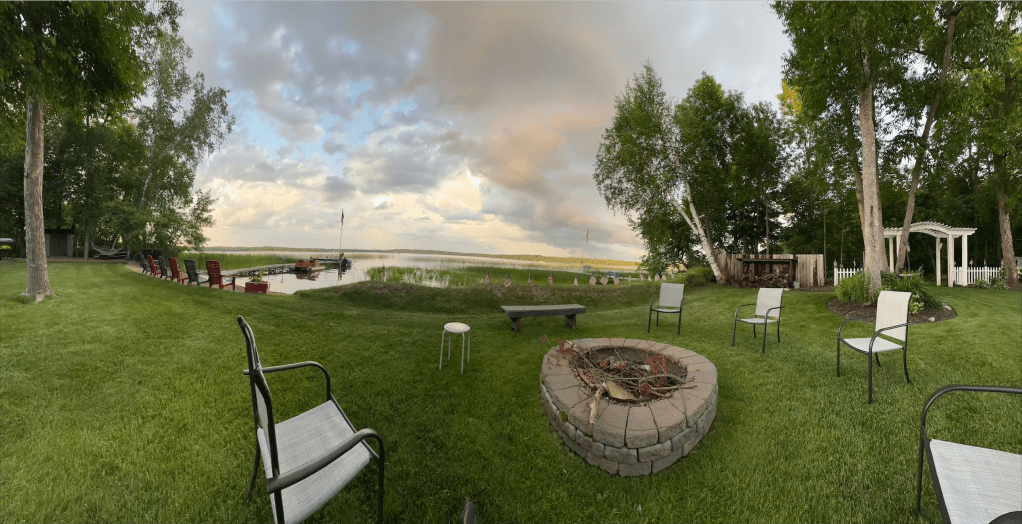
Now I’m back, refreshed, with some new ideas. I’m currently on a much-needed vacation at the lake—the perfect time to write. I’ll be catching up on my short story submissions, and I may have some table-top content coming up in the not too distant future.

For now, here’s the peaceful panorama from the shore.

The Read Report — April 2024

Here in Minnesota, April showers have brought May…showers. It’s been rainy, drizzly, or just generally damp. Everything is slowly greening up, and Spring is going to sproing the moment the sun comes out.

This past month, I finished my read-through of the main series League of Extraordinary Gentlemen comics, I got back into Terry Pratchett’s Discworld books with my kids, and I finally received my Kickstarter-backed edition of The Secret World TTRPG.

Where possible, I’ve included Bookshop affiliate links instead of Amazon. If any of these books pique your interest, please use those links. I’ll get a small commission, and you’ll support real book stores instead of mega-yachts for billionaires.

League of Extraordinary Gentlemen, Volume 3: Century

Written by Alan Moore, Illustrated by Kevin O’Neill

After the first two volumes of League, I was a little disappointed in The Black Dossier, which was more backstory than story. I was curious to see where Volume 3 would take us. As it turns out, it’s both forward and backward in time.

As the subtitle suggests, the book covers a full one hundred years of the League.  The main storyline of Black Dossier took place in the 1950s, but the story of Volume 3 begins just before the coronation of King George V, which is mid-1911, assuming the date in the alternate timeline of League lines up with real world history. This version of the League sees Mina Harker and Allan Quatermain joined by the immortal Orlando; occultist Thomas Carnacki; and gentleman thief A. J. Raffles.

The mystery that these characters seek to unravel throughout the book is the work of a cult founded by Oliver Haddo, who turns out to be a body-hopping mystic intent on creating the antichrist. The more immortal members of the League, Mina, Quatermain, and Orlando, investigate the cult over the course of the century. Their failure to stop the cult is matched by the cult’s own failure to create a proper apocalyptic monster.

This century sees the League eventually crumble, Mina falling into a drug-and-mysticism-induced fugue, Quatermain reviving his abusive relationship with Heroin, and Orlando getting lost in the violence of war.

It isn’t until 2009 that the League’s long-time mystical benefactor, Duke Prospero, contacts a reformed Orlando, who springs Mina from a mental institution. They join up with Allan just in time to confront the Harry Potter-esque magical antichrist, who is put down by an entirely appropriate modern myth who I’ll refrain from naming, lest I spoil the fun.

This third (technically fourth) volume once again shows the League as mostly ineffective. They are still involved in the big movements of the world, but none of their meddling does much good.

With the move away from steampunk Victorian England, some more recent pop-culture references inject fresh fun into the series, although I couldn’t help noting that twisted versions of Harry Potter have already been done elsewhere, and in my opinion, more effectively.

League of Extraordinary Gentlemen, Volume 4: The Tempest

Written by Alan Moore, Illustrated by Kevin O’Neill

In this final volume of the main-line League books, Mina Harker, Orlando, and the freshly recruited Emma Night (a.k.a. M) are all that remains of the League in alt-history 2010.

In some ways, Volume 4 has learned lessons from the weak points of the previous books. The authors are playing with formats again, bringing back the 3D glasses sections and including parts reminiscent of classic superhero comics. These format-shifts add variety without being as gimmicky as Black Dossier.

The story alternates between three time periods. The 1970s sections follow superhero squad The Seven Stars, organized by Mina while disguised as Vull the Invisible. In 2010, the time travelers seek Vull and any remaining superheroes. In the 30th century, an apocalypse has occurred and a desperate few freedom fighters engineer a trip back in time to prevent the catastrophe.

The true history behind the League and the reason for its existence are finally revealed to be part of a vast conspiracy that also encompasses British Military Intelligence (with a host of oblique James Bond references) and Shakespearean-era faery politics.

While League has never shied away from killing off major characters, Volume 4 is perfectly happy to burn all the bridges. While a few characters manage to escape disaster and even find some semblance of happiness, the entire setting burns down around them, with time travelers making it clear that the cataclysm won’t be cleaned up for hundreds of years.

League of Extraordinary Gentlemen is a series built on literary references, and it has finally run the full gamut of time periods. This feels like a suitable ending. (At least until the thirtieth century, when I fully expect Alan Moore’s frozen head to be revived for Volume 5.)

Feet of Clay

By Terry Pratchett

I finally finished reading the Harry Potter series with my children last month. After that, I decided we ought to jump into some lighter fantasy, returning to the nearly inexhaustible Discworld series.

Pratchett has crafted a fantastic setting and populated it with a gigantic cast of interesting characters, but each book tends to follow particular groups. Feet of Clay follows Sam Vimes and his city watch in Ankh Morpork. The city’s patrician, Lord Vetinari, is being slowly poisoned, and it’s up to the Watch to figure out whodunnit.

The mystery provides the structure of the story, but the joy of any Discworld book is in the wonderful craft and comedy that Pratchett puts into almost every sentence, and the interactions between the characters. I think the craft of comedy writers tends to be underappreciated, but Pratchett at his best is as good as anyone out there.

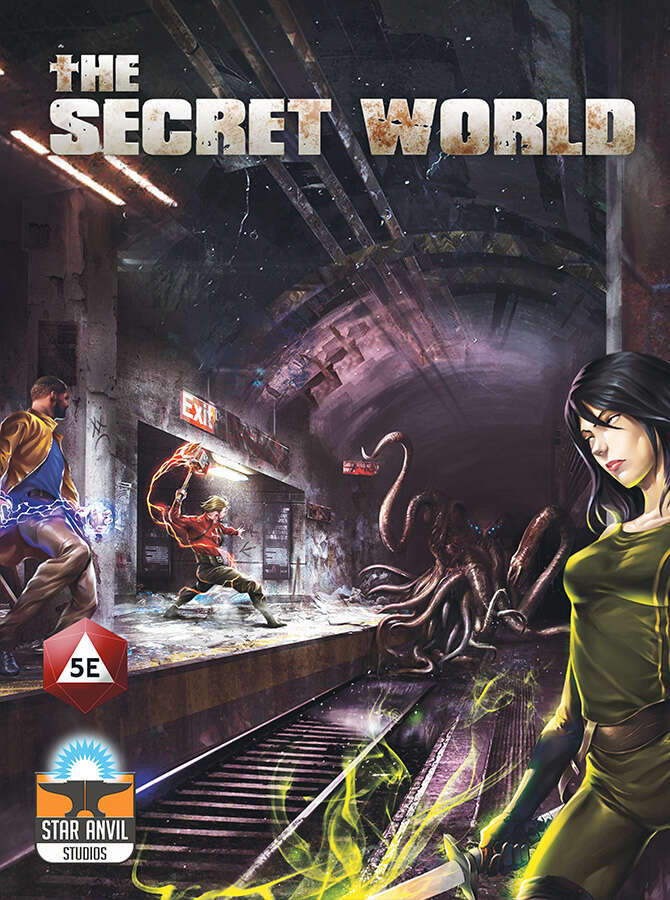
The Secret World – 5e TTRPG

By Star Anvil Studios

The Secret World began life as a 2012 MMORPG. Sadly, 2012 was one of the last few years when game developers still believed that the market for MMOs was infinite, and that it might somehow be possible for someone…anyone…to dethrone the longtime king of the genre, World of Warcraft.

While Secret World did a bunch of interesting, innovative things, it was really the modern, urban, “every conspiracy theory is true” setting, slow-burn mysteries, and brilliant writing that set it apart. Unfortunately, that wasn’t enough to overcome its clunky gameplay. The game stumbled along for several years, eventually spawning an updated, free to play re-launch and a few smaller games in the same universe.

I won’t lie. When I heard about a table-top RPG based on the IP, I was excited. The setting and story were always the best part of the Secret World, so a TTRPG made perfect sense to me.

The rules are based on 5th Edition Dungeons and Dragons, lightly adapted to a more modern, more urban setting and the Secret World character system. At this point, 5e D&D is probably both the most popular and most disliked TTRPG system out there. Because it’s so ubiquitous, and many people directly equate role playing games with D&D, it’s the obvious choice when adapting an IP that most people have never heard of. No point in limiting your audience.

Unfortunately, 5e has its downsides, and I suspect that the Secret World has once again paired its fun settings and stories with clunky gameplay systems. The book’s creators, Star Anvil Studios, might realize this, because as soon as they finished this edition, they announced a new Kickstarter to bring the Secret World setting to the Savage Worlds rule set. Or maybe it’s just a way to cash in in the IP by writing a new book that is 70% the same as the old book.

The 5e core book defines nine classes that will be familiar to anyone who has played Secret World Legends. Everyone is a spellcaster to some degree, but two of the classes are all about the spells. There is no true multi-classing, but there are Secret Architypes, which are like mini-classes that characters can collect as they level. Only one can be active at a time, but they can be swapped with a short rest. It feels like a fun way to scale characters horizontally, but I wonder if high-level characters will feel too much like a jumble of abilities.

The biggest draw, to me, is the setting, and the book wisely dedicates about 60% of its pages to the world, with descriptions of a large number of NPCs, the factions, and a good amount of the history and lore from the games. Sadly, there are limits to how much can fit in a single core book like this. The game will still likely be much more fun in the hands of a game master who knows their way around the Secret World setting.

There was a single premade adventure released as a part of the Kickstarter materials. I would love it if Star Anvil was able to craft a couple more, although I won’t be holding my breath.

What I’m Reading in May

I’m still reading The Witcher. For my short story fix, I’m thinking I’ll tackle a sci-fi novella collection from the 80s. And I’ve got a book of writing advice that has been calling my name for a while. See you in May!

The Read Report — June 2023

This is the monthly post where I talk about what I’ve been reading. This month, I continued my reread of the Sandman series, and delved into the Witcher books. I also took a look at a new TTRPG.

As usual, if you’re interested in any of these books, please use the included Bookshop.org links instead of Amazon. It helps independent bookstores, and I get a small affiliate commission.

The Sandman, Vol. 2: The Doll’s House

Written by Neil Gaiman, Illustrated by Mike Dringenberg

The first Sandman trade paperback followed Morpheus (a.k.a. Dream) through his embarrassing imprisonment by a petty modern sorcerer, his escape, and the subsequent retrieval of his magical tools. It also introduced some of his siblings, the immortal personifications known as the Endless.

However, things aren’t yet back to normal. In this second trade paperback, Dream must clean up his kingdom, which fell into disarray in his absence. Several of his minions are missing, including The Corinthian, a murderous nightmare with mouths for eyes. To make matters worse, a Vortex has appeared: a mortal with the ability to tear down the walls between dreams (which turns out to cause a lot of problems). Mixed up in all of it are Dream’s siblings, Desire and Despair, who plan a potentially deadly trap for their older brother.

Through flashbacks, we see stories from Dream’s past, interspersed with his present-day hunt for the escaped dreams and the Vortex. While he is obsessed with his responsibilities, there are some indications that his imprisonment has taught him to have more compassion in his dealings with mortals.

This volume confirms that the series is not afraid to wade into dark topics, with storylines involving an abused child and a convention of serial killers doing the sorts of things you’d expect them to do.

The Sandman, Vol. 3: Dream Country

Written by Neil Gaiman, Illustrated by Kelley Jones

This volume contains four stand-alone stories set in the Sandman universe. Some involve Dream heavily, some barely, or not at all. They’re all enjoyable in their own way, but not strictly necessary to read if you’re only interested in the “main” storyline.

They include a story about a feline prophet from the perspective of cats, a captive muse used (and abused) by artists for fame and fortune, Shakespeare’s theatre company putting on a play for faeries, and the second story to feature Death, about an un-killable super-hero who wants to die after her powers alienate her from society.

The book ends with some notes, revealing the origins of these stories (namely that Gaiman was itching to do different things after struggling to complete the Doll’s House arc). It includes the original script for Episode 17: Calliope. If you’re interested in writing for comics, it’s a nice side-by-side comparison of script and finished product, from a widely acknowledged master of the craft.

Die: The RPG

By Kieron Gillen and Stephanie Hans

This was a Kickstarter that I backed somewhat on a whim.

It starts with a group of people attending a school reunion. They played table-top RPGs together when they were younger. Now they’re all grown up, and they’re getting together to do one final adventure. Only this game is different. It’s magical, and it transports them, literally, to another world.

It’s basically TTRPG Jumanji.

Die began its life as a comic series. You can read the first issue for free. Now, it’s also a real TTRPG by the same authors. It’s a nice, 400-page hard-bound all-in-one rulebook.

The main innovation the system offers is a doubly-layered story. Players first create a cast of “real life” characters, a group with history and emotional baggage. Then those characters become the paragons (the classes) in the fantasy world of Die.

Die eschews the usual fantasy archetypes. The default rules require each player to play a different class, and each is associated with one of the classic TTRPG dice. Characters can play as…

  • The Dictator (D4), with the power to alter others’ emotional states
  • The Fool (D6), who gains incredible luck so long as they’re being dangerously daring or cavalier
  • The Emotion Knight (D8), who harnesses a specific emotion for martial power and wields a sentient weapon
  • The Neo (D10), a cyberpunk thief whose powers are fueled by money
  • The Godbinder (D12), a spiritual mercenary who gains magical powers by going into debt with the divine
  • The Master (D20), is played by the GM, and can break the rules and cheat at the risk of destroying themselves.

The game is relatively rules-light. It’s a D6 dice-pool game, with the class dice adding a little variety for special skills. The book includes a single chapter bestiary, and very little incidental description of items.

It is also story-light. It doesn’t have a setting so much as a meta-setting, a world with 20 regions that can take the form of whatever settings you want to pull into your game. The Master plays the ultimate villain who forces the players into this alternate world, and all the players must collectively decide whether to stay in the fantasy or leave together. At least, all the players who are alive at the end…

There are some interesting rules for death, where players come back as zombie versions of themselves, capable of regaining life only by taking it from one of the other players. And there are The Fair, the hidden denizens of the world of Die, with their own secret agenda and godlike powers.

I don’t have an active RPG group at the moment, and I haven’t had the chance to play this yet, but it feels like a game designed for veteran players. The two-layered characterization requires players to deeply understand and heavily role-play their characters. It’s unlikely to make for a fun hack-and-slash dungeon crawl. The lack of detailed systems or predefined settings and adventures mean the GM is going to have to either prep a lot or do some excellent improv (and probably both).

Overall, an interesting game book to read, and one I’m happy to have on my shelf, but probably not one I’ll be playing any time soon. For experienced groups who are looking for a new game, it might be a system worth trying.

The Witcher: The Last Wish

By Adrzej Sapkowski

The Witcher series contains eight entries: a five novel series and three stand-alone books. This is the first: a short story collection. They were originally written in Polish by Andrzej Sapkowski and later translated into a variety of languages, several successful video games, and an ongoing Netflix series that just happens to have released a new season.

These sword-and-sorcery tales take place in an Eastern-European-feeling secondary world and follow the titular Witcher, Geralt, one of a dying group of magic-infused monster hunters. Geralt is often feared and treated poorly because of his mutant nature, and an ongoing theme of the books is that the humans are often more evil than the monsters.

In addition to monsters and humans, there are several non-human races like dwarves, elves, and gnomes. There are hints that these races once ruled the continent, but were long ago ousted by humans and their kingdoms in a series of brutal and attritive wars. Now, they are forced to choose between hopeless rebellions or integration into a society that treats them as dangerous and lesser beings.

Geralt, by virtue of being an outsider among humans, moves between all these different factions and groups, managing to make friends and enemies in equal measure just about everywhere. The stories often hinge on questions of ethics, with Geralt being thrust into situations with no good choices.

This is a great intro to the character and the world. Many of the elements are fantasy staples and little homages to fairy tales, but they’re infused with little twists that make them all feel fresh again.

The Witcher: Blood of Elves

By Andrzej Sapkowski

In the release chronology, this is technically the third book, however it is the first book of the five-part series of novels, and the place to start if you’re less interested in the short stories.

I have to admit, the beginning of the book is a little hard to swallow. The famous troubadour Dandelion sings to a crowd, crooning a thinly veiled ballad about the Witcher, Geralt, and his young princess ward Ciri. For the remainder of the chapter, the crowd of listeners dump exposition about these characters, their past, the world, and the current political situation. Somehow, half a dozen of the people gathered have had run-ins with these people. After that, however, it livens up quickly.

The story mostly follows Geralt and Ciri, and the sorceresses Yennifer and Triss. Ciri is the princess of a kingdom annexed by invaders. While the invasion was halted by an alliance of other kingdoms, war seems to be looming on a variety of fronts, and at least a few dangerous people are looking for Ciri and her Witcher protector.

This book really expands the world with some tantalizing hints of a long and complex history. It’s revealed that monsters came into the world through an event known as the Conjunction of the Spheres, an overlaying of dimensions more than a thousand years previous where things could cross between worlds. Monsters are invasive species, and while many are dangerous, they are not necessarily well-adapted to this world and are generally in decline, leaving Witchers with less work. It is also implied that humans may have entered the world during the Conjunction, explaining how they suddenly started to take over ancient non-human lands.

Sapkowski introduces some interesting anachronisms to his largely medieval setting. Sorcerers and Witchers apparently understand quite a bit about biology, physiology, and the origins of disease, and use a mix of magic and modern(-ish) medicine.

This is a great first book for a series, introducing important characters, building the world, and hinting at bigger mysteries and a villain lurking in the shadows. While Geralt is at home among the common folk (rarely interacting with anyone more important than a mayor in The Last Wish), this book promises an epic fantasy series with plenty of royal politics, assassins, magic, and world-shattering consequences. The characters drive the action, and are largely pulled into these broader political situations against their wills. Geralt is the perfect gruff-but-lovable protagonist, and I look forward to learning more about the cosmology of Sapkowski’s world.

What I’m Reading in July

I’ll continue the Sandman and Witcher series, I’m going to get back to Discworld with my kids, and I’ve got a Neal Stephenson novel I’ve been slowly picking at in e-book that I’m determined to finish.

The Read/Write Report – January 2023

It has been a while since I did one of these posts, but the new year seems like a great time to jump back into it. Here’s what I’ve been up to lately.

Vacation

At the end of 2022, I took what is probably the longest vacation I’ve taken in the past 15 years—three whole weeks. The last two weeks of the year were “stay-cation” around the house, and in the first week of 2023 my family escaped the snow and cold of Minnesota and went down to Florida.

I stayed fairly busy during my time at home, and we did quite a bit of sightseeing and beach time while in Florida, but I was able to do about twice as much writing as I typically do. Most of this went into Razor Mountain, but I couldn’t entirely resist poking at side projects and some potential future blog stuff. But I’ll talk about those things another day (maybe).

New Year’s Resolutions

I generally don’t put much stock in New Year’s resolutions, but I’m trying one this year. I’m not a person who tends to collect many possessions, with a couple notable exceptions. Firstly, as you might expect from a writer, I tend to collect a lot of books. I have a couple shelves full of physical volumes I haven’t yet read, and a handful of e-books on the Kindle.

I’m also a sucker for video games and, to a lesser extent, board games. There are a lot of inexpensive video games these days, especially with various services competing to offer the best sales. So I wish-list a lot of games and buy them when they’re cheap.

My not-too-serious resolution for the year is to not buy any new books or games, and try to work through the backlog that I already own. We’ll see how that goes.

Recent Reading

As usual, I have ongoing bedtime reading with my kids. We finished Startide Rising and moved on to The Uplift War, the last book in David Brin’s first “uplift trilogy.” It has been interesting, because these were formative books that I read in my teenage years, but I actually remember very little about them. I’m certainly seeing things that I missed when I was young.

On my own, I’ve started a slim little volume called Invisible Cities, by Italo Calvino. The book is framed as conversations between Marco Polo and Kublai Khan, where Polo describes the many cities that he’s visited in his travels.

I’ve been sitting on an idea for a fictional city for years, but I’ve never quite figured out whether it fits into a novel, a TTRPG, or something else. Invisible Cities is one of the pieces of fiction that I’m investigating to find some inspiration with my own fictional city.

Waiting for the Secret World

In November, a Kickstarter project popped up on my radar: The Secret World TTRPG.

The Secret World was originally an MMORPG released in 2012, back when people still believed that a new game would someday overthrow World of Warcraft. It was moderately successful on launch, but it was a little clunky, didn’t get a lot of updates, and slowly lost players over time. In 2017 it was relaunched with some new systems as the free-to-play Secret World Legends. That iteration was equally unsuccessful, and it eventually went into maintenance mode while the developers moved on to other projects in order to keep paying the rent.

Secret World, in both its iterations, was a very strange MMORPG. While the gameplay itself never really shined, it had a fantastic story, amazing settings, great voice acting, and some interesting puzzle design that was often a bit like an ARG. It’s a little cosmic horror, a little X-Files, with some Jules Verne and The Matrix thrown in for good measure. It still has a cult following, and those that love it stick around because of the story.

A TTRPG seems like a perfect fit for this kind of rich, expansive setting, so I’m excited to see what Star Anvil come up with. A few people have voiced concerns that it will be using the Dungeons and Dragons 5E rules, which may not be a perfect fit for this style of game. However, that’s the most popular TTRPG around, so I can’t really fault a small indie studio with a relatively unknown property for hedging their bets.

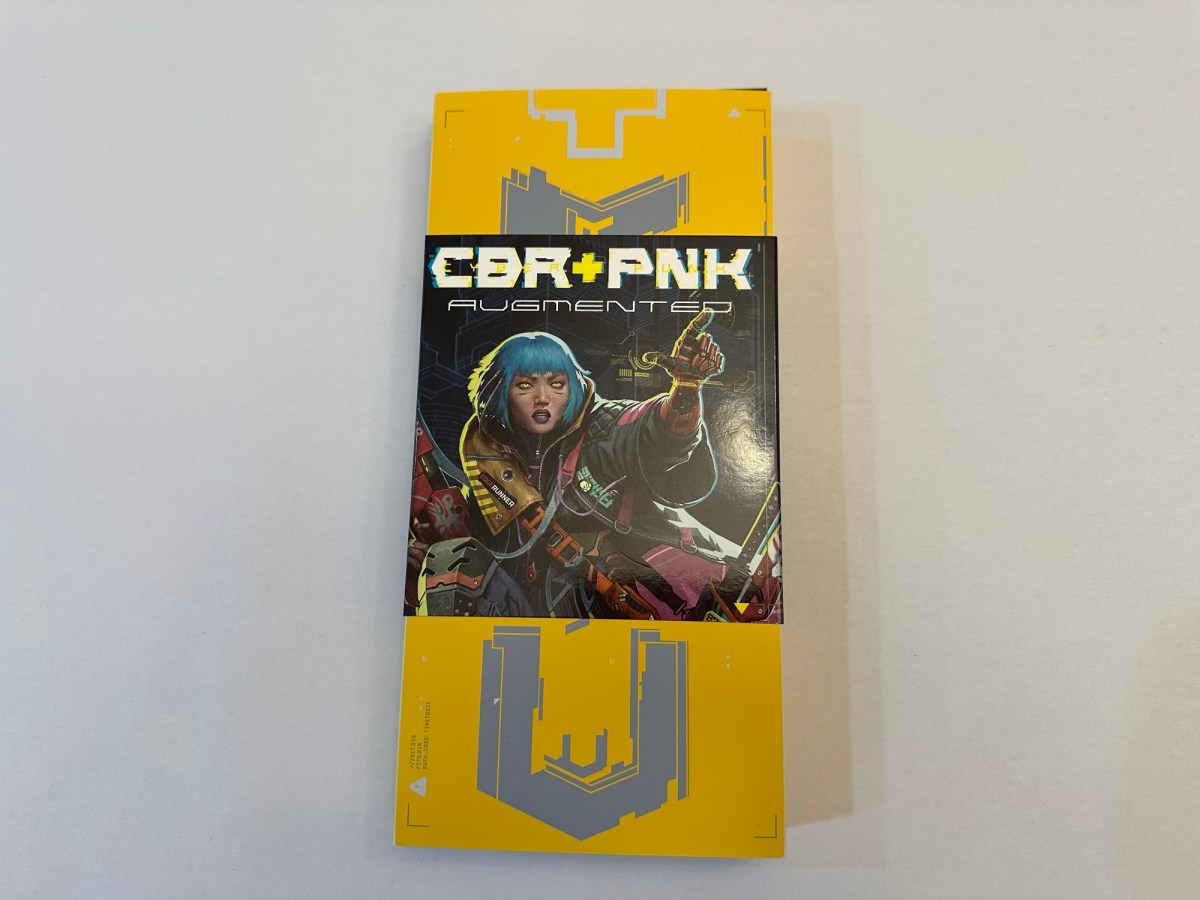
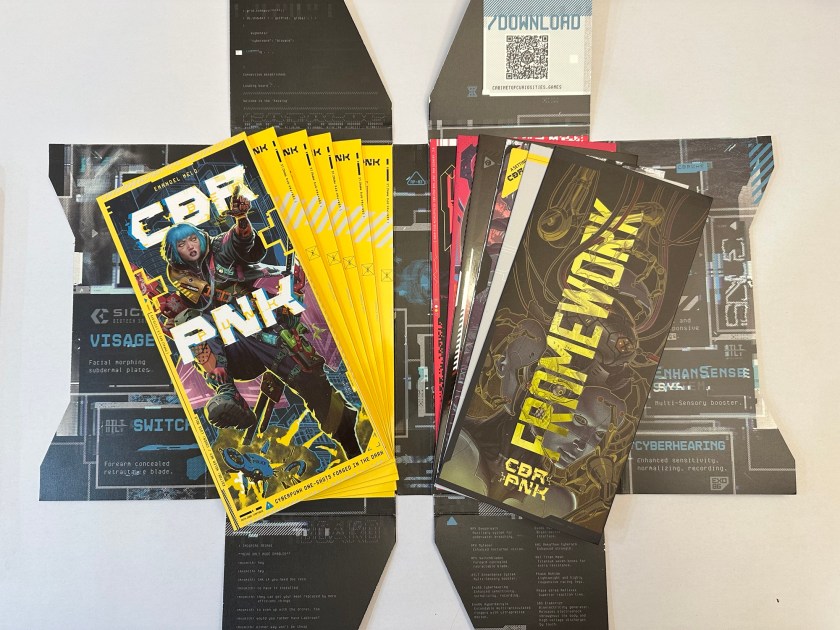
The current goal for releasing the book is October 2023, and over-funded Kickstarter projects aren’t exactly known for meeting their deadlines. , the project got me itching for some science-fiction or science-fantasy TTRPGs. To scratch that itch, I dug into two other games: Shadowrun 6e, and Cyberpunk Red.

Shadowrun

I’ll be honest. Shadowrun 6e seems like a mess. Both gameplay and setting feel like they took the “kitchen sink” approach, with a lot of different fantasy ideas and sci-fi ideas all fighting for attention, while nothing really stood out to me. Some of the ideas, like big dice pools, seem fun. But, having never played Shadowrun, I felt like the core book really didn’t give me a good feel of what it would be like to play, and I didn’t get enough of the setting to feel comfortable running a game. I think any core rule book should have snippets of gameplay or an example adventure, and this had neither.

I was a little leery of spending any more money on the game, so I tried looking in the…somewhat legally gray areas of the internet…for campaign books. The 6e adventure books I found were still frustratingly vague about actual gameplay, and seemed to largely eschew the mission-based play described in the core book.

By the time I got through the book I was fairly irritated, and I went down the rabbit hole of reddit posts and forums. As far as I can tell, Shadowrun players spend about half of their time debating which version of Shadowrun to use, or which bits to cannibalize from all the different versions. 6e doesn’t seem to be popular. And I started regretting purchasing the book at all.

Cyberpunk Red

To soothe myself, I moved on to another venerable franchise, one that recently had a very over-hyped video game made in its image: Cyberpunk. The latest iteration of Cyberpunk is called Cyberpunk Red. It is also quite recent, and interestingly, it seems to have been made alongside the development of the video game.

One of the challenges of the game’s namesake genre is that it was popularized in the 80s, and in some ways it has become retro-futurism. Cyberpunk Red takes an interesting approach to modernization. Rather than rewrite history, Red moves it forward. In the “Time of the Red,” decades have passed since previous Cyberpunk games (and their outdated references). The world has changed. It’s still an alternate-history version of our world where technology advanced faster than it did for us, but letting a few decades pass allowed the creators to change the setting so that it feels like it’s exploring and expanding upon today’s problems, not the ones that were relevant thirty or forty years ago. It’s an elegant solution.

It may not be fair to compare Cyberpunk Red to Shadowrun, but I read them back to back, so I’m going to do it anyway. Cyberpunk Red pretty much addresses all of the things that irritated me about Shadowrun. Where Shadowrun is all over the place with fantasy and sci-fi tropes, Cyberpunk Red is laser-focused on its cyberpunk setting. There are lots of character options: you can play as a rock star, mid-level executive, or freelance journalist, as well as the soldier and hacker types you’d expect from the setting. You can outfit yourself with all sorts of cybernetic hardware. But everything fits nicely in the setting. Everything seems to make sense.

The book includes a thousand-foot view of world history and geopolitics, but it focuses on a single city. This overall focus makes it feel like Cyberpunk Red can dig a lot deeper into the details of the setting. Even better, it includes a meaty section on how to run the game, some fiction to get a feel for the setting. It doesn’t include an example adventure, but there are a couple small free ones easily found online.

Back to the Grind

With my long vacation at an end, I’m back to work, kids are back at school, and we’re getting comfortable with our routines again.

My main writing project remains Razor Mountain, and I look forward to finishing it in 2023. After that, I’m going to have to think about what to do with this blog—I’ve been working on that book in some form for almost the entire life of Words Deferred. It’ll be an exciting new adventure!

For now, I still have a ways to go, and I’m back in my normal writing routine. Look for a new chapter next week.

Reference Desk #17 — Story Engine: Deck of Worlds

If you’ve been around here for a while, you might remember my review of The Story Engine. The Story Engine is part card game, part tool for generating semi-randomized writing prompts. I’ve used it as a fun way to brainstorm ideas for short stories, and I’ve found that it works well for me. As someone who enjoys card and board games, it’s just a much more fun and tactile way to generate ideas than sitting in front of the notebook with pen in hand.

Recently, the folks behind the original Story Engine kickstarted a new product in the same vein. It’s called the Story Engine: Deck of Worlds. Deck of Worlds is another card-based brainstorming game, but this time it’s focused on settings instead of plots. It’s billed as a tool for storytellers and TTRPG game masters to easily generate interesting and deep settings.

I received my order right before the holidays, and I was able to take Deck of Worlds for a test drive.

What’s In the Box?

The base set of cards for Deck of Worlds comes in a flat box with a plastic insert, magnetic latch, and a heavy tagboard sleeve that guarantees it will stay closed. This is nearly identical to the box that the original Story Engine came in, and the build quality is good. It’s the sort of box you’d expect from a premium board game.

However, the original Story Engine had many expansion packs that added more cards, and Deck of Worlds is the same. If you add extra cards to your set, you’ll quickly fill up the small amount of extra space in the box. Luckily, the creators of the Story Engine are well aware of this problem, and they’ve created a new card box with dividers that is capable of holding all the cards, even if you’ve got every single expansion. They’re inexpensive, so I got one for my original Story Engine set as well as my Deck of Worlds.

I also received three expansion packs for Deck of Worlds. “Worlds of Chrome and Starlight” is the science fiction expansion, “Worlds of Myth and Magic” is the fantasy expansion, and “Worlds of Sand & Story” is the deserts expansion. I chose these because sci-fi and fantasy are my two favorite genres to write in, and I have a TTRPG project percolating with a strong desert component.

Much like the original product, the Deck of Worlds main box includes a slim “guidebook,” which describes the intended ways to use the Deck of Worlds—although the creators are clear that there is no wrong way to play.

The Card Types

There are six card types in the Deck of Worlds: Regions, Landmarks, Namesakes, Origins, Attributes, and Advents. According to the guidebook:

  • Regions establish a setting’s main terrain type and act as a hub for other cards
  • Landmarks add geographical sites and points of interest
  • Namesakes combine with Regions or Landmarks to create in-world nicknames
  • Origins record significant events of the area’s past
  • Attributes highlight present-day features of the area and its people
  • Advents introduce events that may change the area’s future

Regions are the only cards with a single prompt on them, and have a nice background that illustrates the geography of the setting. Landmarks have two prompts to choose between, and each one has a background illustration. The other four card types have a symbol and color to identify the card type, and four different prompts to choose from.

Building Basic Settings

The simplest way to play with Deck of Worlds is to create small settings, or “microsettings” as the guidebook calls them. These will typically be built around a single region (terrain type) and a single landmark, like a building.

For my test run, I built a few of these microsettings. First, I chose the prompts I liked best and combined the cards. Then I expanded or focused the results, writing a little blurb about each setting. I only spent a couple minutes on each of these examples.

The Grassland of Crowds

The museum’s founding piece is a huge fulgurite dug out of a sandy hill. The museum was built around this dug-out hill, and the piece is displayed, unmoved, where it was found.

The “lightning festival” grew in this area, and is held during the season of rainless storms. People display all kinds of art. One of these presentations is voted the winner of each festival and incorporated into the museum.

The Scree of Rivers

(Cyberpunk) The scree was mined for the long, winding veins of precious metals near the surface, leaving a maze of narrow, shallow canyons and piles of leavings. Rivers form when it rains. A grey market meets here periodically, protected from government scanners by the trace metals in the rock, with lots of escape routes and hidey-holes for quick getaways.

Not sure about the prophecy bit.

City of Sand and Story

The City of Rains is nestled in rocky mountains in a desert. During the wet season, the mountains funnel moisture and clouds and it rains on the city, creating a temporary river. All inhabitents capture as much water as possible, to live on and trade for the rest of the year. They plant crops along the river while it lasts.

A recent sandstorm uncovered caverns in the rock beneath the city, leading to underground ruins and vast cisterns. The discovery of so much water could upend the economy of the entire region

Complex Settings

The guidebook also includes some rules for building more complex settings out of multiple microsettings. There is really no limit to the number of smaller settings you could combine. There are optional rules, including a “meta-row” for attributes of the larger area as a whole, a “sideboard” of extra cards to give you more choices when selecting any given card type.

To test this out, I built a setting from four different microsettings, using the meta-row (on the left) and sideboard (on the right).

The Golden Plains

Once known as a wealthy region, but its reputation is fading. The area has been covered with strange dark clouds for weeks, but there is little rain.

In the North: The Red City

Home of a religious order, this city was built on a river and filled with canals. It was once a hub of commerce, but the river grew over the years and eventually overflowed its banks south of the city, disrupting the flow and creating a vast swamp.

Now, the priests of the Red City ply a darker trade: they’ve made the city into a prison for the worst criminals. The prison is the center of the old city, and is called “The Prison Without Walls.” It is surrounded by deep and fast-running canals, and is only accessible by a single, heavily-guarded bridge.

The priests have traditionally been led by a patriarchal lineage of high priests, but now a lowly priestess is gathering a following among priests and prisoners alike. She has radical ideas of rehabilitating prisoners instead of working them to death as penance for their crimes.

In the South-East: The Swamp of Ink

These thickets were once hunting grounds of the nobility, until the river overflowed and the land became swampy.

The few people who still live here are led by an excommunicated priest from the Red City. They harvest “swamp mites,” tiny, stinging crawfish that can be ground into fine black dyes. Travelers from the North recently called out the priest as an exile, and he imprisoned them, but there is unrest and talk of rebellion among the people.

In the West: The Moraine

The coast of mists is the western edge of the Golden Plains region.

The Moraine is the home of the School of Poets. It was created by a celebrated poet who was known as a cantankerous jerk. The only woman who ever loved him, muse of his thousand poems, made him promise to teach other poets his craft.

The school is rumored to be haunted. While most of its inhabitants don’t take this seriously, many students have recently complained of strange and disturbing noises coming through the stone walls.

In the Southwest: The City of Smoke

A city on the slopes of an inactive volcano, built atop the ruins of the “old city,” which was destroyed by the last eruption.

Hot springs in the city are warmed by the heart of the volcano. They supposedly have healing properties, and draw tourists who hope to have their injuries or sickness cured.

Vineyards planted in the fertile volcanic soil use a unique variety of small, golden grapes, harvested after the first frost to make sweet wine.

The dark clouds that have shrouded the region threaten the growth of the grapes and the year’s wine harvest.

Takeaways

Overall, I’m pretty happy with the Deck of Worlds so far. It has a very similar feel to the original Story Engine. The cards strike a nice balance by giving you a few options to pick from, but also limitations that force your brain to make interesting and occasionally surprising connections between seemingly unrelated things.

Like any sort of brainstorming, not every single idea will be a good one. The randomization means that sometimes you get combinations that just fall flat or fail to inspire. Some of this depends on your own creativity and willingness to explore.

Like the original Story Engine, the quality of the product is great. The new boxes are an improvement, allowing me to keep all my original and expansion cards together in a form factor that takes up less space than the original box.

I don’t necessarily like all the rules suggested by the guidebook, but it’s easy to tweak the process until it works for you. They’re just cards, and they can be arranged however you see fit. The extra rules for bigger settings are a little complicated for my tastes, but the end result in my experiment had some interesting ideas that I wouldn’t mind exploring further.

The guidebook also has more rules that I didn’t get into, for collaborative multiplayer and for combining Deck of Worlds with the original Story Engine. All of that feels like more complexity than I want when I’m brainstorming—I would much rather create smaller ideas and then mix and match myself. However, I’m sure this style of prescribed creation could work for others.

Finally, I think this could be a great tool for GMs/DMs who run custom table-top RPG campaigns. I’ve long believed that the best way to approach TTRPG worlds is the “billiards” style described by Chris Perkins, where you set up a number of interesting locations full of interesting characters, and then let the player characters bounce around between them, setting events in motion.

The Deck of Worlds is a great way to invent these little islands of content, and I think it would be pretty easy to create quick and dirty sessions with very little prep, especially if you’re using a lightweight rule set.

Where to Get It

The Deck of Worlds and its expansions are available directly from the Story Engine website. In addition to the Sci-fi, Fantasy and Desert expansions I chose, there are Horror, Coastline, and Arctic expansions. If you’re planning to use the deck for tabletop RPGs, they also have expansions for lore fragments, cultures, and adventure prompts.

The Challenge of Telling Great Stories in TTRPGs

I recently played A Visit to San Sibilia for the first time, and I found it to be a really enjoyable solo tabletop role playing experience for crafting an interesting story. It appealed to me as a writer much more than as a gamer. In fact, I think part of the reason why it does so well at making interesting stories is that it’s barely on the edge of being a TTRPG at all. All of this got me thinking about telling great stories in tabletop RPGs, and why it can be so hard to do well.

One of the challenges I inevitably run into when I’m playing these games is the desire to craft a good story. I think this is only natural for writers. The problem is that good stories have certain structures, and the game often fights against that.

TTRPGs have three aspects that often disrupt good story structure:

Mechanics

Especially in rules-heavy games like Dungeons and Dragons or Pathfinder, the mechanics of combat, spellcasting, or even more esoteric things like politics or detective work can really limit the storytelling. If there is a rule for doing something, players tend to stop telling stories and start plugging values into the equation to get the outputs they want. They go into gameplay mode. Plus, working through these rules often throws pacing out the window. I’ve been in more than one session where the story was really getting good…right up until we got in an hour-long fight.

Too Many Drivers

Imagine going to get lunch with a few friends. Now imagine you all pile into the same car, but it’s a crazy car with pedals and a steering wheel for every seat. Oh, and you all want to go to a different restaurant. That’s what trying to guide the story in a TTRPG can sometimes feel like.

Each player has their own character and their own interests in the game. The only person who can really guide the story more than others is the DM/GM who is running it. But even they can’t really force the story to go in a direction unless the players want it to. If they try to railroad the players in the “correct” direction, the players will feel like they have no agency in the game. If they give the player characters the ability to shape the story, they will inevitably steer it away from whatever long-term plans the GM might have, whether on purpose or by accident.

Even harder to control are real-world intrusions into the game. Maybe a player has to miss a session or two. Maybe they have to stop playing. Suddenly a main character disappears, like a star actor unexpectedly leaving a show.

Randomness

Sometimes you get a couple of lucky hits and the villain dies in the middle of the campaign. Sometimes you get a series of bad rolls and miss all the clues that move the mystery forward. Veteran GMs know that you shouldn’t count on any outcome if there’s any randomness involved.

Randomness can make a story arc drag on too long, or unexpectedly end it outright. It can be responsible for incredible highs when the players get lucky at a vital moment, and incredibly low lows like party wipes.

True randomness means you can’t be sure what’s going to happen next. That can be exciting, but it doesn’t help you to craft a tight story.

Story vs. Game?

So, are TTRPGs destined to have bad stories? Not necessarily. But a good story for a TTRPG has a different structure and a different feel to a good story on the page.

In TTRPGs, it’s important that the story give the player characters agency in the world, give them challenges and opportunities. It’s up to the players what they do with them. Much like video games, the fun comes from experience and participation. The “plot” will sometimes stall or take a ninety-degree turn. Or a session will get bogged down in mechanics, and the story will be mostly ignored. All of that is fine, as long as everyone is having a good time.

That said, there’s a reason why TTRPG logs often translate into boring fiction. Good fiction can’t afford to meander. Good fiction has to have tight character arcs, and the success or failure of the characters can’t be thrown out the window at a die roll.

I personally love writing stories and playing games, but I had to come to grips with these differences when I first started running those games. I had to realize that I don’t want a story outline that goes much beyond the current play session. I had to learn that my job was to build interesting settings and experiences and above all, opportunities, and let the players navigate them however they wanted to. I had to create a collaborative environment, and then I had to collaborate.

So if you’re frustrated or worried that your TTRPG sessions don’t feel like you’re playing a novel, realize that you’re not alone. That’s expected. Leave the books for reading, accept that the story in your game is sometimes going to be a little wonky, and enjoy it for what it is: a collaborative experience; part gameplay, part story.