Blogs are ancient technology, an elegant weapon from a more civilized age, and nowadays they can be found mainly in museums. However, back in their heyday, blogs were so popular that their authors would post lists of their favorite blogs on their own blogs in a sort of blogception. They called it a blogroll. Yes, people once used the term “blogroll” with utter seriousness.
Being an ancient artifact myself, I’ve been thinking for a while that I ought to make one of these blogroll things. I’ve also occasionally thought about off-topic posts where I talk about my favorite music or movies, but we all know that successful blogging requires total focus on your chosen topic, and if I veered off into something like music, I’d never get any views or subscriptions ever again.
Luckily, I’ve found a loophole. I’ve created the Recommendations page! It’s in the menu! You can get to it from every page!
Now I can have lists of my favorite blogs, books, movies, games, TV, music, tabletop games, and more—all without cluttering up that precious RSS feed—another ancient technology that I’m sure you’re all using. I’ll be updating these lists…sometimes. Occasionally. Whenever I come across something so good it needs to go in a top ten list for a while.
And as long as we’re being off-topic, feel free to comment and tell me about whatever show, movie, song, game, book, podcast, TTRPG, or anything else that’s got you excited today.
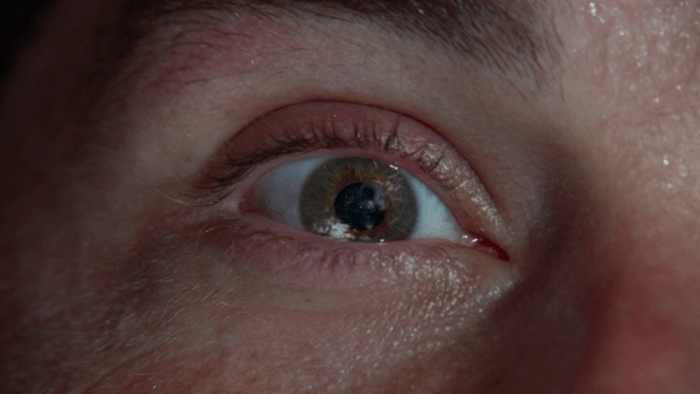
A close-up of a man’s eyeball. As tense music plays, the eye opens wide, reflecting a canopy of bamboo.
A wider shot, zooming out: the man wears a suit and tie. His face is scraped. He may be in shock.
A sound from the forest. A yellow labrador retriever walks out of the trees.
The injured man rises, finds a minibar bottle of vodka in his pocket, and runs through the trees. He comes to a beach, where the camera slowly pans to reveal the catastrophic wreckage of a trans-oceanic flight, survivors screaming and frantic.
“Who are you?” It’s a tinny, artificial voice.
We look down on a conference room: a long wooden table surrounded by twelve chairs. The carpet forms concentric rings of green and yellow.
There is a woman on the table, wearing sensible blue business skirt, blouse, and beige heels. She is face down, arms splayed as though she fell from above.
“Who are you?” the voice asks again. There is a little intercom box on the table, near the woman’s head. She begins to stir.
“Hello?” the woman asks, looking at the box in confusion. There is a beat of silence.
“I’m sorry,” the voice says. “I got a little ahead of myself. Hello there, you on the table. I wonder if you’d mind taking a brief survey?”
That Familiar Feeling
The first scene was the opening of LOST, the show best known for popularizing the mystery box genre and irritating its fans with an unsatisfying ending. The second scene is from Severance, the new mystery box darling that’s currently rolling out its second season on Apple TV+.
There’s a striking similarity between the openings of these two shows, nearly two decades apart. A person waking up in a strange environment, inviting the character and the audience to immediately start wondering “what’s this all about?” (And as an aside, if anyone ever tells you that you should never start a story with a character waking up, feel free to point them toward these lauded, high-budget shows.)
I have spent a good amount of time thinking about mystery boxes (and writing my own), and the current popularity of Severance provides an interesting opportunity for reflection. After all, LOST was hugely popular and widely praised for much of its run, with many critics and fans souring only at the conclusion or in the last season.
Is a show like Severance bound for a similar fate? Or will it be a shining example of how to do it right?
What’s In the Box?
So what elements contribute to a show like this working or falling apart?
First, it has to be going somewhere. That implies two things: the writers have to know the answers ahead of time, and the answers have to be interesting. If the story is built up by throwing around mysteries too liberally, without careful concern for how it all fits together, then it inevitably won’t. And even if the biggest mysteries manage to get wrapped up, audiences will be frustrated when the path along the way is littered with plot holes.
This was perhaps the biggest failing of LOST. The show runners changed across seasons, and are on record admitting that they introduced mysteries without knowing all the answers or the final resolution of the series.
However, it’s not enough to know what you’re doing. You also need the trust of your audience. A mystery box show can earn that trust in a couple ways. The first is to set up and pay off smaller mysteries. These can be arcs within an episode or questions about a particular character; anything that shows foresight and planning, without necessarily giving away too many major plot points. Bigger reveals are less frequent by necessity, but a steady drip of smaller reveals are what builds up audience trust. Severance has done this fairly well, usually dropping a “big reveal” every couple episodes.
Finally, it pays to reward the audience for noticing the details. Smart writers will leave breadcrumbs and clues for the super-sleuths to find and interpret. LOST fans were known for insane frame-by-frame analysis of seemingly mundane details, including many things that simply didn’t end up mattering.
While there’s no way to prevent determined fans from going through the irrelevant details with a fine-toothed comb, LOST included many details that practically shouted “this is a clue!” but never had a satisfying explanation (like those six numbers that kept showing up everywhere).
Mystery is not Enough
The mysteries are obviously an important engine of the “mystery box” genre, but they can’t be the only thing driving the story. Even the most mystery-centric story must have compelling characters and interesting relationships between them.
One of the greatest insights in Chuck Wendig’s Damn Fine Story is that the inner emotional story should drive the external action. Star Wars isn’t just a story about galactic war, it’s about the Skywalker family drama that will ultimately decide the fate of the galaxy. The mystery box needs to be inhabited by compelling characters, and they should be driven by their own needs to try to find out what is going on.
The characters in LOST had a very straightforward reason to solve the mysteries around them (at least in the first few seasons): they were stranded on an island and wanted to go home. To a certain extent, this is true in Severance as well. The “innies” live their lives trapped within the confines of their underground office complex, even if their bodies and the other half of their brain gets to go home at night.
A more subtle and more powerful way to drive the story is to tie the characters’ arc and growth to the resolution of the mysteries. If the character needs to solve the mystery to mend a broken relationship or understand their purpose, they’ll be driven to find answers.
In LOST, this manifested in the long-running debate between characters who believed in free will and choice, vs. those that thought their experiences were driven by unalterable fate. In Severance, the mysteries are direct impediments to at least four different romantic relationships. If those characters want to be together and be happy, they need to resolve the mysteries surrounding them.
The Danger of Success
The biggest threat to quality on a mystery-centric show is runtime, and there is an obvious impulse to drag out a successful story to maximize its money-making potential. Unfortunately, the longer the story goes on, the harder it is to maintain the tension. It’s difficult to keep the audience’s interest across seasons without moving the goal-posts or introducing long digressions.
Even worse, stretching out the development increases the likelihood that the outside world will intrude: from writers’ strikes to key actors and personnel leaving, to network executives foisting questionable demands onto the creatives responsible for crafting a good story.
Every episode or chapter is another opportunity to accidentally introduce loose ends, red herrings, and irrelevant details. There is a constant danger of diluting the elements that make the story exciting.
Gravity Falls — A Mystery Box that Delivers?
While Apple slowly releases new episodes of Severance on a weekly cadence, I also happen to be watching another mystery box show with my kids: Gravity Falls.
Admittedly, Gravity Falls is a slightly different beast. It’s first and foremost a funny cartoon for kids, even if it does have some jokes thrown in for the parents and those unexpected tonal shifts that define a good “dramedy.” However, it is a mystery box, and the slightly simplified formulas of a kids’ show help to show off how a mystery box can be done well.
The show follows the classic “monster-of-the-week” formula, with stand-alone episodes that add depth to the characters, interspersed with key episodes that advance the bigger, ongoing plot. Having originally run on TV before the rise of streaming, the show limits itself to two seasons, but these are old-fashioned TV seasons, totalling 40-episodes. It’s a run that might still outdo a show like Severance, with seasons under 10 episodes. Regardless, it’s fairly tight compared to LOST.
The show builds mystery in a lot of small ways: secret codes in the credits, callbacks and background details, and generally rewarding the fan base for digging deeper. And mystery isn’t the sole draw: there is character building and tension in the relationships, with overarching themes of siblings growing apart, and the challenges of maintaining ties in the face of growing up.
Gravity Falls does a fantastic job spreading out the clues and resolutions across episodes. It doesn’t try to save all the secrets for a huge ending. In fact, most of the mysteries are resolved before the end, with a finale that focuses on defeating the big villain and answering the ultimate emotional question of the show: will the two sets of sibling relationships (adult brothers and kid brother and sister) survive and thrive, or end in estrangement?
Don’t Let me Down, Ben and Dan…
Back to the original question. Will Severance satisfy, or will it be another LOST?
The answer, of course, is that we won’t know until the final episode. There is still plenty of time for the people behind the show to make bad decisions. I have reason to be hopeful though.
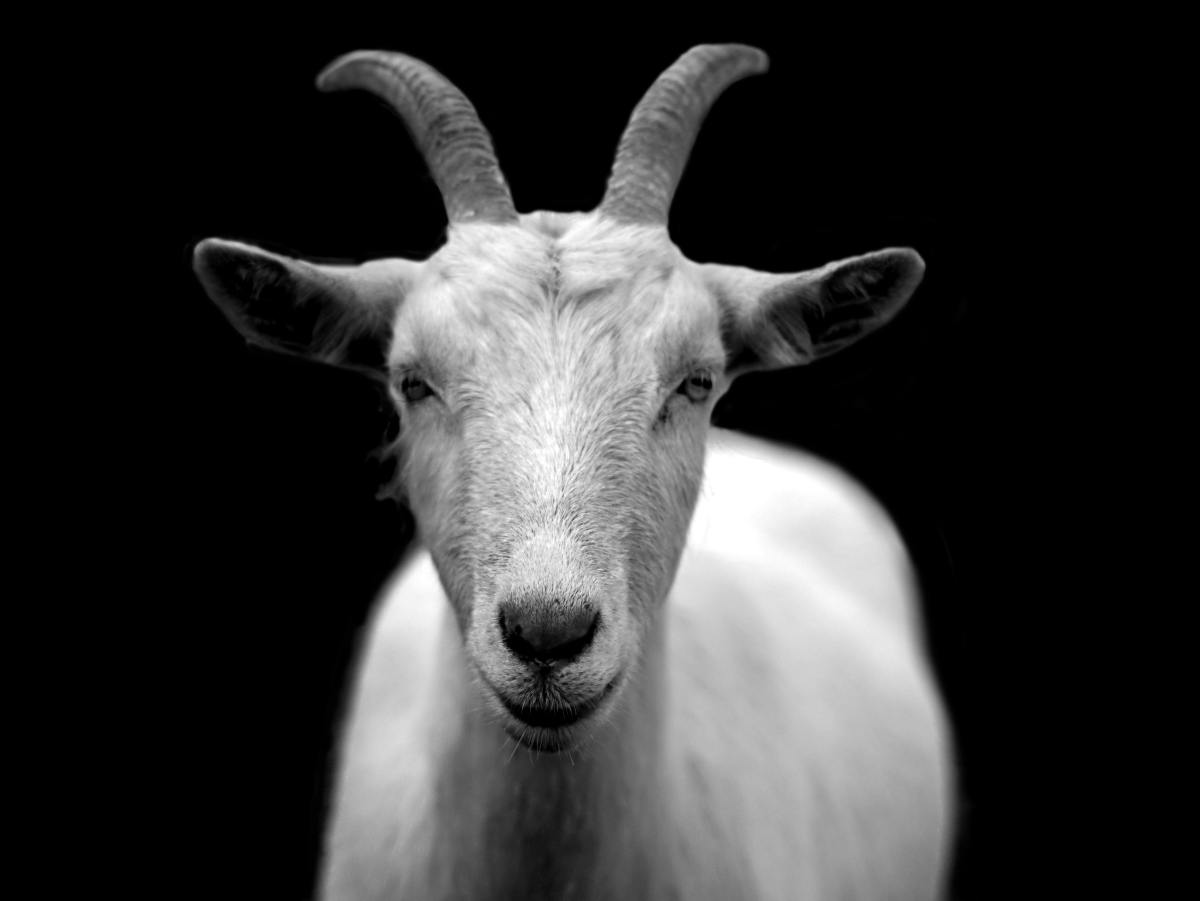
So far, Severance hasn’t been overly stingy with clues and reveals. While certain plot points (cough-cough-goats-cough-cough) feel worryingly LOST-esque, I’m still willing to believe the show-runners’ claim that they have a clear ending in mind.
The characters have had fantastic arcs so far, and they’re tied nicely into the central mysteries. But we’ve seen this before. They need to stick the landing.
I’ll be watching the season two finale with fingers crossed.
I would describe myself as a mid-level comics nerd. I’ve subscribed to comics. I worked at a comics store in high school. I still read comics in trade paperbacks, but rarely the ones with superheroes. I’ve seen at least half of the Marvel movies, although I’ve really cut back in recent years. The last DC movies I saw were the Christopher Nolan Batman trilogy. (But honestly, I’ve never been that into classic DC characters.)
In short, I come at this topic as someone at least reasonably informed, but not quite a super-fan. Unfortunately, from this point of view, I think superhero movies as they currently exist are doomed.
The Structures of Comics
For many years, comics have been primarily periodicals. They exist somewhere in the universe of magazines and newspapers, traditionally printed on cheap paper and published in monthly 30-page installments. You can find many examples of other form factors, but this is the standard, and this has had a strong influence on the structures of the comics industry and the stories comics tell.
Comics follow a structure I call “endless episodic.” There may be arcs to the story, but the overall goal is to keep publishing issues, month after month, year after year. If the story ends, it stops making money. “Endless episodic” naturally trends toward a steady state, a cartoon-like existence where the world and the characters are more or less the same at the end of the story as they were at the beginning.
This steady state is death for good storytelling. If nothing changes, there are no stakes. There is no satisfying resolution. The ending is what provides meaning.
This is one of the reasons why origin stories are so important to superheroes. Often, they are the best story about that character, the only one a non-comics-nerd is likely to know. If the average normie knows anything about Superman, it’s probably that he comes from the planet Krypton, that it blew up, and he was adopted by farmers. If they know anything about Spiderman, it’s probably that he was bitten by a radioactive spider, and that “with great power comes great responsibility.” That’s because the origin story is allowed to have an actual character arc. At the beginning, the hero is just some person, and by the end, they are a superhero. They’ve changed. They’ve learned things. They’ve experienced loss.
Of course, comics writers have long understood this limitation of the form, and they’ve come up with many solutions and band-aids. They’ve ramped up the stakes in each subsequent story arc, saving the city, the country, the world and the universe. They’ve written tie-ins that pull in other, unfamiliar characters to provide novelty and sell more books. They’ve killed off the main character and put a replacement in the same old super-suit. They’ve explored alternate realities.
All of these are ways to create an arc while keeping the endless episodic story going, but you can only squeeze so much juice out of each of these techniques. Readers might get excited by the first or second jaunt into alternate realities, but eventually they’ll get bored. Everybody can only get worked up about the death of Superman so many times when you know he’ll be back in a couple months.
Comics will even go so far as to completely reboot their entire lineup and shared universe, and it’s all because they’re fighting against the intractable problem of endless episodic stories.
The State of Movies
The pandemic had a profound effect on movie theaters and theatrical releases, but the truth is that it only accelerated processes that were already in motion.
Movies today are a luxury item. Theaters have more screens, reserved seating, big fat recliner seats, restaurant food and a full bar. Taking my family of five to a movie is a significant outlay even if we only buy the tickets, and it’s very easy to spend over a hundred dollars on two hours of entertainment. Small, discount, and second-run theaters are essentially extinct.
The big studios are bigger than ever, and they’re putting more money into fewer movies. These bigger tentpole movies are designed to be as safe as possible, and are engineered by committee to appeal to a maximally broad audience.
It is in this environment that the superhero movie has ascended. I don’t necessarily think this environment boosted superheroes into pop culture. It may just be coincidence. However, superhero movies are the flavor du jour, and the current environment has resulted in maximum saturation. Disney spent billions to acquire Marvel and has continued to pour billions into it, and Disney will get its money’s worth. Same goes for DC and Warner, although they’re not quite as good at the money extraction process.
The State of Streaming
It’s easy to forget how young the streaming industry is. Netflix started streaming in 2007, and it didn’t really take off until 2010. The industry rode a decade of steady growth and market expansion into the pandemic boom, and now it’s quite possible that we have just entered the era of flat growth that will become the norm going forward. Prices are rising, everyone is adding commercials, and all of this looks awfully familiar to anyone who saw the rise of cable TV. Nobody knows yet how much people are willing to pay (in cash or commercial attention) or how many different services can coexist.
Early in Marvel’s meteoric rise, they released a few limited series on Netflix. These featured characters ranging from moderately popular (Daredevil) to almost unknown (Jessica Jones). These initial forays into superhero TV were largely self-contained, with real character arcs—although the origin story is always a bit of a freebie. The series were popular enough to warrant second seasons in a couple cases, and eventually a tie-in series that featured the whole Netflix superhero crew.
When the contracts between Disney and Netflix ran out, the new home of Marvel streaming became Disney+, and with this, they doubled-down on integrated stories. The movies told an ongoing, interwoven story, so why not include TV series in that and sell some subscriptions? Just as comics love crossovers to sell more issues across different lines, comics movies love crossovers to sell more tickets and subscriptions.
However, this also begs the question of just how many people are willing to see that many movies per year, and subscribe to the streaming service just to get the “whole story.”
The Present Moment
When the movie studios bought Marvel and DC, they bought a massive back-catalog of superhero stories. Decades of content, some of which is effectively modern mythology, it has so permeated modern society. From this huge backlog, they can pick and choose the best stories…for a while.
The studios wanted a return on their investments, and they have kept their foot on the gas for years now. They have burned through some of the biggest classic comics stories. Eventually they will have to look to more and more obscure and mediocre storylines, all that filler that kept those “endless episodic” stories going. Of course, they could take a chance on a brand new story, but big studios don’t like to take chances.
It seems inevitable that comics movies will fall into the same patterns as comics, only faster. The same forces are shaping them. The more history the movie universes accrue, the more is expected of new viewers to “catch up.” Big, integrated universes become weighed down by their history. The temptations of reboots and alternate universes grow ever stronger. Hell, we’ve already had multiple movies featuring multiple alternate-universe Spidermen.
The flavor du jour of movies will change. Just like Westerns, superhero movies will eventually discover that they can’t command the same budgets they once had. There will be less room for incredible effects and star-studded casts, and these are integral parts of the modern superhero movie formula.
There are even signs that the super-fans are tiring. I wasn’t even aware that there was a Secret War series on Disney+, until a wave of nerd-rage and complaining washed over Twitter. As someone who hasn’t watched these series, it was quite the contrast to the excitement that followed Wandavision or Loki. And even if you ignore bombs like Morbius, people just don’t seem to be talking as much about the current crop of movies as they did in the era of Endgame (or even Justice League).
The Future
People have been debating whether big-budget superhero movies have peaked for nearly the entire time studios have been making them. We could debate whether now is an inflection point, but it doesn’t really matter. It seems inevitable to me that there will be a hard turn sooner or later, followed by a significant decline. Nothing lasts forever.
As a somewhat-invested comics fan who is burnt-out on Marvel and DC, I think I’m a reasonable bellwether for the broad audience. Super-fans might stay invested longer.
On the other hand, the genre won’t go away completely, and that’s a good thing. Projects like the Spider-verse films and “off-brands” like Umbrella Academy or Sandman show the possibilities of less-integrated properties, less focus on classic superhero archetypes, and eschewing the “endless episodic” formulas.
Superhero movies are, in some ways, burdened by the need to be the 900lb. gorilla at the top of the hill. If budgets shrink and opportunities dwindle, it will force some limitations on the genre, and limitations breed creativity. If movies and shows are given smaller budgets, the people in charge of the money may be more willing to dig into the many weird and interesting corners of comics, taking on riskier projects on the chance that they hit big.
I’m hopeful that the future of comics movies will be filled with cheaper, smaller things, and more innovation. I’d love to see more exploration of less mainstream titles. I think the massive shared universes will eventually collapse, although I doubt any media based on comics can completely escape the gravity of cross-overs, alternate universes, and reboots. Even if the number of releases and the budgets decrease, the future of superhero media is bright. In fact, it’s likely to be better than an alternate universe where they remain big-budget blockbusters forever.
During the month of May I performed an experiment. I decided to limit myself: I would watch no video (TV, movies, streaming, or internet), play no video games, and stay off social media. It was an enlightening experience.
Soma
In Brave New World, Aldous Huxley introduces a fictional drug called soma, which is used to make the people in the story’s future civilization happy and docile. A variety of people have excitedly pointed toward media, and especially television and social media as a kind of modern soma.
I think those arguments are overblown in some ways. In the past hundred years, various pundits have claimed that newspapers, paperback books, comics, radio, and every form of television would also turn us into mindless zombies. Somehow society hasn’t collapsed. However, there’s also clearly some truth in the idea: media can be an escape from the real world, and it’s certainly possible to use it as a mind-numbing drug.
There’s plenty of “junk food” media that passes time, but nobody would claim is great art. Or even mediocre art. A great movie can feel elevating and change your whole outlook on life. But also, Jersey Shore exists. The junk can be fun, but too much of it is obviously problematic.
I’ve certainly done things like doom-scroll Twitter while watching a movie I don’t care about with half an eye. I would frequently watch whatever the YouTube algorithm threw at me while playing a low-effort video game. That’s the sort of behavior that really crams so much stuff into the eyeballs that the brain short-circuits. I like the word used by the YouTube video game theory channel Extra Credits: abnegation, literally entering an ego-negating mental state via the consumption of media.
Finding My Keys
Over the month, I shifted from a lifestyle where I was frequently performing this kind of media-fueled abnegation to one where I consumed almost no screen-based media at all. I did continue to listen to podcasts (although most of these are writing-related) and I read books.
I’m reminded of a comedy act I saw years ago (and unfortunately can no longer find to give credit). They talked about giving up smoking weed.
I could remember things again. I thought I was psychic. I was like, where are my keys?
They’re over on the counter!
How did I know?
I don’t smoke, but I did find that my time used to disappear mysteriously. Where did my evening go? My weekend? That time would just vanish. During May, I really didn’t have that feeling at all. I was experiencing all that time instead of letting it just slip away.
I also noticed some of the environmental factors that contributed to my problem. On day 2, I realized I had the Twitter app open on my phone, with no recollection of opening it. I ended up turning off notifications, because the bird app would ping me first thing in the morning, inviting me to turn off my brain before I even got out of bed.
I also began to notice just how many pings I got from services like Steam and Oculus. When I wasn’t paying attention, all these things together created a steady stream of invitations to distraction every single day. But being aware of them also takes away a lot of their power. It turns out almost none of those notifications were for anything that was more than a 5/10 on my excitement scale, so why would I bother opening them, except out of habit?
What I Did Instead
I read eleven books in a month. (Granted, there were a few short ones in there, but I still find that hard to believe.) I have a bad tendency of buying books faster than I read them, and I have quite a backlog on the book shelf. If I keep reading like this, I could get through it in a couple months.
In addition to all that reading, I got a lot more of my to-do list done. And when bedtime rolled around, I was much more inclined to actually go to bed. I got the appropriate amount of sleep most nights, which is another strange feeling when I’ve spent years depriving myself of sleep to various degrees.
I wrote more, but not a lot more. I found that even when I had more time, my ability to write (as well as do other things) was still limited by my energy. As much as I love it, writing is not low-effort or relaxing to me.
During the week, I only have time at the end of the day, and I’m already drained. Unfortunately, I didn’t find my secret to writing productivity, but I did come to a better understanding of what’s limiting me.
What Changed?
It’s now June. My experiment is over, but it really changed my outlook. While I had the periodic itch to watch something, or pick up Twitter or a video game, I wouldn’t say I’ve been missing it.
At the start, I was worried that May would be a miserable month for me. In actuality, it felt really good—so good that I want to keep that feeling going. That doesn’t mean I’m going to give up most media forever, but I am going to be much more discriminating when I spend my time watching or playing something.
Taking a month off really clarified which media I’m genuinely excited about. I found that I had no desire to go back to most of the “junk” I was watching before, but I wrote a small list of movies I’ve been meaning to watch and never got around to because it was just slightly more effort than firing up the first thing that caught my eye on YouTube or Netflix. I can still watch less, but feel like I’m getting more out of it.
I’m honestly not sure if I’ll go back to Twitter. It was a slow-burning dumpster fire in April, when they broke all the integrations, and I sincerely doubt it has gotten any better in the past month. It is, unfortunately, still the social media hangout for writers though. I’ve found a lot of great books, blogs, substacks, etc. through it. Time will tell.
Try It, You’ll Like It
I’ll close with this. If you’re someone who consumes a lot of media, I’d encourage you to try this experiment: one month, no TV, movies, games or social media. If it turns out to be miserable, well, it’s only a month. But I don’t think it will. It changed my perspective and my priorities, and somewhat to my surprise, it made me a happier person.
If you decide to try it, let me know. I’d love to know how it goes for you.
Every week, my daughter Freya and I have a “storytelling class.” Really, it’s just a fun opportunity to chat about writing stories. This week, our topic was beginnings, middles and ends.
We always start with two questions: what did we read and what did we write over the past week?
What Did We Read?
I read the usualblogs, more of The Wes Anderson Collection, and Damn Fine Story. I also read the first two trade paperbacks of Y: The Last Man (found among a pile of random Vertigo TPBs that my wife found at a garage sale for a pittance).
Y’s main character, Yorick is the literal last man on earth when a mysterious event causes all other men to simultaneously die. The premise is fine, and the world-building is done well enough, but the story frustrated me (at least in these first two books) because Yorick just isn’t very interesting. He has trained himself as an escape artist, but we don’t really find out why he has this odd interest, and his only goal in post-apocalyptic life is to get to Australia to find his girlfriend.
What made this more perplexing is that all of the secondary characters either had odd and interesting personalities, or hints of strange backstory, or both. I felt like a version of the story from any of these other perspectives might be preferable to following Yorick around.
Freya continues to read Harry Potter and the Order of the Phoenix, and her class, having finished The One and Only Ivan, has begun the sequel, The One and Only Bob.
What Did We Write?
I’ve been banking up some scheduled blog posts this week, working on Razor Mountain as usual, and revived an old half-finished story for my class “homework.”
Freya wrote for her school work, as well as her story “Amber and Floria.”
Homework
In previous weeks, we’ve done thematic homework that relates to the class topic of the week. That hasn’t really been piquing our interest lately, so we decided to change tactics this week. After all, this isn’t school. It’s just for fun.
From now on, our homework will be more free-form: we’ll just spend time writing some kind of fiction each week and then talk about it. If we want to tie it into the topic of the week, we can. But we don’t have to. Just as the best way to get kids excited about reading is to let them read the things that interest them, the best way to get a kid excited about writing is to let them write what interests them.
So, this week Freya worked on a story in progress called Amber and Floria, about two sisters who have to rescue their parents, whose plane crashed and stranded them deep in the jungle. Which sounds pretty awesome.
I worked “Understump,” a story I started writing for my children a year or two ago and set aside when I couldn’t come up with a satisfying ending. Time away from it has given me a fresh perspective, and I’m excited to work on it again. Kid-lit is definitely a new frontier for me, which is a good thing. It’s also the sort of story that could easily be the first in a series, which is a good thing too.
Scripts 101
After our third class, where we talked about turning ideas into stories, our homework was to come up with some new story ideas. Freya’s list included a couple ideas for homemade movies, and that got us talking about writing scripts.
I’ll be the first to admit that I am no expert on script writing. I’ve never completed a script. So this was an opportunity for us to learn a little bit together. What we covered in this class were strictly basics—the formatting and other differences between scripts and fiction.
Scripts, Scripts, or Scripts?
Not all scripts are created equal. Most scriptwriting advice I found was focused on writing for TV and movies. That’s probably what most script writers are hoping to write in this day and age, so it makes sense. However, there are other forms of audio-visual media with their own slightly different takes on what a script should look like.
Audio fiction was once a nearly extinct art form, a mainstay of radio before the advent of television. But podcasts went and reminded everyone that audio-only media is actually pretty cool, so “radio” plays are back and bigger than ever. Of course, this kind of script writing eschews camerawork and detailed descriptions of visuals, and focuses more on sound effects and dialogue.
Also, despite the best efforts of the pandemic, live theatre is still very much a thing. Stage plays have to work with the static perspective of an audience directly in front of the stage rather than flexible camera-work, and have more limitations on scene changes and special effects, thanks to being performed live by real actors and crew on a real stage with physical limitations.
Formatting
I found a pretty good Studio Binder page that describes the pieces of a script and their formatting, with an example script. We read through this and discussed the different parts.
Scene headings and character introductions are much more straightforward and terse than the typical descriptions of settings and characters in fiction. However, more attention has to be paid to the viewpoint of the audience from moment to moment: what are they seeing and hearing.
Length
Works of fiction get lumped together in rough categories like flash fiction, novella or novel by number of words. Scripts, on the other hand, are typically made to fit a particular format and hit a set length in minutes. Helpfully, the rule of thumb is that one page of script should equate to about one minute of on-screen (or in-ear?) time.
In the days when broadcast television was king, shows in the U.S. were written to fit in 30-minute or 60-minute time slots with a set amount of time dedicated to commercials, and perhaps a little extra set aside for an intro sequence and credits. Now we live in a world of network, cable, premium and streaming services, where commercial breaks may or may not be a concern and some shows even choose to have wildly variable episode lengths.
Movies follow similar rules, and much like streaming services you don’t need to worry about commercials. Movies typically run 90–120 minutes, but there are extreme exceptions like the Lord of the Rings movies, whose theatrical releases were close to 3 hours and whose directors’ cuts were even longer.
Structure
Script structure is an entirely different beast from fiction, and can depend quite a bit on the media format. How many commercial breaks? An intermission? Episodic series or one-shot? We didn’t get into this too much, because I don’t know much and it’s a big topic. If you’re serious about writing something to actually get made though, you’ll need to figure these things out.
Homework
As I said before, we’re stepping away from class-specific homework, so the goal for next week is to just do some fiction writing. Freya does want to make more home movies, but she has to wrangle her brothers into being the actors, and as we all know, actors (and brothers) are an unruly bunch who often don’t take direction well.
See you next week, when we’ll dive deeper into characters!
Over the Garden Wall is a strange show. It’s a cartoon mini-series of ten tiny episodes, less than twelve minutes each. It purposely evokes an old-fashioned style, and while it’s not afraid of a joke, the mood of the show is often one of slowly building horror.
The show is the story of two brothers, Wirt and Greg, who are lost and trying to find their way back home. Where exactly they are (in geography or time period) and where their home might be, are all left a little bit unclear. But that doesn’t stop them from continuing down the road, accompanied by a pet frog and a talking bluebird named Beatrice.
It is strange enough that it seems a small miracle that it was ever made. It’s the sort of thing that knows exactly what it wants to be, even though that doesn’t fit very neatly into television seasons or half-hour slots, or precisely-delineated viewership and advertising segments. I expect it’s the sort of thing that people mostly either love or hate, and I fall firmly into the first camp.
As usual, I’ll eschew a traditional review. Instead, I want to comb over this beautiful oddity to see what lessons we can learn from it, to improve our storytelling.
There may be some light spoilers here, but I’m going to try not to ruin the mystery for those who haven’t watched it. If you don’t want to be spoiled, go watch it first! It’s on Hulu, and only slightly longer than a movie.
1 – Succinctness is a Virtue
When I was a wee lad, I loved giant stories that spanned many volumes. I loved giant jRPGs that shipped on half a dozen discs. I loved TV shows that ran for the better part of a decade.
There are still examples of those things that I love, but now that I’m kind of an old guy and there are never quite enough hours in the day, I really, really appreciate things that fit greatness into a small package. I love a good short story or novella. I treasure a good miniseries or single season show.
Over the Garden Wall clocks in at under three hours in total. You can watch the whole thing in an evening, and you don’t even have to stay up late. And although each episode is quite short, each one is gratifyingly complete. Across the episodes, every major character has an arc, and the little mysteries build into big mysteries.
Even the twist ending (which could have been disastrous) is satisfying, layering additional meaning onto the episodes leading up to it. When I finished the series for the first time, the first thing I thought was, “oh man, I need to rewatch that to find all the things I didn’t pay enough attention to.”
It’s easy to make a big, messy, sprawling story. The real artistry is in crafting that story down into a svelte package where every single word is in exactly the right place, and even doing multiple things at once.
2 – Mood Matters
Over the Garden Wall is autumnal. And I don’t simply mean that it’s set during the fall, although it is. The backgrounds are scattered with orange leaves verging on brown. There are fields, ripe and ready for harvest. There are fall festivals and Halloween parties, and as the show goes on, the chill of winter descends over everything.
There’s also the music, which is original to the show but sounds decidedly old-fashioned. It’s sometimes jovial and silly, sometimes morose and melancholy. It hovers between major and minor keys. It captures the mood of Halloween, an old festival that has continued into modern times, stripped of its original meanings: a hint of the ancient and sacred, a hint of the otherworldly and evil, a hint of banal silliness.
Almost every single episode manages a difficult trick. Each one feels like a horror story, beginning with the mundane, leading into strangeness and rising dread. Then, in the end, that menace turns out to be overblown. Everything works out fine, but that dread lingers and grows as the episodes go on.
Autumn is the season of dying. The cold death of winter is on its way, and the plants and animals seek shelter and hope for the rebirth of spring. The show is keenly aware of this, and almost everything is built around these themes of fall, winter and spring, of death and rebirth.
An overarching mood or theme like this can elevate a story beyond the individual components.
3 – Don’t Explain Everything
The last two episodes of Over the Garden Wall come out of nowhere. At least I certainly didn’t see them coming. And yet, they’re a satisfying conclusion. They provide an explanation for what’s going on, and they provide the emotional closure that makes the whole thing feel complete.
What the ending doesn’t do is explain everything. Did everything literally happen? Or was some of it metaphorical? Ultimately, it doesn’t matter, and we can each ponder and debate what we think really happened.
I know there are some folks who need to have every mystery wrapped up neatly with a bow, but…I don’t understand those people! Life in the real world is mysterious, and things often go unexplained. Hundreds of years of scientific exploration have only shown us how little we really know. Stories, like science, are a way to explore the universe.
By all means, resolve those big mysteries in your stories. Answer those burning questions. But when you get to the acknowledgements or let the credits roll, consider leaving one or two things open to interpretation. A little ambiguity can make a good story feel like it was just a little too big and too real to entirely fit onto the page.
4 – Comedy Enhances Tragedy Enhances Comedy
There are great dramas and great comedies, but I’ve always felt that the greatest works of art straddle the line between comedy and tragedy. There’s something magical about laughing at the start of a sentence and crying by the end of it.
Over the Garden Wall has some amazing jokes that have become a part of my daily conversations with my family. None of them bat an eye when I talk about burgling turts, call harmless lies “rock facts,” or mention horses who want to steal. But the show also has some relatable teenage angst, tear-jerking brotherly love, and even maybe some life-and-death stakes.
Just because you’re creating “serious art” doesn’t mean you can’t crack wise once in a while, and if you’re crafting a work of comedy you can still sneak in an emotional gut punch or two. In fact, those things can be even more effective thanks to that juxtaposition. The real world isn’t all good or all bad. It’s a mix of both. Stories that acknowledge that feel true.
5 – Wear Your Influences Proudly
Have you ever had a great idea for a story, only to realize it’s not your idea—it’s actually from a movie or book that you forgot about long ago? I have. It’s mortifying.
As artists, there’s an incredible pressure to create something unique and new, with your own voice. To be called derivative is an insult. But the fact is that each of us is a creative soup whose ingredients are all of our most beloved influences. The art and media that you consume inevitably influence the art and media that you create.
Over the Garden Wall emulates a turn-of-the-century style in its painted backgrounds (often with sweeping countryside or dark forest), its new-yet-old-timey music, and even in the mode of speech used by many of the characters. The animation evokes Felix the Cat, Betty Boop, and early Disney.
The show isn’t afraid to look, sound, or act like things that have come before. It pulls wholeheartedly from its inspirations. It wears its influences proudly. And wonderfully, by amalgamating all of these old influences with its modern writing, voice acting and processes, it manages to create something that feels unique and fresh.
Over the Garden Wall is a Modern Masterpiece
What can I say? I love this show. I love the mood that it puts me in, and I try to watch it every year around Halloween. I love how difficult it is to find any comparisons for it when I’m recommending it to people. I love that I keep finding little secrets hidden in the dialogue or visuals, even after multiple viewings.
If you haven’t watched it, go check it out. As I said in the intro, it’s on Hulu and only slightly longer than a movie. And I hope, like me, you get a little inspiration from it for your own creations.



 Words Deferred