Razor Mountain — Chapter 18.1

Razor Mountain is a serial novel, with new parts published every week or two. For more info, visit the Razor Mountain landing page.

The entire group marched without speaking. Boots crunched in the thin layer of snow. One of the soldiers’ radios squawked to life momentarily, issuing a series of staccato beeps familiar to Christopher from his time manning the radio in the bunker. The soldiers weren’t particularly rough, but Christopher felt corralled, like cattle, and if he stumbled in the wrong direction, there was instantly a gloved hand on his arm, shoving him back into the center of the formation.

He glanced at his ersatz companions. Harold’s face was as impassive as ever, revealing nothing about what he might be feeling. Garrett’s brow was creased and his narrowed eyes flicked back and forth, but Christopher could see that he was focused on his own scattered thoughts rather than his surroundings. Christopher suspected a battle raging inside the man’s head: would his risk be rewarded, or had he voluntarily ruined himself and his brother?

The soldiers marched them up a shallow ravine between hills, then into a deeper gorge where the ground was rocky and steep on either side. Now they were coming to the base of the mountain itself. The gorge led to a dead end, a broad stone face that had sheared cleanly from the mountain. Christopher could see the worn path where the water would run over the rocks above and into the gorge where they stood, but for the moment it was dry.

One of the soldiers walked up to the rock face and did something, his body blocking Christopher from seeing. A rectangular seam appeared as the man pulled at a section of the stone. It turned on concealed hinges, silent and perfectly camouflaged. Behind the stone facade was a heavy metal hatch, similar to the one on the bunker that was so familiar to Christopher. A lever was set within a little alcove in the door, and the adjacent keypad was also set flush with the surrounding stone, so the facade could close tightly against it.

The soldier took a step so he was between the keypad and the prisoners and punched in a code. Christopher listened to the sound, trying to guess the number of keystrokes, though he realized such little scraps of knowledge were unlikely to do him any good. He suddenly felt like his brain was buzzing, taking in everything around him.

Another one of the soldiers took out his radio and punched in another code in the keypad on its face. The soldier at the door watched him, waiting for a few beats afterward before he pulled the lever. The lever’s action was smooth and silent until it hit the far end of its arc with a satisfying clunk. The door swung open, and the soldiers immediately pushed the prisoners forward.

The entrance was too small for more than one person to enter at a time, so they had to go single-file. One soldier went through, then a second grabbed Harold by the arm and pushed him in before going through himself. Garrett went next, and Christopher was ready when the soldier next to him sent him through.

Even though it hadn’t been bright outside, it was dark beyond the door, and it took some time for Christopher’s eyes to adjust. The air was warm and carried a faintly mechanical smell, like oil and metal.

They navigated a series of long, branching hallways. Christopher couldn’t tell if the paint on the walls was a light green or a dull gray. It might have even been the naked rock, polished smooth. He wasn’t given time to stop and investigate.

He wasn’t typically prone to claustrophobia, and they couldn’t possibly be that deep underground, but he physically felt the weight of the mountain above him. It was as though the air got thicker as they went, syrupy and hard to breathe. Christopher felt dizzy, then nauseous. Sparks flashed across his vision. When it passed, his eyes were better adjusted and he no longer felt ill, but he still felt jittery and too-aware of his surroundings. He felt like he had downed too much coffee. He could differentiate the rustle of each piece of clothing as the soldiers moved around him. He could hear the tread of their boots on the smooth floor. He wondered if it was the lack of food and water over the past day catching up with him. Or just the shock of everything that had happened.

They reached the end of a hallway and moved into what looked like a separate section of the compound. The walls were brighter here, off-white. More halls branched off in three directions, but they were shorter and lined with wooden doors. At the intersection, the group split without warning or any apparent signal. One of the soldiers continued straight, fast-walking on his own. A pair of them took Christopher to the right, and the rest took Harold and Garrett to the left.

Christopher turned to look back at the brothers as they were marched around the corner. He thought he heard Garrett’s voice saying something about “bringing in an enemy spy” before the soldier behind him gave him a firm push to turn him around and keep him walking.

“I’m sure it doesn’t do me any good,” Christopher said, “but I’m just someone who got lost out here in the wilderness. That guy is determined to try to use me to help himself, and he’s going to say whatever he thinks will help him. I’m really not anyone special.”

The soldier ahead of him barely glanced back. “Please be quiet, sir.”

“Yeah. Sure.”

Eventually, they stopped in front of a doorway and ushered him inside. On the other side of the door was a big, high-ceilinged room. In each corner of the room was a jail cell made of bright metal bars. Each cell contained nothing but a metal toilet on one wall and a narrow metal bench on the other. The four cells left an open, cross-shaped central space. In the center was a metal table. On either side of this was a metal chair. All of them were bolted to the floor. The desk had four brackets welded to the otherwise smooth surface.

The soldiers brought him to one of the cells and opened the door with a small key. He felt them cut the zip tie around his wrists, before shoving him into the cell. The door closed before he could turn around. The soldier turned the key and tested the door, then the pair turned and went back out the way they had come.

Christopher grasped the bars and took a moment to study the room. Then he sat on the bare metal bench that was apparently supposed to serve as a bed. He stared at the lines on his hands, then up at the ceiling.

He had never been in jail before. He had certainly never had an experience like this. Even so, he felt a jarring sense of familiarity. He closed his eyes and pressed his head back against the wall.

<< PREVIOUS ] [HOME] [ NEXT >>

Meditation on Death

Among Buddhists, there is a type of meditation focused specifically on death. My understanding is that it is a reminder that our lives are transitory and temporary, and that we should accept and embrace that rather than fighting against it, clinging to what we have, and fearing the unknown.

This idea got me thinking, and eventually writing. I don’t know if what came out was exactly in the spirit of the meditation, but it did feel like it exposed some of my own personal truths. If you’ve ever wondered why this blog is called Words Deferred, this might serve as an explanation.

I don’t claim to be much of a poet, so I’ll apologize for the free verse, but it felt like the correct choice for this.

Sometimes, when I’ve stayed up too late again, 
and I’m climbing the stairs to bed,
exhausted,
the night’s darkness creeps in.

When I was in college, 
adults (real adults) would ask me what I was doing
with my life. 
I would tell them that I wanted to be a writer, 
but it’s hard to make a living, writing. 
I love computers too, 
so I got a degree in computer science.

I think I believed myself. 
And it was true.
It’s hard to sell stories, 
and it easy to get a job 
writing code. 
It pays well. 
It’s in high demand. 
It’s the sort of thing your career counselor would tell you to do.

I have no right to complain. 
I’m comfortable. 
I have a wife and children and I love them. 
We have a house in the suburbs and food to eat. 
We buy whatever books and games we want, 
and when I stay up too late, 
it’s not because I’m worried about money.

I find satisfaction in my job.
Sometimes. 
But not as much as in my writing. 
I don’t write as much as I feel I ought. 
When I go to bed late at night, 
I imagine myself dead, 
having written nothing of value.

Sometimes I want to shout to my children, 
“Don’t make back-up plans! 
Don’t have escape hatches! 
Burn the ships on the shores of your dreams, 
so you have no choice but to conquer them.”

There’s danger in having too much, 
in being too comfortable. 
That’s an easy thing to say 
when you’re not wondering how you’ll make rent this month. 
But that’s how I feel, 
late at night, 
when the darkness creeps in 
and I think about myself, 
dead, 
and the words I haven’t written.

Three Things I Learned From City of Saints and Madmen

I bought City of Saints and Madmen on a whim, many years ago. I suspect I was too young to properly appreciate it back then. In fact, I don’t clearly remember if I even finished it. Regardless, it left a strong impression on me and it has influenced my own work.

The book was my introduction to the New Weird, a genre that is even more difficult to define than most genres. These stories of the city of Ambergris are like fantasy in that they create a secondary world, but there are no wizards, no magic, no elves. There are elements of steampunk in the presence of post-industrial technologies, but they are props, not the focus. There are certainly elements of horror, as these stories are often dark and bleak, unsettling and violent. There is more than  a touch of the literary, the savoriness of phrasings and narrative in unusual, twisted  forms.

Recently, an even larger Ambergris anthology was printed, and I had to buy it. It is a massive tome, combining three books—City of Saints and Madmen, Shriek: An Afterword, and Finch.

Unfortunately, I discovered that this new version is missing almost everything from the appendix of the original book of City of Saints and Madmen. Even more unfortunately, this so-called appendix is almost half of the book, and it adds far more than just ancillary information. So despite having bought the new edition, I have to keep the old book for the huge chunk they cut out.

As usual, I don’t like to write ordinary reviews (and I’d be hard-pressed to review this strange book, anyway). Instead, I want to talk about what I’ve learned from it.

1 – Don’t be Bound by Traditional Narrative Forms

Vandermeer didn’t just write an anthology of ordinary stories. Instead, he presents the city of Ambergris through various narrative lenses. There are ordinary stories, but there are also pamphlets of civil history and family history, notes from psychiatrists, and a slightly deranged monograph on a fantastical type of giant squid. Hell, the squid monograph even has a ridiculously long bibliography of completely made-up sources.

Presenting fiction in some of these forms might seem like a bad idea, but Vandermeer makes it work. “Dradin in Love,” the first story, pulls you into the book with a strong narrative, providing an introduction to the city and piquing your interest. Then he expands the setting through a guidebook essay, “The Hoegbotton Guide to the Early History of Ambergris.” He keeps it light with snarky footnotes from the author, an irritable historian who considers himself above writing a cheap guide, but still does it for the easy money.

“The Transformation of Martin Lake” follows Lake, an artist who will become famous in Ambergris for his oil paintings, through the most formative period of his life.  Inserted between these scenes are the speculations and interpretations of his work by a famed art critic. As the story eventually reveals the dark secrets of his success, we see that the critic’s analysis is wildly inaccurate.

In “The Strange Case of X,” we witness an interview between a psychiatrist and his patient. The story flits from third person to first person, to the raw transcript of the interview and back again. The patient, X, turns out to be a stand-in for Vandermeer himself, institutionalized because he has become so obsessed with the fictional city that he can no longer differentiate between the real world and his own creations.

Then (at least in the original printing) we reach the purposely mis-capitalized AppendiX, itself presented as a collection of items found in X’s room at the asylum after he mysteriously disappears. Within this frame are more stories and tidbits, letters and codes. The sheer variety of forms keeps you wondering what you’ll encounter next, and in a subtle way they help to build the verisimilitude of Ambergris. This is a city with a history, with surrounding geography, with politics and art and beauty and danger, as well as hundreds of thousands of people going about their business.

Many of these forms involve multiple characters with differing opinions and interpretations. There is Lake and the critic. There is the dry history of Ambergris, and historian’s irritated footnotes. There is the interview with X, and the psychiatrist’s interpretations. Just as real people often come at reality from different angles, the characters in Vandermeer’s stories are constantly vying for narrative control.

2 – A Web of References is a Puzzle to Solve

“Dradin in Love” opens the book with a gripping story, but it also sets up much more of the book than the reader will realize at first. It introduces the Religious Quarter, Albumuth Boulevard, the river Moth, the distant city of Morrow, Borges Bookstore and the Hoegbotton and Sons mercantile empire. It introduces the delights and horrors of the Festival. Dradin and his former teacher, Cadimon, and the ubiquitous musical genius of Voss Bender.

In every single section of the book, every story and essay and letter, there are scattered little references to the people, places and things of Ambergris. Some are large and glaringly obvious. Others are extremely subtle, and sometimes even inserted into what seems to be purposely dull writing (a bibliography and glossary, for example) in order to obscure them. Characters and places that seem to be little more than decoration in one story reappear in unexpected places later on.

Once again, this makes the random selection of literary bits and bobs slowly congeal into a much more unified whole as you read deeper into it. It also encourages the reader to pay attention to all the details. The kind of reader who loves to solve mysteries and riddles will begin to see the book as a puzzle, and each subtle reference clicks into place like another piece, forming a larger picture.

Of course, the danger with this style of writing is that the reader may not want a difficult book that they have to “solve” to find satisfying. They may not want to wade through bibliographies and glossaries to find some small connection between Martin Lake and Dradin Kashmir. They may not be tantalized by the coded section at the end of the psychiatrist’s letter. They may simply be irritated. But the readers who like that sort of thing will feel rewarded by what they have found, and there is magic in the idea that you may not have caught all the secrets on the first read-through.

3 – Setting is an Engine of Story

Something I find myself often referencing is Lincoln Michael’s post “On the Many Different Engines That Power a Short Story.” Writers talk constantly about character- and plot-driven fiction, but there are really an astonishing number of ways to make a story work.

I think City of Saints and Madmen is definitive proof that setting can power a story. This ramshackle collection of elements should not feel unified. There are characters, yes, and there is plot, here and there. But it is the city of Ambergris that ties it all together. All of the other elements are in service of that. Even the author of Ambergris, X, finds himself in thrall to it, the city seemingly dictating its own creation.

I have to confess that I find this heartening. I’ve had a fictional city of my own that I’ve been slowly building for a few years, but I’ve struggled to find characters and plots that I find satisfying. I’ve considered short stories, a novel, and even a TTRPG setting. Maybe I should just follow the lesson of Ambergris. Maybe the city itself is the story.

Get Uncomfortable

I live in the suburbs, but we are within spitting distance of the city proper. Thanks to an intersection of nearby highways, most of the streets in our neighborhood don’t go through, so it’s nice and quiet, but also close to busier areas. Now, my kids range from early grade school to middle school, and this summer they’ve been eager to go out and play with their friends around the neighborhood. They want to go places and do things unsupervised.

The impression I get about children growing up in the 70s and earlier is that parenting mostly consisted of making sure that your children had a reasonable number of meals per day and did chores to build character. Other than that, children just went where they pleased. However, today’s parents have been drowned in stories of kidnappers, serial murderers and razor blades in Halloween candy all of their lives. “Helicopter parenting” is a phrase spoken with derision, and yet there is an awful lot of media focused on all of the terrible things that can happen to a child, if only you take your eyes off them for a moment.

My children want to run around the neighborhood with various other children. They are not particularly good at telling me where they’re going or keeping track of time. But I’ve forced myself to give them a little more space than I’m comfortable with. This is one of the things that I’ve had to come to grips with as a parent. Parenting is a compromise: the kids probably get less freedom than they want, and I get less control and less reassurance. As the kids get older (and they keep on getting older!) the boundaries will keep shifting.

Comfort is Stagnation

My own complete comfort as a parent is not necessarily what is best for my kids to grow and become self-sufficient and responsible. And my own comfort as a writer is not necessarily what is best for my stories to grow and improve. That’s right, you just walked into a metaphor!

Discomfort is the natural human reaction to shifting boundaries and new ideas. To challenge your limitations and grow, you have to work on something you’re not entirely sure you can do. Sometimes these experiments lead to success, and sometimes they fail. But whenever I try some new and difficult writing project, I end up taking away valuable new ideas, experience and skills.

Being a good parent also requires admitting that you don’t always know what you’re doing, and you don’t know how exactly you’ll end up affecting your children. After all, the world is full of well-meaning parents whose parenting styles have contributed to their children’s hang-up and neuroses. We are all, to some extent, the products of our upbringing.

Stories, like children, are a product of their parents. My thoughts, my dreams, my ideas all come out in my writing, either directly or in subtext. My unspoken assumptions may be on the page even when I don’t realize it. However, it’s easy to self-censor.

We all have secrets and darker thoughts. Things we’re not proud of. Shame or embarrassment, enviousness, and worry. We don’t talk about these things with our co-workers. We don’t bring them up at parties. We may not even dare whisper them to our husbands and wives, our trusted relatives or closest friends.

Letting those things creep into our writing is hard. It’s like opening up your soul and letting strangers look inside. We fear being judged. Now, perhaps more than ever before, judging strangers is a popular pastime. But this kind of vulnerability is powerful.

Embrace Vulnerability

Mike Birbiglia has a show called The New One, about becoming a father, and the changes that it wrought on his life. It’s comedy, but it has serious elements too. In one of the darkest parts, he admits that he “understood why some dads leave.” He didn’t leave, but he understands it. That’s vulnerability. It’s the sort of statement that could ruin relationships. But it’s honest, and it’s one of the most powerful parts of the show.

Mike has stated that many people judge him for those statements. He gets messages about it on social media. But he also gets messages from people who connected with it, and his process of working through and accepting parenthood made them feel understood and helped them work through similar feelings.

That kind of brutal honesty, that acceptance of the truth of the situation, no matter how uncomfortable or upsetting, is a hallmark of good writing. Those are the things that audiences connect to, because your secret shame or fear or sadness or loathing feels like less of a burden when you discover that you’re not alone.

Plumb the Depths

Achieving this kind of honesty is difficult. The first hurdle is being honest with yourself. People don’t typically like to evaluate themselves with complete honesty. Luckily, we’re all complex individuals, and we don’t have to dig up all the skeletons at once.

One of the easiest ways to get started is to simply think about negative emotions. What are your fears? Are you jealous of others? What feelings do you have that you wouldn’t want to tell to others? You don’t have to write a biography of all of your problems, but sometimes, thinking through these darker aspects of the self will shed light on a topic that could be a powerful inclusion in a story.

Sometimes, taking an honest look at the unpleasant parts of ourselves can be cathartic. It’s a common-enough trope that the writer who writes about their deepest issues can use fiction as a mode of healing. Hiding from problems rarely helps fix them.

On the other hand, I’m definitely not a mental health professional. If going down these roads makes things worse, it’s possible that you need more than fiction to get to a better place. Don’t embrace the old “romantic” notions of writers who actively hurt their health for their work.

It’s also worth noting that some of the difficult truths in our lives may involve relationships with friends or family. If you’re going to put your loved ones into your fiction in a way where they will recognize themselves (or others will recognize them), talk to those people first. Don’t destroy relationships for a story.

Writer, Know Thyself

It’s difficult to infuse a story with the hard truths from our own lives, but this uncomfortable honesty can take fiction to new levels and really help us connect with readers. If your stories never make you feel exposed, consider whether you’re skirting around these areas of discomfort. It may sometimes be painful, but it’s one of the most effective ways to grow as a writer.

Razor Mountain — Chapter 17.3

Razor Mountain is a serial novel, with new parts published every week or two. For more info, visit the Razor Mountain landing page.

When the sun was above the horizon, they continued walking. Harold took some jerky from his pack and gave a piece to Christopher and another to Garrett. They walked in silence.

Christopher noticed that Garrett seemed to be scanning the ground as they went, and he finally stopped and picked up a straight stick about three feet long, with all the bark missing. He paused to take a plain white tee-shirt from his pack, and using his pocket knife he cut a square of fabric from the torso with two extra strips hanging off. Then he used the strips to tie the fabric to the stick. Finally, he tied the flag to his backpack so that it stuck up just above his head, hanging like a dead thing in the still air.

He also unloaded the rifle and slotted it onto the opposite side of the pack, through a series of straps that seemed to be designed for it. He pointed to Christopher and looked at Harold.

“Keep an eye on him.”

It didn’t seem to matter much whether Harold kept an eye on Christopher or not, because Garrett also made Christopher take the lead while the brothers walked behind. That meant Christopher would be the the first thing any sharp-eyed resident of the mountain would see, and the first thing they’d be likely to shoot at. Christopher thought about asking if he could wear the flag, but he already knew what Garrett’s answer would be.

“It won’t be long now,” Garrett said to Christopher. “We’ll either run into a patrol or be seen by a spotter. If you want to stay alive, don’t do anything that could be construed as remotely threatening.”

“That’s actually my standard operating procedure,” Christopher replied.

“Cute. If you’ve got any info that we could use to negotiate, now’s the time.”

Christopher shrugged. “Even if I did, wouldn’t it be better for me to hold onto it? Why would you do anything to help me? All you’ve done so far is kidnap and insult me.”

“What helps us helps you,” Garrett replied. “If they have reason to believe you’ve been cooperative, it might make you look a little better.”

“You think they’ll be lenient on the supposed spy who collaborated with the traitorous deserters?”

Christopher glanced back in time to see Garrett’s irritated frown. Harold looked oddly unperturbed for a man who had very recently suggested they might all be murdered before they had a chance to realize what was happening.

Christopher sighed.

“You want real truth? The truth is that, as far as I can tell, all of you have been wildly misinformed about what the outside world is like. Nobody has been very eager to share much with me, but it seems like you think it’s a lot worse out there than it really is. You’re all worried about Russia and I can’t tell if you think the Cold War is still going. I suppose it makes sense, being right next door to them, but you all still seem way too concerned.

“I realize it doesn’t really matter what I say. I’m an outsider, and everyone here has a lot of trust issues. I don’t know whether that’s justified or not, but the fact that your people are on the run from the military and might just go to prison or get shot makes me think at least some of the fear is reasonable. Meanwhile, I’m stuck out here, having been dropped down the shittiest rabbit hole this side of wonderland, and I’m more and more of the belief that I’m going to end up dead because of you. So thanks for that.”

“Just walk.”

“Sure thing, boss.”

They kept walking, a thin, hard layer of snow crunching beneath their feet. Despite the talk of being shot, Christopher couldn’t stop his mind from wandering. The human brain could only keep up the tension for so long in the face of sheer boredom.

“So what’s it like up there?” Christopher asked, pointing at the mountain that now dominated the sky in front of them.

“More like down there,” Harold said.

“What, underground, like that office where your friends were?”

“They’re not our friends,” Garrett said, “and we’re not here to play tour guide.”

“I was friends with a couple of them,” Harold muttered.

“What’s the point of all the secrecy anyway?” Christopher said. “Your people already told me that there’s this base here, and there are certainly enough other buildings littered around here to make even someone as clueless as me start to wonder what’s going on. Other countries must have satellite cameras. These places must be visible in infra-red or something.

“Knowing there’s something is a lot different from knowing what that something is,” Harold said. “You’ve heard of Area 51, right? Everyone has.”

“Sure.”

“What exactly do they do there?”

“Okay, that’s a pretty good point.”

Christopher gave up his questioning and marched in silence for a while.

The trees began to thin out. The land rose in fits and starts, hills piled upon hills, with unexpected little dips and gullies hidden by scrub bushes. They had to find narrow places to jump across or scrabble down and up. A few of these low places had ice at the bottom, and one had a thin trickle of dirty water. Christopher imagined them flooding with snow melt in the summer, the water carving up the land into little puzzle pieces, the inexorable pull of gravity doing its work over hundreds of years. Once again he was captivated by the beauty of this lonely landscape. It felt like a place outside of time, like he could walk these paths a thousand years before or after and see the same things in only slightly different arrangements.

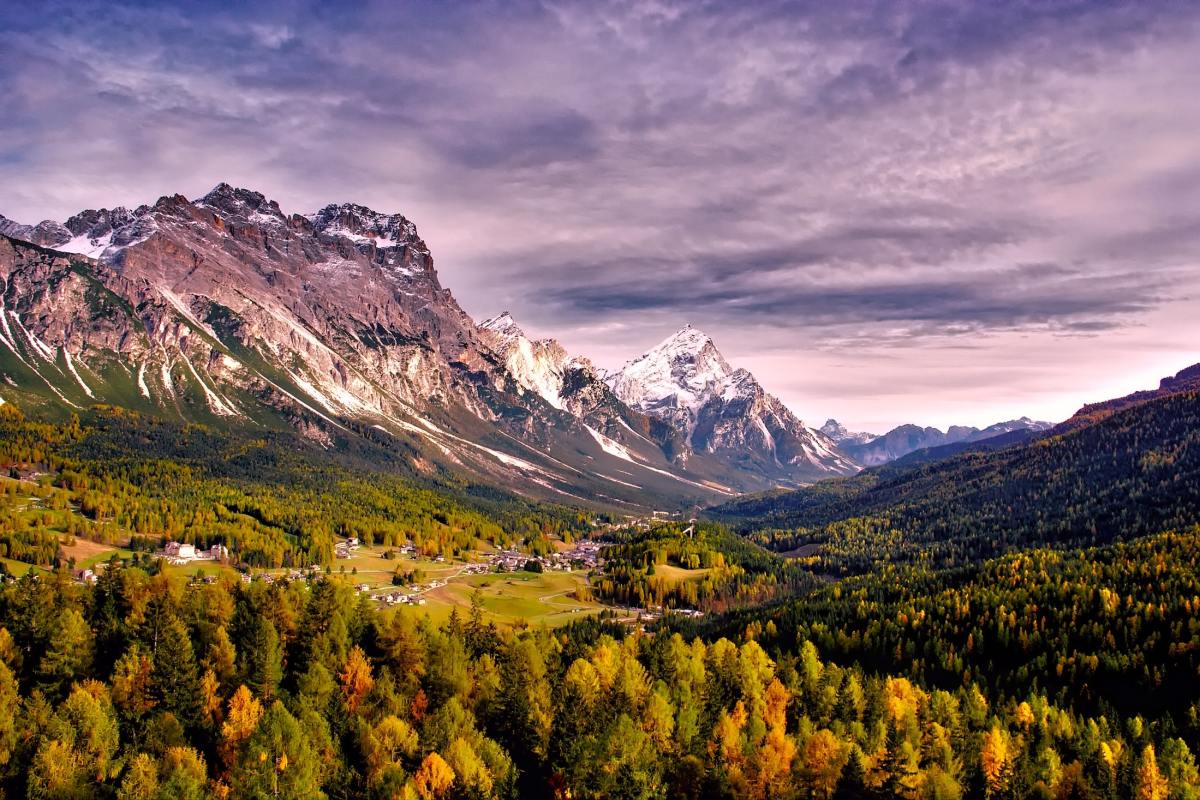
They came up a slope and found themselves on the edge of a wide open, treeless expanse with a clear view of Razor Mountain. Perception was tricky: the roots of the mountain might only be a few hundred meters away, or still miles distant. For the first time, Christopher could see the entire vast mass of rock in all of its glorious crenulations and textures. The sunlight glinted here and there on facets of the rock and gilded the deeper ridges with liquid gold. There was very little foliage visible among the shattered boulders and jutting rock, and the nearly vertical faces made the mountain look almost as though it had burst from the ground in a single violent incident. It was a mingling of dull reds, grays and blacks. The broken twin peak was dusted with snow, but even in the bright sunlight the dull black rock looked as though it had been scorched from above by heavenly fire or some unruly dragon.

Garrett stopped and adjusted his makeshift flag. Christopher saw a meaningful look pass between the brothers before Garrett looked to him and motioned him forward. They stepped out into the open space, completely devoid of cover.

A stiff breeze blew through, whipping and cracking the flag dramatically, then everything went quiet. Christopher felt the tension hang between them. He stepped carefully; his footsteps in the gravel seemed loud. Off to the side, somewhere in the low brush, unseen birds chirped and chattered at one another. The breeze blew over the rough grass in uneven waves.

Christopher felt certain that something was coming, the crack of a gunshot or a shout from some hidden spy. His muscles were tight, vibrating with nervous anticipation. He glanced back and saw the fear in Garrett’s eyes. Harold studied the landscape around them, but he still looked calm. Whatever he thought would happen, he appeared to have made peace with it. Christopher felt a faint pang of envy.

Christopher didn’t see where the soldiers came from. He only saw the sudden change in the brothers’ expressions. He turned, and found himself facing six men in gray-green camouflage, helmets and body armor. They shouted orders as they surrounded Christopher and the brothers, though Christopher didn’t process exactly what they were saying. Something about not moving and getting on the ground, he supposed, because they immediately pressed their captives face-down to the earth. Christopher heard a thud near his head as Garrett’s backpack was removed and tossed aside. The tee-shirt flag lay on the ground nearby.

More voices and footsteps joined the others. Christopher kept his face in the rough, sharp grass, adjusting his position only to avoid getting jabbed in the eyes. He half-expected to hear the sound of gunfire or Garrett making some desperate excuses. But the guns and the brothers remained silent.

After a quick, whispered conversation among the captors, Christopher felt hands firmly grasp his arms and haul him upright. The soldiers weren’t rough or cruel; they exuded an aura of professionalism. This was what they did, and they’d do it efficiently and with a minimum of fuss. Christopher saw that Garrett and Harold now had their hands behind their backs as well, bound with black zip-ties. Two soldiers held their backpacks.

The soldiers gathered in a loose formation around the captives, weapons held ready, and they began to march, once again, toward the mountain.

Though he still had a tight knot of fear and worry lodged just below his heart, Christopher couldn’t help a slight smirk at his situation. He had swapped captors three times in as many days, but he was still headed toward the mountain. In opposition to the seasonal flow of water, pulled by gravity toward distant lakes and oceans, Razor Mountain had its own gravity, and no matter what he did, Christopher couldn’t escape its pull.

<< PREVIOUS ] [HOME] [ NEXT >>

Razor Mountain — Bonus Development Journal

This is part of an ongoing series where I’m documenting the development of my serial novel, Razor Mountain.

You can find my spoiler-free journals for each chapter, my spoiler-heavy pre-production journals, and the book itself over at the Razor Mountain landing page.

But Wait…There’s More!

I write and edit each chapter of Razor Mountain as a single cohesive unit, but I’ve been splitting each chapter into multiple parts, usually between 1,000 and 1,500 words. For blog posts, this is supposedly the sweet spot for keeping readers’ attention, and it lets me draw out each bit of the story over a couple of days, to mitigate the fact that I usually only produce a new chapter every two weeks.

I sometimes take little notes as I’m writing, and once I’m done with a chapter I write the development journal for it. Usually this means I post the parts of the chapter early in the week, and the dev journal on a Friday.

A week ago, I released Chapter 17 in two parts and thought I was done with it. I posted the development journal. I did get feedback from my wife that this chapter felt a little short and ended abruptly, but I thought that was perfectly fine, and I moved on to working on Chapter 18.

As I wrote Chapter 18, I realized that it was going to be a short one, probably not even long enough to split into two parts. And then I realized that Chapter 17 flowed directly into it, with no significant shift in time or location. I reread the part of the chapter I had finished, and I had to admit, it was really a continuation of Chapter 17.

So, I decided to merge this into the previous chapter. This week I’ll post it as Chapter 17.3, and I’m posting this “mini” development journal to explain why.

Outlining and Flexibility

I am the kind of writer who likes to outline. For Razor Mountain, I knew I was going to be posting chapters as I wrote them. That’s a scary prospect, so I spent more time outlining in detail than I ever have for any other project before.

I know there’s supposedly this great schism among writers who outline or don’t outline, but I think it’s a false dichotomy. There’s a spectrum of more or less preparation, and more or less tweaking the story as you write it.

We outliners are a little smug about knowing exactly what’s going to happen in the story, but that can be dangerous. You can miss the opportunities for improvement that present themselves during the writing process, because they don’t “fit into the plan.”

The outline is an invaluable resource for me. I can’t imagine embarking on a project like Razor Mountain and not knowing exactly how I want the plot to flow or not knowing how it will all end. I’m not that kind of writer, and I’ve seen too many serialized stories crash and burn. But I also refuse to be beholden to the outline. I consolidated several chapters in the first act, and I’m happy to do it again. I’ve changed and adjusted a few minor plot points. The outline is a tool, a safety net, to be used only as long as it’s helpful.

The Upshot

The downside of making changes as you go, and the reason some writers are loathe to deviate from the outline, is that any significant changes mean the outline has to change too. Razor Mountain is a story of two different timelines, Christopher and God-Speaker, and thanks to my particular mental proclivities I have arranged it so that we get two Christopher chapters followed by a single God-Speaker chapter. Combining or eliminating chapters throws that off.

While that kind of consistent formula appeals to me, I don’t feel the need to force it when it doesn’t serve the story. Conveniently, the two timelines are fairly independent. The characters exist thousands of years apart, so while adjacent chapters may relate to one another indirectly or share similar themes, most of the book is fairly amenable to small re-orderings of individual chapters. I can probably pull chapters back to fill in the “gap” left by combining these two chapters. I just need to make sure the pacing feels good.

As evidenced by this post, this unexpected change also throws off my posting schedule. This sort of thing would have worried me back when I first started posting Razor Mountain. However, I’m now a year into the project (holy shit, yes, it really has been a year), and I’m slowly becoming less precious about the blog and how I present my fiction to the universe at large. As a small-time blogger, I now work under the assumption that none of my readership cares about my posting schedule as much as I do.

Besides, the whole point of this project was to provide a radically open view into my writing process, and I think this is a great example of that. Look for Chapter 17.3 this week, and then a return to the usual schedule.

How Has Covid Changed Our Stories?

This weekend, while mowing the lawn, I listened to Asphalt Meadows, the new Death Cab for Cutie album. I am a horrible screen addict who has to constantly fight the urge to inundate myself with multiple streams of content at once, Back to the Future-style, so mowing the lawn is a great time for me to actually listen to music while part of my brain is focused on the simple task of driving in straight lines.

Marty McFly watches six channels at once in Back to the Future.

Upon initial listen, I really liked it. It’s clearly recognizable as a Death Cab album, but it also feels like something very different from the band. There is considerably less slick production. The sound is much more raw. Out of the quiet parts, they blast you with almost violent noise.

Death Cab has always had an emo melancholy streak, but it’s amped up here. And yet, there are still glimmers of hope in the face of tragedy. I’m hardly an expert music critic, but it feels like a Covid album.

Trends and Tectonic Shifts in Storytelling

The last few years have had such broad effects on society and on most of us personally. I’ve been wondering for a while just what long-term changes this will wreak on the world at large. It’ll take decades to begin to understand how these plague years have changed us.

As a writer, I think one of the most interesting lenses to view society through is our stories. There are always trends in fiction, like the waves of zombies following The Walking Dead, the vampire romances following Twilight, and the myriad dystopias post-Hunger Games. But there are bigger trends too. These meta-trends can show something about our collective sentiment or what we’re seeking in our imagined worlds that we feel lacking in the real one.

The optimistic science-fiction of the post-WWII era reflected a society that thought it could do anything. This was a society that believed technology could be harnessed to solve any problem and overcome any obstacle. This was the Jetsons-style future of sleek silver spaceships and moving sidewalks and personal robot butlers.

Is Cyberpunk the Present Day Yet?

When this blog was young (a whopping 1.5 years ago), I wrote an article inspired by a tweet by William Gibson, and asked, is cyberpunk retro-futurism yet? Looking back, I think that while the aesthetics of cyberpunk have been reused and recycled extensively, it’s the deeper themes of cyberpunk that really seem to be oddly on-point in our current day and age.

The futurists of the 1980s looking toward a world dominated by mega-corporations and invasive technology seems almost quaint in our modern era of Amazon and Facebook, of ad-targeting and bot-farms and Cambridge Analytica and wondering whether Alexa or Siri is listening in on our conversations. In a lot of ways, we’ve out-cyberpunked the genre of cyberpunk with our own dystopic reality.

But looking beyond these surface-level themes of cyberpunk, I think there is an even more resonant core. Cyberpunk is about vast, uncontrollable systems. Rogue AIs, mega-corporations, and legions of near-human replicants all represent systems so big and so complicated that the average person on the street has no way to even understand what’s going on, let alone take it in a fair fight. Cyberpunk is about survival in a world of vast, incomprehensible, world-controlling systems that are completely indifferent to you.

Surviving in a completely indifferent world. Boy, that sounds familiar.

When Dystopia is Too Optimistic

What about the last few years? What has changed in our stories? Again, this is something that will need the space of another decade or two to really understand, but I can look at the anecdotal evidence of the stories I’ve been reading and watching recently. A lot of these stories are about found family, about belonging, hope and love in a world of hate and nihilism.

Covid, along with the political and cultural fissures that have developed and deepened in recent years, have left many of us feeling…brittle. The world is made of glass these days. It feels like so many things are just barely holding together, and it would only take one or two well-aimed blows to shatter. This is what I heard in Asphalt Meadows while I mowed the lawn.

If the era of The Hunger Games and its dystopian facsimiles was about fighting back against authoritarianism, this era of fiction feels like an all-out fight against nihilism. Only, back in The Hunger Games days, there really wasn’t anyone rooting for the authoritarians. (If anything, people were awfully glib about the message of that series, which seemed to be that it’s not actually that easy to make things better through violent revolution.)

Today’s question seems to be whether or not to give in to complete nihilism, and I think the jury is still out on which way we’re going.

Nihilism and Its Opposite

One of the best movies of the past year was unquestionably Everything Everywhere All at Once. If you haven’t seen it, go see it right now. If you have seen it, go watch this great analysis on Movies With Mikey (one of my favorite channels about movies), and feel those feelings all over again.

E.E.A.A.O. puts to shame the shallow multiverses of Hollywood powerhouses like Marvel. This isn’t an excuse to trot out all the nostalgic reboots of reboots of reboots. This isn’t a story where evil threatens to destroy the world, or even the universe. This is a threat to every world in every universe. You know, everything everywhere all at once. Only, the threat isn’t evil. It’s malicious indifference. It’s nihilism.

In the absurd drama that only The Daniels can pull off with such panache, it’s the literal “everything bagel,” the black hole of indifference that threatens to absorb the sprawl of infinite universes. After all, when the universe is infinite, everything that can happen, happens. Nothing is unique. Nothing is special. In the face of everything, nothing matters. This is the argument the characters of the film are pitted against. Why care? Why bother?

Despite all the universe-hopping and existential threats, this isn’t really a movie about big stakes. Big stakes are what fuel nihilism. It’s those incomprehensibly huge cyberpunk systems that can’t be fought by mere mortals. Like Amazon and Facebook, or national US politics. This is a film about the opposite of nihilism, something I’m not sure there’s even a good word for. Perhaps it’s along the lines of the Buddhist idea that when nothing matters, everything matters: every word, every action, every choice and every moment has value.

The movie centers around the moment when the protagonist begins to understand this. She stops worrying about the fate of everything everywhere, and starts paying attention to the people around her: her husband, her daughter, her father, her IRS auditor. She stops worrying about the incomprehensible systems and the vast universe that seem like the overwhelming problem, and focuses on what she can do in the here and now. She fights nihilism with hope, and (perhaps because it’s a movie) that’s what saves the multiverse, and more importantly, her family.

“All or Nothing” Fiction

Even as I write this, I have a hard time taking myself seriously. Determined hope vs. nihilism, what a unique and clever new idea, right? Spoken plain, it feels a little too simple, even childish. But then I look at the fragile world around us, and at my own perpetual temptation to look at no less than two screens at any given moment, just to avoid having to think too much about what’s going on out there.

We are, collectively, tired. There’s a real temptation to just stop caring about…everything. I think the fiction of the moment is all about this fight, this question. Do we actually care? Or do we just look away and let it all happen? Do we give up because the problems are too big to solve? Or do we each do what we can do, in our own infinitesimally tiny corner of the multiverse?

Does nothing matter? Or does everything?

Razor Mountain Development Journal — Chapter 17

This is part of an ongoing series where I’m documenting the development of my serial novel, Razor Mountain.

You can find my spoiler-free journals for each chapter, my spoiler-heavy pre-production journals, and the book itself over at the Razor Mountain landing page.

Writing After Time Off

This chapter took a little longer than usual because of my Covid vacation, which mostly involved sleeping and being unproductive. This particular break was outside my control, but I’ve taken plenty of writing breaks in the past. I’ve never been a very consistent writer, so I’m no stranger to taking time off, but this blog has been slowly helping me get better at that.

The challenge for me with time off from writing is almost always just the mental block on getting started again. It’s not exactly writer’s block. Getting myself to write that first sentence is like pulling my own teeth, but once I’m a paragraph or two in, I can usually set my writing cruise-control for a while. It helps a lot to have a project like Razor Mountain, because I can write from a detailed outline. Most of the plot problems are small and easy to solve.

Mixed Feelings in the Middle

Looking at chapters, we are dead center in the middle of the book. We’ll have to wait and see how it shakes out in terms of wordcount. For me, this is always the most nebulous part of the story. That may be because I rarely feel comfortable working on a story unless I already have a detailed understanding of the beginning and the end. It just doesn’t feel like a proper story until I have those elements.

The beginning is all about introducing characters and problems and settings. It’s busy. The ending is the most exciting part, because it’s full of problems being resolved and characters making important decisions and mysteries finally revealed.

The middle is more trouble. The middle is the glue. It’s the throughline that gets you from the beginning to the end. The middle is the most flexible part. It’s also usually the part with the most difficult decisions and problems to figure out. As a result, the middle is where I do most of my second-guessing and wondering whether I’m going in the right direction.

The issue I have right now with the middle of Razor Mountain is that it feels like a lot is going on—there are new characters in every chapter, new time-jumping narrative for God-Speaker, and a lot of shifting mysteries where some things are revealed while bringing up new questions. That all sounds pretty good on paper, but I have some doubts over whether all of these things will feel like a logical sequence of events or more like distracting degressions.

All of this is further exacerbated by putting each chapter up online for the world to see, as I write it. I have to accept that I may be writing imperfect story beats (and let’s be real, they’re never perfect), and that people will actually see them before I finish the thing and edit and polish as much as I would like.

The advantage of experience is that I know I always feel this way to some extent in the middle of the story. I can keep writing through it and come out on the other side with a more informed perspective. Looking back from the end of the book, I may choose to pull some plot points or change what happens. And the advantage of putting the story out there in this state is that I hopefully get a little less precious about my stories and get a little better at pushing forward and writing the thing.

A Lack of Agency

The other issue that I’ve been thinking about here in the middle of the book is how much agency Christopher has over the story. God-Speaker will be doing a lot for the next few chapters, but Christopher is at the mercy of other characters for a while. In these parts, his agency has to come from his thoughts and reactions, and how he chooses to react to the lack of control over his external situation.

My goal is to use these scenes to further develop Christopher’s character and set him up for the challenges and choices that will happen in later chapters.

Next Time

Chapter 18 continues Christopher’s forced march with the kidnapping brothers as they make their way toward Razor Mountain.

Razor Mountain — Chapter 17.2

Razor Mountain is a serial novel, with new parts published every week or two. For more info, visit the Razor Mountain landing page.

Christopher guessed that they walked for at least an hour after coming outside, though he was sure he was slowing them down. It was harder than he would have guessed to hike without being able to see or use his hands, even with someone else guiding him. His captors must have felt the same way. After another muffled disagreement, they stopped, sat him down on an uncomfortable rock, and unceremoniously pulled the bag off of his head.

The light was so bright after the forced darkness that he couldn’t see anything clearly for a moment. It wasn’t sunlight though, it was the full moon high above them. Christopher was still blinking and squinting away the blurriness when the gag was pulled down and he could breathe the icy air.

“Please don’t shout,” Harold said, “or we’ll have to put it back on.”

Christopher felt something prod him in the side, and saw the indistinct shape of Garrett next to him, holding a rifle.

“Be good, like you have been, and we won’t have any problems. You’re slow with the hood on, and I’d like to go faster.”

It was apparent now that it was just the two men with him. They were stopped next to a cluster of boulders on a lightly-forested low hill. Far to the right, half-hidden by trees, Christopher thought he could see an escarpment, perhaps the foothills of the mountain. It was the same sort of terrain he had come through with Amaranth just a day or two ago, but he didn’t see any specific landmarks that he recognized.

“Where are we going?” Christopher asked. “Why are you doing this?”

Garrett smiled grimly. “We’re turning you in.”

“What does that mean?”

“It means that nobody comes here by accident. I don’t know exactly where you’re from or what you think you’re going to accomplish up here, but I’m sure that people on base will be very interested to find out.”

“Well, you’re wrong,” Christopher said. “I’m either incredibly lucky to be alive, or incredibly unlucky to be alive here, but I definitely did not end up here by choice. I don’t know what I can tell you to make you believe me.”

“Nothing,” Garrett said. “Don’t bother.”

“What about the others?” Christopher asked.

“What about them? They still think Ema is going to come up with some brilliant plan to get out of here. She doesn’t know any more than the rest of them. They’ll either be stuck out here, starving until they get picked up by patrols, or they’ll die out in the wilderness.”

“So you’re abandoning them?” Christopher asked.

“They made their choices. Now I’m making mine.”

“No choices for me, huh?” Christopher said.

“’Fraid not,” Garrett said. “Now let’s keep walking.”

They made their way through the forest, the long shadows of the trees slowly shrinking as the sun rose higher in the sky. The two men had packs, and Harold gave Christopher a few bites from a granola bar, but it was just enough to make Christopher acutely aware of his own hunger.

“What’s the point of bringing me with you if you’re just going back,” Christopher said. “You really think I’m that dangerous?”

“You don’t seem that competent to me, but somehow you had everyone else fooled,” Garrett said.

Suddenly, Harold held up a hand. They all stopped, silent, and listened. Harold and Garrett’s heads swiveled as they squinted into the trees.

There was the snap of a branch breaking to their left, and Garrett brought the rifle to bear. After a few seconds there was another sound, like a small animal scrabbling up a tree with sharp claws. The pair let their breath out slowly.

“Maybe we should find someplace without snow,” Harold said. “Throw her off the track.”

Christopher frowned. “You’re worried about Amaranth.”

Harold nodded. “You’ve traveled with her right?”

Garrett shook his head irritably. “Even if feral girl figures out where we left the compound, she’s not going to have time to catch up. We don’t have that far to go.”

They kept walking. They were traveling steadily upward, and Christopher caught glimpses of the mountain through the trees. From this angle, he could clearly see the black crack that split the peak in half, one side slumped, the other tall and sharp like a blade.

It was hard going, and not just because his hands were still bound and his shoulders ached. Christopher realized that when he had walked with Amaranth, she had been navigating the easier paths up the slopes, avoiding the areas of woods with tangled undergrowth, avoiding the areas with rough, rocky ground. Garrett kept them going in more or less a straight line toward Razor Mountain, regardless of minor obstacles.

“You know,” Garrett said, “you’d be better off telling us what you’re really up to. We’re a lot more pleasant to deal with than the professional interrogators on base will be.”

“I told you what I know,” Christopher said. “You didn’t seem like you wanted to hear it.”

“Hmph.”

Christopher thought for a minute. “You know, I think you should be the one who’s worried about interrogators. It sounded to me like all of you are going to be branded as traitors, and I’m guessing they’re going to expect you to tell them all about the others and where they’re hiding.”

“Not a problem,” Garrett said. “I’ll tell them whatever they want to know.”

“Just going to sell out your friends? That seems shitty.”

“Friends?” Garrett asked. “You think we were just out on a camping trip? Ema convinced everyone that the chain of command was lying to us, and that she knew how to get out. She’s a liar. I don’t owe anything to any of them.”

“That’s not what it was like,” Harold murmured, “and you know it.”

“Shut up,” Garrett said. “You’re just like the rest of them.”

Harold sighed. “This is going to go badly.”

“I said, shut up.”

They walked in silence for a while. Garrett was clearly in his own head, getting worked up and irritated. Christopher could see his shoulders hunch as he stalked ahead. He wondered how much he dared to push the man.

“Why are you doing this?” Christopher said quietly, hoping that only Harold could hear.

Harold shrugged. “He’s my brother.”

“Huh. I’m sorry.”

Garrett stopped and turned. “You think you’re going to turn us against each other? You pretend you’re just a bumbling idiot, but I see you trying to get information out of everyone, trying to manipulate them. I don’t know if you think you’re clever, but it’s obvious to anyone who’s paying attention.”

Garrett grabbed him by the shoulder and shoved him forward. Christopher stumbled and narrowly avoided falling on his face. He walked in front now, with the brothers a few feet behind, whispering irritably to each other.

Christopher knew that every conversation he had been in with these people, he was, in fact, trying to get information out of them. It wasn’t nefarious. He just wanted to know what was going on. On the other hand, he realized that he had been searching for ways to manipulate the two brothers without really thinking it through. It just seemed natural. They were so different, Christopher thought he might be able to get them to turn on each other. He had never thought of himself as manipulative. Where had that inclination come from?

The next time they stopped to rest, the faint pink light of dawn was beginning to color the sky and lend texture to the mountain ridges. They sat and ate from an unlabeled foil bag of mixed nuts. Harold shared his with Christopher. Garrett, unsurprisingly, did not.

After staring into the sky thoughtfully, Harold looked at Christopher, then at Garrett.

“I think there’s a pretty good chance that the 550th will just shoot us all on sight.”

<< PREVIOUS ] [HOME] [ NEXT >>

Razor Mountain — Chapter 17.1

Razor Mountain is a serial novel, with new parts published every week or two. For more info, visit the Razor Mountain landing page.

Christopher woke as someone was pulling something tight over his mouth. A moment later, more fabric slid down over his face. He felt himself choking, unable to get enough air, and he clawed frantically at the cloth, trying to breathe. Hands grabbed his wrists and pulled them behind his back, where they were tied together with rough rope. Without thinking, he bent his neck and rammed his body, shoulder-first, toward the assailant he couldn’t see. He struck a glancing blow and heard a grunt, then lost his balance and fell forward and to the right, landing hard and banging his forehead.

A violent static filled his vision and hearing. He felt like he was plunging into the lake again, sinking into the darkness.

He was being captured, or kidnapped. But that didn’t make any sense. Wasn’t he already captured, already a prisoner among this strange group? Once again, he was overwhelmed by the frustration of not knowing. There was more going on among these people than he had been told. They were obviously afraid of the Razor Mountain people. Maybe they had been found?

The sparks and waves that filled his vision began to fade into more ordinary darkness. His eyes were open, but he couldn’t see anything. He realized that he had been pulled to his feet while still dazed, and he was stumbling forward with an unseen hand pushing between his shoulder blades. Another clamped his left arm, guiding him.

He took slow, shaky breaths through the fabric and found that he could still breathe reasonably well. It was only the animal fear of being smothered in his sleep that had made him think he was being suffocated. He could hardly enunciate with the fabric bunched in his mouth, but he tried to shout, to make some noise. It sounded muffled, even in his own head.

“Quiet,” said a familiar voice on his left, and the hand on his back shoved harder.

Next, the hand pushed down on his shoulder, forcing him to bend. He tried to straighten up, only to scrape his head on something above. He bent forward, letting himself be guided and propelled. He thought about the collapsed section of the building and wondered if he was being pushed beneath that low ceiling.

He walked, half-crouched, listening to the scrape of feet and the faint sound of breathing nearby. The guiding hand grabbed his shoulder and pulled back. He found he could stand at full height again. For a moment, there was no hand gripping him. The idea of running or flinging himself away from his captors flashed through his head, but it was nonsense. Where could he go when he couldn’t see or use his hands? He had no idea how many people were with him, although it didn’t sound like more than two or three.

He took another deep breath and tried to calm down. He didn’t understand what was going on. He didn’t have enough information to guess. He had to just accept that. He also couldn’t escape at this point. He had to wait, try to be patient, and look for opportunities.

Although his heart was still beating loudly in his ears (and pulsing in the lump he could feel rising on his forehead), when he stopped to listen he found that he could make out a quiet conversation going on behind him to the left.

There were two voices, both familiar, but one that he recognized right away. It was the low, slow voice of the big man who had been assigned as his guard, or at least his observer. Harold. So he was still with the same people as before. Probably.

Before Christopher could really parse anything they were saying, a hand grabbed the rope binding his hands behind his back and ushered him forward once again. They turned to the left and there was the sound of a door opening in front of him, then closing gently behind him. He felt cooler air on his face, though not as cold as the outside air.

The sound was different here too, the scrape of footsteps echoing as though they were in a bigger space. The voices were whispering again, and this time he could hear snatches of the conversation. The low voice, Harold, sounded like he was arguing with the other voice.

“…bad idea…choice…won’t help…”

Christopher thought he recognized the other voice too. It wasn’t as deep. It was a voice that was irritatingly self-righteous. A voice that knew everything it needed to know, and expected everyone else to come around to its viewpoint. Christopher was pretty sure it was Garrett, the argumentative man from the mess hall who had even managed to get Amaranth riled up.

A gust of wind hit him, and now it was brutally cold. Now it felt like they were facing the outside. He was shoved forward again. As he walked, he was forced to rely on the hand on his shoulder or arm to guide him.

He felt the crunch of snow underfoot, and the subtle rise and fall of the rough ground. He had to concentrate on his steps to make sure he didn’t slip on slick spots or trip on the rocks and grass and whatever else he trod over.

His world of darkness lightened a little, to a deep gray, and he thought that the sun must be rising.

<< PREVIOUS ] [HOME] [ NEXT >>