Blog

From the Blogroll: Aeryn Rudel’s Rejectomancy

Aeryn Rudel is a sometimes-editor, sometimes-RPG-designer, and writer of stories. In fact, he is an unstoppable story writing machine.

On his Rejectomancy blog, he talks about various writing topics, but what I find most interesting is his thorough documentation of the sheer quantity of short stories and flash fiction he writes, along with his submission, acceptance, and rejection numbers.

There’s plenty of advice out there about writing and submitting short stories to publications, but I haven’t found another person who is so thorough in documenting their own personal experience. He really embodies the idea that writers should embrace rejection as a natural part of the publishing process and build up a thick skin.

Earlier this month, he compiled some interesting information and advice to commemorate his 500th rejection, a feat that took him almost ten years of submissions.

Check it out over at Aeryn Rudel’s Rejectomancy.

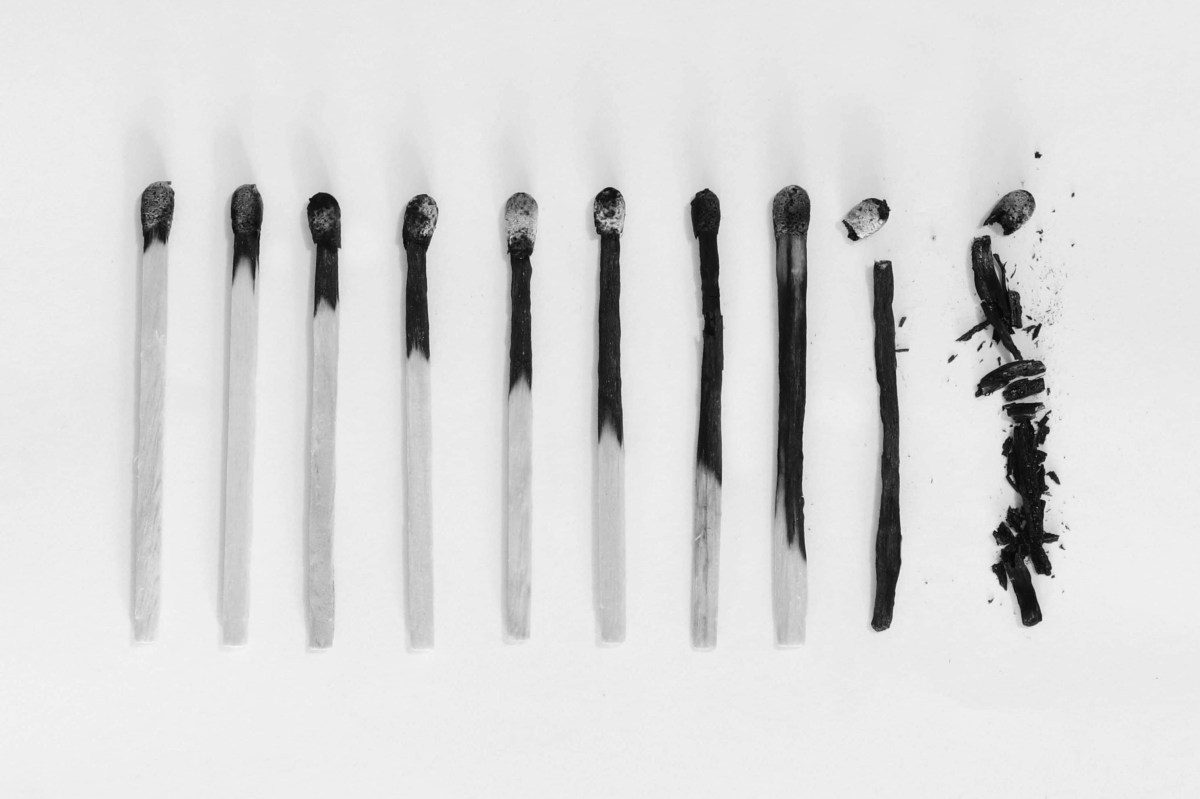
Burnout

This post is a bit more off-the-cuff than my usual essay-style posts about writing. It’s not prescriptive. I don’t have any conclusions or answers. I just have a few things I felt like talking about.

Writer’s Block vs. Burnout

Writer’s block is wanting to write, but finding yourself unable to get the words out. It is perpetually romanticized (by some writers, and some non-writers). If you do a google search, you’ll find millions of suggestions for how to “break through” writer’s block. I’ve made my own contributions.

Burnout, on the other hand, is losing even the desire to write. It’s writing depression; it’s losing the joy or even interest in the stories that compelled us to write in the first place.

The Grinding Gears of the Content Machine

Gone are the days when writers would toil away quietly, hidden from the public eye, perhaps producing a novel every couple of years. (Or wait, was there ever really such a time?)

To be a successful writer today, you are expected to do everything. If you’re a traditionally published midlist author, publishers are doing less and less for you. You’re expected to do more of the marketing and promotion. If you’re self-publishing, then you not only have to do everything yourself, but you’re probably paying out of your own pocket for services like editing and layout. Either way, you need to have a social media presence on a list of sites that changes every few years. You need to be entertaining. You need a Substack newsletter. You need to dance on TikTok with your book, or some shit.

The publishing industry is a massive beast, and it’s slow to change, but it’s clearly moving in the same direction as other modern media. The focus isn’t on making something amazing occasionally, it’s on making a constant stream of “content.” It’s quantity over quality, the obsession with capturing views and the fear that if you give anyone a reason to glance away, even for a moment, they’ll forget about you and never come back.

Earlier this week, I reblogged Lincoln Michel’s post, subtitled “Why are we more comfortable talking about output than art?” That was right about the time when I realized I was falling into exactly that trap.

Background Radiation

Stress is like background radiation. COVID has been stressful, but things are improving, right? It was really bad, and now it’s…better? It’s pretty hard to tell. I used to work in an office, and I’m still working from home. My kids are back in school, but they’re wearing the mandatory masks. Everything is just not quite right. Just a little bit tainted.

I have no intent to talk about politics on this blog, but political strife has come to permeate more and more of modern American life. Where you live is a political choice now. The car you drive is a political choice. Where you work is a political choice. And, of course, how you’re dealing with COVID is a deeply, deeply political choice. It taints everything it touches: a slow poison in the air.

These are the kinds of background radiation that most of us are dealing with every day. I feel bad even complaining about it, because others have it so much worse than I do. But that stress wears away our defenses. It weakens us in body and mind. Winter and the upcoming holidays pile a little more on top.

That building stress level didn’t really come front-and-center in my consciousness until this Friday, when the software development world collectively freaked the hell out over this thing now known as Log4shell, and my entire team got to drop everything we were working on to frantically search for possible exploits and figure out whatever mitigation was needed. Probably the worst computer security issue found in the last year or two.

Oddly enough, that huge stress spike in my day job helped me to realize the stress I had been putting myself under when it came to my writing. Somehow, it snuck up without me realizing. Nothing like realizing you’re sad and have been for a while.

Observing the Signs and Portents

In my February 2021 “State of the Blog” post, I mentioned a two-posts-per-week schedule. I talked about building up a buffer of pre-written posts. Even a whole month’s worth! And maybe, just maybe, adding a third post per week. After all, I was being careful to avoid burn-out.

In my August 2021 “State of the Blog” post, I had apparently given up on the two-month buffer. But I talked about adding a third post to the weekly schedule. Maybe. Sometimes.

I was certainly up to three posts per week when I began actually publishing chapters of Razor Mountain at the start of November. That threw the existing schedule out the window. I decided I would post a chapter of Razor Mountain each week, while still doing a weekly development journal and a weekly post about writing. That left me scheduled to write 4-5 posts per week. And my stats show that I have indeed posted 4-5 times every week from the start of November until last week.

It can also be observed that pretty much every chapter development journal contains some mention of “falling behind.” Despite having one chapter written when I started, I was behind my self-imposed schedule by Chapter 3, and pretty much unable to keep up from that point forward. That makes sense when I had been steadily increasing my expected output. Unfortunately, the power of wishful thinking makes it sometimes seem reasonable to start behind schedule and not only catch up, but get ahead.

In short, it’s easy to get caught up in a self-determined schedule despite that schedule being objectively unreasonable. In my case, I really wanted to be able to finish publishing the book in a year, and I did not want to consider evidence that the schedule was not practical for me.

The Creative Pathology

I am a naturally lazy person. I am the sort of person who absolutely delights in staying up until 1:00 or 2:00 AM, and then will happily sleep past noon. I love to spend a Sunday playing video games all damn day. Without an external stimulus, I am capable of truly astonishing feats of procrastination.

Yet, in complete opposition to this laziness, I am a person deeply concerned with my legacy (as pretentious as that word sounds). I’m terrified of dying without leaving behind any artifacts that somehow prove my worth. Is a life worthwhile if it doesn’t leave behind ample evidence?

Intellectually, I know that’s ridiculous. Emotionally, it’s a feeling I can’t shake. I’m Ozymandias, from the famous Shelley poem.

No matter what we leave behind, memory is always temporary. Some lives are remembered longer than others, but nothing lasts forever. We’ll all be broken statues in the desert eventually.

Still, this dichotomy is probably what drives me to create more than anything else. I know that I can easily fall back to that default state of lethargy. I’ve certainly done it before. There’s a sort of frantic worry somewhere down deep that if I ever stop, I won’t be able to start back up again. The feeling that I need that inertia. Moderation has never worked well for me. It’s just a stepping stone back into apathy.

I don’t think that kind of internal push and pull is healthy, but I suspect it’s the sort of engine that drives a lot of creative people. We’re all Ozymandias, trying to not be forgotten.

(a typical gathering of writers)

Perspective

In a deeply ironic twist, while I was worrying about my output, WordPress came around like an excited puppy and informed me that I hit a new record for page views in a single day. Someone sharing a link or a new reader going through the back catalog still gives me more of a bump in readership than a typical post.

So, is it really worth stressing about?

No. That’s probably obvious from the outside looking in. It’s just a blog. It’s just a novel. If there’s anything I take away from all this, it’s that it’s very easy for things to feel more important in a given moment than they are in the long-term.

I’ve taken a week off the novel, and I might take more. I’ll take a little bit of holiday vacation to de-stress. And I’ll pick back up where I left off and keep writing, maybe not worrying quite so much about schedules and the endless churn of “content.”

Reblog: Writing Is about the Right Words, not the MOST Words — Lincoln Michel

I posted a couple months back about my experience with NaNoWriMo, and how it works well for some writers, and pretty terribly for others. In his post, Lincoln identifies a key problem with the popular (Twitter) discourse around writing that goes hand-in-hand with NaNoWriMo: the tendency to obsess over quantity of output instead of the end result.

This is a problem we see in business all the time: when useful metrics are hard to find or hard to measure, managers will often try to measure bad metrics, and workers will optimize to excel at those metrics rather than trying to get the best results.

But the general attitude is one I see all the time. Writers are often less comfortable talking about aesthetics than productivity. They’ll brag about the years they worked on something or the number of drafts they’ve done. It’s as if they aren’t making art but operating a plastic pellet factory. “Check out this optimized output!” And I get it. Art is hard to talk about.

Read the rest over at Counter Craft…

1K

This happened a couple weeks ago, but I figured it was worth a mention.

It’s not exactly a huge number, but it’s something. Looking back, what’s more interesting than the actual number is that the first ~500 took eight or nine months, while the second ~500 took about four months.

Anyway, thanks for reading, and special thanks to the regulars. Seeing the same names in my notifications each week makes me think I must be doing something you like.

Mapping Dialogue

Dialogue is a cornerstone of fiction. It’s also one of the hardest things to write well. Dialogue isn’t like real life conversation. Let’s face it—real conversation is often not that interesting to someone not directly involved, and doesn’t always serve a purpose. Dialogue in fiction can’t afford to be dull and meandering. It has to be pulling its weight.

Mapping dialogue is a way to plan, analyze, or fix dialogue by looking at what it contributes to the story. It’s all about deciding what the dialogue should accomplish, and then figuring out how it can accomplish it. It won’t turn dull dialogue into snappy conversation—but it will ensure that the dialogue is at least moving the story forward.

Dialogue mapping can be used when outlining or planning, to make sure the dialogue achieves a narrative goal. It can also be used in revision to tighten up dialogue that isn’t getting the job done.

Finding Purpose

Dialogue, like anything included in a story, should have a purpose. If it has no purpose, it can be safely left out, the way you’d leave out a character’s irrelevant breakfast, or that bathroom break they took between scenes.

To understand the purpose of a given conversation, you need to look at the state of the story before and after. What does the conversation change? In what way does it move the story forward? You can think of this in terms of how the dialogue contributes to the MICE quotient thread that contains it. The conversation itself may also be a small thread of its own. Either way, it needs to contribute to the bigger picture in some way, or the story is just treading water.

Since a conversation consists of two or more characters, this before-and-after effect can be broken down for each person. Each character has their own goals, and each character may change, or change their goals as a result of the conversation.

  1. What is the state of each character at the start of the conversation?
  2. What does each character want at the start of the conversation (in the story, and in this particular interaction)?
  3. What is the state of each character after the conversation?
  4. How has each character’s goals changed after the conversation?

These individual character differences add up to form the total change in the story from a given piece of dialogue.

Dialogue is Conflict

Dialogue has two main story purposes: information sharing, and conflict. However, information sharing isn’t terribly interesting without some sort of associated conflict. It can become interesting if the information is incomplete, incorrect, or not given freely.

As an example, consider a detective trying to solve a murder. If they ask the witness, and the witness explains exactly who the killer was, how they did it, and why, then the story isn’t interesting. However, if the witness only saw a fraction of what happened, the detective has to make inferences and combine information from other sources to solve the crime. If the witness doesn’t want to help, the detective needs to find a way to change their mind or trick them. If they lie, the detective needs to discover the lie. These “twists” on basic information sharing are all forms of conflict between the characters.

This conflict is caused by interactions between the characters’ goals:

  • Characters with similar or identical goals may try to work together toward a common cause. In this case, the conflict is something external that they team up to fight.
  • Characters with opposing goals will try to succeed at the expense of each other. One or the other may end up “winning” the conversation, or it may end in more of a tie, with the tension remaining or ramping up. They may get something useful from the conversation, or it may just increase their animosity for one another.
  • Characters with different, but not opposing goals may make a trade where both try to gain something from the conversation.

Action in Dialogue

Sometimes characters just talk, and sometimes they act without speaking, but often the two go hand-in-hand. When mapping out dialogue, it’s important to consider the actions that the characters will be taking while they talk. Are they just sitting in a room, or are they in the middle of a heist, trading quips between the safe-cracking and zipping down elevator cables?

Scenes can really start to pop when the characters’ actions in a scene drive one thread of the plot, while the characters’ dialogue in that same scene drives a different thread. The two characters may be stealing the diamond so they can pay off their debts to the deadly villain, but they can also be flirting in a way that ramps up the sexual tension, or trying to work out which of their fellow criminals ratted them both out.

Of course, sometimes the action and the dialogue go hand-in-hand, both advancing the same story thread. But beware scenes where only the action or dialogue is doing work. Meaningless dialogue during important action, or vice-versa, is a missed opportunity.

Charting a Course

Here’s a simple example with some of our heist dialogue in a table with a column for each character, and actions (in parentheses).

NatashaFrank
(slides down elevator shaft first)(slides down elevator shaft second)
Comments about the view from below. 
 Asks about Boris’s suspicious behavior recently. Is he the traitor?
She trusts Boris—he saved her in Amsterdam. 
(Works on the vault lock until it opens)(keeps watch)
Asks about Rocky—he knew things about her dad that he shouldn’t. 
 Agrees that Rocky is suspicious. He seemed to be snooping when they were planning the job.

The important thing is to list out the segments in order. Dialogue is give and take. In a typical conversation, each segment will lead logically into the next. When mapping dialogue, it typically looks like a series of actions and reactions.

Sometimes the characters will exhaust a topic and move on to something else, but even that requires planning. If one of the characters has more to say, they may not want to shift topics. If there is a break, one of the characters will usually start a new topic that pertains to their goals at that point in the conversation.

Mapping in Revision

Dialogue maps can be useful for editing, by providing a tool to analyze dialogue that’s already written. If a piece of dialogue doesn’t feel right, a dialogue map can reveal structural problems. Does the conversation flow naturally from the characters’ starting points and goals? Is there conflict? Does the flow of the segments back and forth make sense? Do the characters leave the conversation with new goals or knowledge? What changed?

Because dialogue maps are a structural tool, they won’t help with voice. A piece of dialogue can be perfectly functional in pushing the story forward, but still come across as stilted and artificial. Dialogue maps describe the content of the conversation, but not the exact wording.

The other important function of dialogue maps in revision is in making sure that changes to dialogue don’t break the structure. I often find that I want to change something that a character says in the middle of a conversation. Maybe I come up with a single line that I really want to include. Because of the nature of dialogue as back-and-forth, one change can result in another character’s response no longer making sense. Sometimes a change to one segment requires that the next segment change, and the next segment, and so on.

With a dialogue map in hand, it’s much easier to embark on this kind of reworking with an understanding of what that conversation has to accomplish. Even completely replacing the entire conversation is possible, so long as it starts and ends with the same character states and goals, and the appropriate action still happens.

To Map or Not to Map?

Depending on how you write, you may want to do some dialogue mapping before writing, as a guide through the conversation. It can be especially useful when more than two characters are involved or there’s a lot going on in a given scene.

If you’re less inclined to plan, you can always write first and ask questions later. Mapping dialogue after the fact is a great troubleshooting tool for a scene that feels “off,” or even as a way to decide exactly what a meandering conversation should be about.

Mapping every single conversation may be overkill. It can be a lot of work. But it’s a useful tool in the writer’s toolbox for addressing one of the biggest challenges of writing great stories.

Razor Mountain Development Journal — Chapter 4

This is part of an ongoing series where I’m documenting the development of my serial novel, Razor Mountain.

You can find my spoiler-free journals for each chapter, my spoiler-heavy pre-production journals, and the book itself over at the Razor Mountain landing page.

Research

This chapter’s research was all about flights and preserved food.

I had to figure out more of the details of Christopher’s flight plan. I looked up flights from Minneapolis to Anchorage. There are a wide variety of airlines that make the trip, and the flights are typically about 8.5 hours, which is more than I would have guessed. The distortions of the Mercator projection strike again.

I figured if he were headed to someplace less populous, he would probably connect in Anchorage. From Anchorage, I needed it to be a long enough flight to his actual destination that he might reasonably fall asleep and also fly over mountainous wilderness areas. Fairbanks fit the bill pretty well. I haven’t gotten too deep into it in the story, and probably won’t, but Christopher was on a sales trip trying to sell products to electrical utilities. In this case, the GVEA electric cooperative.

Flying from Anchorage to Fairbanks would send him over the Alaska range and would also be somewhat close to Denali National Park and Preserve, a 6-million acre park with a single road entrance and a small airport, McKinley National Park Airport.

While I was searching for info about what it might be like to board a small plane in Anchorage, I found a plane-spotting website and then spent a while going down that rabbit hole. One of the fun things about writing is discovering these random topics and subcultures that I know nothing about. I have absolutely no desire to go somewhere to watch planes, but I love anything where I can hear (or read) someone discussing something they are intensely passionate about.

For the preserved food, all I really needed for this chapter was something portable that Christopher could bring on his hike. However, I’ve been working on a larger list of long-lasting foods to fill the pantry. Christopher’s eats are going to be an ongoing background detail. It’s reasonable for the bunker to be stocked with long-lasting, zero-maintenance foods, but from a story perspective I also want things that preserve the mystery of how long it’s been since someone last used the bunker.

The meaty stuff that Christopher took on his hike is called pemmican. I found it through survivalist websites, although it has been around for centuries. It’s basically dried meat powder mixed with tallow and sometimes berries for flavor. It’s a high-energy food and one of the few meat products that can last for many years when properly prepared.

The final bit of research I had to do was around flint and steel. I was about as familiar as Christopher is. Thanks to a million RPGs and fantasy stories, I knew that these are used to make fire, but I’ve never actually used one. I looked into several different types and how they’re struck, as well as accoutrements like char cloth.

The Breaking Point

In the first three chapters, I found fairly natural break-points where I could split up episodes. This chapter was about 3.5k words, enough that I could theoretically break it into three episodes a little over 1k words each. Unfortunately, I only came across one break-point that I liked. I tried to find a second, but I wasn’t very happy with the placement, and it still would have left me with a very short third episode. Instead, I opted to just break the chapter in half. This ended up bringing me quite close to Tapas’ 15k characters size limit. I hadn’t bothered measuring it before, but it ends up being around 2k words. So this is about as big as an episode is going to get.

This week, having only two episodes worked out well, because I didn’t get all my revisions from feedback done until Tuesday, and I wouldn’t have been able to post three episodes without pushing this post into the weekend. As you can tell, I’m still working on getting ahead of the posting schedule.

I think part of my challenge has been that my chapters are continuing to skew long. Okay, not that long, but in the past I have tended toward ~2,000 word chapters. That may just be my style changing over time, but I’ve been wondering if there are other factors. I produced a more detailed outline for this project than I usually do, so that might have had some impact. I also suspect that I’m cutting fewer words in editing than I would be if I wrote the whole book and then edited all at once, instead of writing and revising the chapters in sequence.

Finding Drama

Christopher has had a bad time so far, but the bunker seems relatively safe. He’s lazy, like me, and he has to fight his instinct to lie low if he’s going to have a chance at being rescued. I tried to get into how he’s feeling toward the end of the chapter, as he realizes that he probably needs to save himself.

It’s a lot harder to dramatize dying slowly by doing nothing than dying quickly in an attempt to escape. Christopher will be facing some of both, but I wanted to lay some groundwork and get the reader into his head space here. He’s not someone who was inclined to take low-stakes risks in life before the start of the story, and he’s finding it hard to think about taking high-stakes risks now.

Back to God-Speaker

We now have three Christopher chapters and only one chapter of God-Speaker, but we’ll be getting back to him next week. I feel more comfortable writing Christopher, so I may have to work a little harder to keep God-Speaker’s chapters entertaining. I’m a little worried that the 2:1 chapter ratio will make him feel too much like a B plot, but that structure is baked-in now, and there’s no going back. Luckily, constraints breed creativity.

See you all next time, for Chapter 5.

Razor Mountain — Chapter 4.2

Razor Mountain is a serial novel, with a new chapter published every week. For more info, visit the Razor Mountain landing page.

There were three or four of everything in the storage room, which meant that Christopher had a limited range of random clothing sizes to choose from. The largest pair of boots was about a size too big, but the rest of the boots were far too small. He found one of the heavy overcoats that fit well enough and a pair of gloves that were perfect for him. Then he grabbed a tinderbox and a hatchet and made his first real excursion outside the bunker.

The radio was still the most likely way to make contact with the outside world, but he had no idea what frequency he was broadcasting on, what frequencies anyone was likely to be listening on, or what the range was on the damn thing. The only transmissions he had heard were from the cycling numbers station, and if they were hearing him, they weren’t acknowledging it. A multi-pronged approach was in order. He would try other signals.

First, he shuffled to the nearest group of pines and chopped off the lower branches, looking for a good mix of dead wood and green. He heaped it up in the rocky, open space between the bunker door and the lake. Then he collected a large pile of dry pine needles. He criss-crossed small bits of deadwood over the needle pile.

He still had sharp pains in a variety of joints when doing almost any physical activity, but it felt good to be outside, and he thought his troublesome right leg felt a little bit better. He was sweating under the overcoat after fifteen minutes of chopping and hauling.

The tinderbox was a little wooden box painted gray-green and labeled in stenciled white letters. When he opened it, he found several strips of black cloth and two pieces of metal. Christopher had never used flint and steel, but he had assumed that one would clearly look like metal and the other would clearly look like rock. These were both rectangular metallic pieces of slightly different proportions. He had to scrape a few edges between them before he got them to spark.

Once he understood the basics, it was surprisingly easy to produce a cascade of sparks with the flint and steel. He tried to light the little pile of pine needles, but a cold wind was gusting across the open space, and the needles only smoked and smoldered. He piled the wood next to the needles, as a bulwark against the wind, then stood on that side as well. Already sweaty, he was getting uncomfortably hot striking the flint and steel over and over. The wind was icy on his neck and face where his clammy skin was exposed.

He had wanted to save the little scraps of fabric that were obviously intended to be used as kindling, but the needles refused to light after several minutes. He finally took a scrap of the black cloth out and draped it over the needles. It only took a few tries for the sparks to light it, creating a tiny, fluttering flame. With the flame going, the needles caught fire more easily, and soon he had a decent little fire going.

“You thought this would be easy,” he muttered. “You didn’t think about how you’ve never done any of this before. You’ve barely been camping. Flint and steel starts fire. Wood burns. Easy, right?”

He placed several dry branches onto the pile as it crackled and sizzled. The needles were consumed in less than a minute, and the pine branches were burning well, but much more quickly than he had expected. The wood he had cut would only last a few minutes, and he had built the little fire a hundred feet from the trees.

“You’ve got to plan these things step by step,” he said. He threw the rest of the dry wood onto the flames, and stacked a few pieces of the green wood with intact needles on top, in hopes that it would burn more slowly.

He hobbled back to the copse, finding an untouched tree to hack at. He glanced at the fire as he worked, worrying as the flames dwindled. He chopped quickly and haphazardly, and returned to the much-diminished fire with an armful of wood. He sorted out some of the dead branches and threw them on to get the fire going again, then began to arrange the rest of the wood over it.

He had hoped to get a good fire going, then use the green wood to create thick smoke for a signal that could be seen by any nearby towns or passing aircraft. However, the wood was burning too fast and not generating that much smoke. The plume blew away in the wind before it could get very high. The attempt was clearly a failure. He’d just have to treat it as a test run. He would need an improved plan for the next time.

He would need more fuel. The fire ate through the skinny pine boughs much more quickly than he’d anticipated. He’d want to look for something that made thicker smoke. The fresh needles and green wood produced an unimpressive amount of gray smoke that would be hard for anyone to see against the dull clouds or snowy peaks. Finally, he would need to do something about the wind. It would help to wait for a calmer day, but Christopher didn’t know what typical weather was like up here. For all he knew, the wind always blew like this.

The problem with the wood was that he had already hacked away a lot of the lower branches from the pines close to the bunker entrance for his failed fire. He would need to go further afield, to the trees ranging further down the lake shore. He would need to do some scouting, which was fine because he had already intended to walk around the lake and get a better sense of his surroundings. He needed to determine conclusively where the bunker was on the map (or if it even was on the map).

He felt his energy ebbing. A slow walk around the lake had seemed reasonable first thing in the morning, but now he wasn’t so sure. He would definitely need a more manageable solution for hauling the wood if he was going to chop more and bring it further for another fire.

The sun was getting high in the sky. Christopher went back to the bunker and looked for some food that he could take with him. There were shelves in the pantry that appeared to contain various kinds of field rations. A few were labeled “MRE,” but many of the packages were inscrutable. He found a box of bars in vacuum-packed plastic that were pliable and made from some kind of reddish-brown, greasy, granular substance with more colorful bits embedded. He guessed they were some kind of granola bar, or a very odd piece of jerky. Either way, he grabbed two and went back out.

There was a tall, lonely birch among the pines that he had used for his fire, and he found a thick, sturdy branch to use as a walking stick. He began trekking down the shoreline.

The beach was mostly gravel — sharp little shards of rock — and Christopher found it easier to walk further back from the water, where the rocks gave way to hard ground, scrubby grass, and occasional shrubs and boulders.

Once again, Christopher was struck by the desolate beauty of the landscape around him. There were no planes overhead; no signs of people whatsoever. He barely even saw animals. Occasionally, a sparrow or chickadee would hop between nearby branches or be visible picking at half-frozen berries in a bush. Christopher saw a flash of movement in the needled carpet beneath some pines, but couldn’t identify the animal. Otherwise, the only sound was the wind and the faint lapping of the water.

Time passed. He had no way to measure it exactly, but the sun was descending. With mountains all around, the horizon was high, and the sun set quickly. He felt himself slowing down, and his right knee was tightening up. He knew he was pushing his body more than was smart, but there was some sort of freedom in moving, in being outside instead of trapped in the stone-walled bunker.

He wouldn’t be able to make it around the lake before sunset, so he decided to take a break. He found a small boulder with a flat top and took a seat. He took out one of the sealed bars and opened it. It had a faintly salty smell, not unlike bacon, with a fruity tang. It didn’t smell rotten, but it was a little musty.

He took a tentative nibble. It was greasy and a little meaty, like a sort of ground-up jerky. The brighter bits turned out to be some kind of fruit, maybe dried cranberry. If someone had asked Christopher whether he wanted to eat ground jerky with berries a few days earlier, he would have replied with an emphatic no, but now that he tasted it, it wasn’t awful. Not exactly a treat, but after a morning of exercise in the cold, it was energizing.

The sun dimmed behind a fluffy pile of cumulonimbus clouds, and Christopher could feel the temperature drop a few degrees as he finished the strange bar. The living landscape painting surrounding him was drained of its color, leaving a world of the same gray-green that was so prominent inside the bunker. Heavy flakes of snow began to fall.

Christopher had already been thinking about turning back, and the snow immediately confirmed that decision. The food reinvigorated him, but his injuries ached more after the brief pause. The snow fell thicker, and soon the world was reduced to a bubble around him as the blowing flakes reduced visibility. The snow accumulated, and the ground grew slippery. Several times his foot slid, and he was grateful for the walking stick to help prop him up and avoid twisting any of his already damaged limbs.

He began to worry that the snow would alter the landscape enough that he would lose track of the bunker. It would be ridiculous to find this safe haven against astronomical odds, only to lose it after a short hike. However, he recognized the trees he had chopped when he came upon them, and the remains of his fire were still a black smudge in the fresh snow.

From there, it was easy to find his way back to the cliff and the embedded hatch. He tapped the code into the keypad and went inside, where the air felt over-hot after the stinging wind and sweating in his overcoat. He stripped off his outer layers and set about making another dinner of rice and beans. If he wasn’t rescued soon, he would have to do a proper inventory of the available food.

He sat, and the uncomfortable couch was blissful. He ate, and the simple food was amazing. He jotted a few notes in the notebook and unfurled the map again, but he had little more to add to his knowledge of the surrounding landscape. Tired and full, he sank into a daze. He thought he ought to do something useful, perhaps try to determine if the radio signal jumped frequencies in a predictable pattern. But he didn’t want to. He was worn out. He was in pain. It was warm in the bunker.

Half-dozing, he felt as though he were drifting outside his own body. In this dreamy state, he watched himself laying back on the couch, doing nothing. He could see backward and forward in time. He glimpsed the insane jump from the plane and the fall into the lake. He saw a smear of future moments, hiking around the lake, lighting signal fires, tuning the radio for meaningless signals.

He felt his heart constricting in his chest. This place was safe and warm, yes. There was food, perhaps for years. There was no immediate danger, no impetus to push him. He saw further back into his life. When had there ever been any impetus? He drifted along the path of least resistance. He was boring and safe. When had he ever taken chances?

He fell into his own body again, waking with sudden adrenaline. He heard his own breathing, shallow and fast. His chest was tight. He clung to the couch. He had the frantic feeling that the stone walls were pressing close. The bunker was a safe, secure prison. It would be easy to stay here, to wait on others to find and rescue him. But his plane had gone down under strange circumstances. They might not be looking.

The easy path would be to wait for whatever would come. Maybe he would be rescued within a week. Maybe he would be trapped for months or years, and eventually run out of food. He knew himself. If he let his guard down, it would go that way. He needed to plan. He needed to do something.

He got up and tried to slow his breathing, still feeling like he might be having a panic attack. He brought the notebook to the radio and scanned the channels. Frustratingly, he couldn’t find the signal at all. Either it wasn’t transmitting, or he was missing it. It was dark outside now, and the overhead lights dimmed to a flickering lamplight glow.

He gave up on the radio and stood, wincing as pain flashed through his right leg. The wood chopping, the hike, and the cold had been too much. Or perhaps it had been the dream-induced panic attack that had tensed his whole body like a single muscle. In any case, his body would limit what he could do for days or weeks to come. He would have to be more careful or risk slowing himself further.

He limped to the bunks and lay gingerly in the bed, still fully clothed. He felt nearly as tired as he had when he had first collapsed in the bunker. He was dirty and sweaty and smelled of fire and pine needles.

He lay there, his eyes too heavy to open, his limbs too heavy to move. But he couldn’t sleep.

<< PREVIOUS ] [HOME] [ NEXT >>

Razor Mountain — Chapter 4.1

Razor Mountain is a serial novel, with a new chapter published every week. For more info, visit the Razor Mountain landing page.

When Christopher woke, light was streaming from the slats in the ceiling. He felt as though he had slept for days, though he had no way of actually knowing. As far as he could tell, there were no clocks of any sort in the bunker.

The long rest felt necessary, but the uncomfortable bed had done nothing to ease his battered body. If anything, all of his aches and pains had settled in and gotten comfortable. In some places they were less acute, but deeper. It made Christopher worry that he was  damaged in ways that wouldn’t properly heal without medical attention. His right knee and ankle especially ached in the joints, and jolted him as he got to his feet.

He realized there was no proper place for bathing in the bunker, but he stripped down and ran enough water in the little sink to wash with a bar of soap from the store room. Once he was somewhat clean and had gingerly washed his various scrapes and the crusty gash down his calf, he started to get dressed again. Then he thought better of it and did his best to scrub his filthy clothes in the sink. He laid them over the backs of the steel chairs and sat down to wait for oatmeal to cook in the weird little oven. He felt awkward, sitting naked, even though he was completely alone. He wondered if there might be security cameras hidden around the place. If so, they had already seen all of him that there was to see.

Sitting with nothing to do for a few minutes, he suddenly began to remember bits and pieces of dreams from the night before. They were  faded and half-forgotten, but he remembered hiking through the snowy forests and mountains. He had the vague sense that there were others following, but he never turned around to see them.

When he remembered to check on the oatmeal, it had already boiled over and was in the process of burning. He did his best to clean the hot box, wiping with a rag and scraping with a spoon, slightly singeing his forearm. The entire bunker reeked of burnt oats. He ate the unburnt portion directly from the little saucepan. As he ate, he opened the notebook to a fresh page.

“Alright, what do you remember?”

He thought back to Anchorage. The flight from Minneapolis had been dull. He had a seat near the back of the plane, in the zone that combined the smell of the bathroom with the maximum possible engine noise. If he had ever had the hint of a thought that regional sales would be glamorous and exciting, he had been disabused of it.

He had a layover in Anchorage, just under two hours. Long enough to be tedious, but not enough to do anything or go anywhere beyond the dull beige-tiled corridors and uncomfortable seating of the airport. He had browsed emails and art websites while he waited.

Boarding the flight to Fairbanks had only been interesting because Christopher had never flown on such a small plane. He was used to taking the boarding bridge onto large planes, not scanning his ticket and walking out onto the tarmac. He had paid more attention to the plane itself than the passengers that boarded with him. He closed his eyes and tried to remember them in as much detail as possible.

There was a man, younger than him. He had been on the plane already, in one of the rear seats when Christopher stepped on. He remembered the back of the man’s head. Dark brown hair, almost black. Parted, and a little greasy. He remembered the elbow on the aisle armrest: a brown coat with leather patches on the elbows. An oddly old-fashioned look for somebody young.

There had been a woman, maybe a little older than Christopher, who came aboard after him and sat in a seat near the front. Her hair was platinum blond, a color that might have been natural or dyed, or perhaps a slightly darker shade naturally verging toward an elderly white. It had been wrapped in a bun.

Christopher wasn’t sure if he had seen either of their faces. If he had, he didn’t remember them. He remembered the pilot, who had helped him stow his luggage and get to his seat with as few words as possible. An older man with white hair mostly covered by a white pilot’s cap with a black plastic brim. The man’s face had been creased and grim; the sort of face that wanted to get things done with a minimum of fuss.

Since the small plane had been a new experience for Christopher, he hadn’t thought much of it. Looking back, it was a little odd. The plane seemed relatively new, especially compared to some of the other small planes at the airport. It seemed strange that they’d fly it with only three passengers. They couldn’t be making much money on a flight like that. The tickets had been dirt cheap, which he assumed was the reason his company travel site had recommended them. The name of the airline had been something generic: something like Fairbanks Air Taxi.

Christopher ran through his memories step by step, making small notes and sketches of the plane and what he remembered of the passengers. He wished he had paid more attention to his ticket, but he couldn’t remember his flight number or be sure he even had the name of the airline exactly right.

He had a flash of memory: the woman in the front seat had gotten up at some point. He specifically remembered her bumping into him as she moved down the aisle. A sharp pain in his arm. He still couldn’t envision her face. Had she gone to that awkward little toilet in the back, with nothing but a curtain to shield it? He thought he would remember if anyone had used that. He couldn’t remember anything more about the incident.

As he thought about it, he remembered feeling groggy and nauseous when he had awoken alone on the plane. He had felt off-balance and had a hard time focusing. He had felt sick. Or drugged.

The idea seemed absurd on its face, but everything after that moment had been so insane that it didn’t seem any more far-fetched than any other possible explanation.

He flipped to a new page and titled it “What is going on?” He began a bulleted list, then laughed aloud as he read it back to himself.

  • A crazy accident
  • Something supernatural
  • Someone trying to kill me
  • It’s all a dream

The insane thing was that he honestly wasn’t sure which option was the most likely.

<< PREVIOUS ] [HOME] [ NEXT >>

The MICE Quotient

The MICE Quotient is an idea that originated with Orson Scott Card, in his books on writing: How To Write Science Fiction and Fantasy, and Character and Viewpoint. It has been updated and expanded by Mary Robinette Kowal, one-time student of Card, and award-winning author in her own right, who is one of the main hosts of the Writing Excuses podcast.

In its latest incarnation, MICE stands for Milieu, Inquiry, Character, and Event. It’s a framework for understanding where the overlapping threads of a story start and end, and how they’re affected by obstacles and complications along the way. It can be useful for architecting stories, or figuring out what’s wrong with a story when it seems to have gone off the rails.

Milieu

Milieu threads are all about setting and place. The thread begins with the character entering or exiting a place. It ends with exiting the place, returning home, or entering yet another place.

Obstacles in a milieu thread typically prevent the character from freely coming and going — physical barriers or something more subtle like emotional ties.

Sci-fi and fantasy often have a milieu component in the form of new worlds or fantastic places. The hero’s journey often includes a milieu thread that starts with “crossing the threshold” and ends with the “road back.” Prison dramas and heists, The Wizard of Oz, and Alice in Wonderland are clear examples of milieu threads as a main driver of the story.

Inquiry

Inquiry threads are all about asking and answering a question. The thread begins when the question is posed and ends when it’s answered and understood.

Obstacles in an inquiry thread typically prevent the character from gathering the info needed to answer the question, or things that broaden the scope of the question.

Murder mysteries (any mysteries, really) are the classic example of inquiry-driven stories.

Character

Character threads are all about a character’s self-discovery or change. The thread begins when the character questions who they are, and ends when the character decides the answer to that question — either accepting who they are, or changing in some fundamental way.

Obstacles in a character thread are things that prevent the character’s self-discovery. That may mean the character tries to be something they’re not, and fails. It may mean the character tries to stay the same in the face of changing circumstances, and has to bear the negative results of that.

“Coming of Age” stories and romances are typically character stories.

Event

Event threads are all about disruption of the status-quo. They start when the established order is disrupted, and end when the status quo is restored (or a new status quo is set up).

Obstacles in event threads are typically things that prevent the situation from settling.

Disaster movies and spy thrillers are often driven by event threads, as characters seek to overcome the disaster or stop the villain’s evil plot.

Multiple Threads and Nesting

MICE threads can describe sweeping arcs across a whole novel, but stories can also be analyzed as a series of MICE micro-threads. An inquiry thread might be a character having a question at the start of a chapter, and finding the answer by the end. A character thread might consist of a single conversation where one character changes another character’s mind. Ideally, the resolution of one small thread will lead naturally into other threads, keeping the momentum going.

A single thread by itself produces a very simple story. Most stories have multiple interrelated threads. Threads do not have to proceed serially, one after another — they can be nested several layers deep, although at some point you risk muddying the waters for the readers who has to keep track of it all.

Kowal suggests that nesting threads in a first-in, last-out (FILO) structure is easiest for readers to parse. For example, my novel Razor Mountain begins as a classic type of Milieu story—the survival story. Christopher is lost in the Alaskan wilderness and he wants to get back home. However, as the story continues, there will be a Character conflict as well. Christopher will end up facing challenges that make him question himself and what kind of person he wants to be. Near the end of the book, Christopher will face a final choice that determines his character, finishing the character thread. As a result of that choice, he will exit the milieu, one way or another.

Simple nesting looks like matryoshka dolls, one thread within another. Complex nesting looks more like IKEA furniture, with each box possibly containing multiple boxes of different sizes.

Applying MICE To Outlining

Using MICE in outlining is a proactive approach to building story structure. Stories usually contain bits of all of the MICE elements, so the strategy when outlining comes down to asking yourself as the author, “What matters to me in this story?” As Kowal illustrates with the Writing Excuses homework assignments, any given story can be told with any one of the MICE elements as its primary driver.

In the outline, you can choose which MICE thread is most important, and nest all the other threads within it. You can then construct obstacles for the characters that block the resolution of specific threads. You can tweak inner threads so their resolutions affect the threads containing them.

Applying MICE to Editing

Using MICE in editing is more of a reactive approach — looking for parts of the story that don’t feel right, and analyzing them in terms of their MICE threads.

When the story isn’t working, try to identify the different MICE threads. Which ones are introduced first? Are they all getting resolved? What order are they resolved in? Are the sub-threads creating obstacles that contribute to their parent thread, preventing the characters from resolving a larger issue? Or are they introducing side complications that only distract from bigger, more pressing issues?

For example, take my favorite dead horse to beat: the show LOST. It introduces dozens, probably hundreds of inquiry threads, and many character threads. The character threads are mostly resolved, but some are resurrected later on. Many of the inquiry threads are left hanging with no resolution. The nesting is impossible to follow because there are so many threads.

As a different example, Lord of the Rings creates an epic story with a sequence of endings that irritate some readers. Reordering those endings to follow a clear FILO nesting structure would probably make them feel less like the books keep ending over and over for five chapters in a row.

That’s MICE

Like any writing technique, the MICE quotient is not a magic bullet. It won’t fix every problem in every story, and sometimes you can break the formula and still come up with something that works. You can probably think of at least one classic story that stands up despite breaking the nesting rules or structuring story threads in unusual ways.

On the other hand, the MICE quotient is a great starting point or default. It can be a guardrail when a story starts going off the tracks, and a guide when navigating the mire of a difficult outline. It’s an easy way to analyze plot structure through beginnings, endings, obstacles and nested threads.

If this piqued your interest, the full series of Writing Excuses episodes provide a great deep dive in eight short parts.

Razor Mountain Development Journal — Chapter 3 (Redux)

This is part of an ongoing series where I’m documenting the development of my serial novel, Razor Mountain.

You can find my spoiler-free journals for each chapter, my spoiler-heavy pre-production journals, and the book itself over at the Razor Mountain landing page.

Since I ended up posting the Chapter 3 episodes last week and this week, I had a brief Chapter 3 journal last Monday. I wanted to wait until after the episodes were out to avoid any potential spoilers. So now we can speak freely.

Momentum

Christopher exploring the bunker has a certain element of mystery that helps propel the chapter, but I don’t think it’s not enough to sustain the momentum all on its own. The radio message and the map ramp up the mystery, while also giving Christopher some useful clues that he can use to start solving those mysteries.

The sooner Christopher can take an active role in determining his own destiny, the sooner he can start to be a compelling character. That active participation is important, even if it’s just small things. Characters who are just passive lumps, waiting for things to happen to them, are not interesting characters to read about.

Themes

There were several themes that I wanted to keep up throughout the chapter.

  • The strangeness of the bunker. A secret bunker in the wilderness has some built-in strangeness, but things like bunks, a radio, and survival gear are all reasonable things to find in that place. There are other things that are oddities, like the weird oven, the many-piped device behind the storage room, and the lights and odd decorative flourishes. I wanted the bunker to feel “off” in a few ways, to enhance the feeling that there’s a mystery here. (I also made sure to reference the strangeness of Christopher guessing the door code.)
  • Physical pain. Christopher likes action movies, but this is not an action movie. Jumping out of the plane was crazy, and it ought to have killed him. His survival is already a miracle, and he’s going to pay for it. It’s hard to make jumping out of a plane and surviving seem like a realistic thing, but I’m going to try. Christopher is thoroughly beat up, and I wanted to keep that in the forefront of the reader’s mind. He’s not going to be running and gunning by the next scene. He’s going to be hobbling and limping.
  • Christopher’s emotional state. I didn’t focus on this as much as the physical pain, but I wanted to make it clear that Christopher is someone who can work things out. He’s naturally compelled to be a puzzle solver. Even though he spends most of the chapter hobbling around, looking at things, and wondering what’s going on, he also spends some time thinking and planning. He tries the radio, even if it doesn’t work. He’s already thinking about next steps.

Editing Out Weak Language

One of the stylistic errors that I continue to fight is hedging language. I always find a few points in every chapter where things “seem” or “feel” or “are like” something, and I have to delete those words so they just are. I think this is a symptom of uncertainty while writing. If I’m not sure I have the right words or I am going in the right direction, this hedging slips in as a symptom. All it does is make the language weaker. On the upside, I’m developing a pretty comprehensive list of these problematic words, so I can catch this stuff quickly during revision.

Getting Back on Track

I started publishing Razor Mountain with a little more than one chapter already written, to give me a buffer. (The second was done, but not fully revised.) I intended to publish one chapter per week, fully knowing that would be a stretch for me. It only took until Chapter 3 for me to start to fall a little bit behind.

With Chapter 3 spread out across two weeks, I have a week of buffer again to get ahead on writing and keep going with the chapter-per-week cadence. I’m trying to stick with that plan for a few reasons.

First, it ends up being a nice amount of posts each week. Most chapters are going to split into two or three short episodes in order to fit the word count limits on the serial services. Filling Tuesday – Thursday with Razor Mountain fits neatly between a Monday craft post and this Friday development journal. If I ever have a really long chapter, I have the flexibility to split it between two weeks and maybe throw in some short posts or re-blogs.

Second, it feels like a stretch that is still achievable. One of the reasons I started blogging in the first place was to acclimate myself to writing more, and doing it on a regular schedule. I have to say, it’s been a resounding success. Having to write for my blog schedule (even though it’s self-imposed) has gotten me to write more, and write with consistency. I used to write in fits and starts. Now I write almost every day.

Writing on a tight schedule has forced me to be a little less precious about my writing. Posts can always be improved, but I’ve started to get a good sense of when I’m better served by expanding this week’s upcoming article, and when I should just let it go and think about next week’s post. I’m juggling Razor Mountain and blog posts, and I prioritize now, instead of putting things off and only writing what I feel like, when I feel like it.

I think I need to cultivate a little bit more of that attitude for Razor Mountain. I want it to be good, but there’s a limit to how much I can revise when I’m publishing serially. That’s okay. That’s the nature of the project. I console myself with the idea that I might go back when it’s all finished and clean up every little part I don’t like. Razor Mountain: The Director’s Cut. Whether or not I end up doing that, it helps keep me going.

I’ll keep trying to hit the chapter-per-week. If I find myself consistently getting behind, then I’ll reevaluate that and adjust the schedule. For now, let’s plan on Chapter 4 next week.