Summer is here, and I’m currently in the process of packing to move. It turns out you can acquire a shocking amount of junk when you spend almost 15 years in a house, so I’m going through it and getting rid of everything I can.
This past month was light on reading, but I did manage to get through a couple of books.
Where possible, I’ve included Bookshop affiliate links instead of Amazon. If any of these books pique your interest, please use those links. I’ll get a small commission, and you’ll support real book stores instead of Armageddon bunkers for billionaires.
I’m still reading Discworld with the kids at bedtime. This title features some of my favorite recurring characters: Death (and the miniature rat version, the Death of Rats); Susan, his grand-daughter; the wizards of Unseen University; and the mysterious and villainous Auditors, who are not permitted to meddle in the affairs of mortals, but keep coming up with clever schemes to wipe them out so the universe can be neat and orderly.
The Discworld version of Death is, in some ways, the classic trope of the robot who wants to become human. He may be an anthropomorphic personification, but he has spent centuries around people, and he can’t help that they’ve rubbed off on him.
Thanks to the Auditors, the Hogfather (Discworld’s version of Santa Claus) is missing in action, and it’s up to Death to take his place and keep the world believing in him. It’s a Nightmare Before Christmas with ancient gods and extra-dimensional monsters.
Susan is pulled into Death’s schemes against her will, determined (but mostly failing) to live a “normal” life instead of the inevitably strange life of the woman whose grandfather is the personification of Death.
Hogfather is a meditation on the way people create the gods they need, while also being a completely silly story about bumbling wizards, a skeleton posing as a mall Santa with a strap-on beard, and a governess who actually finds the monsters under the children’s beds, and resolves the issue with the sharp end of the fire poker.
Novelty is a book of four stories, two longer, and two shorter. Its themes and some elements of its plots are very science-fictiony, but the style is literary. It feels like a 1980s precursor to the “new weird” of Jeff Vandermeer or China Miéville.
“The Nightingale Sings at Night” begins in classic myth-story fashion with an explanation of the nightingale’s unusual song. It’s a retelling of the fall of man from Genesis, but the structure feels like something straight out of Aesop’s Fables. It’s a great example of using a classic story structure as a jumping-off point.
“Great work of time” is the longest story of the bunch, and a fantastic time travel story. Like all time travel stories, it’s linear from one perspective and non-linear from another.
Caspar Last is an imminently reasonable man who invents a time machine and decides to use it only once, in order to make enough money to live out the rest of his days in moderate comfort. However, he is tricked into giving up his invention to a secretive group calling themselves the Otherhood. They use the time machine, first and foremost, to sow peace around the world and build up the British Empire. They also use it to ensure their group’s own creation.
However, all this meddling in time has strange effects. The peace they create has its costs, twisting the world beyond all recognition. One member discovers that the Otherhood’s twisted timeline will eventually result in a sort of quiet cataclysm, a world so at peace that there is nothing but endless forest growing out of a quiet sea. The only way to prevent this terrible future is to undo everything the Otherhood has done.
“In Blue” is a story set some time in the future, in an unnamed city. Refugees crowd an ancient city that is being systematically rebuilt. There has been pseudo-communist Revolution, and lives are governed by a social calculus and act-field theory, mathematics that govern society and all interactions between people. The protagonist, Hare, is a member of the cadre that organizes society without overtly ruling it, but he becomes overwhelmed by his duties and has a mental break.
The final story, “Novelty” is the most literary (or, at least, the lightest on plot): a story about an author in a bar, realizing what his next book will be about. He decides he must write a book on the “pull men feel between Novelty and Security,” the drive to discover something new versus the safety of the known. The implication is that the story is at least a little autobiographical, and the book we’re reading is the book he will write.
What I’m Reading In June
I’m not sure how much reading I’ll actually be able to do, but I’m still working on the Witcher series and Discworld. I’m also continuing my goal of reading at least one anthology of short stories each month, and recently picked up a volume of stories from Apex which seems perfect for summer reading.
Here in Minnesota, April showers have brought May…showers. It’s been rainy, drizzly, or just generally damp. Everything is slowly greening up, and Spring is going to sproing the moment the sun comes out.
This past month, I finished my read-through of the main series League of Extraordinary Gentlemen comics, I got back into Terry Pratchett’s Discworld books with my kids, and I finally received my Kickstarter-backed edition of The Secret World TTRPG.
Where possible, I’ve included Bookshop affiliate links instead of Amazon. If any of these books pique your interest, please use those links. I’ll get a small commission, and you’ll support real book stores instead of mega-yachts for billionaires.
Written by Alan Moore, Illustrated by Kevin O’Neill
After the first two volumes of League, I was a little disappointed in The Black Dossier, which was more backstory than story. I was curious to see where Volume 3 would take us. As it turns out, it’s both forward and backward in time.
As the subtitle suggests, the book covers a full one hundred years of the League. The main storyline of Black Dossier took place in the 1950s, but the story of Volume 3 begins just before the coronation of King George V, which is mid-1911, assuming the date in the alternate timeline of League lines up with real world history. This version of the League sees Mina Harker and Allan Quatermain joined by the immortal Orlando; occultist Thomas Carnacki; and gentleman thief A. J. Raffles.
The mystery that these characters seek to unravel throughout the book is the work of a cult founded by Oliver Haddo, who turns out to be a body-hopping mystic intent on creating the antichrist. The more immortal members of the League, Mina, Quatermain, and Orlando, investigate the cult over the course of the century. Their failure to stop the cult is matched by the cult’s own failure to create a proper apocalyptic monster.
This century sees the League eventually crumble, Mina falling into a drug-and-mysticism-induced fugue, Quatermain reviving his abusive relationship with Heroin, and Orlando getting lost in the violence of war.
It isn’t until 2009 that the League’s long-time mystical benefactor, Duke Prospero, contacts a reformed Orlando, who springs Mina from a mental institution. They join up with Allan just in time to confront the Harry Potter-esque magical antichrist, who is put down by an entirely appropriate modern myth who I’ll refrain from naming, lest I spoil the fun.
This third (technically fourth) volume once again shows the League as mostly ineffective. They are still involved in the big movements of the world, but none of their meddling does much good.
With the move away from steampunk Victorian England, some more recent pop-culture references inject fresh fun into the series, although I couldn’t help noting that twisted versions of Harry Potter have already been done elsewhere, and in my opinion, more effectively.
Written by Alan Moore, Illustrated by Kevin O’Neill
In this final volume of the main-line League books, Mina Harker, Orlando, and the freshly recruited Emma Night (a.k.a. M) are all that remains of the League in alt-history 2010.
In some ways, Volume 4 has learned lessons from the weak points of the previous books. The authors are playing with formats again, bringing back the 3D glasses sections and including parts reminiscent of classic superhero comics. These format-shifts add variety without being as gimmicky as Black Dossier.
The story alternates between three time periods. The 1970s sections follow superhero squad The Seven Stars, organized by Mina while disguised as Vull the Invisible. In 2010, the time travelers seek Vull and any remaining superheroes. In the 30th century, an apocalypse has occurred and a desperate few freedom fighters engineer a trip back in time to prevent the catastrophe.
The true history behind the League and the reason for its existence are finally revealed to be part of a vast conspiracy that also encompasses British Military Intelligence (with a host of oblique James Bond references) and Shakespearean-era faery politics.
While League has never shied away from killing off major characters, Volume 4 is perfectly happy to burn all the bridges. While a few characters manage to escape disaster and even find some semblance of happiness, the entire setting burns down around them, with time travelers making it clear that the cataclysm won’t be cleaned up for hundreds of years.
League of Extraordinary Gentlemen is a series built on literary references, and it has finally run the full gamut of time periods. This feels like a suitable ending. (At least until the thirtieth century, when I fully expect Alan Moore’s frozen head to be revived for Volume 5.)
I finally finished reading the Harry Potter series with my children last month. After that, I decided we ought to jump into some lighter fantasy, returning to the nearly inexhaustible Discworld series.
Pratchett has crafted a fantastic setting and populated it with a gigantic cast of interesting characters, but each book tends to follow particular groups. Feet of Clay follows Sam Vimes and his city watch in Ankh Morpork. The city’s patrician, Lord Vetinari, is being slowly poisoned, and it’s up to the Watch to figure out whodunnit.
The mystery provides the structure of the story, but the joy of any Discworld book is in the wonderful craft and comedy that Pratchett puts into almost every sentence, and the interactions between the characters. I think the craft of comedy writers tends to be underappreciated, but Pratchett at his best is as good as anyone out there.
The Secret World began life as a 2012 MMORPG. Sadly, 2012 was one of the last few years when game developers still believed that the market for MMOs was infinite, and that it might somehow be possible for someone…anyone…to dethrone the longtime king of the genre, World of Warcraft.
While Secret World did a bunch of interesting, innovative things, it was really the modern, urban, “every conspiracy theory is true” setting, slow-burn mysteries, and brilliant writing that set it apart. Unfortunately, that wasn’t enough to overcome its clunky gameplay. The game stumbled along for several years, eventually spawning an updated, free to play re-launch and a few smaller games in the same universe.
I won’t lie. When I heard about a table-top RPG based on the IP, I was excited. The setting and story were always the best part of the Secret World, so a TTRPG made perfect sense to me.
The rules are based on 5th Edition Dungeons and Dragons, lightly adapted to a more modern, more urban setting and the Secret World character system. At this point, 5e D&D is probably both the most popular and most disliked TTRPG system out there. Because it’s so ubiquitous, and many people directly equate role playing games with D&D, it’s the obvious choice when adapting an IP that most people have never heard of. No point in limiting your audience.
Unfortunately, 5e has its downsides, and I suspect that the Secret World has once again paired its fun settings and stories with clunky gameplay systems. The book’s creators, Star Anvil Studios, might realize this, because as soon as they finished this edition, they announced a new Kickstarter to bring the Secret World setting to the Savage Worlds rule set. Or maybe it’s just a way to cash in in the IP by writing a new book that is 70% the same as the old book.
The 5e core book defines nine classes that will be familiar to anyone who has played Secret World Legends. Everyone is a spellcaster to some degree, but two of the classes are all about the spells. There is no true multi-classing, but there are Secret Architypes, which are like mini-classes that characters can collect as they level. Only one can be active at a time, but they can be swapped with a short rest. It feels like a fun way to scale characters horizontally, but I wonder if high-level characters will feel too much like a jumble of abilities.
The biggest draw, to me, is the setting, and the book wisely dedicates about 60% of its pages to the world, with descriptions of a large number of NPCs, the factions, and a good amount of the history and lore from the games. Sadly, there are limits to how much can fit in a single core book like this. The game will still likely be much more fun in the hands of a game master who knows their way around the Secret World setting.
There was a single premade adventure released as a part of the Kickstarter materials. I would love it if Star Anvil was able to craft a couple more, although I won’t be holding my breath.
What I’m Reading in May
I’m still reading The Witcher. For my short story fix, I’m thinking I’ll tackle a sci-fi novella collection from the 80s. And I’ve got a book of writing advice that has been calling my name for a while. See you in May!
Well, we’re halfway through April, but I’m just getting around to my monthly reading recap. This month was mostly continuing series: The Witcher, League of Extraordinary Gentlemen, and finally finishing Harry Potter with my kids.
Where possible, I’ve included Bookshop affiliate links instead of Amazon. If any of these book pique your interest, please use those links. I’ll get a small commission, and you’ll support real book stores instead of mega-yachts for billionaires.
Hemingway is often cited as the pinnacle of American short fiction, and I haven’t read any of his work since college. Perfect for my year of short stories. However, this particular collection is 650 pages, and I only managed about half of that in March, so I’ll be continuing in April.
If you’ve heard anything about Hemingway, it was probably that he’s known for his short, terse sentences. While those sentences are certainly present, he actually mixes up his sentence styles quite a bit. I feel like this description of him has been cargo-culted through undergrad English programs for decades. Possibly unpopular opinion: many of his best sentences are quite long.
While the majority of Hemingway stories are quite short and straightforward, the language is sometimes a little bit of a slog. We’re far enough removed from the times and places in these stories that it’s like visiting another land. The style and word choice is old fashioned enough that it’s sometimes like translating a different dialect. It’s not like parsing Shakespeare or anything, but I’m probably getting less out of it than a contemporary reader would.
None of these stories are particularly plot-heavy, and many are vignettes with scarcely any plot at all. They capture a feeling and a place and time, but I find myself wishing that more would happen.
If you’re a modern reader who is acclimated to fast-paced, plot-heavy stories, and you’re not interested in the historical value or the literary prose, I can’t really recommend reading all of the Complete Hemingway. However, I think anyone with an interest in short fiction should read at least a few of his more famous stories.
War is raging between the kingdoms of the north and Nilfgard. The Witcher is recovering from a near-fatal beating at the hands of the traitorous sorcerer, Vigilfortz. Ciri has become a bandit in Nilfgard, (though Nilfgard claims she is safe under the protection of the Emperor). Yennefer is gone, missing after the battle at the sorcerer’s conclave.
We appear to have reached the section of the fantasy series where the main characters are all split up and must fend for themselves. For Ciri, this means having to survive for the first time without the protection of Geralt or Yennefer, and falling in with a very bad crowd.
For Geralt, the Witcher, this means coming to grips with the possibility that he is not strong enough to protect the people he loves without some help. Despite himself, he collects a motly crew that includes his longtime bard friend, Dandelion; Regis, the old alchemist with a dark secret; Milva, the human archer allied with the non-human scoi’atel rebellion; and a caravan of kind-hearted dwarves scavenging and collecting refugees in the wake of battle.
Yennefer’s absence remains a mystery for most of the book, but she comes back into the story with a meeting of a new alliance of sorceresses from the north and Nilfgard. As usual, the wizards are always plotting ways to control the events of the world. Unfortunately, those plans still involve Ciri.
The strength of the Witcher books thus far is the way the story integrates the large-scale political machinations and battles with the personal connections between characters.
Written by Alan Moore, Illustrated by Kevin O’Neal
We begin with John Carter and Gullivar Jones as leaders in a war of many races on mars. One alien race, holed up in a fortress, escapes in rockets headed for earth. Thus begins the Martian invasion of tripods, a la War of the Worlds.
The first volume of League was so short and introduced so many characters that there was limited opportunity to delve into each one. It worked, partly, because the source material was already familiar. In Volume 2, there is space for more characterization: romance, betrayal, and plenty of fractures and disagreements between the League’s members (as well as Bond, M, and the British government).
If Volume 1 was the origin story, Volume 2 feels like an abrupt finale. Two members of the League end up dead and the rest are estranged by the time the story is over.
The weakness of the series so far is that all these exciting characters have so little control of their own lives. The violent and self-centered Hyde and Griffin act on their own impulses, mostly to their detriment. Mina and Quatermain, and to some extent Nemo, are the “good kids” of the group, who actually follow orders, and are once again used to carry out actions they don’t understand or necessarily agree with. While the League plays a major role in the fight against the martians, I couldn’t shake the feeling that they were side characters in their own story.
Volume 2 concludes with a thirty-page illustrated travelogue that hints at several earlier iterations of the League, composed of literary characters from previous eras. It also hints at the future.
Like the Quatermain story at the end of the first volume, this was too tedious for me, and I ended up skimming by the end. There are tantalizing references to the previous Leagues and the adventures of Allan and Mina will have after the Martian invasion. But much like Calvino’s Invisible Cities, endless descriptions of fantastic places become dull when they have no characters or plot to anchor them.
Written by Alan Moore, Illustrated by Kevin O’Neal
Set in the same alternate universe as the first two volumes, we’ve jumped to 1958. The totalitarian post-war Big Brother government has just fallen in England, and Mina Harker and Allan Quatermain are back after years abroad.
Black Dossier expects the reader to have slogged through the travelogue at the end of Volume 2, which contains a lot of mostly elided story. It explains where the pair have been all these years, why they are young-bodied and effectively immortal, who the heck this Orlando character is, and what exactly is up with the Blazing World.
Black Dossier is a very strange comic, a time-jumping multimedia extravaganza. It begins as an ordinary comic, as Mina and Quatermain trick a rather nasty version of James Bond into gaining them access to military intelligence records. They proceed to find the black dossier of information about all the different incarnations of the League, and make their escape.
Safely back at their boarding house lodgings, they begin to read the dossier. Then the narrative pauses to show the contents of the files.
The rest of the books shifts back and forth between Mina and Quatermain in ’58, fleeing military intelligence, and the dossier’s files, which range from lost Shakespearean folios to memoirs and maps, to borderline erotica/porn.
This book is incredibly horny. It makes some sense, with the pulp fiction roots that the series embraces wholeheartedly, but at a certain point it just comes across as a little juvenile, especially when some sections have no purpose in the story and exist just to be sexy.
The book ends with a 3D glasses chapter, and a play on the end of midsummer night’s dream — instead of comparing stories to dreams, it plays on the way science fiction has shaped the world over the years.
The League books have always been a mix of high-brow and pulpy. Unfortunately, the whole experience is pretty uneven. Some sections are dull and self-indulgent, feeling more like a collection of backstory notes than proper story, and it’s frustrating that you need to cross-reference everything to get a sense of exactly what’s going on.
This final book of the series eschews the structures that have held fast through the previous books. Harry isn’t going to school. He’s on the run, searching for the immortal lich villain’s phylacteries horcruxes. The story alternates between a series of narrow escapes and heists.
The death of a secondary character at the end of the fourth book was fairly shocking compared to the surrounding material, but the tone is so much darker by this final book that major characters are dying every few chapters.
The biggest problem I have with this book is how much time the three protagonists spend wandering, with no idea what to do. They fight, separate, come back together. They argue and complain. The middle of the story gets bogged down and doesn’t seem to be going anywhere. It’s too bad, because the first third and last third of the book are packed with good action.
Right in the center of this soggy middle is a sequence where the main characters acquire an important macguffin without any effort on their part. This is all explained much later, but it still feels like a major success falling into their laps almost accidentally.
Finally, I have to complain at least a little bit about the amount of info-dumping that occurs in the last couple chapters of the book. The biggest info-dump comes through the pensieve, a magical device that allows Harry to view other people’s memories. This device is Rowling’s exposition machine in the latter half of the series, but it is exercised to such an extent in this book that we effectively get a whole chapter of wading through memories. I can’t help but feel that this was a bit of a cop-out, allowing Rowling an easy way to reveal all the important secrets of a major character right at the end, without any of the messy difficulties of figuring out how the characters could discover that information.
With all that said, and the occasional other complaints I’ve lodged in earlier Read Reports, the series holds up pretty well. It feels relatively unique in the way its voice changes so significantly from the beginning of the series to the end. It also creates a huge cast of interesting characters. So even if I may be irritated by the inconsistencies of the magic or the incredible dysfunctionality of wizard society and government, the story still gets me to care about what’s happening to Harry and his friends.
What I’m Reading in April
I’m going to be finishing off the League of Extraordinary Gentlemen with Volumes three and four. I’ll be reading the fourth novel in the Witcher Saga, Tower of Swallows. I’ll also be doing my best to finish The Complete Short Stories of Ernest Hemingway.
March has begun with an unseasonably warm weekend. Here in Minnesota, where we’re used to rough winters, it barely feels like we had any winter at all. Let’s jump back to February for my monthly report on what I’ve been reading.
To stay on theme, I’m trying to read more short stories this year. I end up reading quite a few while researching markets, but I’ve also got a stack of anthologies on my bookshelf that I’ll be reading as the year goes on.
I’m getting close to wrapping up the read-through of Harry Potter with my kids, and I finally returned to The Witcher series after an unplanned hiatus.
Where possible, I’ve included Bookshop.org affiliate links instead of Amazon. If any of these book pique your interest, please use those links. I’ll get a small commission, and you’ll support real book stores instead of gig economy worker abuse.
(Unfortunately, may only be available on Kindle Unlimited now)
For my February short stories, I picked Time Shift, an anthology of time travel flash fiction I picked up as a backer reward from The Martian Magazine.
Anthologies like this are awesome when you only have five or ten minutes to read. This one is even nicely pocket-sized. However, I’m reminded why I don’t like narrow themes like this. While any of these stories, individually, is good, thirty-eight stories about time travel, all in a row, started to feel repetitive.
If you like time travel and flash fiction, this is certainly the anthology for you. But if you’re like me, you might want to only consume them a few at a time.
I never intended to take a break from The Witcher series, but I got distracted by this and that, and suddenly a few months had gone by. The Witcher books consist of a five-book series, along with three anthologies of short stories that interconnect with the larger story. Time of Contempt is the fourth Witcher book, and the second book in the main series.
The setting for the story is the Northern Kingdoms, about a dozen countries of various sizes in a vaguely Nordic, medieval, semi-feudal fantasy world. A few years have passed since the attempted invasion of the huge southern Nilfgaardian Empire was barely stopped by an alliance of kingdoms and sorcerers in a decisive battle.
The Witcher, Geralt, had had his run-ins with royals in the past, but he’s made a point of staying out of politics. Now, however, he finds himself entangled by his ties to his adopted daughter, Cintran princess Ciri, and his sorceress partner Yennifer. War is brewing again between the Northern Kingdoms and Nilfgaard, but back-stabbing politics between kingdoms and factions of sorcerers make it look increasingly unlikely that the North will be able to unify again against their stronger adversary.
Ciri, despite her kingdom lying in ruins, is sought by royals and spies on both sides for her ability to legitimize claims over disputed lands near the center of the conflict. Some would kill her, while others would use her as a figurehead for political marriage. Even worse, she is believed by sorcerers and others to be the prophesied Child of Elder Blood, who may be destined to set off and/or finish a conflict of apocalyptic proportions.
Sapkowski does a great job combining the often humble difficulties of these powerful—but ultimately fallible and mortal—main characters, with the politics and machinations of classic high fantasy. All of the big movements of the world are revealed through small interactions. The widespread preparations for war are shown by following a royal messenger as he delivers secret messages, or the changes in market prices noted by a banker who sees the rich hedging their bets and fleeing in droves.
Geralt is the reluctant hero who could theoretically just walk away from all of this, but the people he loves cannot, so he gets drawn in through his efforts to protect them. He’s a likable character because he’s smart and moral, but he’s perpetually fighting a defensive fight to shield his family from forces he doesn’t entirely understand. The surface-level causes and effects of the war make sense, but it’s clear that there are deeper drivers of world events that haven’t yet been revealed: the Emperor of Nilfgaard and the Sorcerer Vigelfortz are both after Ciri because of something to do with the prophecy, but we don’t know why.
The languages and cultures of the world are, for my money, on par with the greats of the fantasy genre. The world is more gritty and grounded than the squeaky-clean high fantasy of Lord of the Rings, and the Polish influences make it feel distinct from the glut of generic Western European D&D knock-offs. The Elder Speech used by non-humans and sorcerers feels like a real language, and though few words are directly translated, it is consistent enough that phrases and patterns become familiar and recognizable.
Having recently read Palaniuk’s book on writing, I noticed some similarities in Sapkowski’s style. Palaniuk advocates writing each chapter of a book as a short story that can effectively stand alone. The early Witcher books are short stories that contribute to a larger narrative. The series books are more focused, but most sections are still nicely self-contained, and there are many smaller pieces within the narrative that could stand alone, without the context of the series.
The Time of Contempt ends with the three main characters separated, each of them in a bad place. However, they are survivors, and the question is how they will be able to get back together and solve the problems that plague them.
If it isn’t obvious, I’m delighted to be back in this series. It’s a joy to read, and I plan to plow through the rest of the books in the near future.
Half-Blood Prince might be the most interesting Harry Potter book. In a series that relies on patterns that repeat in each book, this is the book where most of the patterns get broken.
The Harry Potter books usually slavishly follow Harry’s perspective. Half-Blood Prince, however, opens with two chapters where the namesake character is conspicuously absent. The first is a meeting between the newly elected wizard Minister of Magic and the “muggle” Prime Minister, showing just how much the war between wizards is bleeding out from their usually secret world. The second is a meeting between the bad guys where a promise is made that will be fulfilled at the end of the book.
This collapse of familiar structures mirrors the plot: the order of the wizard world, and the world as Harry Potter understands it, is falling apart. Despite this, it might be the most well-plotted book in the series.
The language in this book is also different. This is partly a continuation of the trend away from the childishness of the first few books, as the language grew alongside the audience. It’s also clear that some of this came with Rowling gaining experience. I’m sure she had a stellar editing team at this point as well. However, I suspect that the language is more cinematic, more vividly descriptive, partly because Rowling had the opportunity to see the first couple books adapted as movies by the time the series was wrapping up.
The ending of this book is, of course, the big twist that has become something of a meme by now. But that’s because it’s a pretty good twist. It’s hard to imagine a bigger, more unexpected plot point for the series, short of one of the three main characters dying. This ending really is the ultimate way to signal that the story is now off the map. The final book will do without the patterns and conventions of the previous six, and will tread into the darkest territory of the series.
I fell backward into this series, reading the TTRPG rulebook based on the comic before I got the book itself. My understanding is that they were created in tandem though, so it seems appropriate.
The book itself is a beautiful, monstrously thick hardback with an understated black cover. The slightly oversized comics form factor feels oddly tall and skinny for a book with this much heft. The art is full color, and the style is dreamlike. Almost every panel is either crowded with shadows or blown-out with background light.
The first two chapters describe the backstory: a group of misfit teens play a magical RPG that sucks them into the fantasy world of the game. They don’t return until two years later, missing one person and one arm, and considerably worse for wear. They never tell anyone what happened to them.
Twenty years pass, and they meet up again, brought together by the mysterious return of the magical dice that transported them, and memories of the player they left behind. Most of their lives aren’t going well. They still carry the traumas of their past. Once again, they’re sucked into the fantasy world of Die.
Like so many of the stories I’m drawn to, Die is a metafiction, obsessed with the structures and dynamics of stories. Where Sandman is a contemplation of dreams and myths, and The Unwritten is a study in fantasy tropes, Die is an analysis of story and conflict in tabletop RPGs, and the interplay between players, player-characters, and the game. In fact, the back of the book is taken up with a number of essays on TTRPGs written concurrently with the story itself.
Unfortunately, I feel like Die is a little too eager to define itself in shorthand references to greater works. It bludgeons the reader with big nods to Tolkein, Wells and Lovecraft, but they are shallow references, and not enough new and interesting is built on top of them. Die is constantly saying things like
The Fair are…”What if William Gibson designed elves.”
…or…
Glass Town is Rivendell meets Casablanca, Oz in No Man’s Land.
Eventually, I found myself desperate for something in the world that wasn’t described in terms of something else. Unfortunately, the gods of Die and the Fallen half-zombies are the most unique aspects of the setting, but they’re only rarely touched upon. I couldn’t help feeling that Die is a little too clever, and a little too eager to show you how clever it is. There is a certain cynicism to a story that hides behind its influences. By not exposing its heart, the story and the author don’t leave themselves open to praise or criticism in their own right.
Die is driven by a simple idea: the characters are trapped in this fictional world, and the only way they can go home is if they all agree to it. The challenge is that they do not get along, so getting everyone to agree is no simple task. It can’t be done through force, only through negotiation.
While that’s a fun concept, I felt like the motivations of the characters were too mercurial. Their disagreements and fights felt too arbitrary, too inorganic. It’s the soap opera problem, where the characters whims shift in service to every twist and turn in the plot.
In retrospect, I see that a lot of my review here is negative, and that is probably unfair. Die ultimately didn’t quite land for me, but it does do a lot of things well. The art is beautiful, and it presents a huge number of interesting ideas. And while many of them work on a granular level, they don’t quite mesh into a satisfying whole.
I’m not the most die-hard fan of TTRPGs, but I’ve played a decent amount. Over the years, I’ve come to realize and accept that the story in a TTRPG campaign will never conform to the shape of a well-crafted novel or movie. As a GM, trying to make that kind of story is a mistake. It can’t work when there are four or more people all driving it together. There will be tangents. It will meander. And that’s okay. It’s a different sort of experience than a novel or movie. Despite the incredible popularity of TTRPG “actual play” podcasts and videos in recent years, I firmly believe these stories are more enjoyable as a contributor than they are as an external viewer.
Strangely, I feel the same way about Die. I can feel a great story in there for someone, I just wasn’t able to experience it myself.
The League of Extraordinary Gentlemen was originally published in 1999. Ironically perhaps, for a series that cribs from the earliest science fiction, it feels older than that. I suspect that feeling is due to the outsized influence that League has had on indie comics. We see echoes of it in many things that came after, so when we return to the original, it seems a little less unique and strange than it did at first. But it still holds up pretty well.
If Die is a story that rubs me the wrong way with its blatant references to other stories, League is the polar opposite. Practically every single page is jammed to the gills with references to turn of the 20th century proto-science-fiction. However, there are no winks and no nods. The story doesn’t feel the need to draw attention to the references.
In the first few pages, our scarf-clad main character, Mina Harker (né Murray) meets with her employer, Campion Bond, who works for a mysterious M. Then she’s off to retrieve a second main character, the opium-addled Alan Quatermain, taking the taciturn Mr. Nemo’s submersible. The League is rounded out with the help of Mssr. Dupin in acquiring the two-faced Dr. Jekyl, and they locate a certain invisible man at the estate of Rosa Cootes.
The story is so stuffed with familiar names that it’s easy to latch on to Jekyl or Nemo or the invisible man and not worry about the rest. But an avid reader can search out every name and turn up another interesting lost corner of old pulp literature. League draws upon an absurd number of stories and mashes them together with reckless abandon. The result is something pulpy and silly and occasionally self-serious in much the same ways as the stories that it cribs from.
The story fully embraces the casual racism, sexism, self-righteous colonialism, and all the other -isms endemic to the British Empire as it approached the 20th century. This could easily come across as crass, but it manages to feel accurate to that world and time period. And as the main characters tend to be on the receiving end more often than not, it doesn’t feel as though these ideas or behaviors are condoned.
That’s not to say that the protagonists are good people all of the time. Or even most of the time. They don’t get along with each other, let alone the rest of the world around them.
The art is a style that I’m not sure I’ve seen elsewhere. It’s detailed and scribbly in equal measure, with impossible, caricature proportions that combine realistic and cartoon aesthetics.
At the end of the six issue series is a lightly-illustrated bonus story called “Allan and the Sundered Devil.” This adds a little more color to Quatermain’s character and acts as a mini-prequel to the main story. It leans into the pulp fiction premise of League even more than the comic, and the prose is so purple that I found it a little much to read.
This is the only volume that I’ve read previously, but the pile of comics I received at Christmas included three more volumes of League. I’ll be reading those in the coming months and seeing how they hold up compared to the first. This one, at least, I would consider a must-read for any fan of non-superhero comics.
What I’m Reading In March
The final book of Harry Potter, the continuation of The Witcher and The League of Extraordinary Gentlemen. For short stories, I’ve got some light reading lined up in The Complete Works of Ernest Hemingway.
It’s a new year. I’m working on the pile of books and comics I got for Christmas, and mostly ignoring the books I had planned to read. Someday I’ll get back to The Witcher. Someday.
If any of these sound interesting, please use my bookshop affiliate links instead of Amazon. I’ll get a small commission, and you’ll support real book stores instead of phallic rockets for billionaires.
I thought I had read nearly all of the Gaiman/McKean comics collaborations, but this one somehow slipped under my radar. Published in 1989, Signal to Noise is almost a prototype of their future work. It’s a little less subtle with its themes than later works, but it still shows that expertise at crafting a story that can be observed from a dozen different angles to reveal some new through-line or idea.
The “noise” cutting through the signal of the story is nonsensical text, hinting at meaning without ever finding it. At the end of the book, it’s explained that this text was produced by a text sampler program, a 1989 prototype of the LLMs that have recently become so prevalent.
McKean’s illustrations are a fever-dream. The filmmaker inhabits a foggy ghost world. The movie in his head is unfocused and clogged with snow. Pops of color cut through: the yellow of a wheel clamp on an illegally-parked car, a red traffic light, a rare splash of green from a potted plant. The story is drowning in monochrome blue-white-gray, and the splashes of color are quick breaths before going under again. The panels shift between purposely similar 4×4 squares (evoking strips of film) and luscious full-page spreads, especially potent in this oversized form-factor.
The main character is a filmmaker, who is dying. He’s composing a movie in his head: people in the year 999, waiting for the new year, when they expect the world to end. A dying man composing a story of the apocalypse. But the apocalypse never came for those people.
For me, the resonating theme of the book is creator’s remorse. The work, when done, is never as good as it was in your head. But there is always hope that the next piece will be the one that works. Still, there is joy in it. A finished piece of art evokes “the feeling that one has clawed back something from eternity, that one has put something over on a nodding god, that one has beaten the system.”
Continuing the theme of old Gaiman comics, we have short spin-off in the Sandman universe, starring the effervescent goth girl Death, possibly the most popular of the Endless, apart from Dream.
Once each century, Death must spend a day as a mortal, and this just happens to be that day. She meets a boy named Sexton, who happens to have written a suicide note he has yet to act on. He is utterly disillusioned with the world, as only an inexperienced teenager can be.
Death, going by Didi today, explains who she is and invites Sexton to spend the day with her. He does , complaining all the way, and only slowly coming to believe Didi really is the personification of Death.
The magic of the Sandman version of Death is that she knows everyone, and she loves everyone, regardless of how the average human might judge them. She embodies the Christian ideal of kindness that many people aspire to, and none really achieve. So, of course, she goes on a little adventure with Sexton, and it changes him. He gains a new outlook on life. I won’t spoil who ends up dying at the end.
If you like the Sandman universe, this is a fun little jaunt along the edges of it, with a few familiar faces, and a good story in its own right.
Persepolis is autobiographical history in the comic tradition of Maus. The author grew up in Iran, living in a well-off family of intellectuals.
The first part of the book is largely about Satrapi’s childhood, and the many revolutionary elements that led to the overthrow of the Shah, followed by the disappointment of groups like the communist revolutionaries when the movement was hijacked by Islamic fundamentalists.
In the second half, Satrapi moves overseas, attends college in Germany. She gets into drugs, spends time homeless, and manages to rebuild her life. After her time abroad, she returns to Iran and finds herself chafing against the rules of the regime.
She finds a boyfriend and marries, but they are almost immediately unhappy. The end of the book is abrupt. She gets a divorce and moves overseas again, this time to France.
Although it’s sometimes disjointed, the book is a great ground-level introduction to the recent history of Iran and a culture that I certainly didn’t learn much about, growing up in America.
There seems to be an inherent dissonance in Iranian culture between public and private life. Despite Islamic theocracy, many Iranians hold on to Persian culture, seeing themselves as independent from the rest of the Middle East. The fundamentalist regime makes the consumption of alcohol and mixed-gender parties illegal, but they still secretly happen with regularity. Head coverings are mandatory and makeup is frowned-upon, but many women flout these rules, even in public when they think they can get away with it. Punishments for breaking these cultural rules can be avoided by paying a fine, which results in the wealthy having much more leeway than the poor.
While it might be cliche, the obvious takeaway is that Western countries have more in common with Iran than the uneducated (like me) might think. There is a thread of fierce personal independence and self-determination in these stories that will feel familiar to anyone who has grown up in America, as will the rifts between social classes and the mismatch between public perception and private reality.
The Potter read-through with my kids continues. It’s the fifth book in the seven-book Potter series, and everything’s falling apart. Wizard Hitler is back in town, consolidating power in secret. Meanwhile, the government refuses to believe the only evidence: the eyewitness testimony of our 15-year-old protagonist.
As a series of kids’ books, I’m willing to overlook some of the simplicity of world-building that a lot of folks like to harp on, but this book really makes it clear how dysfunctional the “wizarding world” is. There are a great many institutions that are unique in the wizarding world, and that makes it awfully easy to gain and abuse power.
There’s effectively only one wizard newspaper. The government apparently exerts tremendous control over it, and can just squash articles they don’t like. Harry only gets his story published in a homemade conspiracy zine.
There’s a very simple wizard government, with a single head of state that seems to have total control over the unicameral legislature. In fact, it’s not even clear if anyone except the wizard president even needs to sign off on new laws.
There’s a single, hellish maximum-security wizard prison, which seems to be the default punishment for any non-trivial offense. There’s a single wizard bank, just in case the all-powerful government wants to exert economic controls as well. Finally, there’s only one wizard school in the country, so it’s nice and easy to lock down that educational system.
The wizarding world is a model autocracy. No wonder a new wizard Hitler crops up every couple decades.
Anyway, this book marks Harry at his most persecuted. The all-powerful government hates him because he keeps saying that Voldemort is back, and exerts all its power to convince everyone he’s a crazy person. His friends are mostly children, so they can do very little about this. The few adults on his side have created a secret society to try to fight back, because they’d be targets for the all-powerful government if they were open about it.
The theme of being unable to depend on adults really reaches its peak here. The school is taken over by a sadistic pawn of the government, the adults who Harry trusts are picked off one-by-one, and even Dumbledore, who has always been a bit like Old Testament God (distant, but loving authority figure), purposely abandons Harry.
As usual, Harry leads the kids by ignoring all adult advice and doing what he thinks is best. On the one hand, this is a pretty bad idea because he knows full well that all the adults have been hiding a lot of information from him. He doesn’t really know what’s going on. As usual, he’s ignored their warnings. On the other hand, this has worked out well for him in every single book up to this point. Maybe if the adults wanted him to behave, they should have tried a little harder to parent the headstrong super-wizard orphan boy.
Where previous books like Prisoner of Azkaban toyed with the idea that Harry’s poorly thought-out actions might cause real problems, everything always turned out prefectly when he followed his gut. Even the first death of the series in Goblet of Fire was not really his fault. He got played by an adult he trusted. But in Order of the Phoenix, Harry lets his intuition guide him, against the advice of literally everyone, and the result is terrible.
Sure, they get incontrovertible evidence that Voldemort’s back. So that’s nice. It just costs the life of the only person Harry considers family.
There is also a problem of Harry’s personality in this book. He’s constantly angry, and generally mean to all of his friends. In the end, it turns out that he’s being psychically manipulated, but there really aren’t enough hints about what’s going on, so he just comes across as an unpleasant character for most of the book.
I won’t harp on this one, since I’ve already written a separate post about it. Suffice to say it’s the best book on writing that I’ve read in a few years.
What I’m Reading in February
Harry Potter continues. I’m halfway through a beautiful hardcover complete edition of the comic Die. I may dig into a stack of anthologies, to stay on-brand for my year of short stories. And there is always the eternal promise of jumping back into The Witcher. It could happen.
This is the monthly post where I talk about what I’ve been reading. The end of the year really snuck up on me. I didn’t have a lot of time to read in November due to NaNoWriMo, and I was busy with holidays in December, so I decided to roll them together into a single blog post.
As usual, if you’re interested in any of these books, please use the included Bookshop.org links instead of Amazon. It helps independent bookstores, and I get a small affiliate commission.
Monster (Vol. 1 – 18)
By Naoki Urasawa
My interest in this series stems from watching an episode or two of the anime based on these books several years ago. Conveniently, one of my co-workers is an avid collector, so I was able to borrow the whole series over my Christmas vacation.
What s stands out about Monster is the subject matter and setting. So much anime and manga follows familiar formulas, and this one is refreshingly different.
Dr. Kenzo Tenma is a Japanese immigrant in west Germany, shortly before reunification. He is a brilliant neurosurgeon with a promising future at a prestigious hospital. He’s a favorite of the hospital’s director, and engaged to the director’s daughter.
However, Tenma has a crisis of conscience after he’s ordered to save the life of a famous performer instead of the poor immigrant worker who arrived first. The next time he has to make a similar choice, he rejects hospital politics, saving the life of a boy shot in the head, while less skilled surgeons are unable to save an important donor who came in shortly after.
Overnight, Tenma’s life begins to collapse. The director refuses to talk to him, his engagement is broken off, and he’s overlooked for promotion. His fortunes turn yet again when the director and two of his allies are found poisoned, and the remaining hospital leadership puts him in charge.
A decade later, Tenma comes across the boy he saved, now an adult. To his horror, the boy seems to be tied up in a string of serial murders, and kills a man in front of the doctor. He reveals that he was the one who poisoned Tenma’s co-workers.
With Tenma once again close to a murder, a federal investigator takes an interest in him, trying to pin all the murders on the doctor. Tenma is wracked with guilt for saving the boy who has turned out to be a monster, but he has no evidence, and only he knows the truth. When the police attempt to arrest Tenma, he decides to flee and chase down the boy he saved, to kill him and stop him from harming anyone else.
The series follows Tenma as he evades the authorities and slowly uncovers the mysterious and disturbing origins of the monster, Johan, while helping people along the way. He uncovers the history of secret psychological experiments on children, and the legacy of the people who once ran those experiments, as well as the damaged children that came out of them.
Set in 1990s Germany and Czechoslovakia, the setting is phenomenally well-executed. The characters are excellent, and the mystery is compelling. Unfortunately, I felt like the story was treading water in some of the later volumes, and the conclusion wasn’t as satisfying as the opening. Regardless, this is still a fantastic manga, and a great story for anyone who is turned off by the usual anime/manga tropes and settings.
The Department of Truth is a comic built on the well-worn fantasy premise that peoples’ collective belief can physically change the world. It feels especially relevant in our current moment, when it sometimes feels like our different political and cultural factions are living in entirely different universes.
Cole Turner is a teacher at Quantico specializing in home-grown American extremism. In the course of his research, he attends a flat-earther convention, where he attends a showing of Stanley Kubric’s fake moon landing tapes before being whisked off with a select group on a private jet to see something even more impossible: the literal edge of the world. The trip is cut short when the group is unceremoniously gunned-down, and Cole is taken in for questioning by a group calling themselves The Department of Truth.
The Department of Truth is the secret government agency responsible for monitoring the effects that collective beliefs have on the fabric of reality, and keeping them in check. What exactly does that entail? Well, that’s the complicated part. They cut down conspiracy theories, killing and ruining lives when they deem it necessary for the greater good. It’s a messy job. The agency’s leader, none other than Lee Harvey Oswald, recruits Cole as a new member.
This first volume does a good job laying the groundwork of setting and characters, and brewing up a big fight. There’s an enemy organization called Black Hat working against the Department of Truth. They are trying to change the narrative, to put real evidence of the conspiracy theories out into the world. They want to reveal and destroy the Department of Truth, and it turns out they’ve been watching Cole for a long time.
Unlike similar stories, this doesn’t shy away from real, modern conspiracies. In this first volume it touches on classics like the Kennedy assassination and the satanic panic, but it also hits Obama’s birth certificate, “pizzagate,” Epstein’s suicide, flat earth, school shooting “crisis actors,” 9/11 as an inside job, and the whole QAnon/deep-state mish-mash. There’s effectively infinite material for them to riff on, since conspiracy theories are practically mainstream these days.
The book also features a gay main character, without making a big fuss about it. Unfortunately, Cole’s personal life with his husband is hardly touched on. Between the conference and his recruitment, he goes missing for a couple of days, and it results in a mildly heated argument. The relationship boils down to one face-to-face scene and a phone call in this first volume. I would have liked to have gotten more, and it would help to flesh out Cole as a character. However, there’s a lot of hinting that his background will tie into the story more and more as we go deeper, so I’m hopeful that there will be more in future volumes.
The art style is grimy, dark, and impressionistic. It’s more about conveying mood than the literal scenery, and the moods are not generally happy ones. Characters’ inner thoughts are expressed as shadowy images lurking behind them. Almost every image is filtered through TV scan lines, ink splatters, deep chiaroscuro shadows, and scribbled linework. This intense abstraction is appropriate for a story where there’s a blurring between truth and fiction, and dark things really are lurking in the shadows.
Unfortunately, the darkness and the abstraction sometimes make it hard to tell what is actually happening. On more than one occasion, I found myself having to re-read a two-page spread because the panel order wasn’t clear from the layout. I don’t mind unusual layouts (Sandman Overture is still my favorite art in any comic, and it almost never uses “normal” layouts), but there’s a real difficulty in not confusing the reader. The Department of Truth doesn’t always quite hit that mark.
Overall, I really enjoyed the Department of Truth, Vol. 1, and I’ll definitely be picking up more of the series.
The Potter read-through with kids continues. This is the middle book of the series, and it feels like a middle book. There are still a few of the kid-centric tropes and patterns that have repeated through the earlier volumes, like a red-herring bad guy and a mystery to be solved. It’s also doing a lot of work to set up everything that’s going to happen in the next three books.
This book clearly signals darker stuff to come, with the main villain finally arriving, and a death near the end of the book. Still, I couldn’t help feel that the dead character wasn’t actually all that important in the grand scheme of the story. There is a broad cast of side characters that have been built up across the first few books, and any one of them dying would have had more impact.
Once again, the biggest lesson this series teaches is that adults are all useless. They’re either outright evil, incompetent, or just don’t trust the kids enough to inform or direct them in any useful way. Of course, this is a theme that’s pretty common in kids’ books. It wouldn’t be fun if the adults took care of everything.
What I’m Reading in January
Harry Potter continues, I dig into more of the comics I got for Christmas, and I’ll definitely (probably) finally return to the Witcher series. See you then.
This is the monthly post where I talk about what I’ve been reading. As usual, if you’re interested in any of these books, please use the included Bookshop.org links instead of Amazon. It helps independent bookstores, and I get a small affiliate commission.
Having finished rereading all the books in the main Sandman series, I figured I would top it all off with the two stand-alone Sandman volumes. The first of these is Dream Hunters, which was published three years after the 1996 wrap of the main series.
Dream Hunters comes in the form factor of a graphic novel, but it is actually an illustrated short story in five parts. There are a variety of different layouts, including many full page illustrations and some two-page paintings and both horizontal and vertical splits. There is even a double-fold-out illustration, four pages wide. Amano’s inks, pencils and watercolors mingle to create a variety of effects, sometimes clear, other times murky or abstract.
The story is a retelling of a Japanese folk tale, “The Fox, the Monk, and the Mikado of All Night’s Dreaming.” A magical fox falls in love with a lonely monk who maintains a small and forgotten shrine. When a powerful sorcerer tries to kill the monk in his dreams, the fox intercepts those dreams to protect him.
This is one of those classic Sandman side-stories where Dream is involved, but only as a side character. It’s a good story with great art, but not really necessary to pick up unless you’re already in love with the series.
Unlike Dream Hunters, Endless Nights is a proper comic. This is an anthology of stories, each with a different illustrator, and each one focused on one of the seven Endless: Death, Dream, Desire, Delirium, Destruction, Despair, and Destiny. Again, these could be considered side-stories to the main series, but they feel closer to the main series in tone and style, and they do offer a few interesting tidbits for die-hard fans.
Some light is shed on Dream and his interactions with Desire, when they attend a gathering of sentient stars some few billion years ago. We see what might be the first of Dream’s many ill-fated romances, and the source of animosity between Dream and Desire. We also get to see what Destruction is up to in his exile, and hints that he may yet reach a kind of friendly ambivalence with his family, even if they never quite see eye-to-eye.
I really like Endless Nights. If The Wake was the epilogue to the main story, then this feels like a reunion.
I continue to work through the series with my kids. This third book feels like the inflection point to me, still largely plotted in a way to appeal to relatively young kids, but beginning to ramp up the darker themes.
At this point, it’s clear there is something of a formula that the books follow. Again, it leans on couple of mysteries to keep the plot moving. Again, there is a red herring that is pushed hard. Where this book differs is in the long third act, which wraps everything up with a fun time-travel sequence that has to interweave with a series of events that we already read from a different point of view.
While it’s popular to knock the Harry Potter books these days, especially for their plot holes, the time travel opens up a pretty egregious one. Sure, as in Back to the Future, a big deal is made over the “dangers” of seeing yourself while time traveling. But then main characters do it anyway, and it turns out perfectly fine. Unlike Back to the Future, the Harry Potter books barely mention time travel again, which is a little hard to swallow.
I didn’t intend to read House of Leaves again. I was talking with my son about the Backrooms, and how it seemed like it was inspired by House of Leaves. I went to grab my slightly beat-up paperback copy and discovered that it wasn’t on the shelf. Then I remembered I had loaned it to a friend, years ago. So I ordered myself a new copy.
When the book arrived, I popped it open, just to enjoy the sections where the text went all wonky. I went back to the beginning, to see how it started. Before I knew it, I was fully absorbed. It’s probably been over ten years since I last read it, and there was a lot I had forgotten.
House of Leaves is a strange book. At its heart is a horror premise: a house that somehow contains an infinite, shifting, maze-like series of rooms and corridors, where one might become lost forever. Wrapped around that core are multiple layers of frame stories and linguistic complexity.
I could go on about this book, but it’ll have to wait for another post. Suffice to say that it’s just as enjoyable as I remembered, and I highly recommend it to anyone interested in reading something genuinely weird.
What I’m Reading in November
With NaNoWriMo looming, I probably won’t be reading much. If I do get ahead and end up with some free time, I expect I’ll finally get back to The Witcher or delve into a new comics series.
This is the monthly post where I talk about what I’ve been reading. As usual, if you’re interested in any of these books, please use the included Bookshop.org links instead of Amazon. It helps independent bookstores, and I get a small affiliate commission.
This volume is a collection of stories within a Canterbury Tales-esque frame. A group of strangers from across the Sandman universe get caught in a storm and find shelter at The Worlds’ End, an inn that exists beyond ordinary space and time, and a play on words in a few different ways.
This is, in many respects, the beginning of the end: the final arc of The Sandman series. While this volume is similar to several others, with seemingly disconnected stories set in the same expansive world, it’s laying groundwork for the two volumes to follow.
The end of the book makes this apparent, as the storm quiets, and all the strange guests at the Worlds’ End see a huge procession in the sky. This is a funeral on a cosmic scale, and the dead man is Dream of the Endless.
Finally paying off the foreshadowing in Volume 7 and 8, The Kindly Ones is the largest volume in the series, and the climax of Dream’s story. The dangling plot threads come together, and it’s incredibly appropriate as Dream’s antagonists in this volume are none other than the Fates, who measure and cut the thread of each person’s life.
In the Sandman mythos, the Fates have many aspects, each represented by three women: young, middle-aged, and ancient. They are also called the Furies, embodiment of revenge against those who dare to spill the blood of family.
The Furies are called to action against Dream by Hypolyta Hall, the former super-hero from earlier volumes, who conceived her son within dreams and holds a grudge against Morpheus for “killing” her husband. She’s convinced that Dream has stolen her child. However, the real kidnappers are mere mythological tricksters. It’s Dream’s murder of his own son, Orpheus, that allows the Furies to work against him.
The surface conflict between Dream and the Furies becomes progressively more violent, and we see a number of fan-favorite characters caught in the cross-fire. The bigger question, however, is why this is allowed to happen. Within their specific sphere of influence, the furies have power to equal the Endless, but it seems that Dream is holding back.
Gaiman has shown that he knows how to wrap up a story, so I can only assume that this final ambiguity is on purpose. It’s up to the reader to decide why Dream doesn’t have his heart in the fight. Is he overwhelmed with the shame and guilt of what he did to his son? Is he an exhausted immortal who knows that there will always be another fight, another petty enemy knocking at his doorstep? Does he know himself too well; his obsession with responsibility forcing him into the fight when he could just as easily run away like his brother, Destruction?
In the end, Dream dies. This isn’t a spoiler so much as an inevitability. However, he doesn’t lose. He is prepared for even this eventuality, and a new aspect of Dream appears to take his place.
For my money, this is still probably the single finest volume in comics. Not only does it provide a satisfying conclusion to a great series, but it represents an inflection point in comics that opened the doors to so many great stories in subsequent years.
The Wake is a classic epilogue. The story of Dream (at least the Dream that we’ve followed for 9 volumes) is ended. This last volume sweeps the floors, pus the chairs on the tables, and turns off the lights.
It starts with the funeral that was hinted at in Worlds’ End, a once-in-a-billion-years send-off for one of the Endless. As is appropriate, this somber affair happens in dreams, and many of the side characters from throughout the series are in attendance, even if they don’t all entirely understand what’s happening.
The final few issues are a melancholy mix. We spend a day with Hob, the immortal (but otherwise ordinary) man who met with Dream once each century. His life goes on.
We meet a man exiled from ancient China, who finds himself in one of the “soft places” between waking and dream. He meets the old Dream and the aspect who replaced him. The man doesn’t run from his fate: he meets his exile with dignity.
Finally, we see Shakespeare, near the end of his life. He finishes the second and final play commissioned by the Lord of Dreams. This was the price he paid for the chance to tell stories that would live beyond his own lifetime.
The play is The Tempest, and Dream commissioned it because it is a play about endings. Though he didn’t realize it at the time, we see the possibility that the Lord of Stories wanted just one story about himself. He wanted an ending.
We’re left with the words of a Roman soldier, lost in the place between dreams and waking:
I snagged this book after reading Wendig’s Damn Fine Story. This is an older book, and only barely available as an e-book from one or two retailers.
There was probably a reason for that. On the upside, it only cost a couple bucks.
The book consists of a series of listicles, each on a particular writing topic: antagonists, novel prep, self-publishing, etc. Each has 25 items. It’s apparent that these lists were originally Twitter or blog fodder and were compiled unaltered—a few of them say as much.
I don’t begrudge Wendig for turning these posts into a saleable product, especially since this was published a decade ago, when Wendig was early in his career as a professional writer. The origins of the material show in the lack of cohesive through-line, something that made Damn Fine Story much more satisfying.
Considering the low price, this book isn’t a bad one to pick up, but I wouldn’t suggest reading it cover to cover. Instead, skim through the list of topics and use it as reference. If you’re revising a book (as I am), you might find the section on revision useful. Consult the topics when they’re relevant to you.
This second book establishes a lot of the elements that will repeat through most of the series. Harry spends his summer with his caricature-villain evil aunt, uncle and cousin, before being whisked back to wizard school where he can live happily (apart from wizard Hitler occasionally trying to kill him).
I realized as I was reading this installment that these early Harry Potter books follow a very straightforward formula. A mystery is established early on, and Harry and his friends latch on to a red herring. Clues appear at intervals, and they all seem to support the red herring thesis. In the finale, the truth is revealed, including an explanation for each clue and how it actually pointed toward the real answer.
The first book is all about the kids’ distrust of Snape and the mystery of the package hidden in the guarded corridor. But Snape turns out to merely be a jerk and not the jerk. The second book is all about finding the person opening the chamber of secrets, and the children are fooled into thinking it’s the only adult they actually like and trust. Nope, it’s the ghost of Wizard Hitler!
The moral of the books so far seems to be that adults are untrustworthy. Some are bumbling, some are outright malicious, and a few are well-meaning, but ineffective. Even Dumbledore, often invoked as the most powerful wizard in the world, doesn’t really…do anything useful, at least so far.
As an adult myself, this lesson is a little concerning, but I also know first-hand that adults really are often bumbling, malicious and ineffective. As a starting point for a middle-grade series, it makes a lot of sense. Kids aren’t going to get into interesting adventures if they go whining to the grown-ups whenever they have a life-threatening problem.
What I’m Reading in October
I finished The Sandman series…or did I? There are two more more spin-off volumes: Endless Nights and Dream Hunters. As long as I’m rereading, I might as well include those, right?
I’m also overdue on getting back to The Witcher, and I aim to remedy that with at least one book in October. I’ll be continuing through Harry Potter with my kids, so I expect to get through one or two more of those.
Finally, I’ve started ordering some of the trade paperbacks for comics on my huge list of “acclaimed non-superhero comics of the past 30 years I haven’t read yet.” I’ve been enjoying comics a lot lately, partly because a typical trade paperback is novella-length, and I can feel like I’m reading a lot more books.
This is the monthly post where I talk about what I’ve been reading. As usual, if you’re interested in any of these books, please use the included Bookshop.org links instead of Amazon. It helps independent bookstores, and I get a small affiliate commission.
Written By Warren Ellis, Illustrated by Derick Robertson
Transmetropolitan has been on my radar for some time, even though I knew almost nothing about it. It was lodged in my brain alongside a bunch of other 90s-2000s non-superhero comics. I’ve recently discovered just how cheaply you can snag slightly beat-up trade paperbacks of old series at places like ThriftBooks, so I went ahead and purchased the first two volumes of the series just to see if I had any interest.
My feeling coming away from the first volume is that Transmetropolitan is weird for the sake of weird, and that particular brand of “edgy” that was popular in this era, but a little silly in retrospect. It is a depiction of the kind of cultural and technological singularity where almost everything is possible and is probably happening just down the street, but the absolutely schizophrenic nature of that kind of chaos doesn’t really jive with telling a deep or particularly coherent story.
The book begins with former journalist Spider Jerusalem living like a wild-man in a mountain-top cabin surrounded by booby-traps. He is naked, heavily tattooed, and clearly hasn’t gotten a shave or a haircut in a few years. We learn that he was the most famous journalist in a nearby city (simply known as The City), and he gave it all up to move out here. Unfortunately, he signed a contract for a book deal, overdue by five years, and now his publisher is threatening to take the money back. So off he goes, back to The City.
Spider breaks into the offices of his old newsfeed, secures a job and an apartment, removes all his hair with a chemical shower, and gets his trademark glasses out of the totally-not-a-Star-Trek-replicator in his kitchen. Then he turns on the news. There are cryogenic defrostees, people uploaded into nanite clouds, and humans surgically turning themselves into aliens and trying to succeed from The City and create their own colony. As it turns out, these will all be plots for subsequent issues.
The first volume didn’t wow me as an introduction. The chaos of The City struck me as an excuse to just throw any sort of futuristic spaghetti at the wall and see what sticks. The characters all range from unpleasant to outright awful, and I have a hard time taking it seriously when the city is called The City and the protagonist has a name like Spider Jerusalem. But hey, it’s the first volume, and a lot of series don’t find their feet right away, so I started in on the next one…
Transmetropolitan (vol. 2)
Written By Warren Ellis, Illustrated by Derick Robertson
I realized partway through this volume that the post-facts world of Transmetropolitan probably seemed more science-fictiony around the year 2000. Nowadays, it’s hardly any different than world outside my window. This certainly isn’t the first piece of sci-fi to satirize politics and religion, only to find that the future went and outdid them. Being subversive and edgy is not a good way to last—yesterday’s shocks are boring to tomorrow’s audience.
I also came to the conclusion that a lot of what rubs me the wrong way about the series is that it’s packed with big, obnoxious allegory. It’s constantly winking and nudging you.
Transmetropolitan doesn’t have an ongoing arc in these first couple volumes. It’s just a series of unrelated stories. This time, we get one about Spider’s assistant’s boyfriend, who decides to download himself into a cloud of nanites. After that, it’s a cryogenically frozen woman who wakes up and discovers that the future is impossible to acclimate to, and that nobody much cares to try and help her. Then there’s Spider’s tour of the “reservations,” hermetically sealed places throughout The City that are built to preserve different cultures and ways of life. Each of these works pretty well as a stand-alone short story, but it didn’t feel like it was building to anything bigger.
Ultimately, I found that Spider Jerusalem was one of the least interesting characters in his own book. It’s possible that some of these disparate threads will eventually weave back together into a larger story, but I wasn’t feeling it after two volumes. I don’t think I’ll be continuing this series.
This is the second Witcher book that’s billed as a short story collection. And it is, but they end up feeling like more than the sum of their parts. There are bigger arcs happening across these stories, continuing the events from the first book.
In addition to the titular Witcher, Dandelion the bard and the sorceress Yennifer are the other main characters. If there is an overall theme across the book, it’s the angst between Geralt and Yennefer, who are both outcasts and troublemakers in their own ways. They each think they can’t make the other person happy, while also being unable to permanently break things off.
There is also a great deal more world-building happening here, including the first mentions of the Wild Hunt, a mysterious recurring event where ghostly warriors cross the sky and portend disaster and war. These stories are still “low to the ground,” but they incorporate a bit more about the nations and politics of the northern kingdoms.
Of course, it wouldn’t be the Witcher without stories about the interactions between humans and magical creatures, whether that be a shapeshifter stealing friends’ identities or a pompous town mayor in love with a mermaid. It also sets up the series of books to follow, as Geralt meets Ciri, the kid princess whose destiny he inadvertently entwined with his own.
Written By Neil Gaiman, Illustrated by P. Craig Russell
Much like Volume 3, Dream Country, this is a set of mostly stand-alone tales where Dream takes on a minor role. There’s a story about Emperor Norton, the real person who declared himself Emperor of the United States of America, a fable about a clan of eastern European werewolves, a tale of young Marco Polo getting lost (and eventually found) in the desert, and story of a spectacular Baghdad, greater than we ever knew it because it was traded into dreams so it might stay perfect forever.
Unlike Dream Country, there are a few things of note that tie back into the broader ongoing plot. For the first time in the series, we actually see “the prodigal,” Destruction, the one member of the Endless who has abdicated his position. We witness a retelling of the ancient Greek tragedy of Orpheus, who is an oracle, and Dream’s son. We see why Orpheus lives eternally as a severed head, and the cause of the rift between him and his father.
These events lead directly into Volume 7, and it really feels like the meandering main story is picking up steam.
The Sandman: Brief Lives (Vol. 7)
Written by Neil Gaiman, Illustrated by Jill Thompson
The issues of this arc are labeled as “chapters,” and this is probably the most linear and focused volume since the first. The beginning pulls together several threads from earlier stories, and the end implies a whole lot of bad things are in store for Dream.
Each chapter begins with a sequence of cryptic phrases, like this for chapter one:
Blossom for a lady
Want/not want
The view from the backs of mirrors
Not her sister
Rain in the doorway
The number you have dialed…
They turn out to be little landmarks in the story, a game where the reader can try to guess what might happen from these tidbits, and then check items off the list as they come to pass. It got me thinking how excellent the whole series is at these little things. From the surreal Dave McKean covers and interstitial art to the introductory quotes to the entertainingly themed credits, the Sandman books feel like absolutely every single element was labored over more than was really reasonable. All the little things add up.
The story of this volume centers around the duo of Dream and his youngest sister, Delirium (who used to be Delight). Delirium’s personality is somewhere between a young child and a lunatic, and you get the feeling that the rest of the oh-so-serious Endless family is perpetually humoring her. She decides to go looking for Destruction, the brother that abandoned the rest of the Endless and made it clear that he doesn’t want to be found. Delirium asks her siblings to help her, but one by one they brush her off. When she comes to Dream, the most serious of them all, it’s a surprise that he agrees to go with her. So the pair set off to find Destruction.
Eventually, we learn that Dream had ulterior motives, and never really expected to find Destruction. But he takes his responsibilities seriously, and since he promised to help Delirium, he turns to the one person who has the power to find the Endless, even when they do not want to be found: his own son, Orpheus. For this favor, Orpheus (a severed head who cannot die) asks his father to end his suffering.
The book ends with foreboding. They find Destruction, only to have him leave again. Morpheus returns to his realm, everything neatly wrapped up, and then reveals his chalk-white hands stained with his son’s blood. It’s made clear that there are consequences for the Endless when they spill family blood. The only question is what those consequences will be…
Sometimes I look at the Hitchhikers’ Guide omnibus on my shelf and I think sadly about how I’ll never be able to read another Douglas Adams story for the first time. But if there’s anyone who can compare to Adams, it has to be Terry Pratchett. I’m grateful that unlike Adams, he wrote so prolifically.
There are 41 books in the Discworld series, and I’ve been slowly going through them, picking up new ones at Half Price Books whenever I see them. I’m savoring them, because I know eventually I’ll run out.
Small Gods is about an accidental prophet named Brutha, in the desert land of Omnia, where the people worship the god Om. Omnia is a strict theocracy where the church is the central pillar of life, and it’s not uncommon for supposed sinners to have the badness tortured out of them. Faith is of the utmost importance in Omnia, so it’s especially awkward when Brutha discovers that Om is trapped in the form of a turtle with hardly any godlike powers at all, and this is because nobody besides Brutha actually believes in him anymore.
Brutha goes on a hero’s journey, and despite his best efforts he manages to overthrow the Omnian order, restore (real) belief in Om, and generally start making the country a place where people can live their lives without worrying about being randomly tortured.
Small Gods isn’t my favorite Discworld book, but it’s a parody with plenty of laughs and a few sideways glances toward our world. As usual, an average book by Terry Pratchett is quite good by anyone else’s standards.
One of the joys of being a parent is getting to share things you enjoy with your kids. One of the strange things about being a parent of several children (with a few years in-between) is that I’ve shared a bunch of those things with my eldest kids, and my youngest knows nothing about them. So, although I read the Harry Potter books to my eldest son—and my daughter was sometimes in the general vicinity of the reading—I was told that we should read them again. And now we are.
I’ll say here that I don’t agree with Rowling and the garbage she is now known for spewing on social media. I also think it’s fashionable to criticize books by authors who are deemed terrible people. Despite Rowling acting out, I think the Harry Potter books are perfectly enjoyable.
A lot of the complaints about this series are about all the unbelievable aspects of the world-building. There are a lot of problems with the Wizarding World and its interactions with the regular world that just aren’t addressed. And that’s completely true. But I also think it doesn’t really matter.
The odd thing about this series is that it grew up along with its readership. The first book is very much a children’s story, in its form and in the language it uses. It’s not worried about perfectly consistent world-building, any more than Little Red Riding Hood or Goldilocks is, because the shape of the story still works. Part of that is because it borrows from fairy tales, starting with the classic evil step parents (or in this case, aunt and uncle), and the orphan boy who is destined to save the world.
So shockingly, my takeaway is that a super-bestselling book that started a huge pop-culture craze and made more money than some small countries does, in fact, do a lot of things well.
What I’m Reading in September
I’ll continue working my way through the Sandman and Witcher series. I might go for a couple brand-new books about writing that I just got. I also recently compiled a list of highly-rated comics from the last 20 years, and I might start working through some of those.
This is the monthly post where I talk about what I’ve been reading. As usual, if you’re interested in any of these books, please use the included Bookshop.org links instead of Amazon. It helps independent bookstores, and I get a small affiliate commission.
I was surprised how quickly this volume rushed into the plot that would drive this entire arc. For the first time, we see Dream meet with all of the other Endless, except for the still-unrevealed “prodigal.” His elder brother, Destiny, calls them together for a meeting, because his book (which describes everything that will ever happen) tells him that’s what’s he’s going to do.
In previous volumes, it was revealed that Dream was once in love with a mortal, and when she rebuffed his advances, he got very grumpy about it, and threw her in hell, where she’s been for a few thousand years. For some reason, Dream’s siblings bring this up, and amazingly, for the first time, he realizes that this was a pretty shitty thing to do.
He embarks off to Hell, and Gaiman cleverly sets us up to think that Lucifer is going to fight Morpheus, but when Dream arrives, he finds the Lightbringer shutting everything down. He gets his revenge on Dream by giving him the keys to an emptied Hell.
The rest of the book follows Dream as various old gods come to his kingdom to ask for the keys to Hell, a piece of prime psychic real estate. We see him for the first time as a royal figure, with these mythological figures seeking his favor. He turns out to be adept at navigating the politics of the situation, and he manages to get rid of the key and free his former girlfriend in the process.
I think this might be the first volume that is completely free of any superhero references, which is no big deal in modern comics, but was probably a rarity when it first released.
Volume 5 revisits Barbie (no, not that one), who was first introduced in Volume 2, The Doll’s House. She’s split with Ken (no, that that one either) and now lives in New York, in an apartment building with a whole new set of interesting neighbors. In Volume 2, we saw bits and pieces of Barbies dreams, which were an ongoing fantasy tale where she was the protagonist. Here, we find out that she hasn’t been dreaming for months, and when her dreams return, they bring some very real nightmares with them.
I’m hardly an arbiter of wokeness, but I will say that this story was written in 1991, involves a lesbian couple, a trans woman, and a homeless person with implied mental illness, and feels surprisingly modern and respectful in the way it treats all of these characters. The world around them doesn’t always treat them kindly, but the narrative explores them honestly as people with good aspects and interesting flaws, rather than caricatures.
This volume also barely involves Morpheus. The apartment building crew venture into Barbie’s strange dreams and confront an invading creature. Only at the very end does Dream show up, giving us a few tidbits of info about his past.
I have to say at this point that I had forgotten how meandering the series is. There are certainly bits and pieces of connective tissue: characters that keep coming up, and the ongoing theme of Dream learning how to be more “human” and a bit less of a stodgy, immortal curmudgeon. And hints of a feud with Desire. I’m now halfway through the original run, and there’s no clear overarching conflict apparent. Yet. Luckily, the world, the characters, and the writing are so good that I don’t much mind.
The city of Ambergris left a strong impression on me, and I decided about a year ago that I needed to explore more of Jeff Vandermeer’s work. So I picked up Dead Astronauts, only to find it almost inscrutable. Then I discovered it was actually the second book in a series. I finally got back around to picking up the first book, and that is Borne.
Vandermeer has once again created an amazing setting in the confines of a city. We learn that the Earth has been ravaged by environmental catastrophe and bioengineering run amok, but apart from this, very little is revealed beyond the City. The City has no name, and it is a ruin surrounded by harsh desert. It is inhabited by scavengers, and by Mord, the kaiju-esque 3-story-tall bear. Mord and many other creatures were engineered by the also-unnamed Company, which exists as a huge, white building at the edge of the city, abutted by the holding ponds where the bio-waste and failed experiments are dumped, to eat each other and be eaten, and sometimes to escape into the City.
Borne is about a scavenger, Rachel, and her partner and lover, Wick, a sort of freelance bioengineer who once worked for the Company. They protect and defend their base of operations, a half-ruined apartment building, from scavengers, from another Company alumn called The Magician, and from Mord and his monstrous bear minions. Rachel discovers a piece of biotech, which she calls Borne, who turns out to be a sentient shapeshifter and becomes a sort of surrogate child to her.
I find Vandermeer fascinating because he is frequently riding the very edge of the Principle of Least Necessary Information. This book and the Ambergris stories are all a kind of puzzle that manages to propel you forward through the story while scrounging for hints and clues about what exactly is going on. I devoured this book in a day, because I couldn’t stop reading.
The Strange Bird is a hundred-page story set in the same world as Borne. It starts with some tantalizing bits outside the City, as the titular Strange Bird escapes from a bio-engineering lab and sets off in search of…something…it’s not sure what, but it knows it’s got to find it.
After a series of adventures that leave it considerably worse for wear, the bird arrives in the City and is captured by The Magician. This middle part of the story covers some of the same events from Borne from a different viewpoint, providing more context around the events toward the end of that book.
Eventually, the bird escapes once more, in an entirely new form, and continues its journey. When it finally arrives at its destination, it discovers that the thing it was looking for is long gone, but the ending is bittersweet and it still manages to find some peace at the end of the road.
I was excited to return to Dead Astronauts, now that I had the first two stories in the series fresh in my mind. If Borne rides the edge of Least Necessary Information, Dead Astronauts jumps head-first off the edge. It is experimental in the extreme, living somewhere between poetry and novel. In my original reading, I was lost. With the added context of Borne and The Strange Bird, I was able to follow the story, but I’d be lying if I said I understood everything.
Dead Astronauts has four parts. In the first part, we follow the three “astronauts.” They are Moss, an ever-changing plant creature in the form of a human, Grayson, an actual astronaut with a robotic eye, and Chen, a former Company bio-engineer who sees the world in equations. These three have made it their mission to destroy the Company, and to this end, Moss shunts them between parallel universes to try to find a version of the City and the Company where they can gain an advantage. The Company, however, also coordinates between parallel universes, and in the end, the Company seems to overcome them.
The second part shifts perspective (and uses the rare second-person!) We follow a character who remains unnamed for almost the entire section, living homeless in a city that may be a past version of the City, or may be another place entirely. Creatures from the Company begin to appear , followed by the Company’s agents, biological and robotic. There are pale men who may have some relation to Wick from Borne, and a duck with a broken wing, an innocuous creature that turns out to be a horrible monstrosity.
In the third part, we learn more about what goes on inside the Company. We learn about Charlie X, a character who has appeared in the first two stories in smaller roles, and how intertwined he is with everything that has happened. While we get more information, the origin and the nature of the Company are never entirely explained. Is it responsible for the ruination of earth? Or did it merely take advantage of it? And just how many of its tentacles did it send out across parallel universes? Vandermeer gives plenty of tantalizing clues, but no clear answers.
The final part of the story follows the blue fox, another bio-engineered creature that has appeared here and there in the other stories. The fox shares a connection with Moss, and it can also cross between parallel worlds. In this final part, the different storylines become intertwined across time and the different versions of the city. Causes and effects are all mixed up in twists and loops.
Reading these three books in order, I enjoyed them immensely. If you can accept that not everything will have a clear answer, and you’re interested in puzzling through some of the mysteries, I would highly recommend the series. This is pretty much the pinnacle of literary science-fiction.
I’ll continue The Sandman series, and pick The Witcher series back up as well (in fact, I’m already halfway through the next book). I’m also eyeing some unread books on my bookshelf by Terry Pratchett and Andy Weir. See you in a month.


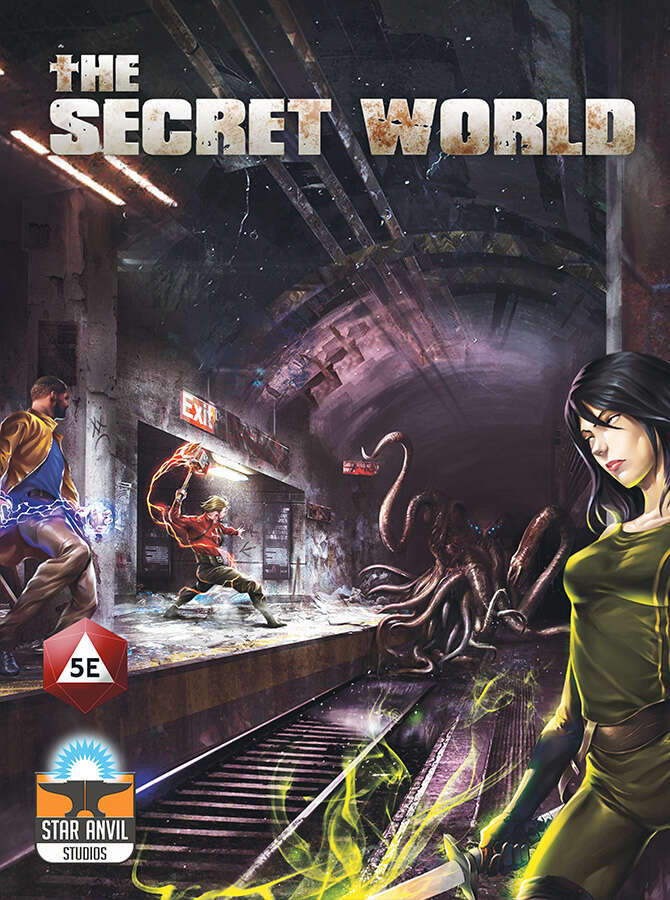











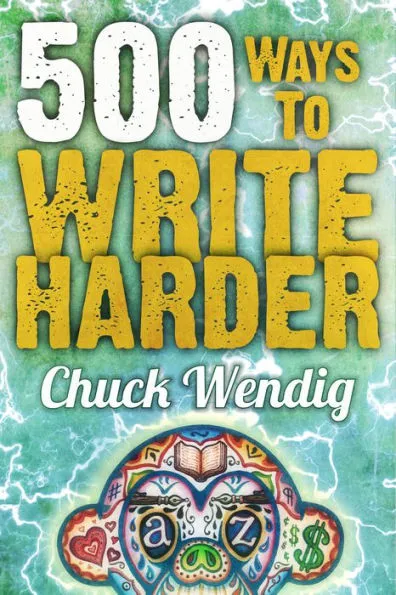


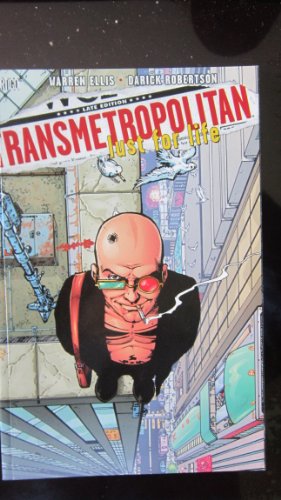





 Words Deferred