Asking For Feedback

No matter what I’m writing — short story, novel, or something else — I’ll start with a first draft, do some amount of editing, and then feel the need for feedback. No matter how great you are at editing and revision, you can’t catch everything. In fact, if you’re me, you can’t catch a lot of things.

As I’m working on my serial novel, Razor Mountain, feedback is going to be interesting. While I’m going to start with a buffer of a couple completed chapters, I’ll be publishing as I write. Unlike my normal process, I’ll be interleaving the first draft writing, editing, and incorporating feedback for different chapters.

Regardless of the project you’re working on, getting feedback is critical to making your writing the best it can be. However, it’s important to understand that you’re not just throwing a manuscript over the wall to your reader and expecting them to toss back some notes. To get the most out of your readers, it can and should be a collaboration!

Who Is Your Reader?

When you’re asking for feedback, consider who you’re asking. If you have friends and family who are willing to read, that’s a fantastic resource. Many writers have a spouse or trusted friends who act as beta readers. You might also have writer friends, a critique group, or fellow writers on a critique website.

The largest differentiator between your early readers will probably be between “regular” readers and fellow writers. Readers tend to look at what they like or dislike about a story, and point out typos and grammar issues. Writers are much more likely to think about story structure or word choice, and to think about how they would do it were they writing your story.

If you use the same readers for several projects, you’ll get to know what feedback they’re good at giving. If you use a big online critique group or service, you might get different people every time. In either case, there’s a simple way to stack the deck in your favor and get more of the feedback that you want. Ask for it.

Know Your Weaknesses

First, think about what your own weaknesses are. What mistakes do you make? Writer, know thyself! The easiest way to do this is to pay attention when you’re editing. Keep track of the errors you fix and the things you improve.

For example, I love asides in the middle of sentences — like this one — and I have to restrain myself when it comes to em-dashes, parentheses, and sometimes colons.

I also tend to hedge when I’m not entirely sure about a moment in the story. For example, I might say that a character felt angry when or seemed upset when it would be more forceful to just say that the character was angry or upset. And then, I usually try to do away with that telling entirely, and show that the character is angry or upset through their actions or words.

If you don’t already pay attention to your editing like this, taking inventory of your foibles as a writer is a great way to improve. It’s also a way to build up a list of things for your early readers to look for.

What Are You Worried About?

When I write, there are some parts of the story that are rock solid. They’re straightforward and I know exactly what I want to do. I write them, and it comes out pretty well. Then there are other parts of the story where I’m less certain that I’m doing the right thing. I know there’s room for improvement. I feel like the character’s actions don’t quite match their personality, or the story is taking a detour, or the words just don’t fit together in the way I’d like.

You’ve probably had similar feelings. We all have parts of the work that we’re worried about, for one reason or another. That’s great. Those are perfect targets for your beta readers. Let them tell you whether you’re right to be worried, or doing better than you thought.

Asking For What You Want

Now we get to the crux of it. You have a list of your writerly tics and foibles. You know the parts of your story that you’re worried about. And you have some readers waiting in the wings.

If you have readers with a particular set of skills, you can always sic them on specific problems. Maybe you have a reader who is great with grammar and spelling. Don’t feel bad telling them to focus on those things. Don’t prevent them from bringing other issues to your attention, but cater to their strengths.

If you have readers who are generalists, or you’re not sure what their feedback strengths are, you can always include a few bullet point notes with your manuscript to guide them. Have them pay attention to a particular character that you’re unsure about, or particular scenes. Also consider whether you want to put these notes up-front at the start, guiding your reader to pay more attention to that particular thing, or at the end where they will prompt your reader to reflect on your concerns after they’ve finished reading.

You don’t always have to be extremely specific either. Maybe you’re worried that your comedic sidekick character, Phil, is unlikable. Rather than asking that directly, you might just ask how the reader feels about Phil. You can suss out their feelings without guiding them too much in one direction or another.

Guided Feedback is Great Feedback

Almost any beta reader feedback is going to be beneficial. When you find good readers, you need to take care of them and nurture them as a precious resource. You’ll find that they’re even more effective when you ask them for the kind of feedback you want.

Nobody knows your story-in-progress better than you do. If you have concerns about some particular part, there’s a good chance they’re justified. Use your beta readers to shore up those weaknesses and turn them into strengths, and your stories will be better for it.
Razor Mountain Development Journal #45

This is part of my ongoing series where I’m documenting the development of my serial novel, Razor Mountain. Be forewarned, there are spoilers ahead! You can start from the beginning here.

Last Time

I revised Chapter One, with special attention to the opening. I spent time evaluating options for book covers.

More Book Cover Action

Much like in my writing, I’m finding that making a good book cover is not about the first draft. It’s about revision, revision, revision. I am, admittedly, trying to be cheap and do it myself, instead of dropping cash on the many fine businesses that would be happy to provide professional artists to help me out. I got myself into this mess, and I’ve been doing my best to get myself out of it.

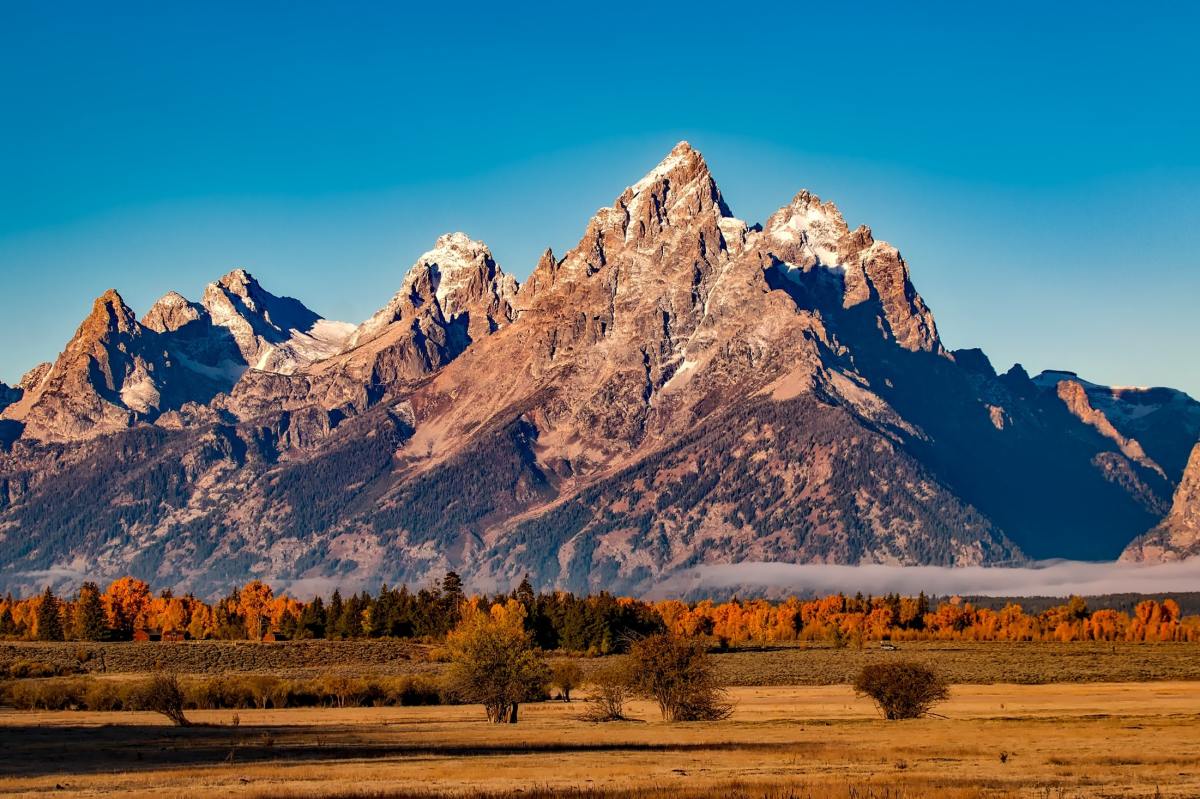
A couple weeks back, I had rough ideas for what a Razor Mountain cover might look like. First and most obvious thing: with a title like that, it pretty much has to have a mountain on the cover. Apart from that, the book is in many ways about duality: past and future, acceptance and denial, life and death, God-Speaker and Christopher. That’s not necessarily an easy concept to get across visually, but I had a vague idea of the mountain being split in half, and the shape of a person in a dark space beneath it, also split or doubled. I imagined a line down the middle, with the regular colors on one side, and a photo-negative effect across the other side.

I continued to think about what I wanted. I looked at lots of book covers. I researched tools and techniques and companies and prices. I wrote a post about it.

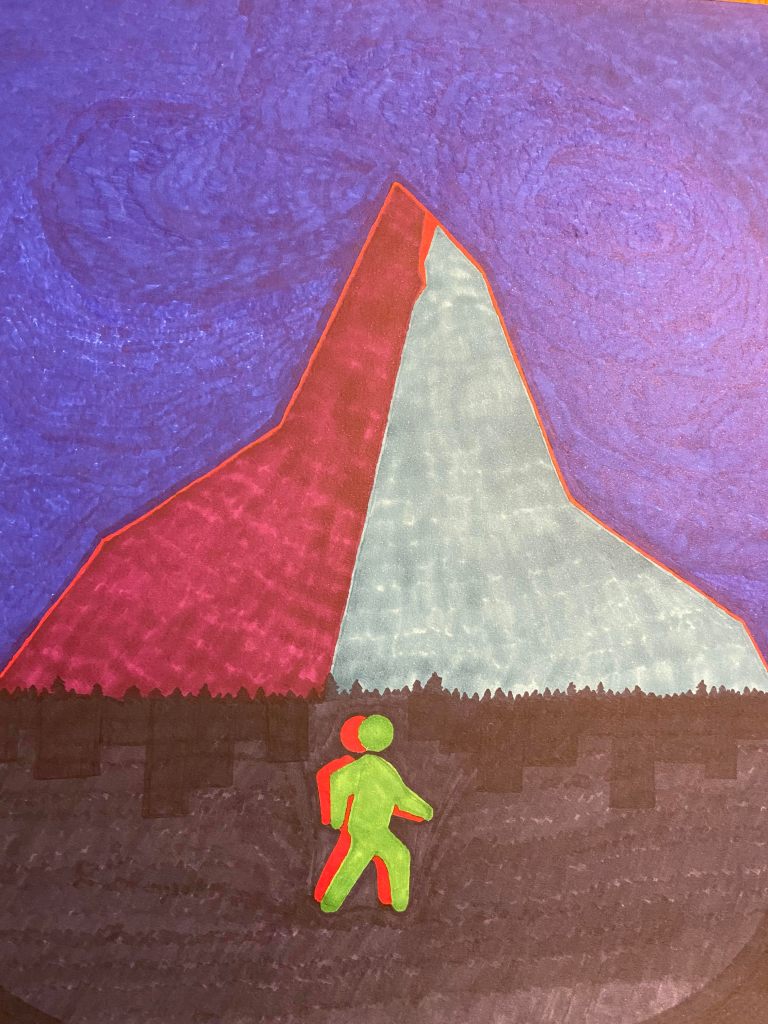
I tried creating a prototype by hand, with colored Sharpie felt-tip pens. I enjoy doodling and painting from time to time, but I was not particularly satisfied with the result in this case. It does look slightly better in person — the lighting is bad and the colors are pretty washed-out in this photo — but it’s not something I want to put on the front of my book.

Welcome to Disappointment Mountain.

Next, I moved on to Canva. I started by modifying their premade templates. My next cover was certainly better, but it’s a little too simple, with even fewer visual elements than the Sharpie disaster. It also looks a bit outdated, like a paperback cover from the 70s. In retrospect, the font is more of a fantasy font, with a vaguely runic look. Still, this looks like a book cover to me, even if I’m not that excited about it.

There’s probably dwarves in that there mountain.

I came back a few days later, energized to make another attempt. With some Canva experience under my belt, I trolled through Pexels for royalty-free images of mountains, silhouetted people, cities, etc. I also fired up GIMP (a.k.a. GNU Image Manipulation Program) and did some light editing. I’m hardly a graphic designer, but I’ve played around with GIMP and Photoshop in years past, so I can do some simple things like filters or gradient transparency.

The end result was actually pretty close to my original vision. I spent a surprisingly long time on little tweaks, like the silhouette of hills that separate the top section from the bottom. Fonts are also incredibly difficult to get right. I spent ages flipping between fonts. I still vacillate between this being too cheesy and just right. It definitely feels more like a thriller font.

I also created several different layouts with these same elements slightly rearranged. Unfortunately, different services want square (or even circular-cropped) “cover” images, and in some cases I may want the image without the title and author overlaid, for cases when they already appear in text nearby.

More Revision

I don’t have too many specifics to report on the editing front. I took several more passes through the first two chapters, mostly making small line edits. Now they’re going to my first beta reader, my wife. I’ll be back to looking for more critique partners and beta readers this upcoming week.

Results

I continued revising and editing the first two chapters and I created a book cover that I’m satisfied with.

Reference Desk #8 — Working it Out

There’s something raw and awkward about a rough draft. It’s hard enough to be confident about work that’s polished to a mirror shine, and it can outright hurt to reveal the grotesque early versions of the art we’re passionately trying to create, in the midst of its creation. But it’s immensely reassuring to be reminded that it’s like that for everyone!

There’s a rare thing that happens sometimes in great comedies. The writers insert an episode, a scene, or even a few lines of dialogue that create a dramatic, emotional impact. A little island of seriousness among the jokes.

When this is done correctly, the knife twist from lighthearted laughs to pathos can be every bit as impactful as a similar scene within a drama, where the entire show may have been building up to it.

Fans of Futurama will know what I mean if I mention Fry’s dog, Seymour. Fans of Scrubs will remember Ben Sullivan. And fans of Adventure Time might just get a little choked up when they hear “Everything Stays.”

Birbigs

I’ve been a fan of Mike Birbiglia for a while, and I think it’s mostly because he lives on that edge between humor and pathos. He considers himself a stand-up comedian, but his on- and off-Broadway shows often feel like half dramatic one-man-show, half stand-up special. They revolve around events as serious as sleep-walking through a second-story window or being T-boned in a hit-and-run car accident.

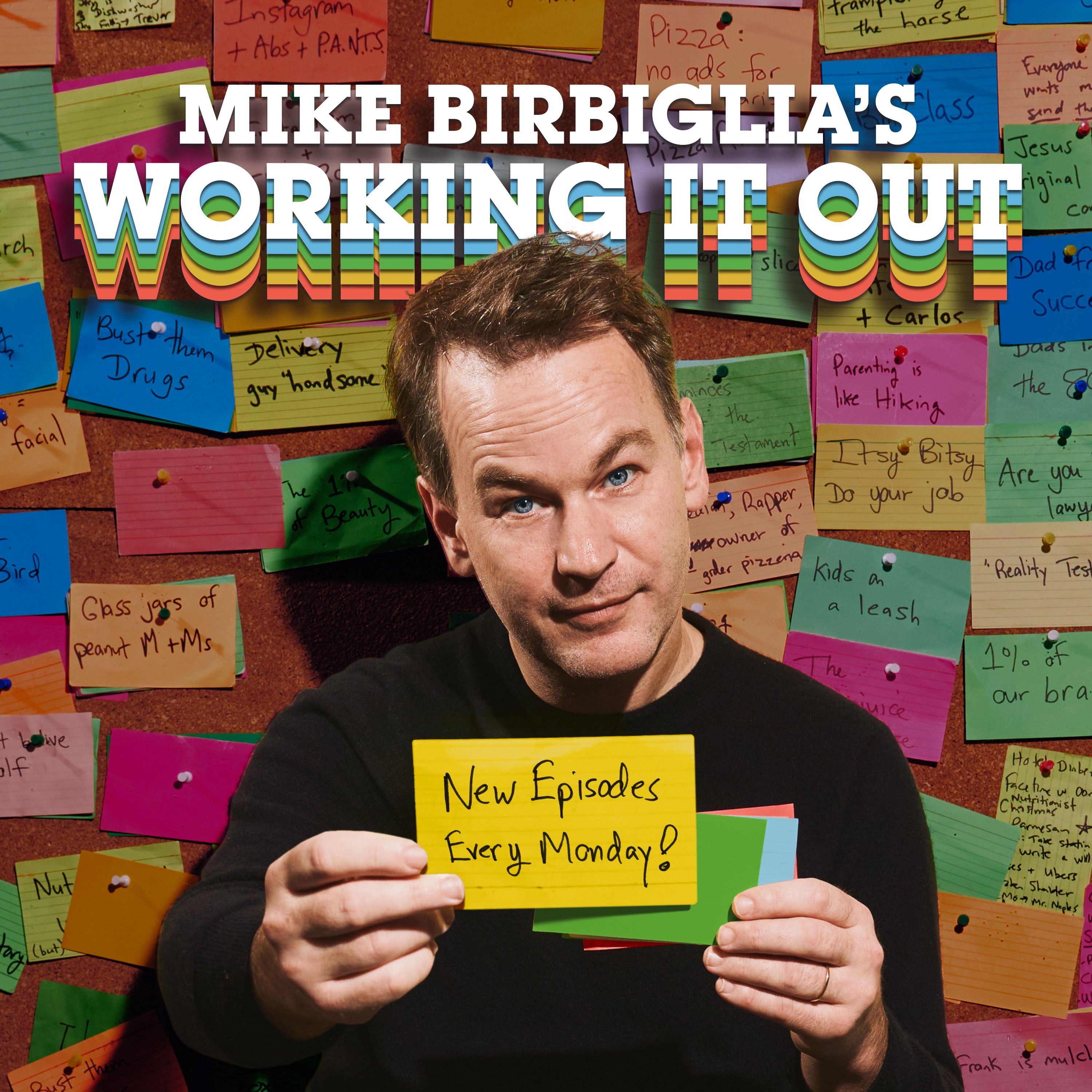
Working it Out” is Birbiglia’s podcast. As you might expect from a comedian’s podcast, there are plenty of popular comedian guests, from John Mulaney and Hannah Gadsby to Jimmy Kimmel and Frank Oz. But rather than being a simple excuse to joke with friends and acquaintances, Mike makes it something halfway between an interview show and a critique circle. It turns out he is deeply studious when it comes to the craft of telling jokes, and the craft of storytelling.

The through-line of the 40 episodes that have been released so far is the new show that Birbiglia is developing. It started with the title “The YMCA Pool,” but he now calls it “The Old Man and the Pool.” It’s a comedy show about getting older and coming to grips with your own mortality.

In the first episode, Mike tries out some of the material he’s working on with his friend and “This American Life” luminary, Ira Glass. Ira gives him advice that involves significant rewriting, and he accepts it graciously. By episode 25, when Ira returns, Mike has done his rewrite. They run through it again, and discuss it in depth. Mike jokingly asks, after half a year of revisions, how close his story is to being worthy of “This American Life.” And Ira deadpans, “halfway there.”

The Vulnerability of Revision

What makes Birbiglia’s comedy work so well, and the knife-twist that makes it hit so hard, is his vulnerability on stage. The podcast is different from a stage show, of course, but it still works because he’s willing to be vulnerable in front of an audience.

It’s clear that Mike doesn’t shy away from the hard work of revision. Guests bring their work in progress, and he brings his, and they hash it out, every episode. Some of the guests are clearly less into the workshopping aspect than others, but Birbiglia’s enthusiasm shows through.

If you’ve read any of my writing development journals, you can probably see why this appeals to me. There’s something raw and awkward about a rough draft. It’s hard enough to be confident about work that’s polished to a mirror shine, and it can outright hurt to reveal the grotesque early versions of the art we’re passionately trying to create, in the midst of its creation. But it’s immensely reassuring to be reminded that it’s like that for everyone! Art doesn’t spring fully formed from our minds, like Athena from the head of Zeus. It has to be shaped and reshaped. Bits added on, and bits sanded off. The slow, steady grind of progress.

Of course, it helps to have a few jokes to lighten the mood, even if they are jokes about death.

207. Chris Fleming Returns: He Is Way More Popular This Time Mike Birbiglia's Working It Out

The last time comedian Chris Fleming was on Working it Out, the episode was titled “He Should Be Way More Popular.” In the 2 years since then Mike’s wish has come true. Chris and Mike chat about the pros and cons of having a higher profile in comedy, including the protective steps needed to avoid legal action from Adam Driver over a bit. Mike also takes the chance to respond to the shots Chris takes at Mike in his new HBO special Live at the Palace, and Chris talks about getting glared at by Ryan Gosling. Plus, Mike and Chris work out lots of new jokes about drum circle friend groups, hotel smells, and dog DNA tests. Please consider donating to Planned Parenthood Hosted by Simplecast, an AdsWizz company. See pcm.adswizz.com for information about our collection and use of personal data for advertising.
  1. 207. Chris Fleming Returns: He Is Way More Popular This Time
  2. Nathan Lane: The Safest Thing You Can Do Is Take a Risk
  3. 206. Cazzie David: Spiritually a Boomer
  4. 205. Taylor Tomlinson: Hope No One Filmed That
  5. 204. Ali Siddiq: Telling His Own Story