

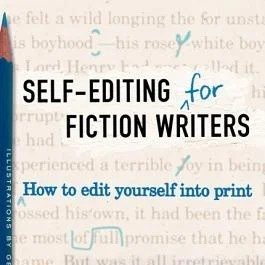
After my recent re-read of Self-Editing for Fiction Writers, I decided to create a revision checklist. For this list, I started with items from the book, then added some of my own based on my weaknesses and what I typically look for. I’ve split these into several categories to help focus. If you want to make your own checklist, you can split items up into whatever categories make sense to you.
There is a lot to keep track of when revising a story. Too much, in fact, to keep track of all at once. This is why it pays to make multiple revision passes, working from big to small, and working on only a few things at a time. The checklist is a convenient tool for keeping track of it all.
One checklist like this can’t cover everything. It’s just a starting point. There will be changes that are specific to each story. The “general purpose” checklist can also change with your writing style. As you rid yourself of bad habits, you may find that you don’t need to check for those things anymore. If you want to focus on something new (maybe something that comes up repeatedly in reader feedback), you can add it to the checklist.
Story
☐ Introduce important characters early
☐ Describe character physically when first introduced.
☐ Can any characters be merged?
☐ Avoid using multiple channels to show the same characterization or plot point (dialogue, action, narration, etc.)
Chapter/Scene
☐ New scene or chapter when location/timeframe/POV changes
☐ Pacing - should this feel faster or slower?
    ○ Adjust scene or chapter length
☐ Focus on important aspects for scene
    ○ Characters/characterization
    ○ Physical action
    ○ Dialogue
    ○ Background info
    ○ Tone
Dialogue
Mechanics
☐ Avoid swifties (alternatives to "said," adverbs on "said")
☐ Single attribution per character per POV/scene
☐ Avoid tagging with redundant explanations
☐ Beats (action in dialogue)
    ○ Do two things at once — illuminate character, reveal something
    ○ Punctuate an emotional shift
Character
☐ Each line fits character/shows character
☐ Dialect - word choice, cadence, grammar. No phonetics.
Misc
☐ Read aloud!
    ○ Read each character’s dialogue consecutively, out loud, to hear inconsistencies in voice.
☐ Avoid big soliloquies - back and forth flow
☐ Complexity - misunderstandings, indirect questions, leaving things unspoken
Details
☐ Avoid weak words - seemed, mostly, some, a little, a bit, slightly, somewhat, sort of, kind of, like, as though
☐ Avoid cliches and idioms
☐ Avoid italics and ”emphasis” quotes
☐ Avoid phrasing that draws attention to itself
☐ Avoid description in a dependent clause (accidentally simultaneous actions)
☐ Avoid repetition
☐ Use exclamation points very judiciously
☐ Use brand names judiciously
☐ Use expletives judiciously
☐ Use adjectives judiciously
☐ Replace adverbs with better verbs
Narration
☐ Bad/excessive summary or exposition.
    ○ Work in exposition along the way
    ○ Provide information at the point it becomes relevant
☐ Narration follows POV character's focus
Characters
☐ Avoid summarizing character feelings
    ○ Show through action/dialogue
    ○ Have a character react to or describe another
☐ Time spent/level of detail on character should reflect importance
Point of View
☐ Establish POV as quick as possible in a scene.
☐ Evaluate POVs
    ○ What info is necessary? Is an omniscient  perspective necessary
    ○ What perspective is most interesting?
    ○ More distance makes perspective changes less jarring
☐ Limit interior monologue
Pacing
☐ Should this feel faster or slower?
    ○ More or less description
    ○ Sentence and paragraph lengths

 Words Deferred