The Read Report — August 2023

This is the monthly post where I talk about what I’ve been reading. As usual, if you’re interested in any of these books, please use the included Bookshop.org links instead of Amazon. It helps independent bookstores, and I get a small affiliate commission.

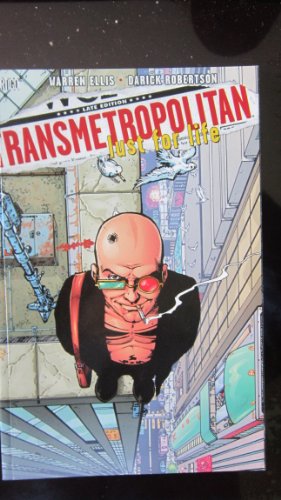
Transmetropolitan (Vol. 1)

Written By Warren Ellis, Illustrated by Derick Robertson

Transmetropolitan has been on my radar for some time, even though I knew almost nothing about it. It was lodged in my brain alongside a bunch of other 90s-2000s non-superhero comics. I’ve recently discovered just how cheaply you can snag slightly beat-up trade paperbacks of old series at places like ThriftBooks, so I went ahead and purchased the first two volumes of the series just to see if I had any interest.

My feeling coming away from the first volume is that Transmetropolitan is weird for the sake of weird, and that particular brand of “edgy” that was popular in this era, but a little silly in retrospect. It is a depiction of the kind of cultural and technological singularity where almost everything is possible and is probably happening just down the street, but the absolutely schizophrenic nature of that kind of chaos doesn’t really jive with telling a deep or particularly coherent story.

The book begins with former journalist Spider Jerusalem living like a wild-man in a mountain-top cabin surrounded by booby-traps. He is naked, heavily tattooed, and clearly hasn’t gotten a shave or a haircut in a few years. We learn that he was the most famous journalist in a nearby city (simply known as The City), and he gave it all up to move out here. Unfortunately, he signed a contract for a book deal, overdue by five years, and now his publisher is threatening to take the money back. So off he goes, back to The City.

Spider breaks into the offices of his old newsfeed, secures a job and an apartment, removes all his hair with a chemical shower, and gets his trademark glasses out of the totally-not-a-Star-Trek-replicator in his kitchen. Then he turns on the news. There are cryogenic defrostees, people uploaded into nanite clouds, and humans surgically turning themselves into aliens and trying to succeed from The City and create their own colony. As it turns out, these will all be plots for subsequent issues.

The first volume didn’t wow me as an introduction. The chaos of The City struck me as an excuse to just throw any sort of futuristic spaghetti at the wall and see what sticks. The characters all range from unpleasant to outright awful, and I have a hard time taking it seriously when the city is called The City and the protagonist has a name like Spider Jerusalem. But hey, it’s the first volume, and a lot of series don’t find their feet right away, so I started in on the next one…

Transmetropolitan (vol. 2)

Written By Warren Ellis, Illustrated by Derick Robertson

I realized partway through this volume that the post-facts world of Transmetropolitan probably seemed more science-fictiony around the year 2000. Nowadays, it’s hardly any different than world outside my window. This certainly isn’t the first piece of sci-fi to satirize politics and religion, only to find that the future went and outdid them. Being subversive and edgy is not a good way to last—yesterday’s shocks are boring to tomorrow’s audience.

I also came to the conclusion that a lot of what rubs me the wrong way about the series is that it’s packed with big, obnoxious allegory. It’s constantly winking and nudging you.

Transmetropolitan doesn’t have an ongoing arc in these first couple volumes. It’s just a series of unrelated stories. This time, we get one about Spider’s assistant’s boyfriend, who decides to download himself into a cloud of nanites. After that, it’s a cryogenically frozen woman who wakes up and discovers that the future is impossible to acclimate to, and that nobody much cares to try and help her. Then there’s Spider’s tour of the “reservations,” hermetically sealed places throughout The City that are built to preserve different cultures and ways of life. Each of these works pretty well as a stand-alone short story, but it didn’t feel like it was building to anything bigger.

Ultimately, I found that Spider Jerusalem was one of the least interesting characters in his own book. It’s possible that some of these disparate threads will eventually weave back together into a larger story, but I wasn’t feeling it after two volumes. I don’t think I’ll be continuing this series.

The Witcher: Sword of Destiny

By Andrzej Sapkowski

This is the second Witcher book that’s billed as a short story collection. And it is, but they end up feeling like more than the sum of their parts. There are bigger arcs happening across these stories, continuing the events from the first book.

In addition to the titular Witcher, Dandelion the bard and the sorceress Yennifer are the other main characters. If there is an overall theme across the book, it’s the angst between Geralt and Yennefer, who are both outcasts and troublemakers in their own ways. They each think they can’t make the other person happy, while also being unable to permanently break things off.

There is also a great deal more world-building happening here, including the first mentions of the Wild Hunt, a mysterious recurring event where ghostly warriors cross the sky and portend disaster and war. These stories are still “low to the ground,” but they incorporate a bit more about the nations and politics of the northern kingdoms.

Of course, it wouldn’t be the Witcher without stories about the interactions between humans and magical creatures, whether that be a shapeshifter stealing friends’ identities or a pompous town mayor in love with a mermaid. It also sets up the series of books to follow, as Geralt meets Ciri, the kid princess whose destiny he inadvertently entwined with his own.

The Sandman: Fables and Reflections (Vol. 6)

Written By Neil Gaiman, Illustrated by P. Craig Russell

Much like Volume 3, Dream Country, this is a set of mostly stand-alone tales where Dream takes on a minor role. There’s a story about Emperor Norton, the real person who declared himself Emperor of the United States of America, a fable about a clan of eastern European werewolves, a tale of young Marco Polo getting lost (and eventually found) in the desert, and story of a spectacular Baghdad, greater than we ever knew it because it was traded into dreams so it might stay perfect forever.

Unlike Dream Country, there are a few things of note that tie back into the broader ongoing plot. For the first time in the series, we actually see “the prodigal,” Destruction, the one member of the Endless who has abdicated his position. We witness a retelling of the ancient Greek tragedy of Orpheus, who is an oracle, and Dream’s son. We see why Orpheus lives eternally as a severed head, and the cause of the rift between him and his father.

These events lead directly into Volume 7, and it really feels like the meandering main story is picking up steam.

The Sandman: Brief Lives (Vol. 7)

Written by Neil Gaiman, Illustrated by Jill Thompson

The issues of this arc are labeled as “chapters,” and this is probably the most linear and focused volume since the first. The beginning pulls together several threads from earlier stories, and the end implies a whole lot of bad things are in store for Dream.

Each chapter begins with a sequence of cryptic phrases, like this for chapter one:

Blossom for a lady

Want/not want

The view from the backs of mirrors

Not her sister

Rain in the doorway

The number you have dialed…

They turn out to be little landmarks in the story, a game where the reader can try to guess what might happen from these tidbits, and then check items off the list as they come to pass. It got me thinking how excellent the whole series is at these little things. From the surreal Dave McKean covers and interstitial art to the introductory quotes to the entertainingly themed credits, the Sandman books feel like absolutely every single element was labored over more than was really reasonable. All the little things add up.

The story of this volume centers around the duo of Dream and his youngest sister, Delirium (who used to be Delight). Delirium’s personality is somewhere between a young child and a lunatic, and you get the feeling that the rest of the oh-so-serious Endless family is perpetually humoring her. She decides to go looking for Destruction, the brother that abandoned the rest of the Endless and made it clear that he doesn’t want to be found. Delirium asks her siblings to help her, but one by one they brush her off. When she comes to Dream, the most serious of them all, it’s a surprise that he agrees to go with her. So the pair set off to find Destruction.

Eventually, we learn that Dream had ulterior motives, and never really expected to find Destruction. But he takes his responsibilities seriously, and since he promised to help Delirium, he turns to the one person who has the power to find the Endless, even when they do not want to be found: his own son, Orpheus. For this favor, Orpheus (a severed head who cannot die) asks his father to end his suffering.

The book ends with foreboding. They find Destruction, only to have him leave again. Morpheus returns to his realm, everything neatly wrapped up, and then reveals his chalk-white hands stained with his son’s blood. It’s made clear that there are consequences for the Endless when they spill family blood. The only question is what those consequences will be…

Small Gods

By Terry Pratchett

Sometimes I look at the Hitchhikers’ Guide omnibus on my shelf and I think sadly about how I’ll never be able to read another Douglas Adams story for the first time. But if there’s anyone who can compare to Adams, it has to be Terry Pratchett. I’m grateful that unlike Adams, he wrote so prolifically.

There are 41 books in the Discworld series, and I’ve been slowly going through them, picking up new ones at Half Price Books whenever I see them. I’m savoring them, because I know eventually I’ll run out.

Small Gods is about an accidental prophet named Brutha, in the desert land of Omnia, where the people worship the god Om. Omnia is a strict theocracy where the church is the central pillar of life, and it’s not uncommon for supposed sinners to have the badness tortured out of them. Faith is of the utmost importance in Omnia, so it’s especially awkward when Brutha discovers that Om is trapped in the form of a turtle with hardly any godlike powers at all, and this is because nobody besides Brutha actually believes in him anymore.

Brutha goes on a hero’s journey, and despite his best efforts he manages to overthrow the Omnian order, restore (real) belief in Om, and generally start making the country a place where people can live their lives without worrying about being randomly tortured.

Small Gods isn’t my favorite Discworld book, but it’s a parody with plenty of laughs and a few sideways glances toward our world. As usual, an average book by Terry Pratchett is quite good by anyone else’s standards.

Harry Potter and the Sorcerer’s Stone

By J. K. Rowling

One of the joys of being a parent is getting to share things you enjoy with your kids. One of the strange things about being a parent of several children (with a few years in-between) is that I’ve shared a bunch of those things with my eldest kids, and my youngest knows nothing about them. So, although I read the Harry Potter books to my eldest son—and my daughter was sometimes in the general vicinity of the reading—I was told that we should read them again. And now we are.

I’ll say here that I don’t agree with Rowling and the garbage she is now known for spewing on social media. I also think it’s fashionable to criticize books by authors who are deemed terrible people. Despite Rowling acting out, I think the Harry Potter books are perfectly enjoyable.

A lot of the complaints about this series are about all the unbelievable aspects of the world-building. There are a lot of problems with the Wizarding World and its interactions with the regular world that just aren’t addressed. And that’s completely true. But I also think it doesn’t really matter.

The odd thing about this series is that it grew up along with its readership. The first book is very much a children’s story, in its form and in the language it uses. It’s not worried about perfectly consistent world-building, any more than Little Red Riding Hood or Goldilocks is, because the shape of the story still works. Part of that is because it borrows from fairy tales, starting with the classic evil step parents (or in this case, aunt and uncle), and the orphan boy who is destined to save the world.

So shockingly, my takeaway is that a super-bestselling book that started a huge pop-culture craze and made more money than some small countries does, in fact, do a lot of things well.

What I’m Reading in September

I’ll continue working my way through the Sandman and Witcher series. I might go for a couple brand-new books about writing that I just got. I also recently compiled a list of highly-rated comics from the last 20 years, and I might start working through some of those.

See you at the end of September.

The Read Report — July 2023

This is the monthly post where I talk about what I’ve been reading. As usual, if you’re interested in any of these books, please use the included Bookshop.org links instead of Amazon. It helps independent bookstores, and I get a small affiliate commission.

Sandman: Season of Mists (Volume 4)

By Neil Gaiman

My re-read of the Sandman series continues.

I was surprised how quickly this volume rushed into the plot that would drive this entire arc. For the first time, we see Dream meet with all of the other Endless, except for the still-unrevealed “prodigal.” His elder brother, Destiny, calls them together for a meeting, because his book (which describes everything that will ever happen) tells him that’s what’s he’s going to do.

In previous volumes, it was revealed that Dream was once in love with a mortal, and when she rebuffed his advances, he got very grumpy about it, and threw her in hell, where she’s been for a few thousand years. For some reason, Dream’s siblings bring this up, and amazingly, for the first time, he realizes that this was a pretty shitty thing to do.

He embarks off to Hell, and Gaiman cleverly sets us up to think that Lucifer is going to fight Morpheus, but when Dream arrives, he finds the Lightbringer shutting everything down. He gets his revenge on Dream by giving him the keys to an emptied Hell.

The rest of the book follows Dream as various old gods come to his kingdom to ask for the keys to Hell, a piece of prime psychic real estate. We see him for the first time as a royal figure, with these mythological figures seeking his favor. He turns out to be adept at navigating the politics of the situation, and he manages to get rid of the key and free his former girlfriend in the process.

I think this might be the first volume that is completely free of any superhero references, which is no big deal in modern comics, but was probably a rarity when it first released.

Sandman: A Game of You (Volume 5)

By Neil Gaiman

Volume 5 revisits Barbie (no, not that one), who was first introduced in Volume 2, The Doll’s House. She’s split with Ken (no, that that one either) and now lives in New York, in an apartment building with a whole new set of interesting neighbors. In Volume 2, we saw bits and pieces of Barbies dreams, which were an ongoing fantasy tale where she was the protagonist. Here, we find out that she hasn’t been dreaming for months, and when her dreams return, they bring some very real nightmares with them.

I’m hardly an arbiter of wokeness, but I will say that this story was written in 1991, involves a lesbian couple, a trans woman, and a homeless person with implied mental illness, and feels surprisingly modern and respectful in the way it treats all of these characters. The world around them doesn’t always treat them kindly, but the narrative explores them honestly as people with good aspects and interesting flaws, rather than caricatures.

This volume also barely involves Morpheus. The apartment building crew venture into Barbie’s strange dreams and confront an invading creature. Only at the very end does Dream show up, giving us a few tidbits of info about his past.

I have to say at this point that I had forgotten how meandering the series is. There are certainly bits and pieces of connective tissue: characters that keep coming up, and the ongoing theme of Dream learning how to be more “human” and a bit less of a stodgy, immortal curmudgeon. And hints of a feud with Desire. I’m now halfway through the original run, and there’s no clear overarching conflict apparent. Yet. Luckily, the world, the characters, and the writing are so good that I don’t much mind.

Borne: A Novel

By Jeff Vandermeer

The city of Ambergris left a strong impression on me, and I decided about a year ago that I needed to explore more of Jeff Vandermeer’s work. So I picked up Dead Astronauts, only to find it almost inscrutable. Then I discovered it was actually the second book in a series. I finally got back around to picking up the first book, and that is Borne.

Vandermeer has once again created an amazing setting in the confines of a city. We learn that the Earth has been ravaged by environmental catastrophe and bioengineering run amok, but apart from this, very little is revealed beyond the City. The City has no name, and it is a ruin surrounded by harsh desert. It is inhabited by scavengers, and by Mord, the kaiju-esque 3-story-tall bear. Mord and many other creatures were engineered by the also-unnamed Company, which exists as a huge, white building at the edge of the city, abutted by the holding ponds where the bio-waste and failed experiments are dumped, to eat each other and be eaten, and sometimes to escape into the City.

Borne is about a scavenger, Rachel, and her partner and lover, Wick, a sort of freelance bioengineer who once worked for the Company. They protect and defend their base of operations, a half-ruined apartment building, from scavengers, from another Company alumn called The Magician, and from Mord and his monstrous bear minions. Rachel discovers a piece of biotech, which she calls Borne, who turns out to be a sentient shapeshifter and becomes a sort of surrogate child to her.

I find Vandermeer fascinating because he is frequently riding the very edge of the Principle of Least Necessary Information. This book and the Ambergris stories are all a kind of puzzle that manages to propel you forward through the story while scrounging for hints and clues about what exactly is going on. I devoured this book in a day, because I couldn’t stop reading.

The Strange Bird

By Jeff Vandermeer

The Strange Bird is a hundred-page story set in the same world as Borne. It starts with some tantalizing bits outside the City, as the titular Strange Bird escapes from a bio-engineering lab and sets off in search of…something…it’s not sure what, but it knows it’s got to find it.

After a series of adventures that leave it considerably worse for wear, the bird arrives in the City and is captured by The Magician. This middle part of the story covers some of the same events from Borne from a different viewpoint, providing  more context around the events toward the end of that book.

Eventually, the bird escapes once more, in an entirely new form, and continues its journey. When it finally arrives at its destination, it discovers that the thing it was looking for is long gone, but the ending is bittersweet and it still manages to find some peace at the end of the road.

Dead Astronauts

By Jeff Vandermeer

I was excited to return to Dead Astronauts, now that I had the first two stories in the series fresh in my mind. If Borne rides the edge of Least Necessary Information, Dead Astronauts jumps head-first off the edge. It is experimental in the extreme, living somewhere between poetry and novel. In my original reading, I was lost. With the added context of Borne and The Strange Bird, I was able to follow the story, but I’d be lying if I said I understood everything.

Dead Astronauts has four parts. In the first part, we follow the three “astronauts.” They are Moss, an ever-changing plant creature in the form of a human, Grayson, an actual astronaut with a robotic eye, and Chen, a former Company bio-engineer who sees the world in equations. These three have made it their mission to destroy the Company, and to this end, Moss shunts them between parallel universes to try to find a version of the City and the Company where they can gain an advantage. The Company, however, also coordinates between parallel universes, and in the end, the Company seems to overcome them.

The second part shifts perspective (and uses the rare second-person!) We follow a character who remains unnamed for almost the entire section, living homeless in a city that may be a past version of the City, or may be another place entirely. Creatures from the Company begin to appear , followed by the Company’s agents, biological and robotic. There are pale men who may have some relation to Wick from Borne, and a duck with a broken wing, an innocuous creature that turns out to be a horrible monstrosity.

In the third part, we learn more about what goes on inside the Company. We learn about Charlie X, a character who has appeared in the first two stories in smaller roles, and how intertwined he is with everything that has happened. While we get more information, the origin and the nature of the Company are never entirely explained. Is it responsible for the ruination of earth? Or did it merely take advantage of it? And just how many of its tentacles did it send out across parallel universes? Vandermeer gives plenty of tantalizing clues, but no clear answers.

The final part of the story follows the blue fox, another bio-engineered creature that has appeared here and there in the other stories. The fox shares a connection with Moss, and it can also cross between parallel worlds. In this final part, the different storylines become intertwined across time and the different versions of the city. Causes and effects are all mixed up in twists and loops.

Reading these three books in order, I enjoyed them immensely. If you can accept that not everything will have a clear answer, and you’re interested in puzzling through some of the mysteries, I would highly recommend the series. This is pretty much the pinnacle of literary science-fiction.

Reamde

By Neal Stephenson

I already wrote another post about this book, so I won’t say any more here.

What I’m Reading in August

I’ll continue The Sandman series, and pick The Witcher series back up as well (in fact, I’m already halfway through the next book). I’m also eyeing some unread books on my bookshelf by Terry Pratchett and Andy Weir. See you in a month.

The Read Report — June 2023

This is the monthly post where I talk about what I’ve been reading. This month, I continued my reread of the Sandman series, and delved into the Witcher books. I also took a look at a new TTRPG.

As usual, if you’re interested in any of these books, please use the included Bookshop.org links instead of Amazon. It helps independent bookstores, and I get a small affiliate commission.

The Sandman, Vol. 2: The Doll’s House

Written by Neil Gaiman, Illustrated by Mike Dringenberg

The first Sandman trade paperback followed Morpheus (a.k.a. Dream) through his embarrassing imprisonment by a petty modern sorcerer, his escape, and the subsequent retrieval of his magical tools. It also introduced some of his siblings, the immortal personifications known as the Endless.

However, things aren’t yet back to normal. In this second trade paperback, Dream must clean up his kingdom, which fell into disarray in his absence. Several of his minions are missing, including The Corinthian, a murderous nightmare with mouths for eyes. To make matters worse, a Vortex has appeared: a mortal with the ability to tear down the walls between dreams (which turns out to cause a lot of problems). Mixed up in all of it are Dream’s siblings, Desire and Despair, who plan a potentially deadly trap for their older brother.

Through flashbacks, we see stories from Dream’s past, interspersed with his present-day hunt for the escaped dreams and the Vortex. While he is obsessed with his responsibilities, there are some indications that his imprisonment has taught him to have more compassion in his dealings with mortals.

This volume confirms that the series is not afraid to wade into dark topics, with storylines involving an abused child and a convention of serial killers doing the sorts of things you’d expect them to do.

The Sandman, Vol. 3: Dream Country

Written by Neil Gaiman, Illustrated by Kelley Jones

This volume contains four stand-alone stories set in the Sandman universe. Some involve Dream heavily, some barely, or not at all. They’re all enjoyable in their own way, but not strictly necessary to read if you’re only interested in the “main” storyline.

They include a story about a feline prophet from the perspective of cats, a captive muse used (and abused) by artists for fame and fortune, Shakespeare’s theatre company putting on a play for faeries, and the second story to feature Death, about an un-killable super-hero who wants to die after her powers alienate her from society.

The book ends with some notes, revealing the origins of these stories (namely that Gaiman was itching to do different things after struggling to complete the Doll’s House arc). It includes the original script for Episode 17: Calliope. If you’re interested in writing for comics, it’s a nice side-by-side comparison of script and finished product, from a widely acknowledged master of the craft.

Die: The RPG

By Kieron Gillen and Stephanie Hans

This was a Kickstarter that I backed somewhat on a whim.

It starts with a group of people attending a school reunion. They played table-top RPGs together when they were younger. Now they’re all grown up, and they’re getting together to do one final adventure. Only this game is different. It’s magical, and it transports them, literally, to another world.

It’s basically TTRPG Jumanji.

Die began its life as a comic series. You can read the first issue for free. Now, it’s also a real TTRPG by the same authors. It’s a nice, 400-page hard-bound all-in-one rulebook.

The main innovation the system offers is a doubly-layered story. Players first create a cast of “real life” characters, a group with history and emotional baggage. Then those characters become the paragons (the classes) in the fantasy world of Die.

Die eschews the usual fantasy archetypes. The default rules require each player to play a different class, and each is associated with one of the classic TTRPG dice. Characters can play as…

  • The Dictator (D4), with the power to alter others’ emotional states
  • The Fool (D6), who gains incredible luck so long as they’re being dangerously daring or cavalier
  • The Emotion Knight (D8), who harnesses a specific emotion for martial power and wields a sentient weapon
  • The Neo (D10), a cyberpunk thief whose powers are fueled by money
  • The Godbinder (D12), a spiritual mercenary who gains magical powers by going into debt with the divine
  • The Master (D20), is played by the GM, and can break the rules and cheat at the risk of destroying themselves.

The game is relatively rules-light. It’s a D6 dice-pool game, with the class dice adding a little variety for special skills. The book includes a single chapter bestiary, and very little incidental description of items.

It is also story-light. It doesn’t have a setting so much as a meta-setting, a world with 20 regions that can take the form of whatever settings you want to pull into your game. The Master plays the ultimate villain who forces the players into this alternate world, and all the players must collectively decide whether to stay in the fantasy or leave together. At least, all the players who are alive at the end…

There are some interesting rules for death, where players come back as zombie versions of themselves, capable of regaining life only by taking it from one of the other players. And there are The Fair, the hidden denizens of the world of Die, with their own secret agenda and godlike powers.

I don’t have an active RPG group at the moment, and I haven’t had the chance to play this yet, but it feels like a game designed for veteran players. The two-layered characterization requires players to deeply understand and heavily role-play their characters. It’s unlikely to make for a fun hack-and-slash dungeon crawl. The lack of detailed systems or predefined settings and adventures mean the GM is going to have to either prep a lot or do some excellent improv (and probably both).

Overall, an interesting game book to read, and one I’m happy to have on my shelf, but probably not one I’ll be playing any time soon. For experienced groups who are looking for a new game, it might be a system worth trying.

The Witcher: The Last Wish

By Adrzej Sapkowski

The Witcher series contains eight entries: a five novel series and three stand-alone books. This is the first: a short story collection. They were originally written in Polish by Andrzej Sapkowski and later translated into a variety of languages, several successful video games, and an ongoing Netflix series that just happens to have released a new season.

These sword-and-sorcery tales take place in an Eastern-European-feeling secondary world and follow the titular Witcher, Geralt, one of a dying group of magic-infused monster hunters. Geralt is often feared and treated poorly because of his mutant nature, and an ongoing theme of the books is that the humans are often more evil than the monsters.

In addition to monsters and humans, there are several non-human races like dwarves, elves, and gnomes. There are hints that these races once ruled the continent, but were long ago ousted by humans and their kingdoms in a series of brutal and attritive wars. Now, they are forced to choose between hopeless rebellions or integration into a society that treats them as dangerous and lesser beings.

Geralt, by virtue of being an outsider among humans, moves between all these different factions and groups, managing to make friends and enemies in equal measure just about everywhere. The stories often hinge on questions of ethics, with Geralt being thrust into situations with no good choices.

This is a great intro to the character and the world. Many of the elements are fantasy staples and little homages to fairy tales, but they’re infused with little twists that make them all feel fresh again.

The Witcher: Blood of Elves

By Andrzej Sapkowski

In the release chronology, this is technically the third book, however it is the first book of the five-part series of novels, and the place to start if you’re less interested in the short stories.

I have to admit, the beginning of the book is a little hard to swallow. The famous troubadour Dandelion sings to a crowd, crooning a thinly veiled ballad about the Witcher, Geralt, and his young princess ward Ciri. For the remainder of the chapter, the crowd of listeners dump exposition about these characters, their past, the world, and the current political situation. Somehow, half a dozen of the people gathered have had run-ins with these people. After that, however, it livens up quickly.

The story mostly follows Geralt and Ciri, and the sorceresses Yennifer and Triss. Ciri is the princess of a kingdom annexed by invaders. While the invasion was halted by an alliance of other kingdoms, war seems to be looming on a variety of fronts, and at least a few dangerous people are looking for Ciri and her Witcher protector.

This book really expands the world with some tantalizing hints of a long and complex history. It’s revealed that monsters came into the world through an event known as the Conjunction of the Spheres, an overlaying of dimensions more than a thousand years previous where things could cross between worlds. Monsters are invasive species, and while many are dangerous, they are not necessarily well-adapted to this world and are generally in decline, leaving Witchers with less work. It is also implied that humans may have entered the world during the Conjunction, explaining how they suddenly started to take over ancient non-human lands.

Sapkowski introduces some interesting anachronisms to his largely medieval setting. Sorcerers and Witchers apparently understand quite a bit about biology, physiology, and the origins of disease, and use a mix of magic and modern(-ish) medicine.

This is a great first book for a series, introducing important characters, building the world, and hinting at bigger mysteries and a villain lurking in the shadows. While Geralt is at home among the common folk (rarely interacting with anyone more important than a mayor in The Last Wish), this book promises an epic fantasy series with plenty of royal politics, assassins, magic, and world-shattering consequences. The characters drive the action, and are largely pulled into these broader political situations against their wills. Geralt is the perfect gruff-but-lovable protagonist, and I look forward to learning more about the cosmology of Sapkowski’s world.

What I’m Reading in July

I’ll continue the Sandman and Witcher series, I’m going to get back to Discworld with my kids, and I’ve got a Neal Stephenson novel I’ve been slowly picking at in e-book that I’m determined to finish.

The Read Report — May 2023

Good God, I read a lot of books in May. You can find out more about why in another post.
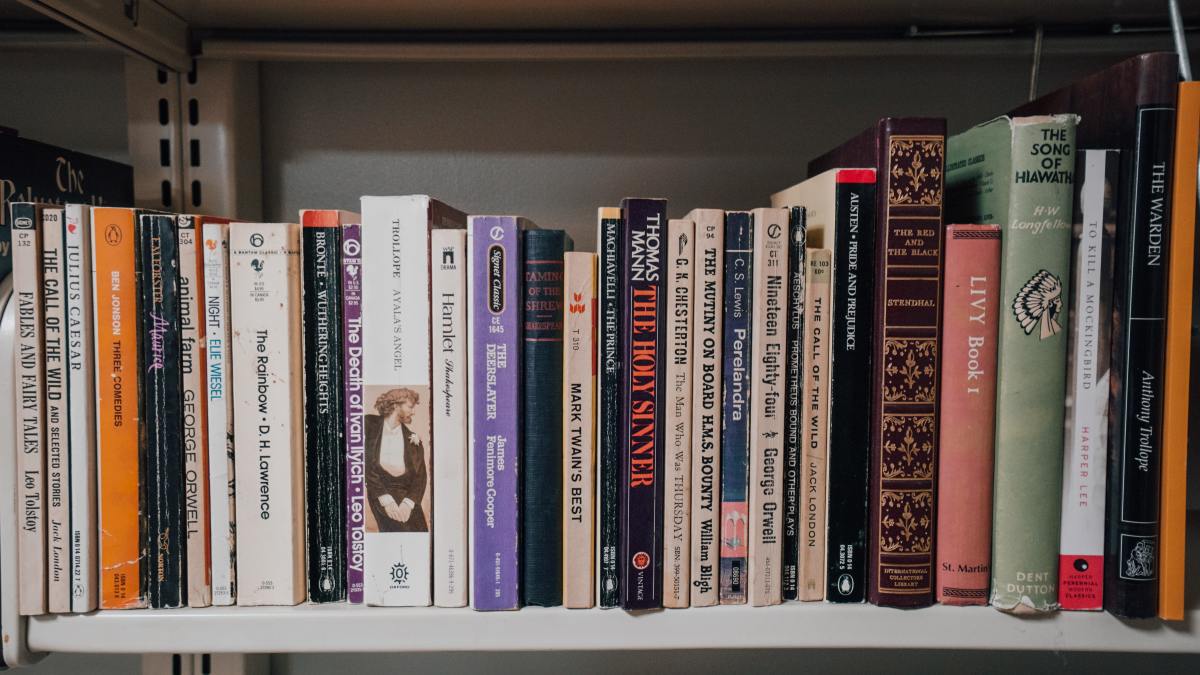
I don’t have the desire or time to write full-on blog posts for every book I read, but I’ve come to appreciate how blogging gives me an opportunity to reflect a little bit more explicitly on what I got out of a book. So, I’m going to start writing these monthly posts to talk about what I’m reading.

If you’re interested in any of these books, please use the included Bookshop.org links instead of Amazon. It helps independent bookstores, and I get a small affiliate commission.

Ways of Being: Animals, Plants, Machines: The Search for a Planetary Intelligence

By James Bridle

This triply-titled book is the kind of non-fiction that is perfect for fiction writers. It’s full of interesting ideas that could spark a story. Bridle is a little bit “out there,” but this exploration of intelligence comes at an old topic from an interesting perspective.

The book postulates that we should consider a lot more under the umbrella of intelligence than we typically do. The human definition of intelligence always seems to be “things that humans do,” and Bridle argues that this definition dramatically limits our understanding of the universe.

As you might guess from the title, Bridle argues that various animals, plants and machines all have their own varied forms of intelligence, often radically different from our own. He provides some interesting examples to back up his opinions, although some of the leaps of logic toward the end of the book didn’t quite land for me.

The Way of Zen

By Alan Watts

This is an introduction to the basics of Zen Buddhism, along with some history and context.

Alan Watts was an odd duck. A British-born writer and speaker who gained popularity after moving to California in the 1950s, he was a priest before becoming enamored with Asian religions and philosophy, and he found a receptive audience in the hippie movement.

I don’t really know if Watts is much appreciated in more mainstream or traditional Zen circles, but he has an entertaining style and a knack for explaining abstract concepts through metaphors and parables aimed at a western audience. His many recorded philosophical lectures have found new life on the internet in the YouTube era.

Becoming a Writer

By Dorothea Brande

I wrote a whole post about this one.

The Black Tides of Heaven / The Red Threads of Fortune

By Neon Yang

A fun pair of fantasy novellas set in an Asian-inspired secondary world. Despite a pair of royal twins and a magic system based around elements, these books feel original and fresh. Quick reads full of action and adventure.

What I really appreciated about these books was that all of the magical fantasy action was driven by relatable and varied interpersonal conflicts: disagreements between parents and children, irritation with in-laws, and the loss of loved-ones.

The first book also successfully tricked me into believing that it would end with a big fight, then switched it up at the last second and gave me a more cerebral conclusion.

Animal Farm

By George Orwell

Originally published in 1945, Animal Farm is a skinny little book that Orwell sometimes described as a fairy story. It’s a modern (for its day) fable about a group of animals that take over the farm, only to have their noble rebellion slowly subverted back into tyranny.

I’ll be the first to say that allegorical novels aren’t exactly the sort of thing I’m very excited to read, and I probably wouldn’t have read this if it wasn’t considered such a classic. However, it’s a very quick read, and entertaining enough that I didn’t regret it.

In many ways, this book feels like an early prototype of Orwell’s 1984, which was published only four years later. Many of the same ideas appear in that book, but in less simple, satirical forms.

The Wes Anderson Collection / The Grand Budapest Hotel

By Matt Zoller Seitz

These are big “coffee table” books with some great illustrations and images from the movies.

The original book spent a good amount of time on each of Anderson’s first seven movies. While I’m not much of a movie critic, I do have an appreciation for experts talking about the things they love. This was an interesting look into that world. While a lot of it is specific to filmmaking, there are some useful tidbits about building good stories in general.

The second book is a bit thinner, but focused entirely on a single film. For my money, Grand Budapest is Anderson’s best work, but this still felt like more of a deep dive than I needed on the one movie, especially when contrasting it with the first book.

While they may make more of these books as the director continues to make movies, I think these two were enough to satisfy me, and I’ll get off the ride at this stop.

Flash Futures

(Anthology, edited by Eric Fomley)

This was one of my backer rewards from a Kickstarter for The Martian magazine. It’s an anthology of sci-fi flash fiction, generally on the darker side. I have to admit, while there were some enjoyable stories here, I prefer the drabbles on the site.

I think flash fiction is one of the hardest formats to write. I enjoy drabbles and micro-fiction because it’s hard to even tell a coherent story at that length. Pulling it off is a bit of a magic trick. At the 500 or 1000 words of a flash piece, you still can’t tell very much story, but you also don’t have the incredible tightness of a drabble, where you’re fighting to fit every single word and forced to cut words in clever ways.

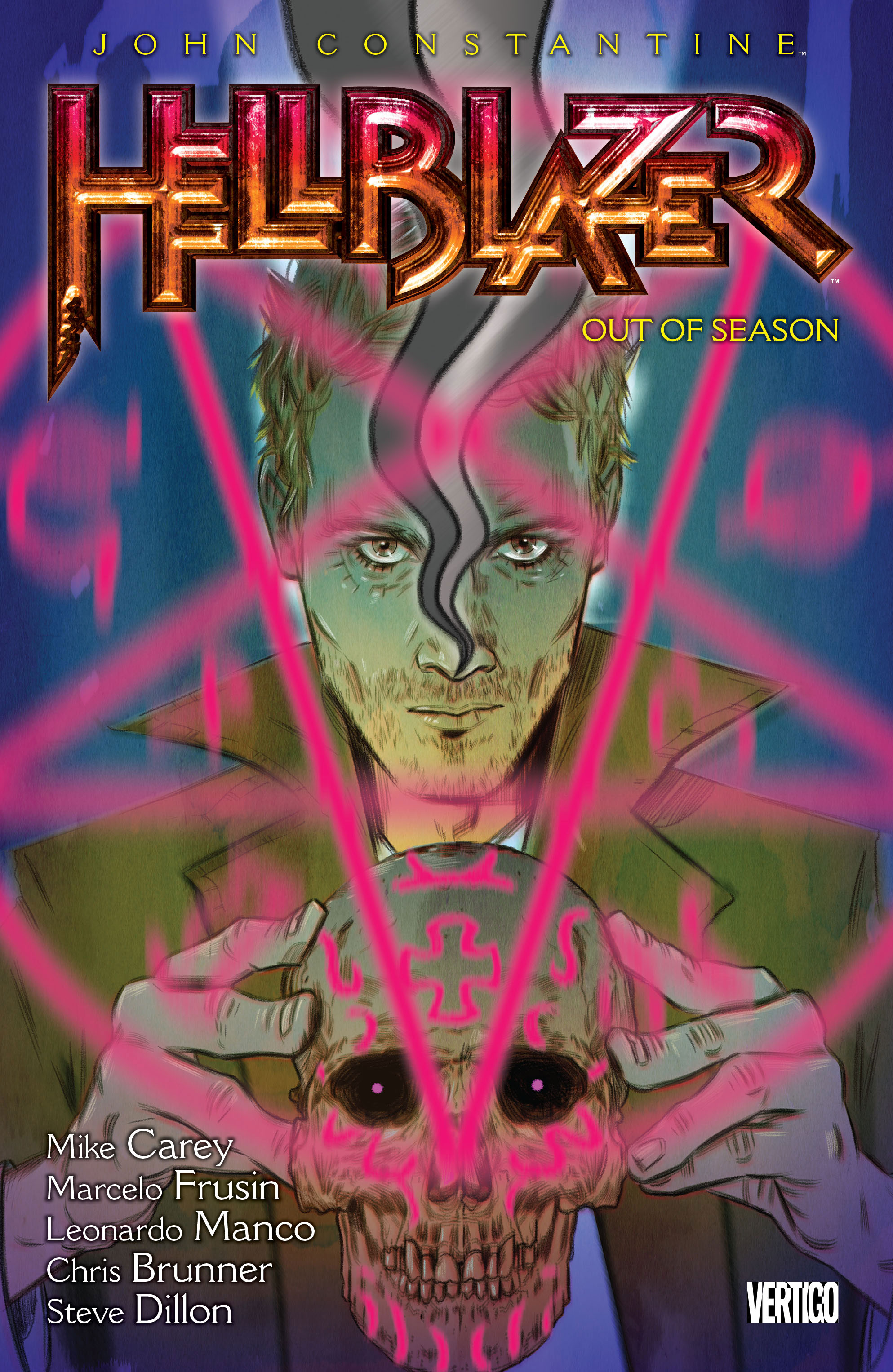
Hellblazer: Out of Season (Volume 17)

Written by Mike Carey

Art by Chris Brunner, Leonardo Manco, Marcelo Frusin, Steve Dillon

This was a random pick from the library.

I love Constantine as a character, and his whole milieu, but how many times can there be a worldwide supernatural apocalypse event? It seems like it happens every year or so in these books. I really prefer the smaller, more intimate story arcs that focus on just how miserable it is to be in Constantine’s social circle.

I will say, this is a pretty great connecting arc. The twist at the end is interesting, and it creates new characters and problems. It’s a great example of finishing a chunk of episodic story by building a lot of new scaffolding that future stories can be built upon. That’s not always an easy thing to achieve. Good lessons for anyone who wants to write a series.

The Sandman: Overture

Written by Neil Gaiman

Illustrated by J.H. Williams and Dave Stewart

Not my first time reading this, and it won’t be my last. If you love comics and you haven’t read this book, you are missing out.

It is, by far, the most beautiful Sandman book, and that is a high bar. There are no straight-edged standard panels here. It’s a master-class in all the different ways a comics page can be composed. While the original Sandman was often very dark and brooding, Overture contrasts its serious blacks with all sorts of psychedelic color.

I’ve read some complaints about the story not being as good as the originals. And that might be true, but I also don’t think it’s too far off the original series. Neil Gaiman does his usual Neil Gaiman things, crafting stories that feel simultaneously new and old, familiar and strange, playing around in one of the worlds where he is most comfortable.

Although this is a prequel, I think it definitely ought to be read after the original run. Narratively, the story comes before the other books, but the references and emotional beats are clearly designed as a follow-up.

Reading this again gave me the itch to read even more Sandman. So…

Sandman: Preludes and Nocturnes (Volume 1)

Written by Neil Gaiman

Illustrated by Sam Keith, Mike Dringenberg, Malcolm Jones III, Kelley Jones

The big, bad original, from the early days of DC’s Vertigo imprint.

Despite Morpheus (a.k.a. Dream) being almost infinitely old when we first meet him, this is a fantastic origin story. It’s a satisfying arc in its own right, as Morpheus is trapped, escapes, and then has to regain his tools and repair his kingdom. It also sets the tone for the entire series: a delightful mix of modern and ancient stories in a new mythological frame.

Almost all of the issues collected here are dedicated to the main plot, with the exception of the final one. “The Sound of Her Wings” remains one of the greatest single issues of a comic of all time, characterizing Death as a whimsical, kind, and profoundly compassionate older sister to Dream.

What I’m Reading in June

In June I’ll be continuing my re-read of the original Sandman series. I’m also delving into the Witcher series and a brand new TTRPG.