Week 16 — Year of Short Stories 2026

2026 is another year of short stories. In this weekly series, I track my short story writing, from idea and draft to submission.

This is the week of Apr. 20-26.

Stats

  • Stories Finished: 2
  • Submissions Currently Out: 6
  • Submissions Total: 15
  • Rejections: 13
  • Acceptances: 0

Goals and Results

Last week’s goals:

  1. Revise F-TIB.
  2. Write Arbor Grove.
  3. More critiques.

The stories that were out remain out. I received no responses and sent no new submissions. Critiques are going well and I’m comfortably ahead again.

I continue to make progress on Arbor Grove, although the middle has been muddier and slower than I would like, and as a result I am still a few days behind on my word count. It feels like it’s going to need some trimming when it’s done.

Despite putting F-TIB at top priority last week, I didn’t actually work on revisions that much. I did ruminate on changes and parts that don’t quite feel right, but that doesn’t tend to feel as productive as fingers-on-keyboard work, even if it is sometimes a necessary step of the process.

Next Week

Beneath the House in Caen goes out for critique at the end of April. In order to try to make good progress on F-TIB before I have another story to revise, I’m going to make it my singular priority for the week.

Goals for next week:

  1. Revise F-TIB.

Changing Things Up

Shocking as it is, we’re approaching the 1/3 mark for the year of 2026.

In writing the most recent update or two, I’ve begun to feel that these posts are becoming a little too rote. Rather than continuing to bore everyone, I thought it might be time for a change.

My reason for this series is partly to improve my habit of regular writing. Repetition develops habits, but it also breeds complacency. With that in mind, I’m going to try something new. Going forward, I’ll try to find a mini-topic of the week that relates to whatever I’ve been writing. I’ll still have the stats and goals to keep me motivated, but this bonus topic should give us some variety.

This Week’s Mini-Topic: Exploratory Writing

I’ve discussed exploratory writing before, and while I don’t begrudge writers who like to find their story as they write it, I’ve never considered myself one of them. It still makes me slightly nauseous to think about writing a novel without having a firm outline.

For the writers who insist this is the way they have to write, dead-ends, plot-holes, and heavy revisions are the cost of doing business. It just galls me to think about potentially throwing away whole chapters when something doesn’t work.

Admittedly, having an outline doesn’t guarantee that a scene or section will work. Planners can miss plot holes, and scenes can look good in summary only to die on the page. Still, outlining lets me feel that I have a fighting chance to catch a wide spectrum of issues up front, before I’ve wasted my precious time.

Only, that’s not entirely true anymore.

I’ve slowly come around to accepting (and maybe even enjoying) exploratory writing for short stories. The shorter I think the story should be, the happier I am to jump into it blind. This makes some sense, because I generally don’t outline short stories in the same way I would outline a novel. When a story is under three thousand words, a major rewrite doesn’t feel quite so unreasonable.

I also find that short stories, more than longer work, can run on an engine of mood, style, or a unique viewpoint. Plot can be less of a concern in a short story, even if I remain firmly against “plotless” fiction.

I draw the line at endings though. I might find a better ending than I thought, but I still don’t like to start a story without having some idea of how it could end. That’s just crazy talk.

Week 15 — Year of Short Stories 2026

2026 is another year of short stories. In this weekly series, I talk about short story writing, from idea and draft to submission.

This is week fifteen: Apr. 13-19.

Stats

  • Stories Finished: 2
  • Submissions Currently Out: 6
  • Submissions Total: 15
  • Rejections: 13
  • Acceptances: 0

Goals and Results

Last week’s goals:

  1. Write ~2k words of Arbor Grove.
  2. Revise F-TIB.

This was a fairly quiet week. I made good progress on Arbor Grove, but didn’t quite hit 2k. I revised F-TIB, but it still has a ways to go. I got a single form rejection for Taco Cat.

I also did some extra critiques this week. I’ve found that I tend to slack off on critiques when I don’t have a story in the queue (which luckily is not that often this year), so I’ve been trying to not only stay caught up, but get a little ahead. That way I’ll have some wiggle room when things come up and I have to miss a week.

Next Week

Even though I made progress this week, my goals for next week are essentially unchanged. However, I’m moving F-TIB into the top spot because it would be nice to get it ready for submission before Beneath the House in Caen goes out for critique at the end of April.

Goals for next week:

  1. Revise F-TIB.
  2. Write Arbor Grove.
  3. More critiques!

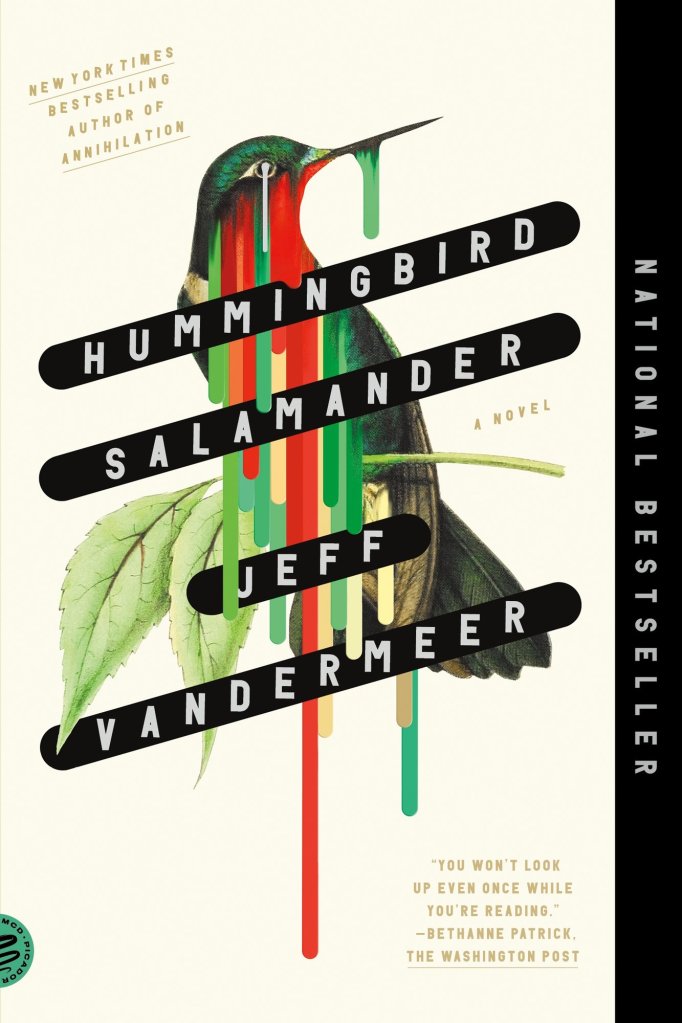
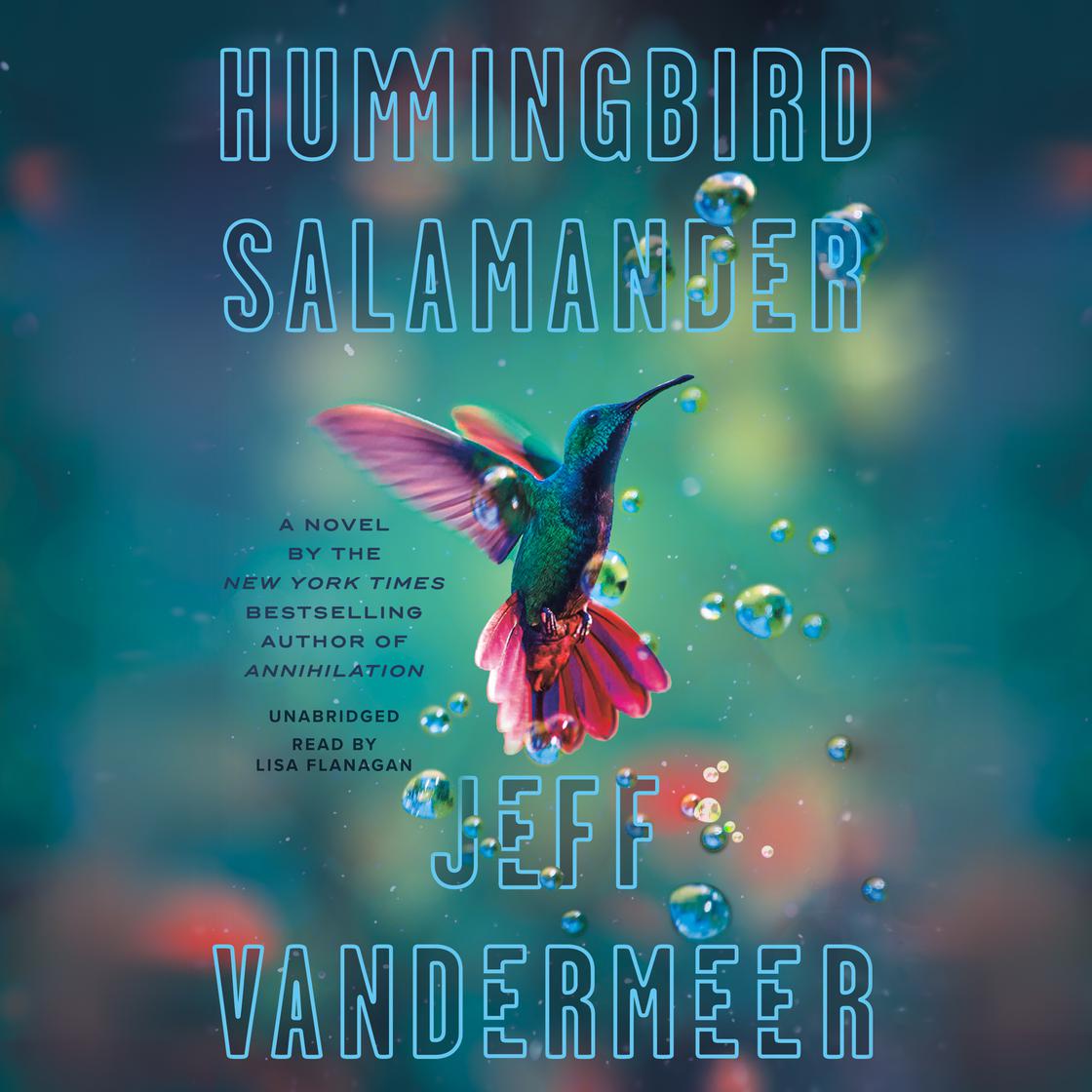
Hummingbird Salamander — Read Report

Book | E-book | Audiobook (affiliate links)

Jeff VanderMeer has hovered at the top of my favorite authors list since I read Borne and Dead Astronauts. The Area X trilogy only cemented that position. I had understandably high hopes for his latest book, Hummingbird Salamander.

Hummingbird Salamander stays close to the modern day in a way that will feel familiar to William Gibson fans. There are science fiction elements, but they are very restrained compared to VanderMeer’s previous work.

Borne was almost Joycean in a way that made it a challenging read. Hummingbird Salamander is much more straightforward, even if VanderMeer can’t stop himself from adding literary flourishes. It comes across as more of a suspense/thriller story than anything he has written in recent years.

Eco-Terrorism and Generational Trauma

It’s not particularly hard to pick out the bigger themes running through VanderMeer’s work. Ecology is the most obvious. His stories explore the ways humans interact with the world around them, and how social and technological factors intertwine with the natural world. Area X seems to exist in a relatively near future where climate change continues apace and a mysterious section of coastline is hidden behind government claims of a localized ecological catastrophe. The Borne stories describe a far-flung future city where most of what survives is the result of extreme genetic manipulation.

In Hummingbird Salamander, humankind’s fraught relationship with nature is again front and center. The story begins with a note that leads the protagonist, Jane, to a storage unit. The note contains the words “Hummingbird” and “Salamander,” with some mysterious dots in between. The storage unit contains an actual, taxidermied hummingbird of a variety that turns out to be extinct. These clues lead Jane into a deadly mystery that involves poaching and the illegal wildlife trade, as well as eco-terrorism and organized crime.

Jane lives in an America that is on the brink. Extreme weather is normalized. Ecological collapse is commonplace. Pandemics are perpetually imminent. It turns out that society fails in more of a whimper than a bang, and most things in life are getting slowly, steadily worse. But people still have jobs, family, and lives. Jane has all of these things. She’s a private security analyst, a mother, and a wife. She stands out as an unusually tall, strong woman who has excelled at weight lifting and body building, but has an otherwise normal, middle-class existence.

Another common theme among VanderMeer books is generational trauma, and in some ways this is just ecology at an individual level. A family is an environment, and as our current world is shaped by the mistakes made by our forefathers and ancestors, our personal hangups and dysfunctions are shaped by those who raised us, and those who raised them.

Jane’s dysfunctions are revealed slowly in fragments and flashbacks, only becoming fully apparent in the final third of the book. In many ways, this is the story of everything she does wrong, and why.

Where it All Breaks Down

Hummingbird Salamander is a well-written book. It has rich and detailed characters, an interesting setting, and touches on timely topics. And after some consideration, I have to admit that it is the most unenjoyable VanderMeer book I have read. This book and I have irreconcilable differences, and they are, unfortunately, at the very heart of the story.

From the first chapters, Jane is obsessed with the hummingbird and the mystery it represents. And sure, there is a reason for why the two words on the note would be important to her. But even with all the answers that are eventually revealed, I can’t help but feel that her obsession is unreasonable.

I might be able to overlook that questionable motivation if I had some sympathy for Jane. But in spite of her horrible upbringing, I find it hard to root for her. There are a handful of moments in the book where Jane shows affection for her teenage daughter and long-suffering husband, but these seem like afterthoughts. These people are hindrances, distractions from her obsessive pursuit of the central mystery. When it becomes apparent that unraveling the mystery might be dangerous, she barely spares a thought about how that could impact her “loved” ones.

In the end, she makes choices that destroy her family and ruin their lives, but she can barely muster a moment of self-reflection or regret. Her coworkers are caught up in the maelstrom. Strangers are hurt and killed because of her. She simply doesn’t care. She gets tougher and meaner as the book goes on, but she was cold and indifferent to begin with.

I will admit, as a husband and father of a teenage daughter I may be especially well-positioned to dislike Jane and her choices. Other readers with different backgrounds might have an easier time identifying with her and sympathizing. I enjoy flawed characters. I just need them to have enough redeeming qualities to get me on their side.

All Cloud, no Silver Lining

I think you’d be hard-pressed to find anyone who’d say VanderMeer’s work shows a positive attitude or hope for the future, but the pessimism has never been as apparent as it is here. A straightforward reading suggests that we might have to hit rock-bottom (as individuals and as a species) before things will get better. And even then, they might not.

Jeff’s other work balances that dark and dismal worldview with genuine strangeness and wonder. There’s a reason he was one of the leading voices of the New Weird/Slipstream movement. His worlds are shadowy and unfamiliar, but also unexpectedly delightful. Nobody loves a tidal pool the way this man loves a tidal pool. He describes coastlines like French poets describe their lovers. Hell, in Borne, the post-apocalyptic city is effectively ruled by a kaiju-sized, magically levitating super-bear, and the scariest villain is a regular-sized (but very menacing) duck.

There’s almost none of that here. The drones have gotten a little fancier and the world’s gone to shit. No impossible sci-fi. No crazy weirdness. Just a mysterious note in a grim world that eventually leads to violence and heartbreak.

The Missed Twist

I don’t want to be too down on this book, and I’ve already gotten more negative than I really like. The fact is, I plowed through it, and I did want to know the answer to the mystery. I wanted to know how it all turned out. But the entire time I was reading, I kept waiting for the twist that would help me finally understand Jane and why she was doing all this.

That twist never came.

Week 13 & 14 — Year of Short Stories 2026

2026 is another year of short stories. In this weekly series, I talk about short story writing, from idea and draft to submission.

This is week fourteen: Apr. 6-12.

Stats

  • Stories Finished: 2
  • Submissions Currently Out: 7
  • Submissions Total: 15
  • Rejections: 12
  • Acceptances: 0

Goals and Results

It’s a double week, since I took a week off. It’s been quiet—not a single response to my submissions.

I had a single goal from week 12, and that was to get a story into the Critters queue.

The story that I had in mind went by the bland working title of Hunter’s Apprentice, and although I liked the idea and the general structure, it needed more tension/conflict. I added that in the form of the main character being less sure of the big choice she has to make, and I changed the title to Beneath the House in Caen, which I think is a much more evocative title.

That story is now off to the Critters queue, and should go out right around the end of the month.

Next Week

Lately, I’m finding that it’s pretty easy to hit my self-set revision quotas. Thanks to a backlog of first drafts, I have no shortage of stories to clean up and get critiqued, then thoroughly revise when the critiques roll in.

However, I have been falling behind on my word count goal for new stories. That needs to be remedied. I have a solarpunk story called Arbor Grove that I’ve just started, and I think that will be the target for this week.

Assuming I get that done, I need to work on the post-critique revisions of F-TIB.

Goals for next week:

  1. Write ~2k words of Arbor Grove.
  2. Revise F-TIB.