It’s a common misconception that a great idea makes a great story. The truth is that most great stories come down to execution. A great idea with poor execution rarely works, but a great writer can breathe new life into even the most tired tropes.
Like any writer, I have my own treasure trove of ideas that might end up in a story…someday. But why horde them? Instead, I’m opening the vault and setting them free.
Use these ideas as a writing prompt, or come up with your own twist and reply in the comments.
Fifteen Years
He’s one of the most successful CEOs in history, turning a small business into a corporate behemoth in a little over a decade. Every industry he touches is revolutionized. Every decision proves prescient. He keeps the prices low. He takes care of his workers and their communities. He puts people over profits, but the profits still roll in. The business analysts don’t understand how he does it. Nobody does.
It’s easy though. Easy when you can travel backward in time exactly fifteen years. Easy when you can try every strategy, make every mistake, and then start again. How many times has he started over?
What’s hard is the long cycle. Fifteen years to recharge, and then back again. No way to go further. No way to escape that event horizon of the past.
So many days are too far back now for him to visit. They exist only as memories. The day he met the woman he loves. They day they married. The day she got her diagnosis.
She’s still back there, in the past. He can still visit her hospital bed. He can smell the antiseptic, see the sunken hollows of her cheeks and eyes. Hear the wheezing rhythm of the machine that helps her breathe. Two weeks before she passes on. Two weeks by her side, every fifteen years.
He knows he should let her go. That’s what she would want. He has tried. But he’s so afraid to lose those last two weeks. Then she’ll really be gone beyond his reach. And what will be the point of this empire he has built? What will be the point of anything?
The date is blocked off in his calendar, among the meetings and events. It’s nearly time again.
2026 is another year of short stories. In this weekly series, I track my short story writing, from idea and draft to submission.
This is the week of May 18 – 24.
Stats
Stories Finished: 2
Submissions Currently Out:8
Submissions Total: 20
Rejections: 16
Acceptances: 0
Submissions and Responses
I had one story come back to me this past week—a form rejection for Dr. Clipboard’s Miracle Wonder Drug. So I sent it back out.
The rejection and new submission were both publications that don’t accept simultaneous submissions (that is, submitting the same story to several places at the same time). It used to be like this almost everywhere, but explicitly allowing simultaneous submissions has become more and more common. Generally a good thing for writers. The remaining sticklers tend to be the more prestigious or higher-paying markets.
Some writers will say that nobody can stop you from submitting all you want, and it’s unlikely any publication will catch you. That is generally true. If you are lucky enough to be accepted by more than one publication—well, Lucy, you might have some ’splainin to do. Accepted stories do sometimes get withdrawn, though it’s unlikely to ingratiate you with any editors.
As someone who likes to spend some time vetting publications and submitting to those where I think my stories have the best shot, I don’t necessarily mind some of my stories being submitted to a single publication at a time, so long as those publications don’t have annoyingly long turnaround times. I sometimes find it hard to keep up with submissions anyway. I can spend that time working on other stories instead.
** Goals and Results
Last week’s singular goal:
Continue revising F-TIB.
Here’s where I sound like a broken record and complain that I haven’t had much time to write over the past week. A couple hours on the weekend doesn’t feel like it goes very far.
I have gone through all the critique feedback for F-TIB and decided what to address and what to ignore. I then took that, along with my breakdown of the story structure, and used it to outline a new structure that I believe will fix the things that need fixing.
The result is an outline with twice as many scenes as the original, but that’s a misleading description. Certainly at least twice as much happening. The first draft only had a couple real scenes embedded in a kind of montage of description. It felt stylized when I was writing it, but it’s clear that many of my readers found it bland, messy, and too fast to earn the emotional payoff that I was trying to build at the end of the story.
In the current draft I’m building more traditional scenes and spending more time ramping into the key moments so they feel earned.
Next Week
It has been far too long that I’ve been slowly chipping at F-TIB, so I’m upgrading last week’s goal:
Finish revising F-TIB!
I might put in some late evenings this week, just to try to get this done.
I’ve been rewatching Ted Lasso recently, and while there are many things to appreciate about the writing on that show, I found myself impressed by the tropes. Rebecca is the tough female boss, Higgins is her bumbling sidekick. Jamie is the fantastic young athlete who only cares about himself, and Roy is the old curmudgeon, past his prime. Many of the characters are shown in the first episodes as decidedly one-dimensional.
Normally, “trope” is a dirty word among writers—synonymous with laziness and lack of creativity. Tropes are things we’ve seen before; things we’ve seen so many times, in fact, that they are familiar and often boring.
But that familiarity can be an asset when used carefully. A trope can be a shorthand. It doesn’t have to be explained, because the audience already knows. A show with a big cast like Lasso needs these shorthands to introduce so many characters so quickly without confusing the audience. The show manages to get a ton of story across in the first few episodes, when it also has to build a world for these characters to live in.
But a show full of tropes will bore a smart audience quickly, so Lasso pulls off a second trick. The trope isn’t the end state, it’s the opening move. Each trope is quickly deflated by a scene or two where the character shows a surprising attribute—something that directly contradicts what the audience is expecting from that trope. Suddenly, those characters feel considerably more like real people.
These rounded characters also play directly into one of the core themes that makes Lasso such a heartwarming show. The audience finds that they’ve pre-judged these characters, but everyone has a reason for their weaknesses. They’re good reasons, and easy to sympathize with.
The characters are cold to protect themselves, they’re angry because they’ve been hurt. They are never excused their bad behavior, but they are forgiven for it, because they’re human.
So don’t discount tropes. They can be extremely effective when used carefully.
2026 is another year of short stories. In this weekly series, I track my short story writing, from idea and draft to submission.
This is the weeks of May 4 – 17.
Stats
Stories Finished: 2
Submissions Currently Out: 8
Submissions Total: 19
Rejections: 15
Acceptances: 0
Submissions and Responses
In the past two weeks I had a single rejection for Taco Cat Employee Manual. It was one of those where it’s either a very brief personalized rejection or a very positive form rejection.
As I mentioned in the previous post, the last open submission for The Incident at Pleasant Hills had come back, so I spent some time scouring Duotrope and submitting. The end result was one new anthology submission for Taco Cat and three new submissions for Pleasant Hills.
I’m still pretty much on par or slightly ahead on my goal of hitting 50 short story submissions by the end of the year. Now, if I could just finish a few more stories, that would help me blow that goal out of the water.
Goals and Results
Last week’s goals (well, technically two weeks ago):
Submit The Incident at Pleasant Hills
Continue revising F-TIB.
Outline Arbor Grove (and maybe start on the next version)
Review critiques for Beneath the House at Caen.
Between work and my kids school activities, life has been busy. As usual, I’ve made progress, but perhaps not as much as I would like. I submitted Pleasant Hills and did a cursory read-through of the critiques that came in for House at Caen.
I’ve now gotten a couple notes from critters who mentioned that they liked some previous story I had submitted, so they picked up one of my newer stories when it came up in the feed. It’s nice to hear that the quality on rough drafts was at least high enough to pique some interest, and a good indicator that it pays to submit regularly so the more prolific critters have a chance to notice you and submit useful feedback.
The main downside of Critters compared to a traditional writers’ group is that it’s less personal and harder to get to know others. It’s nice to see that there is some community to be found in the group if you’re active enough.
Arbor Grove was really the one goal that I didn’t work on, although it has been in the back of my mind. This week I’m thinking that I’d rather just fall behind on my word count goals and spend my time working on the drafts that are closer to completion.
Then again, I’ve never been very good at sticking to any one thing for long, so I may go back to it if I get the itch.
I rewrote a couple scenes in F-TIB (or rather made scenes out of the messy montages). There’s still more work to be done there, and I haven’t quite gotten it all to fit together in my head in the way that tells me I’ve cracked it. So I’ll continue.
This Week’s Mini-Topic: Revisionary Disassembly
As part of my work on F-TIB this week, I broke the story down into its scenes and characters, which really helped to show that a good chunk of the story didn’t have discrete scenes (as well as highlight the problems critters pointed out with two of the characters).
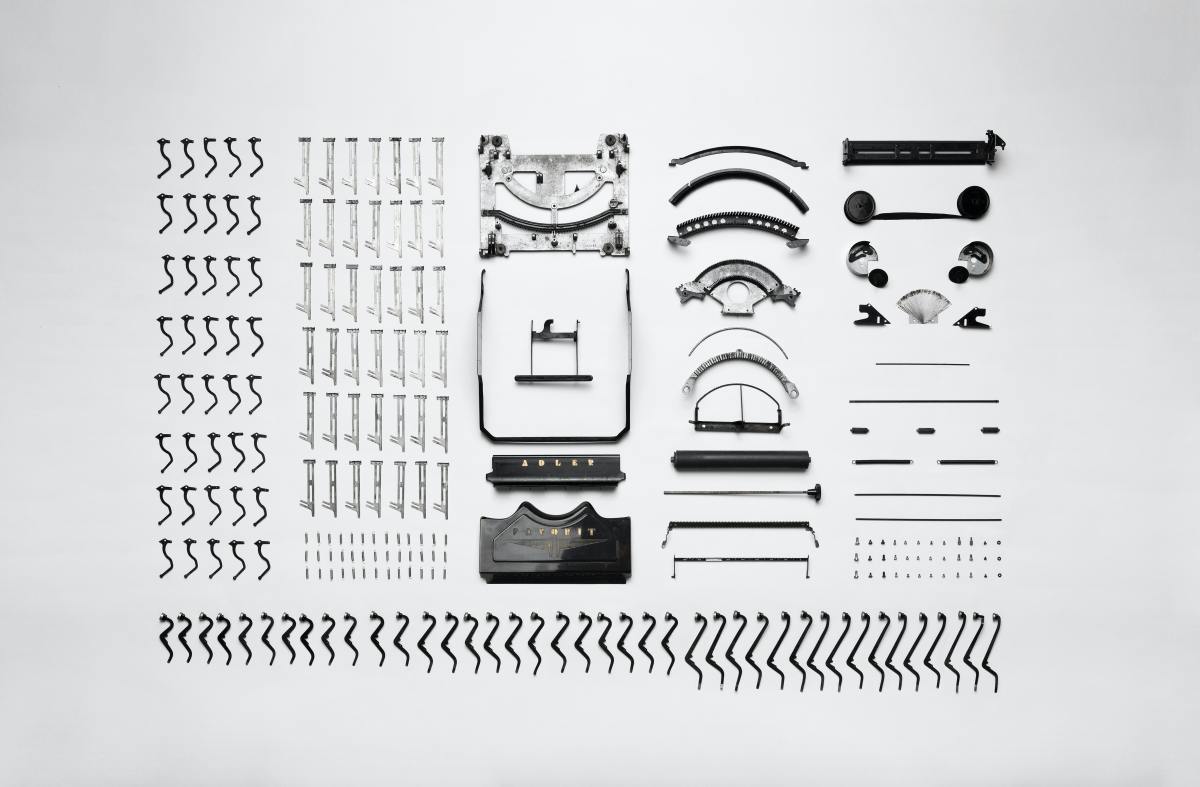
The pattern that I noticed is that major revisions are often a process of disassembly and reassembly.
I often find that once I’ve finished a first draft and done some polishing, it starts to feel like a single unit with no seams. It’s easy enough to deal with line edits, because those don’t typically change the shape of the story, but when problems revealed in characters or scenes or anything that cuts across the story as a whole, they feel much more overwhelming. When the story is a contiguous sequence of A then B then C, how can anything be significantly modified?
This is where I’ve found it effective to break the story back down into individual components. Look at the scenes and what happens within them. Look at the characters and see how they interact and how they drive the plot.
These smaller pieces are discrete components with interfaces to other components of the story. If you modify one of them, you just look at the linkages to other characters and scenes, and make the necessary adjustments to make them fit. Sometimes that means a changes in one place necessitates a cascade of changes, but those can be identified and addressed one after another.
So, next time you’re having trouble with revisions, consider making a reverse outline or listing out your characters and what their purposes are within the story.
Why? Well, that’s a good question. I enjoy thinking up ideas for stories. But I rarely find that “traditional” writing prompts help me do that. I suspect that the skills for creating a good writing prompt are further from the skills for writing a good story than we might expect.
Many writing prompts start with a core idea that’s too specific. Most of my Story Idea Vault entries fall into this camp, sad to say. It can be hard for someone else to come up with their own spin on the monster beneath the monastery that kills the monks and whispers the future, or the student biologist who has to learn how to recognize thousands of deadly forms of alien life on sight. How do you find the twist on that to get you excited and feel like it’s now yours?
I think a good writing prompt needs to contain not quite enough information. For me, a good story idea starts with an unexpected leap of logic or connection between unexpected things. It starts in the gaps.
I like the Story Engine because it provides very small bits of ideas and shuffles them up randomly. Often, when I use it to generate story ideas, I find that the new ideas are inspired by the cards, but often don’t quite fit all the parameters. From a full sentence with characters and actions and setting, something like the phrase “architecture bomb” will lodge in my brain and grow into something else entirely.
An even simpler exercise that I like for ideation is to generate two long lists of words or phrases. Then align the lists randomly and start reading the combinations. What is a skeleton jar? A Rickroll engine? Sky games?
Again, it’s not anything like a full, coherent idea; more like a high-speed collider for linguistic nuclei. It’s that unexpected connection between unrelated ideas that tickles the muse.
Recently, I discovered another exercise in the same vein—something almost, but not entirely unlike a writing prompt.
Go into the music app on your phone (or your record collection, or a Spotify playlist depending on how old you are) and put on some music. For each song, try to come up with the “story of the song” before it’s over.
I don’t mean summarizing the lyrics (if there are any, and they actually tell a story). Those words might contribute. Is there a person on a bike? A mother? Jilted lovers? An old truck? A fast car and a gun?
You might find yourself picturing little scenes or images. They could relate to the lyrics, or they may be soundscapes. Check the band name, the song name, the album name. Look at the cover art.
Surprisingly few songs tell a straightforward story. They’re often full of loosely related tidbits with little gaps and dark voids in between.
If you look carefully, there are stories in those gaps.
2026 is another year of short stories. In this weekly series, I track my short story writing, from idea and draft to submission.
This is the week of Apr. 27 – May 3.
Stats
Stories Finished: 2
Submissions Currently Out: 5
Submissions Total: 15
Rejections: 14
Acceptances: 0
Submissions and Responses
One response this week—a rejection for The Incident at Pleasant Hills. This included a little note with some kind words for the story, but they found it too bleak for the publication. This is a good note for future submissions, and another indication that the story is being read positively, even if it hasn’t found a home yet.
Goals and Results
Last week’s goals:
Revise F-TIB.
My horror/dark fantasy story, Beneath the House at Caen, went out to Critters this week. The critiques are coming in, and will continue until Wednesday. As usual, I’m only glancing at this feedback as it dribbles into my inbox. I’ll wait until the crit week is over before collecting it all into a new document, giving it an initial read-through, and sending out a brief thank you to the readers.
I think this was a productive week, but not in a way that helps my word count much. For F-TIB, I’ve been crunching down feedback into plans for revising the story. That involved mapping out the current scenes and thinking about new scenes, brainstorming a new title and new name for a major character, and deciding on some small changes that will still have significant impact on this relatively short story.
One nice thing about this planning work is that I can immediately see several low-level critiques of the story evaporate as the broader structure changes. That’s the main reason why I advocate starting with big changes and working down to the nitty-gritty, and it’s always nice when I can see that philosophy saving time and effort.
I’ve also been working on my foray into solarpunk, Arbor Grove. When I talked about exploratory writing last week, this is the story I was thinking about. I knocked out 2,400 words of Arbor Grove with only some vague ideas of an event that ties the beginning and end together. What I found was that the story had gotten bogged down in boring scenes and failed to do anything interesting.
So, much like F-TIB, I mostly spent my time staring at the screen rather than typing. I’m working through the things that excite me about the story and the things that are dragging it down, and just articulating those things really helps clarify the direction I should be going. I expect some sort of outline to come out of this process, and I will likely end up throwing most of those 2,400 words away, but they were worthwhile as a way to refine the story.
Next Week
My single goal last week was to work on F-TIB because it’s the story that’s closest to completion. Soon I’ll have critique revisions to work on for Beneath the House at Caen. But I’m also enjoying working on Arbor Grove, and I like to indulge the muse by following a project when it feels productive and fun.
At the risk of splitting my focus, I’m setting a few goals for next week.
Submit The Incident at Pleasant Hills
Continue revising F-TIB.
Outline Arbor Grove (and maybe start on the next version)
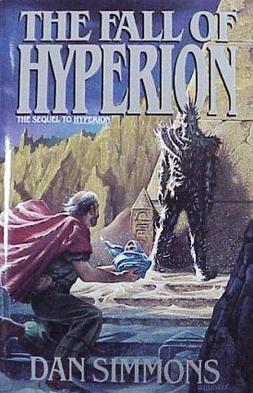
The Fall of Hyperion is the second book in the Hyperion Cantos. It is the sequel to Hyperion, and although the two Endemion books pick up a related story in the future of the same universe, the two Hyperion books really form a complete pair.
They are an interesting duo of books to compare. Hyperion has only a few long chapters, each a self-contained story. As the first half of a series, it makes little attempt to resolve loose ends. The Fall of Hyperion has a very large number of short chapters and has many mysteries to wrap up and plot points to resolve.
Severn, Gladstone, and the Pilgrims
Hyperion followed the stories of the seven Shrike Pilgrims, who make their way to the so-called Time Tombs, finding themselves alone in a dire situation as the galaxy sits on the brink of war. The Ousters, humans who long ago committed to life in wandering deep space colonies, face off against the Hegemony, a culture stradles hundreds of planets with instant-travel “farcaster” portals and a central government.
The Fall of Hyperion introduces the character of Joseph Severn, who takes his name from a friend of the ancient poet, John Keats. Severn is a “cybrid”—a hybrid of human biology and an AI personality, with the artificial memories of John Keats embedded in his mind. As if that weren’t enough, Severn is in some ways the twin of Johnny, the dead cybrid lover of one of the Shrike Pilgrims.
Severn is hired by Hegemony CEO Meina Gladstone, ostensibly to draw her portraiture in what is expected to become a defining moment of the Hegemony’s history. For most of the book, chapters alternate between Severn and the Shrike Pilgrims. The Pilgrims work to discover the mysteries of the Time Tombs and how they relate to the Shrike, a four-armed, semi-mythic, razor-covered metallic monstrosity that seems inextricably linked to the tombs and a far-future war where humankind fights for its existence.
It eventually becomes apparent that the chapters alternate because Severn has the unique ability to “see” the pilgrims’ activities in real time through his dreams, and it is because of this that Gladstone wants to keep him close.
The Hegemony’s war with the Ousters heats up and threatens to spill out of the Hyperion system, into the web of farcaster-linked worlds. But the pilgrims and Severn soon learn that the Ousters may not be the biggest threat. The Core of hyper-intelligent AIs, inventors of the farcasters and aloof patrons of the Hegemony, are revealed to be split into three competing factions. At least one of these is Hell-bent on creating a machine god and wiping out humanity.
The Challenges of Mythic Sci-Fi
The greatest strength of Hyperion becomes the main weakness of The Fall of Hyperion. The first book manages to build an epic space-opera universe and populates it with characters and stories pulled from other genres. The overall effect of the Pilgrims’ quest and their adventures is a mythical-feeling quest in a far-future setting.
Hyperion gets away with this partly because it only dips its toes into galactic politics and space wars and AI metaverses. But the sequel has to gather the loose ends into a somewhat logical and satisfying conclusion. As a result, it digs deeper into many of the sci-fi elements and strips away some of the hand-wavy magic of the universe by explaining how it all works. Of course, the AIs and quantum physics of eight centuries in the future are still magic, just with a technobabble vocabulary.
I do appreciate that the resolution really resolves the story (even if it does leave one very specific opening for the sequels). The two books make a satisfying series. But the second book feels more like “standard” space opera and doesn’t quite achieve the same highs of the first book.
That said, my favorite chapter across both books comes from The Fall of Hyperion, and follows Meina Gladstone as she traverses many worlds by farcaster on the eve of war. Rarely does sci-fi achieve such a sense long history in its setting or capture so well the feeling of insignificance in the face of a vast universe.
Is Dan Simmons Problematic?
Coincidentally, as I was re-reading these books, Dan Simmons passed away. I clicked through a few articles and quickly learned that he is widely considered problematic. I hadn’t come across much in these books that raised my hackles, so I ventured down the Internet rabbit hole to see what random strangers found objectionable.
The answer was mostly in his other books. It turns out historical and alt-history fiction is a more fertile ground for outright racist tropes. However, I did find some specific complaints with the Hyperion books, and I thought they offered interesting insights into modern readers.
Firstly, some people are just excited to pile on. Hating things online has long been a popular pastime, and hating on awful people has the added bonus of letting the hater feel superior and righteous.
A notable number of criticisms come from “readers” who pretty clearly haven’t read the material. They complain about unreasonable interpretations of the material, or complain about something insignificant when there are clearly better examples for their argument elsewhere in the books. At best, these are readers who quit after the first few chapters.
One critic took offense at the use of the r-slur by one of the characters, in reference to a tribe of people with a parasite that revives them whenever they die, but degrades their mental faculties each time. This is an interesting case, because the first book was published in 1989.
For younger readers unfamiliar with the history, I suspect it comes across as weirdly blatant use of a nasty slur. These readers seem unaware of the shifting moral terrain of scientific terms around mental disabilities over the course of the 20th century. I think it’s fair to assume that this particular usage of the r-word was considered relatively innocuous in ’89. The modern, offensive, and derogatory usage of the word (and pushback against it) came mostly in the following two or three decades. Similarly, the word “oriental” is used once or twice. That might have been a bit dated in ’89, but I don’t think it would have seemed nearly as off-color as it does today.
These books are “only” 40 years old, but that is enough time for the language and the culture to change. I may be the old man yelling at clouds, but this shallow maligning of the author’s intent and tone strikes me as willful disinterest in any non-negative interpretation.
That said, there are parts of these particular stories that don’t hold up well to modern sensibilities. Simmons indulges in a few Star Wars-style monolithic planets, including a Catholic planet, a Jewish planet, and an Islamic planet. None of these are explored in great detail, but the Islamic planet is suggested to be a place where holy war and fanatic religious hatred are normalized.
There’s also no question that the book embodies a full-on male gaze. It definitely doesn’t pass the Bechdel test. On a list of important characters, the top fifteen contains—at most—three women. Only two of them meaningfully impact the plot. And yet there are a number of sex scenes focusing almost exclusively on female anatomy.
Of course, sex in sci-fi is hardly a big deal, especially in a world where romantasy is a wildly popular genre. I’d also argue that the most gratuitous examples in these two books come from the story of the meathead action hero, whose focus on sex and violence make some sense for his character.
I don’t defend Simmons’s character. It certainly sounds like some of the books I haven’t read contain more racist and questionable material. For what it’s worth, the first two Hyperion books mostly avoid it.