2026 is another year of short stories. In this weekly series, I track my short story writing, from idea and draft to submission.
These are the weeks of Aug 16 – Aug 30.
Stats
Stories Finished: 3
Submissions Currently Out: 10
Submissions Total: 32
Rejections: 24
Acceptances: 0
Submissions and Responses
Two stories came back this week with form rejections: Dr. Clipboard and Red Eye. The Red Eye response was a whopping 180 days, but this is just the price you pay when submitting a story over 6000 words.
With Dr. Clipboard free of its “no simultaneous submissions” shackles, I submitted it to two less monogamous publications. Red Eye is not so lucky; most publications that take longer stories (and actually pay) like to be exclusive.
Goals
My goals from last week:
Keep up with critiques
Hit writing/editing quotas every day.
This was a change of pace from more specific “get X done” goals that I’ve been doing, to pure numbers. Ironically, I didn’t quite keep up with my quotas, but I did get the draft of Estate Sale edited to my satisfaction, and submitted to the Critters critique queue. I also gave it a new name: The Magpie. I’m still not sure this is the final title, but it’s the working one for now.
Next Week
I’m going to keep the same goals for next week, but my intent is to work on cleaning up T.I.M. for critique and write some new words on Arbor Grove.
In the old days, man tried to catch a glimpse of the future in the strangest of ways.
they locked themselves in dark rooms
not partaking of food and drink
At the stroke of midnight
they ventured out into the night
through the dark woods
when strange creatures roamed
To see if they would be healthy
To see if they would be happy
To see if they would live
To see if they would be loved
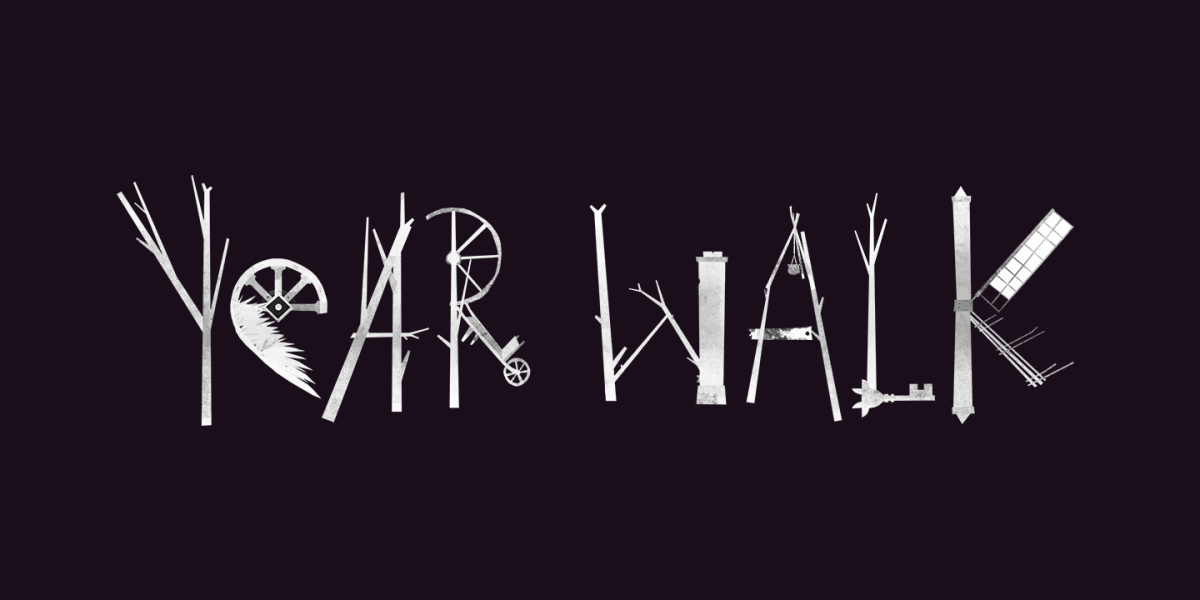
After playing and thoroughly enjoying Device 6, I went into the back catalog for the game’s developer, Simogo. It’s a strange history, including a simple puzzle game (SPL-T), a rhythm game (Beat Sneak Bandit), a physics game (Kosmo Spin), and a strange side-scrolling driving game where you move the ground instead of the car (Bumpy Road). It’s clear that Simogo was innovating in a variety of ways, and not willing to stick to one genre.
However, Device 6 hit my brain just right because of the combination of interesting mobile-tailored interactions and interwoven story, and the old Simogo games fitting that mold seem to be Year Walk—released before—and The Sailor’s Dream—released after. I decided to try Year Walk first.
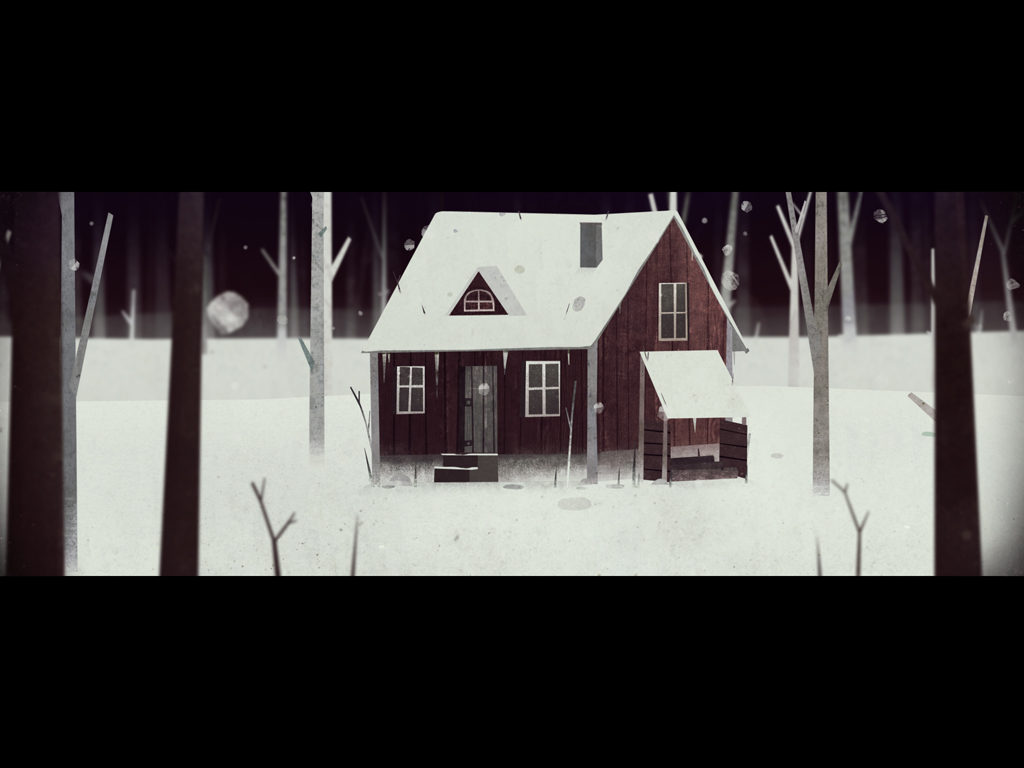
Cabin in the Woods
The game opens with the strange and cryptic description of Year Walking (an actual form of ancient Swedish divination: årsgång). However, you start by walking the woods during daylight, in deep winter.
Navigation is confusing at first. Scroll left and right with a finger. Swipe up or down where arrows appear at the edges of the screen to zoom into or out of the landscape. The world is a multi-layered paper cutout, and zooming takes you from one layer to another, while walking left and right show off the depth as the layers parallax.
Faint film grain adds a cinematic quality. The music is quiet, sometimes almost non-existent. As you move, boots crunch in the snow.
Eventually, by learning the controls and exploring, you find your way to a windmill. The miller’s daughter is there. You clearly love her, but does she love you? Either way, she’s betrothed to another. So you leave, returning to your cabin, vowing to year walk to see whether you will be with her in the future.
Moderate Dread, Mild Irritation
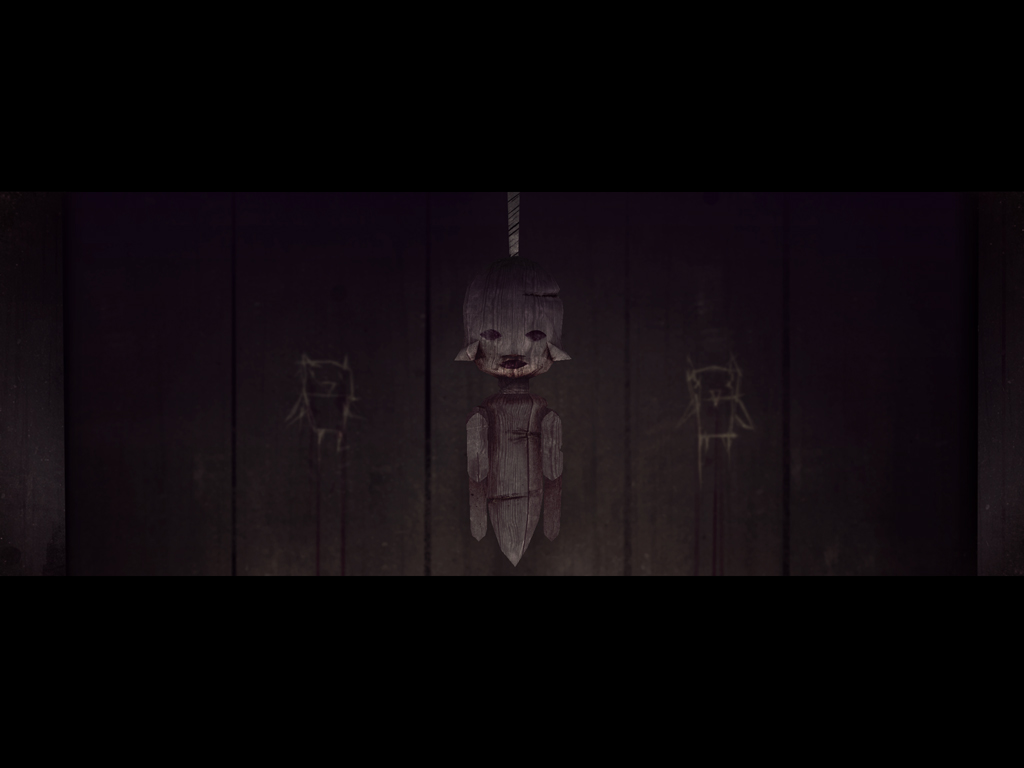
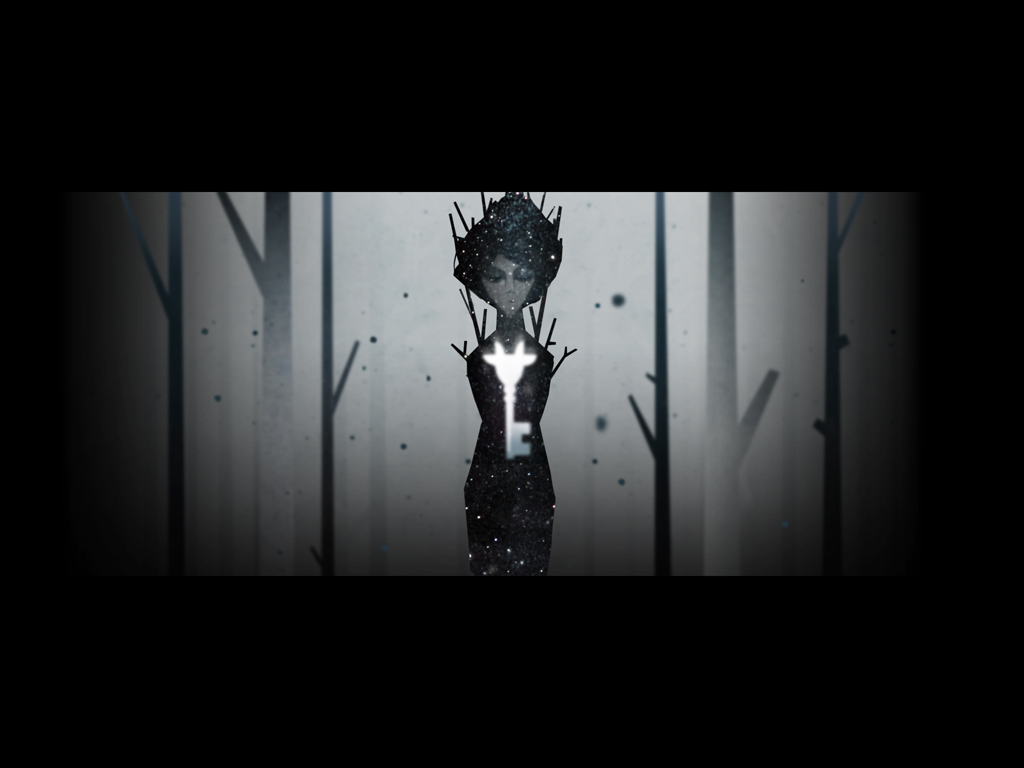
Year Walk is an atmospheric horror game with almost no dialogue. You walk the woods at night, coming across phantasmagorical visions and obscure creatures from Swedish myth. There is a little blood and a few jump scares.
For the bulk of the game, the story must be inferred from vague hints. This is a puzzle game, and the puzzles are challenging and obtuse. No real hints are given in the iOS version, although apparently the Steam version and Simogo’s game collection for console has a hint system. However, there are a couple puzzles here that rely on mobile functionality which had to be reworked for other platforms.
I wouldn’t consider myself a puzzle master, but I do alright. For Year Walk, I had to use a guide to finish. The puzzles require some significant leaps of logic and aren’t nearly as clearly demarcated as in Device 6. One puzzle I missed completely because the interface made it unclear that the scene could be interacted with.
The Companion
The game points you subtly to the Year Walk “companion app,” and gives you a number. This is a completely separate, free app in the store, which describes some of the mythology that the game was based on. It’s written from the perspective of a researcher, and using the code grants you access to his secret personal journal.
This was where the game became more interesting to me—after it was ostensibly over. The journal, hidden inside this separate app, has the same ARG feel that Device 6 dipped its toes into.
Journal entries and blurry photographs document the life of a scholar researching the practice of year walking, trying to find old records or elderly people who may be familiar with the nearly forgotten folk ritual. His research leads him to a small town where the last recorded year walk may have occurred. It is somehow intertwined with a strange murder, for which the walker was convicted and executed.
The scholar’s own writing becomes more erratic and unhinged as he continues to unravel new threads. He finds a wooden box in the woods, locked by a mechanism with strange symbols. And here is likely where most players suddenly remember that this box appeared near the start of Year Walk, a puzzle that was never solved over the course of the game.
The scholar decides he can stop the murder that occurred decades previous. He can use the box to send a message through time. If only he can open it.
If you can decipher the code from his journal, you can restart the game, find the box, and open it to discover the message the scholar sent. This reveals a different, but no less bloody ending to the story.
A Sign of Things to Come
I found Year Walk to be slightly less polished and more frustrating than Device 6, but this final sequence went a long way toward improving my opinion of it. I can see the creative impulses and connective tissue between these two games. Year Walk…walked…so Device 6 could run.
I can’t say I would recommend Year Walk unequivocally. If you enjoy strange horror, challenging puzzles with no hand-holding, obscure Swedish folklore, or experimental games, it might be worth a few bucks and a look in.
How to Play
Year Walk is $6 on iOS and Android. It’s also available in a modified format on Steam for PC, and oddly enough, in yet another differently modified form for the Wii U. It is included along with many other games in the recently released Simogo Legacy Collection.
2026 is another year of short stories. In this weekly series, I track my short story writing, from idea and draft to submission.
This is the week of Aug 10 – Aug 16.
Stats
Stories Finished: 3
Submissions Currently Out: 9
Submissions Total: 29
Rejections: 22
Acceptances: 0
Submissions and Responses
One form rejection this week, for Taco Cat. I still have one other submission out for this story, but I may look for more places to send it.
Goals
My goals from last week:
Keep up with critiques
Finish Estate Sale revisions and submit for critique
I am back in the swing of doing a critique per week, so that’s an easy box to check.
I worked on Estate Sale, but it’s still not ready yet. I’m thinking about better titles, with Magpie being the current frontrunner. Ideally, I’d prefer something with a little more malice for a horror story.
Learn, Learn Again
I often find that many of my difficulties in life are self-inflicted. Few things are more irritating than thinking I’ve learned a lesson, only to realize some time later that I failed to internalize it and slid back into old behaviors.
I started this year with daily quotas for words written and revision per day, and my intent was to try to actually hit those numbers each day instead of cramming all of my writing time into the weekends. The quotas are small: 100 words and ten minutes, so they’re not hard to meet and it’s possible to catch up from missed days.
Now it’s August, and I find that I’ve slipped into old habits. I only write on the weekends, I have been revising with little new work, and my word count is weeks behind. I instinctively reach for the usual excuses: end of summer busyness and the imminent return of school, work, and my indie game project. Plus, it’s so hard to come home from work, cook dinner, do chores, and then find energy for writing, right? Never mind the folks in significantly harder circumstances who somehow find the time to bang out fine literature.
So, with that ritual self-flagellation out of the way, I’m going to try to relearn my lesson this week, and meet my quotas every day.
The Times, They Are A-Changin’
I’ll also mention that I think it’s a very interesting time to be a writer, and I mean that both literally and as the faux Chinese curse.
I’ve been reading quite a bit lately about the direct and indirect effects of AI on writing and publishing. Fiction, like everything involving written words, is in the midst of major disruptions, and these come on the heels of the e-book and self-publishing revolutions that have already caused major upheavals and consolidation of power in the industry. There are more ways to publish work than there ever have been, though it’s still not easy (and maybe getting harder) to be paid to do so.
Scandals around allegedly AI-written books are making it into the general news cycle, but I suspect short fiction is feeling the impact far more, if only because of sheer accessibility of submissions and comparatively lower effort. I’ll have a post or two on these topics in the near future.
2026 is another year of short stories. In this weekly series, I track my short story writing, from idea and draft to submission.
This is the week of Aug 2 – Aug 9.
Stats
Stories Finished: 3
Submissions Currently Out: 10
Submissions Total: 29
Rejections: 21
Acceptances: 0
Submissions and Responses
No new submissions or responses this week.
Goals
My goals from last week:
Keep up with critiques
Revise Estate Sale
If time and energy allow – review T.I.M.
After last week’s reset, I’ve been blasting through critiques to get ahead of the game. Now I just need a story to put in the queue.
On that front, I worked on revisions for both T.I.M. and Estate Sale. This was the first time I’ve read through T.I.M. since the major rewrite, and since it has been a few weeks, I felt like I could give it an honest look. It was better than I thought it might be. The main problem is that it’s now 6000 words, and I’d like to really trim that down. It also has a weak ending that will need to be improved.
Estate Sale feels closer to done, but I’m going to try a new revision technique with it.
Externalizing The Inner Critic
The idea I’m going to try is pretty simple. Now that I have the story in a pretty good place, I’m looking at it, pretending I’m a critiquer, and trying to anticipate where the critiques might complain about the story.
The reason I’m doing this is because I have had a couple cases recently where I managed to convince myself that a niggling problem with a story is not a big deal, only to have critiques come back and call out exactly that problem.
Now, sometimes fellow writers will critique a story, and it’s clear that they want to make it the kind of story they like, rather than the best version of the story you want to tell. I try to avoid this when I’m critiquing. So it’s still important to not water down the story in hopes of making it “something lots of readers will like.”
I suppose I’m just trying a new tactic to try to separate my critical brain from my writing brain for editing.
Next Week
Goals:
Keep up with critiques
Finish Estate Sale revisions and submit for critique
2026 is another year of short stories. In this weekly series, I track my short story writing, from idea and draft to submission.
This is the week of Jul 27 – Aug 2.
Stats
Stories Finished: 3
Submissions Currently Out: 10
Submissions Total: 29
Rejections: 21
Acceptances: 0
Submissions and Responses
The only response I received this week was a single form rejection—the very first for my new story, Beneath the House at Caen. I’m never looking for a rejection, but I do appreciate a publication with a quick turnaround on submissions. Now Caen feels “broken-in.”
I scoured the listings and sent out three more submissions this week, bringing my total in flight up to a healthy ten. Trying to find publications for Red Eye and Taco Cat once again drove home the challenge of selling a 6700-word story vs. selling a 1000-word story. Even though 1000 words is too short for a few publications, there are still far more listings than for the long story. Not only that, but the places that do take longer stories trend toward the bigger, older publications, and they often reply very slowly and don’t like simultaneous submissions, making the process even more arduous.
Remember kids, you have to write what feels right to you, but size does matter when it comes time to actually sell that story.
Goals
My goals carried over from the previous week:
Submit stories
Catch up on critiques
Clean up and trim T.I.M.
Other revisions: Estate Sale?
With the additional story submission this week, I’m in pretty good shape. Now I’m just keeping my eyes open for opportunities to submit Red Eye and waiting for responses.
I also reviewed my Critters admin panel and found that I was far enough behind to warrant a ratio reset. I’ll be working on a couple critiques this week to get myself back in the critique gods’ good graces.
I’m still not quite ready to come back to T.I.M., so I worked on revising Estate Sale this week. Having let it sit for a while and come back, I found it fairly readable. I don’t think this one will need too much more work, at least until I get some reader feedback.