Week 41 — Year of Short Stories 2026

2026 is another year of short stories. In this weekly series, I track my short story writing, from idea and draft to submission.

This is for the week of Oct 12 – Oct 18.

Stats for the Year

  • Stories Finished: 3
  • Submissions Currently Out: 7
  • Submissions Total: 38
  • Rejections: 33
  • Acceptances: 0

Submissions and Responses

It was a quiet week. No new submissions or responses.

Goals

My goals from last week:

  1. Revise The Magpie
  2. Write Mother Night

My kids had some school holidays this week, which seemed as good an excuse as any to take two days off myself. That gave me more writing time than usual, and as a result it was a fairly productive week.

Mother Night was one of the stories that I started from my brainstorms doc without having a full outline. I’ve started on several of these, just to see where they take me. I tend to abandon them after a few hundred words if they don’t inspire me. This one turned out to be one I enjoyed, and the plot was straightforward, so nothing really had to change in the writing. I banged out several thousand words and finished the first draft.

I also made some progress working through the critiques on The Magpie, so I could feel productive on the revision side as well.

Thinking About Zines

I try to keep Words Deferred focused on writing, and but I do occasionally talk about the ol’ vidja games, especially in the context of interactive stories. I’ve mentioned the video game documentary crew noclip previously, and for their 10th anniversary they’re reinventing themselves a little bit.

One of the things they’re doing is introducing little eight-page monthly zines, delivered by snail mail. If you’re not familiar, zines are homemade or DIY magazines, often small and designed for a small, specific audience. This announcement reminded me that I recently saw a few tiny “lit mag” zines in a local indie bookstore. Are zines making a comeback? Or were they always around and I just haven’t been seeing them?

Eight pages is more than I would have guessed could be crammed in a standard single-stamp letter in US mail. That got me thinking a little bit about the kind of short-story-length work that could be put into the zine form factor and distributed for pennies. While I’m not going to stop submitting stories to traditional publishers, I have been wondering what I might do after this year of short stories is over, and a zine (or series) might be a fun thing to try.

Next Week

Goals:

  1. Revise The Magpie
  2. Write more from the idea doc.
  3. Think about zines?

Weeks 39 & 40 — Year of Short Stories 2026

2026 is another year of short stories. In this weekly series, I track my short story writing, from idea and draft to submission.

This is for the period of Sept 28 – Oct 11.

Stats for the Year

  • Stories Finished: 3
  • Submissions Currently Out: 7
  • Submissions Total: 38
  • Rejections: 33
  • Acceptances: 0

Submissions and Responses

I received two rejections this week, one for Beneath the House at Caen, and one for Taco Cat.

I also gave up on two submissions: one to a publisher that only responds for acceptances (Caen) and another that supposedly does, but never replied to mine—or it got lost in the spam filters (Taco Cat).

This left both stories in a totally unsubmitted state, which is anathema to the working writer. I found one publisher to send Taco Cat and two for Caen.

Goals

My goals from last week:

  1. Start Magpie revisions
  2. Continue idea writing

In my last entry, I was happy to be picking up some steam and writing regularly. The past two weeks, I’ve been struggling to get much writing done at all. Fall is packed with kids’ school activities and chores to get done. I suppose it’s that last gasp of life before we burrow in for winter hibernation.

The Magpie is still waiting for its revisions, and the little blurbs and snippets in my ideas folder are still, at best, half-baked. There is one idea in particular, which I’m currently calling Mother Night, that I think has potential. I plan to work on that in the upcoming week.

Next Week

Goals:

  1. Revise The Magpie
  2. Write Mother Night

Trouble! at Coal Creek — Read Report

(affiliate link)

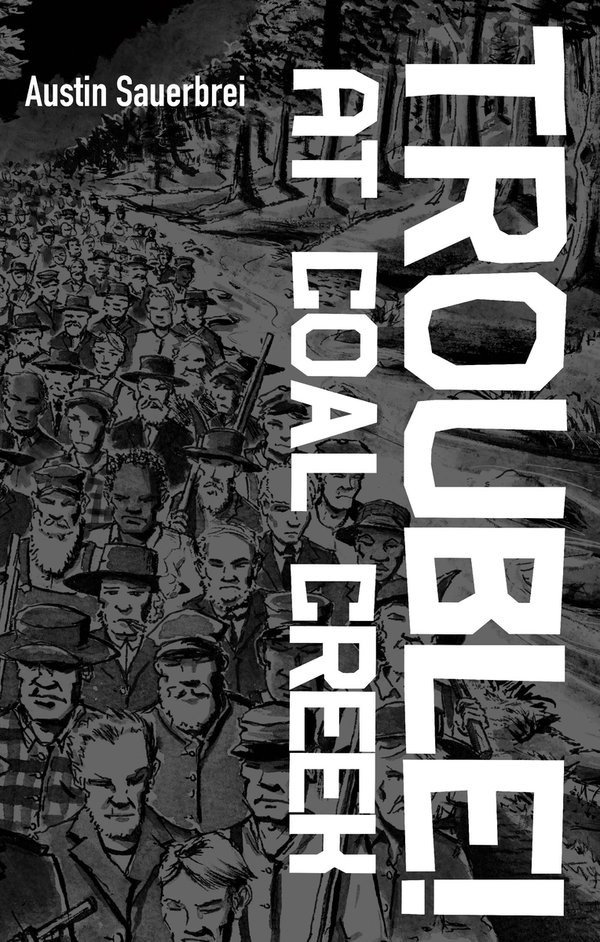
Trouble! At Coal Creek is a historical fiction graphic novel that tells the story of the 1891 “Coal Creek War” through the eyes of a mining family. It follows in the tradition of books like Maus and They Called Us Enemy.

At this point, I would almost classify this style of book as its own sub-genre, fairly distinct from both mainstream graphic novels and traditional historical fiction, with its own style and tropes. Weirdly, after decades of comics being snubbed by the mainstream as childish, the books that managed to cross over have lent a patina of prestige to this particular combination of format and subject matter.

Trouble! was published with grants from no less than three art and education foundations and funds. The author, Austin Saurbrei’s bio describes him as a community organizer with strong union ties. My own political leanings are pretty pro-labor, but I think it’s fair to say that the book is happy to take sides and isn’t trying for a neutral viewpoint. On the other hand, the maltreatment of coal miners in the 1800s was so incredibly nasty that I hope most people with modern sensibilities would find it hard to side with the coal barons.

The story is told by an unnamed narrator whose parents emigrated from Wales to eastern Tennessee, hoping to use Pa’s experience as a miner to build a better life. Ma, Pa, narrator and Sis are sucked into the biscuits cycle of work and debt that mining towns and “the company store” have become synonymous with.

When Ma and a third child die in childbirth, Pa gives up hope of a better life, spending his paltry pocket money and free hours drinking. Sis escapes via marriage into another mining family. The narrator—forbidden from the mines by Pa—gets a job at a local general store. The store happens to be run by a local member of the Knights of Labor, one of the earliest precursors to modern labor unions in America.

The rest of the book chronicles the escalating dispute between coal miners and mine owners. A labor strike is countered by bringing in (largely black, questionably prosecuted) prisoner labor. Miners riot and force out prison labor, only for the Tennessee government to bring it back it through new laws and militia protection. The conflict is shown through the narrator’s family as he and his sister fight for the miners, while their father, oddly, stays loyal to the company.

The book ends on a positive note, the rebellious miners using dynamite to crack open the stockade and free the prisoner-laborers. But the page-long afterword makes it ring hollow, describing how the fights of 1891-1892 weren’t enough to stop convict labor, which continued in some form for another 75 years.

The black and white art is often moody, alternating white and black framing. Recreations of maps, telegrams, posters and newspapers are interspersed with the illustrations to lend verisimilitude. However, despite the often violent subject matter, the book shies away from grit and gore. I suspect it was kept in the PG range to make it an easier sell for classrooms and school libraries.

There is little dialogue in the book. Most of the story is told through voice-over narration, even when the narrator is in the illustrated scene. This, along with the minimal characterization (none of the family have names), gives the story a little too much distance from the fictional characters.

They are there to add some pathos and personal stakes to the historical story. However, that distance makes it hard to be too invested in their plight. Since the rebellion is largely successful in the time period covered, it never really feels like they are in life-threatening danger.

Still, the book is a very easy way into an interesting period of American history; events that I didn’t know in detail, and I expect most Americans aren’t familiar with. The topic is especially salient now, when wealth disparities and the rights of labor are once again a major issue in our politics.

Then again, maybe that could be said for every decade between the Coal Creek War and today.

Hogbook and Lazer Eyes — Read Report

(affiliate link)

I recently went to the DMV near my house, which happens to be in the same government center as a big library. My government-mandated waiting room time was relatively quick, so I walked across the building to browse.

It’s been a while since I’ve been to the library, so I decided to wade into the comics section and see what was on offer. I’m still surprised by the sheer variety in graphic formats these days. There are now shelves and shelves of non-superhero comics. (Not that I’m opposed to superhero comics, but it’s nice to have variety.)

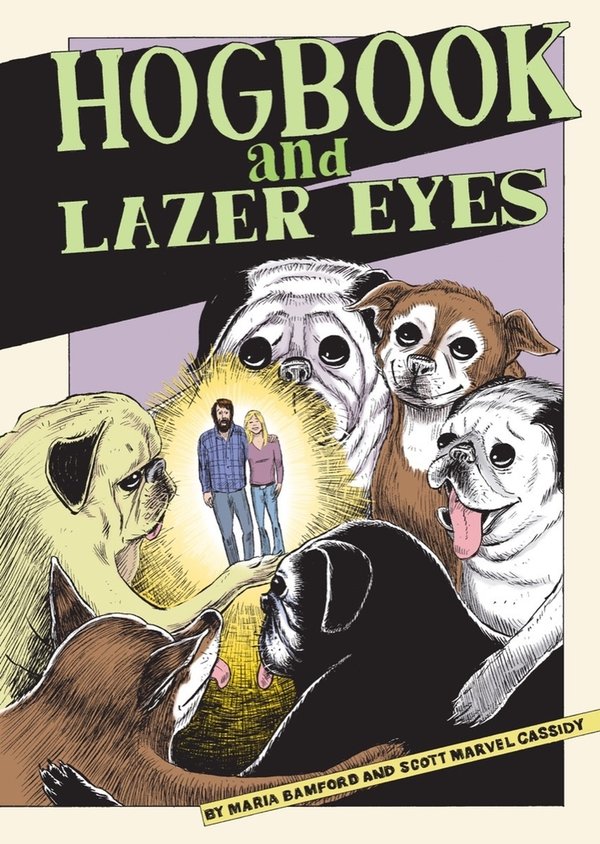
I decided to pick out a few things I might normally skip over, and the first of these was Hogbook and Lazer Eyes by Maria Bamford and Scott Marvel Cassidy.

I recognized Bamford as a stand-up comedian, but I don’t really know her work or Cassidy, her husband. The book bills itself as the story of their relationship, as seen through they eyes of their pet pugs.

Their connection via online dating app and subsequent relationship are the topic of the first third of the book. After that, it’s…stuff that happens to them. Their habit of adopting elderly pugs results in at least half a dozen being introduced through the story.

The story is autobiographical, but unfocused. It doesn’t center on a particular aspect of their lives; just a series of largely unrelated vignettes. It reads a bit like the authors were asked to summarize their lives in a set number of pages.

Most of the problem for me was the narration. The dogs aren’t really given distinct personalities, so it’s hard to say if they’re narrating or not. The narration is largely clinical: what happened and when.

For example, when the pair briefly break up and get back together, the entire explanation reads: “Maria and Scott reunite with help from Sheryl Hirsham, the excellent therapist with silver hair. Communications and emotions resume. Dogs, cats, and other creatures are on board.” It’s accompanied by an abstract illustration of a space council of dogs.

It sounds like there might be an interesting story in there somewhere. I have to assume it was a rougher patch than this glib paragraph suggests, but there’s no detail to be found. Two pages later, they’re engaged.

Perhaps Maria and Scott were uncomfortable airing their dirty laundry in comic form. That’s totally understandable. I certainly would be. But if that’s the case, I would have advised them not to try to write and publish a comic about their relationship.

The art is a ink-heavy, realistic style with muted colors—a bit like early DC Vertigo, minus the horror sensibilities. Half of it is pugs, very faithfully rendered in all their puggish glory. The humans all have a melancholy, slightly pained look to them, regardless of what’s happening in the story.

I’m not sure what to make of this book. I expected comedy, and there was surprisingly little. I expected relationship drama, and there was surprisingly little. The amount of pug content was high, as advertised. If you love pugs or Maria Bamford, you may get more out of this book than I did.