The Killing Moon — Read Report

Book | E-book | Audiobook — Bookshop/Libro affiliate links

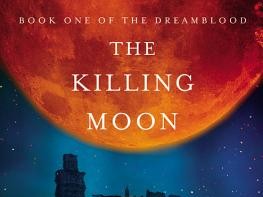
The New York Times calls Jemisin “The most celebrated science fiction and fantasy writer of her generation.” She has repeatedly won every major sci-fi/fantasy award, and when she’s not winning, she’s usually nominated. In short, I’ve heard great things about Jemisin for a while now, but I’ve never read her work. The Killing Moon was published in 2012, so I’m a couple decades late to the party.

I’ve been listening to a lot of audio books lately, and I’ve taken it as an opportunity to fill in some of these major gaps in my genre knowledge. I knew nothing about this book going in, I just saw it on Libro.fm while searching for something new to listen to on my commute.

The Killing Moon takes place in an Egyptian-inspired secondary world, a desert land with a loose pantheon of gods shared across nations. The technology is in the neighborhood of bronze or iron age, with the swords, spears, and armor a fantasy reader would expect.

There is magic in this world, specifically dream magic—narcomancy—attributed to the power of the goddess Hananja. But this is not a world where the gods are close. If they do exist, they are distant and do not meddle.

The story follows master Ehiru and apprentice Nijiri, gatherers who use narcomancy to collect magical energy from souls and guide them to the afterlife. This magical killing, sanctioned by the state of Gujaareh, is usually a gift reserved for the willing but sometimes used as a form of capital punishment for those deemed corrupt.

The pair are assigned to chase down Sunandi, a foreign ambassador accused of corruption. But they soon discover themselves embroiled in a conspiracy that goes to the highest levels of their order, and to the prince of Gujaareh himself. It threatens to reveal long-buried secrets about the near-mythological founding of their country, the religious order surrounding Hananja, and the true nature of narcomancy.

Settings and Sentiment

About a third of the way into The Killing Moon, I found myself struggling. I wasn’t feeling that compulsion to continue that usually accompanies a fantastic book. With all of the hype around Jemisin, I was expecting to be blown away, and I found myself a little disappointed.

I have a hard time pointing to any particular issue. The writing is solid. The world is well-constructed. The plot is perhaps a little slow to get going. However, I was consuming this as an audiobook, and I’m coming to realize that is not a mode of reading that makes it easy to analyze a story in detail.

One thing I can point to is the setting. I am thoroughly burnt out on the “elves and dwarves in medieval Europe” school of fantasy, so I was hoping that the Egyptian-inspired world would prove interesting. However, aside from the names and the desert, I don’t think it made much of an impact. It’s still swords and sorcery. It’s still mighty kings and high priests and big battles and political machinations.

Jade City makes for an interesting comparison. It is also a fantasy book inspired by an underused geographical region, and another one that I read as an audiobook. Jade City imagines a world that is recently industrialized and recovering from war, akin to post-WWII Asia. It eschews the kings and kingdoms so common in fantasy, and imagines a complicated web of politics, religion, and family ties that feels more modern. It limits its scope to roughly two generations of recent history and the capital city of a small island nation. The result is a setting that feels fresh and richly detailed, and I believe that’s in large part because it’s not trying to cover a thousand years and an entire world, as so many fantasy stories do.

Another frustration I noticed is that practically every character in The Killing Moon is miserable all the time. Moments of levity or happiness are brief and far between. Everything is bad, and it’s getting worse. This is certainly an engine to drive the plot, but I found that it ground me down and made it tiring to be with these characters for an extended length of time.

There are a few twists near the end that piqued my interest and substantially improved my opinion of the book overall. I was also relieved to discover that the plot wraps up nicely, because I was expecting it to end with a cliffhanger. The Killing Moon is billed as the first book in the Dreamblood duology, but they apparently only share a setting and can be read as independent books.

(A side note, as I’m reading so much fantasy lately. I sometimes find it exhausting that the norm for this genre is huge tomes and multi-book series. If I’m trying an author to see if I like their work, I don’t want to commit to a 1500 page odyssey. Just one more way it feels like we’re still slavishly copying Tolkien. Where are all the high-quality standalone fantasy books?)

It’s Not You, It’s Me

I don’t like giving negative reviews. If I don’t like a book, I’ll often just not talk about it. I’d much rather discuss what makes good things work. I can’t help but feel that I’m heaping unnecessary negativity on The Killing Moon. I don’t think it’s a bad book. To the contrary, all of the components are here for a great book. It’s well written; it just didn’t resonate for me and I don’t entirely understand why. Maybe part of that was having my expectations calibrated by all the acclaim and awards I know Jemisin has accrued.

Oddly, this only makes me want to read another book by Jemisin. Is it this particular book that doesn’t work for me? Only one way to find out.

After some searching, I see that the Broken Earth trilogy seems to be the most recommended. It made history by winning the Hugo three years in a row, for all three books in the series. Plus, it apparently uses second person POV extensively, and that’s certainly an ambitious choice. I’ll try that next.

A Revision Checklist

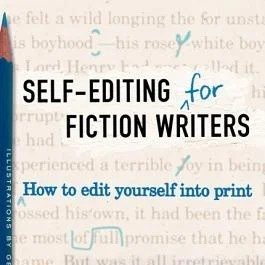
After my recent re-read of Self-Editing for Fiction Writers, I decided to create a revision checklist. For this list, I started with items from the book, then added some of my own based on my weaknesses and what I typically look for. I’ve split these into several categories to help focus. If you want to make your own checklist, you can split items up into whatever categories make sense to you.

There is a lot to keep track of when revising a story. Too much, in fact, to keep track of all at once. This is why it pays to make multiple revision passes, working from big to small, and working on  only a few things at a time. The checklist is a convenient tool for keeping track of it all.

One checklist like this can’t cover everything. It’s just a starting point. There will be changes that are specific to each story. The “general purpose” checklist can also change with your writing style. As you rid yourself of bad habits, you may find that you don’t need to check for those things anymore. If you want to focus on something new (maybe something that comes up repeatedly in reader feedback), you can add it to the checklist.


Story

☐ Introduce important characters early
☐ Describe character physically when first introduced.
☐ Can any characters be merged?
☐ Avoid using multiple channels to show the same characterization or plot point (dialogue, action, narration, etc.)

Chapter/Scene

☐ New scene or chapter when location/timeframe/POV changes
☐ Pacing - should this feel faster or slower?
○ Adjust scene or chapter length
☐ Focus on important aspects for scene
○ Characters/characterization
○ Physical action
○ Dialogue
○ Background info
○ Tone

Dialogue

Mechanics

☐ Avoid swifties (alternatives to "said," adverbs on "said")
☐ Single attribution per character per POV/scene
☐ Avoid tagging with redundant explanations
☐ Beats (action in dialogue)
○ Do two things at once — illuminate character, reveal something
○ Punctuate an emotional shift

Character

☐ Each line fits character/shows character
☐ Dialect - word choice, cadence, grammar. No phonetics.

Misc

☐ Read aloud!
○ Read each character’s dialogue consecutively, out loud, to hear inconsistencies in voice.
☐ Avoid big soliloquies - back and forth flow
☐ Complexity - misunderstandings, indirect questions, leaving things unspoken

Details

☐ Avoid weak words - seemed, mostly, some, a little, a bit, slightly, somewhat, sort of, kind of, like, as though
☐ Avoid cliches and idioms
☐ Avoid italics and ”emphasis” quotes
☐ Avoid phrasing that draws attention to itself
☐ Avoid description in a dependent clause (accidentally simultaneous actions)
☐ Avoid repetition
☐ Use exclamation points very judiciously
☐ Use brand names judiciously
☐ Use expletives judiciously
☐ Use adjectives judiciously
☐ Replace adverbs with better verbs

Narration

☐ Bad/excessive summary or exposition.
○ Work in exposition along the way
○ Provide information at the point it becomes relevant
☐ Narration follows POV character's focus

Characters

☐ Avoid summarizing character feelings
○ Show through action/dialogue
○ Have a character react to or describe another
☐ Time spent/level of detail on character should reflect importance

Point of View

☐ Establish POV as quick as possible in a scene.
☐ Evaluate POVs
○ What info is necessary? Is an omniscient perspective necessary
○ What perspective is most interesting?
○ More distance makes perspective changes less jarring
☐ Limit interior monologue

Pacing

☐ Should this feel faster or slower?
○ More or less description
○ Sentence and paragraph lengths

Self-Editing for Fiction Writers — Reference Desk #22

Bookshop.org affiliate link

Renni Browne and Dave King aren’t household names. They aren’t famous authors like Chuck Palahniuk, or Chuck Wendig, or any of your classic famous authorial Chucks. They’re editors. Their advice isn’t wild or shocking, and it doesn’t claim to make writing easy or save you the hard work. It’s just twelve fairly straightforward ideas that can be used to edit fiction and make it better. The result is one of my favorite books on writing.

This book has been on my shelf for years. I have the second edition from 2004, and the original was published a good decade before that. It’s not exactly timeless, but it’s about as close as you can get while including references to a broad swath of literature. I take it out every few years when I’m planning to do a lot of editing, which is why I recently re-read it.

Each chapter focuses on one thing: Show and Tell, Dialogue Mechanics, Interior Monologue, etc. The authors explain a few problems they look for when editing, then provide short examples from published books, workshops, and manuscripts. Each chapter finishes with a bulleted checklist that can be used for your own work. Finally, they provide a couple of exercises that you can try, if you want to use the book as a sort of self-guided class.

After the last chapter, there are two brief appendixes. The first contains the editors’ answers to the exercises. The second is a list of recommended books for writers, split out into craft, inspiration, and reference. Lastly, there is a solid index, so you can easily find that half-remembered advice without needless skimming.

This structure is something worth noting. So many books on writing are meandering or mix anecdotes, ideas, and advice in ways that make them difficult to use as tools. This book has a few anecdotes and asides, but it’s organized so that you don’t have to wade through any of that when you’re busy trying to find some specific thing that resonated. It’s worth reading the book from cover to cover, but it’s also designed in a way that allows it to be useful as a reference.

If there is a weakness in this book, it’s a focus on a modern, mainstream, “popular” writing style. The authors don’t talk much about the exceptions to the rules, or how to make strange and unusual fiction. This is not a guide that will help much if you’re writing House of Leaves, or Poison for Breakfast, or This is How You Lose the Time War.

I don’t think that’s a major failing. Self-Editing for Fiction Writers advocates for clean, concise, clear fiction. That’s a pretty good starting point for any writer. I suspect the authors would suggest that this is table stakes for fiction. If you want to do something more, something wild and crazy that breaks the rules, you will do it more effectively if you have a good grounding in the basics first. This book provides that.

Killing Time at Lightspeed — Games for People Who Prefer to Read

Killing Time at Lightspeed is a text-based, narrative game by Gritfish about browsing social media while voyaging between the stars.

You are a traveler who has left their life and your planet behind. Your lightspeed voyage will feel like less than an hour to you, but to your friends on Earth it will be twenty years. The only connection you have to those people is a news and social media feed: FriendPage.

This is a small indie game, clearly developed with limited resources. There are a few static illustrations in the introduction. After that, the entire game is contained within a simple, monochromatic yellow and black text console.

The game plays out in a series of turns, each one taking only a minute or two. During a turn, you can read your friends’ updates on FriendPage, and a handful of news headlines. You’re given the option to reply to one or two posts, and you can give them thumbs up or thumbs down. When you’ve read and responded as much as you like, you can click a button to “refresh” the page. When you do, a year passes back on earth and the news and social feeds update.

With that click of a button, you may see the results of an action a friend was considering. Relationship statuses are updated as the people you know get together and break up. They get married and have children. New technology appears, like cybernetic implants and humanoid androids. Your friends have time to adjust to societal and personal changes, but for you it all comes and goes in minutes instead of years.

There are many sci-fi ideas at play here. The arguments about cybernetic enhancement cover similar ground to the Deus Ex games. Discussions of android rights echo Detroit: Become Human. However, with this short runtime and limited budget, the game can’t delve as deeply into these particular issues. In a way, that’s the point.

In Killing Time at Lightspeed, everything that happens in your social media feed is ephemeral—even more than in our day-to-day lives. It excels in delivering a feeling of being cut off and left behind. You’re reading about what everyone else is doing and experiencing, but you are alone.

How much can you really communicate with your friends when months or years pass between messages? Momentous changes in your friends’ lives are summarized in one or two sentences. How many other important things are you missing altogether? You can ask them about what’s happening, but how can they explain all the things that have happened to them since last year and your last message?

The point is really driven home in the final years of the game, when a new social media site becomes popular and friends start to drift away from FriendPage. You don’t have the option of making a new account or checking the new feed. You only have what your spaceship gives you. Soon, your feed is almost entirely filled with spam, bots, and pointless Buzzfeed-esque listicles. You’re stuck on MySpace, in space. Your one tenuous tether to Earth is nearly severed. But you keep refreshing in the hopes that someone will come back and post something.

Then you arrive at your destination. The terminal shuts down. The game is over. Your friends are far away, living their lives without you. Presumably you’ll go off and live a new life without them.

Killing Time at Lightspeed is shorter than a movie, and can be comfortably completed in a sitting. It’s a narrative snack, not a full meal. I didn’t walk away from it with a lot of new thoughts, as I sometimes do with games like this. Instead, it left me with a feeling. A melancholy vignette.

Killing Time at Lightspeed is available for PC on Steam and Humble Bundle.

Final Exam — The Story Idea Vault

It’s a common misconception that a great idea makes a great story. The truth is that most great stories come down to execution. A great idea with poor execution rarely works, but a great writer can breathe new life into even the most tired tropes.

Like any writer, I have my own treasure trove of ideas that might end up in a story…someday. But why horde them? Instead, I’m opening the vault and setting them free.

Use these ideas as a writing prompt, or come up with your own twist and reply in the comments.

Final Exam

In old movies, recognizing aliens was easy. They looked like giant insects, or gray-skinned people with huge black eyes, or heck, just humans with pointy ears. They spoke words through something mouth-shaped, and if they didn’t want to eat you or lay some eggs in your stomach, they at least wanted something reasonable, like taking over your planet.

The scientists in the old movies didn’t have to worry about Species 104, the plasma clouds that only understand calculus. They never had to devise a translator for Species 92, the fungal/viral symbiosis that communicates by rupturing your cells.

As a trained xenologist, it’ll be my job to explore the galaxy and make first contact with new alien species. I’ll be ambassador of the human race. But first, I need to pass my final exam: picking which one of these ten asteroid chunks is actually alive, and whether it talks by exchanging argon crystals or by carving glyphs into you with a focused sonic pulse.

Based on the noises made by the last student and the amount of blood on the floor of the examination room, I’m guessing it’s the glyphs.

Now, which rock…

Speaker for the Dead — Read Report

Book | E-book | Audiobook — Bookshop/Libro affiliate links

Speaker for the Dead is the second book in the Ender’s Game series. The last time I read this, I was probably still a teen.

For Ender and Valentine, it has been two decades since the events of Ender’s Game. But much of that time has been spent on starships traveling at relativistic speeds. A thousand years have passed outside those starship hulls. Humanity has spread across the hundred worlds. Ender’s pseudonymous books, The Hive Queen and The Hegemon have convinced most humans that Ender, “the Xenocide,” was a genocidal monster, and have inspired a secular religion of “speakers for the dead,” who try to eulogize those who have passed with complete honesty.

Ender and Valentine find themselves on the icy, Scandinavian-colonized world of Trondheim, teaching and speaking for the dead, when they hear the news that the only other known sentient alien species, the Pequeninos, have brutally killed a scientist on the tiny colony of Lusitania. A call goes out for a Speaker, and Ender follows it. His sister, however, is married and expecting her first child. For the first time in twenty-two years, they part ways, fully knowing that after the lightspeed journey she will be nearly double his age.

Ender arrives at the Portugese-Catholic colony with two secrets: the egg of the last bugger hive queen, ready to revive the species he destroyed a thousand years previous, and a jewel in his ear that lets him communicate with Jane, the only sentient AI in the universe.

Ender intrudes upon a decades-long family drama. Novinha Ivanova is the colony’s xenobiologist, the orphaned daughter of the original xenobiologists, who died in the process of saving the colony from the deadly alien Descolada plague. In her youth, she was mentored by the colony’s xenologer and fell in love with his son (and apprentice). These two important men in her life, the only people allowed to interact with the Pequeninos, are the ones the aliens choose for strange, ritual murders. And Novinha is determined to keep secret any and all information that might lead others to the same fate.

Speaker for the Dead is a very different book from Ender’s Game. That book was all about Ender’s struggles to overcome adversity at the battle school. Ender is a genius with a variety of remarkable skills, but it works in that context because the challenges stacked against him are so brutal.

In Speaker for the Dead, Ender is even more of a Gary Stu. He is the legendary Xenocide. He is the accidental father of a religion. Not content to have committed genocide, he plans to revive the bugger species. Jane, the AI, chooses him as the only human she will reveal herself to. Even the Pequeninos can only be fully understood by Ender, solving mysteries in days that the xenologers couldn’t penetrate over decades. He immediately gains the trust of almost everyone he interacts with on Lusitania, with apparently little effort.

It’s a testament to the setting and the mystery-driven plot that the book is still good in spite of Ender’s nearly inhuman ability to do whatever he sets his mind to. The alien ecology of Lusitania is interesting and well-conceived, and there are fun twists along the way. The resolution of the mysteries makes perfect sense thanks to the clues peppered throughout the book.

This feels a bit like two books that only come together in the final act. Ender has his own life (and years of post-Ender’s Game history that is only alluded to) before the journey to Lusitania. And many of the important events on planet happen before he leaves or during his long lightspeed transit. Much of the remainder of the book involves teasing out this history and connecting the disparate threads, in the same way the detective pieces together clues in the drawing room at the end of a cozy murder mystery.

The main plot points of Speaker for the Dead came back to me pretty quickly as I was reading. However, I remember very little of the next book, Xenocide, and I’ll be rereading that soon. I’m curious to see if it has more in common with the first or second book in the series.

Five-Finger Brainstorming for Fiction

I have a day job in software development where I’ve worked with large corporations. Thanks to that job, I’ve had plenty of exposure to corporate efficiency buzzwords and processes, from lean six sigma black belts to leveraging synergies.

While the eye-rolls induced by these terms are often justified, they usually start with a useful kernel of truth before metastasizing into something a VP drones on about in the all-hands meeting as everyone tries not to cringe.

This brainstorming method is based on the five whys, a corporate-speak process for digging a few levels deep to find the real root of a problem. I like it for brainstorming fiction ideas is because it is fast and easy and generates some unexpected connections.

Five Finger Brainstorming

Start with the first premise that pops into your head. It can be almost anything. It doesn’t have to be particularly interesting or story-worthy. However, don’t be afraid to start with something big like a hostage negotiation or first contact with aliens.

Example:

A man kills his neighbor…

Next, ask yourself why that first event happened, or what it implies. Repeat this until you’re at least five levels deep. You can count them off on the fingers of one hand.

Don’t think hard. Just write down the first thing that pops into your head each time. This technique works best if you let your subconscious take the wheel.

A man kills his neighbor…

because the neighbor knows his secret…

his secret is that he is hiding an alien in his basement…

because he is in love with it…

because he is an alien too.

Next, look at this sentence or paragraph as though a breathless child had just run up and told you this story. What questions would you have? I usually have a couple. These questions are natural jumping-off points for expanding the idea further.

  • Are they the same species of alien?
  • Why does one need to be hidden? Does one pass for human while the other doesn’t?
  • What happens after the murder?

Bonus: Story Trees

You can expand on this with a different style of brainstorming—one that is slower and more methodical. Try it with an idea that feels like it has potential, where you weren’t satisfied with your initial blurbs.

Look at each answer as a branching point in a tree. The original idea is the root. Instead of expanding that idea once, expand it in five different ways. Then go down the chain for each of those branches.

(Why yes, my MSPaint skills are incredible. Thanks for noticing.)

Be aware that filling out all the branches results in exponential blurbs. If you don’t want to go that far, just fill in a few branches that pique your interest. Remember, inspiration often strikes when you’re straining to come up with one or two more ideas. On the other hand, you’re under no obligation to stop at five if you want to keep going.

Two Techniques that Work Great Together

The five-finger technique helps dig deeper into the reasons and consequences of an initial idea or event. The story tree forces exploration of alternatives, which can sometimes get you past easy, tropey explanations and into more interesting territory.

In brainstorming, quantity leads to quality. With these techniques you can generate a lot of ideas quickly, so don’t be precious about them. They’re meant to be quick and disposable. So start counting, and come up with something new!

Mouthwashing — Games for People Who Prefer to Read

You could say I’m not much of fan of horror. I’ve learned a lesson from music: if I think I dislike a genre, it just means I’m picky and I haven’t found the particular examples that hit just right. House of Leaves, Soma, and Alien are some examples that proved to me I can enjoy horror—it’s just a hard sell.

I’m not sure if I enjoyed Mouthwashing. I’m not sure it’s a game that’s designed to be enjoyed. I am enough of a gaming hipster to appreciate when a game tries to evoke a mood, even if it’s an unpleasant one and it doesn’t always pull it off perfectly.

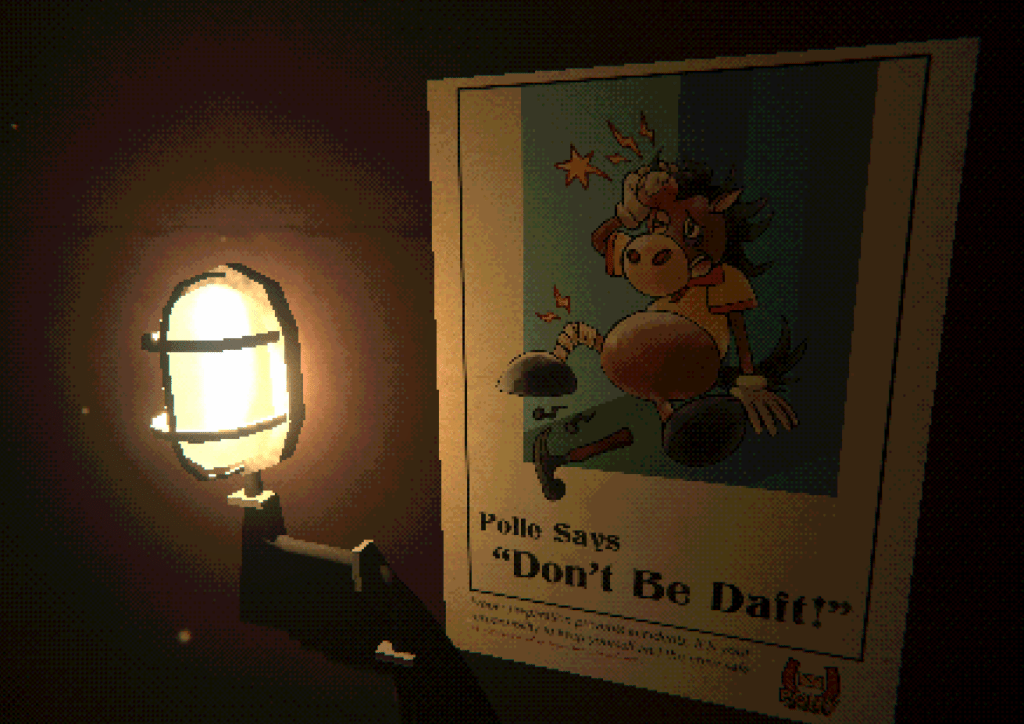
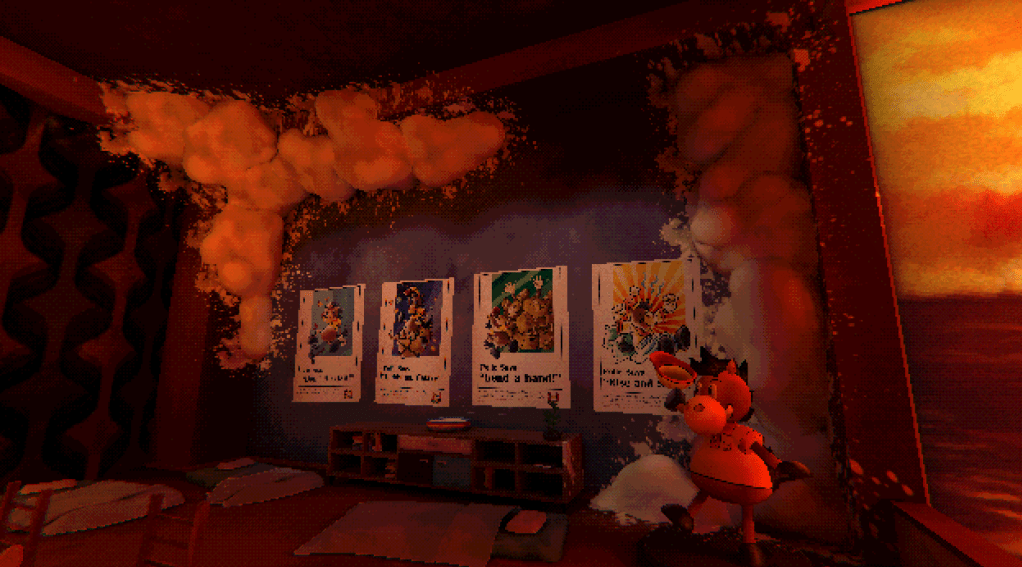
Mouthwashing is a short (3-4 hour) game about the five-person crew of the Pony Express ship Tulpar, a long-hauler transport spaceship on a year-long delivery run. We don’t see the world beyond the ship. We don’t know what it’s like out there, or how far into the future we are. The world of Mouthwashing happens in the grimy, poorly lighted corridors of the Tulpar. The visuals are purposely lo-fi; not only grimy, dark, and gory, but viewed through a crunchy, pixelated filter.

The tale is nonlinear, jumping back and forth several months around a cataclysmic incident. The ship hits an asteroid, crippling it and leaving the crew stranded with limited supplies.

In the past, we play as Curly, the captain of the ship. During the crash, Curly is severely injured, wrapped in bandages, bedridden, and in excruciating pain. A single bloodshot eye peers out from the bandages. A row of bare teeth, with no lip to cover them. In the scenes after the crash, with Curly nearly out of commission, we play as Jimmy, the co-pilot, Curly’s longtime friend and the guy who just can’t seem to get his life together. Rounding out the crew are Anya, the medic; Swansea, the mechanic; and Daisuke, the intern who was unlucky enough to board at the last minute before launch.

The gameplay mostly revolves around conversations among the crew, with occasional simple puzzles and item-fetching. There are two brief “gamier” sections where some reflex and strategy are required, but I found these to be the weakest and most frustrating portions of the game.

As the months go on and the characters become  desperate, civility breaks down. It becomes clear that there are dark secrets among the crew. The game becomes more and more surreal, reflecting Jimmy’s progressively deteriorating mental state. Flash backs to Curly slowly reveal the hidden secrets that Jimmy doesn’t want to talk about, or even acknowledge to himself.

As the crew turn on each other, the ship’s actual corridors fall away, leaving us and Jimmy in a mostly hallucinated world where we can only guess what is real and what is metaphorical. It all ends in blood and tears, as Jimmy tries and fails to hide from a series of horrible truths.

Mouthwashing echoes a classic strain of horror where a small group of people are trapped together in the face of a monster or horrific situation. Here though, despite being lost in space, the horrors are decidedly human.

Mouthwashing is made by Swedish studio Wrong Organ and is available on Steam, Nintendo Switch, PlayStation 5, and Xbox Series X/S.