Blog

The Scrivener Podcast — A Follow-Up

A few weeks ago, I wrote an article about Scrivener’s new podcast, Write Now with Scrivener. I think it’s hard to judge most media based on the first episode, but I gave it a bit of a mixed review. The first half, focused on the author interview and writing process was interesting. The second half, focused on how the author used Scrivener, was a little too infomercial for my tastes.

The next episode of the podcast dropped, so I decided to briefly revisit it here. The guest author for episode two is Dan Moren, science fiction author. I have to say, this one hooked me more than episode one, so I’m glad I kept an open mind.

I’ll be clear up-front that this episode is just better tailored to my personal tastes. I’m a reader and writer of sci-fi, and I’m honestly more interested in the perspective of a relative up-and-comer. Dan Moren has a couple of books out in his science fiction series, and seems to be doing well, but he’s open about the fact that his fiction writing income isn’t paying the rent, let alone buying Lamborghinis or a 40-acre ranch. Peter Robinson, the episode one guest, was nice enough, but he was working in police procedural style mysteries, has dozens of books, and seems to be much more at the “rich guy” end of the spectrum.

Regardless of my tastes, I thought this episode had much better conversation too. Some of that may be the host getting a little more practice. Some may be that these two have a bit of a history together. I’m guessing most of it is down to the fact that Dan Moren hosts half a dozen podcasts, and is pretty comfortable in this environment. The “how do you use Scrivener” section of the podcast felt much more natural this time around, although there was still one moment I noticed where the host was a little too energetic giving Scrivener tips and I could feel the sponsorship miasma creeping in.

After this second episode, I’m on board. A once-per-month, half-hour podcast is easy to commit to, and the content is pretty good. I’ll keep listening.

I’ll put the second episode below, and if you’re interested in sci-fi authors who are open about finances, agent/editor interaction, and the nitty-gritty of publishing, you should check out Dan Moren’s blog.

Episode 60: John Garrison Marks, Historian Write Now with Scrivener

John Garrison Marks is a historian, whose latest book is Thy Will Be Done: George Washington's Legacy of Slavery and the Fight for American Memory. Show notes: John Garrison Marks Thy Will Be Done: George Washington's Legacy of Slavery and the Fight for American Memory DEVONthink Charles Sumner: Conscience of a Nation Learn more about Scrivener, and check out the ebook Take Control of Scrivener. If you like the podcast, please follow it on Apple Podcasts or your favorite podcast app. Leave a rating or review, and tell your friends. And check out past episodes of Write Now with Scrivener.
  1. Episode 60: John Garrison Marks, Historian
  2. Episode 59: Brad Bigelow, Biographer
  3. Episode 58: Tessa Hulls, Pulitzer Prize Winning Graphic Artist & Memoirist
  4. Episode 57: Jonas Enander, Astropyhsicist
  5. Episode 56: Alexander Rose, Historian

Writing Advice…Advice

When I was younger, I would devour a book or blog on how to write, and I’d think, “Okay, maybe this is the one that will stick. Maybe this is the one true path that will work for me.” Maybe I can write just like Stephen King, or Neil Gaiman, or Sue Grafton, or even Strunk and White.

Inevitably, I would do my best for a few days or a few weeks, and then I’d start to drag my feet. Or I’d miss my thousand words per day for one day, and then two, and then I’m hardly on the writing-a-thousand-words-per-day plan anymore, am I?

Trying to follow these myriad, often-conflicting pieces of writing advice can be exhausting. Every time you find a process that doesn’t work, it can be even more dispiriting. They’re a bit like fad diets.

Yet, I have a shelf of books about improving your writing. I follow blogs about improving your writing. My own blog is all about writing and learning about writing. I love this stuff. I love the analysis of the writing process almost as much as the actual writing. So how do we make that learning process more useful, and less painful?

Today, I don’t want to talk writing advice. I want to talk about how we take writing advice. Writing advice…advice. Meta-advice, if you will.

Remember Who You Are

If you go look in the mirror right now, chances are pretty good that you won’t see Stephen King or Neil Gaiman. (If you do, get them a warm drink and a typewriter in a corner and they’ll stay out of your way.)

When someone successful puts out writing advice, it’s easy to say, “Look how well it worked for them.” We focus too much on the “look how well it worked,” and ignore the “for them” part.

We all have different life experiences, different internal machinery. We live in different times, places and circumstances. Even if those wildly successful writers could provide the exact book-length recipe that lead them to their wild success, it wouldn’t work the same way for the rest of us. We have different circumstances, and different mental cogs and flywheels that make us tick.

This gets said sometimes, in various ways, but usually not loudly enough. The first thing to accept is that we each have our own recipe for success. It’s going to be different from everyone else’s recipe.

Instead of trying to replicate someone’s recipe, step back and try some of their ingredients.

Pick and Choose

Let’s mix metaphors. Look at all that writing advice like the classic American buffet. There’s everything from pancakes and steak to crab legs and raspberry ice cream. There’s way too much.  A lot of these things don’t really belong together. Some of it is fresh, some of it has been sitting there a while. See, the metaphors are all food-related. It’s fine.

If you try to take everything from the buffet, you’re going to have a bad time. If you only take one thing…well, why are you at the buffet? Instead, pick a few things that seem to go together. Things you think you’ll like. Pick and choose.

I know myself better than any author with a book on writing knows me. I know what I’m good at and not-so-good at. When I hear some advice, I can think about it and have a gut instinct about whether it will be good or bad for me.

Unfortunately, I don’t know myself perfectly well. There are probably some things that would sound awful to me at first hearing, but actually work pretty well. There are certainly things that seemed like a good idea at the time, but ended up working terribly for me.

When following writing advice, pick and choose what sounds good. Once in a while, maybe try something that you’re skeptical about, just in case it surprises you. Follow that advice for a while. If it works, keep it. If it doesn’t, don’t be beholden to it. Throw it away and try something else.

Let it All Wash Over You

When I think of following writing advice, I tend to think of making a plan and putting it into action. It’s a bit of a science experiment. Make a hypothesis, run the experiment, and compare your results to what was expected. (Okay, this one isn’t a food metaphor. Sorry.)

That’s just my personal default mode. You may be different. But there are other ways to learn. As clever, thinking humans, we are great at acquiring knowledge and skills through purposeful study and experimentation. But we still have an ape brain lurking just below the surface. That animal brain, that subconscious, is great at learning just by exposure.

I’ve read plenty of blog posts and a few books on writing that just didn’t inspire me to go out and try doing something new and different. I’ve read some that I enjoyed, but I didn’t come away with a list of things to put into practice. I think that can still be useful. The act of considering the writing process, and listening to other people’s opinions and thoughts on the topic can still exercise those subconscious muscles. Your ape brain will take bits and pieces, mix them into your subconscious stew, and pour out a big helping the next time you put words on a page. (I did it! We’re back in food metaphors!)

Raise Each Child Differently

As a parent of three children, I know for a fact that my parenting style has changed over the years. My oldest got a different experience that the middle child or the youngest. As a young parent, I worried about things that I now know are no big deal. As an older parent, I have new worries that my younger self never considered. And regardless of order and what I’ve learned along the way, each of my children is their own person, with a unique personality and way of seeing the world.

Have you ever heard writers say that their books (or stories or projects) are like their children? Well, it’s true. Sort of. Each project comes along at a different time in your life. You, yourself, are different when writing them. And each project is its own thing. It has its own needs and its own unique challenges. Just like being a parent of children, when you’re a parent of words, you have to adapt.

It’s one of the most amazing feelings in the world to find a way to get through a book, or even a short story. And it’s really damn frustrating when I find out that what I did last time doesn’t really work that well for the next one. It’s unfair, frankly. But that’s the way it is. One of my favorite quotes lately is Gene Wolf’s: “You never learn how to write a novel. You just learn how to write the novel you’re writing.”

Accept that some projects — maybe every project — will be different. Even if something worked for you previously, don’t feel like a failure when it doesn’t work this time. And keep all your failures in your back pocket. You never know when a project will come along where one or two of those things just happen to fit.

Keep Evolving

There is no silver bullet. No One True Way. I write as well as I can today, and I keep learning new things so that I’ll write a little better tomorrow. Promises of sudden writing super-powers are enticing, just like those diet books that supposedly let you lose 20 pounds in a week. Unfortunately, those promises usually don’t pan out. It’s the steady, incremental improvements that make a real difference over the long term.

Many writers, myself included, like to think about some nebulous point in the future when we will have “made it big.” It’ll all be easy after that. The words will flow out of my keyboard and onto the bestseller lists. I’ll have it all figured out.

Even for the people on the bestseller lists, with the books about how to write, it doesn’t work that way. They still struggle sometimes, and if they’re good, they keep changing up their tactics. They keep learning. Instead of imagining some point of total enlightenment, think of learning as a continuous journey. There is no writing nirvana. It may be a bit sad to accept that we’ll never get to the point where we have it all figured out. But it’s also pretty awesome that we can always get even better than we are today.

That’s It!

That’s the end of my writing advice…advice. We’ll be back to the regular old non-meta writing advice by next week. And I hope you’ll take the things that work for you, for the project you’re working on, and throw away the things that don’t, without a hint of remorse.

Razor Mountain Development Journal #30

This is part of my ongoing series where I’m documenting the development of my serial novel, Razor Mountain. Be forewarned, there are spoilers ahead! You can start from the beginning here.

Last Time

I worked through two more chapter summaries. I also admitted that I’ve learned how terrible I am at cliffhangers. Luckily, it’s easy to fix, because it turns out I have a tendency to put the cliffhanger bit at the start of the next chapter. All I have to do is pull it back to the end of the previous chapter.

The Big Three-Oh!

It’s hard to believe I’ve been doing this thing for thirty weeks. I tend to underestimate how long my novels are going to take, and this one is no exception. When I started working on Razor Mountain, I thought I’d be posting chapters by now.

Part of this is the result of choices I made. I decided to expand and revise my outline when I could have done one pass and started writing. I decided to do more up-front in hopes that it’ll make the actual writing easier. There are also a few things outside the text of the book that I’m going to have to address as I work on finishing up the outline. I need to decide what services I want to post to, and figure out things like cover art, blurbs and author bio.

Characters as Adjective-Nouns

Connie J. Jasperson had an interesting post recently about delving deep into characters by selecting key nouns and verbs to describe them. This reminded me of Fallen London, the darkly whimsical literary browser game. In Fallen London, hardly any of the characters you encounter have proper names. Instead, they have “adjective-noun” monikers, like the Ambitious Barrister, the Captivating Princess, the Jovial Contrarian, or the Gracious Widow.

As a fun little aside, I tried to come up with evocative “adjective-noun” names to describe my characters.

  • Christopher – The Melancholy Wanderer
  • God-Speaker – The Thanataphobic Despot
  • Amaranth – The Accomplished Trailblazer
  • Ema – The Despairing Rebel
  • Garrett – The Reckless Captor
  • Harold – The Obedient Brother
  • Strong-Shield – The Traitorous Lieutenant
  • Sky-Watcher – The Ailing Lover

Try it – it’s an interesting exercise. I tried to come up with a noun that describes the character’s role in the story and an adjective that describes a key personality trait. And check out Connie’s post for a more in-depth exercise in a similar vein.

Chapter 23

The soldiers swarm Christopher, Garrett and Harold. The three are pressed into the snowy ground, disarmed and have their possessions taken from them. Then they’re shoved, stumbling, across the rough terrain. They come to a metal door, cleverly hidden in the mountainside, and are pushed through.

On the other side is a maze of hallways, where they’re immediately split up. Christopher hears Garrett trying to say something about bringing them an enemy spy before he’s whisked out of earshot. Christopher tries to tell the soldiers that he is just someone lost in the wilderness, trying to get back home. He’s not a spy, he’s harmless and this is all a big misunderstanding. The soldiers tell him to be quiet, and give him a solid punch in the gut when he tries to keep talking. After that, he’s quiet.

They haul him to a gray-walled room with a metal desk. Adjacent to it are four empty jail cells. The soldiers put him inside one of them, remove his cuffs, and leave him.

Cliffhangers:

  • What will happen to him in this jail?

Mysteries:

  • 23.1 – Who has captured him? What do they want?

Episode Arc:

  • The chapter starts with Christopher feeling that his life is completely out of his control, but he quickly realizes that the exile brothers may have been far kinder and safer captors than the efficient, silent soldiers that grab him and bring him to this underground jail cell in the mystery complex.

Notes:

  • After half a human lifetime away, Christopher/God-Speaker is finally back at Razor Mountain. There should be one or two things in the bunker and the abandoned building that the exiles inhabit that give Christopher a strong sense of deja-vu. He can’t quite bring those memories to the surface of his mind, but they feel like vague bits of something important. As soon as he’s under the mountain, even though it’s all gray walls and nondescript doors, that feeling of not-quite-remembering really ramps up to 11.

Chapter 24

Christopher paces in his cell, verging on a panic attack. His mind is frantic with ideas that these people are really going to do bad things to him. He was foolish to leave the bunker, and even more idiotic to let the brothers drag him to this place as a goodwill gift that won’t even help them.

He tries to calm himself down by assessing his surroundings. The cell has a hard bed with no sheets and a dented-up stainless steel toilet. He finds himself squinting, and realizes that the lights are abnormally bright. He becomes aware of a faint, high-pitched sound that immediately irritates him.

He sits on the bed, back to the concrete wall. The temperature, which initially felt warm compared to the outside, soon drops. His panic fades, replaced by misery. He feels childish to admit it, but he just wants to go home.

He thinks about everything that has happened, and is a little surprised to realize that the very real possibility of death doesn’t scare him as much anymore. He remembers how he felt in the wilderness, when everything had gone wrong and he decided to keep going. He tries to channel that inner peace. Despite his discomfort, he is exhausted and begins to doze.

Just as he’s losing consciousness, he’s jerked awake by violent banging just outside his cell.

Cliffhangers:

  • What’s that banging?

Mysteries:

  • 24.1 – Who are his captors and what are they planning to do with him?

Episode Arc:

  • Christopher’s situation feels like it’s slowly worsening over this chapter, but his emotional state is slowly stabilizing. He is beginning to understand that even though he can’t control his external situation, he can still control his own internal response.

Notes:

  • Yet another cliffhanger pulled from the following chapter to make this one more interesting!
  • This is another important point in Christopher’s overall arc. When he decides to persevere in the wilderness, and again here when he starts to accept the inevitability of death, he’s growing beyond God-Speaker’s limited, “stuck” perspective, which is constantly driven by fear of his own mortality.

Chapter 25

God-Speaker waits on the balcony of his home, which is now within a city inside the mountain. He’s “wearing” a middle-aged body. He watches excavations underway, expanding the underground space. Sky-Watcher comes out. He asks her how she’s feeling, and she says she’s better. They go to the chamber of the artifacts. God-Speaker treats her a bit like she’s made of glass, and she acts mildly annoyed, but is clearly feeling weak.

In the chamber, God-Speaker guides her in listening to the voices and accessing their power. It’s clear that they’ve been practicing for some time. She has little success, and is quickly worn out. He helps her up a flight of stairs, and they lay outside and look at the stars. This is where she is happiest. They talk about the stars, and about the future. While she talks, he is distracted, worrying about her illness. He half-dozes, and when he wakes, he discovers that she is no longer breathing.

Cliffhangers: Nope.

Mysteries:

  • 25.1 – What exactly is he building under the mountain?

Episode Arc:

  • God-Speaker is quietly desperate. He loves her, he knows she’s dying, and he knows he doesn’t have the technology to cure her. He wants to use the artifacts to let her do what he does, transfer bodies. But they only seem to work well for him. He is used to being in control, but he senses that he’s running out of options. At the end of the chapter, he has failed, and she dies.

Notes:

  • This is the last time we see God-Speaker in any meaningful connection with another person. After this, he begins to pull back from others. He begins to use people solely as means to his own ends.

Results

Three more chapter outlines complete. I’m now about 3/4 of the way done.

The Final Week of Microfiction

This is the last installment of the experiment where I write tiny stories and post them daily on Twitter at @DeferredWords. You can find stories from previous weeks here and here.

If you enjoy this sort of thing, you should check out another Twitter account, @DailyMicroFic, who has been doing this a lot longer than I have. Through them, I discovered the the #vss365 hashtag, where you can find lots of people writing very short stories on Twitter, 365 days a year. See vss365today.com for more info and daily prompts.

I enjoyed writing these. They were a fun exercise in writing under severe limitations, and the format gave some life to lots of little ideas I’ve been kicking around for ages, but I hadn’t been inspired enough to expand into longer formats. I think I’ll have to do it again sometime.

The Furies

The Vine

Desert Bones

Moon and Sea

Politically Correct

Jungles of Minnesota

“No More Kings”

Games for People Who Prefer to Read — “What Remains of Edith Finch”

Video games can be many things. They may be about building empires, stacking oddly shaped bricks, or finding misplaced princesses. Most often, they’re about rather a lot of shooting and blowing things up. Games can be simple or juvenile, and they can certainly have bad writing. For these reasons and many others, games tend to get a bad reputation among the literary-minded.

In this series, I want to highlight a few games that care about story. I want to try to prove to the skeptics that some games have something to say, in much the same way that a good book does. These are games where you can’t die. You don’t need twitch reflexes or a deep knowledge of 900 pokémon. Instead, these games work hard to build deep characters and a compelling narrative, and pull you into their world.

So, if you’re someone who loves books and hates games, consider giving one of these a try. You might just be surprised.

What Remains of Edith Finch

Edith Finch is a young woman returning to her childhood home. She is the youngest of the family, and the last one still alive. As she explains, the Finches believe they are the victims of a curse. Few of them die of natural causes. Instead, they seem destined for strange ends, whether their lives are long or cut tragically short.

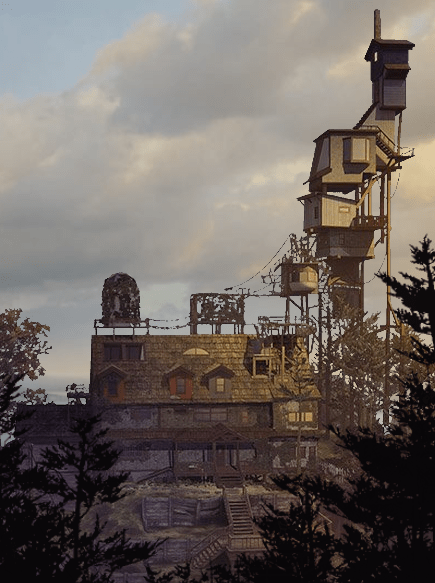
As the player, you guide Edith through the Finch house, a seaside mansion that has been built-upon and expanded over several generations, a bit like the Winchester House. You quickly discover that the rooms of the deceased Finches have been sealed off, untouched, like little museum pieces. As you open those rooms up, you get glimpses of each person — visions from their perspective, enhanced by Edith’s narration and her journal entries, filling out her family tree with whimsical sketches. You begin to piece together the history of the Finch family in all of its joys and tragedies.

Each room in the house, each person, is revealed through a unique experience. Each is delightful in a different way. They range from eldritch horror to peaceful meditation. From the simplicity of flying a kite or swinging on a swing to navigating a living comic book to vignettes of a camping trip seen through the viewfinder of an old camera.

The uppermost rooms of the house are stacked in a teetering tower. They are a promise made in the opening moments of the game, as you first approach the house. They are the most recently-built rooms, the ones once occupied by the people most important to Edith. She will have to climb to the apex and come to grips with the legacy of the Finch family.

This poignant anthology of stories about death ends on a surprisingly hopeful note. The purpose of the journal, the narration, and the title all come together to deliver a clear message: it’s your life that defines you, not your death.

Getting the Game

What Remains of Edith Finch is a game by Giant Sparrow. It’s available for PC (from several providers), as well as Nintendo Switch, Xbox and Playstation.

Razor Mountain Development Journal #29

This is part of my ongoing series where I’m documenting the development of my serial novel, Razor Mountain. Be forewarned, there are spoilers ahead! You can start from the beginning here.

Last Time

I got through two more chapter summaries, fleshed out Christopher and God-Speaker’s interests, and identified some challenges presenting God-Speaker’s Act II chapters to the reader.

Chapter 21

Garrett, Harold, and Christopher take a break in the forest to rest and eat a little. (They have a paltry amount of homemade jerky. They offer to share with Christopher, but he declines.)

Garrett warns Christopher that they will be approaching the main facility shortly, and they need to be very careful or they will be shot. He does his best to scare Christopher, telling him that now is the time to give them any information he might have about the outside world – anything they can use to negotiate with the 550th Infantry.

Christopher tries to explain that they have a strange and skewed view of the outside world, and that he has been open and honest with them. Garrett doesn’t like this answer, and tells Christopher that their blood is on his hands if things go poorly. Harold seems more sympathetic to Christopher, but follows his brother’s lead in everything. Christopher tries to ask questions about the people in the “main facility.” All he gets from the brothers is that it’s where the exiles came from. They left because they thought they were being lied to, but being lied to is better than dying of starvation.

Garrett makes a flag from a branch and a white shirt. They continue walking. As the sun rises, they walk out into a treeless area at the food of the mountain. Garrett directs them to hold their hands up, while he holds the flag high. They walk out slowly.

The sounds of small animals, birds, and pebbles under their feet seem menacing. Christopher half-expects the sound of gunshots. Instead, just as he’s beginning to let his guard down (and his tired arms), there’s shouting, and fully-equipped soldiers swarm from the boulder-strewn slopes above.

Cliffhangers:

  • What will the soldiers do to them?

Mysteries:

  • 21.1 – What was the conflict between Razor Mountain and exiles? What lies are they feeding their population?

Episode Arc:

  • Christopher has been kidnapped and his captors seem interested in him only as a bargaining chip. Still, he feels sorry for them and the bad situation they seem to be in. As they approach the mountain and he sees them get worried, he starts to seriously worry that he may just die here.

Notes:

  • Yet another chapter where I had an easy cliffhanger available! I just had to pull the exciting bit from the start of the next chapter to the end of this chapter.

Chapter 22

God-Speaker is in a new body, in excellent shape in the prime of life. He stands in a carved cave-chamber, with six other people, around a stone table. This is a war council, and they are his military leaders.

They describe the movements of a small war party that is approaching the mountain. He lays out a very conservative defense. His friend, Strong Shield, complains that they have better weapons and better tactics, and this approaching army stands no chance of defeating them. God-Speaker agrees, but explains that he wants as few casualties as possible, and the best possible defense. Becoming overly-proud and lazy will lead to their destruction.

Strong Shield suggests that once they have destroyed the attackers, they should mount a counter-attack to prevent any future threat. He suggests they send a permanent military presence, and essentially begin to build out an empire. God-Speaker dismisses the others so they can talk privately.

When they are alone, God-Speaker explains that he is thinking about stopping all interaction with outside groups, faking the destruction of the village at the base of the mountain, and hiding their knowledge and wealth from the rest of the world to avoid conflicts like this.

Strong Shield says this is a path of weakness. He thinks he would be a better leader for their people. He tries to kill God-Speaker, but God-Speaker is ready for him, and kills his friend. He weeps over the body.

After a few minutes, he composes himself and calls the others back in. He tells them that this is a man he loved like a brother, and he was betrayed. He makes it clear that if anyone else is thinking of betraying him, they’ll meet a similar fate. The gods of the mountain make him unstoppable.

Cliffhangers:

  • Nope

Mysteries:

  • 22.1 – What are the voices/gods/artifacts? What power do they really give him? (Really a continuation of 16.2)

Episode Arc:

  • The imminent attack doesn’t worry God-Speaker, but he is hyper-vigilant anyway. He fully believes the doctrine he’s espousing – laziness and pridefulness will lead to mistakes and failure down the road. This also applies to his friend, Strong Shield. He loves the man, but the artifacts whisper to him that he’s not to be trusted, and they turn out to be correct. He has taken precautions, and he’s ready, but it still crushes him to be betrayed like this. He’s determined to close off his heart to avoid this emotional pain in the future, and immediately begins to erect walls of fear between himself and his other close lieutenants.

Notes:

  • This is the first big lesson for God-Speaker, teaching him that his fear of others is justified. Only by constant awareness can he avoid death from unexpected directions. The voices from the artifacts can help him.

Results

I worked through two more chapter summaries. (I’d still like to get more done, but I’m slowly coming to accept that this is the average amount I’m likely to get done on this project in a typical week.)

Expanding the original, bare-bones chapter summaries has been a useful exercise, but what I’ve noticed most of all is how frequently I throw away opportunities for cliffhangers! There have been so many places where I put an exciting event with an uncertain outcome at the beginning of a chapter. Pulling it out of that chapter and putting it at the end of the previous chapter gives me that extra suspense without even having to rearrange the plot.

Another Week of Microfiction

I’m back, for the second installment of the experiment where I write tiny stories and post them daily on Twitter at @DeferredWords. You can read the first week of stories here.

Our Time Together

The Last Game of Go

The Warp

Black Clouds

Starfall

*(Yes, it should be “pens.” Thanks Twitter.)

Knight, Forsaken

A Concern

There’s one more week of stories left. I’ll post the final installment next Wednesday. See you then.

Killing Characters (The Right Way)

Have you ever read a book where an important character died, and you felt completely crushed by that death, as though you had lost someone real? Now, have you ever read the death of a character and felt…nothing? The big build-up led to that moment, and you just couldn’t muster anything but indifference?

Killing characters is in vogue these days, but there are good reasons and bad reasons to do it. When characters die in service to the story, the impact can be huge. It can be a moment that your readers will remember forever. When characters die for the wrong reasons, you’ll be lucky if your reader only feels indifference and not outright irritation.

The Wrong Reasons

There are plenty of questionable justifications for charactericide. Let’s start with a few reasons to not kill your characters.

First — to “spice up” the story, or make it more edgy. Some authors assume that adding more sex or violence automatically makes their story more mature. But just because it contains “mature content” doesn’t automatically make it better. In fact gratuitous mature content that’s not integral to the story can easily come off as juvenile.

Second — to show that your villain is evil. Don’t get me wrong, a villain killing key characters as they advance their agenda can be important story beats. The problem is more when murder is used as a substitute for characterization. Does the villain kill for a reason? Do they have a personality beyond “that crazy guy who’s always indiscriminately killing?” If not, you may end up with a dangerous character who still manages to be flat and uninteresting.

Finally — to make your life, as the author, easier. You may find yourself deep in the slog of the second act, absolutely despising one of your characters. Maybe their personality developed in a really annoying way. Maybe they just want to do things that push the story in a direction you don’t want to go. It’s tempting to just “get rid” of them. But that doesn’t really solve the problem. Chances are, that character didn’t get a nice, meaningful arc.

What you really have to do is decide if you want to keep that character at all. Maybe they don’t belong in this particular book. They might need a big personality adjustment. Fix the character, adjust the plot, or pull them out of the story. It’s a bad idea to just knock a character dead in a random spot, even if it might be cathartic for the author.

With those out of the way, let’s talk about some good reasons to kill a character.

An Inciting Incident

At the root of each story is an inciting incident. This is the moment when the protagonist’s world changes. It’s the moment that introduces the major conflict or tension that will drive the story. You can be sure that your protagonist losing someone close to them will turn their world upside down and throw them into conflict.

As a well-worn example, look at the beginning of Star Wars. Luke Skywalker’s old life is over when his aunt and uncle are killed and his home is burned down by the Empire. He has nothing left to tie him to his former home, and he has a whole new reason to want to fight the Empire, something he was already considering.

This kind of character death isn’t without dangers. To be an effective inciting incident, it has to happen early. That means the reader is still getting to know your protagonist, and they’re very unlikely to have any strong feelings toward the character(s) you’re killing off. They need to see how those deaths hurt your protagonist, but their empathy is naturally going to be limited. Even among crazed Star Wars fans, you’ll be hard-pressed to find someone who really loves Uncle Owen and Aunt Beru.

Developing a Character

The middle of a story may be the most interesting time to kill off a character. The reader has had a good amount of time to learn about your characters, to understand them, and to empathize with them. The middle of the story is also when you’re deep into the conflicts and tension that drive the story. That dead character is going to leave others behind, and their death can and should influence how the remaining characters move forward.

The death of one character may reveal more about another character who lives. In Ender’s Game, we discover two-thirds of the way through the book that the protagonist has killed two people. We watched him fight those people, but never knew the outcomes. Ender himself isn’t told that he has killed, because the people manipulating him know that the knowledge might destroy him. As readers, we understand that he doesn’t want to be a killer. He hates the very idea. But people around him have learned how to manipulate him into killing, for their own purposes.

Sometimes, death reveals more about a why a character is the way they are. Sometimes, it shows just what they’re willing to do. In the Hellblazer comics, John Constantine watches the people close to him die. People he trusts and loves. He learns that letting people get close is dangerous. It leads to pain. That’s why he does his best to be a sarcastic asshole: so he can hold everyone important at a safe distance — for them, and for himself. But, of course, he doesn’t always succeed. People get close, and suffer the consequences.

John Constantine is a complicated character though. He’s far from the typical goody-two-shoes superhero. In fact, he’s often the anti-hero, and perhaps occasionally the villain. He kills. Sometimes for the right reasons, sometimes for his own selfish reasons. Sometimes because he just doesn’t care. He can be cruel and manipulative as much as he can be soft-hearted.

Sometimes, death can reveal secrets. Perhaps the dead character has been hiding things, and those secrets can only come out once that character is no longer there to protect them. One character killing another may also reveal an animosity that was kept under wraps. In The Truth is a Cave in the Black Mountains, we believe that the protagonist is seeking treasure and riches. It is only when he ends up in a fight to the death with the other major character that his true intentions are revealed. Little bits of carefully parceled back-story take on entirely new meaning as the twist unfolds.

Resolving an Arc

If the middle of the story is the most complicated time to kill a character, the end of the story is probably the simplest, although it’s not without its challenges. The end of the story is when the reader knows the most about your characters. They ‘ve been with them, through thick and thin. They empathize with the good guys, and they’re hoping against hope that the bad guys will lose.

In a traditional tragedy, the hero dies at the end. Their mistakes or failures catch up with them. They may go down swinging, or they may realize the error of their ways. In a more modern take, the hero may save the day, but sacrifice themselves in the process. No matter what leads to their death, it should mean something. Back in our Star-Wars example, Darth Vader is an exemplar of this. He is an important villain throughout the original Star Wars trilogy, and only at the very end does he realize his true feelings, saving the day and his son.

Of course, many villains think they’re in the right all the way to the end. They go down swinging. But their death typically ends the main conflict, and often resolves one or more characters’ arcs. These other characters probably have strong feelings about this, to be explored before bringing the story to a close.

The Takeaway

When you feel tempted to kill a character, ask what it accomplishes. How does it affect the characters who are left behind? Does it move the story forward?

Put yourself in the shoes of your reader. Will they be excited? Heartbroken? Or bored and irritated? It’s surprisingly easy to kill a character. What’s hard is killing them the right way.

Razor Mountain Development Journal #28

This is part of my ongoing series where I’m documenting the development of my serial novel, Razor Mountain. Be forewarned, there are spoilers ahead! You can start from the beginning here.

Last Time

I worked on the chapter 17 and 18 summaries (and also identified some things I may want to go back and improve).

A Little Characterization

I spent a little time this week thinking about Christopher and God-Speaker’s personalities and came away with more ideas about what each of them is interested in.

Christopher loves drawing. Not necessarily what he would consider “real art,” but sketches, doodles, and little things in the margins. As a boy, he loved drawing and programming. When he went to school, he chose a degree in computer science. It was the pragmatic choice — the jobs were plentiful and paid well, as opposed to the challenge of making it as an artist. Yet another example of Christopher avoiding risk and choosing the safe path. As a result, he still has a little nagging regret that he didn’t pursue art beyond a hobby.

Christopher was always fascinated by Leonardo da Vinci’s journals. He got into the habit of similar journaling, mixing sketches and little blurbs of text. He doesn’t journal consistently, and he doesn’t follow any particular format or try to get anything out of them. In fact, he rarely goes back and looks at what he’s written. However, this is an important way that he processes things.

I also decided that Christopher has a habit of talking to himself. This is a bit of an aid for writing a character who spends Act I alone, but it also mirrors God-Speaker and the way he listens to the voices from the artifacts and from the people whose minds and bodies he has usurped over the centuries.

Christopher exhibited this tendency at a young age, but his father worried that it would make him seem strange to others and cause him to be bullied or mocked by other children. Christopher’s father discouraged it, and as a result, Christopher has learned to mostly suppress it around other people. It starts to creep in more as he spends days alone in the wilderness.

Finally, I decided that God-Speaker has a weakness for music. He has avidly followed the development of various instruments and the advancements of music theory over the years. He has a collection of music players (from wax cylinders to records to digital) and a handful of musical instruments in his offices. He also writes music from time to time, but he keeps it secret, never showing it to anybody. He sees himself as a hobbyist, and is afraid that his work is bad, despite centuries of occasional study.

God-Speaker’s Act II

I realized as I came into chapter 19 that the God-Speaker chapters very abruptly change from a sequence where everything is close in time to a series of vignettes with many years in-between. Meanwhile, Christopher’s chapters continue to be close together on the timeline.

I could explicitly break the book into parts. I think that a major delineation like that cues the reader to be on the lookout for bigger changes in structure, like jumps in time. I’m not sure it’s a particularly elegant solution.

Another option is to sprinkle enough context into the first of these vignette chapters to make the time transitions clear. Some ways to do that:

  • Make direct mention of years passing in exposition.
  • Show that God-Speaker is much older through changed physical attributes
  • Highlight changes to Razor Mountain that must have taken years to complete

The first chapter that “jumps” in time will be the most jarring. After that first jump (and definitely after the second), the reader will be primed to look for clues as to how much time has passed in subsequent chapters. For that to work, I still need to provide clues, such as:

  • Each chapter after the first, God-Speaker is in a different body that he has taken over
  • In each chapter, Razor Mountain and the people around God-Speaker have changed
  • In each chapter, God-Speaker is dealing with a completely different set of problems (but following a progression as he consolidates power and hides from the world, all in order to be as safe as possible)

Chapter 19

God-Speaker is older now. It’s a cold morning, and his body aches. He greets a fresh group of ice-age migrants to the village at the base of Razor Mountain. He thinks to himself that there are many migrants, and there will soon be too many people in the village. He will have to be more selective about who he allows in. These newcomers are somewhat in awe, except for one young man who is determined to be unimpressed.

God-Speaker brings them to a large hall in the middle of the wooden buildings, where they eat a large meal, to impress upon the newcomers how good life is here. He answers some questions and deflects others. He asks them about their skills. The irritable young man claims to be a great hunter.

After they’re done, he leads them around the village, showing them where livestock, proto-grains, vegetables, berries and mushrooms are all being cultivated. He shows them stores of preserved food. He shows them a mine and a simple forge where they’re developing smelting and metalworking.

Finally, he explains that this “great tribe” is superior to small tribes. He tells them that he was called here by the gods of the mountain. He listens to them, and learns all the wisdom that allows the village to thrive. The newcomers are eager to join, and God-Speaker convinces the young man by flattering him and explaining that his skill in hunting will be vital to teach others.

God-Speaker passes them off to someone else to get situated. He follows a path up to a cave entrance, and heads into the mountain. Again he feels his body wearing out and knows that death is stalking him. He hears the whispering voices, and they grow louder deeper into the cave. Soon, if he can learn the secrets of the voices, he thinks he will show them something truly amazing: his own rebirth into immortality. He just has to do it before his body gives out.

Cliffhangers:

  • Will he die, or be reborn?

Mysteries:

  • 19.1 – Can the artifacts actually make him immortal?
  • 19.2 – Are the voices actually gods?

Episode Arc:

  • God-Speaker works to convince the group of newcomers to join the village, especially one skeptic who comes around by the end. He is building and carefully controlling a community, and developing power through the artifacts.

Notes:

  • Need to research what naturally occurring plants, animals and mushrooms would be available in this time period and location.
  • Need to research primitive metalworking.

Chapter 20

Christopher wakes in the night as he’s being roughly bound and gagged. He has a bag put over his head. He tries to scream, but can’t make much noise, and receives a blow to the head. Woozy, he is unsure if this is something orchestrated by the people he just met or someone else.

He is dragged and shoved and stumbles for a few minutes. He hears two voices speaking quietly, and thinks he recognizes one of them: the man who was guarding his room.

After some time, he feels cold air and hears that they’re moving through an echoey space, perhaps a cave, and then into snow outside. He becomes more and more sure that his captors are Garrett and Harold. They argue whether they are making a good choice, and whether they’ll be allowed back into the mountain. They discuss some of the contents of Christopher’s pack, which they apparently brought with them.

Finally, they stop to rest and remove Christopher’s head-bag and gag (warning him that he’ll get another knock on the head if he’s loud). Christopher begins to understand that they’re betraying the others and they may be afraid of Amaranth catching up. Garrett tells Christopher that if he has any useful information, he should talk now, because the professional interrogators up at the mountain will be far less pleasant. He tries to sound threatening, but Christopher thinks he’s actually nervous. Harold doesn’t like the plan at all, but does what Garrett says anyway.

They continue walking the rough, heavily-wooded slopes toward Razor Mountain in the faint moonlight. Christopher decides there isn’t much he can do but go along with them. He decides to wait and see if any opportunities for escape present themselves. Harold expresses the opinion that he thinks the 550th might just shoot them all on sight. Garrett doesn’t respond.

Cliffhangers:

  • Will they be shot on sight?

Mysteries:

  • 20.1 – Who is up on the mountain? What is the 550th?
  • 20.2 – What is the situation between the Razor Mountain people and Garrett and Harold’s people?

Episode Arc:

  • Christopher is kidnapped. He’s confused, fearful, and a bit beat-up. He decides he is going to have to do something if he wants to get out of this situation, but isn’t sure what. He pacifies himself thinking that he’ll wait for a better opportunity

Results

I got through two more chapter summaries, fleshed out Christopher and God-Speaker’s interests, and identified some challenges presenting God-Speaker’s Act II chapters clearly to the reader.

Weekly Microfiction

Last week, I talked about a little experiment I’m doing — a very little experiment! As a slightly silly way to get back into writing short stories, I started putting out microfiction on Twitter, @DeferredWords. Every morning for the past week, I’ve been posting a story in a single tweet, and I’m going to keep doing it for a couple more weeks.

Here are this week’s stories:

Gary Left

Princess, Under the Moon

Carlos and Esteban

Angela’s Enlightenment

Space Wizards

Dana Asks

The First Time

See you next week for seven more micro-stories!